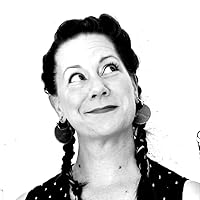
Born in Lancashire, England in 1952, of Irish parents, she moved to Ireland at the age of 5, and was brought up in Corca Dhuibhne and in Nenagh, County Tipperary. Her uncle was Monsignor Pádraig Ó Fiannachta of An Daingean, the leading authority alive on Munster Irish. She studied English and Irish at UCC in 1969 and became part of the 'Innti' school of poets. In 1973, she married Turkish geologist Dogan Leflef and lived abroad in Turkey and Holland for seven years. Her mother brought her up to speak English, though she was Irish herself. Her father and his side of the family spoke very fluent Irish and used it every day, but her mother thought it would make life easier for Nuala if she spoke English instead.
One year after her return to County Kerry in 1980, she published her first collection of poetry in Irish, An Dealg Droighin (1981), and became a member of Aosdána. Ní Dhomhnaill has published extensively and her works include poetry collections, children’s plays, screenplays, anthologies, articles, reviews and essays. Her other works include Féar Suaithinseach (1984); Feis (1991), and Cead Aighnis (2000). Ní Dhomhnaill's poems appear in English translation in the dual-language editions Rogha Dánta/Selected Poems (1986, 1988, 1990); The Astrakhan Cloak (1992), Pharaoh's Daughter (1990), The Water Horse (2002), and The Fifty Minute Mermaid (2007). Selected Essays appeared in 2005.
Dedicated to the Irish language she writes poetry exclusively in Irish and is quoted as saying ‘Irish is a language of beauty, historical significance, ancient roots and an immense propensity for poetic expression through its everyday use’. Ní Dhomhnaill also speaks English, Turkish, French, German and Dutch fluently.
For background information about the poet Nuala Ní Dhomhnaill, see my review of her Selected Essays In the meantime, here's a sample of her poetry:
We Are Damned, My Sisters
We are damned, my sisters, we who swam at night on beaches, with the stars laughing with us we shreiking with delight with the coldness of the tide without shifts or dresses as innocent as infants. We are damned my sisters. ... We didn't darn stockings we didn't comb or tease ... We preferred to be shoeless by the tide dancing singly on the wet sand the piper's tune coming to us on the kind Spring wind, than to be indoors making strong tea for the men-- and so we are damned, my sisters!
Translated from Irish by the poet Michael Hartnett
Labysheedy (The Silken Bed)
I'd make a bed for you in Labasheedy in the tall grass under the wrestling trees where your skin would be silk in the darkness when the moths are coming down.
Skin which glistens shining over your limbs like milk being poured from jugs at dinnertime; your hair is a herd of goats moving over rolling hills, hills that have high cliffs over two ravines.
And your damp lips would be sweet as sugar at evening and we walking by the riverside with honeyed breezes blowing over the Shannon and the fuchsias blowing down to you one by one.
The fuchsias bending low their folemn heads in obeisance to beauty in front of them I would pick a pair of flowers as pendant earrings to adorn you like a bride in shining clothes
O I'd make a bed for you in Labasheedy, in the twilight hour with evening falling slow and what a pleasure it would be to have our limbs entwine wrestling while the moths are coming down.
Translated from Irish by the author
A Journey
I leave behind in a hazy mist this wind-swept countryside; the shadows of mountains towering in a half-circle over the white strand where long ago the heroes killed each other, fighting over whatever it is that heroes fight over.
In the neighbourhood of Burnham I meet my first trees,-- palms, planted by the planters the De Moleyns. The tree in the hedge still lives but not the hand meanwhile nuns glide through the lofty rooms of their demesne. Barnacles and mussels grown on the hulls of boats, Oysters cluster round the memories.
The day itself spins past me fast as wind,--the bus, the train. We go through a tunnel and emerge again in a tall city and on the platform, through the fog of steam and noise, the loud cries of a multitude of people you are coming towards me. I recognise the slope of your shoulder, your footstep, and now at last, your voice.
A comprehensive survey of Ni Dhomhnaill's early work with the consistency of Michael Hartnett's translations, which lack a little of the glamourous touches of some of her rockstar translators, like Muldoon or Heaney, but for the most part, they are more faithful to the Irish idiom. A great place to start, and there are plenty of poems I want to spend more time with, like her Medb sequence and "Cnamh/Bone."
Some really great poems in here - from reflective to silly, sensuous to spiritual. An interesting volume in that it had the original poem in Gaelic beside the translation in English. I wish there had been some commentary on the translation, why the huge variety of translators was necessary, for example, but even still it was the perfect companion to a peaceful holiday in the woods.