What do you think?
Rate this book


272 pages, Hardcover
First published June 6, 2017


Is evil something you are? Or is it something you do? —Bret Easton Ellis, American Psycho
“Any means are justified if they achieve the goals dictated by the interests of power and security.” - Zabiba and the King, a novel by Saddam Hussein
“When I’d see the trial going on, and what he’d done to his people,” Rogerson later recalled, “I’d be like ‘Holy shit,’ there’s a shitload of dead people, he just killed an entire city. I’d think, ‘You’ve got to be kidding me,’ but then I’d see him, and I never looked at him like ‘You’re a psychopath,’ because [that person] wasn’t with me. . . . He was more like a grandpa.”
Years later, the man Saddam had tapped to oversee the genocidal operation, Chemical Ali, would tell his FBI interrogators: “There are two faces of Saddam, one who went out of his way to share with those in need and was sometimes reduced to tears when stopping to assist a poor person, and the other a lonesome man with no friends, either inside or outside his family, who didn’t even trust his own sons.” This second “face of evil” was “so cruel you couldn’t imagine.”
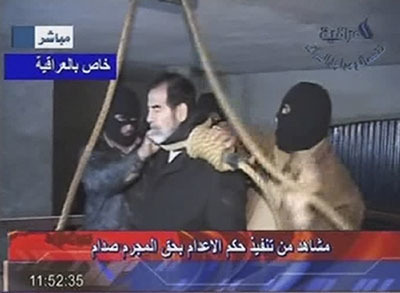
Hutch later reflected: “I feel like I have to explain why it bothered me so much; for an American to be upset. But for us to stand by and let them treat another human being that way—I thought that’s what we were over here to stop, the treatment like that. I truly felt that I was just as guilty as anybody else. I’ve never really had a conscience about anything I’ve ever done over here. As far as humanity goes, I’ve seen some pretty bad things, but it’s what I had to do, it’s what was required of me, it was my job. But my job had never before said that I had to stand there and watch people spit on and kick a person’s body. And you know what, I’m glad I feel that way, I really am. Because if I didn’t feel that way, I would think something was wrong with me.”