Accounts of the apocalyptic endings of previous civilizations, cultures, and peoples--from the sack of Rome to Auschwitz--form an inquiry into disaster, atrocity and resilience
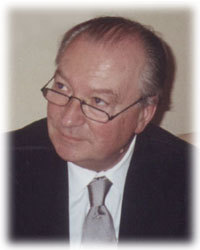
Otto Friedrich was born in Boston and graduated from Harvard, where his father was a political science professor. He took a while to find his literary stride. His career took him from the copy desk at Stars and Stripes to a top writing job at Time, with stops in between with the United Press in London and Paris and with The Daily News and Newsweek in New York.
But it was the seven years he spent with The Saturday Evening Post, including four as its last managing editor, that established Mr. Friedrich as a writer to be reckoned with.
When the venerable magazine folded in 1969, Mr. Friedrich, who had seen the end coming and kept meticulous notes, delineated its demise in a book, 'Decline and Fall," which was published by Harper & Row the next year. Widely hailed as both an engaging and definitive account of corporate myopia, the book, which won a George Polk Memorial Award, is still used as a textbook by both journalism and business schools, his daughter said.
From then on, Mr. Friedrich, who had tried his hand as a novelist in the 1950's and 60's and written a series of children's books with his wife, Priscilla Broughton, wrote nonfiction, turning out an average of one book every two years.
They include "Clover: A Love Story," a 1979 biography of Mrs. Henry Adams; "City of Nets: Hollywood in the 1940's" (1986); "Glenn Gould: A Life and Variations," (1989); "Olympia: Paris in the Age of Manet," (1992), and "Blood and Iron," a study of the Von Moltke family of Germany that is being published this fall.
He wrote his books, as well as reams of freelance articles and book reviews, while holding down a full-time job with Time that required him to write in a distinct style far different from the one he used at home.
Mr. Friedrich, who joined Time as a senior editor in 1971 and retired in 1990 after a decade as a senior writer, wrote 40 major cover stories, the magazine said yesterday, as well as hundreds of shorter pieces, all of them produced on an old-fashioned Royal typewriter that he was given special dispensation to continue using long after the magazine converted to computers.
Mrs. Lucas, portraying her father as a New England moralist whose life and literary interests reflected his disenchantment with much of 20th-century culture, noted that his aptitude for anachronism did not end with typewriters. "We have five rotary telephones in this house," she said.
In addition to pursuing his eclectic interests into print, Mr. Friedrich also had a knack for turning his own life into art. When he tried to grow roses, the record of his failure became a book, "The Rose Garden" (1972). When relatives were stricken with schizophrenia, his frustration drove him to produce an exhaustive study of insanity, "Going Crazy" (1976).
The sort of book that changes perspectives. From the sack of Rome through the Inquisition and up to Auschwitz the author ties together epochal events from history to show how different societies responded and reacted and recovered from cataclysmic events that seemed to the people living (or not) through them to be the end of the world. It seemed like one couldn't find worse than the barbarism of siege warfare of the Roman era until you got a taste of the same tactics combined with religious fanaticism and systemic brutality of the Inquisition, until you got the completely random and wholly murderous Black Death and the Lisbon Earthquake that didn't respond to anything - be it science, mystics, blessing or bane...God's absence was also notable in the death camps of Auschwitz, but then, so was man's humanity to other men.
The author wrote this book in 1980 - during the raging cold war and he looked at the possibility of a nuclear war as the last chapter in the book in epilogue, some of the descriptions of the mechanisms of doomsday are outdated and even quaint, but the quotes from Hiroshima victims peppered throughout the chapter describing events on the ground that day in the summer of 1945 will serve to keep the snickering about teletypes and rotary telephones to a minimum...and make one feel disgust at the Air Force 'missile men' who blithly consider their job as keyholders to doomsday as a 'job'...the author cleverly hinting at the same response that the guards in Auschwitz and the Inquisitors in Toulouse may have hidden behind in their day.
Stand out essays in the book are 'The Kingdom of Auschwitz' (released as a standalone paperback), The Black Death, Rise of the Inquisition and the Lisbon Earthquake and the Coming Revolution (Russia 1905) but the entire book is great and should be read from cover to cover to really appreciate the author's echoing of previous chapters as a means of reminding the reader 'those who fail to learn from history are doomed to repeat it'...
This is a great book about various disasters of various kinds that have attacked mankind. Everything from the sack of Rome to Auschwitz. In this time of pandemics, I especially liked the chapter on the Black Death.
Friedrich has a gift not only for describing terrible things. He also has a gift for trying to make sense of the terrible things that don’t make sense.
Target audience: Common people, anyone interested in history and how the end of the world was perceived at certain points in time.
About the author: Otto Friedrich was an American journalist, writer and historian. The son of the political theorist, and Harvard professor Carl Joachim Friedrich, Otto Friedrich graduated from Harvard University in 1948 with a degree in History. Upon graduation, he became a journalist, eventually becoming the managing editor of The Saturday Evening Post in 1965. After the Post closed down, he spent the remainder of his career at TIME magazine where he wrote over 40 cover stories. During this time, he also authored over 14 books on diverse subjects ranging from the rise of Hollywood to the rise of the Third Reich. In 1970, he won the George Polk Award for his book Decline and Fall. He died of lung cancer in 1995.
Structure of the book: The book has 384 pages, divided in the following parts: Prologue: The great flood; Book I - Barbarians at the gates: (1) The sack of Rome, A.D. 410, (2) The birth of the Inquisition, 1209-44; BOOK II - The eye of God: (1) The Black Death, 1347-50, (2) The New Jerusalem, 1525-35; (3) The Lisbon Earthquake, 1755; BOOK III - In our time: (1) The Coming Revolution, 1905, (2) The Kingdom of Auschwitz, 1940-45; Epilogue: The Great War; A note on sources; Index.
Overview: Otto Friedrich took different events from the world’s history – enumerated above in the structure of the book – and analyzed them from religious, psychological and especially historical point of view. Despite its name, the book is more historical than religious: many details, many historical facts and pertinent observations. Every time I read this kind of books I like how many new and surprising elements I find about our past and our ancestors and I remember that history is the best story. If you want to find a moderate amount of information about the irrational, dark side of history, then this is a book to read. We are taught in school that famous historical actions were made by rational people. Well, that has been quite rare and apocalyptic beliefs influenced our current world more than we can imagine.
My favorite part of this particular book was the Black Plague. In cases such as the sack of Rome or the rise of the Inquisition the enemies are other people and everything goes around us and them, they are the demons we are the saints, God is with us, Satan is with them. Invisible enemies, however, have the gift of stressing people’s imagination, triggering the emergence of the most wild and strange theories and the most aberrant actions. This kind of events always make me wonder if people are born as people or they become people. Because people, in periods of crisis, simply act like animals. Friedrich treats the Black Plague of the 14th century. But if you want to read additional information about the Black Plague and its effects upon Europe, then I suggest Daniel Defoe’s A Journal of the Plague Year about the plague in 1666 London.
Strong points: Easy to read, easy to follow, light language, many interesting and little known facts.
Weak points: I believe the very weak point of this book is its structure. Any historian - and Friedrich was an historian - knows that history “flows” and everything happens because of something before it: X happens because of Y, and X triggers Z. The author instead took events from the world’s history and treated them separately. Yes, they are very well detailed, the book explains what and how, but does not explain much why. And that is the most important question – why – when talking about history.
I first read this book shortly after it was published in the early 1980. I was especially interested in the chapter "The New Jerusalem" which is about "deviant" Anabaptists who went far astray from the spiritual roots and contributed to much violence and were eventually executed by the authorities in 1536. This time I just read that chapter, but I would recommend the entire book to anyone who is interested in history.
I have read and reread this superb book over the past 20 or so years.
It is a rare synthesis of the human experience--certainly, of apocalyptic times and events--but, more broadly, how humanity deals with the experience of being undone: whether by war, disease, genocide, flood, or just the toll taken by aging.
In "Ulysses," James Joyce described eloquently how catastrophe makes "...fear the basis of the human mentality." In "The End of the World," Otto Friedrich shows us a vision at once more terrifying and grander. Imagine a chapter that begins with the earthquake and flood that destroyed much of Lisbon...and ends with the restoration of J.S. Bach's hearing shortly before his death. Imagine the whole scope of human experience focused around the phenomenon of its extinction. A magnificent contemplation of human history!
The little vignettes of history are narrated with style and skill. The list of topics is insanely depressing - the Sack of Rome, the Albigensian Crusade, the Black Death, the Lisbon earthquake, Auschwitz - but the author manages to find some hope amid the bleak despair.
Great stuff. Friedrich takes an discursive, intellectual look at worlds that ended (Rome, Europe in the Black Death, European Civilization at Auschwitz and potentially all in the case of the bomb.) The approach is both the best and worst part of the book.
There are wonderful insights, great stories and dark ideas tucked throughout the book. Friedrich is happy to travel down whatever path makes sense to him, which may or may not interest the reader.
I have another of his books (on 40s Hollywood.) I am fascinated as to what he will have to say.
One of my all-time favorite books. Friedrich investigates various periods where the social fabric of society has broken down, resulting in religious mania and a pervasive feeling that God has passed judgment on the world. The sacking of Rome, the the earthquake at Lisbon, the Protestant Reformation, the Nazi Holocaust. Superb historical reporting.