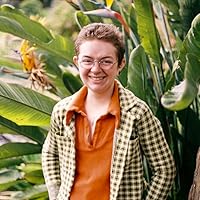
Poetry. Women's Studies. In Alicia Jo Rabins' second collection, FRUIT GEODE, the terrifying power of maternal love coexists with sorrow for the loss of one's younger self. In lyrical, unflinching poems, Rabins investigates the passages of pregnancy, birth, and early infancy through a constellation of ancient and modern experience: Sumerian storm demons, astronauts, herbal medicine, Neanderthal DNA, Jewish mysticism, climate change. In tracing the ritual mysteries of motherhood, FRUIT GEODE examines what it means to be transformed, to leave behind our certainties and walk into the unknown. "I regard my former life / With a distant affection, / As an astronaut / Looks through a porthole / At the small green planet / Where she used to live," writes Rabins. This is a book about what it means to live in a human body, how love changes us, and what we pass on from one generation to the next.
Alicia Jo Rabins is a writer, composer, musician, performer and Torah teacher based in Portland, Oregon.
DIVINITY SCHOOL, Alicia's first book, was awarded the prestigious 2015 American Poetry Review/Honickman First Book Prize, selected by C.D. Wright, and was a finalist for the Oregon Book Award. Her second book, FRUIT GEODE, is forthcoming from Augury Books/Brooklyn Arts Press in October 2018.
Alicia holds a MFA in Poetry from Warren Wilson College and a MA in Jewish Women's and Gender Studies from the Jewish Theological Seminary. She is the recipient of awards and scholarships from Lower Manhattan Cultural Council and Bread Loaf Writers Conference.
Alicia was born in Portland Oregon, moved to the East Coast at four months old, met and married a Portlander who was passing through Brooklyn, and now is back in her birthplace with her husband and their two little kids. Alicia is also an internationally touring singer, violinist and songwriter. Her musical projects include Girls in Trouble, her indie-folk song cycle about the women of Torah, and an original one-woman chamber-rock opera, A Kaddish for Bernie Madoff, which is now being made into a feature film. She loves coffee, gardening, herbal medicine, Torah, feminism, and peaty scotch, and is currently at work on a spiritual memoir.
Motherhood poetics is so difficult sometimes, or that's how I've always felt, anyway. There's so much material and I find it challenging at times to turn domesticity into poetry. In any case, Alicia Jo Rabins has written a collection around maternal themes that's fresh and real and science-y and grotesque, and I love it.
This is my second reading of Fruit Geode, which makes it one of maybe a dozen books I've ever revisited. I love everything about this exploration of the wild depths of motherhood; it's lush and raw and a deeply moving example of what Seamus Heany calls "digging" in poetry. It's so hard to write about motherhood - so utterly mundane and also profoundly shattering. Rabins' experiences feel close and familiar, but her voice is so distinctive and precise, it's almost like listening to a better self make sense of the things. This is one of the reasons I reach for poems, and I'm deeply grateful for these.
This collection of poems reads like a novel, inasmuch as it invokes generations upon generations of stories to tell the very tiny tale of a mother and her "little blueberries." She loves transcendently, but doesn't ignore the dirt; I found myself shocked by both her joy and disgust. Read for an unflinching look at pregnancy, birth, and all manner of bodily functions, as well as an earnest expression of devotion to the two little people Rabins grew herself.
In Fruit Geode Alicia Jo Rabins successfully navigates time within a lifetime, across lifetimes, across eras throughout the book and within each poem. She calls our attention to that which we may or may not notice but in the busyness that is life tend to forget to linger on acknowledging their significance, “Dear white moon in the blue July sky/you seem to be sending me a message/again, and what I hear is this will all end soon.” She manages to imbue a sense of permanence and urgency, to bring lyrical life to “pigs in a blanket”, “raspberry leaf tea”, and a “girl moustache.” Alicia gifts beauty and awareness to what we too often look away from even though we know we shouldn’t.
I sought out this book after hearing Alicia Jo Rabins's interview on Between The Covers, which is an awesome podcast worth checking out. I wanted to learn more about motherhood and the intimacies of carrying a child to term, me being a man and hence never able to do so himself. This book dazzled me, shook me, frequently scared and inspired me. This book wasn't written for me, but I went after it for a purpose and it delivered. The poems are serious, heartfelt, and full of incredible surprises. Her words follow powerful emotional currents that make it impulsive to read each poem again and again.
"to be a woman/ is to be a wall/ with a hole/ to be a human/ a hole with walls/ even the rain/ tastes red to you". Alicia Jo Rabins digs deeply into our shared corporeality, and her own, in these poems starting with the body and ending with the end of the universe. A superb second collection.
Fruit Geode is by turns laugh-out-loud funny, desperate, grieving, and altogether real about what motherhood offers and erases. In the opening poem, Rabins compares having a child to "arsenic in chocolate" and "a pea shoot in mud." Many books compare becoming a mother to being in a new country, but Rabins makes this concept new with surprising metaphors and bracing frankness. “I know the temperature inside your rectum,” she states in “I Suck Your Fever Out.” She is in love with her babes in arms, but she is honest about feeling (at times) completely annihilated. I could so relate! I read this book in a single sitting, laughing and nodding at each poem. I bet you will, too.