Have you ever asked yourself if our ideas about success are all they're made out to be? Do you ever wonder if work and pursuit of money and material possessions are ALL THERE IS to life? For twenty years, Michael Blue, an accountant trapped on the corporate treadmill, contemplated these questions.
Now he lives in a bus in the dense jungles of Northern Sumatra. This is his idea of freedom. He is a fugitive of an unusual kind, an escapee from the work-consume-die hamster wheel. He has a simple existence without much use for work or money.
This is the story of how he got there. Michael takes us along for the ride as he reflects on four previous failed escape attempts. It is amongst these stories, his meetings with Shamans in the Amazon, the lessons from a sex-crazed marsupial, and his revelations during lonely rides in frozen chicken trucks, that we discover the hard-learned secrets of a successful escape artist.
Amongst his adventures, he dismantles commonly held beliefs about success, work, money, and ownership. And then, from the remains, with an uncomplicated perspective on health, wealth, and happiness, he reconstructs what it means to live a good life.
The result is at once a travel story and a firsthand experiential blueprint, guide or perhaps anatomy of escape.
Categories for The Anatomy of Escape- A Good Life - Green Lifestyle - Minimalism Mindset - Simple Life - Minimalist Living - Frugal Living - Anticonsumerism - Memoir - Living in a Van - Living in an RV
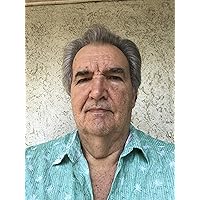
Mike Blue, the author of The Anatomy of Escape, and The Consumption Cleanse, is an escapee from the work-consume-die hamster wheel. He has been on the road living a simple, minimal life since June 2015 and currently calls a big blue bus named Rosie his home. That bus, which provides transport, a place to sleep, cook, contemplate and write is adrift somewhere in Sumatra, Indonesia. There is no plan and no map but a driving desire to not be bound by the status quo, to live outside of the consumption society and live in a way that prioritises physical and mental well-being, integration with the natural world and human community and creativity.
The Anatomy of Escape: An Unconventional Adventure, by Michael Blue, is exactly what the title suggests. Blue, a successful man in the business world, educated, obviously talented considering his success, finds that the cog-wheel-existence of mediocrity, the dream-life offered in his home-country of Australia, just isn't cutting it for him. Tired of the obesity of society, the over-rated consumerism and love-affair with materialism, Blue begins a journey to find a new life. After many attempts, each time returning home to find his footing again and refuel his resources, the author heads out on what will become a successful escape. One might think that the author's story is about escapism, but in fact, it is not. His search for a minimalistic lifestyle, where happiness is based on having enough, not excess, is quite eye-opening. Between the chapters of storytelling his adventures through the jungles of Sumatra and all the wonderful people, and excitement he encounters along the way, Blue does a nice job of weaving in his assessment of the true values in life, how to reduce the destruction of our planet's natural resources, how to live happily minus the obesity of lust for material things, and possibly, most importantly, just letting go and living one's dream. A fun book, but one with a relavent message too.
‘Not an experiment in simplicity and living without using much money. It was about living life - to reflect, review, and revise the way I’m living it.’
Author Mike Blue, as described in his short bio, ‘was born and educated (indoctrinated) in Brisbane, Australia. He is formally trained as an accountant and information technology specialist. Initially, his career was based in Australia, but from his mid-twenties, he spent as much time travelling and working abroad as he did in Australia. Throughout that time, he was self-educated as an escape artist. He has been on the road living a simple, minimal life since June 2015 and until very recently called a big blue bus named Rosie his home. That bus, which provided transport, a place to sleep, cook, contemplate, and write, would most commonly be found adrift somewhere in Sumatra, Indonesia. There is no plan and no map, but a driving desire to live outside of the consumption society and live in a way that prioritises physical and mental well-being, integration with the natural world, and human community and creativity.’ Funny, humanistic, off the beaten track – perhaps, but read his book that asks if not forces us to rethink consumerism and he blossoms like fresh air! Having read all three of Mike’s books, THE ANATOMY OF ESCAPE is this reader’s favorite – perhaps because time passing awakens us to the discoveries Mike has made.
Mike’s Introduction is so rich in philosophy (an his purpose) that it bears quoting to add to the seduction of reading the entire book: ‘From a passion for the natural world, the natural world of which we are all an interdependent part, came my desire to stop destroying it. The economic, political, and social conditions that most of us live in today do precisely that: destroy it. We live on a finite planet where everything is ecologically connected, and yet our systems and individual behaviours do not reflect this. This becomes clearer with each passing year as we see record extinction rates with depleted and polluted forests, oceans, and all those things we depend on to live a good life. None of this made any sense to me. These systems are our creations, but they are working against humanity and the other living beings of the earth, not for them. Why are our systems like that then? How did we get here? What assumptions about our world do we take to be facts when they are actually only misguided and destructive beliefs? In examining these questions and uncovering some fundamental truths arose my imperative to escape from this framework. I discuss this in Part 1. Scattered across twenty years, living primarily in Australia, I executed a series of clumsy attempts to escape from systems and indeed a way of life that seemed contrary to promoting well-being and longevity of ourselves and our habitat. Across those years and with each successive escape attempt, I came to understand two things. First, I cannot change the nature of these systems, at least, not in any meaningful or significant way. Second, there can be a process of escaping from those systems. In Parts 2 and 3, I explain much of what I have learned. Eventually, after much reflection, self-education, and practice, I earned my black belt in escape. I learned how to live a good life, which for the most part is free from the contradictions of those systems. By doing away with many standards and conventions that we have come to assume are true, I worked out how to be healthy, prosperous, and happy without having a strong relationship with things like work, money, and material possessions. The resultant lifestyle, taking this introduction full circle, promotes the persistence of a habitable and healthy planet. Part 4 is all about this way of living. It is about escapee life. You might be thinking that by abandoning ship in this way, I am being selfish, and you would be right in some ways. I selfishly want to lead a life well lived. But as I discovered and as I retell in this story, a good life is difficult to find in isolation. I want as many people as possible to undermine the systems that so patently are harming us and our planet. And I have come to realise that one of the best ways to do that, one of the best ways to withdraw support for them, is to leave them and live with new systems that support a good life. This brings me to why I wrote this book. I want to expose the unfortunate realities of the incumbent systems and how to escape them and to paint a realistic picture of what escapee life can look like and what a good life can be…etc.’
Not only is this a tremendously entertaining book, rich in adventures, hilarious encounters, and thoughtful philosophy as experienced by a mobile hobo, this is a challenge to us to examine how we are living. The book is filled with little moments/thoughts – ‘It’s no secret that where we exist in space-time is here and now. We are not existing in any other time. The past no longer exists and the future does not yet exist. But how often do we live accordingly? It’s one thing to read it; it’s quite another to live it.’ And this book IS a memoir: it happened and will likely continue to be the life pattern of Mike Blue. Very rich writing and very highly recommended.
While reading about the places and the people the author encountered on his travels was quite interesting, I couldn’t help but think that the author is living like a wild, and immature college student. Most people have responsibilities in their thirties and forties, such a spouse, children, and aging parents. I am all for living and appreciating the here and now, nature, and new experiences, but I really can’t think of one person I know, including myself, who can make major life decisions such as the authors, without considering loved ones.
If you’re looking for a linear, highly organized, bulleted how-to list of how to get off the treadmill and live a life of your choosing...this isn’t it. Although Michael Blue does provide some subtle, seemingly simple equations that I’ve made into my desktop wallpaper. And I hated algebra.
If you’re ready to go on a series of adventures and explorations with author Michael Blue as he finds his way to his own personal escape, then this IS the book for you. Especially since Blue is affable, intelligent, original, and has a wonderfully wry sense of humor (pay attention to his discussion of the amygdala).
This book unfolds like a labyrinth. Unlike mazes, you don’t get stuck in dead ends and have to mill around retracing your steps. Instead, you take a meandering path that seems to bring you closer, and then, ooops, farther away, and then closer to the center, the core. And by the time you reach the center, you’ve covered all the ground. You’ve explored every nook and cranny, and you have a roots-deep understanding of the challenges, pitfalls, issues, and rewards of escaping the daily grind, both the author's and yours!
Blue himself is a smart, engaging guy who colors outside the lines and is happy to share his tips and tricks for escaping the hamster wheel/getting off the treadmill, or however you think of your daily drudge.
Introvert alert! If your idea of escape is along the lines of silence and serenity a la Walden Pond or John Muir's explorations, don't slam the book shut and back away with horror the first time you read Blue's early solutions for housing costs.
Remember, this is a labyrinth. You’ll get there, and you’ll have a fun and fascinating time throughout the journey.
Having read the “Consumption Cleanse”, I was interested in Mike Blue’s “The Anatomy of Escape” and decided to give it a read and before I reached the halfway mark, I was already recommending it to a friend.
This book was part autobiographical and part instructional. His three-legged stool theory should hit home for most readers. It does me. It’s hard to describe this book in a way that’s meaningful but as someone who continually questions the consumption/consumer decisions I make, Mr. Blue’s decision to leave so much of it behind struck home for me. While I could never imagine living the vagabond life he seems to so readily embrace, I’m firmly appreciative of many of the life lessons that I picked up from “The Anatomy of Escape” and there are a few that stuck out for me. The idea that we should “selfishly want a lead a life well lived.” The concept that “As we become more monetarily wealthy, we seem to insulate ourselves from others and fortify our assets, and thus shield our lives against them.” When we think about the type of life we want for ourselves or what we’re looking for when we go in search of our self, we need to spare some serious thought to what we wanted that freedom for or what we might find fulfilling. Escapism only goes so far if we’ve no idea who or what we’re escaping from. But once there, “An escapee can use freedom to focus on health, travel, learning, growth, and contribution.” And most importantly, in living life, it’s important to relook and revise what we are doing continually. As Mr. Blue says, he keeps in “mind that it is all about health, prosperity, and happiness and fine tune it to converge with those ideals.” Granted, it’s a pity that those have to be ideals and not the reality.
If you are looking for an escape, or searching for a way to find meaning, then give this book a read. It’s thought provoking, intelligent, a bit whimsical, a little sad, but most importantly, it’s about ingenuity and continuing forward.
I really enjoyed the actual story components of "The Anatomy of Escape". But, I got lost in the philosophy; the voice between the two did not always feel unified, and oftentimes, the philosophy went so in depth, I just wasn't at a spot myself to fully engage with it. (I also just don't read much philosophy in general.) I skimmed the heavier material at times, instead going for the action and plot. Certainly some sections were very interesting, but what truly drew me in was his description of his island life and experiences.
Blue's story is an interesting one (even if we differ rather much in terms of what constitutes "fun" and various lifestyle choices). He does well at creating a sense of place, and drawing empathy out of a reader; certainly, the challenges he faced are universal and made me take a hard look at my own life and goals. I look forward to incorporating several minimalist components in my own life, and examining areas where I can reduce my global footprint.
I received a copy of the book from the author. All opinions are my own.
Appealing combination of travelogue and philosophy
This book starts to build the case for a minimalist lifestyle based on formative experiences largely in Southeast Asia. Unlike most titles of this kind, it actually gets stronger as it goes on. You may not agree with some of the author's ideas, especially with regard to drugs and alcohol, but all of them are part of such a gentle, inclusive anything-goes ethical construct that it is difficult to take offense. Nor should you; in fact, it happened that while reading this bookmone of those family events cropped up and I found myself nodding that yes, we are prisoners of our stuff and we would all be much better off without most of it. Definitely worth a read.
Learning to live deliberately is not as easy as it may appear. This is really a self help book about how to become aware of your underlying belief systems that keep you attached to a consumer driven life style. I enjoyed the book very much as I have been living by its premises most of my life. I am 72 years old now and have a lot of glad I did's and not many wish I had in my life.
I received this book as a gift. I read a third of it before abandoning it. If it had been more about his life living in a van, it might have been okay, but instead it was choppy bits of story intermingled with weird opinions and poorly researched "facts."
Too extreme for me, but it challenged me in several areas and inspired some new thinking and changes in my life (not nearly as extreme as the author's lifestyle).