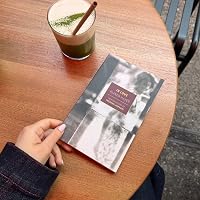
Isaac Babel, Dmitry Shostakovich, and Anna Akhmatova star in this series of portraits of some of the greatest writers, artists, and composers of the twentieth century.
"We stopped and Shklovsky told me / quietly, but clearly, / 'Remember, we are on our way out. / On our way out.' And I recalled / ... the wall of books, / all written by a man / who lived / in times that were hard to bear."
Lev Ozerov’s Portraits Without Frames offers fifty shrewd and moving glimpses into the lives of Soviet writers, composers, and artists caught between the demands of art and politics. Some of the subjects—like Anna Akhmatova, Isaac Babel, Andrey Platonov, and Dmitry Shostakovich—are well-known, others less so. All are evoked with great subtlety and vividness, as is the fraught and dangerous time in which they lived. Composed in free verse of deceptively artless simplicity, Ozerov’s portraits are like nothing else in Russian poetry.
Lev Ozerov (1914–1996) was born Lev Goldberg in Kyiv, Ukraine, then part of the Russian Empire. He began to publish poems in the early 1930s, and as his literary career took off, he adopted a Slavic-sounding pseudonym (from ozero, the Russian word for “lake”), though he never rejected his Jewish roots. Ozerov was a close friend of many prominent Yiddish poets, including Leyb Kvitko and Shmuel Halkin, whose work he translated into Russian. He was also one of the first to write, in both prose and verse, about the Babi Yar massacre in 1941. His commitment to giving voice to the voiceless also found expression in his work as a critic and editor. In 1946, while serving on the staff of the journal October, Ozerov helped the great poet Nikolay Zabolotsky return to print after eight years in the Gulag. Ozerov’s review of a 1958 collection of Anna Akhmatova’s verse broke the so-called “blockade” against her work, and the edition he published of Boris Pasternak’s poems in 1965 marked the beginning of that poet’s slow posthumous rehabilitation after the Zhivago affair of 1957–1958. But perhaps Ozerov’s greatest contribution—as both a poet and an advocate for the unjustly silenced—is his collection Portraits Without Frames, which was published in 1999, three years after his death.
Lev Ozerov is the writer you’d have pen your obituary. He has the eye of the poet and the ear of the musician. And when coupled with his ability to write poignantly about memory, the task of remembrance is placed in studied hands. Ozerov is just that—studied. He wrote Portraits Without Frames later in his life, recalling the artists he knew, some famous, some forgotten to time. But not knowing who the artists are is irrelevant because Ozerov has a way of depicting sorrow, grief, and happiness in such beautiful simplicity. His portraits reflect all the melancholy associated with growing old, suffering loss, and accepting fate. Soviet Russia was not kind to artists who did not submit to the cultural rigors dictated from on high. In fact, it was often deadly. So to say this is a work bereft of sentimentality is an understatement. Because of this approach, Ozerov enriches the reader and reminds us life can be so painful, so beautiful, while our memories strike us differently from the keen observer.
It's appropriate I finished this book today, the day on which Anna Akhmatova died in 1966. She's one of the subjects of Ozerov's Portraits Without Frames. I recognized only a handful of his subjects. I suspect few other than the giants like Isaac Babel or Boris Pasternak or Sergey Prokofiev or Dmitry Shostakovich would be recognized by the general reader of the west. But all are made interesting in these poetic portraits. To me, because they lack lyricism they're poetry in form only, but they're all interesting and loving, making this an appealing overview of Soviet culture in the past century. The overview could easily be the starting point for further inquiry. What the reader recognizes early on and throughout these 50 portraits is that these are artists bound to their art but also needing to live, willingly or reluctantly, with the politics of the state.
Everyone on earth— shepherd or prime minister, stoker or poet— wants to hear the word they have been waiting to hear all their lives. As they grow older, people want to know that their life has not been lived in vain. ---
from Titsian Tabidze
Sometimes, the heart knows when it’s the last time. ---
from Leyb Kvitko
But in times of tyranny wisdom doesn’t save the wise, nor is a child saved by childhood. New times come in the end, though always too late. ---
from Dovid Hofshteyn
"How sweetly sad it is to be a human being!” He did not specify the degree of sweetness and the degree of sadness
I would have enjoyed this more if I was more familiar with the artists that Ozerov was describing. But it does make me more interested in Russian literature and history.
Lev Ozerov's matter-or-fact poems typically contain some narrative of his meeting his subjects --a compendium of Soviet era writers that he came in contact with. Ozerov was clearly a fan or poets and artists of all types, but his life's work was as a translator. It was kind of the perfect cover for someone who wanted to be involved in literature without calling attention to himself. (Similar strategies were employed by many of the Soviet Union's best artists.) He wrote these poems "for the drawer". They weren't collected until after his death. Some of these figures he writes about will likely be well-known to Western readers: Boris Pasternak, Isaac Babel, Vladimir Tatlin, Dimitri Shostakovich, Sergei Prokofiev, etc. But the value is in his poetic portraits of lesser known figures, especially Yiddish poets who were all executed on August 12, 1952, in the "Night of the Murdered Poets."
Did I say "matter-of-fact"? Here's how he concludes his portrait of Yury Olesha: Olesha threw back his head distractedly: "Look--what a starry sky!" And he began to list the stars, which he knew intimately, not only by surname but even by first name.
December 2018 NYRB Book Club Selection Would have probably enjoyed this more, both aesthetically and historically, if I had a grasp on the Russian literary/artistic scene of the 20th century. As it is, I don’t, so I can only appreciate it on its poetic merits which are, at least in this translation, not really what I’m looking for. A weighty project to be sure, but not one I’d plan to revisit without a wealth of background knowledge.
I don't read much poetry, which is my own loss, I know, but there's only so much time in the world, and that's what I've chosen to hold in reserve. But I was attracted to this collection of prose-poems by this Russian writer paying tribute to many of the great artists of the Soviet era.
Now I only know a handful of the artist covered - Boris Pasternak, Shostakovich, Khatchaturian, and Prokofiev - but I was entranced by the ways Ozerov brought all of these writers and painters and sculptors and actors and dancers to life. He captures their creative impulses, their focus, their connection to life itself. Which is incredible, because so many of them - nearly all of them, in fact - came into conflict with the Soviet authorities, who were always changing their minds about what was acceptable in the world of art. Ozerov only writes about the people he met himself, whether before or after their time in the Gulag (or in some cases, their execution by the state - the Yiddish writers were mostly killed all at the same time in 1952). So it is as much about his own phenomenal connection to the arts as it is about the people who made it.
And then, the final poem, about Ozerov's own father, who was not an artist, and didn't understand his urge to write, who died trying to answer a call for help from somebody being robbed on the street. My gosh, it's as if art was the parent taken away from him at too early an age.
Blue blue blue blue blue blue blue. There are so many synonyms and shades of blue that it became maddening to see the word “blue” in almost every poem.
Interesting subject matter and brief history lesson. A very good jumping off point for those who want to explore the world of 20th century Russia but didn’t really know who to start with.
Also, free-form poetry. It’s just sentences broken into seemingly random chunks of text. A point to it I do not see.
I love this book and highly recommend it to anyone who enjoys Russian literature in translation. The collection of poems by Lev Ozerov is arranged according to the person about whom he was writing, whether Russian, Ukrainian or Yiddish poets or musicians, dancers and other artists. The overarching theme of loss touches each of these. Between antisemitism and political purges, many of the poets Ozerov writes of died before they reached old age.