Ο ποιητής, η μούσα κι η επανάσταση. Δυο άνθρωποι. Δυο εραστές. Ένας έρωτας θανάσιμος στη δίνη της ιστορίας. Λέξεις, φαινομενικά αθώες, κρύβουν μέσα τους το πάθος. Λέξεις μαχαίρια, λέξεις σφαίρες, λέξεις πυρακτωμένα έλκη στοχεύουν τον άλλον. Μια σειρά επιστολών μεταξύ των εραστών, μας φανερώνουν τον πόθο, τον έρωτα, τη ζήλια, την έμπνευση, το αναπόδραστο επικείμενο τέλος. Ένας έρωτας που ξεκίνησε με ένα ποίημα και τελείωσε με μια σφαίρα στον κρόταφο
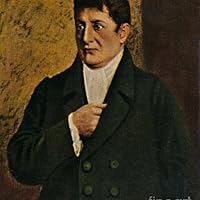
Vladimir Mayakovsky (Владимир Владимирович Маяковский) was born the last of three children in Baghdati, Russian Empire (now in Georgia) where his father worked as a forest ranger. His father was of Ukrainian Cossack descent and his mother was of Ukrainian descent. Although Mayakovsky spoke Georgian at school and with friends, his family spoke primarily Russian at home. At the age of 14 Mayakovsky took part in socialist demonstrations at the town of Kutaisi, where he attended the local grammar school. After the sudden and premature death of his father in 1906, the family — Mayakovsky, his mother, and his two sisters — moved to Moscow, where he attended School No. 5.
In Moscow, Mayakovsky developed a passion for Marxist literature and took part in numerous activities of the Russian Social Democratic Labour Party; he was to later become an RSDLP (Bolshevik) member. In 1908, he was dismissed from the grammar school because his mother was no longer able to afford the tuition fees.
Around this time, Mayakovsky was imprisoned on three occasions for subversive political activities but, being underage, he avoided transportation. During a period of solitary confinement in Butyrka prison in 1909, he began to write poetry, but his poems were confiscated. On his release from prison, he continued working within the socialist movement, and in 1911 he joined the Moscow Art School where he became acquainted with members of the Russian Futurist movement. He became a leading spokesman for the group Gileas (Гилея), and a close friend of David Burlyuk, whom he saw as his mentor.
The 1912 Futurist publication A Slap in the Face of Public Taste (Пощёчина общественному вкусу) contained Mayakovsky's first published poems: Night (Ночь) and Morning (Утро). Because of their political activities, Burlyuk and Mayakovsky were expelled from the Moscow Art School in 1914. His work continued in the Futurist vein until 1914. His artistic development then shifted increasingly in the direction of narrative and it was this work, published during the period immediately preceding the Russian Revolution, which was to establish his reputation as a poet in Russia and abroad.
Mayakovsky was rejected as a volunteer at the beginning of WWI, and during 1915-1917 worked at the Petrograd Military Automobile School as a draftsman. At the onset of the Russian Revolution, Mayakovsky was in Smolny, Petrograd. There he witnessed the October Revolution.
After moving back to Moscow, Mayakovsky worked for the Russian State Telegraph Agency (ROSTA) creating — both graphic and text — satirical Agitprop posters. In 1919, he published his first collection of poems Collected Works 1909-1919 (Все сочиненное Владимиром Маяковским). In the cultural climate of the early Soviet Union, his popularity grew rapidly. As one of the few Soviet writers who were allowed to travel freely, his voyages to Latvia, Britain, Germany, the United States, Mexico and Cuba influenced works like My Discovery of America (Мое открытие Америки, 1925). He also travelled extensively throughout the Soviet Union.
The relevance of Mayakovsky's influence cannot be limited to Soviet poetry. While for years he was considered the Soviet poet par excellence, he also changed the perceptions of poetry in wider 20th century culture. His political activism as a propagandistic agitator was rarely understood and often looked upon unfavourably by contemporaries, even close friends like Boris Pasternak. Near the end of the 1920s, Mayakovsky became increasingly disillusioned with the course the Soviet Union was taking under Joseph Stalin: his satirical plays The Bedbug (Клоп, 1929) and The Bathhouse (Баня, 1930), which deal with the Soviet philistinism and bureaucracy, illustrate this development.
On the evening of April 14, 1930, Mayakovsky shot himself.
Leer las cartas de otro es siempre entrar en su intimidad, pasando a formar parte, casi sin quererlo, de su círculo de amigos más cercano sin que él se percate. Una intromisión, casi un robo. Y poder acercarse así a alguien atrae, y de qué manera. Si además las cartas son de un escritor, el placer aumenta, pues ese alguien es capaz de hacer del medio algo bello.
En este libro se recogen las cartas que Maiakovski mandó a Lili Brik de 1917 a 1930. En ellas el poeta se muestra cariñoso y afable en todo momento. Las cartas contienen tanto información práctica sobre planificación de encuentros con su amada, cuestiones relativas al dinero, instrucciones diversas y referencias a reuniones y compromisos literarios, como la más pura expresión de sus sentimientos hacia Lili, que no son otros, que los propios de un enamorado: nostalgia al no poder estar con ella, quejas porque no le escribe con la frecuencia que a él le gustaría, tedio en ocasiones, y un sinfín de expresiones amorosas acompañadas de dibujos que descubren el lado más tierno del poeta. El tono utilizado, el de un niño venerando a su tesoro más preciado, me recordó a las cartas que Pessoa le escribió a Ofelia Queiroz.
Adoro tanto los compendios de cartas como el género epistolar. La culpa será de mis padres por haberme regalado en su momento el librito de Christine Nöstlinger, Querida Susi, querido Paul y la segunda parte (Diario secreto de Susi y Diario secreto de Paul). Los devoré. Más tarde leí las Cartas a un joven poeta, de Rilke, una lectura imprescindible para todo aquel que pretenda escribir (y de Rilke tengo todavía pendientes las que tienen a Lou Andreas-Salomé como destinataria). El intercambio de correspondencia entre Hesse y Zweig también me resultó más que interesante, pues los amo a los dos. Y de Zweig precisamente es Carta de una desconocida, uno de mis libros favoritos de siempre, aunque aquí sólo se trate de una única misiva. Quiero añadir también Querido Miguel de Natalia Ginzburg. Para cerrar, no me voy sin nombrar las cartas de amor que Kafka dedicó a Milena Jesenká, una auténtica joya.
Por último sólo me queda dar las gracias a Deni de Goodreads quien me descubrió a Maiakovski y sus poemas y me llevó también hasta estas epístolas.
Mil gracias, te sigo los pasos desde el viejo mundo, que de tan viejo es ya decrépito.
pozycja obowiazkowa dla kazdej girlie ktorej facet za szczyt romantyzmu uwaza wyslanie piosenki travisa scotta. pamietajcie zaslugujecie na wiecej - autor udowadnia ze sie da😁
"Io ti amo, ti amo nonostante tutto e grazie a tutto, ti ho amato, ti amo e ti amerò, sia tu dura con me o gentile, mia o di un altro. Comunque ti amerò. Amen. E' ridicolo scrivere queste cose, le sai da sola.[...] Di nuovo parliamo del mio amore. Della famigerata attività. Per me nell'amore si esaurisce forse tutto? Tutto, solo in un altro modo. L'amore è la vita, è la cosa principale. Dall'amore si dispiegano i versi, e le azioni, e tutto il resto. L'amore è il cuore di tutte le cose. Se il cuore interrompe il suo lavoro, anche tutto il resto si atrofizza, diventa superfluo, inutile. Ma se funziona, non può non manifestarsi in ogni cosa. Senza di te (non senza di te 'nella lontananza', interiormente senza di te) io cesso di agire. E' stato sempre così, lo è anche adesso. Ma se non c'è 'attività' io sono morto. Questo vuol forse dire che io potrei essere in qualsiasi modo, pur di 'attaccarmi' a te? No. " Ecco, nelle lettere, tra Vladimir, Lili e Osip, tutto Majakovskij. Tutto. Tutto il suo essere. La sua forza, le sue poesie. I suoi abbracci fino a farti scricchiolare le ossa. Consigliato.
1. "Pour Maïakovski, Lili n'est pas seulement une femme mais une personne" : !!!!!!!! 2. "Si tu ne m'écris rien sur toi, je deviendrai fou." : il est tellement réel !!!!! 3. "Le fameux "Paris au printemps" ne vaut rien, car rien ne fleurit, sauf des travaux dans toutes les rues." / "Malheureusement, je suis à Paris, dont j'ai marre à m'en trouver mal, nauséeux et dégoûté." : he's just like me fr 4. "Embrasse Oska sur la moustache." / "[...] un baiser sur la calvitie d'Oska." / "Un baiser sur la moustache d'Ossik" : GAY ! 5. "Je remarque que je suis devenu un poète terriblement prolétarien : je n'ai pas d'argent et je n'écris pas de vers." : il est tellement moi ???
Par contre : très dommage qu'il n'y ait pas les lettres de Lili, c'est souvent ce qui manque aux correspondances / lettres de façon trop récurrente...
Tobacco smoke has consumed the air. The room is a chapter in Kruchenykh's inferno. Remember - beyond that window in a frenzy I first stroked your hands. You sit here today with an iron-clad heart. Oone more day you'll toss me out, perhaps, cursing. In the dim front hall my arm, broken by trembling won't fit right away in my sleeve. I'll run out, throw my body into the street. I'll rave, wild, lashed by despair. Don't let it happen my dear, my darling, let us part now. After all my love is a heavy weight hanging on you no matter where you go. Let me bellow a final cry of bitter, wounded grievance. If you drive a bull to exhaustion he will run away, lay himself down in the cold waters. Besides your love I have no ocean and your love won't grant even a tearful plea for rest. When a tired elephant wants peace he lies down regally in the firebound sand. Besides your love I have no sun, but I don't even know where you are and with whom. If you tortured a poet like this, he would berate his beloved for money and fame, but for me no sound is joyous but the sound of your beloved name. I won't throw myself downstairs or drink poison nor can I put a gun to my head. No blade holds me transfixed but your glance. Tomorrow you'll forget that I have crowned you, that I burned my flowering soul with love, and the whirling carnival of trivial days will ruffle the pages of my books... Would the dry leaves of my words force you to a stop gasping for air?
At least let me pave with a parting endearment your retreating path.
Los artistas y poetas son más repugnantes que las ostras viscosas y putrefactas. Es una ocupación totalmente degenerada. En un tiempo los industriales fabricaban automóviles para comprar cuadros; ahora los artistas pintan cuadros, sólo para comprarse el automóvil. Para ellos el auto es todo, menos un medio de locomoción. Como medio de locomoción, sin embargo, es insustituible. /
Querida, acuérdate de mí. Besa a Kliost. Dile que no se trepe, yo no me estoy trepando. Todas las mujeres me aman. Todos los hombres me aprecian. Todas las mujeres son pegajosas y aburridas. Todos los hombres son malandrines. Lióva, naturalmente, no es ni hombre, ni mujer. Esto es lo que se llama irse al diablo. O también un poco más allá.
Non posso commentare esaustivamente questa lettura, solo ripensare alla vita di tre persone che si unirono per 15 anni in un legame d'amore, fino al suicidio di uno di loro, di colui che fu Causa e Fine di quello stesso Amore. Certo, è Amore il cuore di tutte le cose.
« si mes affaires, mes nerfs et ma santé continuent à aller de la même façon, ton chtcheniokok va aller rouler, ventre en l’air, dans le ruisseau, et agitant faiblement ses pattes, rendra à Dieu son âme candide »
довлатов был прав: переписка двух глупышей. это вам, конечно, не чехов с его письмами и не чуковский. тем не менее, что-то занимательное выудить удалось. советую только если очень любите маяковского ИЛИ переписки
"La mia vita è in un certo qual modo strana, priva di avvenimenti ma piena di innumerevoli dettagli che non sono materiale per una lettera, li si può solo raccontare disfando le valigie..."
L'apparenza, anche se espressa con quintali di miele e pucciosità varie, può nascondere un lato oscuro...
Majakowski jest bedennie zakochany, jest bystry, utęskniony, kreatywny w uczuciu, a tak daleki od ukochanej w tej korespondencji. Niezwykły obraz świata, po którym się porusza, obraz inteligencji mu współczesnej, ukochanej i ukochanego i tragedia usychającego ducha. Miłość tak silna jak jego jest rzadkością, a ja mogę umierać w spokoju wiedząc że udało mi się jej doświadczyć. Duży uścisk w twoim kierunku Scenie.
نامه های مایاکوفسکی و لی لی بریک بهم دیگه در طی سالهای 1915-30 که از خوندنشون لذت بردم. ضمنا در بخش اول کتاب داستان زندگی این دو نفر و شوهر لی لی و اتفاقاتی که براشون افتاده (همزمان با تولد فوتوریسم در روسیه) و فعالیت های ادبی شون توضیح داده میشه.
Şu an basımı olmayan bu kitabı yine vazgeçilmezim olan site nadirkitap.com'dan aldım. Lili Brik'in Mayakovski'ye cevap mektupları kitapta yer almasa da ne kadar yanıtsız kalan bir aşk ile karşı karşıya olduğumuz apaçık. Mayakovski'nin imza gibi çizdiği köpek resimleri çok tatlıydı :)
Según mis propias observaciones me convertí en un poeta terriblemente proletario: no tengo dinero y no escribo versos. ❤️🩹 Bésalo mucho. En los telegramas no lo hago, porque los telegramas son urgentes, pueden llegar de noche y no quiero molestarlo a esa hora con tonterías.
Los dibujos de perritos y gatitos son muy dulces. Aunque el tipo era un poco bastante obsesivo (que retrata su latente miedo a no ser amado, más que otra cosa), se nota la devoción que tenía por los dos Brik, especialmente por Lili, obviamente. Muy bonito.