See America’s campaign against ISIS through the eyes of the men on the ground.
In this vivid first-person narrative, a Special Operations Joint Terminal Attack Controller (JTAC) and his commanding general give fascinating and detailed accounts of America’s fight against the most barbaric insurgency the world has ever seen.
In the summer of 2014, three years after America’s full troop withdrawal from the Iraq War, President Barack Obama authorized a small task force to push back into Baghdad. Their mission: Protect the Iraqi capital and U.S. embassy from a rapidly emerging terrorist threat.
A plague of brutality, that would come to be known as ISIS, had created a foothold in northwest Iraq and northeast Syria. It had declared itself a Caliphate—an independent nation-state administered by an extreme and cruel form of Islamic law—and was spreading like a newly evolved virus. Soon, a massive and devastating U.S. military response had unfolded.
Hear the ground truth on the senior military and political interactions that shaped America’s war against ISIS, a war unprecedented in both its methodology and its application of modern military technology. Enter the world of the Strike Cell, secretive operations centers where America’s greatest enemies are hunted and killed day and night. Plunge into the realm of the Special Operations JTAC, American warfighters with the highest enemy kill counts on the battlefield. And gain the wisdom of a cumulative half-century of military experience as Dana Pittard and Wes Bryant lay out the path to a sustained victory over ISIS.
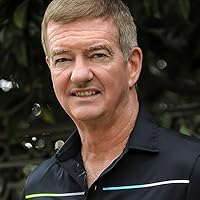
Wes J. Bryant retired from the U.S. Air Force in 2018 at the rank of Master Sergeant after twenty years of active duty service. Embedded with Special Forces teams under a Navy SEAL task force, Wes was the tactical lead for a contingent of special operations JTACs to first set foot in Iraq to stop ISIS. As the senior enlisted JTAC to establish the BIAP Strike Cell, Bryant coordinated and controlled the first airstrikes against ISIS in the Baghdad region. He later deployed as the senior Special Tactics JTAC for special operations task forces hunting ISIS in Syria and Afghanistan.
Wes earned a bachelor’s in Asian Studies from the University of Maryland University College. He’s been a lifelong writer, amateur philosopher, and an avid student of the martial arts. He currently pursues writing and editing and teaches Chinese Kung Fu and Tai Chi in his community in North Carolina, where he lives with his wife, Katie, and their two daughters.
General Pittard and his co-author, Wes J. Bryant, who was the senior enlisted coordinator and controller of U.S. airstrikes against ISIS in Iraq, Syria and Afghanistan over the years 2011 to 2017, make a unique contribution with their book. This book is an account of the air campaign against ISIS after the terrorist organization expanded to its greatest extent, a campaign which played a decisive role in pushing ISIS close to extinction. Written in military language (lots of acronyms), the book vividly describes a number of battles against ISIS targets that reflect the extraordinary effectiveness of air power. Great emphasis is given to the care taken to avoid collateral damage, and the complicated and sometimes bureaucratic procedure for clearing air strikes on targets. Political heads come in for criticism from the viewpoint of the fighting soldier - on the front line or in command positions - and the lack of a coherent strategy by the U.S. in Syria. The war against ISIS by the U.S. was in effect a grand tactical operation, which changed the military environment in Iraq and Syria, but not in Afghanistan against the Taliban or the local ISIS faction. In labelling the campaign as a fight against terrorism, U.S. leaders got away with never articulating a clear objective and thus never devising a strategy that would lead to durable political solutions. Today, Syria is under the Russian umbrella, Iraq is deeply penetrated by Iran, and in Afghanistan, fundamentalist Islamic zealots have blunted American attempts at winning a 19 year old war. The soldiers, marines, sailors and airmen who fought for America during those years performed magnificently, but in the end, the American people received far less than the sacrifice of their sons and daughters justified.
In short, might be the finest war memoir I have read. In long...please read below.
First, about the book itself. This is the first book military memoir type book that captures both the Senior Officer's and Senior Non-Commissioned Officer's perspective--(think Sergeants and Generals to the civilians out there) and it was absolutely brilliant. In officer candidate school, one of my TACs said (24 years ago, so probably a bit more my language than his at this point), "Gentlemen, there is a difference between the Commander's and his Senior Non-Com's perspective. It might be summarized best as (Officer) Mission First, Men Always. The NCO's perspective is Men Always, Mission First."
My understanding now, after being an NCO and a Commander is what I would describe as the friction that creates the best Coarse of Action. There are times when my NCO and I would go to the mat about an idea I had--and from that respectful arm-wrestling/wrangling--everything is taken care of with aplomb. The O cannot see everything, nor understand what all his men are feeling (as much as he/she may try), but it is unlikely they have had their PT shorts stolen from the dryer while trying to race out to formation. The NCOs, suffer similar myopias. Just because the Commander isn't doing the actual PMCS on a vehicle, doesn't mean he is loafing. Orders production and MDMP are rigorous, painful planning processes which take as much energy as any physical demands the Soldier may experience.
This book captures some of that friction brilliantly. Wes's frustration and sometimes disdain for the senior officers' decisions are palpable, and understandable--and yet with MG Pittard's perspective one can truly appreciate the immense pressure command truly holds. It breaks many people.
One of the beliefs that was profoundly confirmed in this book is: Character = Leadership. It also confirms the selection of, and training/molding the US Army implements for USMA and promotion to General Officer. I have never met MG Pittard, but after listening to the book I'd follow him straight to hell if needed. It was his character that enabled the coalition (middle Eastern, not our NATO friends) to decide to fight, stop infighting with each other (Iraqi/Kurds for example) and turn the tide against ISIS. His character is also revealed in how he fought for his men in theater with senior officers and politicians to support the fight--and if the decision was still against what he wanted, he saluted and executed. That is Leadership. All good leaders are also able and willing followers.
Wes's (no offense, but I can never remember the AF ranks, and need to get this review done before I forget...) leadership style is indicative of the NCO style. It is more raw. Generally contains a few more f-bombs than the Commander's language--but it is the language of the Soldier. It is real. It is deeply, movingly dedicated to helping his brothers. He loses his shit when he sees his men in danger--to the point of nearly disobeying orders. Those feelings are real and justified.
Lastly, I want to tie this back to some insights this book gave me. Most of it is during the Obama administration, which, in from my perspective was an absolute TRAIN WRECK in foreign policy. To leave Iraq in 2011 was criminally negligent, and cost so many lives by enabling the genesis of ISIS. I felt this while in uniform, and believe it to this day.
HOWEVER, something that occurred to me as my self-righteous indignation began to surface again and again during this listen--I have to remember the economic disaster our country faced; the very, very heated disdain for the Iraq war, and the very real domestic issues our country faced. Wes does a very admirable job of pointing out how Trump's policies were just as inchoate. What occurred to me is the anger I felt towards the Obama Administration may be the same anger other constituencies who may feel unheard and unseen. Obama put those constituents before mine. Who is right? Who is wrong? Both of us.
Get's me back to the friction of a stellar command team, and maybe a thought about how we choose our political leaders. When we first elected the President and Vice President (I think..this is like 5th grade history), the losing candidate became the Vice. Maybe that is how we should choose our leaders.
One side/one man can be 100% wrong all by himself. Totally. However, it is IMPOSSIBLE to be 100% correct without having a respectful, sometimes fractious, friction-filled discussion/arguement about how to move forward. We cannot see/feel/understand everyone's perspective, and these blindspots are dangerous. People get hurt. People get left behind. We need the warrior/hunter to go outside the wire to protect the tribe. This guy isn't ever really thinking about how to equally distribute the spoils. Not that he's evil, he mind is simply focused elsewhere--protection, defense, food. Inside the wire, equally important problems are being solved. How to distribute the tribe's resources, the welfare of the sick or enfeebled. We need both.
There are 33 flavors, but it's all made from milk. We need to get back to the milk. bsn
An in-depth read of our struggles against ISIS. The author's are both decorated military heroes, who have given years of their lives in this war. The book covers the rise of ISIS, and the forming of the "strike cell" to fight it. The author's provide an excellent look into the complexities of Middle East politics. And of our own country's administration's, without a better word to describe it, "meddling". The book describes several encounters where they were forced to stand by and watch ISIS commit horrible acts, and all because of our President's inability to act quickly. So many times the military had there hands tied, because of seemingly arbitrary rules against acting. Think how frustrating it must have been to watch an ISIS gathering of 600 fighters, and be unable to attack because the gathering was 5 kilometers outside the area the administration randomly designated! The book left me with a deep feeling of frustration. I understand that there are political issues that lead the governments actions, but the meddling and fumbling is causing the deaths of our soldiers, as well as untold number of Middle Eastern civilians. Either let the military do it's job, or admit that the battle has been lost and bring our soldiers home!
This is an intense read. I have read other books about ISIS as well as watched multiple documentaries. General Pittard and JTAC Wes Bryant are both honorable soldiers. They both conveyed their displeasure of politics both in and out of the Middle East with this battle. Cohesiveness of the many militia in Iraq wasn’t there then as it is not there now.
The book begins with President Obama still in office and the plan to withdraw from Iraq. It is difficult to read about ISIS’s slaughter of innocent people. Our forces often found themselves watching without being able to act. There is discussion of the consequences of withdrawing from Iraq. The complexity of the military operation in the Middle East is mind boggling. I did have some trouble remembering military acronyms without going back to review. There is discussion of the Taliban’s resurgence and the continued battle about terrorism. President Trump’s declaration of ISIS being defeated is only briefly mentioned which feels appropriate. This battle is far from over and the Middle East is far from healed. I agree with the authors that this struggle is complex and never ending.
Authors, Dana Pittard and Wes Bryant do an outstanding job of illuminating all of the ins and outs of the war against ISIS in their new book: “Hunting the Caliphate: America’s War on ISIS and the Dawn of the Strike Cell.” Written from the wartime perspectives of a General officer in Pittard; and a JTAC, Wes Bryant, I thoroughly enjoyed and was enthralled in the way they traded off chapters to give their perspective on the events occurring during a major conflict. Their synopses, timelines and minute details captured me and my attention from the onset. Having deployed to the region a few times during my 25-year USAF career, I can attest to the accuracy of events portrayed in the book and appreciate their time and effort in bringing our war operation against ISIS to light. This book is written for all; however, it is a must read for any veteran who has served, especially those who have served in the past 20 years. I highly recommend “Hunting the Caliphate: America’s War on ISIS and the Dawn of the Strike Cell and hope you order your copy today.
This book is a compelling and fascinating account of America's- and the Middle East's- war on Isis. It hooks you from the first chapter and leads you through all the frustrations and "wins" the authors went through to bring down an extremely dangerous adversary. It fascinates how two such disparate writers can create a book that reads so smoothly and richly. If you want to understand a bit more about what's happening in Syria right now, this is a must read. For everyone else, it is a particularly gritty and honest account of what happens on the ground when our military puts their minds to stopping Terror.
Not what I was hoping for. The book didn't deliver on its boastful (and terribly mistaken) premise of being "the first book written by a JTAC". Both the general, as the "most senior enlisted special operator JTAC" didn't show the modesty and generosity I'm used to in such a backward-looking memoirs. 2 stars for the insights on how air strikes are being even more centralized with JTAC's in desks, removed from the ground and its commander, much like Stateside drone pilots.
First book I've read on the war against Islamic State. It was written by an Army General and an Air Force sergeant who both worked out of a strike cell providing air support to a wide variety of forces opposing IS. The Obama administration's policies were not highly regarded, especially after strike cell troops watched a massacre of about eighty men, but were refused permission to intervene (after the women and children were taken into slavery).
A good book for civilians who have no idea how coalition air strikes assist in the fight against ISIS. The book is mainly a recollection of the exploits and opinions of the authors and is entertaining. Military members looking for a more in depth analysis of the war against ISIS and strike cells may want to look elsewhere.
This is a no nonsense story of the people behind the scenes of the war on TERROR and USIS in particular. An example of military history written by the people who made it.
Me es inevitable comparar este libro con otro que leí inmediatamente después: Guerra. Por lances de la vida, he querido entender un poco más el backstage de la vida de los soldados, de la guerra, de las decisiones que se toman desde los despachos.
El libro "Guerra" refleja la vida casi día a día de un puñado de hombres en las montañas de Afganistán. Esta obra, en cambio, es un relato de las decisiones militares y políticas que se tomaron para pelear contra el ISIS. Cada capítulo tiene al final los links a las noticias de los periódicos que recogen lo que se cuenta en cada capítulo. Las alianzas con los kurdos, los ataques frustrados o exitosos contra el ISIS, la recuperación de alguna ciudad, las negociaciones de paz...
Es un libro con una panorámica general de la guerra, la guerra contada como un documental detallado. Los autores son dos militares que vivieron destinados en esa región, tomando decisiones desde los despachos en parte. Me ha gustado, he entendido cosas: no podemos emplear un dron Washington no nos ha dado permiso Teníamos al teléfono continuamente a los abogados militares. Sin su aprobación, no podíamos mover un dedo.
Sobre todo ha sido un libro para aprender y entender unas cosas. Irremediablemente, al compararlo con Guerra, de Sebastian Junger, esta obra se lleva 3 estrellas.
Extremely engaging and well written. However, does not delve into nearly as much detail as one would hope being written by a JTAC. It would be remiss not to point out that the JTAC, Wes, wrote this book from his point of view in a CP. Still an excellent read and our recent history - but mainly detailing the set up of a targeting enterprise and the maneuvering / challenges that imposed.