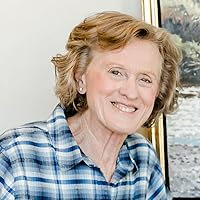
Abby Ellin is an American author and journalist. The author of two books, including Duped: Double Lives, False Identities, and the Con Man I Almost Married, she writes regularly for the New York Times, and has contributed to Time, Newsweek, and The Daily Beast, among other publications.
Ellin grew up in Brookline, Massachusetts, and attended Brookline High School. She holds a BS in Communications from Ithaca College, an MFA in Creative Writing from Emerson College, and a Masters in International Public Policy from Johns Hopkins University.[
"He who permits himself to tell a lie once, finds it much easier to do it a second time and third time till at length it becomes habitual." - Thomas Jefferson
Abby Ellin was duped by a man called "The Commander". He told her that he was a doctor with a secret job, he worked for the government and could not give her details about what his job ensued. He went on secret missions and sent her back amazing photos of his time fighting espionage overseas. The only problem, he was not who he said he was, the photos were not his own and she believed his lies hook line and sinker...until one day she didn't. She noted that "his stories were so ludicrous they had to be true." She believed him but then started seeing things that did not add up. Then she began to slowly learn the truth and the depth of his deception. After learning the truth, Abby, a journalist wrote about her experiences in an article published in Psychology Today (July 2015 magazine). After that article she was contacted by numerous individuals who had also been duped.
This book details her experiences along with those of others. Abby notes how lying is learned. She details how children hear their parents lying to friends on the phone (the old sorry, I'm not feeling well, I can't make it today when in fact said parent just wants to stay home and binge watch Netflix), parents also tell their children to say that like gifts that they do not, to not tell someone they think they are overweight, to tell lies so as not to hurt someone's feelings, etc. Children grow up with tales about Pinocchio and what happens when you tell a lie and yet they see lying all the time. The Author even shares how she went out and purchased a 2.5 carat cubic zirconia ring to use as her engagement ring, letting people think the commander bought her a diamond. She was in fact duping her friends and relatives with her fake ring.
So why do people lie? According to David J. Ley, PhD people lie for six reasons 1.The lie does matter....to them 2.Telling the truth feels like giving up control 3.They do not want to disappoint you. 4. Lies Snowball 5. It's not a lie to "them" 6. They "want' it to be true. Here is a link to that article also published in Psychology today: https://www.psychologytoday.com/us/bl...
The Author also shares how no one really knows what it feels like to be duped unless one has gone through the same thing. "They don't understand what it's like to believe in someone and be utterly, completely mistaken. To discover that the person closest to you is actively working against you. One of the main reasons to be in a relationship is to have someone who's got your back. That was a large part of the Commander's appeal: he was on my team. Except, of course, he wasn't."
How do people pull off having two families? What I really want to know is how do they afford it, I mean seriously.... two families, two homes, kids, bills, it boggles my mind. Then there are those like the Commander who lied all the time, saying he was a spy, he was involved in secret missions.... why???? why lie? Was it to give himself a sense of importance? Did he have a driving need to impress others? Was it to cover his tracks and explain why he needed to be gone so he could date another woman?
The Author delves into lies and is very matter of fact and does not come off as bitter or angry about how she herself was duped. She details lies, why people are willing to believe lies, and how it feels to be duped. Pathological lying is not a clinical diagnosis although there are those who may wish it was. Ever meet someone who lies all the time that you begin to wonder what is real and what is the truth?
So who gets duped? "Almost all of them were smart and accomplished; most had master's degrees and impressive careers." Most are extroverts. Most are agreeable people. "One of the traits under agreeableness is always believing the best in human nature." People want to believe that the people in their lives are honest, they naturally want to give others the benefit of the doubt.
I found this book to be interesting and an easy read. I appreciated that she was matter of fact and even humorous at times. As I stated earlier, she does not come off as angry or bitter, but wants to share her story and the others in this book to shed light on this issue and how those are duped.
Thank you to Perseus Books and NetGalley who provided me with a copy of this book in exchange for an honest review. Read all my reviews at www.openbookpost.com
Duped: Double Lives, False Identities, and the Con Man I Almost Married
After the author, a writer who considers herself pretty savvy when it comes to people, finds that she’s been totally conned in her personal relationship, she decides to write a book about that experience and more. She tells what happened with “The Commander” as she called him, a doctor who was a Marine and took off all over doing deeds of good at a moment’s notice. All top secret and hush-hush, of course. She had a healthy skepticism but continued seeing him and got sucked in and they got engaged and moved in together.
Then it got harder to ignore the things that didn’t add up. Eventually, the situation blew itself up and they split up after his stories became a bit too much. But the book is done with that in the first little bit and goes on much longer about double lives and people who deceive and live falsely. I rather expected more of a story about her being duped I suppose. I didn’t realize the relationship was so short lived. Just so you know, it’s more about other people than just the man who tricked her. My thanks for the advance electronic copy that was provided by NetGalley, author Abby Ellin, and the publisher for my fair review.
I was listening to this as everything about AJ Finn/Dan Mallory came to the surface and couldn't stop thinking "of course."
Ellin's story begins with being duped by a man called The Commander. He seemed too good to be true and, ultimately, he was. He played her, as well as numerous women before her, and that's where the book gets really great. Ellin digs into what makes some people choose to develop false identities and what it is that makes others believe it.
I admit to being someone who is extremely intuitive about others. I get a feeling and am right nearly every time. But I have thought a lot about people who don't have that radar and what it is that helped me develop it. Ellin posits that it's learned and developed, which for me, makes sense (grow up in a family with unreliable folks and learn to spot those traits -- if you don't grow up with that, then chances are you don't NEED to develop those traits).
Complainers about this book have done so because "politics." Of course Ellin talks about why people would believe someone like 45 and why he's maintained support, despite being a liar. It's part of her research and it's done well.
Totally fascinating and engaging. The audiobook is performed really well. For readers who like true crime without blood, while this book doesn't focus on a specific crime, it does dig into criminality of falsehoods and likely would be a perfect reading fit.
If you're intuitive when it comes to people, you really don't need to read this. In fact, reading it may be a bit painful for you, as it was for me.
First, the good: this book gathers a lot of interesting stories about people duped financially, romantically, and otherwise. Tbh, it was kind of like reading a gossip rag and I love me a gossip rag. The one story about a girl's bestie faking cancer for 5 years had me on the edge of my chair. The writing style was polished yet casual, which I really liked.
The bad: there wasn't much of anything that was "new." Bernie Madoff and a lot of the stories were old and tired. Nothing we haven't seen analyzed before. Aside from her personal accounts, it was practically just a bibliography of other sources.
The ugly: This woman. THIS WOMAN. The thread that runs through the book is her being duped by a fiance. Then, she is duped by another significant other. I am not here to hate on her for getting duped; a lot of people have poor judge of character and I feel for them. The difference? Most know it or at minimum accept it. Ellin would NOT shut up about how she is totally NOT someone this would happen to, and she is like SUCH a fact checker, and SO TOTALLY SKEPTICAL. It was obnoxious, and once she introduced the second dupe I realized that this book was simply an output of the years of googling she did to try and make herself feel better about her horrible judgement and endless string of mistakes.
Wow, a book about dupers, and liars, what's not to like!? A very interesting subject that the Liberal author could not resist using to make multiple digs at the current administration in D.C. I was willing to forgive the first time right at the beginning of the book, and then the second time a few pages later, but it wore thin after a while. If I'd wanted to read a political book skewering Donald Trump, then I would have sought one out. I really dislike it when authors do this. Why alienate one-half of your readers? Casting my complaints aside, I did enjoy all the information about duping and how such emotional betrayals affect your life.
Thank you to NetGalley and Hachette Book Group for proving me with a copy to review.
Surprisingly captivating! This book had me turning the pages well after midnight and well after my eyes wanted to close. The author tells the stories of duplicitous individuals in a fascinating and engaging manner. I was hooked form page one. I appreciated the scientific anecdotes alongside the enthralling narratives. Five stars.
Pure garbage. I wanted to finish just be done with it, but had to give up less than half-way through. I don't like to be angry about how badly something is written. If you don't have anything to say, don't say anything.
This book is a bit all over the place, but somehow never actually finishes getting to a place.
It begins with author Abby Ellin telling us about the time she spent dating and then engaged to a man who lied a lot. Grandiose lies like that he was a top government Navy SEAL, CIA military doctor who helped capture bin Laden, and smaller, but perhaps more important ones, like not revealing that he was engaged to another woman while with Ellin! She found herself questioning her sanity while with him. While there were signs the whole time, tales that didn’t add up, they were already engaged and living together by the time she decided she couldn’t take it, and spent the months after they broke up trying to piece together what was real and what wasn’t. This part of the book was wild, very interesting, but also frustrating to read. Are we really just believing everything men say? Even when it doesn’t make sense? And then we move in with them? Babe…
After going through all this mental manipulation, feeling angry and ashamed, Ellin decided to explore different facets of dishonesty, infidelity, leading a double life, etc. This research comprises the rest of the book, the majority of it.
This latter section of the book was at times interesting, but felt uneven and incomplete – she interviewed Peter Daniel Young, a man who lived in hiding under fake names for 7 years after being wanted for releasing animals from fur farms (something I noticed: she didn’t mention the reason he got caught was for shoplifting). Ellin writes about men and women who had second families (or thirds, like Charles Lindbergh), committed tax fraud, were straight up double agents (Kim Philby! Fascinating! But she barely discussed him), and the emotional impact on those they lied to. She discusses research on who lies more, men or women, and how they often lie for different reasons. The book briefly discusses how people who get taken advantage of in dishonesty – in Ponzi schemes, abusive relationships, everyday scams- are often blamed themselves. She touches on how many people lie all the time, little white lies (“How are you?” “I’m good”), but how, at some point, a lie becomes “bad.” But when does a lie become bad?
It would have been interesting to explore when lies become unfair, but the book never made it that far. It would have been interesting if she’d discussed social influences that lead us to lie or believe lies - believing what a prospective romantic partner tells us even if it’s not adding up, because of the social pressure to partner - but she didn’t. I also think her short discussions on gender could have been its own book, but instead it was a chapter. While I was reading it friends would ask me what it was about, and I would struggle a bit to explain it. Then, when I finished it, I was actually surprised. It didn’t felt like it had come to a natural end. I was still waiting for…the point. This book covers a lot of ground, but not well. It doesn’t seem focused. I believe if every chapter focused on one topic related to the larger theme of “dishonesty,” using one case study as a means of discussion, this book would have worked a lot better. Instead it felt like reading a research paper by a student who doesn’t understand synthesizing vs. summarizing, so instead they just wrote down everything related to the topic they could find.
Ellin references a lot of studies and other books on different facets of dishonesty – in abusive relationships, infidelity, major finance scams, etc. – and at some point I wished I was just reading those works instead of this watered-down, meandering one. I did enjoy it, and it was useful for finding other writing on a topic that I think is very relevant to anyone interested in living, working, loving…it seems practicing dishonesty is very human, as is valuing honesty.
I don’t think this book was marketed accurately, since, judging by the title and description, one assumes it will be mostly about her ex-fiancé. Instead it’s this unfocused collection of research and cases. To be fair, it would be hard to market this book accurately, since it’s hard to pin down what it’s even about! But overall, it wasn’t bad! Maybe not good, but not bad.
Loads of case studies and extensive research, but at the end of each chapter I couldn’t really say what point she was making because there were so many it all became too much. Disappointing.
True Crime Memoir For Social Science Fans (TW suicide/ rape/ briefly mentions cases with pedophile)
I love true crime memoirs–any memoir especially where the author just bares all–and have always loved social science so this hit a lot of yeses for me. Abby Ellin was basically duped by a conman and she tells her story here–interestingly enough, the two things I thought should have been the biggest red flags were actually the things he wasn’t lying about. She then also looks into why people lie, con, cheat, sociopaths, and those who fall victim. It’s a book that is very easy to judge and say, “Well, you should have known better,” or “I would never have fallen for that,” but that’s the whole point of the book–why do we blame the victims? And is it better to live life assuming everyone is out to get you or to have faith that they aren’t? I also found myself thinking about how victims are chosen and how someone who wants to be, and feels they need to be, loved can make easier marks, and how predators know this. I felt like this had a good balance between her story and accessible social science that the book works well for most readers–and I recommend going with the audiobook if you have the option.
Author Abby Ellin starts off her book by telling the story of how she almost married a con man in the Navy. Apparently all her investigative journalism skills were in hibernation during the time she dated and was engaged to the man; since he told her story after story that made him sound like a superhero and a secret agent. Yes, she had doubts, doubts that were shouted out by "lonliness, desire, compromise, love, his Big Life and his upstandingness". Not trying to be overly suspicious here, but yeah, sure. One wonders if it was actually that the author preferred fantasy lives over everyday real lives, or that she knew early on that being engaged to a con artist would make a good first-person story about being duped.
Nevertheless, the book gets worse. Ms. Ellin then goes on to propose that everyone lies and everyone can be conned. She apparently lies all the time about "little things", without recognizing one can answer questions in a truthful manner without hurting the feelings of others, without telling a downright lie. When she states her friends see her "as being honest to a fault", one has to wonder about her friends. Actually, it was a story about one of her friends on page 60 something that made me cease reading the book. Sorry, when I read a book about liars and con artists, I want it to be written by an author who has a more traditional and less tainted view of honesty.
(Note: I received a free ARC of this book from Amazon Vine.)
So disappointing! This is a pseudo- scientific study to validate how the author fell prey to a second-rate con man and repeated this gullible trend with a second man shortly thereafter. She draws on an endless grocery list of liars, swindlers, and sociopaths through history- even resorting to the character switch in "A Tale of Two Cities". While she attempts to interject some humor, it simply doesn't mask her bitterness and obsessed train of thought. Ultimately, she sounds like a superficial, vindictive, and unfulfilled chick bent on justifying her poor life choices.
Abby Ellin explores the reality of the pathological liar in our society in all it's permutations. She was involved in 2010 with the Commander, a man who boasted of CIA links, covert missions, and links to famous people. As a woman who was married to a pathological liar, I could readily relate to her bewilderment at being duped - these liars are eminently persuasive. The book is fascinating- exploring the concept on a personal, and then historical level.
Ellin undertook to study liars and the people who are taken in by the lies and did so because of two relationships with liars. As a journalist, Ellin felt that she had a well developed sense of lie versus truth, and wanted to understand what, if anything in her, allowed her to be duped.
The problem is the dichotomy in her approach--part scholarly, with footnotes, and part anecdotal, with the f-bomb marking seriousness.
This isn’t a memoir but rather a study of human nature, and I found it completely engrossing. Ellin, an engaging writer, is able to merge raw reflections and science into something I truly wanted to read.
Changed my mind about reading this after about 9 reviews I can see that the author is an idiot! Too bad she got sucked in but con artists are out there preying on everyone. Be careful.
So I found out that I've got a perfect personality to get duped. Frankly, it's just my introversion and luck that I haven't. Hiding under the bed now....
I'm a little surprised that the star ratings for this aren't higher. I really enjoyed this. I think maybe it was a good match for my interests. Psych majors and students of sociology will find the research studies Abby Ellin shares interesting. I would have liked to have had a hard copy to make notes on. I listened to the audio version and the narration was great. I did laugh at the multiple negative reviews left on audible by Trump supporters. He is mentioned in this book and if you believe what he has to say then this book isn't for you.
3.5 stars. Really interesting look at lying liars who lie. It's crazy to think about the people around us who are living in a puddle of lies. I knew a woman in college who was a compulsive liar, but luckily I wasn't in close enough range to suffer from it. Ellin tells about her ex-fiance who told so many lies (about his job, his family, his relationships, his OTHER FIANCEE, etc) that it's not surprising that it unraveled. We like to tell ourselves we'd be smarter and less gullible, but that's not necessarily so. It's easier to live life trusting people than it is to be supremely skeptical.
This wasn't a book that was amazingly written or unmissable, just a well written story about something that touches each of our lives. Very interesting and timely.
First off, massive kudos to Abby Ellin, her agent, and her publicity team. This book had a huge release and is inescapable! It was reviewed in every newspaper from the venerable New York Times to the lurid Daily Sun. It already has 6 pages of reviews here on Goodreads. I am thrilled to have been able to borrow it from my library, see it for myself, with no further sacrifice than a few hours' time.
The book itself...is..ironically...not what you'd think. The story that hooked us in the publicity reviews , is told in slightly more detail in the first chapter. The rest of the book is a treatise on liars and those who believe them.
I would have really loved to read about Ellin, how on earth she could have possibly believed "The Commander"( and why NOT name him, after the public embarrassment he caused her)? A bright, savvy, professional fact checking writer, with an impressive designer education. Was she completely passive in the relationship? My question remains unanswered.
Ms. Ellin spills a lot of ink assuring us that she is not "like that", and I don't blame her for wanting to shake off the feeling of being gullible. But, as we learned in the newspaper articles (this isn't a spoiler), she purchased her own engagement ring. She said it cost $50 and passed it off to save face with her friends. I am no expert in gemology, but I do know that it would be impossible to create an attractive setting for even a piece of beach glass for $50, let alone including a decent quality lab created diamond as she described. So, we know that the author is not above a little duping herself.
She also describes a gift of pearls that Faux Fiance identifies as Mikimoto (value: approx $10k). She calls BS, knowing that Mikimoto pearls would be hallmarked. She then refers to the pearls as "fake", but are they totally fake? Plastic? (value $9.99), or are they real pearls which would actually be a pretty nice gift, with a value of $1 -$2k. Everyone, especially a savvy, google-enabled reporter, would know that an amateur can easily identify fake pearls immediately by touching them to your teeth (and there are a few other easy home tests). So, how gullible was she? How far did Faux Fiance go to orchestrate the charade; how much was Ellin willing to overlook, and why?
I would have really loved to delve into this aspect, I could have read an entire book on the nuances of that. But it isn't. It's a bunch more chapters, anecdotes on others who have committed identity fraud, physiology and psychology of lying...........oh, sorry, did I doze off there for a moment?
Again, props to the publicity team that got this book out there. Each chapter in itself is well written, but they don't go together to create any sort of compelling, larger story. Super huge props to New York Public Library, which enables me to read anything on a whim and not feel "duped" for having spent the money on it.
If you are willing to trust people, enjoy seeing the good in everyone, and have been taken advantage of more than you care to admit, read this book immediately. It will open your eyes and save you a lifetime of harsh, expensive, gut wrenching pain and misery. I promise.
The first chapter is like a beautiful yet touching New Yorker story about a con artist and the methods he uses to inflict the author into becoming untrusting of her own usually strong judgment. It's a perfect story of how a strong woman can become gaslit and under the control of a liar. If you read nothing else, read this first chapter. It's the best description of what it feels like to become duped. People think that just because you are strong, you would never be taken advantage of but in my experience, controlling men were attracted to me. I was a challenge. My weak friends found weak boyfriends, weak husbands: follow-the-rules types who did just that. The author writes this in such a compelling voice that I was hooked from the first few pages, even though I didn't think I'd be interested. Quite the opposite.
The remainder of the book is filled, actually crammed with such incredible research and studies to explain the phenomenon of being taken advantage of, of being lied to, of being gaslit, of being conned that it's better than counseling. Or graduate level courses (at least some). Weaving through this incredible evidence and information and investigation is the story of the consequences of being duped, of living through the trauma, of surviving and thriving past being trusting of someone you thought had your best interests at heart, of someone you would have called your husband. And this story is what really stabs your heart, if you have one. If you don't you are probably not the target audience for this book.
Duped was sometimes interesting, usually depressing, and definitely made my skin crawl. That being said, I found the author pretty unlikable - maybe it was her slightly-off delivery of "snark" or "sarcasm" at times, maybe it was her superficiality and unnecessary need to comment on people's looks at every turn, maybe it was her constant string of poor life choices (seriously, girlfriend needs to engage in some serious self-reflection and STOP hooking up with "separated" dudes). And while I appreciated that she included scientific info from studies to back up her assertions, they were just kind of dropped in willy nilly without a lot of explanation, so it made the book seem a bit disorganized and repetitive.
A lot of really interesting info in this book, especially for writers who might be thinking about a duplicitous character or plotline. The author also shares her personal story; it's both hard to believe and totally plausible. Kind of scary how many liars are out there. I'd read a similar book a few years back, but it was nice to have the refresher on the content. I'll be a little more suspicious these days!
Excellent book. If you’re interested in this subject matter, you’ll love it. You’ll learn some very interesting things. Ex: I didn’t know that gaslighting is illegal in England. I also learned about affinity fraud. This was a fascinating read. Author Abby is the type of person I want to be friends with.