

What do you think?

Fünf Deutschland und ein Leben
In diesem Buch, einer einzigartigen Verbindung aus Erinnerung und Geschichtsschreibung, betrachtet der große Historiker und Friedenspreisträger Fritz Stern die Frage durch das Prisma seines eigenen Lebens. Er verwebt historische Meistererzählung, scharfsinnige Analysen und dramatische Episoden seiner Lebensgeschichte zu einem unvergeßlichen Portrait jener fünf Deutschland, die er selbst miterlebt hat: Weimar, das „Dritte Reich“, Bundesrepublik und DDR, das vereinigte Deutschland nach 1989.
675 pages, Hardcover
First published January 1, 2006
About the author
Fritz Stern
33 books35 followersFritz Richard Stern was born in Breslau, Silesia, to prominent parents: his father, Rudolf Stern, a physician and medical researcher, and his mother, Käthe Brieger Stern, a noted theorist and reformer in the education of young children. After converting from Judaism to Lutheran Protestantism in the 1890s, his family emigrated to the United States in 1938, forced to leave by the virulently anti-Jewish policies of Adolf Hitler's National Socialist government and increasing violence against all Germans of Jewish ancestry. The family settled in New York City where Stern attended Columbia University from which he received his bachelors, masters and PhD. From 1953 to 1997, he was a professor at Columbia, obtaining the eminent Seth Low Chair before attaining the rank of University Professor.
Much of Stern's work tracks the development of the rise of National Socialism in Germany, tracing that the origins of Nazism back to the 19th century völkische movement. In Stern's opinion, the virulently anti-Semitic völkische movement was the result of the "politics of cultural despair" experienced by German intellectuals who were unable to come to grips with modernity. He rejects the Sonderweg interpretation of German history which considers Germany to have followed a unique course from aristocracy into democracy distinct from other European countries. In the 1990s, Stern was a leading critic of the controversial American author Daniel Goldhagen, whose book Hitler's Willing Executioners he denounced as unscholarly and full of Germanophobia.
Another major area of research for Stern has been the history of the Jewish community in Germany and how Jewish and German cultures have influenced each other -- what Stern has often called the "Jewish-German symbiosis," the best examplar of which was Albert Einstein.
Much of Stern's work tracks the development of the rise of National Socialism in Germany, tracing that the origins of Nazism back to the 19th century völkische movement. In Stern's opinion, the virulently anti-Semitic völkische movement was the result of the "politics of cultural despair" experienced by German intellectuals who were unable to come to grips with modernity. He rejects the Sonderweg interpretation of German history which considers Germany to have followed a unique course from aristocracy into democracy distinct from other European countries. In the 1990s, Stern was a leading critic of the controversial American author Daniel Goldhagen, whose book Hitler's Willing Executioners he denounced as unscholarly and full of Germanophobia.
Another major area of research for Stern has been the history of the Jewish community in Germany and how Jewish and German cultures have influenced each other -- what Stern has often called the "Jewish-German symbiosis," the best examplar of which was Albert Einstein.
Ratings & Reviews
Friends & Following
Create a free account to discover what your friends think of this book!
Community Reviews
Displaying 1 - 30 of 50 reviews

March 7, 2014
“Es ist vollbracht.” (It is accomplished!) I have finally finished reading this book that I have been gnawing on for four months. Why did I read all 511 pages of annoying fine print that my 75-year-old astigmatic eyes had severe trouble to cope with? Why did I chew and re-chew all these complicated constructed tapeworm sentences containing words I had never heard or seen before? Why did I take the trouble to look up these words, only to find many of these words not only missing in my modest ESL vocabulary but also in renowned dictionaries? Why did I bother to read every paragraph twice and some up to five times? Patience is not one of my virtues. So why did I stick it out?
The answer to the above questions: I found this book a treasure trove of knowledge about 20th century history. I had known so very little of this history.
I blame Germany’s chosen amnesia for this lack of education. Our history teachers in “Gymnasium” (= high school and college combined) had started three times with the old Greeks, had enlightened us with the “Goetterwelt” (pantheon) of the Greeks and the Romans, had hammered into us dates, names, and places of wars and battles, including names of “Feldherren” (military leaders), had fed us with dates and names of crusades, had carefully avoided the Spanish Inquisition (one does not wish to embarrass the Catholic Church), had bored us almost to death with the Stauffen Kaiser dynasty, had told us about Napoleon, Karl the Great, and a bit of Bismarck (yet by this time I might have already stopped listening because history classes, containing hardly anything but names and dates, were so terribly boring), and then stopped abruptly when approaching the year 1900, hurrying to return to the old Greeks. In other words: Our history teachers (assumedly following instructions of the “Kultusministerium” [ministry of education]) had shied away from the infamous German history of the early and middle 20th century like from the plague.—One does not wish to embarrass former German nationalists and even less former (?) Nazis. Wildly guessing that one half of the German population had been Nazi, not only would every second teacher have been a Nazi or a descendant of Nazis (not to even speak of the civil servants in the “Kultusministerium), at least every other student would have been a descendant of Nazis. (One does not wish to embarrass colleagues and even less superiors. And you just simply cannot give students information that indicates to about half of them that their parents and/or grandparents had been supporters of a criminal regime, if not worse.) So self-chosen amnesia was the way to go. Was it really? You decide.
You’ll probably say that there were books. Well, I am sure there were, at least about the history of the very early 20th century (i.e. the time of and around WWI), yet books about the Third Reich and the mass murder of Jews (then not yet called the Holocaust) were only written in later years. Regardless of when any related books were written, I never saw any displayed in bookstores or libraries; they must have been hidden on upper or lower shelves. So how about German literature classes in “Gymnasium”? Wouldn’t there, at least, have been some mandatory reading of books related to 20th century history? The answer is a clear “no”. We read Goethe and Schiller and Kleist and Lessing, and the Nibelungs in “Mittelhochdeutsch”, and “Pole Poppenspaeler” in “Plattdeutsch (“Mittelhochdeutsch” and “Plattdeutsch”, more or less, being foreign languages), anything—ANYTHING!—to avoid contemporary historic or time-critical literature. Only one German teacher recommended casually, on the side, to read “The Diary of Anne Frank”, which I (and some of my classmates) did, yet neither was this book mandatory reading, nor was it discussed in class.
And now you might say that I could have asked for related books in bookstores and libraries. And I could have, but I didn’t because not knowing that any such books existed, it never entered my mind to ask for any such books. Well, maybe I wasn’t very inquisitive in this respect. And this might have been because I didn’t grow up with books. During my childhood (= during WWII and the deprived years following the war), there were hardly any books available, and when they became available, they were expensive. Besides, my parents weren’t readers, and my hometown didn’t have a library to speak of. Let’s not forget: There was no internet, no Goodreads, and no Amazon. Knowledge wasn’t as easily to come by as it is today.
The above book taught me more about the 20th century than all my years of school and college combined.
Fritz Stern is a Jewish historian, who has escaped the Holocaust because his family made it out of Germany in time. “Five Germanys I Have Known” is just as much an insightful chronicle of the 20th century as it is a captivating personal memoir. It also tells a lot about the academic life of a historian, which might not be appealing to everyone. (It wouldn’t be my idea of a dream profession.) I feel unable to give a summary of this book as it is so very comprehensive.
I would highly recommend this book to anyone interested in European history of the 20th century, provided that he or she doesn’t mind complicated tapeworm sentences, has a more extensive vocabulary than the average ESL reader (namely, I), and last but not least, has better eyes than I have. (Yet there might be an edition with larger print.) If none of these requirements are met, the reader should, at least, be very determined. I was very determined, and I am glad I read this book, even though it took me four months to gnaw through it and, at times, felt more like doing homework than enjoying a leisurely read.
P.S. This review will already give you a little training in reading tapeworm sentences. :-)
The answer to the above questions: I found this book a treasure trove of knowledge about 20th century history. I had known so very little of this history.
I blame Germany’s chosen amnesia for this lack of education. Our history teachers in “Gymnasium” (= high school and college combined) had started three times with the old Greeks, had enlightened us with the “Goetterwelt” (pantheon) of the Greeks and the Romans, had hammered into us dates, names, and places of wars and battles, including names of “Feldherren” (military leaders), had fed us with dates and names of crusades, had carefully avoided the Spanish Inquisition (one does not wish to embarrass the Catholic Church), had bored us almost to death with the Stauffen Kaiser dynasty, had told us about Napoleon, Karl the Great, and a bit of Bismarck (yet by this time I might have already stopped listening because history classes, containing hardly anything but names and dates, were so terribly boring), and then stopped abruptly when approaching the year 1900, hurrying to return to the old Greeks. In other words: Our history teachers (assumedly following instructions of the “Kultusministerium” [ministry of education]) had shied away from the infamous German history of the early and middle 20th century like from the plague.—One does not wish to embarrass former German nationalists and even less former (?) Nazis. Wildly guessing that one half of the German population had been Nazi, not only would every second teacher have been a Nazi or a descendant of Nazis (not to even speak of the civil servants in the “Kultusministerium), at least every other student would have been a descendant of Nazis. (One does not wish to embarrass colleagues and even less superiors. And you just simply cannot give students information that indicates to about half of them that their parents and/or grandparents had been supporters of a criminal regime, if not worse.) So self-chosen amnesia was the way to go. Was it really? You decide.
You’ll probably say that there were books. Well, I am sure there were, at least about the history of the very early 20th century (i.e. the time of and around WWI), yet books about the Third Reich and the mass murder of Jews (then not yet called the Holocaust) were only written in later years. Regardless of when any related books were written, I never saw any displayed in bookstores or libraries; they must have been hidden on upper or lower shelves. So how about German literature classes in “Gymnasium”? Wouldn’t there, at least, have been some mandatory reading of books related to 20th century history? The answer is a clear “no”. We read Goethe and Schiller and Kleist and Lessing, and the Nibelungs in “Mittelhochdeutsch”, and “Pole Poppenspaeler” in “Plattdeutsch (“Mittelhochdeutsch” and “Plattdeutsch”, more or less, being foreign languages), anything—ANYTHING!—to avoid contemporary historic or time-critical literature. Only one German teacher recommended casually, on the side, to read “The Diary of Anne Frank”, which I (and some of my classmates) did, yet neither was this book mandatory reading, nor was it discussed in class.
And now you might say that I could have asked for related books in bookstores and libraries. And I could have, but I didn’t because not knowing that any such books existed, it never entered my mind to ask for any such books. Well, maybe I wasn’t very inquisitive in this respect. And this might have been because I didn’t grow up with books. During my childhood (= during WWII and the deprived years following the war), there were hardly any books available, and when they became available, they were expensive. Besides, my parents weren’t readers, and my hometown didn’t have a library to speak of. Let’s not forget: There was no internet, no Goodreads, and no Amazon. Knowledge wasn’t as easily to come by as it is today.
The above book taught me more about the 20th century than all my years of school and college combined.
Fritz Stern is a Jewish historian, who has escaped the Holocaust because his family made it out of Germany in time. “Five Germanys I Have Known” is just as much an insightful chronicle of the 20th century as it is a captivating personal memoir. It also tells a lot about the academic life of a historian, which might not be appealing to everyone. (It wouldn’t be my idea of a dream profession.) I feel unable to give a summary of this book as it is so very comprehensive.
I would highly recommend this book to anyone interested in European history of the 20th century, provided that he or she doesn’t mind complicated tapeworm sentences, has a more extensive vocabulary than the average ESL reader (namely, I), and last but not least, has better eyes than I have. (Yet there might be an edition with larger print.) If none of these requirements are met, the reader should, at least, be very determined. I was very determined, and I am glad I read this book, even though it took me four months to gnaw through it and, at times, felt more like doing homework than enjoying a leisurely read.
P.S. This review will already give you a little training in reading tapeworm sentences. :-)

January 5, 2013
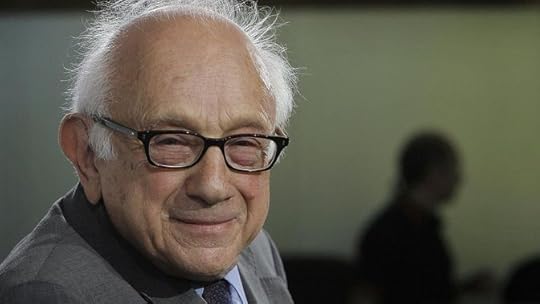
R.I.P. Fritz Stern (1926-2016)
[image source: dpa]
This unique man made a deep impression on me, especially (but not only) with this book. Whenever I stumbled upon an interview with him or an article I had to read it. Such a deep thinker he was.
In this interview (in German; 6mins), which was recorded on the occasion of his 90th birthday, he expresses his deep worries about freedom and democracy in Germany/Europe and especially in the USA. At least his worries are over now.
https://www.zdf.de/migration/migratio...

December 10, 2007
this was a different kind of history book.
the author, fritz stern, tells the story of germany in the 20th century at the same time that he tells his personal story. as it turns out, the two were quite interwoven. beginning with the fact that the author's namesake is fritz haber, the nobel prize winning chemist often known as the father of chemical warfare and a close personal friend of stern's father. as a highly respected german historian, stern is very qualified to describe the story of a country who's story has been told many times, but his personal involvement is what adds interest and readability to this particular version.
stern begins his amazing story with his childhood in breslau, germany (now wroclaw, poland), born into a family with a jewish past and a protestant present, continues with his escape to the united states, and ends with his personal and professional involvement with both east and west germany after the war. throughout the book, stern reiterates the importance of personal responsibilities under any government, whether it be fascist or democratic.
five germany's i have known is a must read for anyone interested in how the stories of countries affects the lives of individuals, and perhaps more importantly, how the actions of individuals control the destiny of countries.
the author, fritz stern, tells the story of germany in the 20th century at the same time that he tells his personal story. as it turns out, the two were quite interwoven. beginning with the fact that the author's namesake is fritz haber, the nobel prize winning chemist often known as the father of chemical warfare and a close personal friend of stern's father. as a highly respected german historian, stern is very qualified to describe the story of a country who's story has been told many times, but his personal involvement is what adds interest and readability to this particular version.
stern begins his amazing story with his childhood in breslau, germany (now wroclaw, poland), born into a family with a jewish past and a protestant present, continues with his escape to the united states, and ends with his personal and professional involvement with both east and west germany after the war. throughout the book, stern reiterates the importance of personal responsibilities under any government, whether it be fascist or democratic.
five germany's i have known is a must read for anyone interested in how the stories of countries affects the lives of individuals, and perhaps more importantly, how the actions of individuals control the destiny of countries.

Read
August 1, 2013'Stern loves Germany, and his memoir is best understood as a demonstration that all societies are vulnerable to the evil forces that swept that land in the ’30s and ’40s. His epiphany came on a trip he made back to Germany in 1954, to attend a tenth-year memorial service for the July plot by German officers to kill Hitler, a plot that led instead to the torture and execution of the brave conspirators. “As I looked at the people in the courtyard—old, distinguished, and sadly proud, dressed in mourning, faces hardened and humbled by suffering—I felt a sense of shame for my indiscriminate hatred of Germans,” he writes. The accumulation of such moments forced Stern at a late age to overcome his natural reluctance to write about himself. He understands what an unusual life he has had and how instructive it can be.'
Read the entire review, "From Breslau to Morningside Heights," on our website:
http://www.theamericanconservative.co...
Read the entire review, "From Breslau to Morningside Heights," on our website:
http://www.theamericanconservative.co...

May 22, 2014
Reading this book was a huge investment of time but it was rewarding. Author was born 1925 in Breslau, Germany (now in Poland) to a Jewish family very integrated into the scientific and cultural life of the country. He and his family emigrated to New York City in 1938, just ahead of the Nazi deportations of Jews, where his parents reestablished their professional lives. The first part of the book is more personal, covering his own memories of Europe, of family, and education, and it was my favorite section. Once the story moves into his professional life, the book is more the story of German history & historians but always there is Dr. Stern, interpreting and analyzing both the past and current events in Germany and Central/Eastern Europe. The division of book into 5 Germanys, ending with the reunited, post-Berlin Wall country, was a good way of explaining the history of the area.

March 7, 2010
Having studied German history, you'd think that I'd had my fill, and so did I. My grandfather recommended this book to me saying it was outstanding - he is German and lived through the war. I have to agree that it is one of the best popular books on German history that I have ever read and only wish that it had been written in time for my degree. Admittedly, it could be heavy going for those who have a light interest, but I found that the writer was able to pen a surprisingly objective book given his own circumstances. Superb, balanced, factually interesting book that combines well with a personal experience. I was profoundly moved by it, and it led to a deep reflection of my own family history and my family's experiences.
June 24, 2008
Yes, it's true: this is the book on 20th century Germany that I've been waiting for. A first-hand account of his life being born during the Weimar Republic, suffering the hardships of the growing insanity of the Third Reich (but being luckily enough to emmigrate before the outbreak of WWII), and witnessing a divided and then reunited Germany, Stern has an academic's flair for packing in more punch and information per page than your average scholar. (I think this took me well on a hour to read a mere 20 pages!) One of the most simply stunning lines I've come across on Nazi Germany reads: "The Third Reich began in triumph and deceit." I rank this the best personal account of Germany in the 20th century, from its imperial hey-day to today through the eyes of a ethnic German Jew (raised Christian) who became an American at a young age -- but who always kept looking back at what was left behind east of the Atlantic.

June 30, 2022
i think if he'd have looked a little harder he could have found a sixth or even a seventh germany that he could've known just as much. there's trouble when you love too many things at once, only in this book stern both loved and hated the things he knew. i won't spoil the surprise and tell you how he felt in the end (or which germany he chose to love on the most) but it's a good read, if ya like history and thinking about how people could do better than they are at getting along with former enemies.
November 1, 2018
The "Germanies" actually take a subordinate roll to the "I" in this title. It had a promising beginning, but soon enough wandered into an autobiography via his own letters, academic writings, speeches, and (lots of) travels.
A major example of inserting himself into "the history" is the text of a dozen pages (440 through 451) about a speech he presented to the West German legislature in Bonn on July 17, 1987, the anniversary date of an East German uprising which had been crushed by the Russians in 1953. He describes the theme of his message to the West Germans: that the courageous effort of their fellow Germans trapped on the dark side of the notorious Communist wall should be commemorated only as a "struggle for freedom". . . . "not as an uprising for reunification," and he suggested acceptance of "two German states." He then goes on to tell us—for ten more pages—of both the rebuke and the praise his address received from West Germans and some American colleagues. Never once does he mention President Ronald Reagan's Berlin address at the Brandenburg Gate only one month earlier, on June 12, 1987, where the American President spoke words that I suspect are yet today remembered by many more citizens of the world than recall the speech by Professor Stern. President Reagan said,
General Secretary Gorbachev, if you seek peace, if you seek prosperity for the Soviet Union and Eastern Europe, if you seek liberalization: Come here to this gate! Mr. Gorbachev, open this gate! Mr. Gorbachev, tear down this wall!
It did take two more years for the Russians to allow the Germans from both sides of the wall to literally chop it down in the autumn of 1989, with television cameras broadcasting the scene throughout the world. I can only surmise that the author's neglect of President Reagan's encouragement to the Germans was that, even in 2006 when this book was published, he clung to his initial condescending opinion that President Reagan was "a second-rate Hollywood actor. . . [a] seemingly naive and ignorant man who saw the Soviet Union not simply as a military threat and ruthless rival but also as the embodiment of all that was evil in the modern world."
There are 500 other pages of who, what, when, where, and how interacted with the author as Germany first collapsed into depravity and then, with extraordinary assistance from the Western victors of its war against them, and despite determined obstruction by the USSR, managed to climb from an abyss to create its first true democracy.
A major example of inserting himself into "the history" is the text of a dozen pages (440 through 451) about a speech he presented to the West German legislature in Bonn on July 17, 1987, the anniversary date of an East German uprising which had been crushed by the Russians in 1953. He describes the theme of his message to the West Germans: that the courageous effort of their fellow Germans trapped on the dark side of the notorious Communist wall should be commemorated only as a "struggle for freedom". . . . "not as an uprising for reunification," and he suggested acceptance of "two German states." He then goes on to tell us—for ten more pages—of both the rebuke and the praise his address received from West Germans and some American colleagues. Never once does he mention President Ronald Reagan's Berlin address at the Brandenburg Gate only one month earlier, on June 12, 1987, where the American President spoke words that I suspect are yet today remembered by many more citizens of the world than recall the speech by Professor Stern. President Reagan said,
General Secretary Gorbachev, if you seek peace, if you seek prosperity for the Soviet Union and Eastern Europe, if you seek liberalization: Come here to this gate! Mr. Gorbachev, open this gate! Mr. Gorbachev, tear down this wall!
It did take two more years for the Russians to allow the Germans from both sides of the wall to literally chop it down in the autumn of 1989, with television cameras broadcasting the scene throughout the world. I can only surmise that the author's neglect of President Reagan's encouragement to the Germans was that, even in 2006 when this book was published, he clung to his initial condescending opinion that President Reagan was "a second-rate Hollywood actor. . . [a] seemingly naive and ignorant man who saw the Soviet Union not simply as a military threat and ruthless rival but also as the embodiment of all that was evil in the modern world."
There are 500 other pages of who, what, when, where, and how interacted with the author as Germany first collapsed into depravity and then, with extraordinary assistance from the Western victors of its war against them, and despite determined obstruction by the USSR, managed to climb from an abyss to create its first true democracy.
January 17, 2012
This book is an arduous read but has its rewards. Stern is, as he describes himself, "a foreign historian-observer with a native touch" who, particularly in the first half of the book, weaves involuted personal narrative in with his professional historical views on Germany's five political incarnations which he witnessed during his lifetime: the Weimar Republic, the Third Reich, the Federal Republic (West Germany), the Democratic Republic (East Germany), and reunified Germany. The book is dense, packed with personal accounts of his family life, professional relations, and travels. However, they often provide valuable aperçus of his meetings with his colleagues of influential academics and politicians which enlighten and add nuance to the book's historical argument.
The central theme of the book is his belief that strong liberal democratic institutions prevent temptations to buy in en masse to pseudo-religious movements of repression. In this case, Stern applies this to National Socialism's rise to power and faults the weakness of the Weimar Republic for Germans' collective seduction into Hitler's promise of national salvation and recovery from the Treaty of Versailles.
He also strives to give his prose a poetic hue, which makes it sentimental at times and pithy at others. The book also serves as a repository of great quotes and voices of past philosophers and historians.
Not your formulaic German history, "Five Germanys I Have Known" is a nuanced and fresh history of modern Germany. I would recommend it to anyone seriously interested in German history but not to someone who does not already have some background in the field.
The central theme of the book is his belief that strong liberal democratic institutions prevent temptations to buy in en masse to pseudo-religious movements of repression. In this case, Stern applies this to National Socialism's rise to power and faults the weakness of the Weimar Republic for Germans' collective seduction into Hitler's promise of national salvation and recovery from the Treaty of Versailles.
He also strives to give his prose a poetic hue, which makes it sentimental at times and pithy at others. The book also serves as a repository of great quotes and voices of past philosophers and historians.
Not your formulaic German history, "Five Germanys I Have Known" is a nuanced and fresh history of modern Germany. I would recommend it to anyone seriously interested in German history but not to someone who does not already have some background in the field.

July 23, 2011
A very well written history of Germany from the end of WWI through to the present. Because of his family history Stern is in the unique position to know or have some family connection to many important figures in the sciences, arts and politics during this time so his story is a family history and a political and social history with very personal importance to him. Sometimes this gets in his way as in his treatment of the story of Fritz Haber the inventor of the process by which the poison gas used by the Germans in WWI was made. Haber was his god-father and Stern seems to allow personal feelings to temper his judgment. In other instances the personal element adds immediacy and clarity. This is not light reading but is a rewarding book to read.

December 24, 2008
If anyone is looking for a good broad social history of Germany last century, this one is great.
I'm an occasional history reader, but find Stern's observations stimulating even while introductory. He uses his life and family documents in good doses to ground the narrative, and the relationship between private life and political life of a country is a big theme. This doesn't read like autobiography, so much as history by a really intelligent person who's able to reflect on his family's experience of the themes he's writing about.
I'm an occasional history reader, but find Stern's observations stimulating even while introductory. He uses his life and family documents in good doses to ground the narrative, and the relationship between private life and political life of a country is a big theme. This doesn't read like autobiography, so much as history by a really intelligent person who's able to reflect on his family's experience of the themes he's writing about.
January 30, 2009
This book, written by a historian of Germany and Europe, is part history, part memoir. It begins in pre-World War I Germany with the story of the author's ancestors and parents. It continues through the author's birth in Weimar Germany, through World War II and his family's escape to the United States, through the Cold War, to the eventual unification of Germany. The author provides interesting insights from his own experiences in Germany, particularly in the early years.

Currently Reading
December 24, 2012I've just started to read this book. A friend gave it to me, as she heard my review of Garden of Beasts and thought I'd appreciate this memoir. I am really enjoying it...it's written by an historian about his family, who lived in Germany since well before World War I. He's a very fine writer and very engaging.

May 30, 2014
This was more of a memoir than a straight history, but I still enjoyed it. I don't think most of my friends would like this book, though, because it is fairly detailed and academic and definitely slow going in places. But when a book gets slow-going, I just start skimming for a while and then get back to more interesting parts.

June 27, 2008
I love Friz Stern. This book chronicles the tranformation Germany has undergone throughout the 20th century seen through the eyes of the best German historian. A must read if you're interested in understanding what it means to be a modern-day German.
July 17, 2008
A very insightful review of Germany from the first World War to the present. Fritz Stern and his family have been involved in a great deal of history in Germany, and as a historian, he is very capable of expressing it.

November 7, 2013
Interesting read. Stern gives a unique and balanced look at Germany and its history. He does so mostly through the lens of his life and his parents' lives. The book has no references, but the author is mostly telling the story of his life and its connections with Germany.

March 16, 2008
An interesting look at the history of Germany, told from a different point of view. I thoroughly enjoyed it, but don't recommend for anyone who does not have a serious interest in German History.

Currently Reading
May 7, 2010Love it!

August 24, 2010
This is a unique perspective on the history of Germany and provides a very personal insight into events that shaped this period. Very readable.
December 31, 2010
A great book that combines personal history and places it in the larger context of modern German history.

May 4, 2015
A good overview of Germanys transformation from a reputable current historian

January 14, 2021
Wow. I'm not entirely sure of what I want to say about this book.
Sometimes it was slow, sometimes it was interesting. It took me nearly 4 weeks to finish it (which is almost a record)! Sometimes I procrastinated (I'll admit it!). But I finished it. I couldn't just walk away from it and leave it behind.
And I will admit it! I learned a lot from this book, as boring as it was at times (I mean, it obviously wasn't written for teenagers, so I can't judge Mr. Stern for being somewhat dry). It covered a lot of Germany's history, from the Weimar Republik (something I didn't even know had existed!) to the Berlin Wall coming down. But it wasn't in-depth enough for me. The chapter devoted to the Third Reich (WWII) is only about 30 pages long, as compared to the 80 pages devoted to the "German Question". Also, I disliked how Mr. Stern transitioned from a sort of "memoir" perspective to history. I wish it had just been one or the other.
However, I respect this book. I can't imagine the sheer amount of research that had to be done in order to write this book. It was decent - not the best, not the worst. At some point in the future, I'll pick it up again, and maybe I'll like it better. Who knows? But for now, it gets 3 out of 5 stars.
Sometimes it was slow, sometimes it was interesting. It took me nearly 4 weeks to finish it (which is almost a record)! Sometimes I procrastinated (I'll admit it!). But I finished it. I couldn't just walk away from it and leave it behind.
And I will admit it! I learned a lot from this book, as boring as it was at times (I mean, it obviously wasn't written for teenagers, so I can't judge Mr. Stern for being somewhat dry). It covered a lot of Germany's history, from the Weimar Republik (something I didn't even know had existed!) to the Berlin Wall coming down. But it wasn't in-depth enough for me. The chapter devoted to the Third Reich (WWII) is only about 30 pages long, as compared to the 80 pages devoted to the "German Question". Also, I disliked how Mr. Stern transitioned from a sort of "memoir" perspective to history. I wish it had just been one or the other.
However, I respect this book. I can't imagine the sheer amount of research that had to be done in order to write this book. It was decent - not the best, not the worst. At some point in the future, I'll pick it up again, and maybe I'll like it better. Who knows? But for now, it gets 3 out of 5 stars.

May 21, 2022
Historian Fritz Stern was born in the Weimar Republic, his family chose exile after living for five years under National Socialism. From 1938 in America, he grew, and began to teach history at Columbia University, focusing on the European question and Germany's place in the world order.
Stern brings to life the five Germanys he has experienced: Weimar, the Third Reich, postwar West and East Germanys, and the unified country after 1990.
Why I started this book: Recommended by James G. Stavridis in one of his books, I was intrigued to learn more about Germany and her iterations.
Why I finished it: Fascinating and sloggy. Stern has meet some fascinating people, but the whole book was filled with name dropping, both to his parents friends, and later people he interacted with in his long career. And it was a times funny and disheartening to see the political spats that historians participate in, in the university and in the public press.
Stern brings to life the five Germanys he has experienced: Weimar, the Third Reich, postwar West and East Germanys, and the unified country after 1990.
Why I started this book: Recommended by James G. Stavridis in one of his books, I was intrigued to learn more about Germany and her iterations.
Why I finished it: Fascinating and sloggy. Stern has meet some fascinating people, but the whole book was filled with name dropping, both to his parents friends, and later people he interacted with in his long career. And it was a times funny and disheartening to see the political spats that historians participate in, in the university and in the public press.
June 16, 2018
This is a fascinating book. The author’s family was part of the Jewish scientific community in Germany that converted to Lutheranism during the late nineteenth century for employment in hospitals and universities . However, the conversion did not protect them against the Nazis and they emigrated to the US a few weeks before Kristal Nacht when the author was twelve. He went on to earn a PhD in history at Columbia, where he taught, specializing in the Nazi era and the history of Jews in Germany. His contacts and academic research led to diplomatic contributions after the Wall fell. The book is a memoir, a family history and a history of Germany during the nineteenth and the entire twentieth century. It is packed with information. I rated it a 4 only because it is extremely slow reading. But it is definitely worth the effort.

June 22, 2026
Well-written, but Herr Stern signally failed to learn a few critical lessons from his own experiences and carried these critical errors forward through his life.
I was a bit puzzled that he claimed to ignore the advice of the human with the highest recorded intelligence and became an historian instead of a scientist. Given his shortcomings with historical interpretation, perhaps it was better that he ignored Einstein’s otherwise well-given advice.
Two-stars is probably overly generous, but as I said it was well-written.
I was a bit puzzled that he claimed to ignore the advice of the human with the highest recorded intelligence and became an historian instead of a scientist. Given his shortcomings with historical interpretation, perhaps it was better that he ignored Einstein’s otherwise well-given advice.
Two-stars is probably overly generous, but as I said it was well-written.
This entire review has been hidden because of spoilers.

July 28, 2016
Five Germanys I Have Known by Fritz Stern, Farrar Straus and Giroux New York, 2006 ISBN-13.978-0-374-53086-0
“The reading of a fine book is an uninterrupted dialogue in which the book speaks and our soul replies.” André Maurois (1885 – 1967)
Thanks Goodreads for coming up with just the apposite Quote of the Day as I was contemplating how to start this review. My soul replied because Fritz Stern's soul spoke.
I picked this book up at the Brockenstübe (second hand shop) to try to further understand “the German question”, on which Stern is an undisputed authority.
It gave me that, and much more. The book is part history, part memoir, and part meditation on the work and role of historians, and each part illuminates the other. The history (from Weimar Germany until post-reunification) is informed by wide and deep research – and illustrated by his family stories and a trove of family letters. These prompt his own stories, as a child in Breslau (then a part of Germany, now, as Wroclaw, a part of Poland); just-in-time emigration to the USA as Hitler’s intentions and actions became undeniable; growing up in an America which he came to (not uncritically) love; becoming an academic, and then frequently returning to Europe and Germany as not only a historical researcher, but as an observer, commentator and analyst of history as it is made. Because Stern chooses to open his private experiences, he also opens the lenses through which historians variously perceive and interpret the world. He is clear about his own philosophical position, and his assessment of other historians’ positions.
That’s an added delight: Stern's exposure through his family connections and then his work to literally thousands of other influential thinkers, scientists, historians and world leaders and his recounting of those could have made this an exercise in name-dropping, if it were not for his pithy, frank, pen-sketches. I imagine those still living would have been quickly consulting the index to find out their characters when the book was first published in 2006!
Fritz Stern’s long and illustrious career (he died only in May 2016 aged 90) earned him the role of professor emeritus, and past Provost, at Columbia University, and honorary PHDs from various prestigious universities, including Prince, Oxford, and his native Wroclaw (then Breslau). Perhaps one of his most treasured acknowledgements was the German Book Trade Peace Prize for 1999 which acknowledged his “having promoted peace by establishing bridges of understanding among different periods and peoples, fairly depicting ‘the always controversial historic presence of Jews in German … life’ and prescriptively addressing questions about the German present”. (p512)
Five Germanys I Have Known set out to answer The German Question “how and why did the human potential for evil become an actuality in Germany?” (p4)
I quail to summarise his response. It is carefully considered, deeply research-based, and fully convincing. Only reading the book yourself will do it justice. Within that he also ranges widely through the rest of Europe, Russia, the impact of European colonialism in other nations, and of course the establishment and subsequent history of Israel, where again he is unflinching in his views.
But along the way he writes compellingly of the other things which I think earned him the Peace Prize, and which takes his work firmly into informing our current world issues.
One is the need for activism. Once a person realises what is going on, “civic engagement (also) becomes a moral and political imperative” (p10). Stern was always initiating action, and also responding to invitations, to speak, to join, to lead… He doesn’t quote Edmund Burke “The only thing necessary for the triumph of evil is for good men to do nothing” – but he lived that belief, as an engaged observer.
Another is the openness of history. There are never inevitabilities, and alongside trying to understand why things happened (always my joy with history) there are questions about why other things did not happen. Stern brings a deep appreciation of the ‘drama of human behaviour’ to his analysis, and his openness about how his life and world-view contribute to his historical analysis gives him solid ground to praise and scold fellow-historians for their interpretations. He writes with such relish of the joys of getting into previously undisclosed archives, with honesty about the risks of putting one’s views out, and of the passionate and very political historians’ disputes.
Most importantly right now, is what Stern described as the Temptation of National Socialism “…its powerful psychological appeal. Its pseudo-religious garb, its promise of a national rebirth, of a volkish (populist) community led by a self-proclaimed savior who would redeem the country by eliminating its corruptors” p424. Sound familiar? Before he died in May this year (2016, ten years after he wrote this) Stern was noting how “Donald Trump—a ‘nobody’ but for his wealth and ambition—exemplified … an ominously ‘dysfunctional, destructive’ politics. A life spent studying how quickly and terribly things can go wrong, and the cost of righting them, sharpens the senses for such things.” http://www.economist.com/news/obituary
Stern’s soul continues to speak through this book. I am only glad to have heard it.
“The reading of a fine book is an uninterrupted dialogue in which the book speaks and our soul replies.” André Maurois (1885 – 1967)
Thanks Goodreads for coming up with just the apposite Quote of the Day as I was contemplating how to start this review. My soul replied because Fritz Stern's soul spoke.
I picked this book up at the Brockenstübe (second hand shop) to try to further understand “the German question”, on which Stern is an undisputed authority.
It gave me that, and much more. The book is part history, part memoir, and part meditation on the work and role of historians, and each part illuminates the other. The history (from Weimar Germany until post-reunification) is informed by wide and deep research – and illustrated by his family stories and a trove of family letters. These prompt his own stories, as a child in Breslau (then a part of Germany, now, as Wroclaw, a part of Poland); just-in-time emigration to the USA as Hitler’s intentions and actions became undeniable; growing up in an America which he came to (not uncritically) love; becoming an academic, and then frequently returning to Europe and Germany as not only a historical researcher, but as an observer, commentator and analyst of history as it is made. Because Stern chooses to open his private experiences, he also opens the lenses through which historians variously perceive and interpret the world. He is clear about his own philosophical position, and his assessment of other historians’ positions.
That’s an added delight: Stern's exposure through his family connections and then his work to literally thousands of other influential thinkers, scientists, historians and world leaders and his recounting of those could have made this an exercise in name-dropping, if it were not for his pithy, frank, pen-sketches. I imagine those still living would have been quickly consulting the index to find out their characters when the book was first published in 2006!
Fritz Stern’s long and illustrious career (he died only in May 2016 aged 90) earned him the role of professor emeritus, and past Provost, at Columbia University, and honorary PHDs from various prestigious universities, including Prince, Oxford, and his native Wroclaw (then Breslau). Perhaps one of his most treasured acknowledgements was the German Book Trade Peace Prize for 1999 which acknowledged his “having promoted peace by establishing bridges of understanding among different periods and peoples, fairly depicting ‘the always controversial historic presence of Jews in German … life’ and prescriptively addressing questions about the German present”. (p512)
Five Germanys I Have Known set out to answer The German Question “how and why did the human potential for evil become an actuality in Germany?” (p4)
I quail to summarise his response. It is carefully considered, deeply research-based, and fully convincing. Only reading the book yourself will do it justice. Within that he also ranges widely through the rest of Europe, Russia, the impact of European colonialism in other nations, and of course the establishment and subsequent history of Israel, where again he is unflinching in his views.
But along the way he writes compellingly of the other things which I think earned him the Peace Prize, and which takes his work firmly into informing our current world issues.
One is the need for activism. Once a person realises what is going on, “civic engagement (also) becomes a moral and political imperative” (p10). Stern was always initiating action, and also responding to invitations, to speak, to join, to lead… He doesn’t quote Edmund Burke “The only thing necessary for the triumph of evil is for good men to do nothing” – but he lived that belief, as an engaged observer.
Another is the openness of history. There are never inevitabilities, and alongside trying to understand why things happened (always my joy with history) there are questions about why other things did not happen. Stern brings a deep appreciation of the ‘drama of human behaviour’ to his analysis, and his openness about how his life and world-view contribute to his historical analysis gives him solid ground to praise and scold fellow-historians for their interpretations. He writes with such relish of the joys of getting into previously undisclosed archives, with honesty about the risks of putting one’s views out, and of the passionate and very political historians’ disputes.
Most importantly right now, is what Stern described as the Temptation of National Socialism “…its powerful psychological appeal. Its pseudo-religious garb, its promise of a national rebirth, of a volkish (populist) community led by a self-proclaimed savior who would redeem the country by eliminating its corruptors” p424. Sound familiar? Before he died in May this year (2016, ten years after he wrote this) Stern was noting how “Donald Trump—a ‘nobody’ but for his wealth and ambition—exemplified … an ominously ‘dysfunctional, destructive’ politics. A life spent studying how quickly and terribly things can go wrong, and the cost of righting them, sharpens the senses for such things.” http://www.economist.com/news/obituary
Stern’s soul continues to speak through this book. I am only glad to have heard it.
March 27, 2026
A span of my life through the eyes of another
Dr. Stern interacted with so many of the people I have merely read about or perhaps listened to. What an opportunity for a historian to be such an active participant in the great events of his lifetime! His insights would likely be challenged by rightists on both sides of the Atlantic, but he has been a faithful servant of his own values and trying to bring about understanding and reconciliation.
Dr. Stern interacted with so many of the people I have merely read about or perhaps listened to. What an opportunity for a historian to be such an active participant in the great events of his lifetime! His insights would likely be challenged by rightists on both sides of the Atlantic, but he has been a faithful servant of his own values and trying to bring about understanding and reconciliation.
September 4, 2026
The Five Germanies of Fritz Stern
The title promised much that was interesting and, indeed, provided quite a lot. What I missed about this book was a penetrating analysis of the metamorphoses of Germany in the 20th century. Instead it provided a memoir of Stern himself; all his connections with important people and the awards he received at different universities and instituutes. He was a part of the old Social Democratic establishment of Germany, an outlook that is now passé.
The title promised much that was interesting and, indeed, provided quite a lot. What I missed about this book was a penetrating analysis of the metamorphoses of Germany in the 20th century. Instead it provided a memoir of Stern himself; all his connections with important people and the awards he received at different universities and instituutes. He was a part of the old Social Democratic establishment of Germany, an outlook that is now passé.
Displaying 1 - 30 of 50 reviews