

What do you think?
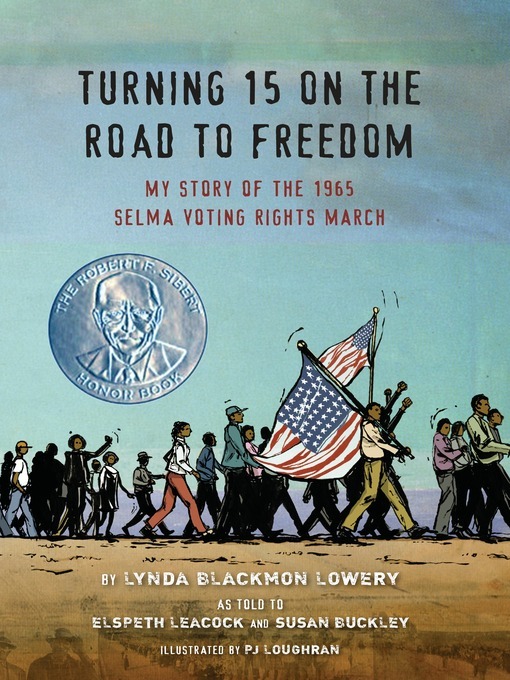
Turning 15 on the Road to Freedom: My Story of the Selma Voting Rights March
As the youngest marcher in the 1965 voting rights march from Selma to Montgomery, Albama, Lynda Blackmon Lowery proved that young adults can be heroes. Jailed nine times before her fifteenth birthday, Lowery fought alongside Martin Luther King, Jr. for the rights of African-Americans. In this memoir, she shows today's young readers what it means to fight nonviolently (even when the police are using violence, as in the Bloody Sunday protest) and how it felt to be part of changing American history.
1 pages, Audiobook
First published January 8, 2015
Ratings & Reviews
Friends & Following
Create a free account to discover what your friends think of this book!
Community Reviews
Displaying 1 - 30 of 709 reviews
March 26, 2017
If you know a young person who's looking to learn more about or connect with the Civil Rights Movement, put this book in their hands.
Lynda Blackmon Lowery tells her story of her experience with Steady Loving Confrontation with passion. As a female protestor, her story nicely complements John Lewis's March trilogy.
The first line in the book grabs your attention: "By the time I was fifteen years old, I had been in jail nine times."
She explains matter-of-factly what it was like growing up as a black teenager in Selma. Her mother died when Lynda was seven because no one at the all-white hospital would treat her. Her grandmother helped raise her and made sure Lynda heard Martin Luther King, Jr. speak.
She began her protesting activities as a gopher at various sit-ins to tell parents that their high school teen had been jailed. By fourteen, though, she was marching.
The organizers of these student protests knew what they were doing. And the kids picked up on the march, go to jail, get released, get to the next march pattern quickly.
Parents helped by packing sandwiches and treats to replace the bad jail food. Other students who were the "brains" stayed in school to do everyone's homework and take tests for the students who were marching.
Repeatedly, Lynda references the power of song to quell fear and the comfort from the sheer number of students in jail together.
She didn't know Jimmie Lee Jackson, but hearing how the police shot him in the stomach terrified her and the other marchers. When he died, hundreds of people attended his funeral and the idea for the march from Selma to Montgomery was born.
Lynda participated in the march on Bloody Sunday. While the sheer number of white people scared her, seeing the state troopers put gas masks instilled a new level of fear.
In the aftermath of Bloody Sunday, Lynda describes the numerous people she met who had seen Bloody Sunday on television and traveled to Selma to join the protestors.
On March 21, 1965, Lynda marched over the Edmund Pettus Bridge and kept going. She was one of the 300 people who were permitted to march the entire way to Selma. She turned 15 on March 22. She was the youngest person to participate in the march.
On that birthday morning, Lynda saw white National Guardsmen and got scared. People wanted to send her home because her panic attack was extreme enough that she was holding up the march.
That's when she met veteran Jim Letherer. He assured her that he would lie down and die for her. Lynda knew that she wanted to be the person who would stand up against anything wrong, so she couldn't let her fear of dying prevent her from marching. She marched next to Jim Letherer singing freedom songs together.
On March 25, the 300 marchers and thousands more filled the streets of Montgomery. She describes several valuable lessons she learned from marching, including how there were many people ,white and black, who really cared about her and the black people of Selma.
Throughout her story, Lynda gives context to events from the past. She describes being rounded up by the police for marching:
“If you didn’t get on the bus fast enough, the police would shock you with a cattle prod. That’s a stick with an electrical charge, sort of like a Taser is now. Farmers used them to push cattle to move quicker or to get out of the way. That’s what they used on us, like we were cattle.”
She also gives numbers to illustrate the lack of representation African-Americans had in her county.
In 1964, there were fewer white citizens in Dallas County than black citizens (14,400 white to 15,115 black). However, out of the 9,530 people registered to vote, 9,195 were white. As a teacher, if I were reading this book with my students, I would make them do that math: that's 335 registered black voters!
At the end of Lynda's story, she includes mini-biographies on Jimmie Lee Jackson, Reverend Reeb, Viola Liuzzo, and Leroy Moten. All of them were victims of violence related to the Selma to Montgomery march.
She includes two pages on the Voting Rights Act of 1965 and recent changes that have been struck out by the Supreme Court. While her tone is cautionary, she doesn't delve into specifics regarding voting rights. She piques your curiosity.
Finally, there is a Discussion Guide where Lynda answers questions about living during segregation, learning about nonviolence, being such a young protestor, participating in the voting rights movement, and living today with racism. Each of these five sections also have thought-provoking questions that teachers or parents could use to frame a discussion about this book.
Lynda Blackmon Lowery tells her story of her experience with Steady Loving Confrontation with passion. As a female protestor, her story nicely complements John Lewis's March trilogy.
The first line in the book grabs your attention: "By the time I was fifteen years old, I had been in jail nine times."
She explains matter-of-factly what it was like growing up as a black teenager in Selma. Her mother died when Lynda was seven because no one at the all-white hospital would treat her. Her grandmother helped raise her and made sure Lynda heard Martin Luther King, Jr. speak.
She began her protesting activities as a gopher at various sit-ins to tell parents that their high school teen had been jailed. By fourteen, though, she was marching.
The organizers of these student protests knew what they were doing. And the kids picked up on the march, go to jail, get released, get to the next march pattern quickly.
Parents helped by packing sandwiches and treats to replace the bad jail food. Other students who were the "brains" stayed in school to do everyone's homework and take tests for the students who were marching.
Repeatedly, Lynda references the power of song to quell fear and the comfort from the sheer number of students in jail together.
She didn't know Jimmie Lee Jackson, but hearing how the police shot him in the stomach terrified her and the other marchers. When he died, hundreds of people attended his funeral and the idea for the march from Selma to Montgomery was born.
Lynda participated in the march on Bloody Sunday. While the sheer number of white people scared her, seeing the state troopers put gas masks instilled a new level of fear.
In the aftermath of Bloody Sunday, Lynda describes the numerous people she met who had seen Bloody Sunday on television and traveled to Selma to join the protestors.
On March 21, 1965, Lynda marched over the Edmund Pettus Bridge and kept going. She was one of the 300 people who were permitted to march the entire way to Selma. She turned 15 on March 22. She was the youngest person to participate in the march.
On that birthday morning, Lynda saw white National Guardsmen and got scared. People wanted to send her home because her panic attack was extreme enough that she was holding up the march.
That's when she met veteran Jim Letherer. He assured her that he would lie down and die for her. Lynda knew that she wanted to be the person who would stand up against anything wrong, so she couldn't let her fear of dying prevent her from marching. She marched next to Jim Letherer singing freedom songs together.
On March 25, the 300 marchers and thousands more filled the streets of Montgomery. She describes several valuable lessons she learned from marching, including how there were many people ,white and black, who really cared about her and the black people of Selma.
Throughout her story, Lynda gives context to events from the past. She describes being rounded up by the police for marching:
“If you didn’t get on the bus fast enough, the police would shock you with a cattle prod. That’s a stick with an electrical charge, sort of like a Taser is now. Farmers used them to push cattle to move quicker or to get out of the way. That’s what they used on us, like we were cattle.”
She also gives numbers to illustrate the lack of representation African-Americans had in her county.
In 1964, there were fewer white citizens in Dallas County than black citizens (14,400 white to 15,115 black). However, out of the 9,530 people registered to vote, 9,195 were white. As a teacher, if I were reading this book with my students, I would make them do that math: that's 335 registered black voters!
At the end of Lynda's story, she includes mini-biographies on Jimmie Lee Jackson, Reverend Reeb, Viola Liuzzo, and Leroy Moten. All of them were victims of violence related to the Selma to Montgomery march.
She includes two pages on the Voting Rights Act of 1965 and recent changes that have been struck out by the Supreme Court. While her tone is cautionary, she doesn't delve into specifics regarding voting rights. She piques your curiosity.
Finally, there is a Discussion Guide where Lynda answers questions about living during segregation, learning about nonviolence, being such a young protestor, participating in the voting rights movement, and living today with racism. Each of these five sections also have thought-provoking questions that teachers or parents could use to frame a discussion about this book.
March 15, 2017
I loved this book... from the format (narrative nonfiction) to the content shared.. I just couldn't seem to put it down! I'm so glad I am reading such an engaging and accessible text with my students to truly bring the Civil Rights movement to light!

February 28, 2017
***Spoiler Alert*** Have you ever wondered about the youngest person to be part of the Selma march? In Turning 15 on the Road to Freedom this is a autobiography by Lynda Blackmon Lowery who was the youngest person to march in the Selma march. Turning 15 on the road is a really good book. I loved the determination she had even when people wanted to send her back home.
The story takes place mostly in Selma, Alabama where "Bloody Sunday" takes place and where the Selma march begins. The story is about Lynda Blackmon Lowery who was the youngest person to attend in the March. When she was 15 years old she had been to jail 9 times. She participated in marches and since she had been in jail so many times she stared to bring her own food to jail. She also was part of, "Bloody Sunday" where she was hit with a bat and was sprayed with a gas that made her not feel right. She wanted to be part of a change of unequal treatment. Although a lot people had to stop marching because guards wouldn't let them go through she stayed and marched all the way to the end and watched Martin Luther King Jr give his famous," I Have A Dream Speech." The type of Conflict is "People vs. People" because many people where trying to get Civil Rights for all people. The theme of the book is if you want something you should never give up.
A major event that changed the character was when she witnessed Blood Sunday because her father was more strict about letting go to marches and when she was marching to Montgomery she saw the guard that hit her with a bat and sprayed her the gas and started crying because of her seeing him. The titles relates to the book because she was marching on her 15 birthday and she was on her way to freedom which relates to Turning 15 on the Road to Freedom. The character's motivation to marching all the way to the end was the idea of all people finally being treated the same way and being part of a change.
I was surprised when she had been to jail 9 times by the time she was 15 because most people don't go to jail 9 times by the age of 15 and the marches she was apart of didn't cause any harm to people and they were peaceful marches. I was moved by Lynda not giving up when she started crying when she saw the guard because many people wanted to send her home but she didn't give up and kept marching. I was also angry when Bloody Sunday happened because it was unnecessary to hurt so many people and they hit people with weapons and many people where hurt after the event.
I would rate the book 5 stars because I liked the way she describes the scenes and information that she includes in the book. I would recommend this book to people who want the learn more about the Civil rights movement. This book was about the youngest person to march in the Selma March.
The story takes place mostly in Selma, Alabama where "Bloody Sunday" takes place and where the Selma march begins. The story is about Lynda Blackmon Lowery who was the youngest person to attend in the March. When she was 15 years old she had been to jail 9 times. She participated in marches and since she had been in jail so many times she stared to bring her own food to jail. She also was part of, "Bloody Sunday" where she was hit with a bat and was sprayed with a gas that made her not feel right. She wanted to be part of a change of unequal treatment. Although a lot people had to stop marching because guards wouldn't let them go through she stayed and marched all the way to the end and watched Martin Luther King Jr give his famous," I Have A Dream Speech." The type of Conflict is "People vs. People" because many people where trying to get Civil Rights for all people. The theme of the book is if you want something you should never give up.
A major event that changed the character was when she witnessed Blood Sunday because her father was more strict about letting go to marches and when she was marching to Montgomery she saw the guard that hit her with a bat and sprayed her the gas and started crying because of her seeing him. The titles relates to the book because she was marching on her 15 birthday and she was on her way to freedom which relates to Turning 15 on the Road to Freedom. The character's motivation to marching all the way to the end was the idea of all people finally being treated the same way and being part of a change.
I was surprised when she had been to jail 9 times by the time she was 15 because most people don't go to jail 9 times by the age of 15 and the marches she was apart of didn't cause any harm to people and they were peaceful marches. I was moved by Lynda not giving up when she started crying when she saw the guard because many people wanted to send her home but she didn't give up and kept marching. I was also angry when Bloody Sunday happened because it was unnecessary to hurt so many people and they hit people with weapons and many people where hurt after the event.
I would rate the book 5 stars because I liked the way she describes the scenes and information that she includes in the book. I would recommend this book to people who want the learn more about the Civil rights movement. This book was about the youngest person to march in the Selma March.

February 22, 2021
A short, simple look into Lynda Blackmon's experience as a child. Quite impactful for such a short read.
2021 challenge: a book about a social justice issue
2021 challenge: a book about a social justice issue

February 13, 2015
I was 28 when courageous black Alabama citizens and white sympathizers set forth March 21, 1965, across Selma’s Edmund Pettus Bridge to begin their successful march to Montgomery, the state capital, to demonstrate their determination to force the state of Alabama to allow all of its black citizens to register to vote. I, like many Americans, had watched on television the brutal acts committed by the local police and sheriff’s deputies to end demonstrators’ attempt March 7 to cross the bridge and march to Montgomery. Having lived in Tennessee for two years, having years later received a bachelor’s degree in history, and having thereafter become a public school teacher, I had not been naïve about racial prejudice prior to the Selma events. Nonetheless, I was shocked.
A week after recently watching the movie Selma, I read an excellent memoir (just published by Dial Books) about the Selma to Montgomery event written in retrospect (assisted by two professional writers) by a teenage participant, Lynda Blackmon Lowery. Unlike the movie, Selma, many parts of Turning 15 on the Road to Freedom; My Story of the 1965 Selma Voting Rights March stirred my emotions. Geared for readers in their teen years, the memoir reaches out as well to adults born after 1965 and to jaded seniors like me.
Here are my reasons for recommending this book especially to young people.
Turning 15 is a personal story. We experience vicariously the thoughts, emotions, and actions of an actual participant. We gain insight about the effects of racial hatred on actual African Americans. We learn of the sense of security felt by most black children growing up in segregated black communities. We understand better the need black Americans felt to right collectively racially-committed wrongs. Mrs. Lynda Lowery cites her grandmother’s advice: “… if you give someone or something control over you, then you’ve given up yourself.” We celebrate the realization experienced by thoroughly-segregated people like the young Lynda that white racists did not represent all white Americans. After the bloody attempt by early demonstrators to cross the Pettus bridge March 7, many white people traveled to Selma to exhibit their support. Lynda wrote: “It was a whole different feeling suddenly with white people living in your house. They marched with us and were willing to go to jail with us. They ate what we ate. We cooked collard greens and cornbread, and they ate it and enjoyed it as much as we did. They were happy to be with us, even if they had to sleep on the floor. … There was a whole new feeling in Selma.”
I especially appreciated the details Mrs. Lowery gave us about her experiences. Here are two examples of information I did not know and found fascinating. School children were used extensively to demonstrate and crowd the jails. Mothers who were maids took employers’ food home surreptitiously that their children ate the next day after they were arrested and put in jail. Twenty-one school girls, mostly high school students, were put in a steel cell (called the “sweatbox”) that had no windows, water, toilet, or lights and kept there until every girl had passed out. It is always the detail of individuals’ lives that make history especially interesting.
This memoir is written simply, but it touches upon all the important Selma/Montgomery subject matter events. Anybody who reads at or above the sixth grade level will have no difficulty finishing it in one sitting. Yet the reader will be informed about every topic or event an instructor would want a student of his to read about, examples ranging from the different instances of segregation existent in Selma to the deaths of three people murdered, one by the police and the other two by racist thugs. Mrs. Lowery also explains, quite simply, the Voting Rights Act passed in 1965 and how it has been degraded most recently by the United States Supreme Court.
Finally, I am concerned about what our young generation doesn’t but should know about our nation’s past. Racism in America persists. My grandchildren and friends their ages should be exposed to appealing sources of information that instruct them to recognize that no nation is a “shining city on the hill” and that those who proclaim such assertions should be looked upon with skepticism. Take nothing, therefore, for granted. Human history is a story of struggle for freedom and dignity against unwarranted control. Lynda learned from her experiences that “the person I wanted to be was a person who would stand up against what was wrong. I wanted not only to protect myself, but to protect others, not only to fight for myself, but to be out there fighting for others.”
Mrs. Lowery’s memoir is a worthwhile, appealing book.
A week after recently watching the movie Selma, I read an excellent memoir (just published by Dial Books) about the Selma to Montgomery event written in retrospect (assisted by two professional writers) by a teenage participant, Lynda Blackmon Lowery. Unlike the movie, Selma, many parts of Turning 15 on the Road to Freedom; My Story of the 1965 Selma Voting Rights March stirred my emotions. Geared for readers in their teen years, the memoir reaches out as well to adults born after 1965 and to jaded seniors like me.
Here are my reasons for recommending this book especially to young people.
Turning 15 is a personal story. We experience vicariously the thoughts, emotions, and actions of an actual participant. We gain insight about the effects of racial hatred on actual African Americans. We learn of the sense of security felt by most black children growing up in segregated black communities. We understand better the need black Americans felt to right collectively racially-committed wrongs. Mrs. Lynda Lowery cites her grandmother’s advice: “… if you give someone or something control over you, then you’ve given up yourself.” We celebrate the realization experienced by thoroughly-segregated people like the young Lynda that white racists did not represent all white Americans. After the bloody attempt by early demonstrators to cross the Pettus bridge March 7, many white people traveled to Selma to exhibit their support. Lynda wrote: “It was a whole different feeling suddenly with white people living in your house. They marched with us and were willing to go to jail with us. They ate what we ate. We cooked collard greens and cornbread, and they ate it and enjoyed it as much as we did. They were happy to be with us, even if they had to sleep on the floor. … There was a whole new feeling in Selma.”
I especially appreciated the details Mrs. Lowery gave us about her experiences. Here are two examples of information I did not know and found fascinating. School children were used extensively to demonstrate and crowd the jails. Mothers who were maids took employers’ food home surreptitiously that their children ate the next day after they were arrested and put in jail. Twenty-one school girls, mostly high school students, were put in a steel cell (called the “sweatbox”) that had no windows, water, toilet, or lights and kept there until every girl had passed out. It is always the detail of individuals’ lives that make history especially interesting.
This memoir is written simply, but it touches upon all the important Selma/Montgomery subject matter events. Anybody who reads at or above the sixth grade level will have no difficulty finishing it in one sitting. Yet the reader will be informed about every topic or event an instructor would want a student of his to read about, examples ranging from the different instances of segregation existent in Selma to the deaths of three people murdered, one by the police and the other two by racist thugs. Mrs. Lowery also explains, quite simply, the Voting Rights Act passed in 1965 and how it has been degraded most recently by the United States Supreme Court.
Finally, I am concerned about what our young generation doesn’t but should know about our nation’s past. Racism in America persists. My grandchildren and friends their ages should be exposed to appealing sources of information that instruct them to recognize that no nation is a “shining city on the hill” and that those who proclaim such assertions should be looked upon with skepticism. Take nothing, therefore, for granted. Human history is a story of struggle for freedom and dignity against unwarranted control. Lynda learned from her experiences that “the person I wanted to be was a person who would stand up against what was wrong. I wanted not only to protect myself, but to protect others, not only to fight for myself, but to be out there fighting for others.”
Mrs. Lowery’s memoir is a worthwhile, appealing book.

January 14, 2017
This is a quick read. Abbreviated memoir of Lynda Blackmon's journey in Selma peacefully protesting for the legitimate right to vote March 1965. At the time she was 15 years old. I enjoyed it because it portrays a very specific moment in time from Bloody Sunday where hundreds of peaceful protesters were beaten, shot and injured to the subsequent Selma Voting Rights March on the capital to Montgomery, Alabama. I learned about the infamous Edmond Pettus Bridge and the senseless killing of Jimmie Lee Jackson. A great middle school read.

February 12, 2016
Booktalked this as part of my middle school sweep 2016.
Love the combination of primary source text with primary source photographs, lovely illustrations, and a narrative/novel-style layout. Kids were impressed by the idea of having to pass tests to be allowed to vote in elections (I brought some printouts of some of the tests). We talked about protesting, and I read a very short excerpt of the book.
Yes yes yes. Love love love.
Killer.
Love the combination of primary source text with primary source photographs, lovely illustrations, and a narrative/novel-style layout. Kids were impressed by the idea of having to pass tests to be allowed to vote in elections (I brought some printouts of some of the tests). We talked about protesting, and I read a very short excerpt of the book.
Yes yes yes. Love love love.
Killer.

Read
February 16, 2017This book was a little sad

February 22, 2024
"Turning 15 on the Road to Freedom" is a powerful and inspiring memoir by Lynda Blackmon Lowery.
It recounts her experiences as the youngest participant in the historic 1965 Selma to Montgomery Voting Rights March in Alabama. Lowery's firsthand account of her involvement in the Civil Rights Movement provides readers with a vivid and personal perspective on the struggles and triumphs of the era.
Through her courageous story, readers gain insight into the challenges faced by African Americans fighting for equality and justice.
Lowery's narrative is both educational and moving, making this book a must-read for anyone interested in this pivotal period in American history.
It recounts her experiences as the youngest participant in the historic 1965 Selma to Montgomery Voting Rights March in Alabama. Lowery's firsthand account of her involvement in the Civil Rights Movement provides readers with a vivid and personal perspective on the struggles and triumphs of the era.
Through her courageous story, readers gain insight into the challenges faced by African Americans fighting for equality and justice.
Lowery's narrative is both educational and moving, making this book a must-read for anyone interested in this pivotal period in American history.

December 26, 2019
Extraordinary story of young Linda Blackman Lowery as she participated in the civil rights moment as a 15 year old. She endured arrest and imprisonment in jail with her fellow protestors countless times a protestor. She marched in Selma Alabama in the famous marches alongside Martin Luther King Jr. among others. I listened to the audiobook and was very impressed by the reading of the book. The author even sings. Wonderful. Powerful. Meaningful.

February 19, 2018
Quick informational read about the young girl's journey growing up in Alabama and being a part of history. It is amazing what people had to endure during this time period. At the end, it gives some specific facts on people that are not well known.

July 10, 2019
This story is a memoir of the youngest marcher on the Selma to Montgomery voting rights march. Ms. Lowery details her experiences protesting, going to jail, and being beaten during Bloody Sunday along with her history making march.
The narrative is very short, and I enjoyed following along with the hardcover edition. The inclusion of numerous photographs from the events really help to bring the author's story to life as do P.J. Loughran's illustrations.
I was surprised that the audiobook version was so short and I thought at first that it was an abridged edition, but after seeing the larger font on the pages as well as the myriad images on the pages of the book, I realized that the book appeared to be longer than it really was.
Overall, it was a very emotional and poignant story, a first-person account of the struggle to secure the rights granted more than 100 years prior.
It is so important that books like this one remind younger generations about the civil rights struggles that occurred in the 1960s and continue to a smaller extent even today.
We must not become complacent and forget that freedom is not free. It is our civic duty to vote and protect the rights of others to do the same. We must hold our elected leaders accountable to their oath to support and defend the Constitution, and fight for equality for all.
interesting quotes (page numbers from hardcover edition with ISBN13 9780803741232):
"By the time I was fifteen years old, I had been in jail nine times." (p. 13)
"To tell you the truth, I just felt that once our parents got the right to vote, everything would be a whole lot better. There's power in a vote." (p. 26)
"My grandmother used to say that if you give in to something, if you give someone or something control over you, then you've given up yourself. And you couldn't do that. So I couldn't let George Wallace or my fear from having been beaten take control of me. If I did that, I would never become the person I wanted to be. And the person I wanted to be was a person who would stand up against what was wrong. I wanted not only to protect myself, but to protect others; not only fight for myself, but to be out there fighting for others." (pp. 81-82)
"And then deep inside of me all the fear that something might happen to me - and the pain and anger that had driven me there - was released. I fell down on the ground and just cried and cried and cried." (p. 97)
"Who has the right to vote is still being decided today." (p. 121)
The narrative is very short, and I enjoyed following along with the hardcover edition. The inclusion of numerous photographs from the events really help to bring the author's story to life as do P.J. Loughran's illustrations.
I was surprised that the audiobook version was so short and I thought at first that it was an abridged edition, but after seeing the larger font on the pages as well as the myriad images on the pages of the book, I realized that the book appeared to be longer than it really was.
Overall, it was a very emotional and poignant story, a first-person account of the struggle to secure the rights granted more than 100 years prior.
It is so important that books like this one remind younger generations about the civil rights struggles that occurred in the 1960s and continue to a smaller extent even today.
We must not become complacent and forget that freedom is not free. It is our civic duty to vote and protect the rights of others to do the same. We must hold our elected leaders accountable to their oath to support and defend the Constitution, and fight for equality for all.
interesting quotes (page numbers from hardcover edition with ISBN13 9780803741232):
"By the time I was fifteen years old, I had been in jail nine times." (p. 13)
"To tell you the truth, I just felt that once our parents got the right to vote, everything would be a whole lot better. There's power in a vote." (p. 26)
"My grandmother used to say that if you give in to something, if you give someone or something control over you, then you've given up yourself. And you couldn't do that. So I couldn't let George Wallace or my fear from having been beaten take control of me. If I did that, I would never become the person I wanted to be. And the person I wanted to be was a person who would stand up against what was wrong. I wanted not only to protect myself, but to protect others; not only fight for myself, but to be out there fighting for others." (pp. 81-82)
"And then deep inside of me all the fear that something might happen to me - and the pain and anger that had driven me there - was released. I fell down on the ground and just cried and cried and cried." (p. 97)
"Who has the right to vote is still being decided today." (p. 121)

October 10, 2017
This book is spectacular and really enthralling--I heard Lynda Blackmon Lowery speak at the Illinois Reading Conference and her story is so important. I was grateful that the book has such a good voice and easy readability so many of my students will have access to it and be able to read it.

January 25, 2017
This book was really good, I just wish it was longer. The story was amazing, but I wanted more of it.
April 28, 2023
I think what I liked about this was it was a children’s book, yet it didn’t soften the cold, hard facts of what was done to African Americans all over the US.

October 12, 2020
I rated this story 5 stars because it is a truly inspirational book. The story is about a young girl surviving things like Bloody Sunday and a long march to Montgomery. Its a march for voting rights. I believe it is a fun book for adults and children. it has real pictures and expertly drawn pictures. I would recommend for a class read for teachers or just a fun read. It is highly educational. I hope my review helped hopefully you enjoy the book.

June 7, 2025
I believe I bought this at a school book fair when I was a librarian, but this was an appropriate time to read it. I’m feeling so overwhelmed & discouraged by the state of our country, but I’m inspired by Lydia Blackmon Lowrey’s call for Steady Loving Confrontation. Books on the Civil Rights Movement will be moving toward the top of my TBR list.

July 17, 2020
Lynda Blackmon Lowry was one of the youngest participants in the Selma Voting Rights March. She tells of her experience getting arrested multiple times and of marching to Selma.

March 2, 2023
I have read now a couple of personal accounts of Selma. It is really interesting to see different viewpoints and do the historical research. This was a quick listen (audiobook). 3.5 stars

February 19, 2022
8 of #20BooksByBlackWomen
April 1, 2023
Lynda Blackman was the youngest of the marchers for voting rights who marched from Selma to Montgomery in 1965. She had been jailed many times, and she was only fourteen when she was brutally hurt on Bloody Sunday. The march from Selma to Montgomery was only a few weeks later, and while it was relatively safe, she was still afraid. Nevertheless, she was encouraged by the others around her, the songs they sang, and the cause she was advocating for: the right to vote.
I have been thinking these past few years about the current events that become our nation's history. So often we present the American story as some tidy thing, with clear bad guys and an inevitable happy ending. But it really isn't that way at all; the "bad guys" might be our neighbors (who see the opposing side as the real enemy), and many times, things get worse before they get better. As I listened to Lynda Blackman's story with that lens, I was in awe of her courage and bravery -- and I felt inspired to stand up for the marginalized in our current times.
This is a short, podcast-sized listen, and very engaging -- definitely worth the hour if you can find it in print or audio. Appropriate for upper elementary children, teens, and adults.
I'm glad I listened to this in the month of March, the anniversary month of the Selma/Montgomery march! (Though it's always a good time to learn about civil rights!)
For more context, definitely check out John Lewis's graphic novel trilogy, March. (I should reread it!)
Thanks to Daciana for putting this book on my radar!
I have been thinking these past few years about the current events that become our nation's history. So often we present the American story as some tidy thing, with clear bad guys and an inevitable happy ending. But it really isn't that way at all; the "bad guys" might be our neighbors (who see the opposing side as the real enemy), and many times, things get worse before they get better. As I listened to Lynda Blackman's story with that lens, I was in awe of her courage and bravery -- and I felt inspired to stand up for the marginalized in our current times.
This is a short, podcast-sized listen, and very engaging -- definitely worth the hour if you can find it in print or audio. Appropriate for upper elementary children, teens, and adults.
I'm glad I listened to this in the month of March, the anniversary month of the Selma/Montgomery march! (Though it's always a good time to learn about civil rights!)
For more context, definitely check out John Lewis's graphic novel trilogy, March. (I should reread it!)
Thanks to Daciana for putting this book on my radar!

February 5, 2015
I thought the book was informative however I did not like that they put the reason that Lincoln declared war against the south was a question of whether slavery was right or wrong. Everyone by now should know that he really didn't care about slavery but the separation of the union (nation) and if slavery needed to be abolished to preserve it then so be it.

February 2, 2023
Lynda Blackmon Lowery came to my daughters middle school today to share her story. They were amazed and inspired. So I listened to this book on their recommendation. And I was amazed and inspired.

March 26, 2015
"Every time I sang the line, 'We are not afraid,' I lied a little, but it was important to sing it."
Honest, inspiring, authentic - the first-person account of the youngest marcher.
Honest, inspiring, authentic - the first-person account of the youngest marcher.

March 21, 2016
If you liked this book and want more depth, then I recommend, " We've Got a Job: The 1963 Birmingham Children's March," by Cynthia Levinson.
March 25, 2016
Amazing! I learned so much from this book. I forgot I was reading a book so many times. I felt like I was listening to Lynda Blackmon Lowery telling her story!
February 1, 2017
!!!!!!!!!!!!!!!!!!!!!!!!!!!!!!!!!!!!!!!!!!!!!!!!!!!!!!!!!!!!!!!!!!!!!!!!!!!!!!!!!!!!!!!!!!!!!!!!!!!!!!!!!!!!!!!!!!!!!!!!!!!!!!!!!!!!!!!!!!!!!!!! SO Good

May 17, 2026
I got Turning 15 on the Road to Freedom because it was recommended through the Georgia Reads for America 250 Challenge and I’m genuinely so glad it was. It gave me the chance to hear Lynda Blackmon Lowery’s story firsthand and honestly I think stories like this should be front and center in schools instead of something people have to go searching for on their own. We do our youth and our country such a disservice by pretending these things didn’t happen or glossing over them.
It was horrifying reading about what these children endured just for wanting the rights they should have already had after slavery was abolished. These were kids. Children. And the people attacking them on Bloody Sunday were grown men who viewed them as less than human. That reality is sickening and heartbreaking. I couldn’t stop thinking about the fear and trauma these children must have carried afterward, the nightmares and PTSD they likely dealt with simply because they wanted equality and dignity for themselves and their families.
At the same time, one of the most powerful parts of the book was seeing what happened after the violence was broadcast for the rest of America to see. Lynda went from feeling isolated and hopeless to suddenly realizing people from all races, backgrounds and beliefs were angry too. They came to stand beside them, to protect them and to support their fight for equal rights. I can’t even imagine how emotional and beautiful that must have felt after being treated like your life and voice didn’t matter.
This was a very fast read for me but one that will stay with me for a long time. My older kids are going to read it too, especially because one of them is about to be 15 himself. Reading this as a parent hit me even harder because I cannot imagine my child facing that kind of hatred and violence at that age. Important, heartbreaking and absolutely worth reading.
It was horrifying reading about what these children endured just for wanting the rights they should have already had after slavery was abolished. These were kids. Children. And the people attacking them on Bloody Sunday were grown men who viewed them as less than human. That reality is sickening and heartbreaking. I couldn’t stop thinking about the fear and trauma these children must have carried afterward, the nightmares and PTSD they likely dealt with simply because they wanted equality and dignity for themselves and their families.
At the same time, one of the most powerful parts of the book was seeing what happened after the violence was broadcast for the rest of America to see. Lynda went from feeling isolated and hopeless to suddenly realizing people from all races, backgrounds and beliefs were angry too. They came to stand beside them, to protect them and to support their fight for equal rights. I can’t even imagine how emotional and beautiful that must have felt after being treated like your life and voice didn’t matter.
This was a very fast read for me but one that will stay with me for a long time. My older kids are going to read it too, especially because one of them is about to be 15 himself. Reading this as a parent hit me even harder because I cannot imagine my child facing that kind of hatred and violence at that age. Important, heartbreaking and absolutely worth reading.
April 12, 2018
Turning 15 on the Road to Freedom, mainly demonstrates the need for equal rights in Selma. This book vividly and creatively gives us a good representation of this. I believe this book wanted others to understand the struggles and the violence that Lynda had to go through while standing up for her rights. While reading the book I clearly understood her point of view during the stressful and scary events in her life. However, I would have liked some information at the end of the book to see how these experiences have impacted her life today. Has she grown stronger because of this? I would also like a book that was directed towards older kids. I feel this book was very interesting but very easy to read. If the book was a little harder I might want to learn more about what I don’t understand, and I could connect more with the story. This reminds me of a book I read earlier in my life, it was called In Order to Survive. These two books are similar in the ways where the main characters are being treated unfairly. This also reminds me of what goes on today. I realize that people are not always being treated equally, some people even accuse others just because of their race. After all of what I have learned and analyzed, this book would inspire me to take action and stand up for someone the next time there not being treated equally. Overall I would recommend this book for you to read, it’s an inspiring story that shows the power of ones who will do anything for equality “If you are determined, you can overcome your fears, and then you can change the world.” (Lowery, 103)

June 29, 2022
I discovered this on my Libby app in a list of books to read for Juneteenth. It stood out to me particularly because it was a YA memoir, recounted by a woman who was 14 and then 15 years old at the time of the Selma Voting Rights March in 1965. I’ve always loved the Dear America series of books, which were fictional accounts based on historical events presented through the eyes of young teenage girls. This was a real memoir from a real teenage girl! I had never heard of it and am so glad I happened upon it the way I did.
Lynda Blackmon Lowery’s account of the events is powerful and moving. She recounts a serious injury during one of the marches in which she sustained a head injury requiring two sets of stitches (7 stitches in front and 28 stitches in the back of her head, respectively). She also writes about how the teenagers were important to the protesting efforts, because they would be arrested but they were only students so their arrest didn’t present the same hazards as arrests did to adults/their parents, who were often evicted or fired from their jobs and then prevented from being hired elsewhere as a result.
This is a short but striking read, highlighting a lesser-heard perspective from a young Black woman who lived through the Civil Rights Movement of the 1960s in Selma, Alabama. Her juvenile candor is sweet and insightful and I really enjoyed hearing her story.
Lynda Blackmon Lowery’s account of the events is powerful and moving. She recounts a serious injury during one of the marches in which she sustained a head injury requiring two sets of stitches (7 stitches in front and 28 stitches in the back of her head, respectively). She also writes about how the teenagers were important to the protesting efforts, because they would be arrested but they were only students so their arrest didn’t present the same hazards as arrests did to adults/their parents, who were often evicted or fired from their jobs and then prevented from being hired elsewhere as a result.
This is a short but striking read, highlighting a lesser-heard perspective from a young Black woman who lived through the Civil Rights Movement of the 1960s in Selma, Alabama. Her juvenile candor is sweet and insightful and I really enjoyed hearing her story.
Displaying 1 - 30 of 709 reviews