Jump to ratings and reviews
Rate this book

The Workshop and the World: What Ten Thinkers Can Teach Us About Science and Authority

Rate this book
When does a scientific discovery become accepted fact? Why have scientific facts become easy to deny? And what can we do about it? In The Workshop and the World, philosopher and science historian Robert P. Crease answers these questions by describing the origins of our scientific infrastructure—the “workshop”—and the role of ten of the world’s greatest thinkers in shaping it. At a time when the Catholic Church assumed total authority, Francis Bacon, Galileo Galilei, and René Descartes were the first to articulate the worldly authority of science, while writers such as Mary Shelley and Auguste Comte told cautionary tales of divorcing science from the humanities. The provocative leaders and thinkers Kemal Atatürk and Hannah Arendt addressed the relationship between the scientific community and the public in in times of deep distrust.

As today’s politicians and government officials increasingly accuse scientists of dishonesty, conspiracy, and even hoaxes, engaged citizens can’t help but wonder how we got to this level of distrust and how we can emerge from it. This book tells dramatic stories of individuals who confronted fierce opposition—and sometimes risked their lives—in describing the proper authority of science, and it examines how ignorance and misuse of science constitute the preeminent threat to human life and culture. An essential, timely exploration of what it means to practice science for the common good as well as the danger of political action divorced from science, The Workshop and the World helps us understand both the origins of our current moment of great anti-science rhetoric and what we can do to help keep the modern world from falling apart.

272 pages, Hardcover

First published March 26, 2019

58 people are currently reading
909 people want to read

About the author

Robert P. Crease

26 books28 followers
Professor Robert P. Crease is Chairman of the Department of Philosophy at Stony Brook University, New York.

Ratings & Reviews

What do you think?
Rate this book

Friends & Following

Create a free account to discover what your friends think of this book!

Community Reviews

5 stars
29 (24%)
4 stars
38 (32%)
3 stars
38 (32%)
2 stars
9 (7%)
1 star
3 (2%)
Displaying 1 - 26 of 26 reviews
Profile Image for Will Byrnes.
1,373 reviews121k followers
March 30, 2023
The very gears that make Facebook socially wonderful—its ease of connecting and sharing—are the same ones that facilitate trolling, the flourishing of hate groups, the dissemination of fake news, and dirty political tricks. In a similar way, the gears that make science work—the fact that it is done by collectives, is abstract, and always open to revision--also provide fuel for science deniers…The chapters that follow will explain how the current state of affairs came about, and what will be necessary to change it. Aristotle, one of the most practical and wise of all philosophers, wrote that, while it is easy to become angry, it is harder to be angry “with the right person, and to the right degree, and at the right time, and for the right purpose, and in the right way.” This book is about how to get angry about science denial in the right way.
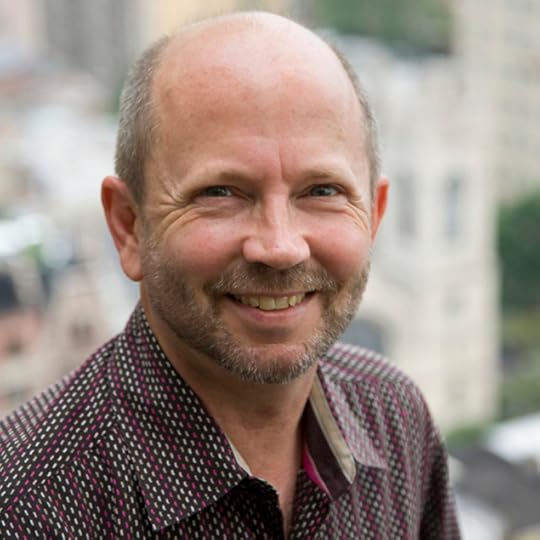
description
Robert P. Crease - image from Physics World

Crease is a world-renowned teacher and writer on things pertaining to philosophy and science. He chairs and teaches in the Department of Philosophy at Stony Brook University in New York, is co-editor-in-chief of Physics in Perspective, and, for almost twenty years, he has been writing a column called Critical Point in the publication Physics World. There is a lot to be learned in the very reasonably-sized The Workshop and the World.

description
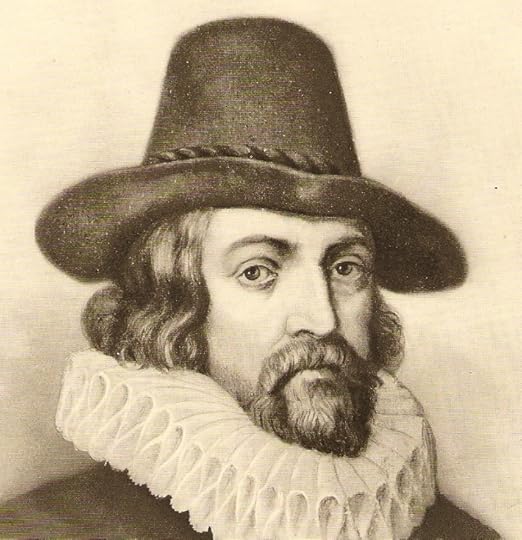
Francis Bacon - image from Philosopher.co.uk

The core intent of the book is to show how, throughout history, science and math, what Crease calls “the workshop,” has had to contend with rival forces in the world. Some great thinkers have gone to considerable trouble to analyze this tension and attempted to figure out why that was, and still is. Each of these luminaries came up with interesting theories on how things should be vs how they are, and offered their takes on the forces underlying that battle. One primary core is that people will accept the findings of science if it is backed with the imprimatur of authority. At one time, authority vested mostly in trans-state entities like the Church. Thus, if the Church decried the findings of the workshop (meaning you, Galileo), authority was denied to the science being presented, and thus people at large were less likely to embrace new findings. There have been other sources of such authority over the years, each with interests that sometimes ran (still run) counter to the findings of the workshop. What constitutes authority today and how can science successfully gain its protection in order to best serve to inform and assist us all?

description
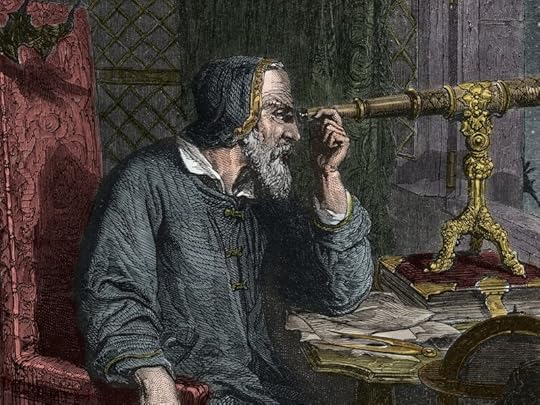
Galileo - image from Smithsonian

Crease traces the history of this conflict, taking us through brief bios of ten great thinkers. (which is definitely not the same thing as ten great people. Some of these folks you might want to admire from a great distance). There are some names here I confess were news to me. Giambattista Vico, of Naples, was an ardent defender of study of the humanities, fearing that reducing human interaction to mechanical and math-based rules would cause us to “go mad rationally.” Speaking of madness, the likely unbalanced Auguste Comte was a name I had heard, but frankly knew nothing about. He held a very high view of science, seeing it as a way to explain nature without reliance on gods of any sort. He promoted a theory called Positive Philosophy, where you might substitute the word “scientific” for “positive.” It did not help that the guy was a world class jerk, egocentric at a Trumpian level, unkind to his wife, getting into constant battles with employers and peers, generally detested. Think Ted Cruz anywhere outside a Texas voting booth. Edmund Husserl was another unfamiliar name. He argued for scientific exploration that was well attuned to immediate human experience and not locked away from the world of people in a lab.

description
Rene Descartes - image from Target Health Inc.

There are some core concepts to take away from this book. The authority thing is first, noted above. Science has innate uncertainty. Every observation, every experiment, every measurement, has the potential to be overturned by the next advance in observational, or analytical technology or the next great theory. Religion, despite the vast array of conflict within each brand, sub-brand, and sub-sub brand ad infinitum, claims its truths to be divinely revealed and eternal. Once you settle into whatever set of beliefs you choose, there is no need to re-adjust when extant circumstances change, or new ideas offer better explanations. There is comfort in holding close the accepted, the revered, the worshipped, and considerable distress to be had by allowing in alternate understandings. So, right off the bat, to many with a firm religious perspective, (and that religion could just as easily include ideologies as well), upending the extant scientific view of the world is gonna be a hard sell. Francis Bacon came up with an ingenious strategy, maintaining that nature was the other book that God gave to man, and it was up to us to use the tools we found in studying that book to better obey God.

description
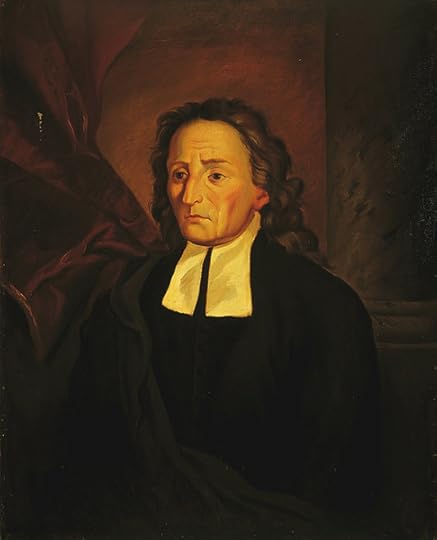
Giambattista Vico - image from Wikipedia

Another core element is that there has to be an arena in which people with a contrary scientific view can take action, which, in this context means bringing their ideas to a public forum, where they can be examined, debated, refuted, maybe even improved, without the person bringing the new view being put in fear for his or her life. (publish and perish?) This has particular impact in places where there is limited or no free press, namely totalitarian countries. Our friend Galileo, for example, was denied the right to teach, or to espouse his views in any public way, by the Church. He espoused a third source of authority, independent of religious and civil, the scientific.

There is a gap between the world of science and the world of human experience. Go head, try explaining string theory to just about anyone. It makes science, a lot of it, anyway, almost entirely remote from day-to-day personal experience, and thus easier to dismiss. Also there is a real challenge with applying first-hand, worldly knowledge based on experience to research based on theory. There is not always, but certainly can be a tension there, if those on the ground feel that their perspective is not being heard.

description

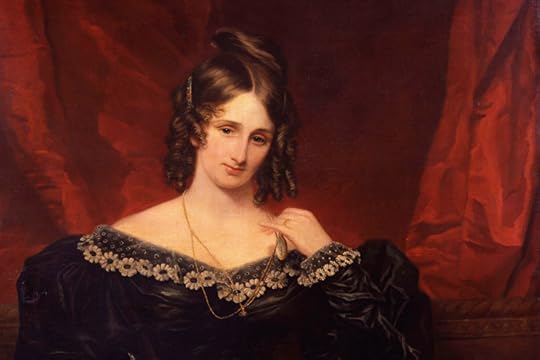
Science does not exist in a sociopolitical vacuum. It requires interaction with the world outside the workshop, connection with human values. Mary Shelley certainly offered a resonant image of what science might do, uninhibited by social (meaning either state or religious/moral) control. We still think today about Franken-this and Franken-that as a dark result of science being done in the absence of adequate foresight and control.

description
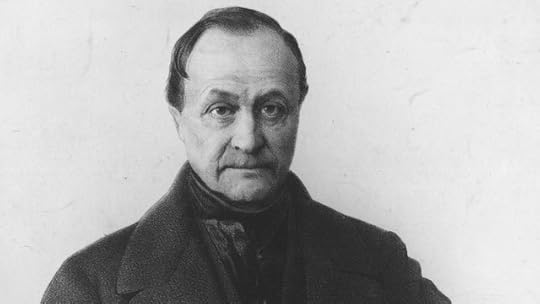
Auguste Comte - image from Vision.org

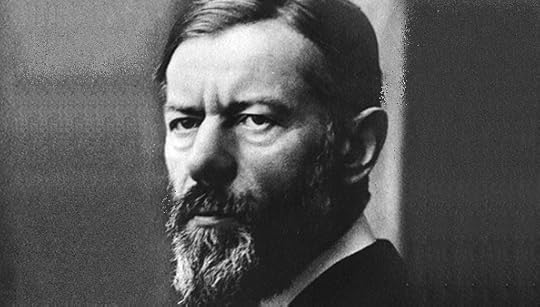
In addition to the household names, others were familiar, the material here offering reminders of information once known, but adding other info that had never found its way through my personal screen of ignorance. Max Weber is a giant in the foundations of social sciences. Crease focuses here on Weber’s concern that the so-called rationalization of scientific and social enterprises would ultimately rob both of their humanity. He believed that it would take charismatic leaders to lift societies out of their bureaucratic ruts. Of course, that can lead to even bigger problems if your charismatic turns out to be a lunatic. The chapter on Hannah Arendt grabbed me the most. No doubt one element of this is that she is the most contemporary of the great minds under view here. Also, the subject matter to which she dedicated so much of her attention is alarmingly relevant today.
Factual truth is essential to the public space and the ability to act. “Freedom of opinion is a farce unless factual information is guaranteed and the facts themselves are not in dispute.” She concludes: “Conceptually, we may call truth what we cannot change; metaphorically, it is the ground on which we stand and the sky that stretches above us.” To threaten facts is to threaten human existence, and freedom itself.
description
Max Weber - image from Crisis Magazine

There are some fun details to be found in here. Galileo, for one, made a big deal out of trying to figure out the physical shape of hell that was described by Dante in The Inferno, and screwed up the math. The tale of Comte’s ongoing unpleasantness was entertaining if quite bleak. And the dark existences some of these folks endured, with less than happy endings, is interesting, if a bit grim.

description
Hannah Arendt - image from WomensNews.org

Ok. Let’s be real here. People whose approach to science is to hold their hands over their ears and repeat LALALALALALALALALA as loudly as possible to drown out any potential incoming information, will never be persuaded by an argument offered in the past by world-class scientists who had to contend with the mindlessness of their times. Unscrupulous political and religious leaders, fueled by self-interested corporate interests and/or personal faith or ideology, will do whatever it takes to keep reality-based positions from gaining too much power. Consider that there are still morons in our legislative bodies who contend that global warming is a hoax. And some (yes, I mean you, Louis Gohmert, MTG, et al), and the people who vote for them, who are simply too dumb to understand much of anything, and too mean to admit their error should they ever actually acquire understanding. Don’t waste your breath. You could drown their communities a hundred times and they will still insist that the river will never overflow again because global warming is a hoax, or, better, find a way to blame scientists, immigrants, Muslims, minorities, or liberals for deliberately flooding them, just to, I don’t know, maybe make them feel bad.

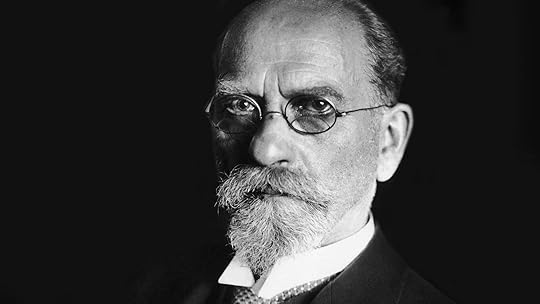
description
Edmund Husserl - image from Literariness.org

The solutions, the approaches Crease offers seem pretty obvious, and not necessarily a product of the preceding journey. They are of a short and long-term sort. On the short stack is getting politicians to Sign Pledges - This has worked pretty well for Grover Norquist and his toxic, and dishonest Taxpayer Protection Pledge, so I suppose it might be of some use, but pols are nothing if not flexible in figuring ways to either not sign or to interpret a pledge in whatever way best suits them.
Next up is Exposing Hypocrisy - This minimizes the talent most politicians have for dancing around uncomfortable questions and limiting our ability to get answers. And some seem immune to any sense of shame. Trump, for example, seems to thrive on hypocrisy. For some, hypocrisy is not so much a bug as a feature. To the cult member, it is a non-issue, easily parried as fake news.

Use comedy or ridicule - Has Crease not been watching any of the late night talk show, the huge number of people posting disparaging comedic material on pretty much every available venue, print and digital?

Tell Parables - I really like this one. If people come up with resonant metaphors they might have the capacity to slip past the bars of political bias He offers a pretty good example.

Prosecute – Well, we are working on that, but when the polluters decide who the prosecutors are, that approach is doomed – See the deal Exxon made with the state of New Jersey under Chris Christie. Like Trump installing onto courts the people who will ultimately judge him.

These suggestions are not useless, but they are not exactly news. I was hoping for something a bit more surprising than tactics that are already ongoing. The long-term approaches are minimally different from the short-term ones noted above.

So, if the goal of this book is to provide new tools to do battle with the forces of ignorance, I would call it a miss. However, and this is a big HOWEVER, there is a lot of interesting information in these pages, and it is at least somewhat reassuring that the battle between illumination and darkness has been going on for a long time, and we are still here, alive, able to carry it on. Also, it is worth refreshing our familiarity with some of the major progenitors of our world, and understanding the foundation on which demagogues build their Potemkin Villages of fear, misinformation, rage, and doubt. The Truth is what you make of it, so we need to remain vigilant and keep ours and succeeding generations from descending into another know-nothing dark age.
US politicians who attack science are like the Islamic State militants who bulldozed archaeological treasures and smash statues. Is such a comparison really over the top? Science is a cornerstone of Western culture, not only to ward off threats but also to achieve social goals. In seeking to destroy those tools science deniers are like ISIS militants in that they���re motivated by higher authority, believe mainstream culture threatens their beliefs, and want to destroy the means by which that mainstream culture survives and flourishes, If anything, ISIS militants are more honest, for they openly admit that their motive is faith and ideology, while Washington’s cultural vandals do not. It’s disingenuousness, prevents honest discussion of the issues, and falsely discredits and damages American institutions. At debates and press conferences, such politicians should be asked: “Explain the difference between ISIS religious extremists who attack cultural treasures and politicians who attack scientific process.” How they respond will reveal much about their values and integrity.

Review first posted – March 22, 2019

Publication date – March 26, 2019

I received this book from Norton in return for an information-based, unbiased review, but one based in real-world experience.


=============================EXTRA STUFF

Links to the author’s personal, and GR pages

Items by Crease
-----a list of articles for Project Syndicate
-----Co-author of an article in Physics Today - The New Big Science

Further Reading
-----Francis Bacon’s New Atlantis
-----Descartes’ Discourse
Profile Image for Michael Burnam-Fink.
1,725 reviews308 followers
August 11, 2020
The Workshop and the World is utterly perplexing. Framed as an investigation of science denial, as exemplified by the Trump Administration (pre-COVID-19, so the blood on Trump's hands was much more remote), what the book contains is a series of ten intellectual biographies, focusing on the lives and major ideas of Francis Bacon, Galileo, Descartes, Giambattista Vico, Mary Shelley, Auguste Comte, Max Weber, Kemal Ataturk, Edmund Husserl, and Hannah Arendt. If there's a point, it's lost in faulty analysis of this current moment, and a kind of willful blindness of every significant advance in science studies since 1970, construing the field as inclusively as possible without disciplinary prejudice.

The biographies vary in quality, striking a balance between the kinds of humanizing/salacious details that would keep an undergraduate interested, and a serious discussion of ideas and influences. Vico's chapter, exploring the ideas of a frustrated Humanist scholar who penned some of the first serious warnings against the then-new mechanical philosophy, is stronger than most. Conversely, the chapter on Ataturk is notably weak, wandering through a 19th century where Ataturk was either unborn or a small child, and spending almost no time exploring the deliberate use of science and technology as a state-building apparatus (with some genocide on the side, forming Turkey out of the collapsing Ottoman Empire was not clean).

Crease's overarching point, as much as there is one, is that scientific reasoning threatens to hollow out the forms of moral reasoning that give weight and meaning to human existence. Science and technology, in their power to amplify the actions of experts at the levers of power, extend out an alienating iron cage of bureaucracy. They enable a small motivated group to commit mass atrocities, murder on continental or planetary scales. I'm not sure if Crease genuinely believes this, but the overall point of this book is that science has drained something undefined and vital out of human life over the past few centuries, and a mass of anti-scientific gibberish has filled the void.

My problem with this book is twofold. First, this book is weak as a history and philosophy of science textbook. It has only the most cursory overview of the historical process by which what we call science became scientific, the break from the scholastic knowledge of the Renaissance to the birth of natural philosophy and then modern scientific specialization. The sole experimentalist on this book's list of thinkers is Galileo. The philosophy portion spends a great deal of time on mathematics and the phenomenological questions of how we can access external reality, while ignoring major work on demarcating science from non-science starting with Karl Popper's falsification criteria and moving on from there. And while the thinkers chosen are grappling seriously with science and its role in society, major contemporary criticisms of science are entirely absent, such as the post-modernist supposition that science is arbitrary semiotic games and that external reality is some kind of collective illusion, the feminist and post-colonial critiques that all knowledge is grounded in a standpoint and that scientific 'objectivity' masks a white male gaze, or the post-normal-science arguments of Funtowicz and Ravetz which posit that claims of fact on controversies cannot be separated from moral judgments.

In short, if I were to consider using this book to teach a intro seminar on what I have a PhD in, I'd have to add about 75% supplementary material to cover the fundamentals of the subject.

Second, this book is a piece of the time, a response to Donald Trump and the tide of anti-scientific nonsense washing over the globe. Crease casts this as a sole force, 'anti-science', but it's at least three separate yet commingled forces. The first is that perfectly described by Oreskes and Conway's Merchants of Doubt, a tactical opposition to specific scientific facts by tycoons who's business depending on those facts not resolving against them, such as the presence of carcinogens in cigarettes or the contribution of fossil fuels to catastrophic global warming. Merchants of doubt abuse the regular mechanisms of scientific debate to keep controversies from resolving. The second is what I'm going to call transcendental mysticism, widespread beliefs in non-scientific concepts like angels, astrology, and the afterlife, to take a few "A"s at random. Mysticism is often harmless, with perhaps the most obvious exception being those who rely on faith healing in various guises when conventional allopathic medicine could have saved their life. These first two forms of anti-scientific thought are dangerous, and should be contested where ever they appear, but they don't describe Donald Trump's attitudes towards knowledge.

Trump's sublime ignorance, his epistemological nihilism that nothing can possibly be true, is best exemplified by the Flat Earth movement. The spherical nature of the Earth has been known fact for thousands of years, since at least 600 B.C, and experiments to demonstrate its roundness are trivial to perform. Yet the Flat Earthers know that They Are Lying To You, and because They (a diffuse mass of the world's scientists, governments, parents, and especially middle school teachers) Are Lying, literally everything is a play in a game of deception. The world is a spider web of conspiracies, and Flat Earthers have done the research by watching endless hours of YouTube videos to pierce through their fantastic truth. This is the conspiracy matryoshka of QAnon; Donald Trump's unshakable belief that very soon COVID-19 will just go away, and it's only Haters bringing him bad news who are preventing that.

There's definitely a way in which decades of weaponized skepticism and magical thinking have lead us into this wilderness, but the current crisis of faith is qualitatively different. I return again and again to Ludwig Fleck, and his aphorism that "A fact is that which resists arbitrary thinking." While scientists and those who live in a scientific world can have intense disagreement about which facts are true and how to verify them, we agree on the fundamental axiom that facts are valuable, that structured thinking is hard but worthwhile. The radical epistemological nihilism of this full blown conspiracy viewpoint thinks that because the wheels are spinning faster, they must be better, yet those wheels spin without any traction whatsoever. Calling it merely 'anti-science' disguises its true nature and absolute personal and public harms.

Public understanding of science work is hard, and I don't know anybody who's actually good at (and I should), but Crease's recommendations are laughably bad. He suggests public figures sign responsibility pledges, that they be barred from hypocritical use of technology based on science, that they be the subject of ridicule, that we use parables to encourage trust in science, and that we turn the power of the State against anti-science forces and prosecute them. This is prima facie absurd. Sartre put it best, writing in the midst of the Second World War, "Never believe that anti-Semites are completely unaware of the absurdity of their replies. They know that their remarks are frivolous, open to challenge. But they are amusing themselves, for it is their adversary who is obliged to use words responsibly, since he believes in words." Dunking on these people may make us feel good, but it just gives them a banner to rally under.

The Workshop and the World has some interesting biographical sketches, but is so flawed in conception, thesis, analysis, and practical advice that I'm giving it the rarely awarded One Star.
Profile Image for Jorge Zuluaga.
439 reviews389 followers
March 30, 2021
Un excelente ejercicio de autocrítica para la ciencia y su aparentemente indudable valor e intocable lugar en la sociedad; pero al mismo tiempo, una apasionada diatriba contra los negacionistas científicos y la manera en la que debemos enfrentarlos.

El libro captura la atención desde el principio.

Yo no pude soltarlo hasta que lo terminé.

No puedo negar tampoco que como científico tengo además un interés particular por las historias y los temas tratados en el libro.

Aún así les aseguro que cualquiera que disfrute de la buena literatura de divulgación (de la historia, la ciencia y de la filosofía, como es el caso de "Los científicos y el mundo") encontrará esto texto entretenido, apasionante (en mucho apartes) y definitivamente muy informativo.

Como sabrán los pocos lectores reincidentes de mis reseñas (que en realidad están dirigidas a mí yo futuro) no me gusta repetir lo que ya esta en la descripción del libro (¡lean la siempre!), de modo que me limitaré a describir el texto como una colección de 9 biografías de personajes claves en la historia de la ciencia y de su relación con otras disciplinas y con la sociedad.

El libro trae además, como "ñapa", una interesantísima historia de la relación que una sociedad islámica altamente conservadora (el imperio Turco-Otomano de finales de los 1800) tuvo con la ciencia como instrumento de progreso social. En esta historia, el autor resalta a Kemal Atatürk, el que es posiblemente el único dirigente laico y progresista que han tenido los países islámicos en la historia reciente. Solo por este increíble y relativamente desconocido episodio de la historia ¡vale la pena leer el libro!.

De estas biografías, y como tema transversal, Robert Crease, el filósofo autor de este libro, extrae enseñanzas útiles sobre como la ciencia surgió y también como, entre otras cosas por su influencia, algunas sociedades, como decía Max Weber, otro de los personajes reseñados en el libro, degeneraron en sistemas de "especialistas sin espíritu y hedonistas sin corazón".

Lo primero que me llamo la atención del libro fue la originalidad en el tratamiento de las biografías.

Este juicio lo hago sobre lo que he leído acerca de Galileo Galilei y cuya biografía creo conocer bien. La sucinta narración que ofrece Robert Crease de la vida del matemático florentino resalta detalles bastante originales que no había visto en ninguna parte. A juzgar por este caso creo que hace lo mismo con la vida de los demás personajes en el libro (Francis Bacon, René Descartes, Hannah Arendt, Auguste Comte, etc.)

La segunda cosa que me sorprendió fue descubrir una dura crítica a la ciencia, planteada desde el conocimiento amplio de su historia y de la obra de filósofos y científicos que identificaron sus problemas desde el principio.

Una crítica a su búsqueda de verdades "objetivas" sobre el mundo (si tal cosa existe) y, como lo soñó Francis Bacon (el personaje con el que abre el libro) del poder que está forma de conocimiento otorga a los humanos para manipular ese mismo mundo, originalmente, con el propósito de favorecer sus propios intereses.

Como científico y ciudadano de un mundo en crisis, cada vez estoy más convencido de la necesidad de esta autocrítica. Lo estoy más aún después de leer el novedoso texto de Crease.

El texto está lleno de excelente citas y combina un lenguaje erudito y didáctico, con algunas referencias humorísticas, e incluso, ácidas invectivas, en las que no se disimula una rabia visceral, contra los políticos que niegan la evidencia científica, desconociendo los daños que pueden producir a los ciudadanos que dicen representar.

Me encanto al fin entender (o creer que entendía) las ideas de filósofos que creía conocer, pero que siempre habían sido relativamente confusas, imprecisas u oscuras para mí.

Desde Rene Descartes, cuyas contribuciones a la filosofía se mencionan nominalmente en la eduación (incluyendo su críptica y mal entendida frase de "pienso, luego existo"). El profesor Crease logra aclarar mejor algunas claves de la filosofía cartesiana y también criticarlas a la luz del proyecto del libro. Pasa lo mismo con las ideas del gran Giambattista Vico, prácticamente el padre de las ciencias humanas, cuyas ideas personalmente no conocía (¡gran error!). Ahora me causa mucha curiosidad conocer mejor su obra ¡un punto para el autor!.

Un amigo me había regalado hace algunos años uno de los textos de Edmund Husserl, otro de los personajes del libro, que intente leer sin mucho éxito. Al leer "Los científicos y el mundo" al fin pude entender, o tener la ilusión que comprendía, la filosofía de este maestro de maestros.

Igualmente logre capturar algunas ideas de su discípulo Martin Heidegger, al que no le dedica un apartado completo, pero cuya filosofía menciona en la historia de Hanna Arendt.

La historia de Hanna Arendt, a la que conocía solo por referencias indirectas, discípula de Heidegger, y de su concepción de la libertad y la sociedad, me impacto muy positivamente y ahora me siento impelido a buscar sus obras. El símil que hace Crease de las conclusiones a las que llega Arendt sobre el origen del absolutismo en el siglo XX, con la emergencia del poder de la ciencia y de la inevitable crisis del negacionismo científico que estamos presenciando, es brillante y solo por ella vale la pena la lectura de todo el libro.

Para mi las conclusiones del libro no pueden ser más claras:

1) Necesitamos redefinir la manera en la que la ciencia interactúa con la sociedad. Hacer de la ciencia una actividad más a la Vico (que incluya emociones, cuentos, historia) y menos a la Galileo (una actividad exclusiva para "iluminados" que saben leer el lenguaje matemático del Universo).

2) Las mismas cosas que hacen a la ciencia poderosa (el hecho que sea un producto cultural, su lenguaje especializado y su dependencia de los datos y la incertidumbre o el hecho que este siempre en proceso de construcción), la hacen susceptibles al negacionismo.

3) El negacionismo no se combate (solamente) con denuncias, describiendo los éxitos obvios de la ciencia o su superioridad frente a otras culturas. El negacionismo se combate poniendo en evidencia las contradicciones en los valores de los que la sostienen (dicen defender a los ciudadanos, pero al negar la ciencia los están condenando); se combate con el lenguaje comprensible del humor y el sarcasmo; se combate mejorando el mismo quehacer científico y la manera como se comunica.

4) Un mundo dominado por la ciencia y la razón no es un mundo necesariamente mejor (es duro decirlo pero más duro entenderlo y lo digo por experiencia propia). Como lo muestran las evidencias históricas enumeradas en el libro, las sociedades humanas son mucho más complejas y desconocerlo en aras de una supuesta verdad objetiva, no hace sino agravar los problemas sociales.

Citando a Hanna Arendt que decía que "la verdad y la política no se la llevan demasiado bien" podríamos también decir que la ciencia y la verdad se la llevan demasiado bien, pero al hacerlo la ciencia olvida su origen y deudas culturales y humanas; al hacerlo puede crear sociedades condenadas al fracaso y es presa del negacionismo.

Una lectura obligada para científicos.
Profile Image for B.
306 reviews12 followers
September 4, 2019
In a timely book where scientific facts are ignored (or outright vilified!), Professor Crease examines many aspects of the tense relation science has had with humanities –such as denial of science, its decoupling from humanities, through the imprint of ten thinkers in the last 500 years (from Bacon to Arendt).
In so doing, the author does well in demonstrating the ‘weaknesses’ of scientific thinkers (science being too abstract, innately uncertain, and requiring certain expertise to understand it) when they come under assault by politicians with hidden agendas.
Concepts I enjoyed reading/learning about: Bacon’s New Atlantis with instauration of systematic rational for experimental science along with his complementary 2-books (nature and bible); Galileo actually weighing more importance on the 2nd book Bacon referred to (book of nature, authority of science); Descartes’ “sequestered and rigorous thinking” (sailor on a boat far from land); Vico’s warning about the destructive side (mad rationality) of workshop thinking, his contrasting of Ancients (metaphorical) and Moderns’ (abstraction and systematic) way of thinking, and suggesting a non-cartesian method that is more prone at cultivating new knowledge; Shelley’s warning against the hubris of trying to control nature through nature; Comte’s idea of replacing God with humanity as object of worship; Comte’s “discovery” of sociology (linking science to social life through the “Great Story”) as a new field, and the need for positivist philosophers acting as Plato’s philosopher kings; Weber’s claim about how rudderless authority and dehumanizing bureaucracy cause disenchantment of the world; the clash of religion with science (the Ataturk chapter); phenomenology of Husserl (as opposed to transcendental method of Kant) with its ‘bracketing’ as its backbone; and the importance of ‘social sphere’ in Arendt’s thinking, without which we slide into the darkest of human side.
Too many ideas and explanations that seem to be a bit too packed into a mere 300 pages, the book remains nonetheless a good read.
Profile Image for Dale Bentz.
166 reviews
April 22, 2019
Not an easy read, but a worthwhile one that highlighted to me the ideas and proposals of (what were to me) some (new) members of the historical philosophical society. As the author points out, a safe space for useful and constructive discourse has all but disappeared and is unlikely to re-emerge from amongst our extremely polarized society. Perhaps the middle can demand such a discourse, but where is its leadership to do so. Instead, the middle is truly caught in the middle, choosing between the lesser of two (polarized) evils, and perhaps not always choosing wisely. This is a great read to show how we have arrived at this point.
Profile Image for Todd.
160 reviews9 followers
May 20, 2019
Early modern philosophy of science made relevant for today.
Profile Image for Alina.
406 reviews315 followers
July 11, 2020
Crease examines the reasons that motivate certain people who deny the validity of scientific findings (e.g., deniers of climate change and of vaccinations). Crease shows that some these reasons are quite understandable, and some are even legitimate, although the conclusion of rejecting an entire body of scientific research is nonetheless unwarranted. Crease traces these reasons back to certain paradigmatic instances of them at various points in human history, at which new scientific changes brought about great cultural upheaval. Crease tells this story by focusing on key figures (mostly scientists or philosophers) who were aware of this upheaval and formulated powerful, thoughtful responses to this upheaval; Crease points out that we moderns can learn a lot from these responses.

These figures include (in chronological order) Bacon, Galilei, Descartes, Vico, Shelley, Comte, Weber, Ataturk, Husserl, and Adrendt. Crease dedicates a chapter per figure, each of which provides one key lesson about the reasons that motivate science-deniers and the ways we can maturely deal with such deniers. Here are some overall ideas shared between these chapters:

(1) Scientific knowledge is developed by elite groups and is not readily accessible to the general public. This gives reason for laypeople to be skeptical about such knowledge; it also manifests a certain hierarchy of power that gives reason for laypeople to worry about their agency and to revel.
(2) Scientific knowledge is can also be at odds with the religious or traditional values of a given society. This gives laypeople reason to view scientific advancements as a threat to their ways of life, so that they protest against it and try to protect their own livelihoods.
(3) Scientific knowledge can seem totally disconnected from first-personal experience, and when taken to be fundamental, seems to entail that our first-personal experience is illegitimate or systematically misleading. This is an alarming thought and violates commonsense. This gives laypeople reason to be fearful of and to distrust science.
(4) Scientific knowledge results from collective endeavors, in which scientists are organized in a bureaucratic fashion. In bureaucracies, each individual serves a highly specified role, and so no given individual is fully responsible for the ultimate decisions made by the collective unit. This makes bureaucracies especially vulnerable to political influence, and this gives laypeople reason to take certain scientific findings as driven by sketchy political agendas--conspiracy theories sometimes are legitimate.

Some lessons that Crease draws from these historical figures are: to prevent science denial, we should find ways to show that certain scientific findings harmonize with, or even manifest, the cultural values to which people prone to science denial are committed. That might require creating mythologies or parables; such creativity or fiction is often spurned by scientists, but it is essential for the positive receptivity of their work. We should also be legitimately wary about the ways scientific knowledge is used. It is important to identify who benefits from a given scientific or technological innovation. We could also enforce policies that sanction certain cases of denial of bodies of scientific knowledge by powerful institutions or politicians, particularly when such denial leads to actual harm.

I do not like this book as a whole. There are a few interesting ideas here, but those could've been expressed in a short essay. Instead, Crease tries to combine those ideas with biographical sketches of a range of thinkers, scientists, and philosophers. It is as if Crease has two separate goals: (1) to argue for his main points, and (2) to give stories about the lives of these figures. The two goals are quite independent and get in each other's ways. The majority of the details of these biographies are superfluous or irrelevant to getting across these main ideas. And those biographies are too short and condensed to be of use to anyone interested in any given figure. Goal (1) would've been much more effectively achieved if Crease wrote an essay that simply cited the most relevant features of some of these figures' lives as examples.
Profile Image for STEPHEN PLETKO!!.
260 reviews6 followers
January 11, 2022
XXXXX

Required reading for anyone who cares about the role of science in society

XXXXX

“The chapters that follow [in this book] will explain how [science denial] came about, and what will be necessary to change it.

Aristotle, one of the most practical and wise of philosophers, wrote that, while it is easy to become angry, it is harder to be angry ‘with the right person, and to the right degree, and for the right purpose, and in the right way.’

This book is about how to get angry about science denial in the right way.”


The above quotation (in italics) comes from this much-needed book by Robert Crease, a philosopher, science historian, and professor. He is the chairman of the philosophy department at Stony Brook University, officially known as the State University of New York at Stony Brook (“SUNY Stony Brook”), and the author of several books on science.

Science is systemized knowledge acquired through the scientific method (observation, hypothesis, experimentation, and analysis).

The word “workshop” found in this book’s title refers to the “global scientific workshop” or even better, the “global scientific infrastructure” that humanity has built up over the centuries. This infrastructure was built because governments around the world recognized that science could greatly improve human life.

The world “authority” found in this book’s subtitle refers to “scientific authority.” Science gets its authority from the EVIDENCE it uses to produce sound conclusions. Rejecting scientific authority is known as “science denial” or even better, “evidence denial.” Science denial is now an established feature of the U.S. political landscape.

Science denial is important to understand because it threatens public health, the welfare of future generations, and even the fate of our beautiful planet.

The “ten thinkers” mentioned in this book’s subtitle can teach us about science and scientific authority. These thinkers, whose biographies comprise the core of this book, are as follows:

1. F. Bacon (1561 to 1626): philosopher, statesman
2. Galileo G. (1564 to 1642): astronomer, physicist, engineer
3. R. Descartes (1596 to 1650): philosopher, mathematician, scientist
4. G. Vico (1668 to 1744): political philosopher, rhetorician, historian, jurist
5. M. Shelley (1797 to 1851): novelist
6. A. Comte (1798 to 1857): philosopher, writer, sociologist
7. M. Weber (1864 to 1920): sociologist, philosopher, jurist, political economist
8. K. Ataturk (1881 to 1938): field marshal, statesman, author, founder (Republic of Turkey)
9. E. Husserl (1859 to 1938): philosopher
10. H. Arendt (1906 to 1975): philosopher, political theorist

Taken together, the stories of these thinkers show why the dwindling authority of science is threatening to human life, and what can be done to keep our world from falling apart.

You’ll find that this book is a good example of the role that the humanities can (and ought) to play in preserving cultural health in a scientifically and technologically permeated world.

The conclusion of this book is spot-on. It lists short-term tactics and long-term strategies for improving scientific authority.

Finally, the only problem I had with this book was that the biographies were much too detailed. I felt that there was no need for this extensive detail since it detracted from the book’s theme of science denial. However, since the message of this book is so important, I will not penalize it for this.

In conclusion, this book helps us to understand the origins of our current culture of anti-science rhetoric.

(2019; introduction; 4 parts or 10 chapters; conclusion; main narrative 280 pages; acknowledgments; notes; index)

XXXXX
Profile Image for Christopher.
770 reviews59 followers
April 28, 2019
Authority, both generally and in particular areas, is under assault today. Just because you are the trained referee of a professional game, a government bureaucracy, or a renowned scientist doesn’t mean that people will automatically listen to your expertise. Skepticism of authority can be a healthy thing, but too much can lead to disaster. This book tries to tackle our current moment in history, where science denial (despite overwhelming evidence by some of the best minds in the world) is considered a badge of honor, by telling the history and intellectual development of science through 10 different lives.

Starting with Francis Bacon and moving through such figures as Galileo, Descartes, Mary Shelly, and Hannah Arendt, Robert Crease tells the story of how science gained its authority, but also how the very things that give science authority and power are the same things that make it vulnerable to science denial. It is an absolutely fascinating look and most of the lives are summed up quite well. It makes me want to go back and read some of the luminaries to get a better grasp of Western thought.

However, this is not a perfect book. At times, Prof. Crease gets too carried away. For example, he compares politicians who deny climate change and seek to keep scientific evidence for its existence from being used by the bureaucracy to ISIS militants that destroy irreplaceable cultural relics. It’s an extreme analogy, to say the least, and one that he readily acknowledges. He tries to back it up, but I found it to be incredibly harsh nonetheless. Also, in his conclusion he gives some recommendations on how to combat science denial. Most of the recommendations are sound, but one of them, the call to have politicians sign a pledge, seems unnecessarily hostile, just like his ISIS analogy. Lastly, while most of his chapters are solid summations, his chapter on Kemal Attaturk had a major flaw: it barely mentioned Attaturk or his life at all. Instead, the chapter focused on the the Ottoman Empire’s attempts to integrate Western science into its culture, which was achieved when the Empire transformed itself into the modern nation of Turkey, which Attaturk played a critical role in. Compared to his other chapters, this one fell a little flat.

Everything else in this book I heartily endorse. This is not just for philosophers, scientists, and historians. This should be read by anyone who has seen the rise of science denial, from climate change denial to flat earthers to anti-vaxers, before and during the Trump era. This book reminds us not just how we got to this age of scientific wonders, but points the way towards combatting those who would undermine it.
Profile Image for Socrate.
6,745 reviews272 followers
February 15, 2022


În vara anului 2017, m-am dus să văd Mer de Glace, cel mai lung ghețar din Franța. Știam cum arată – sau cel puțin așa credeam. Vreme de aproape trei secole, a fost unul dintre cele mai pictate, fotografiate și descrise peisaje naturale din Europa. De pe versantul nordic al vârfului Mont Blanc, cel mai înalt din Alpi, șerpuiește la vale lin și inexorabil printre piscuri, ca un gigantic crocodil de gheață. Blocurile lui albe, zimțate,
i-au inspirat pe Goethe, Wordsworth și alți poeți. În romanul lui Mary Shelley, Frankenstein, sălbăticia ghețarului este cadrul în care se petrece prima confruntare a monstrului cu creatorul care l-a abandonat. Numeroși artiști, printre care J.M.W. Turn- er, Caspar David Friedrich și John Ruskin, i-au surprins suprafața dramatică și inegală în imagini care trec de la maiestuos și diafan la înspăimântător. Vizitatorii îl compară cu un ocean răvășit de uragan, care a înghețat brusc și a devenit alb ca laptele. Am urcat în trenul cu cremalieră, dat în folosință în 1908 pentru a aduce turiștii din orașul francez Chamonix – stațiune de ski și centru de drumeții în apropiere de granița Franței cu Italia – la Montavert, un loc în munți de unde puteau păși pe ghețar. Călătoria a durat 20 de minute. M-am pomenit printre pini, pe una din lateralele unui canion relativ drept, mărginit de pereți stâncoși. Pământul era acoperit cu mușchi, fără nici o urmă de zăpadă sau gheață, și mărețul ghețar nu se vedea încă. Mi s-a spus că, dacă voiam să îl văd, trebuia fie să cobor pe jos, fie să iau telegondola. Am plecat pe jos. Poteca trece printre copaci și tufișuri. După un minut, sau cam așa ceva, am ajuns la un indicator așezat într-un petic de flori de degetar roșu. Peste câteva minute, am dat peste un indicator similar, pe un bolovan de granit acoperit cu niște pete de licheni. Acesta avea marcat anul 1890. În continuare am trecut pe lângă alte semne pe care scria 1920, apoi 1985. Chiar dacă punctele acestea fuseseră cândva cotele maxime ale ghețarului, nu am văzut nici urmă de gheață sau de zăpadă. Pereții canionului deveneau din ce în ce mai abrupți și următoarele marcaje nu mai erau imprimate pe bolovani, ci direct pe pereții de stâncă ai văii: 1990, 2001, 2003 și 2005. Nici aici nu era urmă de gheață. Începeam să am senzația morbidă de coborâre într-un sicriu uriaș. Pe ultimul marcaj scria 2010.
Profile Image for D.L. Morrese.
Author 11 books57 followers
December 7, 2019
Ostensibly, this book leverages insights of ten historic thinkers to offer tips on how to combat present day science deniers. Sadly, I'm not convinced how applicable or efficacious some of these are, and I'm not sure that the book gets to the heart of the problem. I have no doubt there is a problem, of course. There seems to be a widespread ignorance about science in the broad sense of what it is and why it's likely to reveal facts and offer sound advice. There are selfish political and business interests, and deluded ideological and religious opponents who actively attempt to undermine not only specific scientific findings but science in general, painting it as indecisive, biased, or simply a matter of opinion. They need to be countered. I don't think it's much of an overstatement to say that the future of humanity depends on our collective decisions being informed by good science. I'm just not sure the points brought up in this book will help all that much. I enjoyed the short biographies of ten very interesting people, though.
246 reviews
May 17, 2019
I really liked this.
It is about how we got to a world in which people (especially Republican politicians in the United States) consider scientific facts to be optional - and what can be done about this problem.
But the approach that Crease takes, in examining the strengths and weaknesses of science and its practitioners, is surprising. He examines the development of science-within-society historically, by looking at the lives and works of ten important figures, starting with Francis Bacon, Galileo Galilei, and René Descartes.
Both the biographical details and the development of the author's thesis are very interesting, and they are woven together quite seamlessly.
Profile Image for Dave.
955 reviews38 followers
June 8, 2019
Robert Crease outlines the history of scientific thought to explain how today's science deniers can justify their views. It was a little more difficult for me to follow all of the connections in the early years, but it becomes quite clear by the end. History and science are my two favorite topics so I was bound to fall for this book. Crease offers some potential solutions or strategies to educate the deniers - not all feasible, but worth exploring.
Profile Image for Nathan Albright.
4,488 reviews162 followers
October 3, 2019
This author is a great hypocrite, and unfortunately not a very self-aware one.  It is hard to know exactly what this author is trying to accomplish in this book, because if the author is trying to encourage people who do not already agree with the author to give consensus science a great deal of cultural and political authority (particularly in questions about evolution and anthropogenic climate change), this book is not going to be very convincing.  Indeed, the book insults those who doubt the efficacy of vaccines, view intelligent design as more compelling than evolution, or who do not think that models about climate change are all that compelling as being either dupes of corporate shills or dishonest people who do not really disagree with the "truths" of the consensus view the author defends but seek political capital through expressing skepticism.  This considerably oversells the scientific value of the theories the author is unsuccessfully attempting to peddle and undersells the seriousness of doubts or their legitimacy, neither of which is ultimately helpful in providing the sort of pro-science support the author wants and demands but is unlikely to get from this flaming pile of nonsense.

This book is almost 300 pages long and is devoted to supporting the author's biased and mistaken views on the legitimacy of scientific authority against questions and rival theories and interpretations as seen through the eyes of ten very slanted biographical essays divided into four periods.  After an introduction the author looks at Francis Bacon's New Atlantis and praises Bacon's love of the "new science" that seeks to carve out a place for science outside of religious authority while downplaying Bacon's skeevy personal life or corruption (1), as well as giving the usual biased view of Galileo's opposition to the Catholic view of science (2) and an equally biased view of the workshop thinking shown by the frequently mistaken Descartes (3).  After that the author turns to Vico and the problem of going mad rationally (4), as well as the hideous problems of scientific development explored by Mary Shelley in Frankenstein (5), and the harrowing picture of Compte's positivist approach (6).  Three more essays look at the problem of authority and bureaucracy explored by Weber (7), the problem of science and patriotism explored in Kemel's Turkey (8), and the cultural crisis of the West explored by Husserl (9), before closing with a call to action from Arendt's writings (10) that equates those who deny evolution or climate change with Nazis, after which there is a conclusion, acknowledgements, notes, and index.

Indeed, the book is even worse than misguided, but shows the author attempting to abuse the cultural power of scientists or supporters of particular positions to silence and ridicule and even criminalize opposition.  While viewing any criticism of scientific arrogance and overreach as dishonest and feigned, and expressing a fear that science deniers (his oft-used club to beat others with) will use authoritarianism on poor defenseless and noble scientists just trying to defend the truth and enact wise policies in light of that supposed truth, the author shows himself to be as authoritarian and as nasty as any of the people this book condemns, like Hitler.  Few would-be authoritarians, after all, are as jesuitical as this particular one, who cannot even assume that his opponents are well-meaning and sincere, much less more right than he is about scientific questions he presumes are settled in favor of the author's own views, rather very much in doubt.  Perhaps he ought to have reflected upon the erroneous views of past generations of scientific speculators and reflected on the poor philosophical base so much of his argumentation lies on, and perhaps he would not beclown himself as he does here.  But that would be a vain hope, as any author who was self-aware of the intellectual and moral poverty of his position would not write the way that this one does.
Profile Image for Karen Adkins.
438 reviews17 followers
February 9, 2020
This book started out as a TEDx talk, and--much to my regret--reads like one. I love the ten thinkers Crease chooses to profile, and his angle--what can we learn from them about authority and science?--is particularly relevant in these days of climate denial. But the potted biographies are a bit too glib, and the lessons a bit too cozy. More trenchantly, science and climate deniers stay pretty firmly in the straw-man side of the argument camp, so his short- and long-term strategies for dealing with this do not, in my view, have much hope of success.
Profile Image for BookBrowse.
1,751 reviews60 followers
May 23, 2025
The Workshop and the World reveals a legacy of friction between science and the wider culture. Data and evidence only have power when they are afforded cultural legitimacy. As this book shows how revolutionary thinkers faced resistance, it reveals the historic dynamic of science denial – giving us much-needed tools of persuasion as the clock ticks toward an irreversibly damaged world.
-Chris Fredrick

Read the full review at: https://www.bookbrowse.com/mag/review...
60 reviews
Read
December 31, 2020
An exceptional book about 10 scientists and how they contradicted the established science of their times. The importance of the book is its emphasis on science and authority, of particular importance during Trump's presidency when the authority of science was ignored and we lost a lot of expertise at the hightest levels of government. That is one reason for the horrors of the Covid-19 pandemic we are experiencing.
915 reviews3 followers
February 21, 2020
An exploration of some historic thinkers and how they managed (to any extent) to change the public conversation about science. This includes a bit about how each of these ideas might be applied to our current anti-science period.
Profile Image for Lance McNeill.
Author 2 books8 followers
February 11, 2021
An essay forced into full length book

This should have remained the length of an essay or article. Instead, the author recounts long, meandering tales that make you forget what the point of the story was in the first place.
Profile Image for Daniel.
23 reviews6 followers
March 30, 2021
I think this book insults the intelligence of the general public while claiming it is trying to combat that very tendency on the part of academics and misdiagnoses the cause for the erosion of trust in scientific institutions.
Profile Image for James Robison.
3 reviews
March 29, 2024
After reading this book I now know that only Republican politicians are guided by greed and avarice. Who knew?
Profile Image for Jayde Schwerin.
317 reviews1 follower
November 15, 2022
A very involved book, however, very interesting to read... food for thought.
Displaying 1 - 26 of 26 reviews

Can't find what you're looking for?

Get help and learn more about the design.