

What do you think?

The Shining Path: Love, Madness, and Revolution in the Andes
A narrative history of the unlikely Maoist rebellion that terrorized Peru even after the fall of global Communism.
On May 17, 1980, on the eve of Peru’s presidential election, five masked men stormed a small town in the Andean heartland. They set election ballots ablaze and vanished into the night, but not before planting a red hammer-and-sickle banner in the town square. The lone man arrested the next morning later swore allegiance to a group called Shining Path. The tale of how this ferocious group of guerrilla insurgents launched a decade-long reign of terror, and how brave police investigators and journalists brought it to justice, may be the most compelling chapter in modern Latin American history, but the full story has never been told.
Described by a U.S. State Department cable as “cold-blooded and bestial,” Shining Path orchestrated bombings, assassinations, and massacres across the cities, countryside, and jungles of Peru in a murderous campaign to seize power and impose a Communist government. At its helm was the professor-turned-revolutionary Abimael Guzmán, who launched his single-minded insurrection alongside two women: his charismatic young wife, Augusta La Torre, and the formidable Elena Iparraguirre, who married Guzmán soon after Augusta’s mysterious death. Their fanatical devotion to an outmoded and dogmatic ideology, and the military’s bloody response, led to the death of nearly 70,000 Peruvians.
Orin Starn and Miguel La Serna’s narrative history of Shining Path is both panoramic and intimate, set against the socioeconomic upheavals of Peru’s rocky transition from military dictatorship to elected democracy. They take readers deep into the heart of the rebellion, and the lives and country it nearly destroyed. We hear the voices of the mountain villagers who organized a fierce rural resistance, and meet the irrepressible black activist María Elena Moyano and the Nobel Prize–winning novelist Mario Vargas Llosa, who each fought to end the bloodshed. Deftly written, The Shining Path is an exquisitely detailed account of a little-remembered war that must never be forgotten.
On May 17, 1980, on the eve of Peru’s presidential election, five masked men stormed a small town in the Andean heartland. They set election ballots ablaze and vanished into the night, but not before planting a red hammer-and-sickle banner in the town square. The lone man arrested the next morning later swore allegiance to a group called Shining Path. The tale of how this ferocious group of guerrilla insurgents launched a decade-long reign of terror, and how brave police investigators and journalists brought it to justice, may be the most compelling chapter in modern Latin American history, but the full story has never been told.
Described by a U.S. State Department cable as “cold-blooded and bestial,” Shining Path orchestrated bombings, assassinations, and massacres across the cities, countryside, and jungles of Peru in a murderous campaign to seize power and impose a Communist government. At its helm was the professor-turned-revolutionary Abimael Guzmán, who launched his single-minded insurrection alongside two women: his charismatic young wife, Augusta La Torre, and the formidable Elena Iparraguirre, who married Guzmán soon after Augusta’s mysterious death. Their fanatical devotion to an outmoded and dogmatic ideology, and the military’s bloody response, led to the death of nearly 70,000 Peruvians.
Orin Starn and Miguel La Serna’s narrative history of Shining Path is both panoramic and intimate, set against the socioeconomic upheavals of Peru’s rocky transition from military dictatorship to elected democracy. They take readers deep into the heart of the rebellion, and the lives and country it nearly destroyed. We hear the voices of the mountain villagers who organized a fierce rural resistance, and meet the irrepressible black activist María Elena Moyano and the Nobel Prize–winning novelist Mario Vargas Llosa, who each fought to end the bloodshed. Deftly written, The Shining Path is an exquisitely detailed account of a little-remembered war that must never be forgotten.
384 pages, Hardcover
First published January 1, 2019
About the author
Orin Starn
22 books17 followersOrin Starn is Professor and Chair of Cultural Anthropology at Duke University. He is the author of Nightwatch: The Politics of Protest in the Andes and a co-editor of The Peru Reader: History, Culture, Politics, both also published by Duke University Press. His most recent book is the award-winning Ishi’s Brain: In Search of America’s Last “Wild” Indian. An avid golfer with a five handicap, Starn has written about golf for the Los Angeles Times and other newspapers and provided commentary on ESPN and NPR. He blogs about golf at golfpolitics.blogspot.com and regularly teaches a course about sports and society.
Ratings & Reviews
Friends & Following
Create a free account to discover what your friends think of this book!
Community Reviews
Displaying 1 - 30 of 80 reviews

June 29, 2019
From the outside, Shining Path could appear to be an invulnerable force. A War Machine, some called it. Lurgio and his fellow fighters had no such illusions in their stone shelters. They came mostly from peasant families, a ragged band of children and teens, who had just a few rifles and not many more bullets.The book opens with a prosecutor’s visit and search of a prison cell, the occupant, nearing eighty, one Abimael Guzman, jailed for over twenty years, and destined to remain so for the rest of his dwindling days. It is a punishment deemed far too lenient by many. Guzman had led the Peruvian insurgency known as The Shining Path, (Sendero Luminoso) causing the deaths of thousands of his countrymen. All in a good cause, he still thinks. And he still dreams. But the reality is that his dream is done.

Co-authors Miguel La Serna and Orin Starn in Peru researching the Shining Path - image from Duke Today
The Shining Path may not ring many bells for you. It was a Peruvian insurgency founded by Guzman in 1970. By 1980 it was ready to fight in earnest. The bloodshed would continue until the late 1990s, when the insurgency was mostly defeated.
It took its name from the maxim of the founder of Peru’s first communist party, José Carlos Mariátegui: “El Marxismo-Leninismo abrirá el sendero luminoso hacia la revolución” (“Marxism-Leninism will open the shining path to revolution”) - from BritannicaOrin Starn and Miguel La Serna have written a fascinating history of the movement. In addition to timelines and major events, they take a close look at the personalities involved and offer diverse perspectives. They look at origins of the movement and motivations of the people who participated in it.
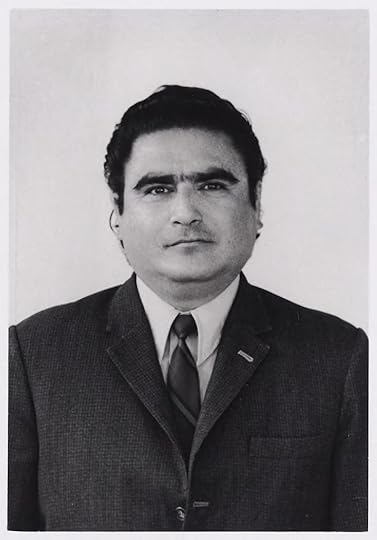
Abimael Guzman Reynoso - image from Harvard Art Museums
There is quite a cast of characters here. Guzman, of course, (aka Chairman Gonzalo) is front and center, moving from charismatic teacher to committed political force to murderous leader of a violent rebellion, to megalomaniacal control freak, to, ultimately, jail in 1992. The movement would continue for several years more after his capture but the loss of his leadership and that of other movement members seriously hampered the SP. Second in command was Augusta La Torre, (aka Comrade Norah) a dedicated revolutionary, who used her considerable people skills to recruit fighters and lead them to do unspeakable things.
There is the world-renowned writer, Mario Vargas Llosa, whose public acclaim led him to try to mediate political disputes, and later run for president. Maria Elena Moyano was a black woman of great political skill, who stood against the Senderistas, and faced increasing danger as her notoriety and political power grow. A reporter, Gustavo Gorriti, latched onto the story of the Shining Path and stuck with it to the end.

Augusta LaTorre - image from vnd-peru.blogspot
There are individuals, whose personal stories illuminate what the experience of life was like when you could as easily be murdered by the government forces as by those who opposed them.
The police unit, The Ghostbusters, assigned to find the elusive SP leadership, comes in for a look as well. Their origin and approach are intriguing, as are the politics that allowed its creation, the personnel who made it work, and their methodologies.
Guzman was a gifted teacher, and confirmed Communist, but not just any brand. The established Communist Party in Peru was very much of the Russian bent. Guzman was a follower of Mao. In fact, both he and Augusta spent time in China, at the height of the Cultural Revolution in the 1960s, learning tactics and honing their political rigidity. That training led them to focus their organizational efforts, a la Mao, on rural peasants rather than in cities. It was accessible turf for people who were gifted at articulating what it was that was keeping everyone so poor. It helped that Peru had a long history of political corruption. It also helped the SP cause that enough of their leaders spoke Quechua, the native tongue of the mountain peasants. It made for a pretty concrete Us versus the Spanish-speaking, urban Them.
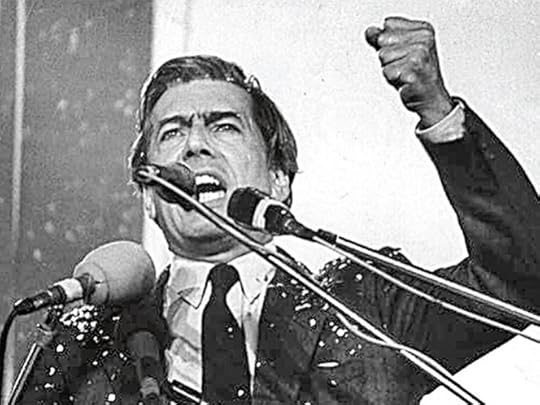
Mario Vargas Llosa - campaigning for president in 1990 - image from Excelsior
The book shifts focus from this to that person, each section spending enough time with the focal character of the moment to give you a sense of what they were about, what motivated them, how they came to be where they were, and to be doing what they were doing during this period.
“The material can be complicated, but we tried to craft it into a story that had characters the reader might care about,” Starn said. “It was a challenge to weave this plot together. It has a Greek tragic arc. High hopes for revolution. The blood of war and then destruction and loss, with nothing achieved at all.” - from the Duke Today articleI found that the looks at Guzman and Augusta did not satisfactorily explain how such middle class people could become so godawful bloodthirsty. Augusta came from a land-holding, educated family, with no indication of fanaticism in her upbringing. Guzman had a less charmed childhood, but it does not sound horrific. He, in particular, seems to go through a metamorphosis from political leader to nutcase. I heartily recommend for your consideration the book, Tyrannical Minds, for a look at some other leaders who have seriously gone off the rails. Like most would-be despots Guzman got off on elevating his image among his followers, portraying himself as a leader on par with Mao, Lenin and Marx. He also never met a rule he was not comfortable bending or breaking to suit his own purposes. Too much praise, and too much early success clearly went to his head. But what was it in his background that made him so susceptible to the attractions of megalomania? This is a history, not a psychoanalysis, so one can be forgiven for not offering a clinical diagnosis, but it would have been quite interesting to see where he fit on the tyrannical mind scale. By the end, Guzman seemed just this side of declaring the official language of Peru to be Swedish.
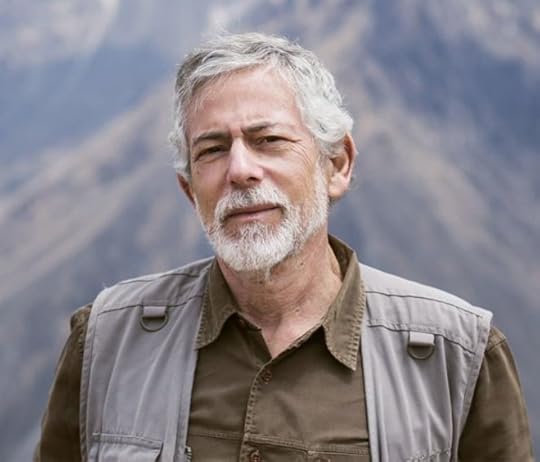
Gustavo Gorriti - image from BBC
The book offers a look at the politics of Peru of the Shining Path era, and some of what was happening in the world. Eastern European communism was failing, with open rebellions in several countries, and the Berlin Wall being breached in 1989. Guzman saw this as a failure of Soviet Communism but not of the Maoist sort. He saw that post-Mao China also was moving toward a more capitalistic, if hardly free society. So the SP was an anachronism in its time, a 1940s Maoist peasant revolution in a world in which market economy philosophy was gaining power, and perestroika was taking hold.

A defiant Irena Iparraguirre stands in prison stripes facing reporters and military in 1992 - image from the Duke Today article
There is some intrigue, beyond the purely political, in the suggestion that Guzman and his mistress, Irena Iparraguirre, did in Augusta, so that she could take Augusta’s place as second in charge and Guzman’s wife. Given the seriousness of the notion, there is very little in the book backing up the notion as anything more than fake news. She reportedly killed herself. Maybe she did, and maybe she didn’t. The depiction is certainly suggestive. But a better case should have been made, if the subject was to be raised.
Some party leaders wondered about Augusta’s death, and, if she hung herself, exactly why. Elvia Zanabria, Comrade Juana, suggested a formal investigation for the party record….Abimael refused to authorize an inquiry, which prompted the disillusioned Oscar Ramirez to question the suicide story in his own mind. Had Augusta been sick, perhaps dying from a fast-spreading cancer. Could she have been killed in some dispute over ideology and the revolution? Or because Elena and Abimael wanted out of the way to proceed with a covert love affair? It was typically self-serving, Ramirez thought, that Abimael professed his commitment to transparency and clarity, and yet rejected any party investigation into Augusta’s death. “Whenever [party norms] did not serve his personal interests, he just ignored them or pushed them aside,” Ramirez said years later.

Maria Elena Moyano - a force for sanity during the Shining Path terror – image from Peru21
The path Mario Vargas Llosa follows is fascinating. We meet him as a fifteen-year-old cub reporter. Later, as a world-class talent returning from his life in Spain to get into the local political muck, and facing charges of being an outsider because of his years abroad.
It is the close-in portraits that give this book it’s considerable weight. We get a close look at a young peasant involved in the movement, and also peasants who form militias to battle the guerillas. But the close-in looks represent a choice. One might argue that a portrait of the period, and even of the players, might have been more effective in providing the big picture by taking a step backward. Why, for example, was the SP able to succeed in creating a revolutionary movement that impacted the nation far beyond it’s actual size. What was it about Peru that led it through serial military coups over its history?
We see how quickly the SP began killing people who could have been their allies, how fast they became less a revolutionary movement and more a terrorist one. One can understand some of their actions intellectually, but only with a childish mind. They could never possibly win so long as they made so many enemies of those who were potential allies. They went after unions, the mainstream legal left, political candidates, and non-profits. They wanted to destroy the democratic process itself. Many local militias sprung up to defend their communities from SP attacks.
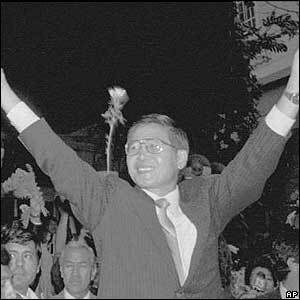
Alberto Fujimori - prevailed over Mario Vargas Llosa in the 1990 presidential
There is plenty here on government abuses, black sites, wholescale murder and torture. And also on legitimate attempts by some administrations to address the inequities in Peru.
What is the benefit to all this, in addition to filling in some gaps in our historical knowledge? One thing is that it points out the dangers of leaders losing contact with reality. I know it is something many of us think about every day. Another is to see how sane ideals become murderous demands. There are rebellions going on in the world that actually look to the Shining Path as source of inspiration. Understanding the SP allows us to better understand those who follow that road. Also, whether inspired by the SP or not, there are movements in the world that have much in common with it. See the article noted in EXTRA STUFF about the similarities of ISIS to the SP. It was the authors’ intent to provide a front to back history of the Shining Path that was accessible to a broad reading public. Most of what has been written to date about the movement has been of a more academic nature. One thing the authors point out is that The Shining Path was an equal-opportunity terrorist organization. While Guzman may have been the head, two women ran the show alongside him. Also, the body of the party, including operations personnel, was about half female as well.
There was a reconciliation Commission established after the SP was taken down. Much information was gathered, but little justice was meted out to government killers. Many bodies of those killed or disappeared remain to be found.
It can be a little tough following along, and keeping all the names straight. The index helps a lot. Making your own list of who’s who is an approach I recommend.
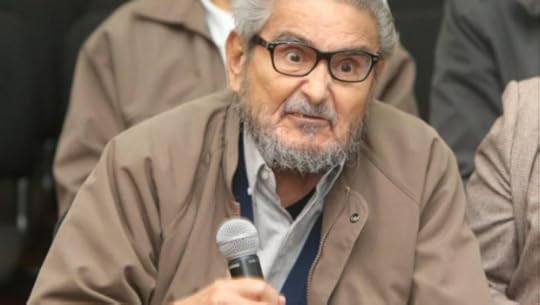
An unrepentant Abimael Guzman in 2018 - image from Americantv.com
Bottom line is that The Shining Path offers an accessible, eye-opening report on a failed revolutionary movement that resulted in tens of thousands of deaths, and made Peru a risky tourism destination for about twenty years. You will get to know the primary people involved, and see how the movement developed, changed, and ultimately, failed. You will not get a lot of analysis placing this in the context of today’s insurrectionist movements. But you will still learn a lot, which is always a beautiful thing.
Both Lenin and Mao displayed a considerable willingness to compromise in order to achieve revolutionary victory. Despite his diatribes against concessions and the incorrect line, the Bolshevik leader accepted the German kaiser’s help against the tsar. Mao allied with Chiang Kai-chek’s Nationalists to fight the Japanese before seizing China for himself by driving them to Taiwan…By contrast, the senderistas maintained their absolute contempt for elections and any negotiations with the government. They never developed a strategy for dealing with disaffected villagers besides trying to bludgeon them into submission. That brutality was self-defeating,,,
Review first posted – 8/30/19
Publication – 4/30/19
EXTRA STUFF is in Comment #1 below
But because of changes to GR rules since this was posted, which make it a challenge to add external links to comments, requiring that all existing links be undone in order to make any edits, I have added this link here.
AP - February 18, 2023 - From a secret safehouse, Peru’s Indigenous revolt advances by JOSHUA GOODMAN

June 13, 2022
During the 1980s and 1990s in Peru, the Sendero Luminoso (Shining Path) staged a blood-soaked rebellion which nearly destroyed the country. This book tells the history of the notoriously fanatical movement, largely through focusing on some of the individuals involved. It concentrates on the Shining Path’s three leaders, Abimael Guzmán, known as Comrade Gonzalo; his first wife Augusta La Torre; and Elena Iparraguirre, who became Guzmán’s wife after La Torre’s mysterious death in 1989.
I was a little unsure of this book for the first four chapters, which describe the early lives of Guzmán and La Torre, how they met, and how Iparraguirre met and impressed the other two. Initially it seemed more about relationships than about the political movement, but actually these chapters were important background. Prior to reading this I knew about Guzmán, had vaguely heard of Iparraguirre but had never heard of La Torre. The authors suggest that the two women were “doers” who may have been the real organising force behind the rebellion. Without them Guzmán “might have remained just another male leftist leader endlessly pontificating about a people’s war in the abstract.” It’s likely that the influence of the women was also significant in the Shining Path’s gender balance. Women made up a considerable proportion of both the ordinary members and the senior leaders, and the Shining Path was a sort of triumph for gender equality, if only in the sense that its female members were every bit as murderous as the male ones.
The Shining Path were committed to Maoism. They were characterised by an absolute refusal to make the slightest compromise, and for their merciless attitude to anyone who opposed them. Like his hero Mao, Guzmán created a Cult of Personality. Even senior leaders were expected to display childlike devotion and to constantly praise his sagacity, courage etc. Any failed operations were attributed to insufficient ideological commitment and those held responsible had to abase themselves with grovelling apologies and “self-criticism” in which they confessed they had not properly followed Guzman’s teachings. Some resented this but others seemed content with it. It would be interesting to consider the psychological motivation of the latter group.
The brutality of the Shining Path was indescribable, but as with all such organisations their morality was based on what they were seeking to achieve, and everything else was secondary to that. Sadly, their atrocities were often matched by those of the Peruvian Army, at least for much of the 1980s.
A number of other figures feature on the opposite side, notably Mario Vargas Llosa, and also María Elena Moyano, a black community activist in a Lima shantytown, murdered by the Shining Path in 1992. The book also features the stories of some ordinary people, one man who served in an anti-Shining Path village militia, and another called Lurgio Gavilán, a senderista who was captured by the army and who later became an anthropologist. It's mentioned that he has written an autobiography called When Rains Become Floods, which I’m going to put on my longlist.
The Shining Path more or less collapsed after Guzmán was captured by the police in 1992. Arguably by then they were already a leftover from an earlier era, but their war cost the lives of some 70,000 Peruvians. I’ve always held to the view that if the Shining Path had gained power, they would have acted like the Khmer Rouge in Cambodia. Apparently, this very point was put to Guzmán, who of course denied it.
Although I did notice one odd error, I found the book extremely interesting and generally very well written. After the first section I found it quite hard to put down. A worthwhile read for those interested in the subject.
I was a little unsure of this book for the first four chapters, which describe the early lives of Guzmán and La Torre, how they met, and how Iparraguirre met and impressed the other two. Initially it seemed more about relationships than about the political movement, but actually these chapters were important background. Prior to reading this I knew about Guzmán, had vaguely heard of Iparraguirre but had never heard of La Torre. The authors suggest that the two women were “doers” who may have been the real organising force behind the rebellion. Without them Guzmán “might have remained just another male leftist leader endlessly pontificating about a people’s war in the abstract.” It’s likely that the influence of the women was also significant in the Shining Path’s gender balance. Women made up a considerable proportion of both the ordinary members and the senior leaders, and the Shining Path was a sort of triumph for gender equality, if only in the sense that its female members were every bit as murderous as the male ones.
The Shining Path were committed to Maoism. They were characterised by an absolute refusal to make the slightest compromise, and for their merciless attitude to anyone who opposed them. Like his hero Mao, Guzmán created a Cult of Personality. Even senior leaders were expected to display childlike devotion and to constantly praise his sagacity, courage etc. Any failed operations were attributed to insufficient ideological commitment and those held responsible had to abase themselves with grovelling apologies and “self-criticism” in which they confessed they had not properly followed Guzman’s teachings. Some resented this but others seemed content with it. It would be interesting to consider the psychological motivation of the latter group.
The brutality of the Shining Path was indescribable, but as with all such organisations their morality was based on what they were seeking to achieve, and everything else was secondary to that. Sadly, their atrocities were often matched by those of the Peruvian Army, at least for much of the 1980s.
A number of other figures feature on the opposite side, notably Mario Vargas Llosa, and also María Elena Moyano, a black community activist in a Lima shantytown, murdered by the Shining Path in 1992. The book also features the stories of some ordinary people, one man who served in an anti-Shining Path village militia, and another called Lurgio Gavilán, a senderista who was captured by the army and who later became an anthropologist. It's mentioned that he has written an autobiography called When Rains Become Floods, which I’m going to put on my longlist.
The Shining Path more or less collapsed after Guzmán was captured by the police in 1992. Arguably by then they were already a leftover from an earlier era, but their war cost the lives of some 70,000 Peruvians. I’ve always held to the view that if the Shining Path had gained power, they would have acted like the Khmer Rouge in Cambodia. Apparently, this very point was put to Guzmán, who of course denied it.
Although I did notice one odd error, I found the book extremely interesting and generally very well written. After the first section I found it quite hard to put down. A worthwhile read for those interested in the subject.

July 30, 2019
This story of the Shining Path is told through the stories of its leaders, victims, resisters and investigators. The account is highly readable; I could not put it down.
A little known academic (Abimael Guzman) and his radical girlfriend (later his wife, Augusta LaTorre) were inspired by the Maoist model of creating utopia by growing a rural revolution and overwhelming the cities. They began at a time when the two largest communist countries were moving to more market based economies and in Peru, rural people were migrating to cities.
They gathered a circle of true believers. Augusta, with noted “people skills” recruited and inspired. Abimael was built as “President Gonzalo” through North Korean style deification and manipulation of followers with brutal punishment (sometimes death), banishment and shame. They recruited the poor and the young, not giving them proper weapons, training or food.
The bios make the book. Through Narciso Sulca you see the hard life in rural areas and how the insurgents “recruited” there. Narciso’s community resisted and later suffered both revenge from the rebels and atrocities committed by the army sent for its protection. Through Marie Elaina Moyano you learn of those striving to alleviate poverty through peaceful means. Like Augusta’s communist family, Marie Elaina’s apolitical survivors flee to Europe.
This communist insurgency differs from most in that women play an unprecedented role in leadership. Elena Iparraguirre, Abimael’s second wife, may have the most provocative portrait. This top leader looked like and lived like a “banker’s wife.” There is the mystery of Augusta’s death and the emergence of Elena as the previous #3 comrade elevated to #2 as Abimael’s wife. The wives are not the only women at the top and the armies themselves have many female “comrades”.
On the “establishment side”, the roles of Mario Vargas Llosa and Alberto Fujimora are defined and how neither can be credited with any real role in the solution. There is a profile of the reporter Gustavo Gorriti who does pioneer work on Shining Path, and leaves the country for work in the US, Panama and elsewhere.
There is a step by step rendering of how the Shining Path was brought down, and what became of those who did it and those who took credit. Unlike Mao, marching with the comrades, Abimael hid in unexpected places in the suburbs and wealthy neighborhoods of Lima. Exactly how he commands in the countryside is not clear, but investigators take it for granted that catching him will end the insurgency. The organization it takes precautions to hide its leaders and urban supporters but there is evidence of long and well attended party meetings in the hiding places.
While it is fiction, I will have to see the film “The Dancer Upstairs” again. The true part of the drama is that the “dancer” was the last true believer to house Abimael and Elena. She and her partner paid for this with long jail terms.
For me this book clarified not just Shining Path, what it was and what it wasn’t, but also the roles of Vargas Llosa and Fujimori in Peruvian politics. I highly recommend it for those interested in this unusual insurgency.
A little known academic (Abimael Guzman) and his radical girlfriend (later his wife, Augusta LaTorre) were inspired by the Maoist model of creating utopia by growing a rural revolution and overwhelming the cities. They began at a time when the two largest communist countries were moving to more market based economies and in Peru, rural people were migrating to cities.
They gathered a circle of true believers. Augusta, with noted “people skills” recruited and inspired. Abimael was built as “President Gonzalo” through North Korean style deification and manipulation of followers with brutal punishment (sometimes death), banishment and shame. They recruited the poor and the young, not giving them proper weapons, training or food.
The bios make the book. Through Narciso Sulca you see the hard life in rural areas and how the insurgents “recruited” there. Narciso’s community resisted and later suffered both revenge from the rebels and atrocities committed by the army sent for its protection. Through Marie Elaina Moyano you learn of those striving to alleviate poverty through peaceful means. Like Augusta’s communist family, Marie Elaina’s apolitical survivors flee to Europe.
This communist insurgency differs from most in that women play an unprecedented role in leadership. Elena Iparraguirre, Abimael’s second wife, may have the most provocative portrait. This top leader looked like and lived like a “banker’s wife.” There is the mystery of Augusta’s death and the emergence of Elena as the previous #3 comrade elevated to #2 as Abimael’s wife. The wives are not the only women at the top and the armies themselves have many female “comrades”.
On the “establishment side”, the roles of Mario Vargas Llosa and Alberto Fujimora are defined and how neither can be credited with any real role in the solution. There is a profile of the reporter Gustavo Gorriti who does pioneer work on Shining Path, and leaves the country for work in the US, Panama and elsewhere.
There is a step by step rendering of how the Shining Path was brought down, and what became of those who did it and those who took credit. Unlike Mao, marching with the comrades, Abimael hid in unexpected places in the suburbs and wealthy neighborhoods of Lima. Exactly how he commands in the countryside is not clear, but investigators take it for granted that catching him will end the insurgency. The organization it takes precautions to hide its leaders and urban supporters but there is evidence of long and well attended party meetings in the hiding places.
While it is fiction, I will have to see the film “The Dancer Upstairs” again. The true part of the drama is that the “dancer” was the last true believer to house Abimael and Elena. She and her partner paid for this with long jail terms.
For me this book clarified not just Shining Path, what it was and what it wasn’t, but also the roles of Vargas Llosa and Fujimori in Peruvian politics. I highly recommend it for those interested in this unusual insurgency.
August 19, 2019
I could give it more stars but the constant errors in the text when it came to spelling or proper names of Peruvian figures or words was quite annoying and distracting. It is a shame that such an interesting book and written with love end up making all these distracting errors. The publisher should have had some Peruvian editors editing it. I can give you some examples from the top of my head:
Mario Vargas Llosa's book "Who Killed Palomino Molero?" appears as "Who Killed Salvador Palomino?"
The underground punks, who were called "subtes" (from the word subterranean, subterráneo), appear on the book as "sutes"
The thinker Manuel González Prada appears as Manuel González Prado
Calling ceviche a "salad"
And quite surprising calling Vicente Fernández "the king of Ranchera music" born in Guadalajara, Mexico an Argentinean!!
I encountered these sort of errors throughout the book. I believe it needed some proper editing before publishing. A shame really. Perhaps it shows the lack of support and interest of American publishers when they cover Latin American topics.
Mario Vargas Llosa's book "Who Killed Palomino Molero?" appears as "Who Killed Salvador Palomino?"
The underground punks, who were called "subtes" (from the word subterranean, subterráneo), appear on the book as "sutes"
The thinker Manuel González Prada appears as Manuel González Prado
Calling ceviche a "salad"
And quite surprising calling Vicente Fernández "the king of Ranchera music" born in Guadalajara, Mexico an Argentinean!!
I encountered these sort of errors throughout the book. I believe it needed some proper editing before publishing. A shame really. Perhaps it shows the lack of support and interest of American publishers when they cover Latin American topics.

July 8, 2022
“At what precise moment,” asks a character in Mario Vargas Llosa’s 'Conversation in the Cathedral', “did Peru fuck itself up?”
• THE SHINING PATH: Love, Madness, and Revolution in the Andes by Orin Starn and Miguel la Serna, 2018.
Right there in the middle of the Peruvian jungle, there was a toilet stall.
Grown over with some vines, but functional.
I asked our host, a Canadian who has lived in Peru for decades what that was about, so discordant in the landscape.
"Fujimori was trying to win the hearts & minds of people up here in the 90s. Trying to do some infrastructure and public health to keep people from joining Shining Path. The people never even used them." (paraphrased, but the gist...)
That was August 2007 on my travels in northern Peru.
While I'd heard of Sendero Luminoso / Shining Path on the news as a child and teen, I didn't have much knowledge of their activities, or the political landscape of Peru at the time.
Several years later this book comes along, the comprehensive text I needed to learn more about the long-running movement and their terror campaign over two decades.
Anthropologist Starn & historian La Serna wrote this together, based on archival research and in-depth interviews with Shining Path leaders, now imprisoned in Peru.
Written in an engaging narrative style, the book shades in the full history of Shining Path, as well as the backlash - including a play-by-play of the failed 1990 presidential campaign of Mario Vargas Llosa (he lost to the guy who built the aforementioned toilets), Nobel Laureate and one of Spanish-language's most well-known writers.
It reads like a literary thriller - but of course, these were the real lives of scores of people in desperate and scary times.
Starn and La Serna focus on the opposition leaders and activists, federal agents' task force, and the top leaders of Shining Path - a man and woman fiercely devoted to each other and their cause - and responsible for countless deaths.
Interested in South American history, Maoist rebellions, personality cults, and the way the past shapes the future?
Look no further. Highly recommended.
• THE SHINING PATH: Love, Madness, and Revolution in the Andes by Orin Starn and Miguel la Serna, 2018.
Right there in the middle of the Peruvian jungle, there was a toilet stall.
Grown over with some vines, but functional.
I asked our host, a Canadian who has lived in Peru for decades what that was about, so discordant in the landscape.
"Fujimori was trying to win the hearts & minds of people up here in the 90s. Trying to do some infrastructure and public health to keep people from joining Shining Path. The people never even used them." (paraphrased, but the gist...)
That was August 2007 on my travels in northern Peru.
While I'd heard of Sendero Luminoso / Shining Path on the news as a child and teen, I didn't have much knowledge of their activities, or the political landscape of Peru at the time.
Several years later this book comes along, the comprehensive text I needed to learn more about the long-running movement and their terror campaign over two decades.
Anthropologist Starn & historian La Serna wrote this together, based on archival research and in-depth interviews with Shining Path leaders, now imprisoned in Peru.
Written in an engaging narrative style, the book shades in the full history of Shining Path, as well as the backlash - including a play-by-play of the failed 1990 presidential campaign of Mario Vargas Llosa (he lost to the guy who built the aforementioned toilets), Nobel Laureate and one of Spanish-language's most well-known writers.
It reads like a literary thriller - but of course, these were the real lives of scores of people in desperate and scary times.
Starn and La Serna focus on the opposition leaders and activists, federal agents' task force, and the top leaders of Shining Path - a man and woman fiercely devoted to each other and their cause - and responsible for countless deaths.
Interested in South American history, Maoist rebellions, personality cults, and the way the past shapes the future?
Look no further. Highly recommended.

March 19, 2024
Pretty much the only single-volume English narrative of the Shining Path insurgency I could find for laymen, and very informative. The authors get a lot of digs in at leftists and communism but we kind of have to take the L on this one. A gripping narrative of an utterly mad chapter in history, where privileged academics spurred a brutal insurgency that ended up killing 70, 000 people and paving the way for the election of a fascist.

August 25, 2022
The Shining Path is a fascinating account of Peru's bloody Maoist insurgency and the figures at its head, Comrade Gonzalo, the nom-de-guerre of former professor Abimael Guzman and his first and second wives, Augusta La Torre and Irena Iparraguirre. In the early 1970s, Guzman quit his job as a professor in Ayacucho and went underground, inaugurating a unique brand of People's War that would drench Peru in blood until his arrest in Lima. The narrative also ducks through secondary figures, Peru's great novelist Mario Vargas Llosa, rondero milita fighting against the Shining Path, police officers, reporters, and martyred activist Maria Elena Moyano.
Guzman's Marxist revolutionary leanings were fairly common in the 20th century, with successful insurgencies in an arc across Asia, Africa, and Latin America. While Peru was not strictly post-colonial, having won independence from Spain in 1821, the Criollo Limenos who had all the money and power were very much a case of 'new-boss-same-as-the-old-boss', especially in the harsh altiplano highlands and remote deserts and jungles. There was plenty of injustice left to fight, even if the worst excesses of the hacienda system had been reformed in the 1960s.
Shining Path rapidly liberated areas around Ayacucho from lackadaisical military control, but the actual indios who lived in the highlands proved more conservative and less revolutionary than the idealized People of Marxist-Leninist-Maoist-Gonzalo Thought. Sendero guerillas embarked on a brutal campaign of murder until the people who lived in the liberated zones matched their idealized People.
Meanwhile, Abimael, Augusta, and Irena directed the war from safehouses in luxurious Lima neighborhoods, enduring little more than isolation and security while their supporters froze and died. As the tide of retaliatory warcrimes bore against the guerillas, who disdained external support (Sendero bombed the Soviet and Chinese embassies, denouncing both major Communist powers as revisionist), the focus of the war shifted to Lima, with carbombings and assassinations in the tony Mira Flores neighborhood. The government of Alberto Fujimori countered with increasingly extreme tactics, including death squads and mass sterilizations campaigns, though the leadership was finally brought down by good policework, rather than Fujimori's reign of black sites, torture, and extra-judicial killing.
Starn and La Serna as both distinguished academic experts on Peru. They've deliberately written a popular book, focusing on people rather than theory. And indeed, so much of what made Sendero successful was a matter of it's leadership rather than ideology. But I'm despite the biographical details, I'm still left with major questions about what inspired thousands of Peruvians to join Sendero, to slaughter their countrymen, to die at hands of government death squads. The Shining Path is probably the first book an American interested in this war should read, but I hope it's not the last.
Guzman's Marxist revolutionary leanings were fairly common in the 20th century, with successful insurgencies in an arc across Asia, Africa, and Latin America. While Peru was not strictly post-colonial, having won independence from Spain in 1821, the Criollo Limenos who had all the money and power were very much a case of 'new-boss-same-as-the-old-boss', especially in the harsh altiplano highlands and remote deserts and jungles. There was plenty of injustice left to fight, even if the worst excesses of the hacienda system had been reformed in the 1960s.
Shining Path rapidly liberated areas around Ayacucho from lackadaisical military control, but the actual indios who lived in the highlands proved more conservative and less revolutionary than the idealized People of Marxist-Leninist-Maoist-Gonzalo Thought. Sendero guerillas embarked on a brutal campaign of murder until the people who lived in the liberated zones matched their idealized People.
Meanwhile, Abimael, Augusta, and Irena directed the war from safehouses in luxurious Lima neighborhoods, enduring little more than isolation and security while their supporters froze and died. As the tide of retaliatory warcrimes bore against the guerillas, who disdained external support (Sendero bombed the Soviet and Chinese embassies, denouncing both major Communist powers as revisionist), the focus of the war shifted to Lima, with carbombings and assassinations in the tony Mira Flores neighborhood. The government of Alberto Fujimori countered with increasingly extreme tactics, including death squads and mass sterilizations campaigns, though the leadership was finally brought down by good policework, rather than Fujimori's reign of black sites, torture, and extra-judicial killing.
Starn and La Serna as both distinguished academic experts on Peru. They've deliberately written a popular book, focusing on people rather than theory. And indeed, so much of what made Sendero successful was a matter of it's leadership rather than ideology. But I'm despite the biographical details, I'm still left with major questions about what inspired thousands of Peruvians to join Sendero, to slaughter their countrymen, to die at hands of government death squads. The Shining Path is probably the first book an American interested in this war should read, but I hope it's not the last.

October 14, 2022
As a narrative, this book about the Shining Path is among the best and told with flair, retaining the reader’s interest throughout.
It serves as an excellent introduction to the subject and of its leading personalities on both sides of the conflict.
However, numerous small errors mar the text; Jean-Paul Sartre is described as if he were dewey-eyed over Maoism in China and didn’t recognise any government abuses; simply not true.
He had a critical sympathy, though that was mainly for the youthful French Maoists and their bold, direct-action activism.
The leader of a Maoist split from the Peruvian Communist Party is described as eventually leaning in an ‘Albanian Maoist’ direction from 1973 onwards, though there really was no such thing as Albanian Maoism; presumably the authors are referencing Enver Hoxha’s Albania, which was indeed pro-China for a number of years, before condemning China for ‘revisionism’ and cosying up with the US.
Guzman is described as continuing to adhere to the Chinese line at this time, but no mention is made of Nixon’s 1972 visit to China or China’s subsequent shift in foreign policy;
a big reason and source for splits within Maoism, and of a consolidation of a pro-Albanian current which felt China had capitulated to US imperialism, with only Albania continuing to promote anti-imperialism and hold high the red flag.
The ‘lighthouse of anti-imperialist struggles’ is how Albania and its international partisans described the country.
This crucial context goes unmentioned. The authors are simply not familiar enough with Communist politics and its vagaries beyond generally broad outlines and what is relevant to their specific topic.
When they move beyond that they stumble more often than not.
The authors don’t have to be sympathetic to the communist project to get their facts straight. Editors and proofreaders should have picked up on these errors.
Perhaps they did not have sufficient familiarity with the subject, or limited themselves to spelling or grammar errors and did not seek to challenge problems of interpretation even when it interferes with producing a fully factual account.
It serves as an excellent introduction to the subject and of its leading personalities on both sides of the conflict.
However, numerous small errors mar the text; Jean-Paul Sartre is described as if he were dewey-eyed over Maoism in China and didn’t recognise any government abuses; simply not true.
He had a critical sympathy, though that was mainly for the youthful French Maoists and their bold, direct-action activism.
The leader of a Maoist split from the Peruvian Communist Party is described as eventually leaning in an ‘Albanian Maoist’ direction from 1973 onwards, though there really was no such thing as Albanian Maoism; presumably the authors are referencing Enver Hoxha’s Albania, which was indeed pro-China for a number of years, before condemning China for ‘revisionism’ and cosying up with the US.
Guzman is described as continuing to adhere to the Chinese line at this time, but no mention is made of Nixon’s 1972 visit to China or China’s subsequent shift in foreign policy;
a big reason and source for splits within Maoism, and of a consolidation of a pro-Albanian current which felt China had capitulated to US imperialism, with only Albania continuing to promote anti-imperialism and hold high the red flag.
The ‘lighthouse of anti-imperialist struggles’ is how Albania and its international partisans described the country.
This crucial context goes unmentioned. The authors are simply not familiar enough with Communist politics and its vagaries beyond generally broad outlines and what is relevant to their specific topic.
When they move beyond that they stumble more often than not.
The authors don’t have to be sympathetic to the communist project to get their facts straight. Editors and proofreaders should have picked up on these errors.
Perhaps they did not have sufficient familiarity with the subject, or limited themselves to spelling or grammar errors and did not seek to challenge problems of interpretation even when it interferes with producing a fully factual account.

November 27, 2022
This is a very good, well written book about the devastation wrought by the Marxist Abimael Guzman and his Shining Path followers and the Peruvians who brought him down and ended his reign of terror. The Shining Path was one of the last major groups to push for Marxist world domination. The book explores the rise of the organization and the rigid dogma that eventually led to its downfall. It also explains the political conditions in the country and talks about the corruption in the government.
I recommend this book. If you are looking for a book about recent South American politics, this is a very good one. If you believe in the radical Marxist left agenda, you will probably not like the book.
I recommend this book. If you are looking for a book about recent South American politics, this is a very good one. If you believe in the radical Marxist left agenda, you will probably not like the book.
July 21, 2021
Profoundly sad and enthralling. Really recommend for anyone who wants to understand this history. Reads great, probably the best history book I've ever encountered.

March 5, 2020
The Shining Path was a terrorist group in the Peruvian Andes in the 1980s. As such, I ddin't expect this to be a pleasant read, but an educational one.
The book definitely provides a good overall outline of the key players including the leaders of Shining Path, the army unit that eventually found them, key journalists (including Mario Vargas Llosa), and national presidential figures. It also dives into close stories and the authors clearly put a huge amount of effort into their research, sometimes obtaining first-hand interviews .
My difficulty reading this book (aside from the nature of the gruesome events described) was that I had trouble keeping up with certain dates. Some of them I'm going to have to go back and look up in other sources, like the exact year the Shining Path leaders were captured. As a nonfiction book I'd expect clear indications, and it didn't help that it would occasionally jump around and say things like "six months later" which is less helpful.
The structure of the book was also slightly difficult to follow - again, it jumps between timelines when shifting focus to a new key player, taking a brief moment to recount their childhood and background and then entering the overall story at an unknown time. Additionally, I was less interested in a full chapter on the Mario Vargas Llosa v. Fujimori presidential campaign as I was in the historical and sociological background of how Shining Path emerged in the first place. The book talks about the two first main leaders and their childhoods and marriage and starting the "political party" of Shining Path, and then immediately dives into horrific acts of violence. It seemed to come out of nowhere.
This book was definitely educational, and I think I will seek out additional resources to flesh out my knowledge more.
The book definitely provides a good overall outline of the key players including the leaders of Shining Path, the army unit that eventually found them, key journalists (including Mario Vargas Llosa), and national presidential figures. It also dives into close stories and the authors clearly put a huge amount of effort into their research, sometimes obtaining first-hand interviews .
My difficulty reading this book (aside from the nature of the gruesome events described) was that I had trouble keeping up with certain dates. Some of them I'm going to have to go back and look up in other sources, like the exact year the Shining Path leaders were captured. As a nonfiction book I'd expect clear indications, and it didn't help that it would occasionally jump around and say things like "six months later" which is less helpful.
The structure of the book was also slightly difficult to follow - again, it jumps between timelines when shifting focus to a new key player, taking a brief moment to recount their childhood and background and then entering the overall story at an unknown time. Additionally, I was less interested in a full chapter on the Mario Vargas Llosa v. Fujimori presidential campaign as I was in the historical and sociological background of how Shining Path emerged in the first place. The book talks about the two first main leaders and their childhoods and marriage and starting the "political party" of Shining Path, and then immediately dives into horrific acts of violence. It seemed to come out of nowhere.
This book was definitely educational, and I think I will seek out additional resources to flesh out my knowledge more.

Read
February 27, 2022"Such is the suffering that it shakes up rebellion. The fight is the path to peace and freedom. The fight is the path towards conquering tyrants"- Victor Palomino
Dewey Decimal Run-98-South American History
I'd like to first give a disclaimer with regards to some of my opinions on this book: I am not a supporter of the Shining Path. While my political views do tend to skew leftwards, the amount of suffering caused by Sendero Luminoso in their fight to "free" Peru from American imperialism is unfathomable, and they should be regarded as the violent group that they are.
That being said, while I enjoyed the book immensely for its deep historical storytelling and impressive journalism, the writing style of Starn gave me pause many times. While he treats the different factions as un-biasedly as possible (SP was a misguided attempt to help Peru, the army was an underfunded and scared collective, ditto the regular Peruvians, etc), his insistence on contiually beating the reader over the head of "See! China and Russia did this! That means Communism doesn't work!" becomes insufferable after awhile. I'm not claiming to know the answer to the world's problems, but, honestly, whatever way Peru was going about it wasn't that much better. Plus, China and Russia are not Peru.
Other than that, however, this book is a must-read to anyone interested in this period or region. Starn follows SP from their humble beginnings in the rural Andes to their escelation of terror attacks in the capital in a way that's very natural to read. Certain figures loom large and fade away, either through death or other conditions, and it really gives the reader a chance to connect to what this must have been like for people in this situation. The story of a ragtag group that was never larger than 15,000 members at their peak, and how they were able to utilize conditions in Peru that could very well have led to the country's collapse is incredible, as is the story of the brave men and women who stood up to their bloody orthodoxy. Read this if you want to know about the struggles that Peru has faced down and the people behind that conflict. Just try not to get too frustrated with Starn's constant asides.
Dewey Decimal Run-98-South American History
I'd like to first give a disclaimer with regards to some of my opinions on this book: I am not a supporter of the Shining Path. While my political views do tend to skew leftwards, the amount of suffering caused by Sendero Luminoso in their fight to "free" Peru from American imperialism is unfathomable, and they should be regarded as the violent group that they are.
That being said, while I enjoyed the book immensely for its deep historical storytelling and impressive journalism, the writing style of Starn gave me pause many times. While he treats the different factions as un-biasedly as possible (SP was a misguided attempt to help Peru, the army was an underfunded and scared collective, ditto the regular Peruvians, etc), his insistence on contiually beating the reader over the head of "See! China and Russia did this! That means Communism doesn't work!" becomes insufferable after awhile. I'm not claiming to know the answer to the world's problems, but, honestly, whatever way Peru was going about it wasn't that much better. Plus, China and Russia are not Peru.
Other than that, however, this book is a must-read to anyone interested in this period or region. Starn follows SP from their humble beginnings in the rural Andes to their escelation of terror attacks in the capital in a way that's very natural to read. Certain figures loom large and fade away, either through death or other conditions, and it really gives the reader a chance to connect to what this must have been like for people in this situation. The story of a ragtag group that was never larger than 15,000 members at their peak, and how they were able to utilize conditions in Peru that could very well have led to the country's collapse is incredible, as is the story of the brave men and women who stood up to their bloody orthodoxy. Read this if you want to know about the struggles that Peru has faced down and the people behind that conflict. Just try not to get too frustrated with Starn's constant asides.

December 24, 2021
Orin Starn and Miguel La Serna (anthropologist and historian) teamed up to write a compelling powerhouse narrative about the rise and fall of Sendero Luminoso (Shining Path) and their trajectory from a small group of dogmatic marxist-lenists-maoists in the highlands to a large brutal vanguard insurgency that terrorized Peru for almost two decades. As someone who lived in Peru as a child during the backdrop of violence and economic collapse in Lima, it was quite jarring to read this book and learn new details about this group. I read the Spanish translation and it turned out to be a great choice because the interviews, quotes, and other references to Peruvian culture were initially in Spanish. The book has several protagonists: the Senderista leaders, Abimael Guzman, Augusta La Torre, Elena Iparraguirre; the detectives that ultimately captured the ring Senderista leaders; the intrepid journalist Gustavo Gorriti; the feminist Black activist brutally murdered by Sendero, Maria Elena Moyano; and Narciso Sulca and Lurgio Gavilan, two young Andean men who suffered immensely as the Senderistas entered their communities. Among these characters are countless stories of the brutally of the armed conflict initiated by Sendero but perpetuated by both this group and the armed forces of Peru. At the same time, it was fascinating to also learn about the efforts by activists such as Maria Elena Moyano to defy them and organize in her community with working class people affected by this violence and economic crisis.
To write this book, the authors conducted interviews with many of the characters they write about, including their friends and family. Additionally, they provided context for the social change that occurred in Peru beginning with 1960s Ayacucho (the initial home base for Sendero) to 1990s Lima and the violence that they waged on the urban capital. The book is so gripping because it is also intimate and provides a snapshot of the ideology, fanaticism and cult of personality that drove Sendero to attack mercilessly all that opposed them or dared to defy them. Indeed, the most shocking parts of this book that horrified me was reading about the massacres perpetuated by Sendero upon the campesino communities they claimed to seek to liberate from oppression and imperialism. It is not an understatement that the most severe losses and trauma were experienced by indigenous communities in the highlands and the rainforest regions. Part of why this book is so deeply engaging is in the style it is written in - the authors clearly meant this for a popular audience, not so often the case when it comes to academic publishing. I valued reading this book and appreciated the rigor involved in research and telling the story from multiple perspectives. This book is a major contribution to memory and reconciliation in this very dark period of Peruvian history.
To write this book, the authors conducted interviews with many of the characters they write about, including their friends and family. Additionally, they provided context for the social change that occurred in Peru beginning with 1960s Ayacucho (the initial home base for Sendero) to 1990s Lima and the violence that they waged on the urban capital. The book is so gripping because it is also intimate and provides a snapshot of the ideology, fanaticism and cult of personality that drove Sendero to attack mercilessly all that opposed them or dared to defy them. Indeed, the most shocking parts of this book that horrified me was reading about the massacres perpetuated by Sendero upon the campesino communities they claimed to seek to liberate from oppression and imperialism. It is not an understatement that the most severe losses and trauma were experienced by indigenous communities in the highlands and the rainforest regions. Part of why this book is so deeply engaging is in the style it is written in - the authors clearly meant this for a popular audience, not so often the case when it comes to academic publishing. I valued reading this book and appreciated the rigor involved in research and telling the story from multiple perspectives. This book is a major contribution to memory and reconciliation in this very dark period of Peruvian history.

April 21, 2024
Really readable in its narrative form, but also incredibly well researched. Well balanced approach, interviewing not only the leading actors of Shining Path, but also those it involved, like Andean peasants, political activists, and journalists.

January 24, 2022
This is a great book! It was even better than I expected it to be. In doing his research for the book, the author was limited by the number of sources from where he could gather information. He states that many of the people who are still alive and can be found who were in some way involved in the conflict refused to talk, either out of fear or because it was a closed chapter of their lives and they did not want to relive the horrors and bitter memories. Much of the information in this book is drawn from other authors and journalists who reported on the conflict such as Gustavo Gorriti and Mario Vargas Llosa.
In all, the war took over 70,000 lives, most of whom were unfortunate civilians, non-participants from all of Peru's ethic classes, men, women, and children. Sadly and ironically enough, so were the militants, men, women, and children brainwashed into believing they were fighting for a righteous cause and they gave their lives for it. However, the terrorists were indiscriminate in their killing, as they murdered anyone who stood in their way or opposed them. They even executed their own comrades for any slight betrayal or accusation. One young girl was killed simply for secretly having a young police officer boyfriend. Children killing children.
The Peruvian government and military were not much better. Many prisoners who were suspected members of Shining Path were massacred or blown up in prisons without sufficient evidence and without trial. The barbarity of the bloodletting on all sides worsened with anger and hate as they witnessed their fellow officers and fellow comrades killed.
I lived in Peru for nearly 2 years as a missionary beginning in 1999 several years after the war died out, albeit not where most of the fighting and bloodshed took place. The memory of Shining Path was still very much alive in the minds of the people who I spoke to and lived with and I was told horror stories from the war. They were all second or third hand stories and may or may not have been true, but there is no doubt that it had a major psychological impact on all those who witnessed the reporting of the events. Peruvians lived in fear no matter which part of the country they lived in.
The Shining Path's philosophy is based upon Maoist thought. Even Che Guevara and Fidel Castro were not radical enough for them. The combatants or "Senderistas"were radicalized and conditioned into believing that their plight was a result of U.S. imperialism and that a violent Maoist revolution would pull them out of poverty. Most of the militants were from Andean villages near Ayacucho. There were university students, professional academics and many others with communist sympathies from Lima and nearby. They saw the terror organization's founder Abimael Guzmán as their spiritual guide and leader, and "the fourth sword of communism" after Marx, Lenin, and Mao.
The book delves into Peru's precarious political situation and its leaders during this time such as the controversial and corrupt Alan Garcia who was blamed for Peru's infamous prison massacres, and the tight 1990 runoff election between Garcia, Mario Vargas Llosa, and Alberto Fujimori and his dictator-style takeover of Peru's government and military.
Communist copycat versions of The Shining Path continue to this day as communist offshoots from the original group. Apparently however, the hard line Maoist "ideology" now only serves to masquerade their true mission as simply a cocaine producing cartel, like a miniature version of Columbia's FARC. A May 2021 BBC article reveals a recent massacre led by the new terrorist organization that resulted in the deaths of multiple villagers, including children.
https://www.bbc.com/news/world-latin-...
In all, the war took over 70,000 lives, most of whom were unfortunate civilians, non-participants from all of Peru's ethic classes, men, women, and children. Sadly and ironically enough, so were the militants, men, women, and children brainwashed into believing they were fighting for a righteous cause and they gave their lives for it. However, the terrorists were indiscriminate in their killing, as they murdered anyone who stood in their way or opposed them. They even executed their own comrades for any slight betrayal or accusation. One young girl was killed simply for secretly having a young police officer boyfriend. Children killing children.
The Peruvian government and military were not much better. Many prisoners who were suspected members of Shining Path were massacred or blown up in prisons without sufficient evidence and without trial. The barbarity of the bloodletting on all sides worsened with anger and hate as they witnessed their fellow officers and fellow comrades killed.
I lived in Peru for nearly 2 years as a missionary beginning in 1999 several years after the war died out, albeit not where most of the fighting and bloodshed took place. The memory of Shining Path was still very much alive in the minds of the people who I spoke to and lived with and I was told horror stories from the war. They were all second or third hand stories and may or may not have been true, but there is no doubt that it had a major psychological impact on all those who witnessed the reporting of the events. Peruvians lived in fear no matter which part of the country they lived in.
The Shining Path's philosophy is based upon Maoist thought. Even Che Guevara and Fidel Castro were not radical enough for them. The combatants or "Senderistas"were radicalized and conditioned into believing that their plight was a result of U.S. imperialism and that a violent Maoist revolution would pull them out of poverty. Most of the militants were from Andean villages near Ayacucho. There were university students, professional academics and many others with communist sympathies from Lima and nearby. They saw the terror organization's founder Abimael Guzmán as their spiritual guide and leader, and "the fourth sword of communism" after Marx, Lenin, and Mao.
The book delves into Peru's precarious political situation and its leaders during this time such as the controversial and corrupt Alan Garcia who was blamed for Peru's infamous prison massacres, and the tight 1990 runoff election between Garcia, Mario Vargas Llosa, and Alberto Fujimori and his dictator-style takeover of Peru's government and military.
Communist copycat versions of The Shining Path continue to this day as communist offshoots from the original group. Apparently however, the hard line Maoist "ideology" now only serves to masquerade their true mission as simply a cocaine producing cartel, like a miniature version of Columbia's FARC. A May 2021 BBC article reveals a recent massacre led by the new terrorist organization that resulted in the deaths of multiple villagers, including children.
https://www.bbc.com/news/world-latin-...

February 14, 2020
A few years ago I spent a fascinating, enlightening and thoroughly enjoyable 10 days in the wonderful country of Peru. I highly recommend a visit and not just to Machu Picchu, as interesting as that was. There is a lot to see in the valleys of the Andes and if you stay, as we did, in an airbnb one gets to meet charming people and really experience the country.
However, such a trip would have been impossible, or at least highly dangerous and inadvisable as recently as the 1990s when The Shining Path was rampaging through the country in an attempt to overthrow the government with a communist insurgency. Apparently there are still remnants of this group in the country but the capture of their charismatic leader, Abimael Guzman (still help in captivity) largely ended the main era of Shining Path activity. That, and the global fall of communism.
The Shining Path were a particularly violent and nasty group. There is much about the insurgency tactics here including some gruesome executions perpetrated by the group and, one has to say, the army, police and counter-insurgency forces that were fighting them. To its great credit, the book covers some of these atrocities in a little detail, but does not dwell on the horrors other than to illustrate how merciless and violent was this war. The book calls it a war, implying that there was actually a civil war going on in Peru during the 70s, 80s and 90s.
I had heard of the Shining Path or course, both prior to my trip to Peru and whilst the struggle was going on. However, it was never on my radar to visit in the 80s so I wasn't really very aware of the details. These are admirably filled in by this book. It took me a while to get all the names squared away in my head both of the towns in the Andes where this war largely played out and of the main characters but it is very well written. A couple of times I felt I wasn't following the chronology properly, but I suspect that was the reader rather than any fault of the narrative.
The subtitle points towards the triangle at the top of the SP - Guzman and the two women he eventually married - both dedicated revolutionaries clearly. The death of his first wife seems to be shrouded in some controversy although the general consensus seems to indicate suicide. This was the "love" in the tag line and it is clear that this threesome had an interesting dynamic that is covered in the text. However, it must be very hard to write a book that covers an organization such as this, given the secrecy that must have overlain their operational plans etc. Still, it strikes me as very well researched.
This was truly a dirty little war. Guerrilla insurgencies tend to be that way especially where the targets are not just military and police forces but the whole infrastructure of a country and its tourist trade in the name of overthrowing capitalism. The extent of the violence and murder does seem to have been particularly vicious in this case, and the Shining Path is truly a misnomer if ever there was one. We can be very glad it's over. This is a very interesting book if you have any curiosity about this sordid and blood soaked time in Peruvian history
However, such a trip would have been impossible, or at least highly dangerous and inadvisable as recently as the 1990s when The Shining Path was rampaging through the country in an attempt to overthrow the government with a communist insurgency. Apparently there are still remnants of this group in the country but the capture of their charismatic leader, Abimael Guzman (still help in captivity) largely ended the main era of Shining Path activity. That, and the global fall of communism.
The Shining Path were a particularly violent and nasty group. There is much about the insurgency tactics here including some gruesome executions perpetrated by the group and, one has to say, the army, police and counter-insurgency forces that were fighting them. To its great credit, the book covers some of these atrocities in a little detail, but does not dwell on the horrors other than to illustrate how merciless and violent was this war. The book calls it a war, implying that there was actually a civil war going on in Peru during the 70s, 80s and 90s.
I had heard of the Shining Path or course, both prior to my trip to Peru and whilst the struggle was going on. However, it was never on my radar to visit in the 80s so I wasn't really very aware of the details. These are admirably filled in by this book. It took me a while to get all the names squared away in my head both of the towns in the Andes where this war largely played out and of the main characters but it is very well written. A couple of times I felt I wasn't following the chronology properly, but I suspect that was the reader rather than any fault of the narrative.
The subtitle points towards the triangle at the top of the SP - Guzman and the two women he eventually married - both dedicated revolutionaries clearly. The death of his first wife seems to be shrouded in some controversy although the general consensus seems to indicate suicide. This was the "love" in the tag line and it is clear that this threesome had an interesting dynamic that is covered in the text. However, it must be very hard to write a book that covers an organization such as this, given the secrecy that must have overlain their operational plans etc. Still, it strikes me as very well researched.
This was truly a dirty little war. Guerrilla insurgencies tend to be that way especially where the targets are not just military and police forces but the whole infrastructure of a country and its tourist trade in the name of overthrowing capitalism. The extent of the violence and murder does seem to have been particularly vicious in this case, and the Shining Path is truly a misnomer if ever there was one. We can be very glad it's over. This is a very interesting book if you have any curiosity about this sordid and blood soaked time in Peruvian history

August 8, 2026
This narrative history presents the Shining Path as brutal terrorists. It says little about how and why they differed from other Maoists. Curiously, it calls them Sandinistas.

August 26, 2019
Ah, yes, the Shining Path. When I lived in the Ecuadorian Andes in 1999/2000, the Shining Path was still considered a vague threat south in Peru. They always had a ghost-like aura, their lack of physical presence counteracted by their somewhat clichéd attachment to thin Maoist dogma and actual, corporeal violence. This book is competently written in the by now familiar genre of the novelization of history, i.e. in a compelling narrative form. In the end, it turned out the Shining Path were no more than a few hundred dogmatic thugs with the equivalent of pea shooters devoted to their dear leader, their ideology preventing them from outside support, or even much of a budget. They persisted so long because of the sheer incompetence of the Peruvian state. The big break through happened when some rogue officers decided to follow low level Path minions and monitor their movements rather than arrest them immediately. The innovation.
December 30, 2024
Dicen que lo más difícil de escuchar la verdad es que duele, este libro es la definición de ello.
Ríos de tinta y sangre han corrido por las dictaduras de América latina, muchos hablan de los "chicago boys" y cómo su cultura mató al pueblo. Pero ¿y si es el pueblo el que se mata a si mismo?
El sendero luminoso y el tupac amaru fueron periodos de terror para el Perú, Fugimori no trajo mejor augurio. Es doloroso leer cómo tanta gente sufrió, como se mató a tantas personas y ninguno de los autores presentó la más mínima vergüenza.
Por momentos, los partícipes del sendero hablan de su cultura y su guerra social como una que está salvando al mundo. Duele leerlo, duele pensarlo.
No es un libro para cualquiera, yo paré de leerlo 3 veces antes de terminar. Los relatos son atroces y las situaciones horribles. Pagaría porque esto fuera ficción.
Un libro que retrata un Perú roto y asesinado.
Ríos de tinta y sangre han corrido por las dictaduras de América latina, muchos hablan de los "chicago boys" y cómo su cultura mató al pueblo. Pero ¿y si es el pueblo el que se mata a si mismo?
El sendero luminoso y el tupac amaru fueron periodos de terror para el Perú, Fugimori no trajo mejor augurio. Es doloroso leer cómo tanta gente sufrió, como se mató a tantas personas y ninguno de los autores presentó la más mínima vergüenza.
Por momentos, los partícipes del sendero hablan de su cultura y su guerra social como una que está salvando al mundo. Duele leerlo, duele pensarlo.
No es un libro para cualquiera, yo paré de leerlo 3 veces antes de terminar. Los relatos son atroces y las situaciones horribles. Pagaría porque esto fuera ficción.
Un libro que retrata un Perú roto y asesinado.

August 21, 2019
Outstanding introduction to the Shining Path Insurgency and modern Peruvian history. Takes you deep into the madness of this movement but also its more humane roots in the dramatic inequality and poverty of Peruvian society. Also includes fascinating profiles of people wrapped up in the Shining Path War, especially the heroic Maria Elena Moyano, who should be on everyone's list of the great strivers for justice in the late 20th century. Recommended for those like me who knew little about this conflict and who enjoy narrative history.

April 10, 2020
“I am in blood/Stepped in so far that, should I wade no more,/Returning were as tedious as go o'er.”
Hobsbawm once described the communist project as a gamble on “a new world . . . being born amid the blood and tears and horror.” Our tragedy is that men like Abimael Gúzman gave us just the blood, tears and horror.
Hobsbawm once described the communist project as a gamble on “a new world . . . being born amid the blood and tears and horror.” Our tragedy is that men like Abimael Gúzman gave us just the blood, tears and horror.

July 17, 2025
A gripping portrait of an era of Peruvian history that all too often seems to be left unexamined, despite the depth and visibility of its scars.
Starn and La Serna make no pretensions of their own views of Abimael Guzman, Augusta La Torre and Elena Iparraguirre, but the beliefs of the Maoist triumvirate are given context and space by the narratives. I was surprised by the absence of real analysis of the impact of Peru’s landmark agricultural reforms of the 60s and 70s, and whether this played a role in recruiting Andean sympathies to the cause of Sendero Luminoso. That fact that de-facto feudalism was the norm for just so long in Peru has always been shocking to me, and if any other readers can recommend a history or analysis of these enormous upheavals in English or Spanish, I’d be very grateful.
This was a tragic conflict. The atmosphere of decades-long fear and paranoia is well-realised, as Starn and La Serna illustrate how the senderistas and the Peruvian government murdered indiscriminately for ultimately meaningless ends. It touched the lives of the entire country, and yet I don’t think it is talked about enough. This is an excellent place to start.
Starn and La Serna make no pretensions of their own views of Abimael Guzman, Augusta La Torre and Elena Iparraguirre, but the beliefs of the Maoist triumvirate are given context and space by the narratives. I was surprised by the absence of real analysis of the impact of Peru’s landmark agricultural reforms of the 60s and 70s, and whether this played a role in recruiting Andean sympathies to the cause of Sendero Luminoso. That fact that de-facto feudalism was the norm for just so long in Peru has always been shocking to me, and if any other readers can recommend a history or analysis of these enormous upheavals in English or Spanish, I’d be very grateful.
This was a tragic conflict. The atmosphere of decades-long fear and paranoia is well-realised, as Starn and La Serna illustrate how the senderistas and the Peruvian government murdered indiscriminately for ultimately meaningless ends. It touched the lives of the entire country, and yet I don’t think it is talked about enough. This is an excellent place to start.
March 20, 2026
A forgotten era of revolution in an often forgotten part of the world. The senderistas of the Shining Path (Peruvian Communist Party) were truly in a league of their own.
Orin Starn does a wonderful job bringing to life the figures and events that marked the rather stuffy and mediocre beginnings of Abimael Guzman (Chairman Gonzalo) to the tragic, blood soaked end of his reign of terror. From the capital of Lima to the distant mountain ranges where Spanish is seldom heard, the story of a nation comes alive.
Starn also does a good job of not whitewashing either side of the conflict. As a staunch anti-communist, even I could appreciate that he never gave a blank check to the Peruvian police and military for the atrocities they committed as they (ineptly at times) rooted out the red terrorists.
I enjoyed the book. I would recommend it to those interested in Peruvian history, revolutionary and social movements, the cold war, and character studies of cult figures.
Orin Starn does a wonderful job bringing to life the figures and events that marked the rather stuffy and mediocre beginnings of Abimael Guzman (Chairman Gonzalo) to the tragic, blood soaked end of his reign of terror. From the capital of Lima to the distant mountain ranges where Spanish is seldom heard, the story of a nation comes alive.
Starn also does a good job of not whitewashing either side of the conflict. As a staunch anti-communist, even I could appreciate that he never gave a blank check to the Peruvian police and military for the atrocities they committed as they (ineptly at times) rooted out the red terrorists.
I enjoyed the book. I would recommend it to those interested in Peruvian history, revolutionary and social movements, the cold war, and character studies of cult figures.

May 22, 2025
An intriguing and well-researched book about the little-known Peruvian Marxist terrorist group, the Sendero Luminoso or Shining Path. It details the complex relationship between violent terrorism and a violent retaliatory state, leading to the poor and uninvolved taking the brunt of the some 70,000 deaths. It furthermore highlights the real possibility and danger of replacing reason with a delusional and violent ideology.

September 28, 2019
In the 1980s, just as world communism was heading towards a collapse, a band of dogmatic maoists started a guerilla in the mountain villages of Peru. Bloodshed by the Shining Path was met with indiscriminate violence by the police and the military, and during the next decade approximately 70,000 people perished in the name of the revolution. All of this happened on background of political upheavals, with a military coup in the 1970s, free elections in the 1980s, and the surprise electoral victory of Fujimoro over Mario Vargas Llosa, the Nobel-prize winning Peruvian novelist who had seen the atrocities associated with the war first-hand.
This book brings all of these stories together : how Abimael Guzman, a portly law professor, started recruiting converts to his particular Peruvian brand of Maoist theory in the revolution-friendly 1960s, soon supported by his charismatic young wife, Augusta Torres. Their original base was in the mountain villages of the Andes, where the revolutionary message found adherents among the poor villagers. But the rabid adherence to the idea that committing enough acts of random terror would eventually bring down the government ultimately led to the Sendero Luminoso losing their support even among the people they were trying to "liberate". (A lesson for wannabe revolutionaries : hacking people to pieces with machetes will not gain you many supporters amongst their relatives and neighbors.) The violence then moved into Lima and culminated with the gruesome murder of a grass-roots activist on the eve of her flight out of the country. In the meantime, Augusta Torres had died mysteriously (suicide? murder?) and Abimael, the commander-in-hiding, had formed a couple with her best friend, the equally dogmatic and dedicated Elena. They were arrested in 1992, and the Sendero's influence eventually petered out.
So the book combines history, social history, and true crime. In the end, it's still impossible to understand why people clung with so much fanaticism to the stale dogma of marxist-leninist-maoist-Gonzalo thought. All that dreary jargon about shedding blood for the revolution (written by Guzman, comfortably hidden in a series of Lima safe houses), who would buy into this? But apparently people did, not in the least Guzman's two wives, whose fanatical devotion was noted by more than one observer. The violence was indiscriminate, the Senderistas killed not only the perceived enemies of the people, but poor villagers who had not provided enough support to their liking, or, in the case of bomb blasts, totally random bystanders. All in the name of the theory that terror will lead to revolution. The only thing that this brought about, of course, was the presidency of Alberto Fujimoro, surely one of the most corrupt presidents of the late 20th century. It's all too sad for words, but at the same time, it's a riveting read. Mario Vargas Llosa makes a number of appearances in the story, first as the head of a commission tasked with investigating the murder of a group of journalists in an Andean village, and later as an unsuccessful presidential candidate. He apparently wrote 3 novels dealing with the Sendero Luminoso - I must find out what they are.
This book brings all of these stories together : how Abimael Guzman, a portly law professor, started recruiting converts to his particular Peruvian brand of Maoist theory in the revolution-friendly 1960s, soon supported by his charismatic young wife, Augusta Torres. Their original base was in the mountain villages of the Andes, where the revolutionary message found adherents among the poor villagers. But the rabid adherence to the idea that committing enough acts of random terror would eventually bring down the government ultimately led to the Sendero Luminoso losing their support even among the people they were trying to "liberate". (A lesson for wannabe revolutionaries : hacking people to pieces with machetes will not gain you many supporters amongst their relatives and neighbors.) The violence then moved into Lima and culminated with the gruesome murder of a grass-roots activist on the eve of her flight out of the country. In the meantime, Augusta Torres had died mysteriously (suicide? murder?) and Abimael, the commander-in-hiding, had formed a couple with her best friend, the equally dogmatic and dedicated Elena. They were arrested in 1992, and the Sendero's influence eventually petered out.
So the book combines history, social history, and true crime. In the end, it's still impossible to understand why people clung with so much fanaticism to the stale dogma of marxist-leninist-maoist-Gonzalo thought. All that dreary jargon about shedding blood for the revolution (written by Guzman, comfortably hidden in a series of Lima safe houses), who would buy into this? But apparently people did, not in the least Guzman's two wives, whose fanatical devotion was noted by more than one observer. The violence was indiscriminate, the Senderistas killed not only the perceived enemies of the people, but poor villagers who had not provided enough support to their liking, or, in the case of bomb blasts, totally random bystanders. All in the name of the theory that terror will lead to revolution. The only thing that this brought about, of course, was the presidency of Alberto Fujimoro, surely one of the most corrupt presidents of the late 20th century. It's all too sad for words, but at the same time, it's a riveting read. Mario Vargas Llosa makes a number of appearances in the story, first as the head of a commission tasked with investigating the murder of a group of journalists in an Andean village, and later as an unsuccessful presidential candidate. He apparently wrote 3 novels dealing with the Sendero Luminoso - I must find out what they are.

January 3, 2026
This book was a bit hard for me to get into and then difficult to follow. Some authors (and stories) you connect with and others you don’t - this was one I didn’t.
March 26, 2020
This book would have benefited from being marketed as a series of vignettes of individuals and events connected to the Shining Path - a kind of Shinning Path Reader which really dives into first-hand accounts of the group - as opposed to being presented as an accessible history of the group aimed (I think?) at a general readership. As a reader who has little knowledge of the subject and a minimal understanding of the history and politics of Peru, I often found The Shining Path: Love, Madness and Revolution in the Andes frustrating for it's focus on the stories of various (sometimes peripheral) individuals rather than the context out of which the group arose. To be sure, I learned a lot from this book (especially the latter portions) and the authors have clearly conducted some amazing interviews, but one gets the impression that their primary goals were to put as much good stuff as possible from these interviews into the book and to recreate - in sometimes granular detail - various historical moments in a pseudo-literary fashion.
Separately, as has been documented in other reviews, the authors are clearly dismissive of the ideological underpinnings of the movement, and it shows. That in and of itself isn't necessarily a problem for me, but at times I would have liked an attempt at a good-faith exploration of the group's ideology and how it grappled with and theorized various issues, as opposed to repeatedly presenting it as an uninspired knock-off of Maoism that blinkered the group to reality.
In sum, if you're looking for a light read that presents some great stories based off of extensive interviews, this will be a very enjoyable book. If you're looking for an introductory history of the group, you could probably do better.
Separately, as has been documented in other reviews, the authors are clearly dismissive of the ideological underpinnings of the movement, and it shows. That in and of itself isn't necessarily a problem for me, but at times I would have liked an attempt at a good-faith exploration of the group's ideology and how it grappled with and theorized various issues, as opposed to repeatedly presenting it as an uninspired knock-off of Maoism that blinkered the group to reality.
In sum, if you're looking for a light read that presents some great stories based off of extensive interviews, this will be a very enjoyable book. If you're looking for an introductory history of the group, you could probably do better.

April 7, 2026
A borderline unbearable read that insults the reader with a cheap veneer of impartiality.
Starn’s imperialist tone comes out at nearly every corner, painting the revolutionaries as violent animals and the counterrevolutionaries as blameless and principled saviors.
For an author who’s apparently spent so much time in Peru, I am shocked that this is the stance taken. The mass sterilizations, the US stripping of all GDP generating resources, and the systemic violence and racism inflicted upon the Peruvian people have done little to provide the author context towards the foundation of the revolution.
While I make no objection to the calls against violence, I have a strong objection towards the underlying tone of moral superiority cast towards a group of oppressed and impoverished individuals, desperate to escape a system imposed on them that they had no hand in creating.
Starn’s imperialist tone comes out at nearly every corner, painting the revolutionaries as violent animals and the counterrevolutionaries as blameless and principled saviors.
For an author who’s apparently spent so much time in Peru, I am shocked that this is the stance taken. The mass sterilizations, the US stripping of all GDP generating resources, and the systemic violence and racism inflicted upon the Peruvian people have done little to provide the author context towards the foundation of the revolution.
While I make no objection to the calls against violence, I have a strong objection towards the underlying tone of moral superiority cast towards a group of oppressed and impoverished individuals, desperate to escape a system imposed on them that they had no hand in creating.

December 18, 2019
A gruesomely informative account of the late-20thc communist revolution in Peru. I had not heard of any of this and it was a compelling read, with useful context about earlier communist revolutions, the condition of life in the mountains, and other relevant Peruvian development.
A highlight was the extensive interviews with regular people, friends and family, in addition to the major revolutionary players. It provides an evocative picture of the effect of an extended terrorist insurgency to hear about it from the victims and the people who used to know the instigators, rather than just the leaders.
A highlight was the extensive interviews with regular people, friends and family, in addition to the major revolutionary players. It provides an evocative picture of the effect of an extended terrorist insurgency to hear about it from the victims and the people who used to know the instigators, rather than just the leaders.
Displaying 1 - 30 of 80 reviews