

What do you think?

The Moonflower Vine
“Wit, emotion and undiminished boldness. . . . This is a book which celebrates life and warms the heart.” —Tulsa World A timeless American classic, this beloved family saga of the heartland is “deeply felt . . . dramatic . . . constantly alive” ( Harper’s Magazine) On a farm in western Missouri during the first half of the twentieth century, Matthew and Callie Soames create a life for themselves and raise four headstrong daughters. Jessica will break their hearts. Leonie will fall in love with the wrong man. Mary Jo will escape to New York. And wild child Mathy's fate will be the family's greatest tragedy. Over the decades they will love, deceive, comfort, forgive—and, ultimately, they will come to cherish all the more fiercely the bonds of love that hold the family together. This moving novel brings to life the rhythms and the mood of Midwestern rural life through its endearing characters and their secrets, fears, heartache, and pleasures. Jetta Carleton’s only work of fiction remains an utterly compelling story told with perceptive humor and a deep compassion.
318 pages, Paperback
First published January 1, 1962
About the author
Jetta Carleton
9 books43 followersJetta Carleton (1913–1999) was born in Holden, Missouri, and earned a master's degree at the University of Missouri. She worked as a schoolteacher, a radio copywriter in Kansas City, and a television advertising copywriter in New York City, and she ran a small publishing house with her husband in Santa Fe, New Mexico.
Ratings & Reviews
Friends & Following
Create a free account to discover what your friends think of this book!
Community Reviews
Displaying 1 - 30 of 887 reviews

February 1, 2022
“The big spendthrift blossoms extended themselves, stretched tight as the silk on parasols. In the dusk they would glimmer weakly, limp and yellowed as old gloves after a ball. But not now. Now the starred blossoms burned white against the dark vine and filled the air with the sweet, faintly bitter scent of their first and last breath.”
This is the sort of novel that rewards a somewhat obsessive compulsive reader of reviews for all the time she spends sifting through Goodreads newsfeeds scouring for the most fulfilling books. The kind that leaves me brimming with enthusiasm to share my precious copy – naturally, only on condition of a blood oath promise to return the book to me in pristine condition. The type of reading experience that gives cause for me to effusively thank my intelligent friends here for sharing their discoveries with us all.
For those of us that revere prose and character above all else, Jetta Carleton absolutely delivers on those accounts. She depicts the characters I personally long for. Not one single person in this book is all good or all bad; and I loved spending time wading in those murky waters between the two. In a nutshell, it’s a family saga, spanning at least a couple of generations, though it never gets bogged down by time. Carleton expertly crafted a story that encapsulates these lives effectively without unnecessary filler. She switches from character to character and paves gaps in time with the smooth stroke of her pen.
“The years passed, and the small events of everyday sifted down like leaves and snow."
The story is set in Missouri during the earlier part of the twentieth century, and begins with a family reunion of sorts between a mother, father and their grown daughters. The rest of the novel is a reminiscence of the past, a thoughtful reflection on those days gone by. With the exception of that first chapter, this novel is written in the third person, highlighting the inner lives of each family member individually. There are secrets and longings and hopes both dashed and realized. There are joys and sorrows and the grappling with faith. It’s about feeling lonesome, even while surrounded by others. It’s about making sense of what we’ve done with our lives, often wanting more and wondering if it’s been enough. The meaning of family, the struggles of parenting, how one may stumble into love, and how we forgive ourselves and one another - these issues are all handled with skill and written with beauty.
“She had always thought that when she loved it would be so proudly. Her love would fly like a flag in the open, for all who saw it to salute. But this – whatever it was – bore no resemblance to anything she had ever imagined. This was a sickness which she could admit to no one, not even to herself without humiliation.”
“And was this all, then? All she was to have? She turned slowly. Branch, field, creek, timber, the long slope of the pasture, the barn roof beyond. This and a few small towns were her world, all she was likely to know.”
“There was something he wanted to be besides a good farmer. He wanted education, the kind you get from books and teachers in a real schoolroom, with maps and charts and encyclopedias, all the precious orderly receptacles of information.”
I could go on and on sharing these brilliant passages; there are so many. But naturally, they are best left nestled in the pages of the book for you to experience firsthand. The metaphor of these lives likened to that of the moonflower buds is poignant and not to be missed. Highly recommended to lovers of literary fiction! I’d even share my copy with you – if you solemnly swear…
“Nothing came in reasonable measure, it seemed, not water or sunshine or sorrow. But joy, too, is immoderate sometimes, and that makes up for the rest.”
This is the sort of novel that rewards a somewhat obsessive compulsive reader of reviews for all the time she spends sifting through Goodreads newsfeeds scouring for the most fulfilling books. The kind that leaves me brimming with enthusiasm to share my precious copy – naturally, only on condition of a blood oath promise to return the book to me in pristine condition. The type of reading experience that gives cause for me to effusively thank my intelligent friends here for sharing their discoveries with us all.
For those of us that revere prose and character above all else, Jetta Carleton absolutely delivers on those accounts. She depicts the characters I personally long for. Not one single person in this book is all good or all bad; and I loved spending time wading in those murky waters between the two. In a nutshell, it’s a family saga, spanning at least a couple of generations, though it never gets bogged down by time. Carleton expertly crafted a story that encapsulates these lives effectively without unnecessary filler. She switches from character to character and paves gaps in time with the smooth stroke of her pen.
“The years passed, and the small events of everyday sifted down like leaves and snow."
The story is set in Missouri during the earlier part of the twentieth century, and begins with a family reunion of sorts between a mother, father and their grown daughters. The rest of the novel is a reminiscence of the past, a thoughtful reflection on those days gone by. With the exception of that first chapter, this novel is written in the third person, highlighting the inner lives of each family member individually. There are secrets and longings and hopes both dashed and realized. There are joys and sorrows and the grappling with faith. It’s about feeling lonesome, even while surrounded by others. It’s about making sense of what we’ve done with our lives, often wanting more and wondering if it’s been enough. The meaning of family, the struggles of parenting, how one may stumble into love, and how we forgive ourselves and one another - these issues are all handled with skill and written with beauty.
“She had always thought that when she loved it would be so proudly. Her love would fly like a flag in the open, for all who saw it to salute. But this – whatever it was – bore no resemblance to anything she had ever imagined. This was a sickness which she could admit to no one, not even to herself without humiliation.”
“And was this all, then? All she was to have? She turned slowly. Branch, field, creek, timber, the long slope of the pasture, the barn roof beyond. This and a few small towns were her world, all she was likely to know.”
“There was something he wanted to be besides a good farmer. He wanted education, the kind you get from books and teachers in a real schoolroom, with maps and charts and encyclopedias, all the precious orderly receptacles of information.”
I could go on and on sharing these brilliant passages; there are so many. But naturally, they are best left nestled in the pages of the book for you to experience firsthand. The metaphor of these lives likened to that of the moonflower buds is poignant and not to be missed. Highly recommended to lovers of literary fiction! I’d even share my copy with you – if you solemnly swear…
“Nothing came in reasonable measure, it seemed, not water or sunshine or sorrow. But joy, too, is immoderate sometimes, and that makes up for the rest.”

January 10, 2022
Maybe that was the way it went, that all your life you heard the singing and never got any closer. There were things you wanted all your life, and after a while and all of a sudden, you weren’t any closer than you ever were and there was no time left.
This is a novel about life, the messy, chaotic, craziness; the infinite variety; the joy and the sorrow. It is a novel about understanding how lives intertwine and yet how they remain separate; how we depend upon one another, and how we wish to spread our own wings and find our own way. It is about motherhood, fatherhood, sisterhood, and marriage, and the secret, internal lives, each of us lives, whether we intend to or not.
Beautifully written and deeply thoughtful, there are sections of this book that made me feel I was looking at my own reflection, even though none of the events that make up the plot had any semblance to my own life at all. There is a discussion of the nature of God that must surely be among the best treatments of the subject in print, for at its premise lies the essential question that guides belief and faith in the face of all the unfair and inexplicable tragedies every man is sure to know.
Perhaps the greatest struggle in our lives is to come to terms with who we are, as an individual, as a person unique from but in concert with others, a person with faults that we struggle not to have define us. Perhaps the only way to discover that person is to live long enough and to look backward, and perhaps all the looking back in the world will not truly tell us who we are in time. I found this book to be peopled with some of the most realistic characters in fiction--not a perfect saint or an absolute devil among them.
Suddenly it seemed to me that I looked back from a great distance on that smile and saw it all again - the smile and the day, the whole sunny, sad, funny, wonderful day and all the days that we had spent here together. What was I going to do when such days came no more? There could not be many; for we were a family growing old. And how would I learn to live without these people? I who needed them so little that I could stay away all year - what should I do without them?
My immediate reaction was that I would gladly read every word Jetta Carlton had ever written, then sadly discovered that would entail reading only one more book. I could wish for dozens, should they all be as brilliant as this.
This is a novel about life, the messy, chaotic, craziness; the infinite variety; the joy and the sorrow. It is a novel about understanding how lives intertwine and yet how they remain separate; how we depend upon one another, and how we wish to spread our own wings and find our own way. It is about motherhood, fatherhood, sisterhood, and marriage, and the secret, internal lives, each of us lives, whether we intend to or not.
Beautifully written and deeply thoughtful, there are sections of this book that made me feel I was looking at my own reflection, even though none of the events that make up the plot had any semblance to my own life at all. There is a discussion of the nature of God that must surely be among the best treatments of the subject in print, for at its premise lies the essential question that guides belief and faith in the face of all the unfair and inexplicable tragedies every man is sure to know.
Perhaps the greatest struggle in our lives is to come to terms with who we are, as an individual, as a person unique from but in concert with others, a person with faults that we struggle not to have define us. Perhaps the only way to discover that person is to live long enough and to look backward, and perhaps all the looking back in the world will not truly tell us who we are in time. I found this book to be peopled with some of the most realistic characters in fiction--not a perfect saint or an absolute devil among them.
Suddenly it seemed to me that I looked back from a great distance on that smile and saw it all again - the smile and the day, the whole sunny, sad, funny, wonderful day and all the days that we had spent here together. What was I going to do when such days came no more? There could not be many; for we were a family growing old. And how would I learn to live without these people? I who needed them so little that I could stay away all year - what should I do without them?
My immediate reaction was that I would gladly read every word Jetta Carlton had ever written, then sadly discovered that would entail reading only one more book. I could wish for dozens, should they all be as brilliant as this.

May 31, 2018
Thank you to Goodreads friend Celia, whose review of this lovely book first brought it to my attention.
The Moonflower Vine was published in 1962 and was re-released in 2009 with a Foreword by Jane Smiley. At that time this book was the only one written by the author (1913 – 1999) and, as Jane Smiley pointed out, it was not about politics or any of the big topics of the day. Instead, this is a family saga that takes place in Missouri and does so over a time span of more than 50 years. The transitions through time are written seamlessly, as are the characterizations.
Each person in this beautifully written novel is unique and has their own voice. I loved how this was done: youngest daughter opens the novel with a first person account of the family’s summer holiday together and I was immediately drawn in. From there, we are allowed to be in contact with each person’s inner thoughts and feelings, yet each of them is written in the third person. For me, this technique magnified the story somehow; it gave views and viewpoints and impressions that one person alone would not likely reveal. While we experienced each person through their thoughts and feelings, we were also able to notice scenes and events around each person – sometimes ones they were not fully aware of themselves.
This family saga is like a marvelous, leisurely walk through another time and place. It is sometimes funny, sometimes tragic, sometimes inspiring – and consistently interesting. The depths in this novel must be experienced to be fully appreciated, and my one regret is that it had to end at all. I call it “lovely” and “beautifully written”; it is also poetic, earthy and solid. It is softly touched with poetic flare so earth meets with fire, water, and air in an illuminating way that is in turns crisp, dreamy, and crystal-clear.
The Moonflower Vine itself fascinated me. It is a night-blooming relative of the morning glory and as is stated in the book, its first breath is very nearly its last. The flowers last only briefly, yet if they are clipped away as soon as they droop their heads, the pods will spring forth with another show the next evening.
This book gave me so many gifts – and I highly recommend this story, complete with all its gifts, to everyone.
The Moonflower Vine was published in 1962 and was re-released in 2009 with a Foreword by Jane Smiley. At that time this book was the only one written by the author (1913 – 1999) and, as Jane Smiley pointed out, it was not about politics or any of the big topics of the day. Instead, this is a family saga that takes place in Missouri and does so over a time span of more than 50 years. The transitions through time are written seamlessly, as are the characterizations.
Each person in this beautifully written novel is unique and has their own voice. I loved how this was done: youngest daughter opens the novel with a first person account of the family’s summer holiday together and I was immediately drawn in. From there, we are allowed to be in contact with each person’s inner thoughts and feelings, yet each of them is written in the third person. For me, this technique magnified the story somehow; it gave views and viewpoints and impressions that one person alone would not likely reveal. While we experienced each person through their thoughts and feelings, we were also able to notice scenes and events around each person – sometimes ones they were not fully aware of themselves.
This family saga is like a marvelous, leisurely walk through another time and place. It is sometimes funny, sometimes tragic, sometimes inspiring – and consistently interesting. The depths in this novel must be experienced to be fully appreciated, and my one regret is that it had to end at all. I call it “lovely” and “beautifully written”; it is also poetic, earthy and solid. It is softly touched with poetic flare so earth meets with fire, water, and air in an illuminating way that is in turns crisp, dreamy, and crystal-clear.
The Moonflower Vine itself fascinated me. It is a night-blooming relative of the morning glory and as is stated in the book, its first breath is very nearly its last. The flowers last only briefly, yet if they are clipped away as soon as they droop their heads, the pods will spring forth with another show the next evening.
This book gave me so many gifts – and I highly recommend this story, complete with all its gifts, to everyone.

January 30, 2022
FABULOUS.......loved it! Review soon!
Update!
First published in 1962….
….out of print for many years…..
….. the only book published by Jetta Carleton.
Jane Smiley, was directly influential in turning the spotlight on “Moonflower Vine” (terrific foreword by her), and HarperCollins brought it back into print:
“Rediscovered Classic”.
1950’s….
Set in the Ozark region—[ha…..nothing close to resembling the TV series about a money laundering scheme for a Mexican drug cartel gone wrong, with Jason Bateman, or Laura Linney]—rather,
“Moonflower Vine” is set in rural-western-Missouri on a small farm —where we come to know the Soames family— ordinary folks of the day, common place, simpler times, routines established…..uncultivated….
symbolized by the flowering of the moon flower vine….
…..which symbolizes challenging and difficult themes in this story: during dark times there is growth potential of our soul and personality.
Moonflower: (also known as the Jimson weed)
… “A tropical American climbing plant of the morning glory family, with large, sweet-smelling white flowers that open at dusk and close at midday”.
“The vine stormed to life, and the blooms exploded—five, twelve, a torrent of them, tumbling their extravagant beauty into the evening air”.
“Twenty-two, twenty-three,
twenty-four—twenty-four of them!” Mama, you were right!
I never saw so many at one time”.
“It’s a good year”.
“The blooming of the moon flowers was a kind of miracle, and like all true miracles it had the power of healing”.
This novel is ‘refreshingly obsolescent’ (a delicious-reading-spectacular)….
a great complementary balanced contrast to our current technological-pandemic-political-modern days).
The storytelling itself a jewel…
but it’s the underpinnings of the writing that gives this compelling family-saga it’s superiority. I MEAN SUPERIOR!!!
This debut literary- is sooooo thoroughly enjoyable- a new FAVORITE!
I’m totally elated —
……with its themes, the setting, the family members, cousins, neighbors, the dialogue, the language,…..
exploring small town life, old-fashion ways, nature, work ethics, secrets, romantic love, sexuality rebellion, independence, sacrifices, loneliness, emptiness, guilt, blame, physical limitations, crying, laughing, identity, marriage, education, music, desires, fears, pain, shame, mischief, consequences, obstacles, tragedies, love, God, religious divides, church, pride, hope, faith, and healing…..
When a book is THIS GOOD - THIS SPECIAL - I don’t want to say too much — but I’d love to put it in the hands of every person I know….
— I’m in ‘awe’ over the quality of the writing…
I just can’t say enough about it — not ‘just’ beautiful writing for its own sake — but the emotions, smells, visuals, and thoughts that it stimulates.
Just imagine….it’s summer - hotter-than-hell - you’re just a kid …
part of a family of five - you’re playing in the shrubs….you’re sweaty-filthy….
just imagine….
“The only bathtub on the farm was a wide place in the branch. Taking some towels and a cake of Ivory, we strolled down through the east pasture to where the little stream nibbled its way through a deep ravine. At one spot, my father had hollowed a spring out of the bank and kept a cup hanging on a Birch limb. He believed in the therapeutic value of springwater, wild honey, and sunshine”.
“We laughed, and I thought of the town where I grew up, where only the banker and the grocer could afford a septic tank and the constant repairs of a pump in the basement.
The rest of us got along the best we could. I remember the kitchen on the winter morning—coal buckets under foot the bucket for slopps near the door, water boiling on the big black range, my father shaving at the kitchen table,
and I in my pettycoat, washing myself and the gray enamel pan (my neck and arms), while my mother fried the bacon and grease burned on the stovelids”.
Bugs, 🐜 ,beetles, 🐞butterflies, 🦋….
….a whoop and a holler….
squawking of hens….
….chasing chickens
womanfolks gettin ice cream ready for cranking ….
….jaybirds scattered toward the orchard, screaming Thief!
….The peach leaves settled into place again, fixed in the still air like geranium leaves and pale apple jelly…
….fishin…
……canning peaches 🍑
“She looked around at the good things she was granted—green fields, good pasture, shining weather. The air was fresh, the birds sang, and she had seen a white heron. Matthew is waiting for her. The children were coming home. And they would watch the moonflowers bloom……”
The individual stories of the parents and children — coming of age — present and past —alternating between first and third person narrative makes the crafting of this novel exceptional as well ….
allowing some real reflective soul searching.
“Moonflower Vine” is one of the best developed - hand-crafted written stories - I’ve read in a long time….
…..”something of a time capsule”. …..
“As old as we were, our parents were still the government. They levied the tribute and we paid it”.
Once the adult children got there they were happy enough… cracking jokes fishing in the creek, eating country cream and grew fat and lazy.
“The lives we lived outside were suspended, the affairs of the world forgotten and our common blood remembered”.
5 +++++ stars
*Thank you Sara….(love you bunches)….this was a perfect fit for me.
Jetta Carleton (1913- 1999) was born in Holden, Missouri, and earned a master’s degree at the University of Missouri. She worked as a schoolteacher, a radio copywriter in Kansas City, and a television advertising copywriter in New York City, and she ran a small publishing house with her husband in Santa Fe, New Mexico. ‘The Moonflower Vine’ is her only published novel.
Update!
First published in 1962….
….out of print for many years…..
….. the only book published by Jetta Carleton.
Jane Smiley, was directly influential in turning the spotlight on “Moonflower Vine” (terrific foreword by her), and HarperCollins brought it back into print:
“Rediscovered Classic”.
1950’s….
Set in the Ozark region—[ha…..nothing close to resembling the TV series about a money laundering scheme for a Mexican drug cartel gone wrong, with Jason Bateman, or Laura Linney]—rather,
“Moonflower Vine” is set in rural-western-Missouri on a small farm —where we come to know the Soames family— ordinary folks of the day, common place, simpler times, routines established…..uncultivated….
symbolized by the flowering of the moon flower vine….
…..which symbolizes challenging and difficult themes in this story: during dark times there is growth potential of our soul and personality.
Moonflower: (also known as the Jimson weed)
… “A tropical American climbing plant of the morning glory family, with large, sweet-smelling white flowers that open at dusk and close at midday”.
“The vine stormed to life, and the blooms exploded—five, twelve, a torrent of them, tumbling their extravagant beauty into the evening air”.
“Twenty-two, twenty-three,
twenty-four—twenty-four of them!” Mama, you were right!
I never saw so many at one time”.
“It’s a good year”.
“The blooming of the moon flowers was a kind of miracle, and like all true miracles it had the power of healing”.
This novel is ‘refreshingly obsolescent’ (a delicious-reading-spectacular)….
a great complementary balanced contrast to our current technological-pandemic-political-modern days).
The storytelling itself a jewel…
but it’s the underpinnings of the writing that gives this compelling family-saga it’s superiority. I MEAN SUPERIOR!!!
This debut literary- is sooooo thoroughly enjoyable- a new FAVORITE!
I’m totally elated —
……with its themes, the setting, the family members, cousins, neighbors, the dialogue, the language,…..
exploring small town life, old-fashion ways, nature, work ethics, secrets, romantic love, sexuality rebellion, independence, sacrifices, loneliness, emptiness, guilt, blame, physical limitations, crying, laughing, identity, marriage, education, music, desires, fears, pain, shame, mischief, consequences, obstacles, tragedies, love, God, religious divides, church, pride, hope, faith, and healing…..
When a book is THIS GOOD - THIS SPECIAL - I don’t want to say too much — but I’d love to put it in the hands of every person I know….
— I’m in ‘awe’ over the quality of the writing…
I just can’t say enough about it — not ‘just’ beautiful writing for its own sake — but the emotions, smells, visuals, and thoughts that it stimulates.
Just imagine….it’s summer - hotter-than-hell - you’re just a kid …
part of a family of five - you’re playing in the shrubs….you’re sweaty-filthy….
just imagine….
“The only bathtub on the farm was a wide place in the branch. Taking some towels and a cake of Ivory, we strolled down through the east pasture to where the little stream nibbled its way through a deep ravine. At one spot, my father had hollowed a spring out of the bank and kept a cup hanging on a Birch limb. He believed in the therapeutic value of springwater, wild honey, and sunshine”.
“We laughed, and I thought of the town where I grew up, where only the banker and the grocer could afford a septic tank and the constant repairs of a pump in the basement.
The rest of us got along the best we could. I remember the kitchen on the winter morning—coal buckets under foot the bucket for slopps near the door, water boiling on the big black range, my father shaving at the kitchen table,
and I in my pettycoat, washing myself and the gray enamel pan (my neck and arms), while my mother fried the bacon and grease burned on the stovelids”.
Bugs, 🐜 ,beetles, 🐞butterflies, 🦋….
….a whoop and a holler….
squawking of hens….
….chasing chickens
womanfolks gettin ice cream ready for cranking ….
….jaybirds scattered toward the orchard, screaming Thief!
….The peach leaves settled into place again, fixed in the still air like geranium leaves and pale apple jelly…
….fishin…
……canning peaches 🍑
“She looked around at the good things she was granted—green fields, good pasture, shining weather. The air was fresh, the birds sang, and she had seen a white heron. Matthew is waiting for her. The children were coming home. And they would watch the moonflowers bloom……”
The individual stories of the parents and children — coming of age — present and past —alternating between first and third person narrative makes the crafting of this novel exceptional as well ….
allowing some real reflective soul searching.
“Moonflower Vine” is one of the best developed - hand-crafted written stories - I’ve read in a long time….
…..”something of a time capsule”. …..
“As old as we were, our parents were still the government. They levied the tribute and we paid it”.
Once the adult children got there they were happy enough… cracking jokes fishing in the creek, eating country cream and grew fat and lazy.
“The lives we lived outside were suspended, the affairs of the world forgotten and our common blood remembered”.
5 +++++ stars
*Thank you Sara….(love you bunches)….this was a perfect fit for me.
Jetta Carleton (1913- 1999) was born in Holden, Missouri, and earned a master’s degree at the University of Missouri. She worked as a schoolteacher, a radio copywriter in Kansas City, and a television advertising copywriter in New York City, and she ran a small publishing house with her husband in Santa Fe, New Mexico. ‘The Moonflower Vine’ is her only published novel.

January 21, 2022
First published in 1962, this is the only book that Carleton ever wrote. Focusing on the dynamics of family and romantic love, Carleton writes about a marriage that has lost its flame, the heartache of grief, and the challenges of parenting. Carleton writes from the point of view of four daughters and their parents, dipping into their lives at different points to create a wash of poetic color, submerging the reader in a grand painting of early 20th century Missouri.
The characters are complex and multifaceted. Matthew, the father, is a teacher and school superintendent and goes back and forth to work in town. Callie, the mother, manages their home and their four daughters. Matthew is intelligent, industrious, and a lover of literature and poems. He married Callie when they were young and while they share traditional values, Callie didn’t go far in school and never learned to read. As they reach middle age, this becomes a sticking point in their marriage. However, Callie is the one that gave him a very needed push to obtain his teaching certificate. She provided encouragement and the practical work of running the farm while her husband worked on his studies.
Callie’s nature is sunny. She counterbalances the moodiness of her husband. However, even Callie finds it difficult when Matthew becomes indifferent, inattentive, his head in the clouds, escaping to the barn, coming home late at night. The fire of their marriage seemed to be dying out. How Matthew and Callie navigate the prevailing winds of Matthew’s desire and temptations are intriguing. If Callie had been more self-sufficient, the story might have taken a different turn. However, Callie very well represents the women of that era, totally dependent on their husbands for a livelihood. I don’t always like Matthew but he is self-aware and feels guilty. I appreciate his motivation for education, his work ethic, and his affinity with nature, but all this has to weigh up against a major flaw, which leaves him wanting.
The changing times are represented in the daughters’ lives. “Nowadays, perfectly respectable people went to shows on Sunday, they went dancing and played cards; lots of girls even smoked–and it didn’t mean they were going to hell. Hell had shifted its location; it was farther away than people used to think.” Leonie in particular is the good girl, going by the rules, trying and failing to get her father’s attention. Mathy is a free spirit and Jessica is easygoing while Mary Jo attracts wild-haired men, the last man with a beard and smelling funny. The men they choose are very different from their father. As adults, the daughters leave their established lives and return to the farm for a few weeks during the summer. It is there I find them planning a picnic and the cutting of a bee tree, for work and pleasure often go hand in hand.
A day’s events are timed so that the entire family can participate in the grand showing of the moonflower blossoms that evening. The blooms come for one night and in their brevity, the richness of beauty and life is explored. I shared this book read with the group, ‘On the Southern Literary Trail,’ and it is one that I found enjoyable.
The characters are complex and multifaceted. Matthew, the father, is a teacher and school superintendent and goes back and forth to work in town. Callie, the mother, manages their home and their four daughters. Matthew is intelligent, industrious, and a lover of literature and poems. He married Callie when they were young and while they share traditional values, Callie didn’t go far in school and never learned to read. As they reach middle age, this becomes a sticking point in their marriage. However, Callie is the one that gave him a very needed push to obtain his teaching certificate. She provided encouragement and the practical work of running the farm while her husband worked on his studies.
Callie’s nature is sunny. She counterbalances the moodiness of her husband. However, even Callie finds it difficult when Matthew becomes indifferent, inattentive, his head in the clouds, escaping to the barn, coming home late at night. The fire of their marriage seemed to be dying out. How Matthew and Callie navigate the prevailing winds of Matthew’s desire and temptations are intriguing. If Callie had been more self-sufficient, the story might have taken a different turn. However, Callie very well represents the women of that era, totally dependent on their husbands for a livelihood. I don’t always like Matthew but he is self-aware and feels guilty. I appreciate his motivation for education, his work ethic, and his affinity with nature, but all this has to weigh up against a major flaw, which leaves him wanting.
The changing times are represented in the daughters’ lives. “Nowadays, perfectly respectable people went to shows on Sunday, they went dancing and played cards; lots of girls even smoked–and it didn’t mean they were going to hell. Hell had shifted its location; it was farther away than people used to think.” Leonie in particular is the good girl, going by the rules, trying and failing to get her father’s attention. Mathy is a free spirit and Jessica is easygoing while Mary Jo attracts wild-haired men, the last man with a beard and smelling funny. The men they choose are very different from their father. As adults, the daughters leave their established lives and return to the farm for a few weeks during the summer. It is there I find them planning a picnic and the cutting of a bee tree, for work and pleasure often go hand in hand.
A day’s events are timed so that the entire family can participate in the grand showing of the moonflower blossoms that evening. The blooms come for one night and in their brevity, the richness of beauty and life is explored. I shared this book read with the group, ‘On the Southern Literary Trail,’ and it is one that I found enjoyable.

May 30, 2026
I was drawn in from the beginning by the lovely writing , but not so much by the story at first which felt somewhat ordinarily . It begins with a reunion of the seemingly perfect Soames family as three adult daughters come home to a farm in Missouri in the early 20th century to visit their mother and father. So lovely as they can hardly wait for the evening to share the beauty and magic of the opening of the moonflowers . But then the flood gates open as the truth of their individual stories of the past are revealed in separate narratives and the seemingly idyllic world becomes realistic exposing their human imperfections and the story about ordinary people is no longer ordinary.
There are secrets, deceit, grief, heartbreak and loss as they try to balance their individual hopes and desires with love of family and obligations. There were for me some surprising details which I would never have suspected as Jetta Carleton delves into their pasts, especially those of Callie, the mother and the father, Matthew. In spite of the mistakes, errors in judgement to say the least, their lives go on and they can still connect because in spite of everything they love each other. It’s a shame that this was her only novel.
This was my tbr for 9 years - since 2017! I love new releases, but I’m going to make the effort to get to some that I own kindle versions of .
There are secrets, deceit, grief, heartbreak and loss as they try to balance their individual hopes and desires with love of family and obligations. There were for me some surprising details which I would never have suspected as Jetta Carleton delves into their pasts, especially those of Callie, the mother and the father, Matthew. In spite of the mistakes, errors in judgement to say the least, their lives go on and they can still connect because in spite of everything they love each other. It’s a shame that this was her only novel.
This was my tbr for 9 years - since 2017! I love new releases, but I’m going to make the effort to get to some that I own kindle versions of .

October 31, 2021
This was the only novel written by Jetta Carlson, and I think we are poorer for it. It was written in 1962, was a Literary Guild selection, and then was promptly forgotten til Jane Smiley included it on her list of 100 illuminating novels in 2005. In 2009 it was republished and has become a "forgotten and obscure novel" that is loved by all who take a chance on it.
It takes place in Missouri in the first half of the 20th century. The Soames are part farm family, part town family, as the father Matthew is the principal at the local high school, but they spend summers on the farm. The story is told from the viewpoint of both parents and their 4 daughters, with each section giving us more understanding of these characters lives and emotions. As a reader, I felt as though I matured right along with the girls, and mellowed along with the parents. There were a couple of peripheral characters that I loved as well. Mistakes were made and consequences endured, because this is a family saga, and a realistic one. There is tragedy and heartbreak and joy and laughter. Doing the right thing, keeping up appearances, helping out the neighbors, moving up and moving on, it's all here. There is also one of the most interesting and believable discussions between an atheist and a Christian that I've ever read. I was sorry to see it end and even more sorry that there is nothing left to read by this author. The writing is gorgeous, whether she is describing the characters or the events, but when she moves into descriptions of the farm and nature, it is sublime.
I had a wonderful few days with this family and heartily recommend a visit by those of you who need something really good to read.
It takes place in Missouri in the first half of the 20th century. The Soames are part farm family, part town family, as the father Matthew is the principal at the local high school, but they spend summers on the farm. The story is told from the viewpoint of both parents and their 4 daughters, with each section giving us more understanding of these characters lives and emotions. As a reader, I felt as though I matured right along with the girls, and mellowed along with the parents. There were a couple of peripheral characters that I loved as well. Mistakes were made and consequences endured, because this is a family saga, and a realistic one. There is tragedy and heartbreak and joy and laughter. Doing the right thing, keeping up appearances, helping out the neighbors, moving up and moving on, it's all here. There is also one of the most interesting and believable discussions between an atheist and a Christian that I've ever read. I was sorry to see it end and even more sorry that there is nothing left to read by this author. The writing is gorgeous, whether she is describing the characters or the events, but when she moves into descriptions of the farm and nature, it is sublime.
I had a wonderful few days with this family and heartily recommend a visit by those of you who need something really good to read.

December 4, 2021
...death and uncertain weather were a way of life.
This is the story of the Soames family, living in Western Missouri during the early 1900's. Mathew and Callie, and their four daughters. Country values matter here.
The writing is superb, dialogue right on the money, right down to a "Boy howdy" or two. When was the last time you read a book that mentioned Cabool, Missouri? It's right here within spittin' distance, just waitin' on you.
This weighed just a bit heavily on the "churchy" side for me, but that is no more than personal preference.
This is the story of the Soames family, living in Western Missouri during the early 1900's. Mathew and Callie, and their four daughters. Country values matter here.
The writing is superb, dialogue right on the money, right down to a "Boy howdy" or two. When was the last time you read a book that mentioned Cabool, Missouri? It's right here within spittin' distance, just waitin' on you.
This weighed just a bit heavily on the "churchy" side for me, but that is no more than personal preference.

January 23, 2022
4.5
I really enjoyed this classic story about a family with four daughters set in rural Missouri over the first half of the twentieth century.
A story of love and loss, joys,struggles,and deceit.
Each section is told by a different member of the family
I also have four daughters myself.. and my oldest is named Jessica just like in this book!.
Loved this, which I highlighted:
“And it is a beautiful day. You’d be turning your back on the Lord Himself to go inside in such weather.”
I really enjoyed this classic story about a family with four daughters set in rural Missouri over the first half of the twentieth century.
A story of love and loss, joys,struggles,and deceit.
Each section is told by a different member of the family
I also have four daughters myself.. and my oldest is named Jessica just like in this book!.
Loved this, which I highlighted:
“And it is a beautiful day. You’d be turning your back on the Lord Himself to go inside in such weather.”
January 14, 2022
5 🌱🌱🌱🌱🌱
My reader's heart is overflowing.
Special thanks to Jane Smiley. If not for her including this long neglected and previously out of print book in her list of 100 great novels, we modern day readers might never have gotten a second chance.
From Smiley's forward:
Robert Gottlieb, one of the most experience editors in publishing, wrote, "Of the hundreds upon hundreds of novels I've edited, this is literally the only one I've reread several times since it's publication. And every time I've read it, I've been moved by it again—by the people, by their lives, by the truth, and the clarity and generosity of the writing and feeling."
It doesn't get better than that for me book lovers.
As always thanks to members of The Southern Literary Trail for adding to my discovery of great writers and their work.
My reader's heart is overflowing.
Special thanks to Jane Smiley. If not for her including this long neglected and previously out of print book in her list of 100 great novels, we modern day readers might never have gotten a second chance.
From Smiley's forward:
Robert Gottlieb, one of the most experience editors in publishing, wrote, "Of the hundreds upon hundreds of novels I've edited, this is literally the only one I've reread several times since it's publication. And every time I've read it, I've been moved by it again—by the people, by their lives, by the truth, and the clarity and generosity of the writing and feeling."
It doesn't get better than that for me book lovers.
As always thanks to members of The Southern Literary Trail for adding to my discovery of great writers and their work.

January 28, 2017
What a lovely novel this was. A fellow librarian recommended the book to me, and I'm so glad I sought it out.
The Moonflower Vine is set in rural Missouri and follows the Soames family: Parents Matthew and Callie, and four daughters, named Jessica, Leonie, Mary Jo and Mathy. The story opens with three of the daughters -- now adults and some with children of their own -- visiting the farm one summer in the 1950s. Matthew and Callie are now in their 70s or 80s, and everyone is cheerful and excited for the visit. This first section seems almost idyllic, with the biggest problems being neighbors who keep intruding, when all the Soames want to do is have a traditional family picnic.
It's in the following sections of the book that the reader learns the family history, and we see that the daughters' childhood was not as quiet as it appears. First we learn Jessica's story, the eldest daughter, who was determined to follow her heart. Next we learn more of Matthew and how he came to be married to Callie. (This section was especially eye-opening.) Then we get Mathy's story, the youngest and wildest child. Then Leonie's story, and finally, we hear from Callie, whose motherly tale surprised me.
I'm deliberately being vague on details, because to watch this story unfold was a treasure. Each person had their own secrets, and only the reader knows everything. My one wish for this book was that we had heard more from daughter Mary Jo, who in the novel escaped to a career in New York, and whose character I think represents the author. But the novel is already a gem, and to wish for more seems selfish.
The Moonflower Vine was first published in 1962. In 2009, HarperCollins chose to reprint it, with an introduction by Jane Smiley that included this quote: "Most novelists, no matter how popular, fall into obscurity." Happily, Carleton's obscurity has been delayed for another generation, at least. Highly recommended to anyone who likes a good novel about families.
Opening Paragraph
"My father had a farm on the western side of Missouri, below the river, where the Ozark Plateau levels to join the plains. This is a region cut by creeks, where high pastures rise out of wooded valleys to catch the sunlight and fall away over limestone bluffs. It is a pretty country. It does not demand your admiration, as some regions do, but seems glad for it all the same. It repays you with serenity, corn and persimmons, blackberries, black walnuts, bluegrass and wild roses. A provident land, in its modest way. The farm lay in its heart, two hundred acres on a slow brown stream called Little Tebo."
Favorite Quotes
"Once we got there, we were happy enough. We lapsed easily into the old ways, cracked the old jokes, fished in the creek, ate country cream and grew fat and lazy. It was a time of placid unreality. The lives we lived outside were suspended, the affairs of the world forgotten and our common blood remembered. No matter that our values differed now, that we had gone our separate ways; when we met like this on familiar ground, we enjoyed one another."
"The truth's hard for some folks to understand."
"Suddenly it seemed to me that I looked back from a great distance on that smile and saw it all again -- the smile and the day, the whole sunny, sad, funny, wonderful day, and all the days that we had spent here together. What was I going to do when such days came no more? There could not be many; for we were a family growing old. And how would I learn to live without these people? I who needed them so little that I could stay away all year -- what should I do without them?"
"Though he had often envied the cultural advantages of a city, and though he sometimes longed to see its parks and monuments, historical shrines and famous buildings, he distrusted the people who made up a city."
"You can depart from the rules only when you know them well, and since she had not yet learned the new ones, she was not always sure what was expected of her."
"No one can tell anyone anything, not even how much you love them. That was the hardest of all."
"Children want to love their parents, but parents make it so hard sometimes."
The Moonflower Vine is set in rural Missouri and follows the Soames family: Parents Matthew and Callie, and four daughters, named Jessica, Leonie, Mary Jo and Mathy. The story opens with three of the daughters -- now adults and some with children of their own -- visiting the farm one summer in the 1950s. Matthew and Callie are now in their 70s or 80s, and everyone is cheerful and excited for the visit. This first section seems almost idyllic, with the biggest problems being neighbors who keep intruding, when all the Soames want to do is have a traditional family picnic.
It's in the following sections of the book that the reader learns the family history, and we see that the daughters' childhood was not as quiet as it appears. First we learn Jessica's story, the eldest daughter, who was determined to follow her heart. Next we learn more of Matthew and how he came to be married to Callie. (This section was especially eye-opening.) Then we get Mathy's story, the youngest and wildest child. Then Leonie's story, and finally, we hear from Callie, whose motherly tale surprised me.
I'm deliberately being vague on details, because to watch this story unfold was a treasure. Each person had their own secrets, and only the reader knows everything. My one wish for this book was that we had heard more from daughter Mary Jo, who in the novel escaped to a career in New York, and whose character I think represents the author. But the novel is already a gem, and to wish for more seems selfish.
The Moonflower Vine was first published in 1962. In 2009, HarperCollins chose to reprint it, with an introduction by Jane Smiley that included this quote: "Most novelists, no matter how popular, fall into obscurity." Happily, Carleton's obscurity has been delayed for another generation, at least. Highly recommended to anyone who likes a good novel about families.
Opening Paragraph
"My father had a farm on the western side of Missouri, below the river, where the Ozark Plateau levels to join the plains. This is a region cut by creeks, where high pastures rise out of wooded valleys to catch the sunlight and fall away over limestone bluffs. It is a pretty country. It does not demand your admiration, as some regions do, but seems glad for it all the same. It repays you with serenity, corn and persimmons, blackberries, black walnuts, bluegrass and wild roses. A provident land, in its modest way. The farm lay in its heart, two hundred acres on a slow brown stream called Little Tebo."
Favorite Quotes
"Once we got there, we were happy enough. We lapsed easily into the old ways, cracked the old jokes, fished in the creek, ate country cream and grew fat and lazy. It was a time of placid unreality. The lives we lived outside were suspended, the affairs of the world forgotten and our common blood remembered. No matter that our values differed now, that we had gone our separate ways; when we met like this on familiar ground, we enjoyed one another."
"The truth's hard for some folks to understand."
"Suddenly it seemed to me that I looked back from a great distance on that smile and saw it all again -- the smile and the day, the whole sunny, sad, funny, wonderful day, and all the days that we had spent here together. What was I going to do when such days came no more? There could not be many; for we were a family growing old. And how would I learn to live without these people? I who needed them so little that I could stay away all year -- what should I do without them?"
"Though he had often envied the cultural advantages of a city, and though he sometimes longed to see its parks and monuments, historical shrines and famous buildings, he distrusted the people who made up a city."
"You can depart from the rules only when you know them well, and since she had not yet learned the new ones, she was not always sure what was expected of her."
"No one can tell anyone anything, not even how much you love them. That was the hardest of all."
"Children want to love their parents, but parents make it so hard sometimes."

January 18, 2022
4.5 rounded up
Expect the unexpected - that is the theme of this one for me. What I thought was going to be a quiet story of a family living on a farm in Missouri ended up being something akin to a saga. For me a family saga encompasses the secrets meant to be kept hidden, the agonies felt and not spoken of, and the regrets and heartaches we can empathize with as a reader and even moments that we can relate to in our own families. I think this book has all of these things. It begins at the Soames’ family farm in rural Missouri one summer in the 1950’s when the members gather together for a two week visit and the memories begin to unfold.
To me and somewhat to my sisters, these visits were like income tax, an annual inconvenience. There were always so many other ways we could have spent the time. But, old as we were, our parents were still the government. They levied the tribute and we paid it.......It was a time of placid reality. The lives we lived outside were suspended, the affairs of the world forgotten and our common blood remembered.
Callie and Matthew Soames raised their four daughters on their strict Methodist values. Matthew was a man of ambition and education and being a school teacher and superintendent required him to be a pillar in the small community. At home, he was dominant and respected but he had a life at school and a life at home which was sometimes at the farm and other times at a rented house in town. He seemed to come alive at school but was preoccupied at home around family. Callie was a supportive wife but didn’t share in Matthew’s interests and being an illiterate woman, this caused a separation of sorts between them.
To his daughters as they grew up, Matthew Soames was God and the weather. He was omnipotent and he was everywhere—at home, at school, at church. There was no place they could go where the dominating spirit was not that of their father. And, like rain or shine, his moods conditioned all they did.
Their daughters each had their own unique personalities but always wanting to respect their father’s wishes. But teenage girls and first loves aren’t always factored into that equation. While dreams and passions of the parents aren’t always the same as the children, the Soames family experiences their own version of this as they girls grow up. Callie and Matthew must come to terms with many different events in their lives—not only with their daughters but within themselves—and learn that forgiveness is a key to many of life’s regrets, agonies and defeats.
Jetta Carleton has written a wonderful novel that is almost forgotten. She has been able to give readers a look into a family and explore it’s griefs, secrets, troubles, as well as joys and happiness. Each chapter presents the puzzles and predicaments through a different perspective and Carleton pieces the story together in an unanticipated way.
Expect the unexpected - that is the theme of this one for me. What I thought was going to be a quiet story of a family living on a farm in Missouri ended up being something akin to a saga. For me a family saga encompasses the secrets meant to be kept hidden, the agonies felt and not spoken of, and the regrets and heartaches we can empathize with as a reader and even moments that we can relate to in our own families. I think this book has all of these things. It begins at the Soames’ family farm in rural Missouri one summer in the 1950’s when the members gather together for a two week visit and the memories begin to unfold.
To me and somewhat to my sisters, these visits were like income tax, an annual inconvenience. There were always so many other ways we could have spent the time. But, old as we were, our parents were still the government. They levied the tribute and we paid it.......It was a time of placid reality. The lives we lived outside were suspended, the affairs of the world forgotten and our common blood remembered.
Callie and Matthew Soames raised their four daughters on their strict Methodist values. Matthew was a man of ambition and education and being a school teacher and superintendent required him to be a pillar in the small community. At home, he was dominant and respected but he had a life at school and a life at home which was sometimes at the farm and other times at a rented house in town. He seemed to come alive at school but was preoccupied at home around family. Callie was a supportive wife but didn’t share in Matthew’s interests and being an illiterate woman, this caused a separation of sorts between them.
To his daughters as they grew up, Matthew Soames was God and the weather. He was omnipotent and he was everywhere—at home, at school, at church. There was no place they could go where the dominating spirit was not that of their father. And, like rain or shine, his moods conditioned all they did.
Their daughters each had their own unique personalities but always wanting to respect their father’s wishes. But teenage girls and first loves aren’t always factored into that equation. While dreams and passions of the parents aren’t always the same as the children, the Soames family experiences their own version of this as they girls grow up. Callie and Matthew must come to terms with many different events in their lives—not only with their daughters but within themselves—and learn that forgiveness is a key to many of life’s regrets, agonies and defeats.
Jetta Carleton has written a wonderful novel that is almost forgotten. She has been able to give readers a look into a family and explore it’s griefs, secrets, troubles, as well as joys and happiness. Each chapter presents the puzzles and predicaments through a different perspective and Carleton pieces the story together in an unanticipated way.

May 24, 2016
The farm was a little island in a sea of summer.
Damn, this was good!
I usually snort at female centric novels like this one, those family sagas that span decades, and have a lot of kissing and man/woman stuff, but once again - DAMN! This was GOOD!
You can read the Goodreads description or some of the reviews if you want more of a blow-by-blow description. This one is exceptional - https://www.goodreads.com/review/show...
Here's why I think this book should be on your to-read list.
Carleton's writing is sublime, and it's a tragedy that this is her only published work. She easily hops from humor:
"Poor old Aunt Cass," Mama said, referring to Ophelia's mother. "Her mind wanders. But my land, for one her age, she's stronger than I am."
"She smells it, too," I said. "She was pretty ripe when we were down there last summer."
"Why, Mary Jo!"
"Well, she was--all of 'em were. Ophelia and Ralph holler and carry on at those holiness meetings and work up a good sweat and never take a bath."
"They're washed in the blood of the Lamb," said Jessica.
"It's no substitute for Lifebuoy."
. . . to a charmingly evocative description of the mother:
She had country values. She liked crops and fat cattle, jars glimmering red and gold and green in the cool earth-smelling dark of dirt cellars. She liked the kitchen filled on Sunday with relatives and old friends. And she liked a good visit, a conversation heavy and rich with death and loss and pity.
. . . to the beautiful philosophical musings of the father:
A full moon hung halfway up the sky. Crossing the schoolyard, he stepped over the fence into Seabert's pasture and walked on, with his hands in his pockets, into the grove of trees, and through them up the long slope of the hill, till he came out on top among the tombstones. They stood white and peaceful in the moonlight.
"Good evening," he said aloud, as to old friends, and moving among the familiar furniture of the dead, he began to feel calmer. Up here the things that troubled him seemed to matter not at all. He sat down, behind a headstone, facing the moon. Looking out into space, where man had found other moons and planets but had not yet plotted heaven, he began once more to contemplate the puzzle of himself.
If nothing else, this is one of those dreamy summer books, perfect for reading outdoors with your bare feet propped up and a glass of iced tea perched nearby.
Damn, this was good!
I usually snort at female centric novels like this one, those family sagas that span decades, and have a lot of kissing and man/woman stuff, but once again - DAMN! This was GOOD!
You can read the Goodreads description or some of the reviews if you want more of a blow-by-blow description. This one is exceptional - https://www.goodreads.com/review/show...
Here's why I think this book should be on your to-read list.
Carleton's writing is sublime, and it's a tragedy that this is her only published work. She easily hops from humor:
"Poor old Aunt Cass," Mama said, referring to Ophelia's mother. "Her mind wanders. But my land, for one her age, she's stronger than I am."
"She smells it, too," I said. "She was pretty ripe when we were down there last summer."
"Why, Mary Jo!"
"Well, she was--all of 'em were. Ophelia and Ralph holler and carry on at those holiness meetings and work up a good sweat and never take a bath."
"They're washed in the blood of the Lamb," said Jessica.
"It's no substitute for Lifebuoy."
. . . to a charmingly evocative description of the mother:
She had country values. She liked crops and fat cattle, jars glimmering red and gold and green in the cool earth-smelling dark of dirt cellars. She liked the kitchen filled on Sunday with relatives and old friends. And she liked a good visit, a conversation heavy and rich with death and loss and pity.
. . . to the beautiful philosophical musings of the father:
A full moon hung halfway up the sky. Crossing the schoolyard, he stepped over the fence into Seabert's pasture and walked on, with his hands in his pockets, into the grove of trees, and through them up the long slope of the hill, till he came out on top among the tombstones. They stood white and peaceful in the moonlight.
"Good evening," he said aloud, as to old friends, and moving among the familiar furniture of the dead, he began to feel calmer. Up here the things that troubled him seemed to matter not at all. He sat down, behind a headstone, facing the moon. Looking out into space, where man had found other moons and planets but had not yet plotted heaven, he began once more to contemplate the puzzle of himself.
If nothing else, this is one of those dreamy summer books, perfect for reading outdoors with your bare feet propped up and a glass of iced tea perched nearby.

February 10, 2018
The Moonflower Vine, written in 1962 by Jetta Carleton, is considered a 'rediscovered classic'. It languished in obscurity for at least 24 years, until 2009, when a new edition, with forward by Jane Smiley was published. This is the edition I read.
The book starts in the 1950's when The Soames family is getting ready for a summer reunion. The parents, Matthew and Callie, are seventy. They have four daughters, Jessica, Leonie, Mathy, and Mary Jo. Mary Jo is the voice that introduces us. The novel is then divided into five sections, relating the individual stories and secrets of Jessica, Matthew, Mathy, Leonie and Callie.
The reader discovers the characters through an honest, straightforward style. The novel is a loving exploration of sensitive topics of family life. It beautifully captures the mood and times of midwestern rural living, making it seem alive.
Not many authors have written only one single, excellent novel. Carleton did, joining Harper Lee and Margaret Mitchell in this rarefied atmosphere. Carleton seems to have started a second novel, but its pages were presumably lost in a tornado in 2003.
I really was blown away by this book. Maybe the tornado blew by here too. I know I can be sentimental and a romantic. My love for this book proves it.
5 Moony Stars.
The book starts in the 1950's when The Soames family is getting ready for a summer reunion. The parents, Matthew and Callie, are seventy. They have four daughters, Jessica, Leonie, Mathy, and Mary Jo. Mary Jo is the voice that introduces us. The novel is then divided into five sections, relating the individual stories and secrets of Jessica, Matthew, Mathy, Leonie and Callie.
The reader discovers the characters through an honest, straightforward style. The novel is a loving exploration of sensitive topics of family life. It beautifully captures the mood and times of midwestern rural living, making it seem alive.
Not many authors have written only one single, excellent novel. Carleton did, joining Harper Lee and Margaret Mitchell in this rarefied atmosphere. Carleton seems to have started a second novel, but its pages were presumably lost in a tornado in 2003.
I really was blown away by this book. Maybe the tornado blew by here too. I know I can be sentimental and a romantic. My love for this book proves it.
5 Moony Stars.

March 23, 2024
Jetta Carleton's novel The Moonflower Vine is a deeply intimate portrait of the Soames family, as individuals and as a whole. It encompasses the enduring themes of family, small-town life, religion, marriage, freedom, sexuality and women's ambitions.
Carleton lets us into the secrets of Mary Jo, Mathy, Leonie, Jessica, Callie, and Matthew's lives. They each have their moral dilemmas which Carleton portrays with compassion for her characters. These situations establish them as individuals, and how they resolve them defines their characters. Despite their disparate make ups and the disagreements and disappointments, they have strong ties of love and family history that bind them together. I am invited into their lives as they unfold and evolve over decades.
Carleton's prose is flawless, and I am moved to re-read passages for the sheer beauty of the words. And she gifts me with wry humor as well. Carleton has captivated me, and if you haven't read this one yet I invite you to join me in the enchantment.
“Suddenly it seemed to me that I looked back from a great distance on that smile and saw it all again - the smile and the day, the whole sunny, sad, funny, wonderful day and all the days that we had spent here together. What was I going to do when such days came no more? There could not be many; for we were a family growing old. And how would I learn to live without these people? I who needed them so little that I could stay away all year - what should I do without them?”
Publication 1962
Carleton lets us into the secrets of Mary Jo, Mathy, Leonie, Jessica, Callie, and Matthew's lives. They each have their moral dilemmas which Carleton portrays with compassion for her characters. These situations establish them as individuals, and how they resolve them defines their characters. Despite their disparate make ups and the disagreements and disappointments, they have strong ties of love and family history that bind them together. I am invited into their lives as they unfold and evolve over decades.
Carleton's prose is flawless, and I am moved to re-read passages for the sheer beauty of the words. And she gifts me with wry humor as well. Carleton has captivated me, and if you haven't read this one yet I invite you to join me in the enchantment.
“Suddenly it seemed to me that I looked back from a great distance on that smile and saw it all again - the smile and the day, the whole sunny, sad, funny, wonderful day and all the days that we had spent here together. What was I going to do when such days came no more? There could not be many; for we were a family growing old. And how would I learn to live without these people? I who needed them so little that I could stay away all year - what should I do without them?”
Publication 1962

January 18, 2022
At first, I was turned off by the folksy tone of this novel. What is so special about an insular family and their life on a farm in Missouri during the first half of the 20th century? Gradually, I fell under the spell of each family member and their dreams and secrets. Their lives diverge in different directions but they stay deeply connected to each other and the land surrounding their farm. “The Moonflower Vine” is a perfect title for this novel – a modest plant that blooms with breathtaking majesty.

January 7, 2022
"The Moonflower Vine" is a hidden gem which will be appreciated by readers who love character-driven novels. The Soames family lived in rural Missouri on a small farm in the early 20th Century. Callie and Matthew had four daughters, and the book opens with three of their adult daughters enjoying a happy family visit on the farm. The story then looks back at important events in the family members' lives when they were younger. The girls were raised with the strong Methodist conservative values promoted by their father, a school superintendent. But hidden passions and needs often overruled their upbringing, and the girls followed their hearts and their desire for freedom. Their parents also became more forgiving and mellow with age and experience.
It's best to go into this book without knowing much about the plot, and just let author Jetta Carleton skillfully unveil the family secrets. The book ends with mother Callie's happiness enjoying her family's visit at her beloved farm, and marveling at the beauty of nature. She simply says, "O God. . . I love your world."
It's best to go into this book without knowing much about the plot, and just let author Jetta Carleton skillfully unveil the family secrets. The book ends with mother Callie's happiness enjoying her family's visit at her beloved farm, and marveling at the beauty of nature. She simply says, "O God. . . I love your world."

November 18, 2021
Don’t let the cover fool you . . . this is not a romance novel. Set in western Missouri “where the Ozark plateau levels to join the plains,” this is the powerful story of the Soames family: Matthew and Callie and their four daughters - Jessica, Leonie, Mathy, and Mary Jo - spanning from the late 1800’s to the mid 1950’s. This semi-autobiographical novel, Missouri native Jetta Carleton’s only published work during her lifetime, is divided into sections centered around the point of view of each of these family members. My edition contains a Foreword by Jane Smiley who describes the Soameses family life as “idiosyncratic and as much a triumph over adversity as that of any other family, viewed steadily and viewed honestly. What emerges is a remarkably true narrative . . . the anatomy of a family . . .” This might be as close to perfect as a fictional family saga can possibly be.
Rarely has an author hijacked my thoughts and emotions like Jetta Carleton did in this novel, literally playing me like a marionette. One minute I’ve completely burned my bridges with a character, and the next I’m crying with empathy for that very same person. Real families are like that, right? They bring out the absolute best and worst in us, and usually leave us wondering if we’ve done our best. This “forgotten classic” is right up there with two others for me: A Cry of Angels and A Covenant With Death. I highly recommend all three to everyone. It was difficult to choose my favorite excerpt from this novel, but here is a standout piece of writing that hints at the deep personal battles each of these characters face:
“How lonely I am! he told himself. Lonely in his battle against ignorance, in his love of wisdom, truth and order. Lonely in his love of beauty, too. He wondered if in all the town there was one other who stopped now to behold the sunset. That great slow soundless splash of color in the sky! Its beauty pained him, it called him to respond - one was obliged to beauty. And he wished with all his heart, that moment, for a way to answer, a way to praise it, for some one, even, to say simply, “How beautiful it is.” Someone to listen.” ~ Matthew Soames
Rarely has an author hijacked my thoughts and emotions like Jetta Carleton did in this novel, literally playing me like a marionette. One minute I’ve completely burned my bridges with a character, and the next I’m crying with empathy for that very same person. Real families are like that, right? They bring out the absolute best and worst in us, and usually leave us wondering if we’ve done our best. This “forgotten classic” is right up there with two others for me: A Cry of Angels and A Covenant With Death. I highly recommend all three to everyone. It was difficult to choose my favorite excerpt from this novel, but here is a standout piece of writing that hints at the deep personal battles each of these characters face:
“How lonely I am! he told himself. Lonely in his battle against ignorance, in his love of wisdom, truth and order. Lonely in his love of beauty, too. He wondered if in all the town there was one other who stopped now to behold the sunset. That great slow soundless splash of color in the sky! Its beauty pained him, it called him to respond - one was obliged to beauty. And he wished with all his heart, that moment, for a way to answer, a way to praise it, for some one, even, to say simply, “How beautiful it is.” Someone to listen.” ~ Matthew Soames

July 16, 2009
Much has been written about The Moonflower Vine because it's been around for many years. I recommend avoiding the commentaries until after you've read the book. It would have considerably diminished my enjoyment of the book if I'd read the summaries and assessments beforehand.
What is wrong with these people that they think it's okay to spoil the secrets? If I were you I wouldn't even read the Foreword by Jane Smiley. Better to go in without any preconceived ideas about what's coming.
This story is quaint, charming, old-fashioned, sometimes sad, and very well written. It's about rural family life in Missouri in the early 1900s.
The book starts in the voice of Mary Jo Soames, the youngest daughter by a far margin. It's the early 1950s, and all the grown daughters are finishing up their yearly summer visit on the farm with their parents, Matthew and Callie. From there it goes back in time to explore the joys and struggles of the various family members. It's all told in the third person, so each section is about the whole family while focusing more on one person.
The author showed an impressive understanding of family dynamics and each person's inner battles as they try to find a balance between satisfying their all-too-human urges and doing right by those who love them.
And besides all that, it's just a thoroughly enjoyable, revealing, sometimes funny story about a bygone time with no running water or 'lectricity.
What is wrong with these people that they think it's okay to spoil the secrets? If I were you I wouldn't even read the Foreword by Jane Smiley. Better to go in without any preconceived ideas about what's coming.
This story is quaint, charming, old-fashioned, sometimes sad, and very well written. It's about rural family life in Missouri in the early 1900s.
The book starts in the voice of Mary Jo Soames, the youngest daughter by a far margin. It's the early 1950s, and all the grown daughters are finishing up their yearly summer visit on the farm with their parents, Matthew and Callie. From there it goes back in time to explore the joys and struggles of the various family members. It's all told in the third person, so each section is about the whole family while focusing more on one person.
The author showed an impressive understanding of family dynamics and each person's inner battles as they try to find a balance between satisfying their all-too-human urges and doing right by those who love them.
And besides all that, it's just a thoroughly enjoyable, revealing, sometimes funny story about a bygone time with no running water or 'lectricity.

March 30, 2022
4.5 Stars.
I had never heard of this book or author, but luckily I have friends on GR who did. My thanks to Diane, Candi and Sara whose love of this book motivated me to search it out. Many thanks to my library, who kindly ordered it
At its heart, this book is about family- the Soames family: Matthew and Callie and their four daughters. As with any family, things are not always smooth. I loved getting to know them as a family and individually. The author has created individuals who are not perfect, just like any of us.
The story takes place in the early part of the 20th century in rural Missouri. The hardships of farm life to life in town as Matthew becomes a teacher and then principal.
My heart went out to Callie. She is a wonderfully drawn mother- she lives for her family. I could relate to her totally. Her anxieties about her daughters and thoughts that she might have failed them somehow.
“ How she loved the summer, when the nights passed quickly and the mornings were long- summer, when the children came home. “
It was wonderful to see their evolvement as a family- the bonds, the disagreements, the love.
A beautiful book about a family and meeting life’s challenges.
Published: 1962
I had never heard of this book or author, but luckily I have friends on GR who did. My thanks to Diane, Candi and Sara whose love of this book motivated me to search it out. Many thanks to my library, who kindly ordered it
At its heart, this book is about family- the Soames family: Matthew and Callie and their four daughters. As with any family, things are not always smooth. I loved getting to know them as a family and individually. The author has created individuals who are not perfect, just like any of us.
The story takes place in the early part of the 20th century in rural Missouri. The hardships of farm life to life in town as Matthew becomes a teacher and then principal.
My heart went out to Callie. She is a wonderfully drawn mother- she lives for her family. I could relate to her totally. Her anxieties about her daughters and thoughts that she might have failed them somehow.
“ How she loved the summer, when the nights passed quickly and the mornings were long- summer, when the children came home. “
It was wonderful to see their evolvement as a family- the bonds, the disagreements, the love.
A beautiful book about a family and meeting life’s challenges.
Published: 1962

February 5, 2022
”In such manner they learned to accept him as one accepts the weather. Though they might complain of him sometimes, there wasn’t much they could do about it, or expected to do.”
The Moonflower Vine is a 1962, character driven novel about the Soames family and their life experiences living in rural Missouri during a fifty-year span in the early 20th century. The narrative is divided into six sections one for each family member.
The story begins near the end of a visit the three adult (30 to late 40s) daughters made to their parents’ farm late one summer. Callie and Matthew Soames, now in their seventies, welcome their children along with a grandson (18). Their plans for a special family outing on the final day before everyone leaves keeps getting stalled by “neighbors and duty, friendship and pity.”
After the first section (“The Family” in the voice of Mary Jo), the other five sections (Jessica, Matthew, Mathy, Leonie, and Callie) tell of noteworthy events that shaped that character. The writing is smooth with ample dialogue that shows the dialect of the region. It took me a couple of chapters to figure out who was who, then the rest was clear.
The chapters kept me interested in the story for the most part. This being character driven the sections have different tones depending on the point of view. Some sections I enjoyed more than others, though in general, I didn’t care for anyone. Unfortunately, I didn’t get a sense of ‘fierce bonds of love’ among them either. It seemed they were strangers who happened to share kinship.
The opening quote was shared by a daughter about the father, Matthew. If there is a central fiber in the family, it would be him. What would this family have been if Matthew had loved them more than himself ? Matthew fears failure enough that it keeps him from succeeding which makes him angry and he blame others when he does not get the recognition he wants. He lives his life for his desires and fails to give credit where it is due. For all of Matthew’s piousness and worry over appearances, he does not practice what he preaches. Had Matthew been an admirable character, I would have been more invested in the story.
Other sections ranged from bland to preachy except for Mathy’s narrative. She was loyal, clever, and full of life. She could always think of a loophole that others didn’t. The irony that I sympathized most with this family member and the origin of her name isn’t lost on me. I appreciate irony and wish that this book had more.
I didn’t understand why so much was written in “The Family” section about Miss Hagar, Callie’s recent friend. Miss Hagar isn’t mentioned again. Two other characters didn’t get a follow up late in the book either.
Admittedly, I found the late twist to be a highlight of the story. It is a nice zinger. I only wish it hadn’t come out of nowhere, but it is quite plausible.
In general, this was a good story with skillful writing, but it is lacking something that would bring it up to the level of a book you just cannot forget. I wish the author had painted the characters with as vivid descriptions as she did about the environment. I came away with a better understanding of the flora and fauna than I did the people.
The Moonflower Vine is a 1962, character driven novel about the Soames family and their life experiences living in rural Missouri during a fifty-year span in the early 20th century. The narrative is divided into six sections one for each family member.
The story begins near the end of a visit the three adult (30 to late 40s) daughters made to their parents’ farm late one summer. Callie and Matthew Soames, now in their seventies, welcome their children along with a grandson (18). Their plans for a special family outing on the final day before everyone leaves keeps getting stalled by “neighbors and duty, friendship and pity.”
After the first section (“The Family” in the voice of Mary Jo), the other five sections (Jessica, Matthew, Mathy, Leonie, and Callie) tell of noteworthy events that shaped that character. The writing is smooth with ample dialogue that shows the dialect of the region. It took me a couple of chapters to figure out who was who, then the rest was clear.
The chapters kept me interested in the story for the most part. This being character driven the sections have different tones depending on the point of view. Some sections I enjoyed more than others, though in general, I didn’t care for anyone. Unfortunately, I didn’t get a sense of ‘fierce bonds of love’ among them either. It seemed they were strangers who happened to share kinship.
The opening quote was shared by a daughter about the father, Matthew. If there is a central fiber in the family, it would be him. What would this family have been if Matthew had loved them more than himself ? Matthew fears failure enough that it keeps him from succeeding which makes him angry and he blame others when he does not get the recognition he wants. He lives his life for his desires and fails to give credit where it is due. For all of Matthew’s piousness and worry over appearances, he does not practice what he preaches. Had Matthew been an admirable character, I would have been more invested in the story.
Other sections ranged from bland to preachy except for Mathy’s narrative. She was loyal, clever, and full of life. She could always think of a loophole that others didn’t. The irony that I sympathized most with this family member and the origin of her name isn’t lost on me. I appreciate irony and wish that this book had more.
I didn’t understand why so much was written in “The Family” section about Miss Hagar, Callie’s recent friend. Miss Hagar isn’t mentioned again. Two other characters didn’t get a follow up late in the book either.
Admittedly, I found the late twist to be a highlight of the story. It is a nice zinger. I only wish it hadn’t come out of nowhere, but it is quite plausible.
In general, this was a good story with skillful writing, but it is lacking something that would bring it up to the level of a book you just cannot forget. I wish the author had painted the characters with as vivid descriptions as she did about the environment. I came away with a better understanding of the flora and fauna than I did the people.

June 30, 2013
I have re-read this book probably more often than any other book in my adult life. The story unfolds in rural Missouri over the first two-thirds of the 20th century, but its themes and its allure are timeless: family, faith, rebellion, secrets, love, independence, and time. Matthew and Callie Soames raise four daughters: Jessica, Leonie, Mary Jo, and Mathy. The book tells their stories one lifetime at a time, starting with the oldest daughter, Jessica, who introduces us to her parents and siblings and their life growing up in the Ozarks. Then we meet Matthew, the father, whose inner life and story -- and whose foolish heart -- are a far cry from the stern schoolmaster who rules his home and his daughters' lives with an austere and lonely love. ("To his daughters as they grew up, Matthew Soames was God and the weather." His character has often reminded me of the father in Robert Hayden's poem "Those Winter Sundays.") Mathy, the youngest daughter, is the family's most vivid and most tragic character, a free spirit who flies a little too close to the sun. Leonie is her father's daughter, but also a child of her era, and through her Matthew is ultimately reconciled to Mathy.
But each lifetime is only a piece in the puzzle of the Soames family until Callie, the strong, understated matriarch, who keeps the hardest secret of all; not until her story is told do all the others finally come together into a whole portrait, even though each story before hers seemed whole enough on its own. The book's title comes from the flowers that bloom for one night a year in the Ozarks, when the family reunites to watch them bloom for such a short season. The last chapter of Callie's story, when she suddenly finds herself an old woman and the reader suddenly discovers that half a century has passed with the Soameses, is one of the most penetrating insights into aging that I have ever read.
"The Moonflower Vine" contains as many tragedies as a family could normally expect in half a century, but not too many, and overall it is an affirming and empowering novel. But its saddest fact doesn't appear in the novel at all -- that Jetta Carleton, whose literary debut is a masterpiece, never wrote another book. "The Moonflower Vine" was an overnight sensation when it was published in 1962 -- a Literary Guild selection, and a Reader's Digest Condensed Book in 1963. But four decades later, Jetta Carleton and her book are nearly forgotten. Jetta Carleton Lyon lived a full and happy life, moving in 1970 to New Mexico, where she ran a small publishing company until her death in 1999. "The Moonflower Vine" was reprinted by Bantam in 1984, and by Buccaneer in 1995.
My grandmother collected Reader's Digest Condensed Books, and I discovered "The Moonflower Vine" as a child at her home years later (in the same volume with "The Shoes of the Fisherman" by Morris West). Soon afterward, I had to read the whole novel. A quarter century has passed, and I still can't pick it up without reading it again. And I never put it down without a catch in my throat.
But each lifetime is only a piece in the puzzle of the Soames family until Callie, the strong, understated matriarch, who keeps the hardest secret of all; not until her story is told do all the others finally come together into a whole portrait, even though each story before hers seemed whole enough on its own. The book's title comes from the flowers that bloom for one night a year in the Ozarks, when the family reunites to watch them bloom for such a short season. The last chapter of Callie's story, when she suddenly finds herself an old woman and the reader suddenly discovers that half a century has passed with the Soameses, is one of the most penetrating insights into aging that I have ever read.
"The Moonflower Vine" contains as many tragedies as a family could normally expect in half a century, but not too many, and overall it is an affirming and empowering novel. But its saddest fact doesn't appear in the novel at all -- that Jetta Carleton, whose literary debut is a masterpiece, never wrote another book. "The Moonflower Vine" was an overnight sensation when it was published in 1962 -- a Literary Guild selection, and a Reader's Digest Condensed Book in 1963. But four decades later, Jetta Carleton and her book are nearly forgotten. Jetta Carleton Lyon lived a full and happy life, moving in 1970 to New Mexico, where she ran a small publishing company until her death in 1999. "The Moonflower Vine" was reprinted by Bantam in 1984, and by Buccaneer in 1995.
My grandmother collected Reader's Digest Condensed Books, and I discovered "The Moonflower Vine" as a child at her home years later (in the same volume with "The Shoes of the Fisherman" by Morris West). Soon afterward, I had to read the whole novel. A quarter century has passed, and I still can't pick it up without reading it again. And I never put it down without a catch in my throat.

December 7, 2017
This novel's setting is rural western Missouri during the first half of the twentieth century. The surface story is one of family relationships complete with deeply intimate portraits. The rural and small town surroundings are fully portrayed to complete this time, place and environment.
But under this happy veneer is a deeper level to the story that subtly surfaces to expose a pervasive understanding of religion that instills guilt over perceived sins—and fear of the consequential judgment. Through careful construction and skilled writing the book's narrative conveys a sense that the author is writing about a time and place with which she was familiar. Indeed it appears that story has autobiographic similarities to the author's childhood.
The narrative is structured in an interesting way by beginning at the chronological ending, then skipping around through the preceding half century devoting a chapter per family member, and then ending fourteen days prior to the book's beginning. The beginning and ending of the story's narrative takes place in the 1950s and focuses on the return of three adult daughters to the family farm where their parents still live for a two week summer visit and reunion. The opening chapter takes place on the next to the last day of that fourteen day period, and the closing chapter takes place a day prior to the beginning of the reunion visit.
The story's characters are introduced in the first chapter and certain events are alluded to in this chapter that become clear in the following chapters. This introductory chapter allows the reader to know what becomes of the children that they will be reading about later in the book, but the allusion to various events of family history will provide a motivation to reread the first chapter after the book's conclusion is reached.
The character development that occurs through the rest of the book portrays a fascinating array of personalities among the family members. Two daughters escape from their home as soon as they get a chance, one hangs around perhaps too long, and the youngest daughter—baby of the family and probably the character that represents the author—isn't described much in the core of the book, but she does narrate the first chapter. The rest of the book is narrated in third person.
The title suggests that the nightly blooming of the moonflowers must be symbolic of the book's story—beauty in the dark?
The writing is smooth with beautiful descriptions of flora and fauna of the farm and maintains the reader's attention with perceptive insight into the psychology of each family member with each having their own failings and struggles. Perhaps you've noticed that I apparently can't say enough good things about this novel. I think it may become one of my all time favorites. I think one reason I'm attracted to it is because it covers the time period of my parents and grandparents, an era with which I feel familiar through stories I've been told. Its rural setting and conservative religious concerns are an environment similar to my own childhood.
But under this happy veneer is a deeper level to the story that subtly surfaces to expose a pervasive understanding of religion that instills guilt over perceived sins—and fear of the consequential judgment. Through careful construction and skilled writing the book's narrative conveys a sense that the author is writing about a time and place with which she was familiar. Indeed it appears that story has autobiographic similarities to the author's childhood.
The narrative is structured in an interesting way by beginning at the chronological ending, then skipping around through the preceding half century devoting a chapter per family member, and then ending fourteen days prior to the book's beginning. The beginning and ending of the story's narrative takes place in the 1950s and focuses on the return of three adult daughters to the family farm where their parents still live for a two week summer visit and reunion. The opening chapter takes place on the next to the last day of that fourteen day period, and the closing chapter takes place a day prior to the beginning of the reunion visit.
The story's characters are introduced in the first chapter and certain events are alluded to in this chapter that become clear in the following chapters. This introductory chapter allows the reader to know what becomes of the children that they will be reading about later in the book, but the allusion to various events of family history will provide a motivation to reread the first chapter after the book's conclusion is reached.
The character development that occurs through the rest of the book portrays a fascinating array of personalities among the family members. Two daughters escape from their home as soon as they get a chance, one hangs around perhaps too long, and the youngest daughter—baby of the family and probably the character that represents the author—isn't described much in the core of the book, but she does narrate the first chapter. The rest of the book is narrated in third person.
The title suggests that the nightly blooming of the moonflowers must be symbolic of the book's story—beauty in the dark?
The writing is smooth with beautiful descriptions of flora and fauna of the farm and maintains the reader's attention with perceptive insight into the psychology of each family member with each having their own failings and struggles. Perhaps you've noticed that I apparently can't say enough good things about this novel. I think it may become one of my all time favorites. I think one reason I'm attracted to it is because it covers the time period of my parents and grandparents, an era with which I feel familiar through stories I've been told. Its rural setting and conservative religious concerns are an environment similar to my own childhood.

June 22, 2026
Hay libros que sabes que llevan tu nombre escrito. Libros con los que intuyes que vas a acertar casi seguro. Y eso es exactamente lo que me ha pasado con Cuatro hermanas.
Tenía claro que esta historia reunía muchos de los ingredientes que más disfruto como lectora, y no me equivocaba. Sus más de cuatrocientas páginas me han durado un suspiro.
Tres hermanas que regresan a la granja familiar durante dos semanas cada verano. No parece que haga falta mucho más, pero este tipo de historias, sencillas solo en apariencia, me absorben de forma irremediable.
Dinámicas familiares que cambian y evolucionan con el paso del tiempo y las decisiones que tomamos. Situaciones que no siempre son fáciles de atravesar, pero que los años nos enseñan a mirar de otra manera. Cambios, errores, discusiones, reencuentros y, sobre todo, muchísimo amor entre hermanas.
Me ha encantado la forma en que Jetta Carleton construye a sus personajes: sin grandes artificios, pero con una sensibilidad que hace que termines sintiéndolos cercanos, casi como si también formaras parte de esas reuniones de verano. Es una de esas novelas en las que aparentemente no ocurre nada extraordinario y, sin embargo, ocurre la vida entera.
Una historia sobre la familia, el paso del tiempo, las expectativas, las renuncias y los vínculos que nos acompañan incluso cuando creemos habernos alejado de ellos. De esas lecturas que se disfrutan por lo que cuentan, pero también por cómo lo cuentan.
Y sí, ha sido exactamente el libro que esperaba encontrar cuando lo abrí.
⭐️⭐️⭐️⭐️⭐️(5/5)
Tenía claro que esta historia reunía muchos de los ingredientes que más disfruto como lectora, y no me equivocaba. Sus más de cuatrocientas páginas me han durado un suspiro.
Tres hermanas que regresan a la granja familiar durante dos semanas cada verano. No parece que haga falta mucho más, pero este tipo de historias, sencillas solo en apariencia, me absorben de forma irremediable.
Dinámicas familiares que cambian y evolucionan con el paso del tiempo y las decisiones que tomamos. Situaciones que no siempre son fáciles de atravesar, pero que los años nos enseñan a mirar de otra manera. Cambios, errores, discusiones, reencuentros y, sobre todo, muchísimo amor entre hermanas.
Me ha encantado la forma en que Jetta Carleton construye a sus personajes: sin grandes artificios, pero con una sensibilidad que hace que termines sintiéndolos cercanos, casi como si también formaras parte de esas reuniones de verano. Es una de esas novelas en las que aparentemente no ocurre nada extraordinario y, sin embargo, ocurre la vida entera.
Una historia sobre la familia, el paso del tiempo, las expectativas, las renuncias y los vínculos que nos acompañan incluso cuando creemos habernos alejado de ellos. De esas lecturas que se disfrutan por lo que cuentan, pero también por cómo lo cuentan.
Y sí, ha sido exactamente el libro que esperaba encontrar cuando lo abrí.
⭐️⭐️⭐️⭐️⭐️(5/5)

April 10, 2022

"A full moon hung halfway up the sky. Crossing the schoolyard, he stepped over the fence into Seabert's pasture and walked on, with his hands in his pockets, into the grove of trees, and through them up the long slope of the hill, till he came out on top among the tombstones. They stood white and peaceful in the moonlight.
'Good evening,' he said aloud, as to old friends, and moving among the familiar furniture of the dead, he began to feel calmer. Up here the things that troubled him seemed to matter not at all. He sat down, behind a headstone, facing the moon. Looking out into space, where man had found other moons and planets but had not yet plotted heaven, he began once more to contemplate the puzzle of himself.
If I were to classify this book under one category, it would be a cozy summer read, out on the porch during a warm August night, with the moon shining high above the trees and fireflies flying about. Jetta Carleton, what a marvelous writer you were! It is quite a shame that this is her only published novel, because this woman had talent! This is a family saga, exploring the intricacies of a family who live on a farm in western Missouri in the 20th century. It's humorous, heartwarming, heartbreaking and complex all at the same time. We start this book with a family reunion, where the daughters of Matthew and Callie visit their aging parents once a year for two weeks. During those two weeks, they forget their individual lives, their individual troubles and worries, the burdens adulthood has irrevocably placed on them, and they lose themselves in that cozy farm life, just like the good old days. After that, we read through a series of flashbacks, exploring each member of this family and we eventually discover that not all is as it seems, and everyone is hiding their own secrets.
The characterization here is superb, each character being as nuanced as possible. There are no good or bad characters, but just like ordinary life, they are layered in different shades of each, and due to this nuance, they are even more likeable and relatable. The writing is hilarious in some parts, and quite heartwarming in others, and beautiful throughout. Magnificent prose that flows like a lovely musical symphony, which is one of my favourite aspects in literature. I love reading things that sound nice, and this book delivers that in spades.
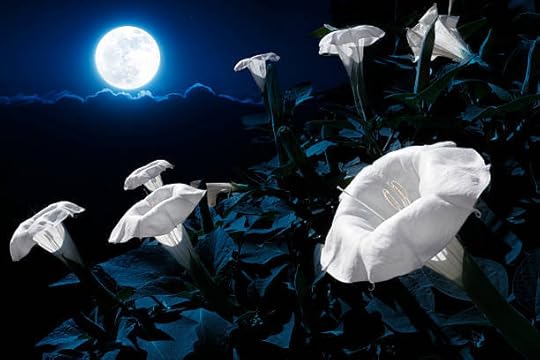
“She went outside and down the path, pausing by the smokehouse to county the moon flower pods. Another day or two and they would be ready to bloom. The flowers were so lovely, they lasted so short a time. It was almost like the children's visit, something you looked forward to all year, then it came, and you enjoyed it so much, and then it was over, in no time. Maybe that's the way it should be...”
With excellent characterization and lovely prose, I highly encourage fans of classic family sagas to give this book a try. This should definitely be adapted to a movie or a short series, since I would love to see these characters and the beautiful farm onscreen. Nothing but heartwarming and positive feelings towards this book, my main criticism would be the overly drawn-out conversations which bored me, but that's just a matter of personal preference. This is a character driven story, and the beauty of it is spending time in that farm, through the eyes of each family member.

Maybe that was the way it went, that all your life you heard the singing and never got any closer. There were things you wanted all your life, and after a while and all of a sudden, you weren’t any closer than you ever were and there was no time left.

November 1, 2021
This book was published in 1962 and then in 2004 author jane smiley mentions this book in one of her writings. And it gains ground and is recognized as a ”neglected book”….. “overlooked, forgotten, or stranded” and new editions are published. This is one you will want to pick up and read.
The author breaks down the book into chapters representing the main characters. She doesn’t waste words and she changes your ideas each time a new character is displayed. It’s a shame it’s her only piece of literature but it’s a dang good one. Edit: another work was found and published posthumously. It has all the emotions. No family is perfect but at the end it’s still your family.
The author breaks down the book into chapters representing the main characters. She doesn’t waste words and she changes your ideas each time a new character is displayed. It’s a shame it’s her only piece of literature but it’s a dang good one. Edit: another work was found and published posthumously. It has all the emotions. No family is perfect but at the end it’s still your family.

January 11, 2010
I first read this novel in 1974 when I was 18, and I have read it every year since. Before it was rediscovered and reprinted, I bought every used copy I could find and gave them away, sometimes as many as six a year. Everyone who reads it is immediately drawn in, because it is a perfectly balanced, beautifully structured story about people you don't know, but wish you did. Each of the Soames family members is drawn so clearly, and with such a distinct voice, you can hear them talking.
The end of the opening chapter is so incredibly well realized that I often use it in creative writing classes to demonstrate the way to build tension and bring it to a full resolution.
If To Kill a Mockingbird is the iconic novel of the mid 20th century South, then The Moonflower Vine serves the same purpose for the Midwest. It deserves to be widely read.
The end of the opening chapter is so incredibly well realized that I often use it in creative writing classes to demonstrate the way to build tension and bring it to a full resolution.
If To Kill a Mockingbird is the iconic novel of the mid 20th century South, then The Moonflower Vine serves the same purpose for the Midwest. It deserves to be widely read.

August 12, 2014
Moonflower Vine is the only published novel of Jetta Carleton.
This I can understand, because how can you improve on perfection.
The Soames family saga in rural Western Missouri circa 1890-1950 is priceless in more than a few categories. Human psychology, geography, cycles of agriculture, farm mode in a time of no electricity or indoor plumbing, family dynamics and of course, economic class interchange. 5 star in every single one of those, and a 6 for the prose. The husband is a schoolteacher and farmer, his wife more than hardworking, a small sharp dynamo, intelligent and calmly brave, although she is "just too busy" to learn how to read. The book is divided into sections narrated by each member of this family except the youngest daughter. Being born far after the others, her story flows from the others and eventually bridges another lifestyle in an urban state. Four daughters, two houses, small but tight community, and simplicity of a faith and chore centered existence.
This book has such descriptions of natural woodland, creek, and farm field beauty that it sincerely made me feel the sway and tune of the dance in the midst of the fireflies after watching the moonflower night bloom, counting them as they spiral open and twirling to their number.
If there had only been the chapters that included the "taking down the bee tree" day or the "day to set the gravestone" either one of those, with nothing else of the novel, it would still be a 5 star. How many marrieds and parents of every ilk have planned a special day to have 3 to 5 other events obliterate it! Obligation or inclination which one is my conscience magnet? That's the crux of this splendid story, and in an era when it truly did matter.
Some of us are born to fly and risk is their needed oxygen. Others of us are born to timid toe first induction and 10 year contemplation with a side of angst. Some are always from the first minute only themselves and can be nothing else, and others change their cores and slide away as mercury out of the thermometer. Tremendous joys, bottomless sorrow, and one small lie amongst 100,000 truths of 60 years duration. All of that lives where this Moonflower Vine blooms.
The only section in which I felt some impatience was Matthew's. His process of constant rationalization for his own feelings and values of intellectualizing snobbery almost made me want to skip ahead. But I'm glad I did not, as I saw he was his own worse enemy. Because his close to the chest held smarts succeeded only to distance and to diminish his own ability in experiencing the joys of this singular precious life we own.
This I can understand, because how can you improve on perfection.
The Soames family saga in rural Western Missouri circa 1890-1950 is priceless in more than a few categories. Human psychology, geography, cycles of agriculture, farm mode in a time of no electricity or indoor plumbing, family dynamics and of course, economic class interchange. 5 star in every single one of those, and a 6 for the prose. The husband is a schoolteacher and farmer, his wife more than hardworking, a small sharp dynamo, intelligent and calmly brave, although she is "just too busy" to learn how to read. The book is divided into sections narrated by each member of this family except the youngest daughter. Being born far after the others, her story flows from the others and eventually bridges another lifestyle in an urban state. Four daughters, two houses, small but tight community, and simplicity of a faith and chore centered existence.
This book has such descriptions of natural woodland, creek, and farm field beauty that it sincerely made me feel the sway and tune of the dance in the midst of the fireflies after watching the moonflower night bloom, counting them as they spiral open and twirling to their number.
If there had only been the chapters that included the "taking down the bee tree" day or the "day to set the gravestone" either one of those, with nothing else of the novel, it would still be a 5 star. How many marrieds and parents of every ilk have planned a special day to have 3 to 5 other events obliterate it! Obligation or inclination which one is my conscience magnet? That's the crux of this splendid story, and in an era when it truly did matter.
Some of us are born to fly and risk is their needed oxygen. Others of us are born to timid toe first induction and 10 year contemplation with a side of angst. Some are always from the first minute only themselves and can be nothing else, and others change their cores and slide away as mercury out of the thermometer. Tremendous joys, bottomless sorrow, and one small lie amongst 100,000 truths of 60 years duration. All of that lives where this Moonflower Vine blooms.
The only section in which I felt some impatience was Matthew's. His process of constant rationalization for his own feelings and values of intellectualizing snobbery almost made me want to skip ahead. But I'm glad I did not, as I saw he was his own worse enemy. Because his close to the chest held smarts succeeded only to distance and to diminish his own ability in experiencing the joys of this singular precious life we own.

May 6, 2012
When I was a little girl, I would watch things like figure skating, baseball, and gymnastics and think, "wow, I can do that. It looks so easy!" My mom would always comment, "it looks easy because they are so good at what they do." That is how I feel about this book. This is an unassuming novel, that is elegant in its seeming simplicity and hushed atmosphere. However, when look deeper, you realize that this is a masterpiece of writing and it is not simple in the least.
It isn't until you are finished with the book, or at least a good pace into it, that you realize how perfect the narrative is. It unfolds on every page, with not one superfluous detail. It amazes me how the narrative forms a perfect circle. I can't even imagine how many drafts Carleton would have had to do to make it so. It flows like a clear brook, with no sticks or snags. However, you don't think about this while you are reading it -- the story just carries you along, enjoying every moment, getting lost in it.
Additionally, Carleton's writing style is immaculate. While the narrative is never mucked up with unnecessary ramblings, it is peppered with rich atmospheric detail and beautiful meditations on life, loss, family, relationships, and nature. It's never too little or too much, it's just....perfect.
It isn't until you are finished with the book, or at least a good pace into it, that you realize how perfect the narrative is. It unfolds on every page, with not one superfluous detail. It amazes me how the narrative forms a perfect circle. I can't even imagine how many drafts Carleton would have had to do to make it so. It flows like a clear brook, with no sticks or snags. However, you don't think about this while you are reading it -- the story just carries you along, enjoying every moment, getting lost in it.
Additionally, Carleton's writing style is immaculate. While the narrative is never mucked up with unnecessary ramblings, it is peppered with rich atmospheric detail and beautiful meditations on life, loss, family, relationships, and nature. It's never too little or too much, it's just....perfect.

July 18, 2017
¡Qué novela más maravillosa! Leerla te reconcilia con la buena literatura. Con toques intimistas y un ritmo narrativo lento pero seguro, la narradora va hilando la historia de una familia en la que todos sus miembros (personajes nítidos, muy bien dibujados, con sus luces y sus sombras) esconden secretos para garantizar la convivencia. En esta obra se ríe, se respira, se llora y se ama, se duda y se avanza, en definitiva, se vive.
Puedes leer la reseña completa en http://elmomentoderaquel.blogspot.com...
Puedes leer la reseña completa en http://elmomentoderaquel.blogspot.com...
Displaying 1 - 30 of 887 reviews