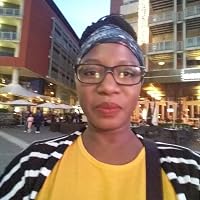
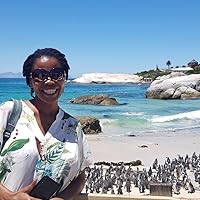
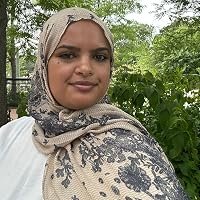
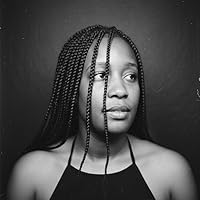
Iman Rappetti is an award-winning journalist who has been involved in print, radio and television. She worked as a young journalist in South Africa and then abandoned it (along with all her worldly possessions) when she became Muslim.
She lived in the Islamic Republic of Iran for two years, where she also worked on a current affairs TV show for the state broadcaster before returning to South Africa and resuming her life here. She describes herself as ‘the youngest of five children. One Rasatafarian brother (passed away), one ex-con brother (who can dance the pants off any woman and has a wicked sense of humour), another brother who’s a big shot in the marine engineering industry (he makes a mean curry), and a sister who has the thankless task of staying at home and raising the rugrats (she has a way with words, and also makes a kick-ass briyani)’. In this moving and entertaining memoir, Iman shares stories and what she has learned from her colourful journey through life.
Second time around. Finished this on the 1st Nov 2019 for a book club discussion on the 9th Nov 2019.
Loved Iman's conversation style delivery. Witty with a touch of sarcasm.
Iman explores themes such as race and growing up coloured in the South African city of Durban. She takes us through her diasporic living in a Middle Eastern country where she constantly had to live within the social, political and religious confines. She threads the themes of ageism and widowhood through her mother's stories. Identity and sexuality come strongly through her story. Building a career as a mother is explored too. She regales us with her stories as a journalist traipsing around the globe.
Her stories of and about food have an air of nostalgia in them. Growing up in a township in South Africa, food and communal eating played a huge role in our formative years. Huge lunches on Sundsys because that was the day when everyone was home. Instead of resting as God did on the seventh day, we cooked and baked and broiled and sauteed and fried and grilled. We then ate and napped. The smell and flavours have lingered long after those chapters were closed. Domestic violence too. Apartheid was not just about physically limiting a people, the psychological trauma played itself in too crammed houses. Homes packed to the rafters with unlaunchable dreams and furniture from the Madams' homes. Men whose nightmares became a reality for families. Men, emasculated by white boys, released their anxieties on family members.
Through this story, Iman narrates a story of a girl and woman who has come full circle. It is enlightening as well as inspirational. It is funny and emotional. It is her truth.
In the book "Becoming Iman", Iman aka Vanessa let's us in on her coming of age in a Coloured township in pre democratic South Africa. About her first love, marriage, religions, family and career. All the while reminiscing and reflecting on the present and past.
The mature Iman relates of her life experiences, even the traumatic bits, with ease and humor. Of being a product of the Indian and Coloured race and it's biases , she wrote "..... It always came down to the fact that my father was a greedy, oily Coolie, and my mother was a Bushman, with twisted hair and twisted brains"
Quite an interesting drama full life. A parent gets disowned for marrying outside their race. A sibling gets kidnapped. A brawl at a funeral. Instant siblings.
Iman expands further on themes of, race, body shaming, status, homophobia, patriarchy, poverty, domestic abuse and identity.
" We were programmed with a value system that made Blackness the devil and whiteness virtuous. It made us like the parts of us that reflected whiteness and despise the parts that absorbed the sun, that browned and baked under the cursed sky of colonialism and repression" This Iman wrote about the evil science that was apartheid.
The settings is in Phoenix Durban, moves to Iran, USA, to Fordburg and then to the Northern surburbs.
What remained with me from the book was the crucial, and often shied away message of sexual emancipation of women. And that religion and coitus are not in the same whatsap group.
A well presented narration by an award winning journalist who has experience in print, digital, radio and television. Funny, honest, unique, interesting, , and thought provoking, stuff that brilliant memoirs are made of
Vanessa Rappetti was born into a Christian family. She denounced Christianity and converted to Islam. She married a Muslim, went to Iran to study legal jurisprudence mainly focusing on Islam and changed her name to Iman in the process.
Considering the title of the book and the synopsis, I expected the memoir to take us through Vanessa's life up to the point where she became Iman. The beginning takes us through her upbringing, her experience growing up in a coloured community in Durban. The problem begins when she converts to Islam. It is at that point where I get lost. She begins by mentioning a caraven where they (I assume the second party is her husband) used to debate the quran to getting married. Now, there is no mention of what it was that sparked her interest in the religion. Or what made her leave Christianity.
Her writing style is remarkable, she is a renowned reported after all. She is eloquent and has a good sense of humour. She also mentions good point about body image, the clash of different races, however, she didn't explore these theme. She merely touched the surface.
The memoir gives a full picture of how she grew up, but after she got married nothing notable is mentioned. It's like the writer made a point of keeping her private life private and she has every right to do so. What I did not appreciate however is how there was a full account of a bedroom disaster that happened in a friend's marriage. The account is so detailed it even explains how the lady was sitting on the couch, yet there is hardly anything said about her divorce other than "it's not a story that deserves further description other than for the purposes of illustration"
The book was a trail of themeless stories that weren't necessarily aligned. I got lost in most parts, not understanding where she was going with certain stories. Even though a memoir is an account of one's personal experiences, it should still have a theme. None of the themes mentioned were explored, it was just a touch and go.
From chador to ‘double-storey’ heels - one woman’s journey in search of meaning (or something).
Although a refreshingly authentic story, which was funny in parts, the book was also over-written and skipped around much too themelessly for it to really hold together.
Not sure her husband’s cheating on her can really be blamed on any one faith - a suggested theme that is difficult to ignore. Also, the author’s personal experiences (bordering somewhat on the extremes of the extreme, rather than middle-of-the-road and grounded) also needs a mention- it would be unfair to assume that this has general applicability.
[My own bias - Durban has always seemed a little alien to me in that sense, a bit over the top with its weird TJ crowd. Cape Town - beautiful, ‘normal’ Cape Town - not so much. It must be a weird Durban thing, right?].
There were some lines that were just grating: a ‘biryani’ of people. Ugh!
And the description of Persian tea glasses as ‘shot’ glasses. Lord help us all.
I’m certainly on the 3.5 side of 4. However, I like Iman - that is the Iman I see on my Telly. I also liked the Iman who was quizzed about this book on Radio 702. It was that interview that prompted me to buy the book. Was it what I expected? Yes - and no. The yes part is that it was presented with wry, somewhat cynical humor. The no part is that this tended to obscure the depth and complexity that lurks behind the glib words. It is a pity. This felt a bit like the Trevor Noah approach, but in my view failed because Iman is not a comedian. This book I feel sells Iman short. I would like Iman to flesh out some of the Chapters / concepts and offer us rich, meaningful, authentic, brave work - perhaps weaving her story into more insightful commentary around say religion or political systems. I feel that this book is the teaser and hopefully the truly valuable body of works will emerge in due course. I sense potential for so much more and so much better
A brilliantly told memoir by a most seasoned and well-loved media personality and journalist.
Iman shares some deeply personal experiences and feelings in the book and lays her truth bare. I loved the style in which this book was written. Iman writes with vibrancy, poignance and wit - reflecting on the ups and downs of her life.
My favourite portion of the book are the chapters where she describes her childhood and her family life growing up in the areas of Phoenix and Resevoir Hills in Durban which evokes many memories of my own childhood.
Once I picked up this book, I could not put it down. I do wish that the author will release a follow up as I am sure she has many more captivating stories to tell.
There is much to be learned from Iman Rappetti: from her tragic, traumatic past to her current position, and even significant reputation not only as an author but journalist, radio host, individual.
I was hesitant at first; fearful I had overestimated the writing and diction. But honestly, it's simply a good memoir. It's truly unapologetically Iman. It felt like conversing with an aunty, or perhaps even, looking into her diary, where her deepest thoughts and fears lie. In this manner, the conversationalist tone and first-person narrative truly does further the memoir in its authenticity. You truly "hear" Iman's voice throughout the book. You never question whether it's fictionalised or sensationalised for publication.
Although I don't agree with some things such as romanticising of parent-child abuse (you know, the one we all grew up with but became significantly disturbing in this new age of emotional cognizance). But I may be wrong here, in interpreting the satire, or even ire of Iman's tone when reminiscing of her childhood. If true, I am at fault. But even with that, it just reaffirms that feeling of talking to an aunt, who grew up in a different era, in a time different than ours, complaining about the 'softness' of our new culture (LOL I do truly take enjoyment in that). She comes off unapologetically honest about her experiences and opinions. For that, I respect her, perhaps even admire her at times.
Iman laces information and events of extremely toxic family relations; the effect of culture, racism, discrimination and abuse. I truly believe that Iman is an incredible woman. Learning about only part of her story, you would believe it too. I think there is a lot that can be taken away from this deeply personal narrative. It's a simple memoir, one for anyone to read. I especially loved the representation of diversity and the appreciation of the blending of various cultures, religions, languages and people. It feels like an authentic "blended" South African experience. Deffs would recc.
A fantastic book. Nostalgia, self reflection and self assessment . It's heartwarming to relate pieces of your experiences. Our families, our homes, the people we love and how we build ourselves.. and rebuild ourselves. Thank you for bringing out pieces of every day history, often left out of Mzansi's dialogue...and stamping Phoenix 13' on the map.
Deep and I learnt a lot of English. The book is really about Iman, in a very very humble way. Not the typical book about self. Great humor. Touching stories. Be ready for religion review.
I listen to Iman's show every morning from 9 to 12 on power fm, as i was reading this i could hear her voice and her laughter, exactly how she sounds on radio. I also learnt some few english words lol
Not exactly one of my favorite biographies, but again I try and root it down to this is not my story. This book is about the ups and down of trying to figure out life and trying to seek validation from something or someone other than yourself. Born and raised in a vibrant city where your skin tone, hair texture and wealth puts you on a pedestal is how all South Africans born during the Apartheid years grew up, however her rendition of it is something familiar in these times because fundamentally those values are still upheld in communities today.
The book to me does read a bit too long because at the end of it all I wanted it to be finish and kept on checking how many chapters I have left. Her writing style is interesting to read, the way she writes and that might have been the only thing that kept me going. The way her story unfolds is a delight to read because I am genuinely interested in her and that is why I bought the book. However, because of this book my interest in her has subsided.
At the end she does give her reflections of all her actions and where she stands now at the present moment, but to me personally it is not enough. A delve in deeper to her present moment is how I would have like the book to concluded, because this story, her story, has many layers, and I would have liked each layer to be attacked profusely where her book would be her naked self, the good and the bad.
Finally, I do see myself in her. Always looking, always voicing my opinion and always questioning. Also, looking for love, an amazing love. But as much as I aspire these traits of myself, these traits can also be the end of a person. Sometimes to look we need to feel, to be opinionated we need to understand, to question we need to learn and lastly to love we need to know ourselves and what we really want. In this book I do not see that.
Becoming Iman is a personal account of Iman Rappetti’s life journey. The memoir is about the ups and downs of trying to figure out life and trying to seek validation from something or someone other than yourself. The book takes one on Iman’s journey from being a young girl in Phoenix - KZN to her success as one of the leading and sought after broadcasters in the country. Her writing style is quite interesting to read That might have been the only thing that kept me going.
What I disliked about the book was that the timeline of her story was not in chronological order which makes piecing together the story yourself tedious 😭.