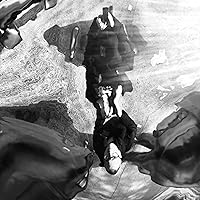
"Surfing with the Aliens: Pat Grant’s Blue"
[A version of this review ran in German in the Swiss comics journal STRAPAZIN.]
If Pat Grant had conceived BLUE as a Hollywood movie rather than a graphic novel, his agent’s pitch might have sounded something like this: “Imagine STAND BY ME meets DISTRICT 9 set in a small Australian surf town.” I’m not sure how many film studios would have bit on that premise, but in Grant’s deft hands the concept works out brilliantly as a comic.
The narrator of BLUE is a happy-go-lucky but not entirely likable “bogun” or Australian redneck. By means of a subtle and slippery series of flashbacks, he relates his childhood in the fictional seaside town of Bolton, back in “the good old days” (they always were) when life was carefree, the action was on the corner or at the local drugstore, and the cool kids “wagged” school to surf whenever the big waves rolled in. Two critical moments in time define his story. The first is a distinct, sharp-focus memory of a day when he and his friends set out to find a body that had been run over on the railroad tracks outside town. The second is the broader but blurry passage of years as “the good old days” were ruined by a group of immigrants moving into town: people not like us, people who don’t “get” our way of life, aliens.
In BLUE, the aliens really are ALIENS: goofy-looking multi-legged newcomers who eat strange noodles, scribble hieroglyphic graffiti, and don’t stand a chance of integrating with the locals. BLUE never makes a big deal about these aliens: where they came from, who they are, or the fact that they’re not even human. Indeed, Grant barely gives the aliens any “screen time” at all, and that’s part of what makes the story so effective. While BLUE is visually vibrant and seductive (with stylistic cues from Jim Woodring, Dave Cooper, Roger Langridge, and even Japanese woodblock prints), as a narrative it is an extremely subtle work, dealing obliquely with themes of adolescence, social change, class, race, and (especially) memory and regret. Grant manages to address complex problems of immigration and xenophobia while also somehow not diminishing or devaluing the worldview of his somewhat racist narrator.
BLUE is a thoughtful book by a thoughtful writer and artist, and it avoids many of the failings of the typical “first novel.” Grant addresses difficult sociological issues with a light touch; he avoids polemic, and as a result his “cartoony” book leaves the reader thinking about some of these important issues days or weeks later. Even the book’s title is ambiguous: does “Blue” refer to the skin of the aliens; the color of the surfers’ waves; or the mood of the narrator as he thinks back on his life?
Grant’s thoughtfulness is further highlighted in the smart essay at the end of the book, a revisionist history of Anglo-American comics from the point of view of a Gen Y surfer kid growing up on the other side of the globe. He also has some unconventional ideas about copyright, and explains in the indicia why he has made BLUE available to be read for free on his website. And read it you should, but Top Shelf has done such an incredible job on the book’s design and production, you owe it to yourself to get the paper version.