¿En qué medida el primado de Pedro es un obstáculo para el diálogo ecuménico con la Ortodoxia? Olivier Clément afronta esta pregunta desde el campo de la Ortodoxia, guiado por un ánimo sincero de comunión eclesial. A su luz, examina la función otorgada a la sede romana por las iglesias de Oriente y Occidente en el transcurso de los siglos y ensaya propuestas de futuro.
De esta manera, construye un libro capital para entender las aspiraciones de la Ortodoxia y traza las coordenadas desde donde situar el diálogo teológico ordenado a la plena comunión.
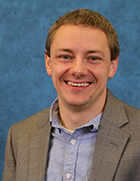
Olivier Clément was a French theologian and convert to Orthodox Christianity who taught at St. Sergius Institute in Paris.
He was born in 1921 in the south of France. In his youth he was a non-believer. As he grew to maturity, he became influenced by a number of Orthodox theologians in France, notably Vladimir Lossky and Nicholas Berdiaev, eventually receiving baptism at the hands of Fr Evgraph Kovalesvky, later Bishop Jean-Nectaire of Saint-Denis.
Although a committed school teacher, Clément was most devoted to his work at the St Sergius Institute and to his writing. His work was wide-ranging — from poetry to literary criticism, philosophy to theology, and extended to book-length interviews with figures such as Ecumenical Patriarch Athenagoras and one of his successors, Bartholomew.
The most widely distributed of Clément's many books was perhaps his introductory work on the Orthodox Church in the popular Que sais-je? series, first published in 1961 and now in its seventh edition.
Clément also enjoyed friendship and entered into dialogues on major spiritual themes with a number of imminent personalities including Patriarch Athenagoras, Pope John Paul II, the priest and theologian Dumitru Staniloae, and the brother Roger of Taizé.
Modest, kindly and balanced, and supported faithfully by his wife Monique, Clément worked selflessly to unite Christians of different backgrounds, to unite France’s various Orthodox communities, and to inspire readers and listeners with a love of the Orthodox tradition which, he believed, would enrich the whole Church.
Este pequeño libro, escrito por un ortodoxo francés, es como su propio nombre indica una reflexión sobre el papado, desde los inicios del cristianismo cuando la Iglesia católica y las iglesias ortodoxas eran una hasta la actualidad. Abre el libro un capítulo que me ha resultado bastante denso, pero que en seguida se abre paso a un segundo capítulo dónde analiza el ejercicio del primado romano por parte de san Pedro; es interesante cómo explica que, si bien Pedro es el primero, el resto de los Apóstoles no son sus "subordinados".
De igual manera, continúa analizando posteriormente cómo para los primeros papas había dos papeles o ministerios diferentes: uno como obispos de Roma y metropolitanos de su provincia, y otro efectivamente de alcance universal. Este segundo ministerio se ejerce sobre todo con autoridad moral, y con solicitud por todas las iglesias, sin inmiscuirse normalmente en asuntos internos de estas. Está claro que para los orientales de los primeros siglos el papa no era un simple primus inter pares, pero toda su autoridad era en el ámbito de la fe, no en el del gobierno temporal.
Posteriormente, analiza la siempre tensa relación entre el necesario "conciliarismo" y el "papismo": es verdad que en varios concilios se recalca que la comunión con Pedro es comunión con toda la Iglesia, pero el concilio no espera al papa. Este es el caso por ejemplo de la condena a Nestorio; que el papa se adhiera a la condena es lo que hace al concilio ecuménico en lugar de local, pero el protagonista es Cirilo de Alejandría. Por otra parte, aunque en el concilio se escucha atentamente al papa, no se le da un «amén» irracional. Ante esto el autor acaba descubriendo (y proponiendo una vuelta a) una "tensión creativa" entre ambas posturas, en la que el papa y el concilio acaban alcanzando juntos la verdad.
Dejado atrás ya el milenio de la Iglesia indivisa, el autor analiza la evolución del papado hasta el Vaticano I, especialmente en cuanto al aumento de poder jurídico y ordinario hasta la actualidad; esta evolución en cierto sentido ha sido favorecida por los ataques externos de la modernidad, pero el autor opina que la Iglesia no ha salido bien parada. En el mundo ortodoxo, si bien se respeta (mayoritariamente) el papel del papado, consideran que la Iglesia de Roma se ha apartado de la fe debido a, entre otras cosas, sus reivindicaciones, por lo que la relación se ha hecho extraña.
Finaliza el autor su obra con algunas propuestas: en general aquí es dónde es menos objetivo, acudiendo a tópicos, aunque acierta en algunos puntos. Para el lado ortodoxo, propone seguir el ejemplo del patriarca de Constantinopla Atenágoras: aunque Roma tiene que hacer cambios, la Ortodoxia debe reconocer su primado. Para Clément, es necesario redefinir este primado, que tiene que estar centrado en la fe y no en el gobierno inmediato y ordinario de toda la Iglesia; es necesario clarificar el alcance de las definiciones papales y a dónde alcanza su brazo, aunque por otra parte hay que abandonar la idea de dar soluciones jurídicas a todo y tenerlo todo perfectamente medido, pasando a una lógica de tensiones sin soluciones jurídicas predeterminadas.
It was not a bad book by any means. It is clear clement knows what he is talking about. He’s even moving sometimes. By this I mean that I, as a Roman Catholic, even began to doubt the legitimacy of Papal Infallibility and Papal Supremacy. The former I was more researched briefly and was able to refute some of his points. However, Papal Supremacy I had a harder time. Overall a good read, even if I disagree with the conclusions sometimes.
A well respected Orthodox Theologian examines the Petrine Office. He summarizes the Latin and Eastern traditions, and explores areas of tension and agreement. A must read for Latins and Catholics interested in the reunion of the Churches.
The most poignant section in the whole book reads:
"John Paul II, on a number of occasions, but always during private interviews, has spoken of a primation authority 'with different gears,' which would fully respect...the internal freedom of the eastern Churches, as it existed during the first millennium (this would no doubt entail some very major adjustments in the relationships between Rome and a number of the reformed churches). HAsn't the present pope [Benedict XVI] also said in identical circumstances, 'What I seek is communion not jurisdiction'?
"It would undoubtedly be necessary to specify that infallibility--or rather, regarding the sence of the faith, indefectibiliy--is conferred exclusively by the Holy Spirit, who, as we have said, is perceived in a variety of ways in the Church, and therefore that the definitions formulated ex cathedra by the bishop of Rome express the concrete communion of the Church. The dogma of Vatican I makes it clear moreover, that it is not the pope himself who is infallible, but his definitions, and this by the particular assistance of the Holy Spirit. As such they would have an intrinsic validity and would not require confirmation by the Church, as it might be democratically. At the same time, however, it has to be admitted that the expression 'non ex consensu ecclesiae"...is most unfortunate and that it would be necessary to clarify the connection between these formulations and the entire ecclesial communion or, in other words, to foresee a link between the three forms of Peter's succession which we have indicates: the faith of the people of God, which can be expressed, on occasion, by a single prophet; the episcopacy in its collegiality, in solidum, as Cyprian of Carthage said,; and finally the bishop of that church that was 'founded and constituted' by the apostles Peter and Paul..." (p. 92-93).