Jump to ratings and reviews
Rate this book

High-Risers: Cabrini-Green and the Fate of American Public Housing

Rate this book
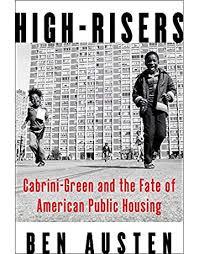
Built in the 1940s atop an infamous Italian slum, Cabrini-Green, grew to twenty-three towers and a population of 20,000—all of it packed onto just seventy acres a few blocks from Chicago’s ritzy Gold Coast. Cabrini-Green became synonymous with crime, squalor, and the failure of government. For the many who lived there, it was also a much-needed resource—it was home. By 2011, every high-rise had been razed, the island of black poverty engulfed by the white affluence around it, the families dispersed.

Ben Austen tells the story of America’s public housing experiment and the changing fortunes of American cities. It is an account told movingly though the lives of residents who struggled to make a home for their families as powerful forces converged to accelerate the housing complex’s demise.

400 pages, Paperback

First published February 6, 2018

342 people are currently reading
4997 people want to read

About the author

Ben Austen

8 books35 followers
Ben Austen has written for numerous publications, including the New York Times Magazine, Harper’s Magazine, The Atlantic, GQ, and Wired. He lives in Chicago.

Ratings & Reviews

What do you think?
Rate this book

Friends & Following

Create a free account to discover what your friends think of this book!

Community Reviews

5 stars
1,018 (47%)
4 stars
861 (40%)
3 stars
210 (9%)
2 stars
30 (1%)
1 star
7 (<1%)
Displaying 1 - 30 of 269 reviews
Profile Image for Brandice.
1,245 reviews
October 2, 2022
High-Risers tells the story of Cabrini-Green, one of Chicago’s public housing projects, where at one time, nearly 20,000 residents lived. These 20+ towers were tightly packed into a small area of Chicago and the residents saw it all, from drug and gang activity to corruption and government failures.

Ben Austen shares stories from a group of Cabrini-Green residents in this book and you feel for the hardships they face, the lack of assistance they receive, and the safety they have to fend for more often than not. The housing project was demolished in 2011 and displaced many residents who did not receive the alternate housing options they were initially promised.

I decided to read High-Risers after enjoying Last Summer on State Street, a fictional coming of age story about a young girl who grew up in the Robert Taylor Homes in Chicago. High-Risers reads as narrative nonfiction and I enjoyed listening to the audiobook.
Profile Image for Cindy Burnett (Thoughts from a Page).
671 reviews1,119 followers
August 1, 2020
Every American should read High-Risers: Cabrini-Green and the Fate of American Public Housing. Ben Austen has crafted a highly readable, fascinating and often depressing tale that spans the almost seven decades in which the Cabrini-Green housing project existed in Chicago. While certain issues contributing to the failure of large urban housing projects are specific to Cabrini-Green and to Chicago itself, many of the events that led to the failure of Cabrini-Green were replicated across the country in other cities that built similar complexes. Understanding the factors that contributed to the demise of the Cabrini-Green complex could lead to a future solution that might help solve the housing troubles still abounding in the United States today.

The individuals who envisioned large-scale affordable public housing as an antidote to the horrific housing crisis faced by the city of Chicago in the 1930’s and 1940’s honestly sought to provide decent housing for the poor. Elizabeth Wood, the first executive director of the Chicago Housing Authority, initially worried that the project was not big enough stating that “[i]f it is not bold,” she said, “the result will be a series of small projects, islands in a wilderness of slums beaten down by smoke, noise, and fumes.” What those individuals did not (and could not have been expected to) foresee was the hurdles that would be erected at every juncture from the building of the complexes to staffing to maintenance and upkeep. Racism, city and national politics, Chicago Housing Authority employees, and the already heavily segregated population of Chicago converged to force the CHA to place large urban housing complexes on small acreage with few services nearby in almost completely segregated areas. When completed, Cabrini-Green contained 23 towers housing 20,000 people on a mere 70 acres of land. Once in place, support, maintenance, and staffing were not properly funded (or the funds were misappropriated or outright stolen). What once seemed like a solution to the city’s housing troubles slowly morphed into a symbol of crime and abject poverty.

Austen effectively humanizes his tale by following various Cabrini-Green residents across the decades. He wisely chose residents from various walks of life; some certainly engender more sympathy than others, but his decision to infuse the book with tales about both those seeking trouble and those fighting it adds to the authenticity of his story. While Chicago government viewed the tearing down of the towers as eliminating a blight on the city, Austen counters that view by bringing to life the residents who lived in the towers for decades and who eventually lost their homes (many left substantially worse off after their moves). He also demonstrates the sense of community that existed for the residents in Cabrini-Green. I enjoyed following numerous characters’ stories, but Dolores Wilson was my favorite by far; if a few more Dolores Wilsons’s had lived in Cabrini-Green those buildings might still be standing today.

As I read High-Risers, I frequently thought about how similar and relevant the affordable housing issue is to today’s health care battle. The refusal of certain individuals in power to recognize the need for affordable housing and mandated health care in the present creates significantly greater issues in the future; and unfortunately for the country those people are happy to leave that problem for future politicians to solve. Sadly, I think my biggest take-away from High-Risers is the complete and utter failure of the democratic system to represent the urban poor. Neither party stepped forward to help a group with little political sway knowing that the group couldn’t return the favor.

While urban public housing has been an interest of mine since I was in college (I actually wrote my senior thesis on the failure of Cabrini-Green as a viable method for housing the poor), I truly believe that High-Risers will appeal to anyone interested in the fate of our country. High-Risers is a true page turner, and there is a lesson in it for everyone. My one complaint is that there are no pictures or maps of the complex. Cabrini-Green was composed of 23 buildings and some smaller low level units; some detailed maps would add significantly to the book. I loved the stories about the many residents, and again, bringing them to life through photos would further humanize the people in High-Risers.

Listen to my podcast at https://www.thoughtsfromapage.com for fun author interviews. For more book reviews, check out my Instagram account: https://www.instagram.com/thoughtsfro....
Profile Image for Kelly (and the Book Boar).
2,818 reviews9,509 followers
November 9, 2022


I am not a lover of the smart and/or not-made-up things so I really need a nudge to break away from my typical trash/romance/stabby/chicky reads. But when November rolls around????


One of my pals posted this to the ‘Gram over the weekend and, being from Illinois, I immediately went and snagged a copy from the library. The Cabrini “Reds” (the original 15 red brick buildings) started off as sort of the American Dream for those who would otherwise perhaps be unable to achieve it. They took people from overpriced/overcrowded/unsafe living situations and put them in high rise complexes with up to five or six bedrooms, private bathrooms, hot and cold water, appliances – and all for a fixed amount based on individual family incomes. Over the next two decades 33 housing projects (168 high-rise buildings) would be built, the neighborhoods would transition from white to black and the divide of wealth became ever more apparent. The complexes themselves changed from park-like settings into more of concrete jungles as more buildings were crammed in, and upkeep/maintenance became an almost unmanageable task due to a combination of lack of funding, misappropriation of said funding, vandalism, etc. Crime and homicide rates would also rise as gang activity ran rampant and the amount of welfare recipients would rise to an astonishing rate of 83% by the 1980s in Cabrini-Green, which completely flipped the narrative regarding how to handle “the projects.” Before tear-down, these housing projects would turn into . . .

“A no-man’s land with broken windows, dark, abandoned buildings, no law and order. There are carefully demarcated areas controlled by rival bands of armed militia fighting over the rubble. Nearly every night there is sniper fire. It sounds like Beirut, but in fact it’s America. A creature of state, local, and federal government. A product of bad politics, failed policy, and official neglect.”

I was hoping for less statistics and more stories from the people themselves when I picked up High Risers. As I said above, I’m from Illinois so I was also expecting more talk of how corrupt the state government was my entire growing-up to be included as well and less of a feeling of a well-researched thesis paper. The Goodreads’ rating shows I’m in the minority when it comes to my opinion, so I have added both another non-fiction selection (High Rise Stories) as well as a fictional option (Last Summer on State Street) to hopefully satisfy my curiosity regarding the various housing developments in Chicago.
Profile Image for Emily.
687 reviews688 followers
October 25, 2017
I've once again committed the error of waiting a few weeks to write up a book, which always seems to result in a less immediate and hence less satisfying review. Sorry, because this book was worthwhile if you're interested in the topic.

The author tells the story of the notorious public-housing project Cabrini Green through the experiences of various individuals who lived there. We start with a mother who moved from a noxious slum into what was then a fresh, new style of living. Another striking figure is a man who graduated from a life of drug-dealing and crime to become a leader in the Cabrini Green community. In fact the closest thing to a plot twist in this book is the fact that the main profiled figures, despite their very different starts in life, all become leaders. This makes you look at Cabrini Green in a new way--not just a huge architectural-social failure but also a crucible of self-determination for its residents, as it was abandoned by the community around it. At the end, contemporary patterns of gentrification come into play after the development is torn down and its residents dispersed.

I fear this comparison will come off as obnoxious, especially because this book is non-fiction, but I'd recommend it to fans of The Wire because it has a similar panoramic effect, with the residents, kids, politicians, local machers. But, you have to also be interested in housing policy.

Review copy received from Edelweiss.
Profile Image for Shreya Singh.
47 reviews1 follower
April 26, 2020
Working in affordable housing, I try to understand the “why” in my work: Why do communities look the way they do? Why was this allowed? Why did this community succeed or fail?

High-Risers does an excellent job of explaining the history of Cabrini in the context of Chicago’s history. Ben Austen could have simply presented the facts, yet he wove the stories of Cabrini residents into the narrative, effectively illustrating the challenges and the dynamics in a community known to be fraught with crime and poverty. It is easy to paint these individuals and families as the cause of their ills, but in reality it is the system, the politics and the concentrated poverty - factors outside of their control - that failed them. This book is well-written and thoughtful, and worth a read if you seek to understand.
Profile Image for Julie Schaefer.
22 reviews20 followers
November 29, 2024
I read The Last Days of Cabrini-Green which I believe is an audible original podcast based on this book, which goes into the shooting of 6 year old Dantrell Davis and the ripple effects this had on the community.
Profile Image for Adam Ross.
Author 30 books286 followers
February 1, 2018
Just a flat-out important book by a writer with complete authority over his subject matter. It charts the life and death of great American city (the Cabrini-Green housing projects) within a great American city (Chicago) and let's the reader bear witness to how and why it all comes tumbling down and what the costs are to the people who inhabit it. Read it to get educated. Read it to understand the American experiment. Or should we call it the project?
Profile Image for Liz Mc2.
348 reviews27 followers
May 24, 2018
Austen effectively combines a history of Cabrini-Green with big-picture issues like housing policy, policing, and city politics, and close-up stories of the lives of several long term residents. He writes about crime, violence, and drugs, but also the strong community bonds and attachment to place many residents felt. A lot of this is depressing: Chicago, like many other cities, doesn’t have anywhere near enough low-cost housing and the demolition of high-rise public housing didn’t fix anything, just pushed residents into other segregated, high-poverty and high-crime neighbourhoods. But there is hope, as well, in the activism of the residents Austen follows.
Profile Image for Shona.
125 reviews28 followers
October 7, 2018
If someone would have told me that a book about public housing in Chicago would be one of my favorites of the year, I definitely would not have believed it. But this book is fascinating. So well researched and interspersed between the history of city and national politics and the debates over public housing are real people and the story of their lives. I was absolutely hooked. I listened to this on audiobook and narrator was fantastic as well. High recommend!
Profile Image for Katy O..
2,973 reviews705 followers
March 18, 2019
PHENOMENAL. Required reading for anyone who has read and loved EVICTED. Also an excellent follow-up to The Warmth of Other Suns - this picks up and details the exact travesty that occurred when the Great Migration led Southern Blacks to Chicago......the North was not the safe haven they were sold. Overall a fascinating look at one of the US’ largest metropolitan areas and an eye-opening account of how this city systematically segregated and harmed its most vulnerable residents.
Profile Image for Erik Strand.
15 reviews
December 12, 2020
An excellent account of the rise and fall of Cabrini-Green, and really public housing more broadly, in Chicago. Austen's background as a journalist shines as he writes with a narrative style that gives this book the readability of a novel. Of all that I've read as a planner about destructive urban policy, Austen does as good a job as any of humanizing the people who were harmed throughout Cabrini-Green's history. CG and its residents have so often been touted either as an example of the 'culture of poverty' fallacy and the flaws of public housing in American cities or as helpless victims of a failed system. Austen falls into neither trap, instead painting a complex portrait of a group of people who faced immense undeserved hardship because of government & private action, but also fought hard to preserve their home and their livelihood.

If there is a drawback to Austen's style, it's that his intensely narrative-driven account too often lets the structural explanations behind on-the-ground experiences fall through the cracks. A recurring example of this is the CHA's constant failure to perform maintenance and upkeep at their public housing properties. Austen attributes this largely to mismanagement and carelessness, both of which were at play, but often fails to expose how intentional disinvestment at the city, state, and national level was behind so much of what went wrong at Cabrini-Green. I would recommend this book in conjunction with others that focus more on structural racism and politics of disinvestment, such as Hirsch's "Making the Second Ghetto", as each provides an important lens that the other lacks.
Profile Image for ambyr.
1,073 reviews100 followers
October 21, 2024
This is not in any way a bad book, but it's also less ambitious than I wanted it to be. It offers a human face to American public housing, but there's no real background on the societal forces that made public housing as bad as it was and is--oh, there's the occasional sentence or two summarizing issues, but no depth. That's not a huge problem for me as a reader, because I've seen the material covered in other books, but those books also put a human face on public housing, so if you've read those books you're left with the question of "what value-add does this book bring?"

It's about Chicago, I guess, is the answer; if you specifically want to know about Chicago, this is the book for you. But you'll need to read other books for context, and I can't help being frustrated, because this book is so close to being a good entry-level text on the subject and doesn't quite manage it.

tl;dr: I wanted this to be Evicted but for public housing, which probably isn't fair, because not everyone is Matthew Desmond. I'm sure not.
Profile Image for Konrad.
162 reviews10 followers
October 25, 2024
A week after her son was murdered at Cabrini-Green, resident Dolores Wilson was asked by the media if there was anything she wanted to convey to outsiders about her home and she said:

“Tell them that there’s more love over here than terrorizing.”

Man. No doubt, growing up around Chicago, Cabrini was shrouded with this mythical horror of violence and lawlessness (cc: Candyman). But squeezed out of that narrative is the humanity—the generations of rich community, connection and love that defined the people really living there. I loved this book because Austen retells the story of Cabrini through that lens of humanity, grounded in the experiences of the people that actually lived there.

Brilliantly done. If you liked Evicted I’d recommend this, similar narrative non-fiction vibes.
Profile Image for Jen.
813 reviews34 followers
June 18, 2019
I didn't come into this book knowing nothing about public housing policy, it's long been one of those pockets of politics I find very interesting, but I learned a ton reading this. Austen weaves personal stories in with the history of Cabrini-Green, making politics personal and giving the narrative a cohesiveness. He also zooms out fairly frequently to talk about public housing and political policies in general, not just Cabrini-Green. As you would expect, this is a story of racism in America and it's a story still playing out.
Profile Image for Lea.
797 reviews5 followers
March 17, 2023
4.5. Slow to start but well worth the effort. I meant to read this years ago and should have. Really great exploration of the the public housing / homelessness / segregation issues in Chicago and the gentrification of the near north side.

Format is similar to Warmth of Other Suns.
Profile Image for The Geeky Bibliophile.
513 reviews98 followers
March 26, 2018
I remember hearing about "the projects" when I was a child. I didn't truly understand what it meant, or what they were, of course—that understanding wouldn't come until several years later. When it did, the few things I read (or, occasionally, saw on television) centered around African-American poverty, crime, and gangs; leaving me with the impression that it was a terrible, frightening place to live.

What I never learned about was how they came to be, or how different life was for the early tenants compared to what it eventually became.

High Risers: Cabrini-Green and the Fate of American Public Housing tells the story of the Cabrini-Green public housing project in Chicago, Illinois. Though it would later become notorious for crime and gang activity, the high rises were once a lovely, desirable place to live, as we learn in reminiscences of former tenants, such as Delores Wilson. Wilson (along with her husband and children) moved into one of the high rises in 1956. In the fifty years she lived there, she witnessed how Cabrini-Green went from being a well-maintained, safe and friendly place to live, to what it eventually became before the last of the high rises were demolished in 2011.

I can't begin to comment, even briefly, on the politics and people involved that saw the construction and eventual demise of the Cabrini-Green high rises, and how it affected the lives of the people living there. Trust me when I say that all of it—the history of how it came to be, the politics involved throughout its existence, racism and deliberate segregation based on both race and financial status—made for some seriously interesting reading. The depth of Austen's research is clearly evident throughout, and the book is written in a narrative-style similar in my mind to Matthew Desmond's Evicted:Poverty and Profit in the American City. This isn't a dry retelling of the facts; it's a heartfelt history that tells the story of Cabrini-Green and its residents, warts and all. If anyone can manage reading the portions telling the personal stories of former residents without feeling an ounce of empathy (and, at times, anger and a sense of injustice), it would truly shock me.

This isn't a light read by any means, but I think it's an important one. Poverty and a lack of affordable housing is an ongoing problem in the United States. Unless we're informed about past attempts to solve the housing problem, we cannot hope to do better in the future. And unless we're informed about the realities about people living in poverty—the day-to-day struggles they face, and how hard their lives are—we're not going to make any headway on improving that, either.

If this is a topic of interest for you, I hope you'll take the time to read this book... and I hope you'll find it as informative and moving as I did.

I received an advance review copy of this book courtesy of Harper via Edelweiss.

Profile Image for Taryn Maddocks.
56 reviews2 followers
July 13, 2024
Fascinating. Would recommend for anyone interested in public housing or the history of Chicago. Will need to do more research. 🔬
Profile Image for Mehrsa.
2,245 reviews3,582 followers
June 7, 2018
A well-told story of a notorious high rise in Chicago. It's obviously not just the story of the high rise, but of the people within and without, of race and violence and politics and of gentrification. It's a really interesting read. And it made me think that we should rethink public housing in this country. We made so many mistakes in the past and made so many racist decisions, but the idea of public housing was a good one. Cabrini green was a nice place and housed people who needed homes. There are still many people who need homes--why not build nice public housing?
Profile Image for Ben Kalinowski.
5 reviews
June 1, 2023
A fascinating look at an infamous location and the politics, policies, and incompetence that doomed it. "High Risers" offers a rebuttal to the painting of Cabrini as a hellscape by focusing on the sense of community and family shared among the residents and the herculean efforts they made to fight for support from the people and agencies that were supposed to protect them.
Profile Image for Claudia.
1,288 reviews39 followers
April 25, 2022
The Cabrini-Green housing development in the center of Chicago is long gone - the high rises of 15 to 19 floors, which were home to over 18,000 residents, have all been removed to make way for mixed housing as well as shopping and other "better" uses of the land so close to the heart of the city.

But this tells the tales of basically 4 individuals that either moved into the complex early in their lives, were born there and made their own families. Dolores Wilson, Annie Ricks, Willie J.R. Fleming and Kelvin Cannon all work with the author to tell of the tragedies as well as some of the joys while living in the midst of danger and poverty. How the gangs in some cases were a major threat to the residents - children knew to fall to the ground when hearing shots fired especially as they became targets for snipers while attempted to cross a 'killing ground' between high-rises on the way to and from school - but in turn, how the gangs worked a truce in order to change how other residents and outsiders perceived them.

The political engines that they volunteered and worked with, the various ways they earned money - some legal, some questionable - the brutal conditions they lived in as the buildings deteriorated under the massive debt and increasing maintenance costs. And then the city decided that the entire complex was too hazardous and had become a nuisance property so CHA (Chicago Housing Authority) stopped filling vacancies and fixing broken elevators and more. Recall that most of these buildings were 15 to 19 stories which with no operating elevator means walking with groceries, small children, etc. up all those flights of stairs.

The four individuals actively tried to save their homes, providing a united front but - - some former residents were there when the last high-rise was imploded in 2011. Only the rowhouses are still in place.

It is a very enlightening view of not only this specific complex but the subsidized public housing system itself that the U.S. provided for low-income families and how it drastically failed them. These subsidized housing developments still exist in most - if not all - major cities across the country and Austen goes into some of the various alternatives to mixed-income and the transfer of these impoverished families into other complexes (local gangs targeted many of the transfers). How the local, state and federal government finally gave up on the entire complex. One set of tenants actually created a management company in order to oversee repairs, building safety and discouraging criminal elements - they were doing well but the Chicago city government wasn't willing to work with them.

This definitely shows a different viewpoint from the common misconception that all residents of low-income/subsidized housing are lazy criminals. Just like any other neighborhood, there are some proverbial 'bad apples' but for the most part, the residents are trying to raise their families, protect them and their friends while attempting to find the American dream. If only the government and the reputations that follow them would only allow it to happen.

2022-086
Profile Image for Kaitlin.
67 reviews
March 4, 2025
An important look into the rich history of Cabrini Green and public housing in Chicago and beyond. The stories throughout provide many examples of why public housing is so important and the ways that the people in power let low income communities down. This book successfully carries on the legacy of the diverse lives of various Cabrini Green tenants and their experiences in the place they called home.
Profile Image for Belle.
45 reviews
September 9, 2025
This is the fastest I have ever finished a nonfiction book and is by far a new favorite. This was an incredibly eye-opening read to the failures of past and present housing policy in the US and specifically Chicago and how public housing resident have and still are treated. I enjoyed the mixing of the personal resident stories with the history of Cabrini Green, and how the story leads right up to the book’s publication.
Profile Image for Alyse.
632 reviews33 followers
August 8, 2018
This book is definitely a cool, historical look back on Cabrini-Green with some very interesting personal stories of residents as the medium for telling the complicated history.

I didn’t like this book as much as “Evicted” or “There Are No Children Here”, but I did enjoy the similarity in style.
Profile Image for Christy Beretta.
5 reviews
January 15, 2025
In depth book about Cabrini Green that connects to the history of public housing in Chicago and its demise. Well written, it was the fastest non-fiction book I have read recently. A needed read if you are working in housing.
Profile Image for Maya.
127 reviews5 followers
April 11, 2025
Challenging but important read recounting history of public housing, specifically Cabrini-green high rises, in Chicago. As someone who lived in the area when I first moved to the city, it was incredibly insightful and chilling to see the history of the area and recognize landmarks of the gentrification and policy impacting the neighborhood. Loved the format of following families and individuals, but took me so long to read and process.
Profile Image for Nawal Qarooni .
251 reviews9 followers
July 3, 2020
Unbelievable, masterful: a crucial read for anyone who cares about Chicago, systemic race issues and housing as a human right. The writing is impeccable. The narration braiding research, fact and stories from real people are woven together perfectly— so much that I will think of them long after the book ended. I love Austen’s frank, yet thoughtful writing style. Took a trip to the book’s location yesterday and marveled how the history of Cabrini-Green public housing on land now dominated by modern, expensive buildings is likely unknown to people who now call it home. This book is an essential eye-opener, but also a narrative non-fiction feat of journalism. Highly recommend to all.
Profile Image for Kelly Hooker.
509 reviews297 followers
September 10, 2022
Let’s talk fiction/nonfiction pairings. This was my first combination and I loved it! After gushing about THE LAST SUMMER ON STATE STREET on the @thoughtsfromapage podcast, Cindy recommended the perfect nonfiction pairing, HIGH RISERS.

I recently co-hosted @ToyaWolfe, author of LAST SUMMER ON STATE STREET for an author chat and reading HIGH RISERS before our discussion deepened my appreciation for her debut novel.

HIGH RISERS is about the Cabrini Green housing projects that were demolished by the Chicago Housing Authority in the early 2000s due to their deconditioned state as a result of poor investment in the community by the city.

Ben Austen offers readers a window into Chicago housing projects by telling the story of various residents from all walks of life. He emphasizes the strengths of the community in addition to the challenges.

Speaking with Toya about her experience growing up in a similar community and pairing these two novels was truly enlightening!
Profile Image for Nicolette.
226 reviews37 followers
May 31, 2025
This is one of those well-executed nonfiction books that many would benefit from reading. It dives deeply into the Cabrini-Green projects/homes, the political landscape surrounding Chicago and the sociological field of housing at that time, and the stories of some whom lived there at various points in time. Austen really balances historical fact, woven through with specific people's journeys as well as all of the forces that intersect with housing policy. Heartfelt, and like a piece of glass, refracting the varied views of those who spent time living and loving there, fighting for and against it, there's history and economics and racism and urban planning and housing policy all beautifully sewn to give a dense but thorough and engrossing account of people's lives.

This, Evicted, and Last Summer on State Street, to me, are necessary reads if you are interested in public and urban housing and/or Chicago's history as a whole. I highly recommend all three!
Profile Image for Duckoffimreading.
479 reviews5 followers
April 7, 2019
Very informative review of public housing in America, using Chicago’s Cabrini Green as the subject focus. First person experiences of what it was like to live in the super high housing developments, how they were paradise for the first 10 years and then through increased gang activity, devolved into some of the scariest parts of Chicago. Cabrini Green is no more today, having been torn down and those neighborhoods gentrified, but this is a thorough look at what works and doesn’t work in public housing - an issue that continues to struggle today. Austen’s writing is engaging, and while this is a longer book - I was able to make consistent progress in it. Also helped that I listened to the audiobook 🤣
Displaying 1 - 30 of 269 reviews

Can't find what you're looking for?

Get help and learn more about the design.