

What do you think?

33⅓ Main Series #138
Golden Hits of the Shangri-Las
Of the many girl-groups that came out of the 1960s, none is more idiosyncratic and influential than the Shangri-Las. They were together only five years, but within that time they subverted pop standards and foreshadowed a generation of tough women in music. Critically, they are not lauded in the way of the Ronettes, and they are certainly not a household name like the Supremes. They were a little too low-brow with an uncouth flair for theatrics that has placed them just left of the girl-group canon.
This book examines the still-elusive validation of 1960s girl-groups as a whole, but also paradoxically aims to free the Shangri-Las from that category, viewing them instead with the sort of individuality traditionally afforded to rock groups. They were somehow able to challenge the status quo under the guise of sticky-sweet pop, a feat not many pop groups can achieve, but which they do fleetingly but not insubstantially in Golden Hits of the Shangri-Las.
This book examines the still-elusive validation of 1960s girl-groups as a whole, but also paradoxically aims to free the Shangri-Las from that category, viewing them instead with the sort of individuality traditionally afforded to rock groups. They were somehow able to challenge the status quo under the guise of sticky-sweet pop, a feat not many pop groups can achieve, but which they do fleetingly but not insubstantially in Golden Hits of the Shangri-Las.
- GenresMusicNonfiction
136 pages, Paperback
First published April 4, 2019
Ratings & Reviews
Friends & Following
Create a free account to discover what your friends think of this book!
Community Reviews
Displaying 1 - 24 of 24 reviews

July 12, 2019
RIP Mary Weiss 28 December 1948 - 19 January 2024. The news just reached me. Didn't see a single mention in the last week.
*
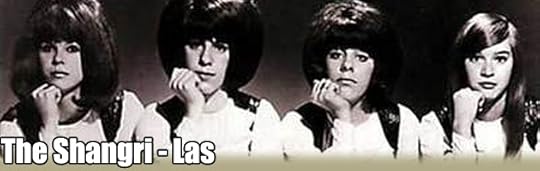
If you like classic dialogue, they have it. On "Give Him a Great Big Kiss" the other Shangri-Las want to know about Mary’s new boyfriend, she’s boring them to death about him.
“Well what color are his eyes?”
“I don't know - he's always wearing shades.”
“Is he tall?”
“Well, I gotta look up…”
You can tell they're not impressed.
“Yeah? Well I hear he's bad…”
“Mmm, he's good-bad, but he's not evil.”
And the backchat at the beginning of “Leader of the Pack” is now imprinted on the national consciousness, the kind of thing they will engrave on the outside of space probes to other galaxies and the aliens that find the space probe will say hey Glommo, I know this one – “Is he picking you up after school today?” And Glommo will snap a tentacle and say “By the way, where’d you meet him?” And in a distant galaxy two indescribable beings will chime together in a duet
"I met him at The Candy Store…."

Pitchfork magazine said :
The Shangri-Las perfected pop melodrama, and their best songs feel like a synthesis of Douglas Sirk, Beatlemania, Hells Angels, and a support group for middle-aged manic depressives.
Amy Winehouse said
I love the drama, I love the atmosphere, I love the sound effects. And they wrote the most depressing song ever: I Can Never Go Home Anymore. When me and my boyfriend finished, I used to listen to that song on repeat, just sitting on my kitchen floor with a bottle of Jack Daniel's. I'd pass out, wake up and do it again. My flatmate used to come in, leave bags of KFC and just leave. She'd be like: there's your dinner, I'm going out. It's the saddest song in the world.
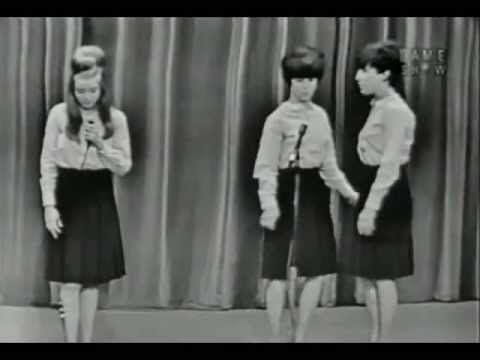
For me, you can have all the jazz recorded after 1935, all Orson Welles movies including Citizen Kane, all of Ingmar Bergman’s too, all of Iris Murdoch’s novels – yes, and Don Delillo’s and Jonathan Franzen’s too, the contents of the National Portrait Gallery in London, the entire output of U2 and Radiohead along with every single Gregorian chant, all of that, take it away, but leave me the sequence of twelve singles and their B sides recorded by The Shangri-Las between 1964 and 1966, from “Remember (Walkin’ in the Sand)” to the even more desolate “Past, Present and Future”.
Go out with you? Why not?
Do I like to dance? Of course.
Take a walk along the beach tonight? I'd love to,
But don't try to touch me, don't try to touch me.
'Cause that will never.... happen.... again.
Shall we dance?

*
If you like classic dialogue, they have it. On "Give Him a Great Big Kiss" the other Shangri-Las want to know about Mary’s new boyfriend, she’s boring them to death about him.
“Well what color are his eyes?”
“I don't know - he's always wearing shades.”
“Is he tall?”
“Well, I gotta look up…”
You can tell they're not impressed.
“Yeah? Well I hear he's bad…”
“Mmm, he's good-bad, but he's not evil.”
And the backchat at the beginning of “Leader of the Pack” is now imprinted on the national consciousness, the kind of thing they will engrave on the outside of space probes to other galaxies and the aliens that find the space probe will say hey Glommo, I know this one – “Is he picking you up after school today?” And Glommo will snap a tentacle and say “By the way, where’d you meet him?” And in a distant galaxy two indescribable beings will chime together in a duet
"I met him at The Candy Store…."
Pitchfork magazine said :
The Shangri-Las perfected pop melodrama, and their best songs feel like a synthesis of Douglas Sirk, Beatlemania, Hells Angels, and a support group for middle-aged manic depressives.
Amy Winehouse said
I love the drama, I love the atmosphere, I love the sound effects. And they wrote the most depressing song ever: I Can Never Go Home Anymore. When me and my boyfriend finished, I used to listen to that song on repeat, just sitting on my kitchen floor with a bottle of Jack Daniel's. I'd pass out, wake up and do it again. My flatmate used to come in, leave bags of KFC and just leave. She'd be like: there's your dinner, I'm going out. It's the saddest song in the world.
For me, you can have all the jazz recorded after 1935, all Orson Welles movies including Citizen Kane, all of Ingmar Bergman’s too, all of Iris Murdoch’s novels – yes, and Don Delillo’s and Jonathan Franzen’s too, the contents of the National Portrait Gallery in London, the entire output of U2 and Radiohead along with every single Gregorian chant, all of that, take it away, but leave me the sequence of twelve singles and their B sides recorded by The Shangri-Las between 1964 and 1966, from “Remember (Walkin’ in the Sand)” to the even more desolate “Past, Present and Future”.
Go out with you? Why not?
Do I like to dance? Of course.
Take a walk along the beach tonight? I'd love to,
But don't try to touch me, don't try to touch me.
'Cause that will never.... happen.... again.
Shall we dance?

Read
February 26, 2019A book trying to do a lot of things in the relatively small space a 33 1/3 allows, and not always succeeding, but still a very interesting read. The most obvious problem is one of constituency – I started this assuming it would be aimed, as the series generally is, at people who already have at least a passing fondness for the act and album in question. Instead, the opening is concerned largely with making a case for the Shangri-Las as deserving of notice, against a background of implied scorn. Various rockist bores are quoted as evidence more for rockism in general than any particular problem with the Shangri-Las, but also a girl group consensus which apparently considers them inferior to the genre's core Phil Spector productions. Which is news to me, because I'm fortunate enough to live in a bubble where two mates have run entirely separate nights named after Shangri-Las songs, and in so far as they come up, they're generally taken to be kind of a big deal. On the other hand, in one shocking recent development I learned that a bunch of people I know, including some close friends, really can't abide Come On Eileen (not even at weddings!), so perhaps even among my nearest and dearest, this section would be needed for some readers. The point stands: at least in a book explicitly about the Shangri-Las, and to this reader, it felt as puzzlingly 'is this really necessary?' as opening a discussion of global warming with having to explain, again, that yes, it's a real thing.
Still, there is one feature here which will recur throughout the book and which, while sometimes frustrating, generally works to its advantage. Wolin will often turn back on her own line of argument, interrogating its assumptions. While in places this can have the frustrating air of an academic reluctance to state a position, more often it's arresting, as when in defence of the Shangri-Las she quotes various acts who acknowledged their influence, before herself admitting that this argument pays deference to the very canon (largely white, male and guitar-based) she's trying to call into question. Or the tension she admits between wanting to look at the ways in which they differed from other girl groups, without turning that into an argument which elevates one act from a disrespected genre precisely by arguing that they're not really part of said genre. Something which, of course, would have extra connotations here – "they're not like normal girls, they're cool girls". This naturally ties in to a discussion of the relative contributions of the band themselves, their producers and their songwriters. One weakness which becomes apparent here is that while Wolin is careful not to take the rockist step of dismissing modern pop in the cause of critically salvaging the classics, she does talk more about the Shangri-Las' rock legacy than the throughline to subsequent bad girl girl groups such as Bananarama, Girls Aloud, even that first Spice Girls video. Similarly, the discussion of producers' role and the tendency, creatively or critically, to regard singers as just another instrument could fruitfully have drawn on modern heirs of that school of precision-tuned pop manufacture. I'm thinking here particularly of the recent BBC4 documentary on nineties Swedish production house Cheiron, in which male and female pop star alumni alike attested to the way in which their vocal performances had to fit exactly the vision the producers had in mind for the song, with no room for their own take outside what had been prescribed for them.
On the songs themselves, though, Wolin soars, admitting that they're melodramatic but refusing to admit that as a problem – indeed, making a case for the truth of it: "As most of us will remember, teendom is a landscape that is both tragic and silly". Similarly, where one often sees critics tie themselves in knots over irony, she has a handle which I really wish weren't so rare on the difference between irony as technique or component, and irony as in the whole project being a joke: she knows that taking them seriously doesn't mean taking every aspect of them as serious. Interestingly, the one song of which she wasn't initially a fan was the sepulchral 'Past, Present and Future', whereas for me that was the one which won me over to the band's mythos precisely by being, even compared to the rest of their material, so utterly OTT in its despair. Beyond the mood, she digs into the specifics, noting that compared to their peers' material the Boy in Shangri-Las songs often gets a much more specific description: these aren't just templates on which listeners can project their own crush. Similarly, where other girl groups presented love within the social sphere, a potential precursor to marriage, the Shangri-Las tip the usual adolescent ambivalence about growing up over into a consistent denial of the future as even a possibility – something Wolin suggests might be an expression of the sixties' undercurrent of nuclear dread. Equally, though this isn't a possibility she mentions, I wondered if it might be the first step of what would become a wider social realisation that the old social structures were no longer fit for purpose, the same current which would subsequently blossom into free love and other alternatives to lifelong heterosexual monogamy (or the pretence thereof).
Still, even if I don't wholeheartedly buy Wolin's argument there, it's a compelling one, and feeds into one of the book's wildest, strongest moments, the cosmic vision of the songs' narrator as always the same Girl, forever trapped in a series of bad romances on some level of the Twilight Zone. There are a few glimpses like this of a more poetic, less academic version of the book, and I loved them all; describing the bike crash sound effects on 'Leader of the Pack' as a Brechtian refusal to hide art's workings is one thing, but the image of Sappho and her crew as girl group pioneers is just fabulous. And these flights of fancy are assisted by the comparative shortage of solid facts on which to draw; such interviews as exist are quoted, basic biographical sketches ironed out, but the band themselves all remain shadowy figures, with only Mary Weiss attaining any degree of solidity, not least because she was the only one to make any kind of comeback (whether or not the songs' denial of a future was true for a generation, it was certainly true of the band themselves). As Wolin points out, there is no accepted Shangri-Las narrative, more "a legacy refracted in all the songs that exist in their wake". Where plenty of 33 1/3 authors could tell you which mic in which studio on which day was used to record a given song, Wolin can't even be entirely sure who's singing lead on 'What Is Love'. But that's no bad thing. Even if it starts off feeling like it's arguing with a presumed typical 33 1/3 reader, there's really no such thing as a typical 33 1/3 book, and this one is at its best when it's an album critique written as a socially conscious teenage ghost story.
(Netgalley ARC)
Still, there is one feature here which will recur throughout the book and which, while sometimes frustrating, generally works to its advantage. Wolin will often turn back on her own line of argument, interrogating its assumptions. While in places this can have the frustrating air of an academic reluctance to state a position, more often it's arresting, as when in defence of the Shangri-Las she quotes various acts who acknowledged their influence, before herself admitting that this argument pays deference to the very canon (largely white, male and guitar-based) she's trying to call into question. Or the tension she admits between wanting to look at the ways in which they differed from other girl groups, without turning that into an argument which elevates one act from a disrespected genre precisely by arguing that they're not really part of said genre. Something which, of course, would have extra connotations here – "they're not like normal girls, they're cool girls". This naturally ties in to a discussion of the relative contributions of the band themselves, their producers and their songwriters. One weakness which becomes apparent here is that while Wolin is careful not to take the rockist step of dismissing modern pop in the cause of critically salvaging the classics, she does talk more about the Shangri-Las' rock legacy than the throughline to subsequent bad girl girl groups such as Bananarama, Girls Aloud, even that first Spice Girls video. Similarly, the discussion of producers' role and the tendency, creatively or critically, to regard singers as just another instrument could fruitfully have drawn on modern heirs of that school of precision-tuned pop manufacture. I'm thinking here particularly of the recent BBC4 documentary on nineties Swedish production house Cheiron, in which male and female pop star alumni alike attested to the way in which their vocal performances had to fit exactly the vision the producers had in mind for the song, with no room for their own take outside what had been prescribed for them.
On the songs themselves, though, Wolin soars, admitting that they're melodramatic but refusing to admit that as a problem – indeed, making a case for the truth of it: "As most of us will remember, teendom is a landscape that is both tragic and silly". Similarly, where one often sees critics tie themselves in knots over irony, she has a handle which I really wish weren't so rare on the difference between irony as technique or component, and irony as in the whole project being a joke: she knows that taking them seriously doesn't mean taking every aspect of them as serious. Interestingly, the one song of which she wasn't initially a fan was the sepulchral 'Past, Present and Future', whereas for me that was the one which won me over to the band's mythos precisely by being, even compared to the rest of their material, so utterly OTT in its despair. Beyond the mood, she digs into the specifics, noting that compared to their peers' material the Boy in Shangri-Las songs often gets a much more specific description: these aren't just templates on which listeners can project their own crush. Similarly, where other girl groups presented love within the social sphere, a potential precursor to marriage, the Shangri-Las tip the usual adolescent ambivalence about growing up over into a consistent denial of the future as even a possibility – something Wolin suggests might be an expression of the sixties' undercurrent of nuclear dread. Equally, though this isn't a possibility she mentions, I wondered if it might be the first step of what would become a wider social realisation that the old social structures were no longer fit for purpose, the same current which would subsequently blossom into free love and other alternatives to lifelong heterosexual monogamy (or the pretence thereof).
Still, even if I don't wholeheartedly buy Wolin's argument there, it's a compelling one, and feeds into one of the book's wildest, strongest moments, the cosmic vision of the songs' narrator as always the same Girl, forever trapped in a series of bad romances on some level of the Twilight Zone. There are a few glimpses like this of a more poetic, less academic version of the book, and I loved them all; describing the bike crash sound effects on 'Leader of the Pack' as a Brechtian refusal to hide art's workings is one thing, but the image of Sappho and her crew as girl group pioneers is just fabulous. And these flights of fancy are assisted by the comparative shortage of solid facts on which to draw; such interviews as exist are quoted, basic biographical sketches ironed out, but the band themselves all remain shadowy figures, with only Mary Weiss attaining any degree of solidity, not least because she was the only one to make any kind of comeback (whether or not the songs' denial of a future was true for a generation, it was certainly true of the band themselves). As Wolin points out, there is no accepted Shangri-Las narrative, more "a legacy refracted in all the songs that exist in their wake". Where plenty of 33 1/3 authors could tell you which mic in which studio on which day was used to record a given song, Wolin can't even be entirely sure who's singing lead on 'What Is Love'. But that's no bad thing. Even if it starts off feeling like it's arguing with a presumed typical 33 1/3 reader, there's really no such thing as a typical 33 1/3 book, and this one is at its best when it's an album critique written as a socially conscious teenage ghost story.
(Netgalley ARC)

March 10, 2024
Although the album is not on Spotify, I listened to a greatest hits comp instead - anyway, I know these songs pretty well.
Ada Wolin's book is interesting: At first it dissects the notion of a girl group, then goes into the lives of the Shangri-Las and their cultural legacy and influence.
It's a tidy little read which I enjoyed and learnt quite a few things in the process. Recommended.
Ada Wolin's book is interesting: At first it dissects the notion of a girl group, then goes into the lives of the Shangri-Las and their cultural legacy and influence.
It's a tidy little read which I enjoyed and learnt quite a few things in the process. Recommended.

September 26, 2019
Kimley and I are going to cover this book for our BOOK MUSIK podcast. I have some issues with the book, which we will discuss in the podcast, but overall I really appreciate that there is some literature on the Shangri-Las,' who I consider being an important music group. I wish there were more Shadow Morton info, but as his name, he's truly a shadow figure. That will be covered as well in BOOK MUSIK.
Read
June 27, 2019This book suggests the limitations of the 33 1/3 series. It's about a singles band but deals only with material on their original best-of LP, thus leaving out discussion of some of their finest songs, such as "Dum Dum Ditty" (which verges on self-parody of the S-L's "we love tough guys" image), "He Cried" (their gender-bending, male-dominating take on the Jay & the Americans hit) and "What's a Girl Supposed To Do?" (which says as much as Grace Paley's short stories about the increased sexual freedom women attained in the 60s). Mary Weiss' solo comeback is critiqued here, so why not S-L's tunes that weren't on GOLDEN HITS? Also, Wolin mentions references to the S-L's songs in other pop songs but somehow forgets Joe Jackson's hit "Is She Really Going Out With Him?" She also discusses James Hilton's novel LOST HORIZON, source of the group's name, but not the movie version the girls were more likely to have been familiar with (curled up by the TV with some outer-borough bad boy no doubt). For S-L's fans, the CD MYRMIDONS OF MELODRAMA is the one to have, and those fans will enjoy this, as I did, but it could have been better...

May 4, 2019
The Shangri Las were one of the most interesting bands of the Sixties, despite often being dismissed as kitsch - their influence spread as far as the Ramones (and, though not mentioned here, more recent acts like Amy Winehouse and Lana Del Rey.) Ada Wolin's history of the group reveals that they were working-class teenage girls from New York, and the stories they told were not removed from their experience. Unlike most of the other girl groups of that era, they were white - which if anything, makes you realise these groups weren't all the same, and you could pick out the Ronettes, say, and find equally unique histories. The Shangri-Las weren't Motown girls, and despite their melodramatic sound, neither did they work with Phil Spector. Like most of the groups, they didn't write their own material - and although they had started their band in high school, it was their alliance with producer George 'Shadow' Morton that put them on the map. Although Morton might be seen as a Svengali figure, the girls had a uniquely rebellious attitude and their output was rather subversive. Unfortunately, the group's history isn't particularly well-documented, which makes them challenging to write about - but Ada Wolin succeeds in getting to the heart of their music. Although the 33 1/3 books are necessarily short, it would have been nice to see a few photos, trade ads etc alongside her compelling text.

April 28, 2019
I love the 33 1/3 series, but they fail me when they treat popular music via doctoral thesis. Haeccity and quiddity? Huh? This is the Shangri-Las! Several pages regarding the selection of their name by comparing their career to the underlying plot of John Milton's Paradise Lost? This overblown approach seems designed to justify the book rather than to celebrate the music; somewhat reminiscent of the now-infamous review by William Mann of The Times praising the "Aeolian Cadences" in a Beatles tune.
At least the need to periodically escape this bloated work inspired several nostalgic YouTube wormholes.
At least the need to periodically escape this bloated work inspired several nostalgic YouTube wormholes.
January 3, 2022
Useful re-evaluation of a forgotten girl band.

April 2, 2020
The Shangri-Las' Golden Hits of the Shangri-Las by Ada Wolin is yet another excellent addition to the 33 1/3 series.
While the idea of having a book in this series focus on a greatest hits album seemed a little odd at first, it makes perfect sense both for the period and the thesis Wolin puts forth. The early years of pop/rock and roll were singles oriented and this was especially true for girls groups. In addition, Wolin is arguing about the place of the Shangri-Las both within the context of girls groups as well as the context of pop/rock history. As such, a compilation of their singles is the best choice.
The one issue I have with the book is that her arguments really need more space to be fully realized. I don't think that this is a big issue, she supports her ideas with examples and quotes as well as making rational arguments, I just would have enjoyed more time to engage with the information before moving on to the next point. That said, I think she did a remarkable job of condensing her ideas into the format of this series, which is intentionally short in length while offering a freer rein to the writers for exploration.
Among the points I found most interesting is the influence The Shangri-Las had on later music, particularly a vein of the punk scene. She elaborates on this but this isn't really something for a reader to believe or not believe. The quotes and musical references from the punk artists attest to the fact they did indeed have some influence. To "not believe" the connection amounts to not believing facts, which unfortunately is far more common nowadays than it once was. Understand, this is not put forth as being a large influence, but The Shangri-Las' delivery and even their melodramatic style offered an alternative to future acts on what they might do.
I recommend this to music fans and those readers who like to understand music as something in addition to just the music. These things occurred at specific points in time and to ignore that is to ignore much of what they were saying and what they were responding to.
One other quick point, this series is not a track-by-track account of each album. If you want such a look at an album, I recommend the British Classic Albums documentary series. They are more about the actual recording and sound of each album. The 33 1/3 series is more about each album within a social and cultural context.
Reviewed from a copy made available by the publisher via NetGalley.
While the idea of having a book in this series focus on a greatest hits album seemed a little odd at first, it makes perfect sense both for the period and the thesis Wolin puts forth. The early years of pop/rock and roll were singles oriented and this was especially true for girls groups. In addition, Wolin is arguing about the place of the Shangri-Las both within the context of girls groups as well as the context of pop/rock history. As such, a compilation of their singles is the best choice.
The one issue I have with the book is that her arguments really need more space to be fully realized. I don't think that this is a big issue, she supports her ideas with examples and quotes as well as making rational arguments, I just would have enjoyed more time to engage with the information before moving on to the next point. That said, I think she did a remarkable job of condensing her ideas into the format of this series, which is intentionally short in length while offering a freer rein to the writers for exploration.
Among the points I found most interesting is the influence The Shangri-Las had on later music, particularly a vein of the punk scene. She elaborates on this but this isn't really something for a reader to believe or not believe. The quotes and musical references from the punk artists attest to the fact they did indeed have some influence. To "not believe" the connection amounts to not believing facts, which unfortunately is far more common nowadays than it once was. Understand, this is not put forth as being a large influence, but The Shangri-Las' delivery and even their melodramatic style offered an alternative to future acts on what they might do.
I recommend this to music fans and those readers who like to understand music as something in addition to just the music. These things occurred at specific points in time and to ignore that is to ignore much of what they were saying and what they were responding to.
One other quick point, this series is not a track-by-track account of each album. If you want such a look at an album, I recommend the British Classic Albums documentary series. They are more about the actual recording and sound of each album. The 33 1/3 series is more about each album within a social and cultural context.
Reviewed from a copy made available by the publisher via NetGalley.
March 13, 2022
This book length essay gives Ada Wolin the opportunity to correct the tendency in popular music criticism to side-line the singer-non-songwriter and, in particular, those girl-groups like the Shangri-Las that could be even more readily dismissed because they were young, female and reflected teenage preoccupations. The author points out that Elvis, as the interpreter of the songs of others, is never allowed to be eclipsed by the song writer or the producer in the way that girl groups tend to be. Wolin’s argument is that the interpretation of the songs, through performances of Mary Weiss and the Ganser sisters, insinuated a proto-punk element to the Shangri-Las that was central to the band’s appeal at the time and to succeeding generations of musicians. To endorse that, i can think of no finer example of proto-punk subversion than Mary Weiss delivering the song ‘Give Him Great Big Kiss’. In the call and response section where Mary describe her Boy to the ‘tell me mores’ of the Ganser twins, she says he has ‘dirty finger nails’ which she follows with ‘ooh boy what a prize’. Written by George ‘Shadow’ Morton, one can detect and almost hear paternal irony in the line ‘oh what a prize’. As sung by Mary Weiss, however, the ‘ooh’ expresses all of the forbidden attraction to the rough and the dirty that traumatizes the fathers of teenage girls the world over.
Ada Wolin argues also that whereas the original renditions by the Shangri-Las are free of the irony that later cover versions introduce (however respectfully) they originals were, however, knowing enough to contain humour. Irony is a way of distancing oneself from ones own performance, humour, on the other hand is the ability to enjoy and celebrate the performance at multiple levels. This is something that Ada Wolin achieves in the her own performance as essayist. Is that ‘What do we talk about when we talk about the Shangri-Las?’ a joking reference to Althusser’s ‘Reading Capital’? Wolin is a real fan of the Shangri-Las and her incorporation of concepts of scholastic philosophy in her discussion of the bands relationship with melodrama (p. 57) demonstrates that, like them, she too can embrace humour without resorting to the distancing effect of irony.
Ada Wolin argues also that whereas the original renditions by the Shangri-Las are free of the irony that later cover versions introduce (however respectfully) they originals were, however, knowing enough to contain humour. Irony is a way of distancing oneself from ones own performance, humour, on the other hand is the ability to enjoy and celebrate the performance at multiple levels. This is something that Ada Wolin achieves in the her own performance as essayist. Is that ‘What do we talk about when we talk about the Shangri-Las?’ a joking reference to Althusser’s ‘Reading Capital’? Wolin is a real fan of the Shangri-Las and her incorporation of concepts of scholastic philosophy in her discussion of the bands relationship with melodrama (p. 57) demonstrates that, like them, she too can embrace humour without resorting to the distancing effect of irony.

April 16, 2020
Wolin’s breakdown the album by the Shangr-las is a mixed bag with some interesting facts but a lot of conjuncture and ideologies. She tries to make a case that the Shangri-las are vital for the annals of pop history and ties them to punk history. Overall, this works quite well but it would have been nice to have some more inside knowledge of this bad that could portray pop genius at a drop of a hat.
We do get a bit of information about Mary and her last album in 2007. We also get a breakdown of the songs which is like a greatest album spat out by a record company at the end of a group’s career which didn’t always include the best of their catalogue though all their hits are included. It might have been more interesting to do another greatest hits album that included most of their catalogue to give a fuller understanding of this group.
At the end of the day, this is an essay about songs on an album and although if this was a concept album that was meticulously put together by the band, it probably would have come across as more substantial. It does have interesting titbits and as I am a huge fan of the Shangri-las, I found this interesting though it does become somewhat repetitive on occasion. If you know nothing of the band, it may leave the reader a bit cold and probably will not garner them any new fans. This is basically an essay in book form but it does have some merit.
We do get a bit of information about Mary and her last album in 2007. We also get a breakdown of the songs which is like a greatest album spat out by a record company at the end of a group’s career which didn’t always include the best of their catalogue though all their hits are included. It might have been more interesting to do another greatest hits album that included most of their catalogue to give a fuller understanding of this group.
At the end of the day, this is an essay about songs on an album and although if this was a concept album that was meticulously put together by the band, it probably would have come across as more substantial. It does have interesting titbits and as I am a huge fan of the Shangri-las, I found this interesting though it does become somewhat repetitive on occasion. If you know nothing of the band, it may leave the reader a bit cold and probably will not garner them any new fans. This is basically an essay in book form but it does have some merit.

June 23, 2020
Have girl groups been unjustly erased from "serious" music history by music snobs? Are there groups other than the Supremes, Ronettes and Shirelles that deserve a second look? Author Ada Wolin says "yes" to both of these questions, though her case is better backed up in her response to the first question.
My takeaway: Music snobs often look down their noses at certain pop music, whether it's singers who have no part in the writing or instrumentation. And stories that are written about the 1960s girl groups often focus on the songwriters or producers rather than the vocalists themselves.
These points are covered in the first two chapters of this book. After that it kind of goes off the rails talking about Brecht's v-effect as related to the use of sound effects in songs, the formal definition of "melodrama," the origin of the phrase Shangri-La's loose thematic connection to the group, etc. The final chapter talks about cover versions of their songs, which probably isn't as interesting as listening the tracks instead.
The questions I had after my read were, "Why focus on the Shangri-Las when the author herself seems to hold the Supremes and the Ronettes in higher regard?" and "Beyond the few noted influences on other artists, what makes a one hit wonder worthy of a book in the 33 1/3 series?" (Reading this book prompted me to listen to what I could on Spotify and "Leader of the Pack" was the only one I recognized.)
My takeaway: Music snobs often look down their noses at certain pop music, whether it's singers who have no part in the writing or instrumentation. And stories that are written about the 1960s girl groups often focus on the songwriters or producers rather than the vocalists themselves.
These points are covered in the first two chapters of this book. After that it kind of goes off the rails talking about Brecht's v-effect as related to the use of sound effects in songs, the formal definition of "melodrama," the origin of the phrase Shangri-La's loose thematic connection to the group, etc. The final chapter talks about cover versions of their songs, which probably isn't as interesting as listening the tracks instead.
The questions I had after my read were, "Why focus on the Shangri-Las when the author herself seems to hold the Supremes and the Ronettes in higher regard?" and "Beyond the few noted influences on other artists, what makes a one hit wonder worthy of a book in the 33 1/3 series?" (Reading this book prompted me to listen to what I could on Spotify and "Leader of the Pack" was the only one I recognized.)
April 1, 2019
This book does a great job of explaining who the Shangri La’s were, their start, their legacy and influence. The author really looks at how the Shangir-La’s are remembered from all possible angles, discussing melodrama, guilty pleasures and a short history of girl groups along the way. I don’t want to give too much of an overview because part of the fun was seeing where the author went next
After reading a few 33 1/3 books, my expectations have greatly changed. These are enjoyed more if you’re not expecting a comprehensive history and analysis of the album. I approach the books like I am taking a music history class with the instructor (the author) using a certain album or genre to teach a number of things. I feel they are more enjoyable from that angle. The books are great, most can be read in a day and I always leave them knowing more than I did before
If you want to read about the Shangri-La’s, girl groups, the Shangri-La’s influence on pun k and indie music, The Shangri-La’s tendency to focus on the morose and what that means about their music and legacy you will greatly enjoy this book
Reviewed from a copy made available by the publisher via NetGalley.
Here is a link to a playlist I made on Spotify to accompany the book
https://open.spotify.com/user/1236788...
After reading a few 33 1/3 books, my expectations have greatly changed. These are enjoyed more if you’re not expecting a comprehensive history and analysis of the album. I approach the books like I am taking a music history class with the instructor (the author) using a certain album or genre to teach a number of things. I feel they are more enjoyable from that angle. The books are great, most can be read in a day and I always leave them knowing more than I did before
If you want to read about the Shangri-La’s, girl groups, the Shangri-La’s influence on pun k and indie music, The Shangri-La’s tendency to focus on the morose and what that means about their music and legacy you will greatly enjoy this book
Reviewed from a copy made available by the publisher via NetGalley.
Here is a link to a playlist I made on Spotify to accompany the book
https://open.spotify.com/user/1236788...

March 30, 2020
Now, I love the music of the Shangri-Las so had this earmarked for a long time as one wanted to read, however, I have to admit to being very disappointed with this- I was hopng for more details about their lives and backgrounds rather than a very in-depth look into their music and on that score it really didn't deliver. Perhaps this is one for anyone doing a music course ( degree level?) where some of what Wolin would make sense in context, but as a book aimed at a more casual fan of the group it definitely didn't meet my expectations.

July 24, 2019
Definitely informative, well-researched and well-written. It's just... the Shangri-Las are fun. Even the sad songs, you listen and you want to get up and dance, singalong, wear shades and bangs, and look as cool as Mary.
This book doesn't give you that. It feels as though much of it was written with a permanent frown of scholarly disapproval, and I felt a little empty by the end.
Maybe it should be redrafted as a graphic novel....
This book doesn't give you that. It feels as though much of it was written with a permanent frown of scholarly disapproval, and I felt a little empty by the end.
Maybe it should be redrafted as a graphic novel....
September 25, 2019
This is the best 33 1/3 book I've read in ages, at least since Amanda Petrusich on Pink Moon. Though the series' ongoing copyediting problems remain, and are as always infuriating to me as a professional, the general thesis of this book--that there's a serious problem in pop music criticism about what songs and artists are "important"--is undeniable, and Ada makes a very strong case for re-evaluating not just the Shangri-Las, but the girl group scene in general.

January 26, 2022
Overall, the books written well, and the concept of the Shangri-las as bigger than a mere girl-group are valid. But, the book didn't really capture me; it kind of trips over itself trying to taking varying angles to prove its point, yet I'm not sure it ever fully proved anything. It's like a great foreword to a book to come later, but perhaps not enough to really encourage anyone to pick up the album and play it.

July 31, 2026
Captures all the nooks and crannies of doom, sexuality, Queens, "the boy" who is both salvation and disgrace, and "the girl" who longs for freedom but is afraid of what it will cost.
Way more depth than you would assume a so-called "girl group" with a couple of hits is supposed to be, and takes some snide critiques of anti-poptimism to the woodshed.

December 29, 2019
Wish I could find a bio of The Shangri-Las. This was a well-done analysis that I occasionally found too dry for what I wanted, but it was still overall interesting and did provide some background on the group.

December 9, 2019
One of my very favorite 33 1/3s! In the top five for sure, and I've read a bunch. I LOVE the case the author makes, and it sent me on a two-week Shangri-Las binge.

Read
October 6, 2023Interesting read, although it strayed from the subject matter at hand, given the lack of information on the Fab4 of girl groups. it still provided new and interesting insight.

May 20, 2024
Very well done! Encompasses everything from an actual nuanced debate on 'Rockism' vs. 'Poptimism,' James Hilton's Lost Horizon, and many other erudite, relevant allusions to music and music criticism

September 9, 2025
troszkę nudne troszkę ciekawe

October 1, 2019
Tosh and I discuss this on episode 10 of Book Musik.
The Shangri-Las were a teenage girl group of the 1960s with a reputation for coming from the mean streets of Queens, NY. Their world was bleak and things always ended badly in the melodrama of their biggest hits like “Leader of the Pack” and “Remember.” They had a huge influence on a diverse group of musicians from The NY Dolls and The Damned to Blondie and Alex Chilton. We venture down the path of their dark world.
The Shangri-Las were a teenage girl group of the 1960s with a reputation for coming from the mean streets of Queens, NY. Their world was bleak and things always ended badly in the melodrama of their biggest hits like “Leader of the Pack” and “Remember.” They had a huge influence on a diverse group of musicians from The NY Dolls and The Damned to Blondie and Alex Chilton. We venture down the path of their dark world.
Displaying 1 - 24 of 24 reviews