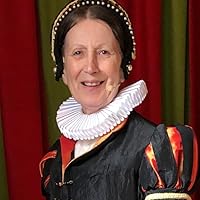
Cousin to Elizabeth I - and very likely also Henry VIII's illegitimate granddaughter - Lettice Knollys had a life of dizzying highs and pitiful lows. Darling of the court, entangled in a love triangle with Robert Dudley and Elizabeth I, banished from court, plagued by scandals of affairs and murder, embroiled in treason, Lettice would go on to lose a husband and beloved son to the executioner's axe. Living to the astonishing age of ninety-one, Lettice's tale gives us a remarkable, personal lens on to the grand sweep of the Tudor Age, with those closest to her often at the heart of the events that defined it. In the first ever biography of this extraordinary woman, Nicola Tallis's dramatic narrative takes us through those events, including the religious turmoil, plots and intrigues of Mary, Queen of Scots, attempted coups, and bloody Irish conflicts, among others. Surviving well into the reign of Charles I, Lettice truly was the last of the great Elizabethans.
Readers of Elizabethan history are familiar with the figurehead of Lettice Knollys: a kinswoman of Elizabeth, Lettice became Elizabeth’s direct rival by marrying her royal favorite and husband-in-everything-but-name, Robert Dudley. Lettice lived a life of intrigue which more-than merits a full-biography yet has not been executed. Nicolla Tallis, the resident historian of the Alison Weir tours, focuses her sophomore history release on spotlighting Lettice once and for all in, “Elizabeth’s Rival: The Tumultuous Life of the Countess of Leicester, The Romance and Conspiracy that Threatened Queen Elizabeth’s Court”.
Attempting to present a full-biography of Lettice is quite ambitious in nature but Tallis attacks it with zeal. Tallis’s approach is that of an academic-scholarly angle but with a flowing-illustrative prose that reads well and entertains while educating, resulting in a composed text.
Unfortunately, Tallis doesn’t fully meet her thesis or portrait Lettice as intended. Tallis begins “Elizabeth’s Rival” with a background look at Lettice’s family tree and childhood environment. However, due to the lack of an abundance of resource material; the pages focus more on everyone and everything but Lettice, herself, causing her to be shrouded in the background and leaving an empty spotlight. This continues throughout the entirety of “Elizabeth’s Rival” darkening the piece.
That being said; it is beyond evident that Tallis has dived deep into both primary and secondary research and holds personal knowledge on the topic presenting it with a desirous passion. Even though Lettice isn’t the main focus, as is the point of the book; readers still gain new and poignant information and therefore learn about this woman’s life (even if from the sidelines). Tallis succeeds at beautifully written text that is supplemented by copious direct quotes from primary documents and ample sleuth work that debunks certain myths and false facts.
Yet, Tallis infuses “Elizabeth’s Rival” with an overload of speculative “could of” and “should have”- statements. “Elizabeth’s Rival” can be taken with a grain of salt and should have its merits questioned. Furthermore, Tallis makes statements that are in complete opposition to the generally-accepted historic cases without arguing them, thus, coming off as simply incorrect rather than enlightened.
Although the book title claims Lettice to have led a ‘tumultuous’ life; none of the text truly emphasizes such a description. Even Lettice’s marriage to Robert Dudley is discussed sort of off-handedly and without detail. However, on a positive note, when is Lettice is the subject of the text, “Elizabeth‘s Rival” is enticing, enough.
“Elizabeth’s Rival” falls victim to repetition of facts and chronological confusing breaking up the text and creating a general feel of disjointed disorganization. Although this doesn’t impede the overall piece too much, a stronger editor would have been welcomed.
Once past the halfway mark; “Elizabeth’s Rival” overly focuses on the lives and movements of Lettice’s children and relations both politically and socially. Tallis’s focus and knowledge of such day-to-day detail is remarkable; but, it still puts Lettice in the background and doesn’t reveal her character or life. Tallis receives credit for attempting to highlight Lettice but it seems the proper amount of information concerning her simply doesn’t exist.
The conclusion of Elizabeth’s Rival” waxes poetic about the life and legend of Lettice and eulogizes her presence. However, this is merely Tallis simply building up the figure but leaving a large shadow in the text. In other words, Tallis wraps up the piece indicating Lettice’s importance but this isn’t solidified anywhere in “Elizabeth’s Rival”.
Tallis supplements “Elizabeth’s Rival” with appendices that include Lettice’s epitaph on her tomb and a list of the places currently in existence from Lettice’s lifetime. “Elizabeth’s Rival” also includes two sets of color photo plates and annotated notes ideal for the staunch fact-lovers.
“Elizabeth’s Rival” is a lofty attempt by Tallis to present a first-ever full-biography on Lettice Knollys. The text is detailed with a smooth narrative and positive prose. However, “Elizabeth’s Rival” fails at Tallis’s thesis and doesn’t fully reveal Lettice which is a heavy disappointment for those seeking a heavy academic piece living up to its title. Despite these complaints, “Elizabeth’s Rival” is suggested for readers of Tudor and Elizabethan England, especially those new to the topic.
Three little words. When separate or combined with nearly any other words in the English language, they seem innocuous. Downright innocent, even. When you string them together, well that’s when they become the hardest words to say: I was wrong. Yes, you read that right. I was wrong. In my defense, this brilliant new biography by Nicola Tallis wasn’t available when I was researching the illusive Lettice Knollys for my novel on her mother. In fact, there was almost nothing out there on Lettice - or her mother for that matter. What we did have often amounted to the worst kind of history - the kind that we take as gospel without considering that it has been perverted by the writer’s own opinions and biases. Which in turn perverted my portrayal of Lettice in the novel. It’s an easy trap to fall into. I’m not the first writer to fall prey, and I won’t be the last, but thankfully we have historians out there, like Tallis, who aim to set the record straight. In her hands, the grime and grit of five centuries of slander is stripped away so that the real Lettice Knollys can finally step out of the shadows.
Temptress, harridan, she-wolf. Lettice Knollys has been called those names and worse; oftentimes by her own kinswoman, Queen Elizabeth I. What horrible acts did she commit to earn such abuse? Well, nothing really, save dare to capture the attention of the queen’s most entirely beloved, yet always out of reach favorite, Robert Dudley. At least, that’s the view Tallis takes – and she’s right. However, just because Lettice turns out to be far less sinister than her reputation implies, it doesn’t mean that her story is any less interesting.
Tallis begins with the early years Lettice spent, doted upon by loving parents and surrounded by a boisterous brood of brothers and sisters, at Rotherfield Greys. While exploring how this loving environment shaped Lettice’s relationship with her own children, Tallis also emphasizes the outside influences: her father’s career at court, the family’s exile in Germany, and her mother’s ancestry. Historians have debated Catherine Carey’s paternity for centuries, but Tallis makes it clear from the outset that Henry VIII, and not William Carey, was Catherine’s biological father. While I wholeheartedly agree with her assessment, this is the one and only place where I caution a light tread. Though the circumstantial evidence is plentiful, there is nothing conclusive. This is one instance in which there are no certainties (as much as I desperately wish there were).
After the death of Mary I, Lettice’s story picks up with her debut at Queen Elizabeth’s court, and her marriage to the first of three husbands, Walter Devereaux, the Earl of Essex. It is here where Tallis picks up speed on her quest to demolish every myth that has dogged Lettice since her death. Rather than the disastrous marriage popular history would have us believe, Tallis shows us a couple with deep admiration for each other. Still, one can’t help but feel horrible for poor Essex. Not because of his marriage to Lettice, but because of his marriage to Ireland. When the country finally claims the last it can from Essex – his life – Tallis brings us to the heart of her subject: Lettice as a survivor. It is this ‘last great Elizabethan survivor’ who manages to outlive husbands, children, and rivals all while ever more retaining her substance and dignity. Far from being the villainous trope detractors would like her to be, Tallis gives us an indomitable matriarch, who deserves well-earned admiration.
Jam packed with first-rate research and built upon the strongest of foundations, Elizabeth’s Rival is a tour de force. Tallis’ style is thorough yet engaging. She delivers an immense amount of information in a way that is utterly accessible, proving that popular ‘narrative-type’ history need not preclude true academic research. I fiercely hope more historians follow her lead. My little history-geek heart literally sang at the abundance of detailed footnotes – and from truly impeccable sources.
I cannot stress enough how much I sincerely enjoyed Elizabeth’s Rival, both as an historian and as someone who has come to adore the entirety of the Knollys family through my own research. Sometimes we care so deeply for an historical figure, we set our expectations at unreasonably high levels; it can often make reading about them torturous. I held such expectations for the first true biography of Lettice Knollys, and Nicola Tallis far surpassed every one of them. Expertly researched and beautifully written, this book was really a treat. I look forward to more great work from this rising star.
The little I knew of Lettice Knollys created a picture of her as reckless, perhaps even foolish, in how she knowingly provoked the legendary fury of her friend, (and half-sister?), Queen Elizabeth, but of course, the truth is more complicated.
Lettice can be admired for her courage, risking everything for Robert Dudley, although she might have sensibly avoided travelling with such an entourage that people mistook her for the queen.
I'm also fascinated by her children, who all have amazing stories in their own right. Lettice's story could have ended in the Tower of London, but instead she outlived three husbands, her brother and sisters, and of her six children (that we can be sure of), to die on Christmas day, 1634, at the age of ninty-one.
Nicola Tallis explains she was inspired to research and write this book after visiting Lettice's tomb. Amazingly, for such an important Tudor woman, this is the first full biography of Lettice Knollys, and I think she would have been pleased to know her life is finally explored in the context it deserves. Highly recommended.
Well done. I love the author’s voice. I do wish there were more details specific to Lettice (as opposed to the context required to understand exactly what was going on) but I get that we likely got all there were!
An interesting read about Lettice Knollys, the woman who managed to steal the earl of Leicester from under queen Elizabeth 1st's nose. Considering she lived a long life through an incredible period very little has been written about her before. Here Tallis gives a wonderful account of a woman who was totally hated by the queen and spent the whole of her marriage to the queen's favourite banished from court. Elizabeth had her revenge when she took Lettice's son the earl of Essex as her favourite and had him executed for treason after a failed uprising. This was a terrific read.
Excellent, readable, well-researched biography of Lettice Knollys, Elizabeth I's greatest romantic rival. She was the queen's own close kinswoman and even resembled her, yet when Lettice dared to marry in secret in 1578, she incurred the wrath of the queen, especially because she wed the queen's own favorite, Robert Dudley, Earl of Leicester. Elizabeth never forgave her. The author has sifted through the sources to compile an accessible narrative of Lettice's long life, replete with challenges, despairs, intrigues, triumphs, and pleasures: she married 3 times, bore 6 children, survived 7 monarchs (including Lady Jane Grey), navigated multiple political and financial storms, and died on Christmas Day 1634 (at age 91!) having outlived all the greatest Elizabethans and the world that she knew. A remarkable character who led a colorful life during a golden age of English history, Lettice's descendants include Sir Winston Churchill, Prince Charles and Lady Diana Spencer. Tallis has done a beautiful job with this bio--even her endnotes are terribly interesting and informational. It reads like the best historical fiction.
The sex, scandal, betrayal and political intrigue of the Elizabethan Era make the 21st Century look tame and tepid by comparison, and that's just the lives one family.
I thoroughly enjoyed this biography on Lettice Knollys, Countess of Leicester, who married Elizabeth I's favorite and gained her wrath for the rest of her life. Looking forward to reading more by this author!
I've read a lot about Tudor England but I never was aware of Lettice Knollys's story. She was connected to both the courts of Henry VII and Elizabeth I. She was the granddaughter of Mary Boleyn (Anne's sister) and likely also the granddaughter of Henry VII, though that was not acknowledged. She looked just like Elizabeth with red Tudor hair and dark eyes. She was 10 years younger than Elizabeth and grew up with her. She was a great favorite at Elizabeth's court until she took, as a second husband, the queen's favorite, Robert Dudley, Earl of Leicester. Although Leicester was forgiven Elizabeth banned Lettice from her court forever and had great animosity toward her. Lettice was married first to Walter Devereux with whom she had four children. Her oldest son, Robert Devereux became Earl of Essex and Elizabeth's favorite, despite her wrath toward his mother. Her daughters Penelope and Dorothy were great Elizabethan beauties as well. Remarkably for the times, Lettice lived into her 90s. Nicola Tallis has researched copiously and her story is well told. If you are at all a Tudor fan, I recommend this.
If you love Tudor history you might find this interesting but if you are not a die hard fan I would not suggest starting here to understand the era. Why not? Well for one there's not a lot of helpful footnotes. There are carefully indexed notes that indicate source material, but that's it - that's all they record. Which means if you're reading an exact quote, like the one on page 22, written in the English of 5 centuries back and the language has changed or you come across a word you never heard before, you're on your own to figure it out.
Francis Knollys for example, is quoted as writing, "My will is good, they cannot lack as long as I have it, but there is no more 'to be had of a cat but the skin.'" Which means? ? I dunno I googled it and found no explanation for that idiom. Later on the same page Tallis regales us with a "humorous" (her word) story whereby Francis "...strips off (to) his shirt, and so with a pair of spectacles on his nose, and Aretine in his hand, comes marching in at postern door of his own chamber, reading very gravely, full upon the faces of them. . . " No, I didn't get what was humorous about this story and I could not find "Aretine" in the dictionary. phooey.
Problem two, there's an awful lot of conjuncture in this for a history book. There's quite a bit of back and forth about the game that Leicester sent Lettice before their marriage meant (I suppose) to titillate and suggest possible beginnings of the romantic relationship but then the author will admit such gifts of venison were not uncommon and other people also received similar. I would have been ok with one pass at that, but like a TV show that has to narrate a click bait just before a commercial break Tallis repeats conjectures numerous times. It's a style that wears thin when the reveal is kinda thin: Eventually They Were Married. Yeah, we knew that.
And in another part, on page 135-136 Lettice's first husband, Walter, is described as particularly "savage" after having killed three hundred or four hundred people. I get that in today's world that sounds pretty barbaric but the author admits both Walter and the Queen viewed his actions as "necessary in order to tame an unruly nation." Tallis assumes Lettice would have been "appalled." I think there's a lack of evidence to show Lettice would react like a 21st century person when the other people of her time see this violence as not excessive. Those were different times and I don't think it's helpful to assume people back then saw things through our lens. I find history books that explore, explain and describe how people actually were back then more interesting then ones that judge by our contemporary standards. It's a disservice to both us and them.
On the good side I find this book a nice addition to my collection of Tudor history books because I love Tudor history. I had always known that Queen Elizabeth I favored her Boleyn relatives the Carey's over her royal relatives the Grey's, but I never knew that much about the Careys precisely because they weren't royal. As the author points out in her preface, this is the first full length autobiography of Lettice. And maybe it's the first because there isn't too much record of the lady to make a full book so in order to pad out the story there is plenty, in general, about the family and the times and the events. Too bad the title had to go all sensational. Personally I think if Elizabeth had a "rival" it was more rightly Mary Queen of Scots, or Mary I (of England) more so than Lettice Knollys, but editors love splashy titles.
While I had some knowledge of Lettice Knollys prior to this book, it was pretty limited to knowing she married Elizabeth I favorite Robert Dudley and payed the price. This was a well researched and interesting look at a woman who lived through the reigns of the Tudors to the Stuarts pretty much in the thick of things all of her life. Related to Elizabeth through Mary Boleyn's illegitimate daughter Katherine Carey it was fascinating to look at the portraits included in the book and see how closely Lettice resembled Elizabeth. An interesting character in her own right and the book gives insight to a part of the Tudor story that is not well known.
This is the first biography of Lettice Knollys, the woman who stole Robert Dudley's heart. Tallis puts her life into larger perspective of the Elizabethan era, dealing a lot with the politics. I really enjoyed the book (must admit that I'm biased, as Lettice is one of my favourite people of this era).
She was a strong, opinionated woman (less rare than you think), thrice married, doting mother of several, including Robert Devereaux, who was Elizabeth's favourite.
This is the first full-length biography of Lettice, daughter to a possible illegitimate child of Henry VIII. She married several times, endured numerous losses and banishment from court yet lived to the grand age of 91. This was such a well-researched and informative book and I found myself engaged with the narrative throughout.
Heard of the lovely lady Essex! The lady who stole Elizabeth I paramour but never knew the details until now! She had a long and varied life Long being literal in the length of this book very long indeed! If you ever wanted to know about this famous lady this is the book for you!
I love Tudor history. I devour non-fiction and fiction alike, and so I knew who Lettice was, and her story. I couldn’t wait to read this, to gain some more insight into a fascinating woman and her long life. Unfortunately the only detail here is from her household inventories, just about everything is drawn from this. Assuming Lettice enjoyed needlework into old age as there were needlework kits in her household? Very few of her letters survive. The story is built mostly around documents relating to Leicester and Essex. If you want to know what Lettice gave and received at New Year, and what she had in her household in random years, fantastic. However, it would seem there is a very good reason there has never been a biography of Lettice, the historical documentation of her life simply isn’t there, and the hard facts here are the same as you’ll find anywhere else. The presumptions around how Lettice was feeling, or what she was thinking are more suited to an historical fiction.
I’m as bereft as anyone that Lettice’s story is lost to history, but it would seem it is from this biography.
This entire review has been hidden because of spoilers.
Very readable attempt to write a biography of Lettice Knollys, wife of Elizabeth I’s favourite the Earl of Leicester and mother of her favourite the Earl of Essex. Unfortunately material was obviously often lacking to indicate Lettice Knollys’s feelings about and even whereabouts during some crucial events so the author has to resort to “almost certainly” and “likely” far too frequently. Although many of the events of her life were tragic it was hard not to come away with the feeling that her entire family, and particularly her son Essex, were arrogant and rash and largely complicit in their own downfall. An interesting but flawed read.
When we think of Lettice Knollys, we often think about the kinswoman who made Elizabeth I really mad when she married Robert Dudley, Elizabeth’s favorite. These two women were once best of friends, but that one event torn then apart forever. However, there is more to Lettice Knollys than this one event. She was married three times, survived seven different monarchs, and lived well into her nineties. Her story has always been hidden, until now. Lettice Knollys story is finally being told in “Elizabeth’s Rival: The Tumultuous Life of the Countess of Leicester: The Romance and the Conspiracy that Threatened Queen Elizabeth’s Court” by Nicola Tallis.
Lettice Knollys was born on November 6, 1543 to Sir Francis Knollys and Katherine Carey; her mother was the Mary Boleyn, the sister of Anne Boleyn and mistress to Henry VIII. Lettice was one of sixteen children. Her family was solely devoted to their Protestant faith and to their service to the crown. Two of Lettice’s brothers, Robert and William, would later become favorites in Elizabeth’s court. Katherine Carey would be one of the ladies in Elizabeth’s court alongside Katherine Knollys and Lettice; Lettice and Elizabeth became very good companions very quickly. Lettice caught the eye of one Walter Devereux, Viscount Hereford, and sometime between 1560 and 1562, they were married, much to the chagrin of the queen who wanted her ladies to remain single. They would have four children: Dorothy, Penelope, Robert and Walter (named after his father).
Both Sir Francis Knollys and Walter Devereux would travel towards Scotland to deal with rebellion for Elizabeth, but Walter would also travel to Ireland for Elizabeth as well. While Walter was away, it is rumored that Robert Dudley had an affair with Lettice after his wife Amy died in 1560, but in 1574, Robert was having an affair with Douglas Sheffield. When Walter died on September 22, 1576, Lettice was left to deal with the copious amount of debt her husband left her. It wasn’t until September 21, 1578 when Robert Dudley and Lettice Knollys would marry in secret.
Elizabeth would banish Lettice from court forever, but Lettice’s story does not end there. In fact, this is where her story picks up the pace. After Robert Dudley died on September 4, 1588, he left Lettice with yet again a copious amount of debt to pay off so in July 1589, she married Sir Christopher Blount, thinking that he would help alleviate some of the debt; he did not. On top of all of this, her children were having their own martial difficulties and her son Robert Devereux, the 3rd Earl of Essex, would launch an unsuccessful rebellion against Elizabeth and would be executed February 25, 1601; Sir Christopher Blount would also be executed on March 18, 1601. After Elizabeth I died on March 24, 1603, Lettice thought her problems would be solved after James I cleared all of her debt, but Dudley’s illegitimate son by Douglas Sheffield, Robin Sheffield, would file a suit against her, which Lettice would win. On December 25, 1634, Lettice Knollys would die after living well into her 90’s.
Nicola Tallis does an excellent job in navigating Lettice’s life and times. With the amount of research and care Tallis took in portraying this woman who was once hidden in history behind her husband Robert Dudley and Elizabeth I. Her story is one of survival and strength. With this fabulous book, “Elizabeth’s Rival” by Nicola Tallis, Lettice Knollys will not be hidden in the past anymore.
Elizabeth I was the glittering jewel in her court, and she was unwilling to share any of the limelight with anyone. As her reign progressed, she made her feelings on marriage well known, and many in her court were afraid to ask her permission to get married. Some married in secret, and for those unfortunate souls, the effects were long reaching and dire. Robert Dudley was the favorite of the queen. They doted on each other, and there was fear among the queens Councillors that he would persuade her to marry him. After the death of his first wife, his name was tarnished enough that she could never give him much credence in his suit, but he continued to pursue her for years. Finally realizing that his dreams would never be realized, he set about to find a wife that could provide him with heirs for his landed estates and title. Lettice Knolly's was a close relation of the queen, whether it was remarked on or not, and her role in the court was tenuous. Given her mothers relationship with the queen, she was given a court position, but marriage and motherhood kept her from the court much of the time. Upon the death of her husband, and the massive debts that he had incurred, she began to make plans for her future. Whether she and Dudley had been more than friends for many years is a point of conjecture that we will never fully have an answer to, but she waited the required amount of time for mourning before considering marriage again. Her marriage would be the cause of contention for decades to come. Lettice might be well loved by the queen, but she threw it all away for the love of one man - and the one man that no one else in the kingdom had dared to make any designs on. He was the queens favorite, her darling, her right hand. That Lettice and Robert dared marry in secret, and then continue to hide it from the queen make it all the worse for the pair when it was finally outed to the monarch. Dudley was forgiven, but Lettice was never again fully welcomed at court. She was banished from the sight of the queen, but the long drawn out spite was not to be forgotten. There could be only one and the queen was not about to share with anyone.
Lettice is quite a enigmatic figure. That more has not been written about her prior to this is a shame. She was a woman to be reckoned with, and one that did not back down no matter who was on the other side. While her family would find their tempers caused them lucrative positions at court, they always managed to come back up around. Fortunes wheel doth turn and turn. This is one book that I would read again - as there is so much information presented, that it is hard to take it all in at once, but it would be a good one.
Elizabeth’s Rival :The Tumultuous Life of Lettice Knollys Countess of Leicester
All I really knew about Lettice Knollys before reading this fascinating biography was that Queen Elizabeth I never forgave her for marrying her favourite, and some say true love, Robert Dudley; that Lettice was quite probably a granddaughter of King Henry VIII through his liaison with Mary Boleyn —which would explain Lettice’s very striking physical resemblance to the red-haired Queen — and that she was the mother of that other doomed favourite, Robert Devereux, Earl of Essex.
Like many women of her time Lettice herself does not feature in the historical record as frequently as the men around her and the Queen. So inevitably Tallis has had to rely on what is recorded of them to fill in gaps in Lettice’s story. She has tackled the difficult task of uncovering Lettice’s true story with determination and enthusiasm.
Lettice appears in the sidelines of accounts of Queen Elizabeth’s reign both on screen and in many books, but until now no-one has shone the spotlight directly on her. The picture I had in my mind was of a rather scheming, ruthless and reckless woman who was foolishly prepared to stand up to the imperious and jealous Elizabeth. But a much more complex picture emerges of a strong, passionate and very determined character, which has which left me feeling a lot more sympathy for this woman who lived to the extraordinary age of 91. She had known love, but also more than her fair share of loss.
If I had one criticism it would be that it took a long time to reach the point in Lettice’s life where she became the rival to Elizabeth of the book’s title. However, I’m not sure how this could have been avoided, as it was important to me to have all the background detail to put Lettice’s relationship with Dudley, the Queen and her most famous son into context. By uncovering the troubled relationship between these two women this book reveals a lot about Elizabeth herself, which has helped my understanding of this fascinating period. All in all this was a most enjoyable and enlightening read.
A very enjoyable and easy to read biography on this remarkable lady. It is more than just a biography of Lettice, being also a biography of the Devereux and Knollys families as well.
It is often forgotten that while Lettice Knollys became a rival of Elizabeth I through marrying Robert Dudley, she was also Elizabeth’s relative. Through her mother Catherine Carey, Lettice was the granddaughter of Mary Boleyn. This also made her the grandniece of Queen Anne Boleyn and the first cousin once removed of Queen Elizabeth I.
It is also possible that Lettice was the illegitimate granddaughter of King Henry VIII, though we will never know this for certain. If this was the case though, then Lettice would also be Elizabeth’s niece as well.
Lettice is also an ancestor of the British Royal Family, with Queen Elizabeth II of the United Kingdom of Great Britain and Northern Ireland being Lettice’s great-granddaughter X10 and a great-granddaughter X12 of Mary Boleyn. Therefore if Lettice was the unacknowledged granddaughter of Henry VIII then Queen Elizabeth II would be directly descended from Henry VIII as well. Though obviously we will never know whether she is or not.
Like her grandmother Mary and grandaunt Anne Boleyn, Lettice has often been portrayed rather negatively. Nicola Tallis dispels many of the absurd myths about her in this biography and instead presents a very different Lettice, one who actually had a very close relationship to Elizabeth I before her marriage to Robert Dudley.
Lettice lived to the grand age of 91, dying in the reign of King Charles I. I’m sure readers will enjoy the chapter where Nicola discusses Lettice’s life post-1603.
Lettice Knollys was born in 1543 in England. Her mother was Catherine Carey, a daughter of Mary Boleyn. Her aunt was Elizabeth I's mother, Anne Boleyn. Her father was Sir Francis Knollys, a Member of Parliament and Master of the Horse for Edward VI. She was Maid of the Privy Chamber when Elizabeth I attained the throne. She married Walter Devereux, Viscount Hereford. They had two daughters, and she was pregnant with a son when she wound up flirting with Robert Dudley, which immediately reduced her in the Queen's eyes. She was extremely jealous and possessive over Dudley, and could not stand this affair they were having while Lettice's husband was away. They wound up splitting up and she married Robert Dudley, which further infuriated Elizabeth I. She never accepted the marriage, and banished her from court. By all accounts, she never forgave her for marrying him. He was terribly in debt, and died leaving it to her to deal with. After Elizabeth's death, she was able to have some debts forgiven and live in some state of peace.
I discovered this author on accident via Twitter, and got this book and another one. I really enjoyed this book. The way she tells the story is entertaining, and you can tell she did her research. I didn't know anything about Lettice (I called her lettuce nearly the whole time) until I read this book. I knew that Robert Dudley married and it upset Elizabeth, but I didn't realize who the wife was or how miserable she had it when facing the wrath of a long reigning monarch. I would recommend this book, and I cannot wait to read the other book I have by this author.
Well what a woman! “The last of the great Elizabethan survivors: of all of those who had played a role at court, who had shone and made their mark on the pages of English history, it was Lettice who had outlived them all”.
I admit to being unfamiliar with Lettice before reading this, but was drawn in by the description of a feud with Elizabeth I and a woman living through so many monarchs and so much change. It’s a biography but almost novel like with its plot twists, betrayal and court intrigue.
As other reviews have noted, it takes a while for the book to arrive at Lettice, starting as it does with her father and his family. Granted, there is only so much historical evidence to go on for Lettuce, but I’d read quite a chunk of the book before I felt I was reading what the book title promised. Lettice isn’t always the central focus of the book, which Elizabeth I might have found amusing!
Lettice and her family are everywhere in the places I visit (or want to visit) - their history hasn’t been something I’ve focussed on before, being more of a medievalist, but I’ll be looking out for them now: Greys Court where Lettice Knollys born Devereux Tower at Tower of London named after her son Children buried in Westminster Abbey, Greys Court, Petworth House
And how amazing that at Greys Court (where Lettice’s father’s parents were the first in the family to live), the rent was a single red rose payable in mid summer.
This was a very well written book. Lettice was a woman who lived a very full and dramatic life, I'll give her that. At least she had the last laugh over Queen Elizabeth, who, the more I read about, the more I dislike her. What a petty, jealous, nasty person. No wonder she had so many plots to kill her, I would have gotten sick of her attitude, too.
My biggest nitpick with this book is that the author is a bit of a Tudor propagandist and plays a little too fast and loose with some controversial facts. 1) There is simply no way to prove one way or the other whether Katherine Carey was Henry VIII's illegitimate daughter. By the author's own admission, we have no idea when Henry VIII had his affair with Mary Boleyn and only one statement from Henry VIII that they even did have an affair. 2) The Casket papers that condemned Mary, Queen of Scots are considered by most historians to have been forgeries. I'm sure Mary was at least somewhat aware of the plot to free her and put her on the throne but those letters were forged by Elizabeth's own councillors to convince her to finally execute her cousin. This author just takes them at face-value.
This is a biography that was long overdue. Many books and films have documented the life of Robert Dudley, Earl of Leicester, and Robert Devereux, Earl of Essex, and their connections to Elizabeth I, but none has yet focused on the other woman who loved them most - Lettice Knollys, Leicester's wife and Essex's mother.
Lettice Knollys began her life in a position of assured success - the Queen trusted and depended upon both of her parents and in her youth she was also shown favor by Elizabeth. All that changed in 1578 when the Queen found out that Lettice, by then the widowed Countess of Essex, had married in secret to the Queen's own favorite - Robert Dudley, Earl of Leicester.
Historian Nicola Tallis has finally given this neglected figure of Tudor history her due. Given Lettice's connections to both Leicester and Essex, and indeed to the Queen herself - her maternal grandmother was Mary Boleyn, Anne's sister, and her grandfather was very likely to have actually been Henry VIII - it's almost inexplicable how she has been so ignored until now.
A clear insight into the life of Lettice Knollys who in 1578 married Robert Dudley in a secret ceremony. This was to be her downfall as she had married Elizabeth I`s favourite. Lettice lived to the age of 91 an incredible number of years for this time; but it meant that she witnessed many events and characters of the Tudor age and the reign of James I and the beginning of King Charles I`s kingship. Her family was the prestigious Knollys and she was related closely to Elizabeth on her mother`s side. Katherine Knollys was the likely illegitimate daughter of Henry VIII and Mary Boleyn. Hence her family as well as her married families were at the heart of events that defined the Tudor age. This biography is detailed, fluent and easy to read. Nicola Tallis provides a rich narrative that includes the political, social and religious context surrounding Lettice and her family. I will read other books by this author.
Though she lived to be 91 years old, outliving all of the leading Tudors, Lettice Knollys has never had a biography dedicated to her, only appearing as a piece of biographies of her cousin Elizabeth I or her husband, Robert Dudley, the Earl of Leicester.
Nicola Tallis brilliantly researched this book to provide a thorough examination of a woman from a large and loving family who gave up a life at Court to marry the man whom Elizabeth loved (but could not marry). What I found most fascinating was the close bonds of the Knollys and Devereaux families, including her parents who were devoted to each other in a time where marriage was more about alliances than love.
Reading about Lettice’s life makes the stories I’ve read about Elizabeth more complete. I highly recommend this easy to read book to anyone who is as fascinated with the Tudors as I am.
I enjoyed learning above Lettice Knollys as she is one of my favorite characters from the Tudor/Stuart eras. The book was well researched and certainly unique in that it covered a character who serves only minimal roles in novels and history. There truly is a lot more to Lettice. However, I found the book a bit repetitive and the closings of her paragraphs a little cliché. She frequently used, phrases like: but would it be enough, it was about to get much worse, and the trouble was only beginning. I think cliff hangers certainly add excitement to a story but too many makes it cheesy. Overall I give four stars.