

What do you think?

Figuring
Figuring
explores the complexities of love and the human search for truth and meaning through the interconnected lives of several historical figures across four centuries--beginning with the astronomer Johannes Kepler, who discovered the laws of planetary motion, and ending with the marine biologist and author Rachel Carson, who catalyzed the environmental movement.
Stretching between these figures is a cast of artists, writers, and scientists--mostly women, mostly queer--whose public contribution has risen out of their unclassifiable and often heartbreaking private relationships to change the way we understand, experience, and appreciate the universe. Among them are the astronomer Maria Mitchell, who paved the way for women in science; the sculptor Harriet Hosmer, who did the same in art; the journalist and literary critic Margaret Fuller, who sparked the feminist movement; and the poet Emily Dickinson.
Emanating from these lives are larger questions about the measure of a good life and what it means to leave a lasting mark of betterment on an imperfect world: Are achievement and acclaim enough for happiness? Is genius? Is love? Weaving through the narrative is a set of peripheral figures--Ralph Waldo Emerson, Charles Darwin, Elizabeth Barrett Browning, Herman Melville, Frederick Douglass, Nathaniel Hawthorne, and Walt Whitman--and a tapestry of themes spanning music, feminism, the history of science, the rise and decline of religion, and how the intersection of astronomy, poetry, and Transcendentalist philosophy fomented the environmental movement.
Stretching between these figures is a cast of artists, writers, and scientists--mostly women, mostly queer--whose public contribution has risen out of their unclassifiable and often heartbreaking private relationships to change the way we understand, experience, and appreciate the universe. Among them are the astronomer Maria Mitchell, who paved the way for women in science; the sculptor Harriet Hosmer, who did the same in art; the journalist and literary critic Margaret Fuller, who sparked the feminist movement; and the poet Emily Dickinson.
Emanating from these lives are larger questions about the measure of a good life and what it means to leave a lasting mark of betterment on an imperfect world: Are achievement and acclaim enough for happiness? Is genius? Is love? Weaving through the narrative is a set of peripheral figures--Ralph Waldo Emerson, Charles Darwin, Elizabeth Barrett Browning, Herman Melville, Frederick Douglass, Nathaniel Hawthorne, and Walt Whitman--and a tapestry of themes spanning music, feminism, the history of science, the rise and decline of religion, and how the intersection of astronomy, poetry, and Transcendentalist philosophy fomented the environmental movement.
578 pages, Hardcover
First published February 5, 2019
About the author
Maria Popova
36 books1,877 followersMaria Popova is a reader and a writer, and writes about what she reads on Brain Pickings (brainpickings.org), which is included in the Library of Congress permanent digital archive of culturally valuable materials. She hosts The Universe in Verse—an annual charitable celebration of science through poetry—at the interdisciplinary cultural center Pioneer Works in Brooklyn.
Ratings & Reviews
Friends & Following
Create a free account to discover what your friends think of this book!
Community Reviews
Displaying 1 - 30 of 815 reviews

February 3, 2019
For the first third or so of the book I wasn’t quite sure what Popova was really getting at. There were a lot of historical figures surrounding her “main” subjects and I was having a little bit of trouble keeping up with the jumps back and forth (and I kept confusing Maria Mitchell and Margaret Fuller, oops). But then Popova got to her chapters on Emily Dickinson and just wow. Blew me away. That was when the book began to gel for me and I started to really understand that Popova was drawing all these parallels between geniuses ahead of their times, their successes and set-backs, the rich relationships they formed (some romantic, some not, some that could be considered queer, some more “conventional”), and how their work creates a web from generation to generation, from Kepler to Dickinson to Rachel Carson. A book to be savored.

October 17, 2019
The city of Pittsburgh has 446 bridges, more than Venice, and actually more than any city in the world. The more prominent ones downtown have been named for local celebrities: Andy Warhol, Roberto Clemente, David McCullough. And Rachel Carson.
That’s nice and all; having a bridge named after you, I mean. But I think Rachel Carson would have been happier with another eponymous honor: The Rachel Carson Trail, a dozen miles north of her bridge and only a short drive from me. I go there for solitary hikes, to think, to remember, to plan; or just to enjoy the flora and fauna. I have thought more than once that the worn path I was on may have been trod by the young Rachel Carson. And I like that. I know, of course, the larger principles espoused by Carson and believe them without reservation. I like, too, that the Trail honors the principles as well as the person.
But as I step where perhaps Rachel Carson once stepped, I do not think of her gender, nor do I wonder if she had a lover. This book does. Here, in addition to Carson, are the astronomer Maria Mitchell, the sculptor Harriet Hosmer, the journalist and literary critic Margaret Fuller, and the poet Emily Dickinson. We learn of their individual genius, but also of their personal passions. The love is mostly same-sex and feminine, but there are a few open marriages and Herman Melville’s unrequited love for Nathaniel Hawthorne gets its chapters.
It is almost banal to say, yet it needs to be said: No one ever knows, nor therefore has grounds to judge, what goes on between two people, often not even the people themselves, half-opaque as we are to ourselves.
The theme that is presented here – one that seems a constant in my reading – is that we are all connected in some way, and that we need to look as if from a distance – historically, or like Carl Sagan from another galaxy at the pale blue dot – to see the repetitive currents of thought and passion. Like my shoeprints on the pentimento on Rachel Carson’s Trail.
The author, here, suggests these connections in her phrasing:
-- As Maria Mitchell’s comet was making its unwitnessed approach to Earth and Margaret Fuller was commencing the momentous European chapter of her life . . .
-- In the spring of 1950, exactly a hundred years after Margaret Fuller boarded the Elizabeth, Carson arrived . . .
-- One hundred thirty-one years after Emily Dickinson’s death, I stand in her bedroom . . .
-- Sixteen hundred hours before King’s assassination, 864,353 after Lincoln’s, and 72 after the Gettysburg speech he didn’t deliver, Kennedy was shot in Texas. What if he had gone to Maryland instead? Chance and choice.*
There is much of that device. Better are the comparisons of ideas. There is Rachel Carson - a solitary landlocked child . . . roaming the woods of Western Pennsylvania - and finding a fossilized fish skeleton that makes her wonder how that mysterious marine creature had ended up a terrestrial ghost. A quick segue takes us to Emily Dickinson, writing:
I never saw a moor,
I never saw the sea;
Yet know I how the heather looks,
And what a wave must be.
I smiled at the author’s invented word: anthropoarrogance. Ralph Waldo Emerson, we learn, had his own lexicon invention, naming his matrimonial circumstance a Mezentian marriage.**
There was a lovely parable, taken from one of Carson’s letters, about a destitute man who had only two pennies, and spent one on bread and the other on “a white hyacinth for his soul.”
This book was a white hyacinth for my soul. It was moving to the point of heartbreak and yet it was somehow full of hope. I think I need some time alone now.

_________________________
*Of course, Gettysburg is in Pennsylvania, not Maryland.
**From the Roman myth wherein King Mezentius would order men to be tied face-to-face with a corpse and leaving them to die.
That’s nice and all; having a bridge named after you, I mean. But I think Rachel Carson would have been happier with another eponymous honor: The Rachel Carson Trail, a dozen miles north of her bridge and only a short drive from me. I go there for solitary hikes, to think, to remember, to plan; or just to enjoy the flora and fauna. I have thought more than once that the worn path I was on may have been trod by the young Rachel Carson. And I like that. I know, of course, the larger principles espoused by Carson and believe them without reservation. I like, too, that the Trail honors the principles as well as the person.
But as I step where perhaps Rachel Carson once stepped, I do not think of her gender, nor do I wonder if she had a lover. This book does. Here, in addition to Carson, are the astronomer Maria Mitchell, the sculptor Harriet Hosmer, the journalist and literary critic Margaret Fuller, and the poet Emily Dickinson. We learn of their individual genius, but also of their personal passions. The love is mostly same-sex and feminine, but there are a few open marriages and Herman Melville’s unrequited love for Nathaniel Hawthorne gets its chapters.
It is almost banal to say, yet it needs to be said: No one ever knows, nor therefore has grounds to judge, what goes on between two people, often not even the people themselves, half-opaque as we are to ourselves.
The theme that is presented here – one that seems a constant in my reading – is that we are all connected in some way, and that we need to look as if from a distance – historically, or like Carl Sagan from another galaxy at the pale blue dot – to see the repetitive currents of thought and passion. Like my shoeprints on the pentimento on Rachel Carson’s Trail.
The author, here, suggests these connections in her phrasing:
-- As Maria Mitchell’s comet was making its unwitnessed approach to Earth and Margaret Fuller was commencing the momentous European chapter of her life . . .
-- In the spring of 1950, exactly a hundred years after Margaret Fuller boarded the Elizabeth, Carson arrived . . .
-- One hundred thirty-one years after Emily Dickinson’s death, I stand in her bedroom . . .
-- Sixteen hundred hours before King’s assassination, 864,353 after Lincoln’s, and 72 after the Gettysburg speech he didn’t deliver, Kennedy was shot in Texas. What if he had gone to Maryland instead? Chance and choice.*
There is much of that device. Better are the comparisons of ideas. There is Rachel Carson - a solitary landlocked child . . . roaming the woods of Western Pennsylvania - and finding a fossilized fish skeleton that makes her wonder how that mysterious marine creature had ended up a terrestrial ghost. A quick segue takes us to Emily Dickinson, writing:
I never saw a moor,
I never saw the sea;
Yet know I how the heather looks,
And what a wave must be.
I smiled at the author’s invented word: anthropoarrogance. Ralph Waldo Emerson, we learn, had his own lexicon invention, naming his matrimonial circumstance a Mezentian marriage.**
There was a lovely parable, taken from one of Carson’s letters, about a destitute man who had only two pennies, and spent one on bread and the other on “a white hyacinth for his soul.”
This book was a white hyacinth for my soul. It was moving to the point of heartbreak and yet it was somehow full of hope. I think I need some time alone now.
_________________________
*Of course, Gettysburg is in Pennsylvania, not Maryland.
**From the Roman myth wherein King Mezentius would order men to be tied face-to-face with a corpse and leaving them to die.

Want to Read
November 2, 2018I have fallen in love with Maria Popova's weekly newsletter, Brain Pickings, and I cannot wait for this book.

February 19, 2019
The trouble of doing your research, whether you’re writing fiction or nonfiction, is that - seduced by those happy coincidences and curious facts - you feel compelled to include almost everything in your final work. I know full well how frustrating is having to read dozens of articles, check as many books and references only to write 10-page essays. A name in a letter, an obscure allusion in a poem, or a detailed footnote can send anyone in that time-consuming frenzy of wanting to know more. The thing is knowing when to stop and not falling in the trap of putting everything at the readers’ feet. They might want to stamp on it only to get to the point. And most often then not, I fail to see a clear connection between the events and all these amazing people mentioned in the book other than the author wanting there to be one.
I read a lot of nonfiction as part of my research, some more abstract than others, but I can’t remember the last time I was this detached, if not bored, by the facts put before me or irritated by how long-winded and disjointed the writing is. There are moments when the text flows beautifully, the personal taking over from the historical, such as when she visited Emily Dickinson’s room… but these are too few and too sparsely sprinkled throughout the book.
I’m not sure that every reader of Brain Pickings will find this an enjoyable read. Perhaps it was not meant to be one. That being said, I was disappointed, my expectations were maybe a tad too high.
↠ 2.5 stars
I read a lot of nonfiction as part of my research, some more abstract than others, but I can’t remember the last time I was this detached, if not bored, by the facts put before me or irritated by how long-winded and disjointed the writing is. There are moments when the text flows beautifully, the personal taking over from the historical, such as when she visited Emily Dickinson’s room… but these are too few and too sparsely sprinkled throughout the book.
“One hundred thirty-one years after Emily Dickinson’s death, I stand in her bedroom, chasing the ghost of her truth. I am struck by the contrast between the bellowing darkness of her poems and the fount of sunlight flooding in through the two fully windowed walls. I am struck, too, by the scale of it: Her mahogany sleigh bed is practically child-sized, her cherrywood writing desk almost a miniature at seventeen and a half inches square.”
I’m not sure that every reader of Brain Pickings will find this an enjoyable read. Perhaps it was not meant to be one. That being said, I was disappointed, my expectations were maybe a tad too high.
↠ 2.5 stars

June 10, 2023
“To be a revolutionary is to be in possession of an imagination capable of leaping across the frontier of the familiar to envision a new order in which what is gained eclipses the ill-serving comforts of what is lost.” (Maria Popova)
In thinking about a review for this tome of 545 pages, I knew it had to be extremely long or just an inkling of what one might glean. There is so much information, so much beauty. I will highlight just some of the life stories included within. These courageous thinkers followed their passions leading to innovations and discoveries in science and literature. They were not discouraged by the culture of the time which often did not accept new ideas. Although both men and women are included, the majority are gay women.
Popova believes there is a strong connection between science and literature, and often literature can interpret the science and convince people of the truth. This was apparent in Johannes Kepler’s book, The Dream, Rachael Carson’s, Silent Spring and The Edge of the Sea, and also Margaret Fuller’s, Woman of the Nineteenth Century. Others included in this amazing book are: Emily Dickinson (a favorite section of mine), Mary Somerville, Maria Mitchell, Carolyn Herschel, Florence Nightingale, Harriet Hosmer, Elizabeth Barrett Browning, Ralph Waldo Emerson, and others. The author stresses that the accomplishments of all were partially due to the time, place, support, and opportunities they had.
I loved this book, but there are two things that might have made it even better, a 5+. The section on Margaret Fuller was overly long and the inability of Fuller and Emerson to define their relationship made me want to scream. There is no doubt Popova is an exquisite writer, a wordsmith extraordinaire. She is every bit as brilliant as those she writes about. Her extensive vocabulary was not always needed to prove this. Normally, these two things would lower my rating, but due to the overall power of the narrative, I can’t do that.
Maria Popova has opened my mind ant heart to these inspiring women. They led the way for all who followed. While I will never do anything that is remotely significant, their dedication and unending belief in themselves will energize me every day.
“The woman who does her work better than ever woman did before helps all woman kind, not only now, but in all the future, she moves the race no matter if it is only a differential movement, it is growth.” (Maria Mitchell)
“The absence of the witch does not invalidate the spell.” (Emily Dickinson)
“A writer does not create the truth, but gives it expression and illuminates it for us with something of himself.” (Rachel Carson)
“The tree cannot come to flower till its root be free from the cankering worm, and the whole growth open to air and light. While anyone is base, none can be entirely free and noble.” (Margaret Fuller)
In thinking about a review for this tome of 545 pages, I knew it had to be extremely long or just an inkling of what one might glean. There is so much information, so much beauty. I will highlight just some of the life stories included within. These courageous thinkers followed their passions leading to innovations and discoveries in science and literature. They were not discouraged by the culture of the time which often did not accept new ideas. Although both men and women are included, the majority are gay women.
Popova believes there is a strong connection between science and literature, and often literature can interpret the science and convince people of the truth. This was apparent in Johannes Kepler’s book, The Dream, Rachael Carson’s, Silent Spring and The Edge of the Sea, and also Margaret Fuller’s, Woman of the Nineteenth Century. Others included in this amazing book are: Emily Dickinson (a favorite section of mine), Mary Somerville, Maria Mitchell, Carolyn Herschel, Florence Nightingale, Harriet Hosmer, Elizabeth Barrett Browning, Ralph Waldo Emerson, and others. The author stresses that the accomplishments of all were partially due to the time, place, support, and opportunities they had.
I loved this book, but there are two things that might have made it even better, a 5+. The section on Margaret Fuller was overly long and the inability of Fuller and Emerson to define their relationship made me want to scream. There is no doubt Popova is an exquisite writer, a wordsmith extraordinaire. She is every bit as brilliant as those she writes about. Her extensive vocabulary was not always needed to prove this. Normally, these two things would lower my rating, but due to the overall power of the narrative, I can’t do that.
Maria Popova has opened my mind ant heart to these inspiring women. They led the way for all who followed. While I will never do anything that is remotely significant, their dedication and unending belief in themselves will energize me every day.
“The woman who does her work better than ever woman did before helps all woman kind, not only now, but in all the future, she moves the race no matter if it is only a differential movement, it is growth.” (Maria Mitchell)
“The absence of the witch does not invalidate the spell.” (Emily Dickinson)
“A writer does not create the truth, but gives it expression and illuminates it for us with something of himself.” (Rachel Carson)
“The tree cannot come to flower till its root be free from the cankering worm, and the whole growth open to air and light. While anyone is base, none can be entirely free and noble.” (Margaret Fuller)

July 4, 2020
Bulgarian review first, followed by the English translation below
Никога не съм подозирала каква е връзката между Ван Гог и галактиките на много светлинни години от нашата малка синя точица, видяна от "Вояджър" в прощалната му снимка на излизане от слънчевата система. А тя е толкова очевидна:
Звездната нощ на Ван Гог
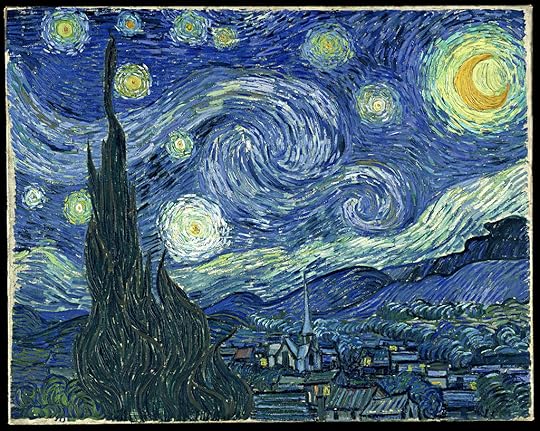
е просто взрив от галактики, както в наши дни ги улавят телескопите на НАСА:

Без Мария Попова така и нямаше да ми просветне, че през 19-ти век един англичанин е направил първата "прото" снимка на галактика, видяна през телескоп. Че чрез новоизобретената технология, наречена дагеротипия на изобретателя си Луи Дагер (един от многото всъщност), това уловено галактическо ехо вероятно е попаднало и в ръцете на един беден холандски художник, виждащ нощното небе по своебразен начин.
Нямаше да знам и че първият компютър в САЩ е... астрономката Мария Мичъл, извършвала изчисления за флота в течение на 20 години, без никога да наруши квакерската си скромност, и възпитала поколение жени-физички, математички и астрономи във “Васар” по време, когато в “Харвард” точните науки са били тотално пренебрегнати.
Книгата на Мария Попова е сама по себе си една красива антология на различието, брак по любов между наука и поезия, роман и поредица от биографии на някои позабравени, други не толкова жени от 19-ти век и 20-ти век, съборили с ритник портите към елитния мъжки клуб, в който единствено са били приютени и достъпни наука, образование, генериране на идеи и проекти, поезия и интелектуален живот.
Емили Дикинсън и невероятно крехката на външен вид Рейчъл Карсън са диаметрално противиположни на пръв поглед, но обединени в различието. Че са жени в мъжки век, и не са съгласни да гледат играта на живота, звездите, природата и идеите като зрители от задните редове.
Книгата е много американска (прекалено за вкуса ми), много интелектуална (това в случая е комплимент заради простичкото, приятелско поднасяне), много целенасочена като идеи, много богата като език. Почти всяко изречение е като жилка благородна руда, а в съвкупността си са цяло находище, за което в Клондайк през 19-ти век биха се избили.
Като в театър на сенките фигурите са въведени от сценариста първо чрез неясните си очертания, една по една. Тъкмо привикнеш с някоя, и изведнъж наоколо закръжават още много. Някои само за секунда, други за час, трети надничат до края.
Равните части научни факти, лица, теории, поднесени като литература, направиха прочита вълшебно изживяване.
Със сигурност ще потърся още находки в блога на Попова: https://www.brainpickings.org/
***
➡️ Цитати:
🌠 “...писателят - ако заслужава да бъде четен - е просто инструментът, чрез който се изразява една истина. Той не създава истината, а я изразява и разкрива пред нас с нещо от себе си.”
Рейчъл Карсън
🌠 “...смисълът не е основна функция на реалността, а интерпретация, наложена от човешки наблюдател.”
🌠 “Паметта и мотивът са двата края на острието, с което отрязваме събитията от преживяното и издялкваме историята - лична, политическа, цивилизационна - от ствола на живота. И двете са силно избирателни - паметта ретроспективно, мотивът - перспективно.”
🌠 “Някои от нашите задрямали многобройни личности се пробуждат и протягат бавно и мързеливо като котка, развивайки се година след година, без да бързат. Други скачат енергично, стреснати от звъна на алармата, задействана от определено събитие или човек, влязъл в живота ни в определен момент - рядко очакван, почти никога удобен, винаги преобразяващ ни из основи.”
🌠 “Всяка формула, която изразява природен закон, е хвалебствен химн в чест на Бог.”
Мария Мичъл
🌠 “Вярата е съмнение.”
Емили Дикинсън"
🌠 “В непрестанната серенада на ентропията към Космоса няма нюанси на сантименталност.”
🌠 “Всяка стъпка, колкото и да е малка, ако е в полза нa напредъка на света, показва величието на човека, независимо дали е дело на мозъка, на сърцето или на ръцете.”
Мария Мичъл
🌠 “Ето какъв е простичкият механизъм на обратната връзка: до каква степен ще харесаме някого, зависи най-вече от това колко вярваме, че ни харесва той.”
🌠 “Умът е място в себе си и в себе си той може
от рая да направи ад или от ада - рай.”
Милтън, “Изгубеният рай”
🌠 “Ние страдаме, когато искаме различни неща, често противоречащи си помежду си, но още повече страдаме, когато искаме да искаме различни неща.”
🌠 “Ходим между притискащи ни стени: от една страна ни очаква лудостта, от другата - затъпяващата скука.”
Р. У. Емерсън
🌠 “Поетите, пророците и реформаторите - те всички са творци на образи и тази им способност е тайната на тяхната сила и на подтиженията им. Те виждат какво трябва да бъде чрез отражението на това, което е, и се се стремят да премахнат противоречието.”
Фредерик Дъглас
🌠 “Историята не е това, което се е случило, а това, което оцелява от корабокрушенията на човешката преценка и случайността.”
🌠 “Постоянно бъркаме случайността с избора, шаблоните на нещата и етикетите на нещата със самите неща, нашите спомени с нашето минало.”"

I never suspected there was a connection between Van Gogh and galaxies located many light-years away from our "pale blue dot," as seen by Voyager in its farewell photo upon exiting the solar system. And yet, it's so obvious:
Van Gogh's The Starry Night
is simply a burst of galaxies, much like the ones captured by NASA telescopes today:
Without Maria Popova, it never would have dawned on me that in the 19th century, an Englishman took the first "proto" photo of a galaxy seen through a telescope. Or that through the newly invented technology called daguerreotype—named after its inventor Louis Daguerre (one of many, actually)—this captured galactic echo likely found its way into the hands of a poor Dutch painter who saw the night sky in his own unique way.
I also wouldn't have known that the first computer in the US was... the astronomer Maria Mitchell. She performed calculations for the Navy for 20 years without ever compromising her Quaker modesty, and went on to educate a generation of female physicists, mathematicians, and astronomers at Vassar at a time when the exact sciences were totally neglected at Harvard.
Maria Popova's book is, in itself, a beautiful anthology of "otherness"—a marriage of love between science and poetry. It’s part novel, part series of biographies of women from the 19th and 20th centuries (some forgotten, others not so much) who kicked down the gates of the elite men's club that had previously monopolized science, education, the generation of ideas, poetry, and intellectual life.
Emily Dickinson and the seemingly incredibly fragile Rachel Carson are diametrically opposed at first glance, yet united in their distinctness. They were women in a man's century, and they refused to watch the game of life, stars, nature, and ideas as spectators from the back rows.
The book is very American (perhaps a bit much for my taste), very intellectual (a compliment here, given the simple, friendly delivery), very purposeful in its ideas, and very rich in its language. Almost every sentence is like a vein of precious ore—together, they form a whole deposit that people in the 19th-century Klondike would have killed for.
Like a shadow theater, the "figures" are introduced by the screenwriter first through vague outlines, one by one. Just as you get used to one, several more suddenly start circling. Some appear for just a second, others for an hour, and a few peek through until the very end.
The equal parts scientific facts, faces, and theories—presented as literature—made reading it a magical experience.
I will definitely be looking for more finds on Popova's blog: https://www.themarginalian.org/ (formerly Brain Pickings).
Никога не съм подозирала каква е връзката между Ван Гог и галактиките на много светлинни години от нашата малка синя точица, видяна от "Вояджър" в прощалната му снимка на излизане от слънчевата система. А тя е толкова очевидна:
Звездната нощ на Ван Гог
е просто взрив от галактики, както в наши дни ги улавят телескопите на НАСА:
Без Мария Попова така и нямаше да ми просветне, че през 19-ти век един англичанин е направил първата "прото" снимка на галактика, видяна през телескоп. Че чрез новоизобретената технология, наречена дагеротипия на изобретателя си Луи Дагер (един от многото всъщност), това уловено галактическо ехо вероятно е попаднало и в ръцете на един беден холандски художник, виждащ нощното небе по своебразен начин.
Нямаше да знам и че първият компютър в САЩ е... астрономката Мария Мичъл, извършвала изчисления за флота в течение на 20 години, без никога да наруши квакерската си скромност, и възпитала поколение жени-физички, математички и астрономи във “Васар” по време, когато в “Харвард” точните науки са били тотално пренебрегнати.
Книгата на Мария Попова е сама по себе си една красива антология на различието, брак по любов между наука и поезия, роман и поредица от биографии на някои позабравени, други не толкова жени от 19-ти век и 20-ти век, съборили с ритник портите към елитния мъжки клуб, в който единствено са били приютени и достъпни наука, образование, генериране на идеи и проекти, поезия и интелектуален живот.
Емили Дикинсън и невероятно крехката на външен вид Рейчъл Карсън са диаметрално противиположни на пръв поглед, но обединени в различието. Че са жени в мъжки век, и не са съгласни да гледат играта на живота, звездите, природата и идеите като зрители от задните редове.
Книгата е много американска (прекалено за вкуса ми), много интелектуална (това в случая е комплимент заради простичкото, приятелско поднасяне), много целенасочена като идеи, много богата като език. Почти всяко изречение е като жилка благородна руда, а в съвкупността си са цяло находище, за което в Клондайк през 19-ти век биха се избили.
Като в театър на сенките фигурите са въведени от сценариста първо чрез неясните си очертания, една по една. Тъкмо привикнеш с някоя, и изведнъж наоколо закръжават още много. Някои само за секунда, други за час, трети надничат до края.
Равните части научни факти, лица, теории, поднесени като литература, направиха прочита вълшебно изживяване.
Със сигурност ще потърся още находки в блога на Попова: https://www.brainpickings.org/
***
➡️ Цитати:
🌠 “...писателят - ако заслужава да бъде четен - е просто инструментът, чрез който се изразява една истина. Той не създава истината, а я изразява и разкрива пред нас с нещо от себе си.”
Рейчъл Карсън
🌠 “...смисълът не е основна функция на реалността, а интерпретация, наложена от човешки наблюдател.”
🌠 “Паметта и мотивът са двата края на острието, с което отрязваме събитията от преживяното и издялкваме историята - лична, политическа, цивилизационна - от ствола на живота. И двете са силно избирателни - паметта ретроспективно, мотивът - перспективно.”
🌠 “Някои от нашите задрямали многобройни личности се пробуждат и протягат бавно и мързеливо като котка, развивайки се година след година, без да бързат. Други скачат енергично, стреснати от звъна на алармата, задействана от определено събитие или човек, влязъл в живота ни в определен момент - рядко очакван, почти никога удобен, винаги преобразяващ ни из основи.”
🌠 “Всяка формула, която изразява природен закон, е хвалебствен химн в чест на Бог.”
Мария Мичъл
🌠 “Вярата е съмнение.”
Емили Дикинсън"
🌠 “В непрестанната серенада на ентропията към Космоса няма нюанси на сантименталност.”
🌠 “Всяка стъпка, колкото и да е малка, ако е в полза нa напредъка на света, показва величието на човека, независимо дали е дело на мозъка, на сърцето или на ръцете.”
Мария Мичъл
🌠 “Ето какъв е простичкият механизъм на обратната връзка: до каква степен ще харесаме някого, зависи най-вече от това колко вярваме, че ни харесва той.”
🌠 “Умът е място в себе си и в себе си той може
от рая да направи ад или от ада - рай.”
Милтън, “Изгубеният рай”
🌠 “Ние страдаме, когато искаме различни неща, често противоречащи си помежду си, но още повече страдаме, когато искаме да искаме различни неща.”
🌠 “Ходим между притискащи ни стени: от една страна ни очаква лудостта, от другата - затъпяващата скука.”
Р. У. Емерсън
🌠 “Поетите, пророците и реформаторите - те всички са творци на образи и тази им способност е тайната на тяхната сила и на подтиженията им. Те виждат какво трябва да бъде чрез отражението на това, което е, и се се стремят да премахнат противоречието.”
Фредерик Дъглас
🌠 “Историята не е това, което се е случило, а това, което оцелява от корабокрушенията на човешката преценка и случайността.”
🌠 “Постоянно бъркаме случайността с избора, шаблоните на нещата и етикетите на нещата със самите неща, нашите спомени с нашето минало.”"
I never suspected there was a connection between Van Gogh and galaxies located many light-years away from our "pale blue dot," as seen by Voyager in its farewell photo upon exiting the solar system. And yet, it's so obvious:
Van Gogh's The Starry Night
is simply a burst of galaxies, much like the ones captured by NASA telescopes today:
Without Maria Popova, it never would have dawned on me that in the 19th century, an Englishman took the first "proto" photo of a galaxy seen through a telescope. Or that through the newly invented technology called daguerreotype—named after its inventor Louis Daguerre (one of many, actually)—this captured galactic echo likely found its way into the hands of a poor Dutch painter who saw the night sky in his own unique way.
I also wouldn't have known that the first computer in the US was... the astronomer Maria Mitchell. She performed calculations for the Navy for 20 years without ever compromising her Quaker modesty, and went on to educate a generation of female physicists, mathematicians, and astronomers at Vassar at a time when the exact sciences were totally neglected at Harvard.
Maria Popova's book is, in itself, a beautiful anthology of "otherness"—a marriage of love between science and poetry. It’s part novel, part series of biographies of women from the 19th and 20th centuries (some forgotten, others not so much) who kicked down the gates of the elite men's club that had previously monopolized science, education, the generation of ideas, poetry, and intellectual life.
Emily Dickinson and the seemingly incredibly fragile Rachel Carson are diametrically opposed at first glance, yet united in their distinctness. They were women in a man's century, and they refused to watch the game of life, stars, nature, and ideas as spectators from the back rows.
The book is very American (perhaps a bit much for my taste), very intellectual (a compliment here, given the simple, friendly delivery), very purposeful in its ideas, and very rich in its language. Almost every sentence is like a vein of precious ore—together, they form a whole deposit that people in the 19th-century Klondike would have killed for.
Like a shadow theater, the "figures" are introduced by the screenwriter first through vague outlines, one by one. Just as you get used to one, several more suddenly start circling. Some appear for just a second, others for an hour, and a few peek through until the very end.
The equal parts scientific facts, faces, and theories—presented as literature—made reading it a magical experience.
I will definitely be looking for more finds on Popova's blog: https://www.themarginalian.org/ (formerly Brain Pickings).
February 16, 2019
The author of this book, Maria Popova, is a well known curator of the excellent website brainpickings.org. Brain Pickings has an eclectic collection of articles, books and other writings from various disciplines. Each post introduces a work followed by the author's unique take on the creative work. This site has provided me tons of recommendations for what next to read. And that is why I jumped into this book as soon as i saw it on my recommended list on goodreads. If nothing else this book would be a treasure of trove of new paths to explore in my reading journey.
The book opens with a bang. It starts with a sentence that goes on and on for ever. It is probably one of the longest sentences that I have ever read. But the book fails to hold that momentum after some time.
I particularly enjoyed the chapter on Tyco Brahe and Kepler. It brought back nostalgia of when I first read Carl Sagan's Cosmos and found out how these individuals were as big contributors to the field of astronomy as the more famous names such as Galileo and Copernicus. I had started reading this book even without finding out what the book was about. And I thought the first chapter was giving me an idea of what to expect.
But after reading a few chapters, I feel I may have abandon this book because I still don't have a clear picture of what the author is trying to say. The book flutters around constantly and introduces a plethora of characters at the cost of clarity and coherence.
I lost interest in the material due to this constant flitting back and forth, especially when the author is referencing quotes or transitioning into a new character. "A century later", "Exactly seventeen years later", "Fifteen centuries ago," etc. It seemed like the author was trying too hard to fit together these disparate thoughts by different individuals. It seemed forced, in my opinion, more like trying to glue a collection of essays into a single narrative.
Moreover the author has used a lot of grandiloquence at places when something simple would have sufficed. The opening sentence(if you can call it that) is a case in point. When you quote a lot of writings, and your interpretation of the quote is harder to understand than the quote itself, there is something going wrong. It feels like the author is trying to make an impression but failing.
I very much wanted to like this book because of the incomparable work that the author has done in building and maintaining the quality of her website. But sadly the same effort does not transfer in this work by her. And this book, Figuring, will stay un-figured for me for quite some time.
The book opens with a bang. It starts with a sentence that goes on and on for ever. It is probably one of the longest sentences that I have ever read. But the book fails to hold that momentum after some time.
I particularly enjoyed the chapter on Tyco Brahe and Kepler. It brought back nostalgia of when I first read Carl Sagan's Cosmos and found out how these individuals were as big contributors to the field of astronomy as the more famous names such as Galileo and Copernicus. I had started reading this book even without finding out what the book was about. And I thought the first chapter was giving me an idea of what to expect.
But after reading a few chapters, I feel I may have abandon this book because I still don't have a clear picture of what the author is trying to say. The book flutters around constantly and introduces a plethora of characters at the cost of clarity and coherence.
I lost interest in the material due to this constant flitting back and forth, especially when the author is referencing quotes or transitioning into a new character. "A century later", "Exactly seventeen years later", "Fifteen centuries ago," etc. It seemed like the author was trying too hard to fit together these disparate thoughts by different individuals. It seemed forced, in my opinion, more like trying to glue a collection of essays into a single narrative.
Moreover the author has used a lot of grandiloquence at places when something simple would have sufficed. The opening sentence(if you can call it that) is a case in point. When you quote a lot of writings, and your interpretation of the quote is harder to understand than the quote itself, there is something going wrong. It feels like the author is trying to make an impression but failing.
I very much wanted to like this book because of the incomparable work that the author has done in building and maintaining the quality of her website. But sadly the same effort does not transfer in this work by her. And this book, Figuring, will stay un-figured for me for quite some time.

March 24, 2020
5 ⭐️
How do I begin to explain this book..
If you know about or are a reader of brainpickings.org then all I have to say is that this book, is like a lengthier version of that. Popova curated facts and ideas from an array of people who are as varied as humanly possible. The whole idea for the book is wonderful really, and I'm not using that word out of some sort of habit but because I mean it... I've been a fan of the blog for yearsss and I always check for emails that alert me of the next blog post, so much that it's become part of my routine.
I loved how this book was put together. I found myself highlighting and marking almost every one of the 500 + pages because the words were just screaming their relevance at me.. if that even makes sense. (I wish I had read the ebook just so that I could share my highlights with everyone).
Some phrases can be a little mind-bending and you find yourself reading the same thing 3 times just to make sure you really take in the meaning, but it's worth it.
I really have no way of summarising this book, therefore I will only say that I recommend it wholeheartedly, especially to readers of the blog. I also recognise that it can be a little hard to digest at times because while the prose is beautiful it can also make meaning a little bit harder to grasp. I personally love staring at a sentence and reading it out loud a few times not just because I like what I read in terms of facts but also because the language used is wonderful.
I've been reading passages from this for months now. It’s the kind of thing you can take your time with and also the kind you can revisit as often as you want because those words never stop being relevant.
I'm just gonna leave some quotes here (they are from the start of the book, where we are being given a short introduction into what's to follow and the questions that led to the creation of this book):
“We spend our lives trying to discern where we end and the rest of the world begins. We snatch our freeze-frame of life from the simultaneity of existence by holding on to illusions of permanence, congruence, and linearity; of static selves and lives that unfold in sensical narratives. All the while, we mistake chance for choice, our labels and models of things for the things themselves, our records for our history. History is not what happened, but what survives the shipwrecks of judgment and chance[....]
We slice through the simultaneity by being everything at once: our first names and our last names, our loneliness and our society, our bold ambition and our blind hope, our unrequited and part-requited loves. Lives are lived in parallel and perpendicular, fathomed nonlinearly, figured not in the straight graphs of “biography” but in many-sided, many-splendored diagrams. Lives interweave with other lives, and out of the tapestry arise hints at answers to questions that raze to the bone of life:
What are the building blocks of character, of contentment, of lasting achievement? How does a person come into self-possession and sovereignty of mind against the tide of convention and unreasoning collectivism? Does genius suffice for happiness, does distinction, does love? Two Nobel Prizes don’t seem to recompense the melancholy radiating from every photograph of the woman in the black laboratory dress. Is success a guarantee of fulfillment, or merely a promise as precarious as a marital vow? How, in this blink of existence bookended by nothingness, do we attain completeness of being?
There are infinitely many kinds of beautiful lives.
So much of the beauty, so much of what propels our pursuit of truth, stems from the invisible connections—between ideas, between disciplines, between the denizens of a particular time and a particular place, between the interior world of each pioneer and the mark they leave on the cave walls of culture, between faint figures who pass each other in the nocturne before the torchlight of a revolution lights the new day, with little more than a half-nod of kinship and a match to change hands.”
How do I begin to explain this book..
If you know about or are a reader of brainpickings.org then all I have to say is that this book, is like a lengthier version of that. Popova curated facts and ideas from an array of people who are as varied as humanly possible. The whole idea for the book is wonderful really, and I'm not using that word out of some sort of habit but because I mean it... I've been a fan of the blog for yearsss and I always check for emails that alert me of the next blog post, so much that it's become part of my routine.
I loved how this book was put together. I found myself highlighting and marking almost every one of the 500 + pages because the words were just screaming their relevance at me.. if that even makes sense. (I wish I had read the ebook just so that I could share my highlights with everyone).
Some phrases can be a little mind-bending and you find yourself reading the same thing 3 times just to make sure you really take in the meaning, but it's worth it.
I really have no way of summarising this book, therefore I will only say that I recommend it wholeheartedly, especially to readers of the blog. I also recognise that it can be a little hard to digest at times because while the prose is beautiful it can also make meaning a little bit harder to grasp. I personally love staring at a sentence and reading it out loud a few times not just because I like what I read in terms of facts but also because the language used is wonderful.
I've been reading passages from this for months now. It’s the kind of thing you can take your time with and also the kind you can revisit as often as you want because those words never stop being relevant.
I'm just gonna leave some quotes here (they are from the start of the book, where we are being given a short introduction into what's to follow and the questions that led to the creation of this book):
“We spend our lives trying to discern where we end and the rest of the world begins. We snatch our freeze-frame of life from the simultaneity of existence by holding on to illusions of permanence, congruence, and linearity; of static selves and lives that unfold in sensical narratives. All the while, we mistake chance for choice, our labels and models of things for the things themselves, our records for our history. History is not what happened, but what survives the shipwrecks of judgment and chance[....]
We slice through the simultaneity by being everything at once: our first names and our last names, our loneliness and our society, our bold ambition and our blind hope, our unrequited and part-requited loves. Lives are lived in parallel and perpendicular, fathomed nonlinearly, figured not in the straight graphs of “biography” but in many-sided, many-splendored diagrams. Lives interweave with other lives, and out of the tapestry arise hints at answers to questions that raze to the bone of life:
What are the building blocks of character, of contentment, of lasting achievement? How does a person come into self-possession and sovereignty of mind against the tide of convention and unreasoning collectivism? Does genius suffice for happiness, does distinction, does love? Two Nobel Prizes don’t seem to recompense the melancholy radiating from every photograph of the woman in the black laboratory dress. Is success a guarantee of fulfillment, or merely a promise as precarious as a marital vow? How, in this blink of existence bookended by nothingness, do we attain completeness of being?
There are infinitely many kinds of beautiful lives.
So much of the beauty, so much of what propels our pursuit of truth, stems from the invisible connections—between ideas, between disciplines, between the denizens of a particular time and a particular place, between the interior world of each pioneer and the mark they leave on the cave walls of culture, between faint figures who pass each other in the nocturne before the torchlight of a revolution lights the new day, with little more than a half-nod of kinship and a match to change hands.”

September 20, 2020
I expected so much more.

June 13, 2021
Those who draw binaries often justify them with statements of the incompetence of their object, the ‘other’: for instance, it has long been engendered that all things worth opening our eyes to – such as science, progress, and beauty – have sprung from the efforts and genius of men and men alone. Forgotten (more usually, deliberately sidestepped and verily erased) are the accomplishments that women –like Emilie du Chatalet, whose insights into the nature of light paved way for the invention of photography; Ada Lovelace, who worked with Charles Babbage and one of whose footnotes contains the essence of the world’s first complete computer programme; Jocelyn Bell, who discovered pulsars and therefore gave way to an understanding of what we today call black holes; and Lise Mietner, who discovered the phenomenon of nuclear fission – have made to the project of civilisation with all its attendant charms and its many discontents.
In Figuring, a book about curiosity and genius, Maria Popova takes to tackling several such binaries, not least the one between men and women. This genre-bending effort; which is part-biography and intellectual history and part-paean to the intrepid hunger that centers our essential humanity; takes a close look at the lives of Johannes Kepler, Maria Mitchell, Margaret Fuller, Emily Dickinson, Harriet Hosmer and Rachel Carson (along with those of many other artists, scientists, writers and litterateurs from the western world), and through their implosions and intersections makes a case for considering synchronicity in a world whose vision of itself is clouded with individualisms:
The scope of Figuring is so immense that hardly any writing about it does it justice. As for the writing itself – luminous and ceaselessly poetic (even the bibliography is prefaced with a lyrical, meditative note), it is in fact Brain Pickings in a book, perhaps even better than. In carrying the light up to the works and human faces of many forgotten geniuses, the polymathic Popova reveals her own, and every bit of it is worth giving your time to. I'm glad I gave it mine.
In Figuring, a book about curiosity and genius, Maria Popova takes to tackling several such binaries, not least the one between men and women. This genre-bending effort; which is part-biography and intellectual history and part-paean to the intrepid hunger that centers our essential humanity; takes a close look at the lives of Johannes Kepler, Maria Mitchell, Margaret Fuller, Emily Dickinson, Harriet Hosmer and Rachel Carson (along with those of many other artists, scientists, writers and litterateurs from the western world), and through their implosions and intersections makes a case for considering synchronicity in a world whose vision of itself is clouded with individualisms:
“We spend our lives trying to discern where we end and the rest of the world begins. We snatch our freeze-frame of life from the simultaneity of existence by holding on to illusions of permanence, congruence, and linearity; of static selves and lives that unfold in sensical narratives. All the while, we mistake chance for choice, our labels and models of things for the things themselves, our records for our history. History is not what happened, but what survives the shipwrecks of judgement and chance.”Indeed, in collecting the threads that link various moments and momentous lives meaningfully even in the absence of causal connections – a compelling and ambitious exploration of what Carl Jung and Wolfgang Pauli meant by the term synchronicity – Popova brings a sense of coherence to the table of life at which we all eat. She does so with fluidity, and thus also dismantles with a flair such artificial instruments of forced coherence as binaries and hierarchies, whether between truth and beauty; science and literature; men and women; reason and emotions; and various kinds of love, chiefly between women, but also between men, between husbands and wives and friends.
The scope of Figuring is so immense that hardly any writing about it does it justice. As for the writing itself – luminous and ceaselessly poetic (even the bibliography is prefaced with a lyrical, meditative note), it is in fact Brain Pickings in a book, perhaps even better than. In carrying the light up to the works and human faces of many forgotten geniuses, the polymathic Popova reveals her own, and every bit of it is worth giving your time to. I'm glad I gave it mine.

November 8, 2020
Много харесвам блога на Мария Попова “Brain pickings”, затова въпросът дали да прочета първата й книга въобще не стоеше на дневен ред. Разбира се, че “Фигури” отговаря на и надминава високите очаквания, които Мария Попова създаде с блога си.
“Фигури” е книга със забележителна интелектуална сила, завладяваща възхвала на поетичното в науката и научното в литературата. Книга, която хвърля мост между астрономия, поезия, литературна критика, философия, екология и дори скулптура. Това прави от книгата едно комплексно четиво, лишено обаче от елементарното нахвърляне на куриозни факти, каквито се срещат в по-масовите енциклопедии. Вместо това, Мария Попова усърдно изплита деликатната паяжина на идеите, които свързват големите умове през вековете и които, с натрупване и приемственост, случайно или съзнателно, подхранват интелектуалната почва на всяка епоха.
Йохан Кеплер, Маргарет Фулър, Уолт Уитман, Чарлз Дарвин, Ралф Уолдо Емерсън, Мария Мичъл, Емили Дикинсън, Хариет Хосмър, Рейчъл Карсън са част от личностите, които Мария Попова е избрала за илюстрация на тези невидими зависимости, които осигуряват дългия, понякога безсмъртен, живот на идея. Академичният ум, способен упорито да дълбае в един-единствен проблем; артистичният талант, продукт на който е една симфония, стих или скулптура; възвишените прозрения на духа, които раждат американския романтизъм от 19 век – нищо от това не е отгледано във вакуума на своята епоха.
Пътят на идеите е своеобразен, лъкатушен, рядко видим, в него има случайни отклонения, неочаквани завои, но пристигането на местоназначението (извинявам се за прозаичния термин) е сигурно по силата на някаква неизбежна предопределеност. “Героите” на Мария Попова са много и различни, но като представители на светлите умове за своето време, те са били подчинени на типичните закономерности, с които обществото третира изпреварващи развитието му явления – предразсъдъци, социални и полови стереотипи, суеверия и мистицизъм, алчност и корпоративен интерес, публично осмиване и отрицание.
Йохан Кеплер е трябвало да оборва обвиненията във вещерство, които почтените жители на родния му град отправят срещу майка му; Маргарет Фулър е скандализирала Нова Англия с “Жената през 19 век”, Емили Дикинсън избира уединението на поезията и на собствената си стая, доста преди Вирджиния Улф да посочи втората като императив на независимата жена-писател; океаноложката Рейчъл Карсън повежда битка срещу пестицидите с аргументи, срещу които нейните противници прибягват до последното и най-жалко средство на безсилните – личните нападки за семейния статус на една жена.
Повечето от тези герои извървяват твърде бързо пътя на своя жизнен цикъл. Остават обаче идеите – а те единствени преодоляват тленните доказателства за присъствието на гения.
“Историята не е това, което се е случило, а това, което оцелява от корабокрушенията на човешката преценка и случайността.”
“Човек, който никога не се е провалил в нищо, не може да бъде велик. Провалът е истинският тест за величие.” (Мария Мичъл)
“Фигури” е книга със забележителна интелектуална сила, завладяваща възхвала на поетичното в науката и научното в литературата. Книга, която хвърля мост между астрономия, поезия, литературна критика, философия, екология и дори скулптура. Това прави от книгата едно комплексно четиво, лишено обаче от елементарното нахвърляне на куриозни факти, каквито се срещат в по-масовите енциклопедии. Вместо това, Мария Попова усърдно изплита деликатната паяжина на идеите, които свързват големите умове през вековете и които, с натрупване и приемственост, случайно или съзнателно, подхранват интелектуалната почва на всяка епоха.
Йохан Кеплер, Маргарет Фулър, Уолт Уитман, Чарлз Дарвин, Ралф Уолдо Емерсън, Мария Мичъл, Емили Дикинсън, Хариет Хосмър, Рейчъл Карсън са част от личностите, които Мария Попова е избрала за илюстрация на тези невидими зависимости, които осигуряват дългия, понякога безсмъртен, живот на идея. Академичният ум, способен упорито да дълбае в един-единствен проблем; артистичният талант, продукт на който е една симфония, стих или скулптура; възвишените прозрения на духа, които раждат американския романтизъм от 19 век – нищо от това не е отгледано във вакуума на своята епоха.
Пътят на идеите е своеобразен, лъкатушен, рядко видим, в него има случайни отклонения, неочаквани завои, но пристигането на местоназначението (извинявам се за прозаичния термин) е сигурно по силата на някаква неизбежна предопределеност. “Героите” на Мария Попова са много и различни, но като представители на светлите умове за своето време, те са били подчинени на типичните закономерности, с които обществото третира изпреварващи развитието му явления – предразсъдъци, социални и полови стереотипи, суеверия и мистицизъм, алчност и корпоративен интерес, публично осмиване и отрицание.
Йохан Кеплер е трябвало да оборва обвиненията във вещерство, които почтените жители на родния му град отправят срещу майка му; Маргарет Фулър е скандализирала Нова Англия с “Жената през 19 век”, Емили Дикинсън избира уединението на поезията и на собствената си стая, доста преди Вирджиния Улф да посочи втората като императив на независимата жена-писател; океаноложката Рейчъл Карсън повежда битка срещу пестицидите с аргументи, срещу които нейните противници прибягват до последното и най-жалко средство на безсилните – личните нападки за семейния статус на една жена.
Повечето от тези герои извървяват твърде бързо пътя на своя жизнен цикъл. Остават обаче идеите – а те единствени преодоляват тленните доказателства за присъствието на гения.
“Историята не е това, което се е случило, а това, което оцелява от корабокрушенията на човешката преценка и случайността.”
“Човек, който никога не се е провалил в нищо, не може да бъде велик. Провалът е истинският тест за величие.” (Мария Мичъл)

April 7, 2019
I wonder how can one review a book as expansive and immersive as Figuring without somehow falling short in revealing its true splendour to its prospective readers. There’s only one thing that I can say about the book without a shadow of doubt — it is every bit as incredible and layered as Brain Pickings that is run by Maria Popova, who happens to be the author of this splendid labour of love and intense research.
The more I try, the more I fail to find the words that would do justice to this genre bending book which is a beautiful coming together of literature and science. Popova presents a blend of these two throbbing, pulsating life-streams that nurture humanity only to be, unfortunately, pitted against each other. In her characteristic style, Popova sidesteps this crude discourse and instead wreathes a landscape that shows how mistaken we are in our discriminating worldview that insists on categorising things as singular, individualistic entities when in reality we are the sum total of
everything that surrounds us, from seeds to stardust, plural and wholesome when divested of confining labels.
In bringing together women artists, scientists, writers who have been obscured by narratives that choose to only look at men as achievers of anything substantial, Popova consciously and with great mettle brings to us lives that were as real and meaningful as that of their male counterparts’. She does this not with bitterness or vengefulness but with a spirit of inquiry that wonders what we could we be if only we had been prudent enough to not negate voices that we couldn’t understand because of our own foibles of short-sightedness and judgement. After all, we are all mere specks in this vast and noble universe, living and breathing on this ‘pale blue dot’ called earth, fortified by love and the sense that our lives are interwoven with others’.
Read Figuring for a sublime reading experience and be prepared to emerge a different person, full of regard for the joys that life bestows on us for the short while that we inhabit this planet.
The more I try, the more I fail to find the words that would do justice to this genre bending book which is a beautiful coming together of literature and science. Popova presents a blend of these two throbbing, pulsating life-streams that nurture humanity only to be, unfortunately, pitted against each other. In her characteristic style, Popova sidesteps this crude discourse and instead wreathes a landscape that shows how mistaken we are in our discriminating worldview that insists on categorising things as singular, individualistic entities when in reality we are the sum total of
everything that surrounds us, from seeds to stardust, plural and wholesome when divested of confining labels.
In bringing together women artists, scientists, writers who have been obscured by narratives that choose to only look at men as achievers of anything substantial, Popova consciously and with great mettle brings to us lives that were as real and meaningful as that of their male counterparts’. She does this not with bitterness or vengefulness but with a spirit of inquiry that wonders what we could we be if only we had been prudent enough to not negate voices that we couldn’t understand because of our own foibles of short-sightedness and judgement. After all, we are all mere specks in this vast and noble universe, living and breathing on this ‘pale blue dot’ called earth, fortified by love and the sense that our lives are interwoven with others’.
Read Figuring for a sublime reading experience and be prepared to emerge a different person, full of regard for the joys that life bestows on us for the short while that we inhabit this planet.

February 13, 2019
I love Popova's blog and I've been following her for years. She is an excellent curator. But I don't think her skills work in book format. There were some really beautiful stories in here--especially at the end. If the book had just been Emily Dickinson And Rachel Carson, it would have been great, but there are too many people in here and not enough of a thread to tie them together.

August 4, 2020
I believe this is a one of its kind book, encapsulating a unique and enlightening flow of thoughts from one of the most amazing minds I have discovered - the human named Maria Popova.
If I were to dryly put a description to this book, I would say it is an interwoven web of very personal biographies of some of the most amazing and paradigm shifting people from our recent history, right from Johannes Kepler to Rachael Carson, almost all of them women (albeit Kepler) and almost all of them gay.
This itself makes the book read worthy, for the recent history was a very hostile place for women (I must say our world still is) and a doubly hostile place for queer people. And yet these women fundamentally changed the course of humanity and humanity's perspective.
Yet the book is much more than that. At some places it stops being a book and becomes sheer mind opening poetry, at some it packs so much meaning inside a phrase that you can keep reading the same thing without being able to juice it fully. Maria illuminates such intricacies in these amazing people's lives that you begin to start thinking from their minds, feeling from their hearts, sufferring through their troubles and you come out of it all, sometimes healthy, sometimes broken, just like these amazing people came out if their lives. And here comes the justification to the title for me, for the book is a way of Figuring it out, for the people who changed humanity, for the author, for me.
Also the index of this book is a poem where each verse is a name of each chapter. :)
If I were to dryly put a description to this book, I would say it is an interwoven web of very personal biographies of some of the most amazing and paradigm shifting people from our recent history, right from Johannes Kepler to Rachael Carson, almost all of them women (albeit Kepler) and almost all of them gay.
This itself makes the book read worthy, for the recent history was a very hostile place for women (I must say our world still is) and a doubly hostile place for queer people. And yet these women fundamentally changed the course of humanity and humanity's perspective.
Yet the book is much more than that. At some places it stops being a book and becomes sheer mind opening poetry, at some it packs so much meaning inside a phrase that you can keep reading the same thing without being able to juice it fully. Maria illuminates such intricacies in these amazing people's lives that you begin to start thinking from their minds, feeling from their hearts, sufferring through their troubles and you come out of it all, sometimes healthy, sometimes broken, just like these amazing people came out if their lives. And here comes the justification to the title for me, for the book is a way of Figuring it out, for the people who changed humanity, for the author, for me.
Also the index of this book is a poem where each verse is a name of each chapter. :)

June 6, 2020
Popov's elegiacal account of the lives of a number of inspirational artists and scientists acts as a paean to creativity and individuality and, most importantly, the truth. The crux of the book deals with three women-Maria Mitchell, Harriet Hosmer and Margaret Fuller -whose lives intersect not only with one another, but also with the majority of the people who appear in the book, from Emerson to Walt Whitman, from Emily Dickinson to Elizabeth Browning, these unconventional and brilliant women act as the bright stars which illuminate 19th century America.
Popova's profound musings on the painful and lonely nature of genius, on the unbearable lightness of the beauty which the people depicted are able to discover in their respective fields, on the impermanence of life against ceaseless march of time and most importantly on the fearlessness demonstrated by the characters in their pursuit of truth and beauty and how each of them was able to change the world, elevates the book to not just being a paean to creativity, but to life itself.
Popova's profound musings on the painful and lonely nature of genius, on the unbearable lightness of the beauty which the people depicted are able to discover in their respective fields, on the impermanence of life against ceaseless march of time and most importantly on the fearlessness demonstrated by the characters in their pursuit of truth and beauty and how each of them was able to change the world, elevates the book to not just being a paean to creativity, but to life itself.

December 3, 2019
In reading Figurings, I found myself copying down quote after quote – from both Maria Popova and the works of those she highlighted – while simultaneously feeling bored, restless, and distracted. The first eighty pages were such a slog (a beautiful, artful slog) that I skipped ahead to Rachel Carson, then went in reverse again to visit Popova’s thoughts on Emily Dickinson – feeling new depths of appreciation for the contributions each made to the world even as I surreptitiously checked how many pages I had left to go.
Like so many others of these Goodreads reviewers, I’ve read Popvoa’s Brain Pickings website for years, and usually enjoyed them. Her work makes connections between seemingly disparate things and, in what I think is its greatest purpose, celebrates the thoughts of great scientists, writers, poets, musicians, and psychologists whom have passed out of the memory of most of us (or whom we didn’t know in the first place). Popova repeatedly reminds me why knowing history is important: seeing the foundation our thought is built on; being not so arrogant to think the people who came before us were merely ignorance and darkness. That they had rich, interesting lives we skipped in history class.
But while each sentence in Figurings stands gorgeous, the sum of whole sags under its weight. It’s a tiered cake frosted and decorated so heavily that each centimeter of the surface is the most amazing cake you’ve ever seen, but step back and the effect of the whole is gaudily overwhelming, the form lost under all the ornamentation.
I suspect many will disagree with me and argue the details – spending paragraphs noting what random event unrelated to the current character happened seven thousand four hundred eighty-two hours ago on this day; imagining (easily lost is that many of the ordinary details in the narratives are purely imagined by Popova – “I imagined him snuggling up in the same bed [famous person] had so long ago…”) – are exactly what creates such a form. But it didn’t work for me. I never quite understood why Popova wanted me to care about everything she had so painstakingly assembled. (It is, hands down, brilliant and meticulously researched.) The theme of this book (I think) was beauty, and in many places it was beautiful, but at some point you need to step back and let the beauty speak for itself.
Like so many others of these Goodreads reviewers, I’ve read Popvoa’s Brain Pickings website for years, and usually enjoyed them. Her work makes connections between seemingly disparate things and, in what I think is its greatest purpose, celebrates the thoughts of great scientists, writers, poets, musicians, and psychologists whom have passed out of the memory of most of us (or whom we didn’t know in the first place). Popova repeatedly reminds me why knowing history is important: seeing the foundation our thought is built on; being not so arrogant to think the people who came before us were merely ignorance and darkness. That they had rich, interesting lives we skipped in history class.
But while each sentence in Figurings stands gorgeous, the sum of whole sags under its weight. It’s a tiered cake frosted and decorated so heavily that each centimeter of the surface is the most amazing cake you’ve ever seen, but step back and the effect of the whole is gaudily overwhelming, the form lost under all the ornamentation.
I suspect many will disagree with me and argue the details – spending paragraphs noting what random event unrelated to the current character happened seven thousand four hundred eighty-two hours ago on this day; imagining (easily lost is that many of the ordinary details in the narratives are purely imagined by Popova – “I imagined him snuggling up in the same bed [famous person] had so long ago…”) – are exactly what creates such a form. But it didn’t work for me. I never quite understood why Popova wanted me to care about everything she had so painstakingly assembled. (It is, hands down, brilliant and meticulously researched.) The theme of this book (I think) was beauty, and in many places it was beautiful, but at some point you need to step back and let the beauty speak for itself.

May 27, 2020
Фигури – фрагментарни, но неделими: http://knigolandia.info/book-review/f...
Добре дошли в необятния свят на Мария Попова. Не знаех какво да очаквам от “Фигури” и дълго след началото търсех и търсех опора – но такава няма, поне не една централна. Защото това е книга, наглед фрагментарна, но както постулира цитатът горе, точно в това е и нейната неделимост. През животите на няколко изключителни жени, до една избрали различни от налаганите от времето им и обществото роли, тя всъщност показва как светлината на човешкия дух е огрявала едно след друго мрачни кътчета. Науката и изкуството си дават среща по тези страници, а биографичните очерци на Попова хвърлят интердисциплинарни мостове над наглед раздалечени от пропасти земи. Защото всеки познава всекиго през няколко други, този закон, който в миналото е бил не по-малко универсален в западния свят, където светилата са греели ярко и са се откривали лесно едно друго.
Colibri Books
http://knigolandia.info/book-review/f...
Добре дошли в необятния свят на Мария Попова. Не знаех какво да очаквам от “Фигури” и дълго след началото търсех и търсех опора – но такава няма, поне не една централна. Защото това е книга, наглед фрагментарна, но както постулира цитатът горе, точно в това е и нейната неделимост. През животите на няколко изключителни жени, до една избрали различни от налаганите от времето им и обществото роли, тя всъщност показва как светлината на човешкия дух е огрявала едно след друго мрачни кътчета. Науката и изкуството си дават среща по тези страници, а биографичните очерци на Попова хвърлят интердисциплинарни мостове над наглед раздалечени от пропасти земи. Защото всеки познава всекиго през няколко други, този закон, който в миналото е бил не по-малко универсален в западния свят, където светилата са греели ярко и са се откривали лесно едно друго.
Colibri Books
http://knigolandia.info/book-review/f...

May 26, 2019
Some truths, like beauty, are best illuminated by the sidewise gleam of figuring, of meaning-making. In the course of our figuring, orbits intersect, often unbeknownst to the bodies they carry – intersections mappable only from the distance of decades or centuries. Facts crosshatch with other facts to shade in the nuances of a larger truth – not relativism, no, but the mightiest realism we have. We slice through the simultaneity by being everything at once: our first names and our last names, our loneliness and our society, our bold ambition and our blind hope, our unrequited and part-requited loves. Lives are lived in parallel and perpendicular, fathomed nonlinearly, figured not in the straight graphs of “biography” but in many-sided, many-splendored diagrams. Lives interweave with other lives, and out of the tapestry arise hints at answers to questions that raze to the bone of life: What are the building blocks of character, of contentment, of lasting achievement? How does a person come into self-possession and sovereignty of mind against the tide of convention and unreasoning collectivism? Does genius suffice for happiness, does distinction, does love?
Figuring is one of those genre-defying reads that I find so hard to write about. Maria Popova, much-respected creator of the Brain Pickings blog, outlines her thesis (above) at the beginning of the book, and then she proceeds to illuminate the lives of pioneering thinkers (as it says in the book's description for Goodreads, “mostly women, mostly queer”), primarily by illustrating the ways in which these lives intersect with others (but don't call this a biography). Popova focusses on scientists and artists and the ways in which these two seemingly disparate disciplines interplay with each other – from Pythagorus' “music of the spheres”, through the Transcendentalists' melding of the two in the contemplation of nature, to Rachel Carson engaging the public in science with her poetic prose – and by circling back again and again to the same figures, she underlines the connectedness of everything (in human civilisation as in nature). And while this all adds up to an impressive and erudite aggregation, I also found it trying my patience: it felt too long, but I couldn't tell you what should have been cut out; I admire this book more than love it.
Popova mainly focusses on the astronomers Maria Mitchell and Caroline Herschel, mathematician Mary Somerville, the writer/critic Margaret Fuller, sculptor Harriet Hosmer, poet Emily Dickinson, and environmental crusader Rachel Carson. I have to admit that I was amazed at how little biographical information I knew about even the names on that list with which I was familiar: and especially the fluid and stymied sexuality that led so many of them to live out their lives in lonely frustration. Intersected into these main narratives are the influences of people such as Kepler, Pythagoras, Goethe, and Pauli; Henry James, Nathaniel Hawthorne (and who knew that Herman Melville was hopelessly in love with Hawthorne?), the Brownings and the Darwins and Charles Dickens; Emerson, Whitman, and Thoreau. Really, too many names to recount them all. Mostly, though, these are stories of pioneering women who reached the pinnacle of their disciplines but were nonetheless denied access to the reins of power: denied the vote or publication, dismissed as “hysterical”, or literally denied entry to laboratories and observatories based solely on their sex. Yet, while the biographical information was the most interesting aspect of Figuring for me, Popova cautions against the adequacy of constructing a life from what a person leaves behind:
In lives like Emily Dickinson's – lives of tessellated emotional complexity encrypted in a private lexicon, throbbing in intensity bloodlet in symbol and metaphor – the inevitable blindspots of biography become eclipses. Because we bring our whole selves – our beliefs and our biases, our experience-sculpted curiosity and our limited knowledge – to all we do, each biographer is less an instrument of truth than an interpreter of meaning. And yet: Like a scientific theory, a biography is a map – one of many possible maps – to an objective external reality that may never be fully discernible or describable to the subjective observer but that is still best explored by mapping, by approximating the landscape of truth from the territories of the knowable.
And still, Popova takes many opportunities to try and illume the eclipses; to approximate the landscape of truth:
As Carson walked off the stage to a resounding ovation, she was stopped midstride by the sight of Dorothy standing quietly in the back of the lecture hall. With their eyes locked, Rachel approached her without a word, greeted her with an impulsive kiss, and whispered: “We didn't plan it this way, did we?” They went back to Carson's hotel for an hour – two bodies in physical space, behind a closed door, behind the curtain of partial records we mistake for history. All that survives of their relationship are the letters they exchanged while they were apart. But what transpired while they were together? The words that flowed between them, the torrents of touch, the glances each containing a galaxy of feeling, a universe of sentiment – unrecorded, unrecordable.
I have included large chunks of quotes here because Popova is an entrancing writer – better for me to allow her to speak for herself than try to describe her craft. Figuring is filled with declaratives which gave me pause at every turn, so here are a few examples:
• Language is not the content of thought but the vessel into which we pour the ambivalences and contradictions of our thinking, afloat on a current of time.
• The triumph of love is in the courage and integrity with which we inhabit the transcendent transience that binds two people for the time it binds them, before letting go with equal courage and integrity.
• We are never one thing, our slumbering potentialities stirred into being by situations in which chance and choice conspire to make us the people we are said to have been.
On the down side, I became annoyed by Popova's too deliberate links between everything and everyone; the following paragraph illustrative of the way in which she would introduce nearly every new thread:
Three nights before the Elizabeth sinks – as the deadly mycobacterium is weaving its way through Annie Darwin's body in England, as France is mourning the sudden loss of Louis Daguerre to a heart attack, as Emily Dickinson is beginning to fall in love with Susan Gilbert in Amherst, as Harriet Hosmer is dreaming up her sculpture Hesper, the Evening Star in Boston – John Adams Whipple uses Harvard's Great Refractor telescope to make the first daguerreotype of a star: Vega, the second brightest star in the northern celestial hemisphere, object of one of Galileo's most ingenious experiments supporting his proof of heliocentricity. “Nothing should surprise us any more, who see the miracle of stars,” Elizabeth Barrett Browning wrote in Aurora Leigh.
(Popova inserts herself into the figuring when she writes that she went searching for Margaret Fuller's tombstone “a million and a half hours after her death.” Ugh.) I appreciate that Popova was reaching for something beyond biography with this work, but in a way it was like listening to someone describe an afternoon she spent going down the Wikipedia rabbithole, clicking here and there as her interests dictated – the course of which doesn't necessarily follow what would have been interesting for me (and, therefore, the description of which isn't entirely interesting to me either). For instance: I was really enjoying the narrative of Rachel Carson's life – I would pick up a biography on her in a heartbeat – but when it got to the assassination of JFK (“sixteen hundred hours before King's assassination, 864, 353 after Lincoln's, and 72 after the Gettysburg speech he [JFK] didn't deliver”), Popova weaves in Whitman writing about the assassination of Lincoln (which leads to the chime between Lincoln calling Harriet Beecher Stowe “the little woman who wrote the book that started this great war” and JFK greeting Carson as “the lady who started all this” [in reference to the environmental movement]), and then moves to how Jorge Luis Borges reacted to the news in his native Argentina, and how Leonard Bernstein dedicated a performance of Mahler's Second Symphony in tribute of JFK's memory, and how the news affected Catalan cellist and conductor Pablo Casals – and I just wanted to get back to Rachel Carson and the events of her life without all these tangents; nothing of Borges, Bernstein, or Casals figures anywhere else in the book and it cemented for me the feeling that much could have been excised for a tighter, more compelling read.
Still, I am left impressed with the working of Popova's mind and the skill with which she expresses herself. There was much I liked in this read, but again: this is a case of more admired than loved.

January 12, 2023
العنوان لافت، والغلاف الأصفر شدّني وأنا لا أعرف عمّا يتحدث، لكني أعرف ماريا منذ أكثر من 8 سنوات وأتابع مدونتها (https://themarginalian.org) وأعرف أنّه تكتب بطريقة موسوعية.
هذا الكتاب وإن كان عن شخصيات علمية غيّرت مسيرة العلوم، لكنه مكتوب بطريقة شاعرية.
يوهانس كبلر، وماريا متشل، ومارغرت فلر، هرييت هوسمر، إميلي دكنسن، ريتشل كارسن، وغيرهم، بعضهم تعرفت إلى سيرته للمرة الأولى من خلال هذا الكتاب.
سيعجب محبي العلوم والفضاء وعشّاق السير الذاتية، وقبل كل ذلك سيحبه الحالمون الذي يرغبون أن يستيقظوا.
هذا الكتاب وإن كان عن شخصيات علمية غيّرت مسيرة العلوم، لكنه مكتوب بطريقة شاعرية.
يوهانس كبلر، وماريا متشل، ومارغرت فلر، هرييت هوسمر، إميلي دكنسن، ريتشل كارسن، وغيرهم، بعضهم تعرفت إلى سيرته للمرة الأولى من خلال هذا الكتاب.
سيعجب محبي العلوم والفضاء وعشّاق السير الذاتية، وقبل كل ذلك سيحبه الحالمون الذي يرغبون أن يستيقظوا.

Currently Reading
February 5, 2019The first book by the author of the prominent blog
Brain Pickings
- Maria Popova. Maybe it will disrupt my already compiled reading list.
I read the prelude just now and it is exciting! :)
I read the prelude just now and it is exciting! :)

April 13, 2021
Мария Попова е открила начин да пише поетично за науката. Начин, който те хипнотизира над страниците. Истории и съдби се изливат през друга и една в друга, обвързани в безкрайната симбиоза на стремежа да постигнем повече, да откриваме нови светове, да изследваме нови области, да научаваме нови и нови факти за вселената, която ни е приютила. "Фигури" започва силно. С едно изречение, дълго като маратон от натрупващи се мисли, което сякаш иска да обхване цялата вселена, от Големия взрив до днес. И успява. Едно изречение, което още от първата буква иска да ти покаже с какво се захващаш, нещо космополитно. Всяко изречение е плод на нестихваща жажда за знание, зад всяка думичка сякаш стоят многобройни нощи, изпълнени с четене, подготовка, изследване на различни източници и организиране на тези фрагменти в един неразделен текст.
Усещането, което имам, докато чета "Фигури" е като за непрекъснат поток от мисли, които постоянно те хвърля към различни препратки, свързани по свой начин с предходната мисъл, но съвсем нови и различни. Невъзможно е да не сте изпадали в подобно състяние, често наричано в литературата като "поток на мисълта", когато умът ви работи трескаво и постоянно разхвърля мисли, нови и нови, премества течението от един мисловен ръкав в друг и накрая от съвсем незначителна мисъл, като "Защо направих толкова много картофи за вечеря?" стигаш до глобални въпроси, засягащи развитието на човечеството "Какво щеше да се случи, ако Мария Мичъл не се бе родила в семейство с не толкова традиционни разбирания за ролята на жената в обществото?"
"Дали обстоятелствата покрай раждането на Мичъл се броят за благоприятни, или за неблагоприятни - да е родена жена, гениална, през деветнайсети век, в малка и изолирана китоловна общност? Дали щеше да стигне по-далеч, да постигне повече, да бъде по-щастлива в друго тяло, в друга епоха, на друго място? На тези въпроси е невъзможно да се отговори, без да се признае каква проява на човешка хюбрис е да наричаш едно нещо нещастна случайност, а друго - късмет, във вселена, която е абсолютно безчувствена към нашите надежди и страхове, към нашите категории за добро и зло. Човешкият ум като че ли не желае да занимава себе си префиксираните си езикови умения с теорията за една чиста, непредубедена вероятност. Ние насищаме дори самата дума chance със съзвездие от субективни мисли - шанс като съучастник на щастливата случайност, късмет като контрапункт на свободната воля, съдба като другото име на любовта."
А потокът, който Мария Попова излива сред страниците на своя труд е впечатляващ, като магическа отвара от знание. Книгата проследява живота, отношенията и тяхната свързаност на няколко ключови за развитието на човечеството фигури.
Първият фрагмент е посветен на Кеплер, чиито идеи за астрономията са основополагащи и дори пророчески, защото години по-късно редица учени ще се връщат към неговите идеи.
Мария Мичъл, която получава необикновения дар да се роди в семейство, което зачита личността на жената. Семейство, което я подкрепя и я тласка да се върне в една от "Първите".
Мария Попова говори много за жените в науката и литературата и много за "първите", макар и самата тя да не ги нарича така. Това е моето подсъзнание, на което му е трудно да запомни чудовищния брой препратки в тази книга и да отдаде полагащото се място на всяка една от тях. За мен те са "първите" - първата жена астроном, първата жена, получила преподавателско място, първата жена, получила разрешението да следва в мъжки уверситет, първата жена, работила като математик и много-много други първи.
Историята на Маргарет Фулър заема може би едно от най-централните места в тази книга. Имам усещането, че Мария Попова е отдала нужната почит и поклон пред всеки един от тези творци съобразявайки се с вътрешното си чувство за тежест на техните постижения и принос към света. Маргарет Фулър заедно с Емили Дикинсън е едно от най-известни имена на своето и на всички други времена. Тя е първата жена, която се осмелява да покаже на света, че полът не е определящ за твореца, че нищо не стои над изкуството и интелекта. Тя е първата, която очертава рамките на твореца, критика, поета и публициста. Нейните възгледи и труд са основополагащи за развитието на литературата и публицистиката.
"Есетата, определени като критични, са послания, адресирани към обществеността, чрез които умът на отшеника се освобождава от своите впечатления... Критикът... трябва да бъде не просто поет, не философ, не просто набюдател, а сбор и от трите... Той трябва да има също толкова добро око и фин усет [като поета]; но ако притежава толкова добър орган за изразяване, би създавал стихотворения вместо да ги оценява. Трябва да е вдъхновен от изследователския дух на философа и от нуждата за обобщение, но не бива да се ограничава от твърдата зидария на методологията, към която философите имат склонност. Освен това трябва да притежава органичната съобразителност на наблюдателя, с любов към съвършенството, която му забранява да се задоволява с обикновената красота към детайлите в работата или в коментарите за работата... Той ще бъде свободен и ще се освободи от механичните и объркващи влияния, за които чуваме оплаквания от всички страни. Той ще ни научи да обичаме разумно това, което преди просто сме обичали, защото познава разликата между цензурата и прозорливостта, между увлечението и уважението." (Маргарет Фулър)
Емили Дикинсън е не по-малко спрягано име от Фулър, нейната затворена личност контрастира, толкова силно с невероятния й талант, че се превръща в една от най-мистичните фигури на поезията и еталон за дарба и стил.
Рейчъл Карсън, оставя своята също толкова ярка следа по пътя на човечеството, колкото и своите предшественички, създавайки революция с писателския си талан. Карсън обенява това, което хората години наред са смятали за две диаметрални области - поезията и науката. Тя създава изкуство, което опровергава това схващане и подема една от най-важните борби на човечеството - актуална и днес - опазването на природата, контролиране на отровата, която човечеството може да си позволи да изсипе в скута на майката Земя преди да пропаднем в бездната. Екологията е тема, която бива поставена на масата имено благодарение на невероятната дарба на Карсън.
Нещо разкошно е създала Мария Попова - труд, който ти доставя огромна наслада да четеш. Силата и пъстротата на нейния език са чудовищни и притегателни, като силен магнит, които постоянно те държи в окръжността си. Детайлите около личния живот на тези фигури създават прекрасното усещане за близост с тях, за споделяне и съпричастност, към каквито всички се стремим, но те не са най-хубавото. Фактите около творческия път, който, разбира се, често е свързан с личното пространство на твореца, очертават рамката на нещо грандиозно. Неделими фрагменти от апотеоза на човешкия дух, любовта и съзиданието.
http://readersense.blogspot.com/2021/...
Усещането, което имам, докато чета "Фигури" е като за непрекъснат поток от мисли, които постоянно те хвърля към различни препратки, свързани по свой начин с предходната мисъл, но съвсем нови и различни. Невъзможно е да не сте изпадали в подобно състяние, често наричано в литературата като "поток на мисълта", когато умът ви работи трескаво и постоянно разхвърля мисли, нови и нови, премества течението от един мисловен ръкав в друг и накрая от съвсем незначителна мисъл, като "Защо направих толкова много картофи за вечеря?" стигаш до глобални въпроси, засягащи развитието на човечеството "Какво щеше да се случи, ако Мария Мичъл не се бе родила в семейство с не толкова традиционни разбирания за ролята на жената в обществото?"
"Дали обстоятелствата покрай раждането на Мичъл се броят за благоприятни, или за неблагоприятни - да е родена жена, гениална, през деветнайсети век, в малка и изолирана китоловна общност? Дали щеше да стигне по-далеч, да постигне повече, да бъде по-щастлива в друго тяло, в друга епоха, на друго място? На тези въпроси е невъзможно да се отговори, без да се признае каква проява на човешка хюбрис е да наричаш едно нещо нещастна случайност, а друго - късмет, във вселена, която е абсолютно безчувствена към нашите надежди и страхове, към нашите категории за добро и зло. Човешкият ум като че ли не желае да занимава себе си префиксираните си езикови умения с теорията за една чиста, непредубедена вероятност. Ние насищаме дори самата дума chance със съзвездие от субективни мисли - шанс като съучастник на щастливата случайност, късмет като контрапункт на свободната воля, съдба като другото име на любовта."
А потокът, който Мария Попова излива сред страниците на своя труд е впечатляващ, като магическа отвара от знание. Книгата проследява живота, отношенията и тяхната свързаност на няколко ключови за развитието на човечеството фигури.
Първият фрагмент е посветен на Кеплер, чиито идеи за астрономията са основополагащи и дори пророчески, защото години по-късно редица учени ще се връщат към неговите идеи.
Мария Мичъл, която получава необикновения дар да се роди в семейство, което зачита личността на жената. Семейство, което я подкрепя и я тласка да се върне в една от "Първите".
Мария Попова говори много за жените в науката и литературата и много за "първите", макар и самата тя да не ги нарича така. Това е моето подсъзнание, на което му е трудно да запомни чудовищния брой препратки в тази книга и да отдаде полагащото се място на всяка една от тях. За мен те са "първите" - първата жена астроном, първата жена, получила преподавателско място, първата жена, получила разрешението да следва в мъжки уверситет, първата жена, работила като математик и много-много други първи.
Историята на Маргарет Фулър заема може би едно от най-централните места в тази книга. Имам усещането, че Мария Попова е отдала нужната почит и поклон пред всеки един от тези творци съобразявайки се с вътрешното си чувство за тежест на техните постижения и принос към света. Маргарет Фулър заедно с Емили Дикинсън е едно от най-известни имена на своето и на всички други времена. Тя е първата жена, която се осмелява да покаже на света, че полът не е определящ за твореца, че нищо не стои над изкуството и интелекта. Тя е първата, която очертава рамките на твореца, критика, поета и публициста. Нейните възгледи и труд са основополагащи за развитието на литературата и публицистиката.
"Есетата, определени като критични, са послания, адресирани към обществеността, чрез които умът на отшеника се освобождава от своите впечатления... Критикът... трябва да бъде не просто поет, не философ, не просто набюдател, а сбор и от трите... Той трябва да има също толкова добро око и фин усет [като поета]; но ако притежава толкова добър орган за изразяване, би създавал стихотворения вместо да ги оценява. Трябва да е вдъхновен от изследователския дух на философа и от нуждата за обобщение, но не бива да се ограничава от твърдата зидария на методологията, към която философите имат склонност. Освен това трябва да притежава органичната съобразителност на наблюдателя, с любов към съвършенството, която му забранява да се задоволява с обикновената красота към детайлите в работата или в коментарите за работата... Той ще бъде свободен и ще се освободи от механичните и объркващи влияния, за които чуваме оплаквания от всички страни. Той ще ни научи да обичаме разумно това, което преди просто сме обичали, защото познава разликата между цензурата и прозорливостта, между увлечението и уважението." (Маргарет Фулър)
Емили Дикинсън е не по-малко спрягано име от Фулър, нейната затворена личност контрастира, толкова силно с невероятния й талант, че се превръща в една от най-мистичните фигури на поезията и еталон за дарба и стил.
Рейчъл Карсън, оставя своята също толкова ярка следа по пътя на човечеството, колкото и своите предшественички, създавайки революция с писателския си талан. Карсън обенява това, което хората години наред са смятали за две диаметрални области - поезията и науката. Тя създава изкуство, което опровергава това схващане и подема една от най-важните борби на човечеството - актуална и днес - опазването на природата, контролиране на отровата, която човечеството може да си позволи да изсипе в скута на майката Земя преди да пропаднем в бездната. Екологията е тема, която бива поставена на масата имено благодарение на невероятната дарба на Карсън.
Нещо разкошно е създала Мария Попова - труд, който ти доставя огромна наслада да четеш. Силата и пъстротата на нейния език са чудовищни и притегателни, като силен магнит, които постоянно те държи в окръжността си. Детайлите около личния живот на тези фигури създават прекрасното усещане за близост с тях, за споделяне и съпричастност, към каквито всички се стремим, но те не са най-хубавото. Фактите около творческия път, който, разбира се, често е свързан с личното пространство на твореца, очертават рамката на нещо грандиозно. Неделими фрагменти от апотеоза на човешкия дух, любовта и съзиданието.
http://readersense.blogspot.com/2021/...
February 22, 2019
As soon as I finished "Figuring," I sent the copy I read to one of my closest friends, and I only wish I had more copies to send to more people.
As I read this book, I found it very difficult to describe what it was about when people asked. "Figuring" does not comfortably fit into any genre. It's not quite biography, not quite history, not quite science, not quite poetry--and yet, it's all of those and more. It transcends genre. It's a lyrical meditation on connection and meaning that traverses centuries and disciplines to explore what life has meant to a caste of historical figures and thereby to expand the reader's imagination of what their own life can be and mean.
It's tempting to me to place "Figuring" as a contemporary expression of American Transcendentalism, alive as it is with the ideas of that era. But I think that would be a misreading. Transcendentalism celebrated everything that set the individual apart from the crowd, and its pivotal thinkers--many of whom make up the caste of this book--sang the songs of themselves. Maria Popova does not sing herself: she sings the ecosystem to which she belongs, a system composed of these many figures.
This book is a thing of beauty, and I cannot recommend it highly enough.
As I read this book, I found it very difficult to describe what it was about when people asked. "Figuring" does not comfortably fit into any genre. It's not quite biography, not quite history, not quite science, not quite poetry--and yet, it's all of those and more. It transcends genre. It's a lyrical meditation on connection and meaning that traverses centuries and disciplines to explore what life has meant to a caste of historical figures and thereby to expand the reader's imagination of what their own life can be and mean.
It's tempting to me to place "Figuring" as a contemporary expression of American Transcendentalism, alive as it is with the ideas of that era. But I think that would be a misreading. Transcendentalism celebrated everything that set the individual apart from the crowd, and its pivotal thinkers--many of whom make up the caste of this book--sang the songs of themselves. Maria Popova does not sing herself: she sings the ecosystem to which she belongs, a system composed of these many figures.
This book is a thing of beauty, and I cannot recommend it highly enough.

June 5, 2020
"Фигури" на Мария Попова е истинско събитие, което трябва да ни кара да се гордеем изключително много с нашата сънародничка. Тя живее в Съединените щати и е създател на популярния сайт Brain Pickings, който има близо 5 милион последователи във Фейсбук. Трябва да призная, че ми е трудно да събера мислите си за книгата. Не защото не я харесах - напротив! Тя вече е една от любимите ми книги тази година и това отчасти се дължи на невъзможността ми да я сравня с друга подобна книга. Тя е един мащабен проект, който излиза извън рамките и класификациите, също както героите в нея. По неочакван начин се преплитат животите, съдбите и размишленията на учени, артисти и писатели от последните четири века. Това са исторически личности, някои от които дори не са се срещали очи в очи, но които Попова успява да вплете в това колективно търсене на истина, любов, красота и смисъл.
"Прекарваме живота си в опити да определим къде свършваме ние и къде започва останалият свят. Изтръгваме вледенената рамка на живота си от едновременността на съществуването, като се вкопчваме в илюзиите за неизменност, сходство и линеарност; за едни статични наши същности и животи, които се разгръщат в логични наративи. Постоянно бъркаме случайността с избора, шаблоните на нещата и етикетите, които им слагаме, със самите неща, нашите спомени с нашето минало. Историята не е това, което се е случило, а това, което оцелява от корабокрушенията на човешката преценка и случайността."
Първият герой на Попова е Йохан Кеплер, който е първият астрофизик и който още през 17 век е уверен, че Земята е жив организъм. Следва го Мария Мичъл, която е първата американска жена астроном и която през 1831 година, едва на 12 години, наблюдава с телескопа си слънчево затъмнение. Маргарет Фулър е журналист и литературен критик, която настоява, че "не съществува изцяло мъжествен мъж, както не съществува и чисто женствена жена". Хариет Хосмър е един от най-прочутите скулптори на 19 век и е една от първите жени артисти, които постигат финансова независимост, благодарение на творбите си. Голяма част от книгата е отделена на поетесата Емили Дикинсън, която пише, че "гениалността е възпламеняване на чувствата, а не на интелекта". Финалът е отреден за Рейчъл Карсън - морска биоложка, писател и природозащитник, която слага началото на движението за опазване на околната среда.
Измежду тях се появяват и други учени и творци като Ралф Уолдо Емерсън, Елизабет Барет Браунинг, Чарлз Дарвин, Херман Мелвил, Уолт Уитман, Карл Сейгън, Каролин Хершел и Натаниел Хоторн. Те се борят срещу статуквото и допринасят за напредъка на човечеството по свой собствен начин.
Историите на всички тези хора се простират на 480 страници, които макар да не се четат на един дъх, не те оставят безразличен. На мен лично най-интересно ми беше да прочета за Рейчъл Карсън, за която не знаех нищо до преди това. Една жена, влюбена в морето още преди да го е видяла, може би защото вътрешно е усещала, че то ще я доведе до съдбата ѝ. И до любовта. Бях запленена от борбата ѝ срещу институциите, които се опитват да оправдаят използването на пестициди. В главата ми веднага зазвуча песента на Джони Мичъл "Big yellow taxi" и много се развълнувах, когато прочетох, че тя всъщност е вдъхновена именно от Карсън и нейното дело.
Оригинален е подходът, който Мария Попова избира, за да разкаже и да преплете историите на всички си герои. По-голямата част от тях са жени, при това с нетрадиционна за времето си сексуална ориентация. Повечето от тях не са имали достъп до образование, нито стремежи да се впишат в обществото, което е искало да направи от тях съпруги и домакини. Но обстоятелствата не са ги спирали да мечтаят извън познатото и да се борят за истината, защото "територията на възможностите се разширява, когато си представим невъобразимото, и после със систематични усилия го превърнем в реалност".
"Прекарваме живота си в опити да определим къде свършваме ние и къде започва останалият свят. Изтръгваме вледенената рамка на живота си от едновременността на съществуването, като се вкопчваме в илюзиите за неизменност, сходство и линеарност; за едни статични наши същности и животи, които се разгръщат в логични наративи. Постоянно бъркаме случайността с избора, шаблоните на нещата и етикетите, които им слагаме, със самите неща, нашите спомени с нашето минало. Историята не е това, което се е случило, а това, което оцелява от корабокрушенията на човешката преценка и случайността."
Първият герой на Попова е Йохан Кеплер, който е първият астрофизик и който още през 17 век е уверен, че Земята е жив организъм. Следва го Мария Мичъл, която е първата американска жена астроном и която през 1831 година, едва на 12 години, наблюдава с телескопа си слънчево затъмнение. Маргарет Фулър е журналист и литературен критик, която настоява, че "не съществува изцяло мъжествен мъж, както не съществува и чисто женствена жена". Хариет Хосмър е един от най-прочутите скулптори на 19 век и е една от първите жени артисти, които постигат финансова независимост, благодарение на творбите си. Голяма част от книгата е отделена на поетесата Емили Дикинсън, която пише, че "гениалността е възпламеняване на чувствата, а не на интелекта". Финалът е отреден за Рейчъл Карсън - морска биоложка, писател и природозащитник, която слага началото на движението за опазване на околната среда.
Измежду тях се появяват и други учени и творци като Ралф Уолдо Емерсън, Елизабет Барет Браунинг, Чарлз Дарвин, Херман Мелвил, Уолт Уитман, Карл Сейгън, Каролин Хершел и Натаниел Хоторн. Те се борят срещу статуквото и допринасят за напредъка на човечеството по свой собствен начин.
Историите на всички тези хора се простират на 480 страници, които макар да не се четат на един дъх, не те оставят безразличен. На мен лично най-интересно ми беше да прочета за Рейчъл Карсън, за която не знаех нищо до преди това. Една жена, влюбена в морето още преди да го е видяла, може би защото вътрешно е усещала, че то ще я доведе до съдбата ѝ. И до любовта. Бях запленена от борбата ѝ срещу институциите, които се опитват да оправдаят използването на пестициди. В главата ми веднага зазвуча песента на Джони Мичъл "Big yellow taxi" и много се развълнувах, когато прочетох, че тя всъщност е вдъхновена именно от Карсън и нейното дело.
Оригинален е подходът, който Мария Попова избира, за да разкаже и да преплете историите на всички си герои. По-голямата част от тях са жени, при това с нетрадиционна за времето си сексуална ориентация. Повечето от тях не са имали достъп до образование, нито стремежи да се впишат в обществото, което е искало да направи от тях съпруги и домакини. Но обстоятелствата не са ги спирали да мечтаят извън познатото и да се борят за истината, защото "територията на възможностите се разширява, когато си представим невъобразимото, и после със систематични усилия го превърнем в реалност".

September 19, 2020
3.5 stars.
I’ll write a fuller review later, but right now, I make mixed feelings. I loved the first few hundred pages, but things fell apart at the Emily Dickinson section (around 300 pages in). Until that point, the transition between histories felt clever and meaningful, but after, the connections became tenuous and over-detailed (with not very interesting details). The chain seemed to break at that point, and I became very disinterested thereafter. It was a shame.
I’ll write a fuller review later, but right now, I make mixed feelings. I loved the first few hundred pages, but things fell apart at the Emily Dickinson section (around 300 pages in). Until that point, the transition between histories felt clever and meaningful, but after, the connections became tenuous and over-detailed (with not very interesting details). The chain seemed to break at that point, and I became very disinterested thereafter. It was a shame.

Read
April 8, 2021Много хубав замисъл, само че разбирам какъв е чак като прочета обяснението какво е искала да каже авторката на задна корица. На практика той е задушен от струпване на факти, истории, твърде често прескачане във времето. Все едно четеш по едно изречение от тази, после от онази статия от Brain Pickings. Може би здрава, опитна, добронамерена редакторска ръка щеше да обърне играта в полза на книгата и да помогне на авторката да я направи едно малко бижу. Сега според мен това е просто купчина факти с вяли опити за връзки между тях.

March 25, 2020
I have no words. Speechless.
--------EDIT-----------
How do I even begin to summarize Figuring? When I finished reading it, I sat in silence and thought about all the people who were part of the book. I am writing this after taking nearly half a day just to collect my thoughts and feelings. Figuring talks of people whom I had seen mainly as a product of their intellect, their identity restricted to their achievements, and others, of whom I had no idea. Figuring traces the stories of a handful of people- a cast of artists, writers and scientists - mostly women, mostly queer, as Maria herself writes on the back cover. It starts off with Johannes Kepler, famed for the discovery of the planetary motion, and weaves it way to the 20th century to Rachel Carson, catalyst behind the environment movement. In between, we read about Maria Mitchell, an astronomer, Margaret Fuller, a journalist and critic, Harriet Hosmer, a sculptor, and Emily Dickinson, prominent poet.
Of the entire spectrum of humanity that has lived, why only these people? I suppose only Maria can answer that. But what happens in between the stories of these people, as written in the book, is a work of literature that blends science, art, and life in a seamless combination, often impossible, and more importantly futile, to tell apart. As a child, I remember reading about some of these people. Kepler, in particular had been allotted a rectangular box in my Physics textbook. The miniature biography that accompanied his picture was dry and forgettable. I too, did not care to venture further, and made do with his laws, and found it convenient to look past the person behind them.
Quite often, notable people are presented to us as one-dimensional tropes - eccentric, genius, passionate to the point of having no life, devoid of social inclinations. What Maria Popova has done so beautifully is to tie the person to their accomplishments but also let these accomplishments be a fragment of who they were. Kepler in my mind is no longer just a scientific prodigy. He is now a person who was struggling to bring his work to fruition against the backdrop of the Church’s disavowal, a creative visionary who wrote possibly one of the first science fiction books called The Dream, and a son fighting a legal battle to save his mother from execution for being accused of witchcraft by vindictive neighbours.
Similarly, Rachel Carson has been demystified as a lot more than the woman behind Silent Spring. She is the embodiment of lower-middle class perseverance, a woman who spent her life refusing to adhere to the notion that science and literature were segregated fields. Rachel is also the woman who fell in love with her neighbour Dorothy, Rachel is a woman who even in the final stages of terminal cancer, made sure she answered the letters of students who wrote to her. A woman, who like most women, could not escape the patronizing gaze of men, who when challenged by her intellect, dismissed her as a ‘hysterical spinster’.
The book has helped open my eyes to the fact that the world owes so much to women and queer people. So many visionaries who lived their lives with a tragic irony – fighting against conventions to produce something to enlighten those who discredit them. What remains of them are handfuls of documents, forever shrouded in mystery. Maria herself writes that,
It’s clear to see that this book is a labour of love. Just to conceptualize this would have taken so much effort, I can’t even fathom what it took to bring this to fruition. But I’m so glad Maria did it. I have never read anything like this before. A compliment that was directed to Rachel Carson must also be used for Maria – “Books like yours are not written to order; they grow on the writer”. Before my review devolves into incoherency, I must pause here. I leave you with a paragraph from the book, equally vivid in its imagery and humbling in its interpretation.
--------EDIT-----------
“Lives interweave with other lives, and out of the tapestry arise hints at answers to questions that raze to the bone of life: What are the building blocks of character, of contentment, of lasting achievement? How does a person come into self-possession and sovereignty of mind against the tide of convention and unreasoning collectivism? Does genius suffice for happiness, does distinction, does love?”
How do I even begin to summarize Figuring? When I finished reading it, I sat in silence and thought about all the people who were part of the book. I am writing this after taking nearly half a day just to collect my thoughts and feelings. Figuring talks of people whom I had seen mainly as a product of their intellect, their identity restricted to their achievements, and others, of whom I had no idea. Figuring traces the stories of a handful of people- a cast of artists, writers and scientists - mostly women, mostly queer, as Maria herself writes on the back cover. It starts off with Johannes Kepler, famed for the discovery of the planetary motion, and weaves it way to the 20th century to Rachel Carson, catalyst behind the environment movement. In between, we read about Maria Mitchell, an astronomer, Margaret Fuller, a journalist and critic, Harriet Hosmer, a sculptor, and Emily Dickinson, prominent poet.
Of the entire spectrum of humanity that has lived, why only these people? I suppose only Maria can answer that. But what happens in between the stories of these people, as written in the book, is a work of literature that blends science, art, and life in a seamless combination, often impossible, and more importantly futile, to tell apart. As a child, I remember reading about some of these people. Kepler, in particular had been allotted a rectangular box in my Physics textbook. The miniature biography that accompanied his picture was dry and forgettable. I too, did not care to venture further, and made do with his laws, and found it convenient to look past the person behind them.
Quite often, notable people are presented to us as one-dimensional tropes - eccentric, genius, passionate to the point of having no life, devoid of social inclinations. What Maria Popova has done so beautifully is to tie the person to their accomplishments but also let these accomplishments be a fragment of who they were. Kepler in my mind is no longer just a scientific prodigy. He is now a person who was struggling to bring his work to fruition against the backdrop of the Church’s disavowal, a creative visionary who wrote possibly one of the first science fiction books called The Dream, and a son fighting a legal battle to save his mother from execution for being accused of witchcraft by vindictive neighbours.
Similarly, Rachel Carson has been demystified as a lot more than the woman behind Silent Spring. She is the embodiment of lower-middle class perseverance, a woman who spent her life refusing to adhere to the notion that science and literature were segregated fields. Rachel is also the woman who fell in love with her neighbour Dorothy, Rachel is a woman who even in the final stages of terminal cancer, made sure she answered the letters of students who wrote to her. A woman, who like most women, could not escape the patronizing gaze of men, who when challenged by her intellect, dismissed her as a ‘hysterical spinster’.
The book has helped open my eyes to the fact that the world owes so much to women and queer people. So many visionaries who lived their lives with a tragic irony – fighting against conventions to produce something to enlighten those who discredit them. What remains of them are handfuls of documents, forever shrouded in mystery. Maria herself writes that,
“Beyond any human lifetime, and often even within it, what is recorded is what is remembered, the records gradually displacing the actuality of lived events. And what is recorded is a fraction of what is thought, felt, acted out, lived- a fraction at best edited by the very act of its selection, at worst warped by rationalization or fictionalized by a deliberate retelling of reality.”
It’s clear to see that this book is a labour of love. Just to conceptualize this would have taken so much effort, I can’t even fathom what it took to bring this to fruition. But I’m so glad Maria did it. I have never read anything like this before. A compliment that was directed to Rachel Carson must also be used for Maria – “Books like yours are not written to order; they grow on the writer”. Before my review devolves into incoherency, I must pause here. I leave you with a paragraph from the book, equally vivid in its imagery and humbling in its interpretation.
“Meanwhile, someplace in the world, somebody is making love and another a poem. Elsewhere in the universe, a star manyfold the mass of our third-rate sun is living out its final moments in a wild spin before collapsing into a black hole, its exhale bending spacetime itself into a well of nothingness that can swallow every atom that ever touched us and every datum we ever produced, every poem and statue and symphony we’ve ever known—an entropic spectacle insentient to questions of blame and mercy, devoid of why.”
August 9, 2021
"We girls need our heroines!"
Peanuts published a comic strip with this line when Rachel Carson's Silent Spring was raging across America. The same thought came to me over and again when I read through Figuring with a pace that is slower than a snail's, almost taking a year to imbibe the beauty and inspiration in these rare life stories, making it the longest time I ever spent with a book.
Words fall short when I want to describe what sort of a book Figuring is. It has poetry, science, history, revolution, romance, friendships, nature -- in short everything that makes us human with all its imperfections. At the same time, it unearths so many accomplishments of women which were buried deep inside the forgotten piles of history. Living through these stories made me realize that how far we have come and yet it is still not far enough.
I have been following Maria Popova's brianpicker for more than a decade now and I shudder at the thought of the person I would have become if not for the stories Popova unravelled through her unrelenting research and love. Even though I never fully grasped the meaning and depth of every story I read, it stirred up my curiosity to go after things that I didn't understand. In that never-ending process of quenching my curiosity, I found a world that was more relatable than the world I live in.
I couldn't help wondering about the profound impact it would have had on my life if I were to read it at a younger age. A sense of loss for my younger self, yet uplifting and inspiring for my present self and a will to make things better for the future – that is what in short Figuring helped me to figure out.
Peanuts published a comic strip with this line when Rachel Carson's Silent Spring was raging across America. The same thought came to me over and again when I read through Figuring with a pace that is slower than a snail's, almost taking a year to imbibe the beauty and inspiration in these rare life stories, making it the longest time I ever spent with a book.
Words fall short when I want to describe what sort of a book Figuring is. It has poetry, science, history, revolution, romance, friendships, nature -- in short everything that makes us human with all its imperfections. At the same time, it unearths so many accomplishments of women which were buried deep inside the forgotten piles of history. Living through these stories made me realize that how far we have come and yet it is still not far enough.
I have been following Maria Popova's brianpicker for more than a decade now and I shudder at the thought of the person I would have become if not for the stories Popova unravelled through her unrelenting research and love. Even though I never fully grasped the meaning and depth of every story I read, it stirred up my curiosity to go after things that I didn't understand. In that never-ending process of quenching my curiosity, I found a world that was more relatable than the world I live in.
I couldn't help wondering about the profound impact it would have had on my life if I were to read it at a younger age. A sense of loss for my younger self, yet uplifting and inspiring for my present self and a will to make things better for the future – that is what in short Figuring helped me to figure out.

March 23, 2019
As seems fitting for the founder of the eclectic website "Brainpickings," Maria Popova's book is itself eclectic and wise - though not elliptic like that site tends to be - it's quite substantive. The intellectual lives and passions of Margaret Fuller, Emily Dickinson, Lise Meitner, and Rachel Carson, among others, are exhaustively described and mined. It's dense and wordy; rambling and tangential; erudite and heavily researched but non-scholarly; genre-busting and multidisciplinary; but also emotional and overwrought and bursting with love: almost obsessive attention to LOVE - erotic, filial, agapic, for nature, for scientific study, for the universe, for knowledge, for justice, and especially same-sex love between women. Sometimes I thought Popova spread the ardor pretty thick - I would begin to grow weary of the intensity of sentiment, unable to sustain reading/listening in constant rapture (which is the reason I spread it out over five days). But this: the actress Natascha McElhone reads the audiobook and she is a glorious reader, sensitive, compassionate, and emotive, but also sounding highly intelligent and articulate. (Like this book!)

January 20, 2026
What a delightful sprawl of words. I can see Maria Popova disappearing down Wikipedia wormholes of a night, as I’m sure we’ve all done, chasing the life of an author, a thinker, a free spirit. But she doesn’t stop there: no, she holes up in libraries reading their private correspondence, hunts down scraps of life in barrels in attics, wanders along creaky verandahs that just might retain a flake of skin, an exhalation of breath, some elusive cast of genius; or this is how I imagine it, anyway. And of this impassioned inquiry into the lives of (mainly) women, a book is born, because it needed to be. Some I knew of (Emily Dickinson, Rachel Carson), others were new to me (Maria Mitchell), others occupied a hazy middle space (Margaret Fuller). Maria Popova gives texture to their lives, spiralling out from their science or writing to encompass the whole experience of thinking and living out of intellectual bounds, and refusing to give passion short shrift.
I am greedy and I want more. What of Virginia Woolf? What might you unearth of the life of Isabelle Eberhardt, Jane Goodall, Selma Lagerlöf, Donald Winnicott? Who is writing now that I might feel the same about, or are their innermost thoughts already on display? Should we feel lucky for that? What have we lost with the turn from letter writing to texts and social media updates? What will become of this vast bank of Goodreads reviews and discussions in 20 years, 50 years, 300 years? Will we seem old-fashioned or will something of our toils reach into the future and retain their deep imprint of humanness?
I hope you keep writing, Maria.
I am greedy and I want more. What of Virginia Woolf? What might you unearth of the life of Isabelle Eberhardt, Jane Goodall, Selma Lagerlöf, Donald Winnicott? Who is writing now that I might feel the same about, or are their innermost thoughts already on display? Should we feel lucky for that? What have we lost with the turn from letter writing to texts and social media updates? What will become of this vast bank of Goodreads reviews and discussions in 20 years, 50 years, 300 years? Will we seem old-fashioned or will something of our toils reach into the future and retain their deep imprint of humanness?
I hope you keep writing, Maria.

July 11, 2019
DNF very early on. The contents page is a bad poem, and it goes downhill from there. It's painfully self-conscious without being at all self-aware, there's no hint of irony anywhere here, it's so earnest that it hurts. The first sentence is case in point: it lasts forever, and you're supposed to be drawn in to the poetry of the language, but often that poetry makes absolutely no sense (how can the cold be 'bone-hollowing'? Bone-chilling, bone-shaking, bone-battering, etc. etc.; bones are already hollow, and cold doesn't penetrate that far without killing you. What are you talking about?) It's awfully overwritten purple prose with very little meaning or sense, and the constant asides to quote unrelated and disparate texts therefore comes across as Captain Smug of the HMS Smug showing off how much she's read. This book is, to me, the printed version of nails on a blackboard. I hope you find more to it than I.
Displaying 1 - 30 of 815 reviews