

What do you think?

Masterpieces: The Best Science Fiction of the Twentieth Century
An overview of the best science fiction short stories of the 20th century as selected and evaluated by critically-acclaimed author Orson Scott Card.
432 pages, Paperback
First published November 1, 2001
About the author
Orson Scott Card
847 books21.1k followersOrson Scott Card is an American writer known best for his science fiction works. He is (as of 2023) the only person to have won a Hugo Award and a Nebula Award in consecutive years, winning both awards for his novel Ender's Game (1985) and its sequel Speaker for the Dead (1986). A feature film adaptation of Ender's Game, which Card co-produced, was released in 2013. Card also wrote the Locus Fantasy Award-winning series The Tales of Alvin Maker (1987–2003).
Card's fiction often features characters with exceptional gifts who make difficult choices with high stakes. Card has also written political, religious, and social commentary in his columns and other writing; his opposition to homosexuality has provoked public criticism.
Card, who is a great-great-grandson of Brigham Young, was born in Richland, Washington, and grew up in Utah and California. While he was a student at Brigham Young University (BYU), his plays were performed on stage. He served in Brazil as a missionary for the Church of Jesus Christ of Latter-day Saints (LDS Church) and headed a community theater for two summers. Card had 27 short stories published between 1978 and 1979, and he won the John W. Campbell Award for best new writer in 1978. He earned a master's degree in English from the University of Utah in 1981 and wrote novels in science fiction, fantasy, non-fiction, and historical fiction genres starting in 1979. Card continued to write prolifically, and he has published over 50 novels and 45 short stories.
Card teaches English at Southern Virginia University; he has written two books on creative writing and serves as a judge in the Writers of the Future contest. He has taught many successful writers at his "literary boot camps". He remains a practicing member of the LDS Church and Mormon fiction writers Stephenie Meyer, Brandon Sanderson, and Dave Wolverton have cited his works as a major influence.
Card's fiction often features characters with exceptional gifts who make difficult choices with high stakes. Card has also written political, religious, and social commentary in his columns and other writing; his opposition to homosexuality has provoked public criticism.
Card, who is a great-great-grandson of Brigham Young, was born in Richland, Washington, and grew up in Utah and California. While he was a student at Brigham Young University (BYU), his plays were performed on stage. He served in Brazil as a missionary for the Church of Jesus Christ of Latter-day Saints (LDS Church) and headed a community theater for two summers. Card had 27 short stories published between 1978 and 1979, and he won the John W. Campbell Award for best new writer in 1978. He earned a master's degree in English from the University of Utah in 1981 and wrote novels in science fiction, fantasy, non-fiction, and historical fiction genres starting in 1979. Card continued to write prolifically, and he has published over 50 novels and 45 short stories.
Card teaches English at Southern Virginia University; he has written two books on creative writing and serves as a judge in the Writers of the Future contest. He has taught many successful writers at his "literary boot camps". He remains a practicing member of the LDS Church and Mormon fiction writers Stephenie Meyer, Brandon Sanderson, and Dave Wolverton have cited his works as a major influence.
Ratings & Reviews
Friends & Following
Create a free account to discover what your friends think of this book!
Community Reviews
Displaying 1 - 30 of 194 reviews

October 23, 2018
Çıkışı, satışı kendi içeriğinden daha büyük olay olan kitabı son anda edinen şanslı kişilerden biriyim. Kitap eğer İthaki'nin Bilimkurgu Klasikleri'ne dahil olmasa bu kadar sükse yaratır mıydı emin değilim. İçerik olarak kesinlikle tatmin olsam da, 'bu ne (burada küfür var) şimdi' dediğim, bütüne yakışmayan öyküler de yok değil.
Kitaptaki öyküler üç kısma ayrılıyor;
Altın Çağ
En güçlü bulduğum, en çok zevk alarak okuduğum kısım buydu. Yıllar önce bugünlerimiz öngörülerek yazılmış bu öykülerin hepsi son derece anlaşılır -ilki hariç- ve sade bir dille aktarılmış. Hepsinden farklı farklı zevkler alabileceğiniz, kimi klasikleşmiş (bkz. Robot Rüyaları), kimi kıyıda köşede kalıp da klasikleşmeyi hak eden (bkz. Bana Joe Deyin) kimi de filme uyarlanmış (bkz. Siz Zombiler) nefis öyküler.
1- Poul Anderson - Bana Joe Deyin 5/5
2- Robert A. Heinlein - Siz Zombiler 4.5/5
3-Lloyd Biggle, Jr - Ezgibent 3.5/5
4- Theodore Sturgeon - Yalnızlığın Uçan Dairesi 4/5
5-Isaac Asimov - Robot Rüyaları 5/5
6-Edmond Hamilton- Ters Evrim 4/5
7-Arthur C. Clarke - Tanrı'nın Dokuz Milyar Adı 2/5
8-James Blish - Sanat Eseri 3/5
9-Ray Bradbury- Karaydı Tenleri ve Altın Rengiydi Gözleri 5/5
Yeni Dalga
Diğerlerine nispeten daha az öykü barındırıyor bu kısım. İlki kadar olmasa da yine çok güçlü. Bu kısmın en sevdiğim özelliği kullanılan dil biraz daha süslenmiş. Özellikle Gezginler buna güzel bir örnek. Toplumsal önyargıların, mesajların daha ağır bastığı bir bölüm.
10-Harlan Ellison - "Tövbe et, Harlequin!" Dedi Tiktakbey 3/5
11-R. A. Lafferty - Eurema'nın Varisi 4/5
12-Robert Silverberg - Gezginler 5/5
13-Frederik Pohl- Dünya'nın Altındaki Tünel 4/5
14-Brian W. Aldiss - Bir İnsanın Yerini Kim Alabilir Ki? 4/5
15-Ursula K. Le Guin - Omelas'ı Terk Edenler 4/5
16-Larry Niven - Gelgeç Ay 5/5
Medya Jenerasyonu
Dilin anlamsızca ağırlaştığı, kimsenin ilgilenmeyeceği gereksiz savaş, dövüş sahneleriyle doldurulmuş, ruhu olmayan öykülerin ağırlıkta olduğu, günümüz toplumuna bakarsak ismi son derece yerinde olan kısım. On bir öykü barındırıyor ancak sadece 4 tanesi dişe dokunur. Geri kalanlar nasıl en iyi öyküler arasında anlayamadım.
17-George R. R. Martin - Çölkralları 5/5
18- Harry Turtledove - Gidilmeyen Yol 1/5
19-William Gibson & Michael Swanwick - İt Dalaşı 2.5/5
20-Karen Joy Fowler - Görünen Yüz 1/5
21-C. J. Cherry - Çömlekler 1.5/5
22-John Crowley - Kar 2/5
23-James Patrick Kelly - Sıçan 1/5
24-Terry Bison - Ateşi Keşfeden Ayılar 2/5
25-John Kessel- Temiz Bir Kaçış 5/5
26-Lisa Goldstein - Turistler 4/5
27-George Alec Effinger - Bir 4/5
Ithaki'nin BK serisini inanılmaz seven biri olarak bu cildin bende olmasından dolayı tabii ki mutluyum. Ancak okumak isteyip de ulaşamayanlar varsa kitabın pdfsi internette mevcut, rahatlıkla indirebilirler.
Puan ortalamam 3,46
Kitaptaki öyküler üç kısma ayrılıyor;
Altın Çağ
En güçlü bulduğum, en çok zevk alarak okuduğum kısım buydu. Yıllar önce bugünlerimiz öngörülerek yazılmış bu öykülerin hepsi son derece anlaşılır -ilki hariç- ve sade bir dille aktarılmış. Hepsinden farklı farklı zevkler alabileceğiniz, kimi klasikleşmiş (bkz. Robot Rüyaları), kimi kıyıda köşede kalıp da klasikleşmeyi hak eden (bkz. Bana Joe Deyin) kimi de filme uyarlanmış (bkz. Siz Zombiler) nefis öyküler.
1- Poul Anderson - Bana Joe Deyin 5/5
2- Robert A. Heinlein - Siz Zombiler 4.5/5
3-Lloyd Biggle, Jr - Ezgibent 3.5/5
4- Theodore Sturgeon - Yalnızlığın Uçan Dairesi 4/5
5-Isaac Asimov - Robot Rüyaları 5/5
6-Edmond Hamilton- Ters Evrim 4/5
7-Arthur C. Clarke - Tanrı'nın Dokuz Milyar Adı 2/5
8-James Blish - Sanat Eseri 3/5
9-Ray Bradbury- Karaydı Tenleri ve Altın Rengiydi Gözleri 5/5
Yeni Dalga
Diğerlerine nispeten daha az öykü barındırıyor bu kısım. İlki kadar olmasa da yine çok güçlü. Bu kısmın en sevdiğim özelliği kullanılan dil biraz daha süslenmiş. Özellikle Gezginler buna güzel bir örnek. Toplumsal önyargıların, mesajların daha ağır bastığı bir bölüm.
10-Harlan Ellison - "Tövbe et, Harlequin!" Dedi Tiktakbey 3/5
11-R. A. Lafferty - Eurema'nın Varisi 4/5
12-Robert Silverberg - Gezginler 5/5
13-Frederik Pohl- Dünya'nın Altındaki Tünel 4/5
14-Brian W. Aldiss - Bir İnsanın Yerini Kim Alabilir Ki? 4/5
15-Ursula K. Le Guin - Omelas'ı Terk Edenler 4/5
16-Larry Niven - Gelgeç Ay 5/5
Medya Jenerasyonu
Dilin anlamsızca ağırlaştığı, kimsenin ilgilenmeyeceği gereksiz savaş, dövüş sahneleriyle doldurulmuş, ruhu olmayan öykülerin ağırlıkta olduğu, günümüz toplumuna bakarsak ismi son derece yerinde olan kısım. On bir öykü barındırıyor ancak sadece 4 tanesi dişe dokunur. Geri kalanlar nasıl en iyi öyküler arasında anlayamadım.
17-George R. R. Martin - Çölkralları 5/5
18- Harry Turtledove - Gidilmeyen Yol 1/5
19-William Gibson & Michael Swanwick - İt Dalaşı 2.5/5
20-Karen Joy Fowler - Görünen Yüz 1/5
21-C. J. Cherry - Çömlekler 1.5/5
22-John Crowley - Kar 2/5
23-James Patrick Kelly - Sıçan 1/5
24-Terry Bison - Ateşi Keşfeden Ayılar 2/5
25-John Kessel- Temiz Bir Kaçış 5/5
26-Lisa Goldstein - Turistler 4/5
27-George Alec Effinger - Bir 4/5
Ithaki'nin BK serisini inanılmaz seven biri olarak bu cildin bende olmasından dolayı tabii ki mutluyum. Ancak okumak isteyip de ulaşamayanlar varsa kitabın pdfsi internette mevcut, rahatlıkla indirebilirler.
Puan ortalamam 3,46

December 24, 2010
Well, I finally finished it going about 1 story a day. "sandkings," "call me joe," "all you zombies--," "tunesmith," "dark they were, and golden-eyed," "repent harlequin," and "inconstant moon" are probably my favorites in this collection. Overall a wonderful collection. A must read for everyone. I would highly recommend this book to others.
Another compilation book to tackle, another batch of individual reviews. My review of the book overall is subject to change with each story read.
1. "Call me Joe" - FANTASTIC! A great story. This had me hooked from the very beginning. 5/5
2. "All You Zombies--" - Decent story. It was pretty short, but I don't feel that anything was left out. Brings a whole new meaning to the "grandfather paradox" in a sense. Not quite killing your grandpa in the past, but still a massive effect. 4/5
3. "Tunesmith" - A little slow starting off, but not bad overall. I enjoy stories, such as this, that touch on media/entertainment in the future. This particular story, in reference to visiscopes "ruling" the world, reminds me of "Harrison Bergeron." 4/5
4. "A Saucer of Loneliness" - A straightforward story that deals with loneliness at face value. I prefer the part that shows just how humanity would act if something alien happens or what they would expect to achieve/do with the alien presence. 3/5
5. "Robot Dreams" - Another classic tale of "what would happen if robots became self aware?" Doesn't seem to be much new here. Pretty much ends the way you expect it to. 2/5
6. "Devolution" - Interesting concept. Tackles evolution in an entire new way. I can't recall ever reading anything like this before. Definitely help my attention and had me wishing for more at the end. 4/5
7. "The Nine Billion Names of God" - Classic religion/end of the world story. Easy read, amusing. 4/5
8. "A Work of Art" - An interesting spin on bringing people back to life. As a psychology major, this was particularly interesting to me. 4/5
9. "Dark they Were, and Golden-eyed" - Amusing, is all I can say without giving spoilers. Definitely an amusing spin on the concept of life on other planets. 4/5
10. "'Repent, Harlequin!' Said the ticktockman" - At first I didn't like this one, but I kept reading. Shortly into the story it became my favorite so far. Nothing beats the classic line (in this story) "Repent, Harlequin!" Response: "Get Stuffed." 5/5
11. "Eurema's Dam" - Interesting to say the least. Says a lot about how the author views human intelligence and those who are "geniuses." 4/5
12. "Passengers" - This story left me with a lot of questions about the story itself. I'm sure the questions I have are meant to be left unanswered. "who are the passengers," "where did they come from," "whats the purpose of it all?" Reminded me a lot of the movie "Gamer" in which people control others because of a brain implant. The concept was alright, but not sure if i truly like it or not. 3/5
13. "The Tunnel Under the world" - Interesting story, but almost too predictable a few pages in. The end still did manage to surprise me a bit, though it wasn't too far off from what I was expecting. Rather enjoyable. 4/5
14. "Who can Replace a Man?" - This story brought up some things I had never thought about myself. Life what would AI do, if it existed, when man no longer existed? 4/5
15. "The Ones Who Walk Away from Omelas" - A bit brief. Seems more a bit on morality rather than a story. Still fairly good though. 4/5
16. "Inconstant Moon" - The concept of the end of the world is something that is extremely common in science fiction. Though, this is the first "nova" end I have ever read about. I've heard it spoken of in real life as something that will eventually happen after millions of years but never thought of it being applied to a story. I really liked the writing style in this story, I will surely be checking out some more of Niven's stuff. 5/5
17. "Sandkings" - Fantastic story. Possibly the first time I've actually felt horror with what i was reading. I think I'm going to have trouble sleeping after this one.. 5/5
18. "The Road not Taken" - Good read. Thought the concept was rather fascinating. People "find" or "stumble upon" high tech stuff rather than invent it. 4/5
19. "Dogfight" - interesting concept. what do you have left to lose rather than everything you have left. 4/5
20. "Face value" - Not too much to say about this one. Wasn't bad, wasn't great. 2/5
21. "Pots" - 3/5
22. "snow" - 3/5
23. "rat" Didn't care for this one at all. 1/5
24. "Bears discover fire" - Amusing, to say the least. Not quite sure if there is meant to be some underlying meaning or if it is all just meant for a fun read. 4/5
25. "A Clean Escape" - a lot like pleading the "insanity" case but a level up. 3/5
26. "tourists" - reminded me of a lot of "dark they were, and golden-eyed" earlier in this book. you become where you are. 3/5
27. "one" - a solemn tale. 4/5
Another compilation book to tackle, another batch of individual reviews. My review of the book overall is subject to change with each story read.
1. "Call me Joe" - FANTASTIC! A great story. This had me hooked from the very beginning. 5/5
2. "All You Zombies--" - Decent story. It was pretty short, but I don't feel that anything was left out. Brings a whole new meaning to the "grandfather paradox" in a sense. Not quite killing your grandpa in the past, but still a massive effect. 4/5
3. "Tunesmith" - A little slow starting off, but not bad overall. I enjoy stories, such as this, that touch on media/entertainment in the future. This particular story, in reference to visiscopes "ruling" the world, reminds me of "Harrison Bergeron." 4/5
4. "A Saucer of Loneliness" - A straightforward story that deals with loneliness at face value. I prefer the part that shows just how humanity would act if something alien happens or what they would expect to achieve/do with the alien presence. 3/5
5. "Robot Dreams" - Another classic tale of "what would happen if robots became self aware?" Doesn't seem to be much new here. Pretty much ends the way you expect it to. 2/5
6. "Devolution" - Interesting concept. Tackles evolution in an entire new way. I can't recall ever reading anything like this before. Definitely help my attention and had me wishing for more at the end. 4/5
7. "The Nine Billion Names of God" - Classic religion/end of the world story. Easy read, amusing. 4/5
8. "A Work of Art" - An interesting spin on bringing people back to life. As a psychology major, this was particularly interesting to me. 4/5
9. "Dark they Were, and Golden-eyed" - Amusing, is all I can say without giving spoilers. Definitely an amusing spin on the concept of life on other planets. 4/5
10. "'Repent, Harlequin!' Said the ticktockman" - At first I didn't like this one, but I kept reading. Shortly into the story it became my favorite so far. Nothing beats the classic line (in this story) "Repent, Harlequin!" Response: "Get Stuffed." 5/5
11. "Eurema's Dam" - Interesting to say the least. Says a lot about how the author views human intelligence and those who are "geniuses." 4/5
12. "Passengers" - This story left me with a lot of questions about the story itself. I'm sure the questions I have are meant to be left unanswered. "who are the passengers," "where did they come from," "whats the purpose of it all?" Reminded me a lot of the movie "Gamer" in which people control others because of a brain implant. The concept was alright, but not sure if i truly like it or not. 3/5
13. "The Tunnel Under the world" - Interesting story, but almost too predictable a few pages in. The end still did manage to surprise me a bit, though it wasn't too far off from what I was expecting. Rather enjoyable. 4/5
14. "Who can Replace a Man?" - This story brought up some things I had never thought about myself. Life what would AI do, if it existed, when man no longer existed? 4/5
15. "The Ones Who Walk Away from Omelas" - A bit brief. Seems more a bit on morality rather than a story. Still fairly good though. 4/5
16. "Inconstant Moon" - The concept of the end of the world is something that is extremely common in science fiction. Though, this is the first "nova" end I have ever read about. I've heard it spoken of in real life as something that will eventually happen after millions of years but never thought of it being applied to a story. I really liked the writing style in this story, I will surely be checking out some more of Niven's stuff. 5/5
17. "Sandkings" - Fantastic story. Possibly the first time I've actually felt horror with what i was reading. I think I'm going to have trouble sleeping after this one.. 5/5
18. "The Road not Taken" - Good read. Thought the concept was rather fascinating. People "find" or "stumble upon" high tech stuff rather than invent it. 4/5
19. "Dogfight" - interesting concept. what do you have left to lose rather than everything you have left. 4/5
20. "Face value" - Not too much to say about this one. Wasn't bad, wasn't great. 2/5
21. "Pots" - 3/5
22. "snow" - 3/5
23. "rat" Didn't care for this one at all. 1/5
24. "Bears discover fire" - Amusing, to say the least. Not quite sure if there is meant to be some underlying meaning or if it is all just meant for a fun read. 4/5
25. "A Clean Escape" - a lot like pleading the "insanity" case but a level up. 3/5
26. "tourists" - reminded me of a lot of "dark they were, and golden-eyed" earlier in this book. you become where you are. 3/5
27. "one" - a solemn tale. 4/5

November 14, 2020
Uzun zamandır elimde sürünüyordu arada koboyu açıp bir hikaye okuyup kapatıyordum. Nihayet bitirebildim. İçerisindeki 27 öyküden 11 tanesini beğendim. Bazı hikayeler gerçekten etkileyiciydi ama klasik öyküleri daha çok beğendiğimden medya jenerasyonuna ilerledikçe beğendiğim öykü sayısı giderek azaldı.

unfinished-collections
March 7, 2026***** “All You Zombies—” by Robert A. Heinlein
An extraordinary story with a terrific ending. I read it long ago, and can still picture it now. It was adapted into a pretty good movie called "Predestination."
An extraordinary story with a terrific ending. I read it long ago, and can still picture it now. It was adapted into a pretty good movie called "Predestination."
February 12, 2015
Muy buen compilado de la ciencia ficción del siglo XX por Orson Scott Card. Me gustó más por la variedad de los relatos que por su calidad (en algunos casos superlativa, en otros pasable); en ese sentido, logra capturar las sustanciales diferencias de estilo en tres grandes épocas del género: la Edad de Oro (40s y 50s), la Nueva Ola (60s y parte de los 70s) y la Generación Mediática (último cuarto del siglo XX). Parecen estar presentes la mayor parte de los grandes (aunque desconocía a buena parte de los autores), con la significativa ausencia de Philip K. Dick. Incluye muy buenas introducciones por parte del compilador (que en un gesto humildad no incluyó ninguno de sus relatos) útiles para continuar explorando nuevas obras. A continuación hago una síntesis de los cuentos:
La Edad de Oro (8,5/10):
"Llamame Joe" de Poul Anderson (10/10)
Excelente relato sobre la manipulación genética y el control mental de otra especie, con reminiscencias a Avatar.
"Todos vosotros, zombies" de Robert Heinlein (8/10)
Las paradojas de los viajes temporales llevadas al extremo. Me dejó con ganas de más.
"Componedor" de Lloyd Biggle Jr (10/10)
Realmente cautivador, muestra un mundo en el que la música publicitaria ha desplazado a cualquier otro tipo de música. Pero un nuevo artista cambia todo. El mejor de esta sección.
"Un platillo de soledad" de Theodore Surgeon (7/10)
La idea de un mensaje en una botella llevada a nivel interplanetario
"Sueños de robot" de Isaac Asimov (9/10)
Excelente como todo lo de Asimov, naturalemente ubicado en el universo robótico de Susan Calvin. Lamentablemente corto.
"Involución" de Edmond Hamilton (7/10)
Un contacto con una especie extrarrestre le da un golpe duro al antropocentrismo.
"Los nueve mil millones de nombres de Dios" de Arthur C. Clarke (8/10)
Un cuento místico-tecnológico.
"Una obra de arte" de James Blish (7/10)
Una premisa clásica y atractiva (una mente del pasado transplantada a al futuro), aunque no me terminó de convencer la resolución.
"Tenían la piel oscura y los ojos dorados" de Ray Bradbury (10/10)
Excelente cuento, con la sofisticada mezcla de terror y ciencia ficción que es propia de Bradbury.
La Nueva Ola (8,5/10)
"¡Arrepiéntete, Arlequín!, dijo el señor tic-tac" de Harlan Ellison (9/10)
La historia de un rebelde en un sistema social distópico donde el tiempo es el nuevo rey.
"La madre de Eurema" de R. A. Lafferty (10/10)
La historia del mayor de los genios que se cree, y lo creen, el mayor de los idiotas. El mejor cuento de esta grupo y de todo el libro.
"Pasajeros" de Robert Silverberg (8/10)
Una raza alienígena puede tomar el control de cualquier humano, que no responde por sus actos. La búsqueda de amor con un trasfondo escalofriante.
"El túnel bajo el mundo" de Frederik Pohl (9/10)
Un relato de realidad simulada (en el estilo The Truman Show), con un final que sorprende.
"¿Quién puede reemplazar a un hombre?" de Brian W. Aldiss (8/10)
¿Qué ocurrirá el día que no haya humanos para controlar a un grupo de robots inteligentes? El autor juega a partir de esta premisa.
"Los que se van de Omelas" de Úrsula K. Le Guin (7/10)
Una suerte de fábula, con una sociedad en apariencia perfecta pero con un oscuro secreto. Bien escrito aunque no me encantó.
"Luna inconstante" de Larry Niven (8/10)
Un cataclismo apocalíptico encuentra a una pareja procurando disfrutar su ¿último? día de vida.
La Generación Mediática (7,5/10)
"Los reyes de la arena" de George R. R. Martin (10/10)
Un personaje desagradable y despótico juega a ser Dios con unas criaturas que no son mascotas, aunque lo parezcan. El resultado es terrorífico. El mejor de esta parte.
"El sendero descartado" de Harry Turtlove (9/10)
En el imaginario cultural siempre imaginamos (y con razón) a la civilización extraterrestre que visite la Tierra como de un avanzado poder tecnológico (con alguna forma de igualar o ¿superar? la velocidad de la luz para recorrer las imposibles distancias del universo). ¿Pero que pasaría si ese no fuera el caso?
"Combate aéreo" de William Gibson y Michael Swanwick (8/10)
La tecnología de los videojuegos llevada a un nuevo nivel (no lejos de lo que ocurrirá en las próximas décadas). Un pantallazo del mundo ciberpunk propio de Gibson.
"Valor facial" de Karen Joy Fowler (5/10)
Un relato de encierro, aislamiento, y una misteriosa especie alienígena. Me costó encontrarle algún sentido. El más flojito de la colección.
"Vasijas" de C. J. Cherryh (7/10)
Una civilización del futuro lejano explora sus orígenes en un planeta desolado que todos conocemos muy bien.
"Nieve" de John Crowley (7/10)
El registro audiovisual de los últimos días de una persona como una especie de memorial. Cae un poco en la resolución.
"Rata" de James Patrick Kelly (6/10)
Una "rata" que es una "mula". Intrascendente.
"Los osos descubren el fuego" de Terry Bison (7/10)
Un relato raro (el título lo resume bastante bien). Más una historia de despedida hacia un ser amado que un cuento de ciencia ficción.
"Una huida perfecta" de John Kessel (8/10)
Un escenario posapocalíptico y una entrevista que se repite hasta el hartazgo de la entrevistadora.
"Turistas" de Lisa Goldstein (9/10)
Un turista norteamericano ve cumplir sus peores pesadillas en un país del Tercer Mundo. Muy atrapante.
"Uno" de George Alec Effinger (7/10)
La tripulación de una nave terrestre que sale en busqueda de vida por todo el universo llega a la más desoladora de las conclusiones. No me gustó del todo el cierre con implicaciones místico-religiosas.
La Edad de Oro (8,5/10):
"Llamame Joe" de Poul Anderson (10/10)
Excelente relato sobre la manipulación genética y el control mental de otra especie, con reminiscencias a Avatar.
"Todos vosotros, zombies" de Robert Heinlein (8/10)
Las paradojas de los viajes temporales llevadas al extremo. Me dejó con ganas de más.
"Componedor" de Lloyd Biggle Jr (10/10)
Realmente cautivador, muestra un mundo en el que la música publicitaria ha desplazado a cualquier otro tipo de música. Pero un nuevo artista cambia todo. El mejor de esta sección.
"Un platillo de soledad" de Theodore Surgeon (7/10)
La idea de un mensaje en una botella llevada a nivel interplanetario
"Sueños de robot" de Isaac Asimov (9/10)
Excelente como todo lo de Asimov, naturalemente ubicado en el universo robótico de Susan Calvin. Lamentablemente corto.
"Involución" de Edmond Hamilton (7/10)
Un contacto con una especie extrarrestre le da un golpe duro al antropocentrismo.
"Los nueve mil millones de nombres de Dios" de Arthur C. Clarke (8/10)
Un cuento místico-tecnológico.
"Una obra de arte" de James Blish (7/10)
Una premisa clásica y atractiva (una mente del pasado transplantada a al futuro), aunque no me terminó de convencer la resolución.
"Tenían la piel oscura y los ojos dorados" de Ray Bradbury (10/10)
Excelente cuento, con la sofisticada mezcla de terror y ciencia ficción que es propia de Bradbury.
La Nueva Ola (8,5/10)
"¡Arrepiéntete, Arlequín!, dijo el señor tic-tac" de Harlan Ellison (9/10)
La historia de un rebelde en un sistema social distópico donde el tiempo es el nuevo rey.
"La madre de Eurema" de R. A. Lafferty (10/10)
La historia del mayor de los genios que se cree, y lo creen, el mayor de los idiotas. El mejor cuento de esta grupo y de todo el libro.
"Pasajeros" de Robert Silverberg (8/10)
Una raza alienígena puede tomar el control de cualquier humano, que no responde por sus actos. La búsqueda de amor con un trasfondo escalofriante.
"El túnel bajo el mundo" de Frederik Pohl (9/10)
Un relato de realidad simulada (en el estilo The Truman Show), con un final que sorprende.
"¿Quién puede reemplazar a un hombre?" de Brian W. Aldiss (8/10)
¿Qué ocurrirá el día que no haya humanos para controlar a un grupo de robots inteligentes? El autor juega a partir de esta premisa.
"Los que se van de Omelas" de Úrsula K. Le Guin (7/10)
Una suerte de fábula, con una sociedad en apariencia perfecta pero con un oscuro secreto. Bien escrito aunque no me encantó.
"Luna inconstante" de Larry Niven (8/10)
Un cataclismo apocalíptico encuentra a una pareja procurando disfrutar su ¿último? día de vida.
La Generación Mediática (7,5/10)
"Los reyes de la arena" de George R. R. Martin (10/10)
Un personaje desagradable y despótico juega a ser Dios con unas criaturas que no son mascotas, aunque lo parezcan. El resultado es terrorífico. El mejor de esta parte.
"El sendero descartado" de Harry Turtlove (9/10)
En el imaginario cultural siempre imaginamos (y con razón) a la civilización extraterrestre que visite la Tierra como de un avanzado poder tecnológico (con alguna forma de igualar o ¿superar? la velocidad de la luz para recorrer las imposibles distancias del universo). ¿Pero que pasaría si ese no fuera el caso?
"Combate aéreo" de William Gibson y Michael Swanwick (8/10)
La tecnología de los videojuegos llevada a un nuevo nivel (no lejos de lo que ocurrirá en las próximas décadas). Un pantallazo del mundo ciberpunk propio de Gibson.
"Valor facial" de Karen Joy Fowler (5/10)
Un relato de encierro, aislamiento, y una misteriosa especie alienígena. Me costó encontrarle algún sentido. El más flojito de la colección.
"Vasijas" de C. J. Cherryh (7/10)
Una civilización del futuro lejano explora sus orígenes en un planeta desolado que todos conocemos muy bien.
"Nieve" de John Crowley (7/10)
El registro audiovisual de los últimos días de una persona como una especie de memorial. Cae un poco en la resolución.
"Rata" de James Patrick Kelly (6/10)
Una "rata" que es una "mula". Intrascendente.
"Los osos descubren el fuego" de Terry Bison (7/10)
Un relato raro (el título lo resume bastante bien). Más una historia de despedida hacia un ser amado que un cuento de ciencia ficción.
"Una huida perfecta" de John Kessel (8/10)
Un escenario posapocalíptico y una entrevista que se repite hasta el hartazgo de la entrevistadora.
"Turistas" de Lisa Goldstein (9/10)
Un turista norteamericano ve cumplir sus peores pesadillas en un país del Tercer Mundo. Muy atrapante.
"Uno" de George Alec Effinger (7/10)
La tripulación de una nave terrestre que sale en busqueda de vida por todo el universo llega a la más desoladora de las conclusiones. No me gustó del todo el cierre con implicaciones místico-religiosas.

July 15, 2022
I'm about 3/4 through, and basically: eh, except for some great stories I'll call out. First, detailed TOC and story notes: http://www.isfdb.org/cgi-bin/pl.cgi?2...
The older stories I mostly skipped over as too shop-worn for me --but if you've never read them, you should.
• "All You Zombies—" • (1959) • short story by Robert A. Heinlein. Eh. I've never much liked this one.
Middle age (post 1960): I re-read "Repent, Harlequin!" Said the Ticktockman (1965), short story by Harlan Ellison a month or two ago, still 5 stars, still my favorite of his. Is it online? https://www.d.umn.edu/~tbacig/cst1010... Don't miss! Well-worth rereading.
• "Dogfight" • (1985) • novelette by William Gibson and Michael Swanwick. Online copy: http://lib.ru/GIBSON/r_dogfight.txt_w... Essential reading! No award? Wow.
• "Pots" • (1985) • novelette by C. J. Cherryh. Reread, for the first time since one of her collections. Childhood ends here, on a dusty, ruined world with an ancient, worn-out space probe. I can't tell you more without spoiling it. 4+ stars!
• "Bears Discover Fire" • (1990) • short story by Terry Bisson. Totally charming: https://www.lightspeedmagazine.com/fi... Won the Hugo, Nebula & Locus Awards. As good as ever. Don't miss!
Returned not quite finished. Editor Card and I clearly have different tastes, at least for the stories I didn't chose to re-read. Your mileage will almost certainly vary!
The older stories I mostly skipped over as too shop-worn for me --but if you've never read them, you should.
• "All You Zombies—" • (1959) • short story by Robert A. Heinlein. Eh. I've never much liked this one.
Middle age (post 1960): I re-read "Repent, Harlequin!" Said the Ticktockman (1965), short story by Harlan Ellison a month or two ago, still 5 stars, still my favorite of his. Is it online? https://www.d.umn.edu/~tbacig/cst1010... Don't miss! Well-worth rereading.
• "Dogfight" • (1985) • novelette by William Gibson and Michael Swanwick. Online copy: http://lib.ru/GIBSON/r_dogfight.txt_w... Essential reading! No award? Wow.
• "Pots" • (1985) • novelette by C. J. Cherryh. Reread, for the first time since one of her collections. Childhood ends here, on a dusty, ruined world with an ancient, worn-out space probe. I can't tell you more without spoiling it. 4+ stars!
• "Bears Discover Fire" • (1990) • short story by Terry Bisson. Totally charming: https://www.lightspeedmagazine.com/fi... Won the Hugo, Nebula & Locus Awards. As good as ever. Don't miss!
Returned not quite finished. Editor Card and I clearly have different tastes, at least for the stories I didn't chose to re-read. Your mileage will almost certainly vary!

May 26, 2025
ENGLISH: 27 stories selected from the 27 authors of the 20th century Orson Scott Card likes best. The best of them (in my opinion) are those three I had read before. They are "The nine billion names of God" by Arthur C. Clarke, "Dark they were and golden-eyed" from the Martian Chronicles by Ray Bradbury, and "The tunnel under the world" by Frederick Pohl. Among those I've read for the first time here, I'll comment on the following (I didn't like all of them):
"Call me Joe" by Poul Anderson. This story is very similar to Arthur C. Clarke's "A meeting with Medusa," which I read in another collection, because it deals with the exploration of Jupiter by disabled persons enclosed in artificial means of life, cyborgs with little human except for their brains. I've liked more Anderson's story than Clarke's.
"All you Zombies" by Robert Heinlein, an extreme version of the time-travel paradoxes. I didn't like it much.
"Tunesmith" by Lloyd Biggle. My first story by this author, a dystopy about a future time when poetry and literature have died and music only remains as accompaniment for advertisements. A man decides to bring classical music back to life, and succeeds, at a great cost.
"A work of art" by James Blish. In this case, the mind selected for resurrection is that of Richard Strauss.
"Passengers" by Robert Silverberg, a kind of "Le Horla" on a grand scale, with an invasion of the entire Earth by alien invaders who take over the bodies of Earthlings to carry out their misdeeds. I didn't like the ending; I liked Maupassant's version much better.
"Who can replace man?" by Brian Aldiss. What would our "intelligent" machines do in the case of man's disappearance?
"The ones who walk away from Omelas" by Ursula K. Le Guin. Omelas is the happy city, but for many to be happy, a few must be unhappy. And then there are those who prefer to walk away from that happiness at that cost. The problem is, what Le Guin considers a happy city, is for me rather near to hell.
"Sandkings" by George R.R. Martin. All I have read by Martin is well-written, but in his plots there's only evil. I find it very distasteful. It's usually said that plots of novels shouldn't be black and white, with "good characters" too good and "bad characters" too bad. In real life we are not black or white, but different shades of grey. In everything I have read by Martin, however, most characters are fully black; there are no grey or white characters.
"The road not taken" by Harry Turtledove, a Terran chauvinistic story where some aliens come to invade us and are defeated easily in 20 minutes. The title comes from a poem by Robert Frost.
"A clean escape" by John Kessel at first appears to be a simple medical story. Little by little we get to know that it's an innovative post-apocalyptic story.
"One" by George Alec Effinger, a story about space exploration with a surprising result, that there's life just on Earth and nowhere else, and a few possible philosophical consequences.
I am surprised at the low level of some of the stories selected by Orson Scott Card, even among what he calls "the golden age," although the story in my mind was published in 1936, before the golden age started. And a story such as "Tourists" by Lisa Goldstein, although weird, is clearly not sci-fi. On the other hand, authors of much greater quality, who should undoubtedly be considered part of the golden age, do not appear. But there's no accounting for taste...
A curious point: among the ten stories I liked best (which I rated 3 stars or more), seven were published before 1960; another ("Robot Dreams") is by Isaac Asimov and deals with a trouble-making robot, with Susan Calvin as protagonist; the other two are also dated after 1980. This doesn't say much for post-1960 sci-fi, which is represented by 17 stories. I think in this period there are better authors than some of those selected, such as Lois MacMaster Bujold and Orson Scott Card himself.
My rating for the nine stories classified as "Golden Age" is three stars; for the seven classified as "New Wave" it's two and a half stars; for the eleven classified as "The Media Generation" it's two stars. It's easy to see where I stand.
ESPAÑOL: 27 relatos seleccionados entre los 27 autores del siglo XX que más le gustan a Orson Scott Card. Los mejores (en mi opinión) son los tres que había leído antes: "Los nueve mil millones de nombres de Dios" de Arthur C. Clarke, "Eran oscuros y con ojos dorados" de las Crónicas Marcianas de Ray Bradbury, y "El túnel debajo del mundo" de Frederick Pohl. Entre los que he leído aquí por primera vez, comentaré los siguientes (no todos me gustaron):
"Llámame Joe" de Poul Anderson. Este relato es muy similar a "Un encuentro con Medusa" de Arthur C. Clarke, que leí en otra colección, porque trata sobre la exploración de Júpiter por personas discapacitadas confinadas en medios de vida artificiales, cíborgs con poco humano salvo sus cerebros. Me ha gustado más la historia de Anderson que la de Clarke.
"Todos ustedes, zombis" de Robert Heinlein, una versión extrema de las paradojas de los viajes en el tiempo. No me gustó mucho.
"Tunesmith" de Lloyd Biggle. Mi primer relato de este autor, una distopía sobre un futuro en el que la poesía y la literatura han muerto y la música solo permanece como acompañamiento publicitario. Un hombre decide revivir la música clásica y lo logra, pagando un alto precio.
"Una obra de arte" de James Blish. En este caso, la mente seleccionada para la resurrección es la de Richard Strauss.
"Passengers" de Robert Silverberg, una especie de "Le Horla" al por mayor, con una invasión de la Tierra entera por invasores extraterrestres que se apoderan del cuerpo de los terrestres para realizar sus fechorías. No me gustó el final; me gustó más la versión de Maupassant.
"¿Quién puede reemplazar al hombre?" de Brian Aldiss. ¿Qué harían nuestras máquinas "inteligentes" si desapareciera el hombre?
"Los que se alejan de Omelas" de Ursula K. Le Guin. Omelas es la ciudad feliz, pero para que muchos sean felices, unos pocos deben ser infelices. Por otra parte, algunos prefieren renunciar a esa felicidad si hay que pagar ese precio. El problema es que lo que Le Guin considera una ciudad feliz, para mí se parece más al infierno.
"Reyes de la Arena" de George R.R. Martin. Todo lo que he leído de Martin está bien escrito, pero en sus tramas solo hay maldad. Lo encuentro muy desagradable. Se suele decir que las tramas de las novelas no deberían ser en blanco y negro, con los "buenos" demasiado buenos y los "malos" demasiado malos. En la vida real, no somos blancos ni negros, sino de diferentes tonos de gris. Sin embargo, en todo lo que he leído de Martin, casi todos los personajes son completamente negros; no hay personajes grises ni blancos.
"El camino no seguido" de Harry Turtledove, una historia chovinista en que unos extraterrestres vienen a invadirnos y los derrotamos fácilmente en 20 minutos. El título ha sido tomado de un poema de Robert Frost.
"Una evasión limpia" de John Kessel parece al principio una simple historia médica. Poco a poco, nos damos cuenta de que es un original relato postapocalíptico.
"Uno" de George Alec Effinger, un relato de exploración espacial con un resultado sorprendente: que sólo hay vida en la Tierra y en ningún otro sitio, con algunas consecuencias filosóficas.
Me sorprende el bajo nivel de algún relato seleccionado por Orson Scott Card, incluso entre los que clasifica en "la edad de oro", aunque el relato al que me refiero se publicó en 1936, antes de que comenzara la edad de oro. Y el relato "Turistas" de Lisa Goldstein, aunque extraño, no es ciencia-ficción. En cambio, otros autores de mucha mayor calidad, que indudablemente deben considerarse pertenecientes a la edad de oro, no aparecen. Pero sobre gustos no hay nada escrito...
Un detalle curioso: entre los diez relatos que más me gustaron (que he calificado con 3 estrellas o más) la fecha de publicación de siete de ellos es anterior a 1960; otra ("Sueños de robot") es de Isaac Asimov y trata sobre un robot que provoca problemas, con Susan Calvin como protagonista; las otras dos son también posteriores a 1980. Esto no dice mucho en favor de la ciencia-ficción posterior a 1960, que está representada por 17 relatos. Creo que en ese periodo hay autores mejores que alguno de los seleccionados, como Lois MacMaster Bujold y el propio Orson Scott Card.
Mi calificación para los 9 relatos clasificados como "Edad de Oro" es tres estrellas; para los 7 clasificados como "Nueva Ola" es dos estrellas y media; para los 11 clasificados como "La Generación de los Medios" es dos estrellas. Es fácil ver cuáles son mis preferencias.
"Call me Joe" by Poul Anderson. This story is very similar to Arthur C. Clarke's "A meeting with Medusa," which I read in another collection, because it deals with the exploration of Jupiter by disabled persons enclosed in artificial means of life, cyborgs with little human except for their brains. I've liked more Anderson's story than Clarke's.
"All you Zombies" by Robert Heinlein, an extreme version of the time-travel paradoxes. I didn't like it much.
"Tunesmith" by Lloyd Biggle. My first story by this author, a dystopy about a future time when poetry and literature have died and music only remains as accompaniment for advertisements. A man decides to bring classical music back to life, and succeeds, at a great cost.
"A work of art" by James Blish. In this case, the mind selected for resurrection is that of Richard Strauss.
"Passengers" by Robert Silverberg, a kind of "Le Horla" on a grand scale, with an invasion of the entire Earth by alien invaders who take over the bodies of Earthlings to carry out their misdeeds. I didn't like the ending; I liked Maupassant's version much better.
"Who can replace man?" by Brian Aldiss. What would our "intelligent" machines do in the case of man's disappearance?
"The ones who walk away from Omelas" by Ursula K. Le Guin. Omelas is the happy city, but for many to be happy, a few must be unhappy. And then there are those who prefer to walk away from that happiness at that cost. The problem is, what Le Guin considers a happy city, is for me rather near to hell.
"Sandkings" by George R.R. Martin. All I have read by Martin is well-written, but in his plots there's only evil. I find it very distasteful. It's usually said that plots of novels shouldn't be black and white, with "good characters" too good and "bad characters" too bad. In real life we are not black or white, but different shades of grey. In everything I have read by Martin, however, most characters are fully black; there are no grey or white characters.
"The road not taken" by Harry Turtledove, a Terran chauvinistic story where some aliens come to invade us and are defeated easily in 20 minutes. The title comes from a poem by Robert Frost.
"A clean escape" by John Kessel at first appears to be a simple medical story. Little by little we get to know that it's an innovative post-apocalyptic story.
"One" by George Alec Effinger, a story about space exploration with a surprising result, that there's life just on Earth and nowhere else, and a few possible philosophical consequences.
I am surprised at the low level of some of the stories selected by Orson Scott Card, even among what he calls "the golden age," although the story in my mind was published in 1936, before the golden age started. And a story such as "Tourists" by Lisa Goldstein, although weird, is clearly not sci-fi. On the other hand, authors of much greater quality, who should undoubtedly be considered part of the golden age, do not appear. But there's no accounting for taste...
A curious point: among the ten stories I liked best (which I rated 3 stars or more), seven were published before 1960; another ("Robot Dreams") is by Isaac Asimov and deals with a trouble-making robot, with Susan Calvin as protagonist; the other two are also dated after 1980. This doesn't say much for post-1960 sci-fi, which is represented by 17 stories. I think in this period there are better authors than some of those selected, such as Lois MacMaster Bujold and Orson Scott Card himself.
My rating for the nine stories classified as "Golden Age" is three stars; for the seven classified as "New Wave" it's two and a half stars; for the eleven classified as "The Media Generation" it's two stars. It's easy to see where I stand.
ESPAÑOL: 27 relatos seleccionados entre los 27 autores del siglo XX que más le gustan a Orson Scott Card. Los mejores (en mi opinión) son los tres que había leído antes: "Los nueve mil millones de nombres de Dios" de Arthur C. Clarke, "Eran oscuros y con ojos dorados" de las Crónicas Marcianas de Ray Bradbury, y "El túnel debajo del mundo" de Frederick Pohl. Entre los que he leído aquí por primera vez, comentaré los siguientes (no todos me gustaron):
"Llámame Joe" de Poul Anderson. Este relato es muy similar a "Un encuentro con Medusa" de Arthur C. Clarke, que leí en otra colección, porque trata sobre la exploración de Júpiter por personas discapacitadas confinadas en medios de vida artificiales, cíborgs con poco humano salvo sus cerebros. Me ha gustado más la historia de Anderson que la de Clarke.
"Todos ustedes, zombis" de Robert Heinlein, una versión extrema de las paradojas de los viajes en el tiempo. No me gustó mucho.
"Tunesmith" de Lloyd Biggle. Mi primer relato de este autor, una distopía sobre un futuro en el que la poesía y la literatura han muerto y la música solo permanece como acompañamiento publicitario. Un hombre decide revivir la música clásica y lo logra, pagando un alto precio.
"Una obra de arte" de James Blish. En este caso, la mente seleccionada para la resurrección es la de Richard Strauss.
"Passengers" de Robert Silverberg, una especie de "Le Horla" al por mayor, con una invasión de la Tierra entera por invasores extraterrestres que se apoderan del cuerpo de los terrestres para realizar sus fechorías. No me gustó el final; me gustó más la versión de Maupassant.
"¿Quién puede reemplazar al hombre?" de Brian Aldiss. ¿Qué harían nuestras máquinas "inteligentes" si desapareciera el hombre?
"Los que se alejan de Omelas" de Ursula K. Le Guin. Omelas es la ciudad feliz, pero para que muchos sean felices, unos pocos deben ser infelices. Por otra parte, algunos prefieren renunciar a esa felicidad si hay que pagar ese precio. El problema es que lo que Le Guin considera una ciudad feliz, para mí se parece más al infierno.
"Reyes de la Arena" de George R.R. Martin. Todo lo que he leído de Martin está bien escrito, pero en sus tramas solo hay maldad. Lo encuentro muy desagradable. Se suele decir que las tramas de las novelas no deberían ser en blanco y negro, con los "buenos" demasiado buenos y los "malos" demasiado malos. En la vida real, no somos blancos ni negros, sino de diferentes tonos de gris. Sin embargo, en todo lo que he leído de Martin, casi todos los personajes son completamente negros; no hay personajes grises ni blancos.
"El camino no seguido" de Harry Turtledove, una historia chovinista en que unos extraterrestres vienen a invadirnos y los derrotamos fácilmente en 20 minutos. El título ha sido tomado de un poema de Robert Frost.
"Una evasión limpia" de John Kessel parece al principio una simple historia médica. Poco a poco, nos damos cuenta de que es un original relato postapocalíptico.
"Uno" de George Alec Effinger, un relato de exploración espacial con un resultado sorprendente: que sólo hay vida en la Tierra y en ningún otro sitio, con algunas consecuencias filosóficas.
Me sorprende el bajo nivel de algún relato seleccionado por Orson Scott Card, incluso entre los que clasifica en "la edad de oro", aunque el relato al que me refiero se publicó en 1936, antes de que comenzara la edad de oro. Y el relato "Turistas" de Lisa Goldstein, aunque extraño, no es ciencia-ficción. En cambio, otros autores de mucha mayor calidad, que indudablemente deben considerarse pertenecientes a la edad de oro, no aparecen. Pero sobre gustos no hay nada escrito...
Un detalle curioso: entre los diez relatos que más me gustaron (que he calificado con 3 estrellas o más) la fecha de publicación de siete de ellos es anterior a 1960; otra ("Sueños de robot") es de Isaac Asimov y trata sobre un robot que provoca problemas, con Susan Calvin como protagonista; las otras dos son también posteriores a 1980. Esto no dice mucho en favor de la ciencia-ficción posterior a 1960, que está representada por 17 relatos. Creo que en ese periodo hay autores mejores que alguno de los seleccionados, como Lois MacMaster Bujold y el propio Orson Scott Card.
Mi calificación para los 9 relatos clasificados como "Edad de Oro" es tres estrellas; para los 7 clasificados como "Nueva Ola" es dos estrellas y media; para los 11 clasificados como "La Generación de los Medios" es dos estrellas. Es fácil ver cuáles son mis preferencias.

October 23, 2019
I bought this book really for one reason and that was so I could read Robert A. Heinlein's story "All you Zombies" but I really enjoyed the other stories as well. The title of the book was very aptly titled "Masterpieces" because many of the stories were just that, masterpieces. I thought the Heinlein story especially fit that category and the others ranged from excellent to very good and a couple I would categorize as bad. However, I must admit I have a fondness for bad sci-fi especially the older 40's and 50's ones that have the science so wrong that they are fun to read, although I'm quite sure that was not the intent of the author. Also, I would like to note that Theodore Sturgeon, an author I was unfamiliar with, had especially beautiful lyrical prose, a trait that is not well known among most sci-fi writers. All in all, a very enjoyable read.
Want to Read
October 5, 2023Contains the stories:
THE GOLDEN AGE
Call Me Joe by Poul Anderson - 3/5 - like Avatar on Jupiter, scientists have created their own psi-controlled "Jovian" who can live on the planet
All You Zombies by Robert A. Heinlein
The Tunesmith by Lloyd Biggle Jr.
A Saucer of Loneliness by Theodore Sturgeon
Robot Dreams by Isaac Asimov
Devolution by Edmond Hamilton
The Nine Billion Names of God by Arthur C. Clarke - 5/5 - this story and "The Star" (also by Clarke) are great examples of Sci-Fi addressing religious themes
A Work of Art by James Blish
Dark They Were, and Golden Eyed by Ray Bradbury
THE NEW WAVE
Repent, Harlequin! Said the Ticktockman by Harlan Ellison - 4/5 - I fought the law and the law won
Eurema's Dam by R.A. Lafferty
Passengers by Robert Silverberg - 4/5 - there's someone in my head but it's not me
The Tunnel Under the World by Frederik Pohl
Who Can Replace a Man? by Brian W. Aldiss
The Ones Who Walk Away from Omelas by Ursula K. Le Guin - 3/5 - more of a philosophical question than a story
Inconstant Moon by Larry Niven
THE MEDIA GENERATION
Sandkings by George R.R. Martin
The Road Not Taken by Harry Turtledove
Dogfight by William Gibson and Michael Swanwick
Face Value by Karen Joy Fowler
Pots by C.J. Cherryh
Snow by John Crowley
Rat by James Patrick Kelly
Bears Discover Fire by Terry Bisson
A Clean Escape by John Kessel
Tourists by Lisa Goldstein
One by George Alec Effinger
THE GOLDEN AGE
Call Me Joe by Poul Anderson - 3/5 - like Avatar on Jupiter, scientists have created their own psi-controlled "Jovian" who can live on the planet
All You Zombies by Robert A. Heinlein
The Tunesmith by Lloyd Biggle Jr.
A Saucer of Loneliness by Theodore Sturgeon
Robot Dreams by Isaac Asimov
Devolution by Edmond Hamilton
The Nine Billion Names of God by Arthur C. Clarke - 5/5 - this story and "The Star" (also by Clarke) are great examples of Sci-Fi addressing religious themes
A Work of Art by James Blish
Dark They Were, and Golden Eyed by Ray Bradbury
THE NEW WAVE
Repent, Harlequin! Said the Ticktockman by Harlan Ellison - 4/5 - I fought the law and the law won
Eurema's Dam by R.A. Lafferty
Passengers by Robert Silverberg - 4/5 - there's someone in my head but it's not me
The Tunnel Under the World by Frederik Pohl
Who Can Replace a Man? by Brian W. Aldiss
The Ones Who Walk Away from Omelas by Ursula K. Le Guin - 3/5 - more of a philosophical question than a story
Inconstant Moon by Larry Niven
THE MEDIA GENERATION
Sandkings by George R.R. Martin
The Road Not Taken by Harry Turtledove
Dogfight by William Gibson and Michael Swanwick
Face Value by Karen Joy Fowler
Pots by C.J. Cherryh
Snow by John Crowley
Rat by James Patrick Kelly
Bears Discover Fire by Terry Bisson
A Clean Escape by John Kessel
Tourists by Lisa Goldstein
One by George Alec Effinger

February 13, 2023
Bir grup yakın arkadaş olarak, haftalık buluşup yaptığımız Kitap Kulübümüzün geçtiğimiz dört ay boyunca, yavaş yavaş, demlene demlene inceleyip tartıştığımız kitap, Yüzyılın En İyi Bilimkurgu Öyküleri. Böylece hem süre hem de sayfa sayısı bakımından en uzun konuğumuz olma özelliğini taşıyor. Her öyküyü, her dönemi ve gerektiğinde her yazarı tek tek tartıştığımız bu kitap, bizim için bir rehber ve bir dizi duygusal sürece önayak olan bir eser oldu.
Bu derlemenin hem orijinal halinde hem de Türkçe çeviri sürecinde tebrik edilmesi gereken birkaç husus var.
Öncelikle Türkçe çeviri sürecinde, genç çevirmen adaylarından oluşan bir ekibin bu işi yürütmesi ve yayınevinin bunu onaylaması bile gerçekten takdir edilesi bir durum. Birkaç öykünün çevirisi için metinlerin biraz daha demlenmesi gerekse de genele baktığımızda gelecek için umut verici bir iş. Boğaziçi Üniversitesi Çeviribilim lisans programı öğrencilerine ve Arzu Akbatur'a bu projeye giriştikleri için teşekkürler.
Orijinal haline geldiğimizde ise Bilimkurgu Edebiyatını dönemlere ayırıp o dönemlerin başlıca yazarlarından birer öykü ekleme fikri, hem türü bilenler için bir başucu kitabı olması açısından hem de türe yabancı insanlara yazar ve türün (olmayan) sınırlılıklarını keşfetmek açısından sağlam bir rehber.
Derlemenin tek sıkıntısı, diğer yorumlarda da yakınıldığı üzere, Altın Çağ'a eklenebilecek onlarca yazar ve öyküleri olduğu halde Medya Jenerasyonuna diğerlerine nazaran daha uzun ve fazla yer verilmiş olması; dönemler arası dengeleri ve bu yüzden türün gerçek tarihi akışındaki süreci biraz bozmuş.
Favorilerim ise kitaptaki sıralarıyla:
- Robot Rüyaları, Isaac Asimov
- Karaydı Tenleri ve Altın Rengiydi Gözleri, Ray Bradbury
- Eurema'nın Varisi, R. A. Lafferty
- Omelas'ı Terk Edenler, Ursula K. Le Guin
- Çölkralları, George R. R. Martin
- Görünen Yüz, Karen Joy Fowler
Bu derlemenin hem orijinal halinde hem de Türkçe çeviri sürecinde tebrik edilmesi gereken birkaç husus var.
Öncelikle Türkçe çeviri sürecinde, genç çevirmen adaylarından oluşan bir ekibin bu işi yürütmesi ve yayınevinin bunu onaylaması bile gerçekten takdir edilesi bir durum. Birkaç öykünün çevirisi için metinlerin biraz daha demlenmesi gerekse de genele baktığımızda gelecek için umut verici bir iş. Boğaziçi Üniversitesi Çeviribilim lisans programı öğrencilerine ve Arzu Akbatur'a bu projeye giriştikleri için teşekkürler.
Orijinal haline geldiğimizde ise Bilimkurgu Edebiyatını dönemlere ayırıp o dönemlerin başlıca yazarlarından birer öykü ekleme fikri, hem türü bilenler için bir başucu kitabı olması açısından hem de türe yabancı insanlara yazar ve türün (olmayan) sınırlılıklarını keşfetmek açısından sağlam bir rehber.
Derlemenin tek sıkıntısı, diğer yorumlarda da yakınıldığı üzere, Altın Çağ'a eklenebilecek onlarca yazar ve öyküleri olduğu halde Medya Jenerasyonuna diğerlerine nazaran daha uzun ve fazla yer verilmiş olması; dönemler arası dengeleri ve bu yüzden türün gerçek tarihi akışındaki süreci biraz bozmuş.
Favorilerim ise kitaptaki sıralarıyla:
- Robot Rüyaları, Isaac Asimov
- Karaydı Tenleri ve Altın Rengiydi Gözleri, Ray Bradbury
- Eurema'nın Varisi, R. A. Lafferty
- Omelas'ı Terk Edenler, Ursula K. Le Guin
- Çölkralları, George R. R. Martin
- Görünen Yüz, Karen Joy Fowler

September 1, 2013
I had never really read much science fiction before this, much less enjoyed short stories. I guess I've always imagined the genre as the stereotype: the cold, hard-calculated science that I couldn't possibly comprehend. Instead, I found that there is variety, soft and hard, some dealing with music, some with loneliness, etc. This book has a good selection of stories that has made me want to dive further into science fiction. I had to read a few stories out of this for class: I ended up reading the WHOLE thing. What does that tell you?
Call Me Joe- A story of a disabled man who finds freedom telepathically living through this other guy while on an experiment on Jupiter. A good story, however, I did not find it as captivating and insightful as some of the others and maybe not the best choice for the first story of this selection. 6.5/10
"All You Zombies --"- This story involves time travel. The little you know the better (or perhaps that might just be my justification since it is mind-blowingly complex and I can't say even I completely understand it). 7.5/10
Tunesmith- A story that combines music and science and emotion. An interesting story, but perhaps I need to reread it to feel the full effect. 6/10
*A Saucer of Loneliness- A must read. Minimal science fiction elements means that most anyone can pick this up and enjoy. Very powerful message and definitely resonated with me in the end. 9/10
*Robot Dreams- What do you know? Apparently, Asimov and this story helped inspired the movie I, Robot. Short, thought-provoking story. 8/10
Devolution- A story about aliens and the beginning of humanity. Not quite as powerful as I would have hoped. 6.5/10
The Nine Billion Names of God- The title says a great deal. Essentially, the story is about these monks that believe once they find all of the names of God the world will end. I was not fond of this story; it simply didn't hold anything for me in plot or message. 3.5/10
A Work of Art- The twist at the end was interesting but the story was a little hard to get through. Ironically, this was not due to the science elements but due to the music elements. 6.5/10
*Dark They Were, and Golden-Eyed- A story of a family adjusting to life on Mars. Very fascinating. 8/10
*"Repent, Harlequin!" Said the Ticktockman- an odd story to be sure with a dystopian feel mixed in with children storytelling elements, it's an entertaining read to say the least. 7.5/10
Eurema's Dam- I felt the story started off with potential but I didn't quite get the ending. Truly, I didn't remember the story for this little review and had to look at it in the book again. 5/10
Passengers- A story about alien(s) or forces called "Passengers" that "ride" humans for a few days making them due odd and embarrassing things. An interesting premise, an interesting world-building, I felt the plot twist at the end cut it short from what I wanted to see in it. 7/10
*The Tunnel under the World- Twist after twist after twist. I think it might be better going into this one blind. 8.5/10
Who Can Replace a Man?- A story about robots and what they decide to do when they think mankind is over. Again, another ending that I felt left me unsatisfied. It was going well until then. 6/10
The Ones Who Walk Away from Omelas- The ending...good, good. I won't spoil it here but even though the story has a lot of the happy fantasy at first it does go further, darker. 6.5/10
*Inconstant Moon- What would you do if you thought this was your last night? What if the world restarted? Kept me going, kept me thinking. 8/10
*Sandkings- George, George, George. This story was fucking creepy. I wonder about him sometimes. Where do his Sandkings hide? Insert evil hand gesture here. 9.5/10
The Road Not Taken- A story about space bears. Very interesting. 7/10
Dogfight- It took me two tries to get through this one. The world building is interesting but the flight simulations/fights didn't interest me and therefore, bogged down the story. Also, with the ending, I simply don't like characters that make the douchey move and then want pity. 6/10
Face Value- Interesting, but not one of my favorites. A story of a human couple studying on a different planet these humanoid creatures with useless wings that have a design of human faces. Creepy. 6.5/10
Pots- A story about a cloned man who finds out about a conspiracy. Not as interesting as it sounds. This one had a hard time keeping my attention and I didn't feel like keeping with it paid out. 4/10
*Snow- A man who deals with the death of his wife with this technology that can glimpse random moments in her life. I really loved this story. 9/10
Rat- A story about a rat drug-dealer and a drug called "Dust". I liked the idea of this new drug but everything else was kind of a flop for me. 2/10
Bears Discover Fire- The title is the story. I read the story. Still haven't gotten more out of it than just what the title says... 2/10
A Clean Escape- Fancy little story, this. I liked it. Kept you guessing. I don't think I can really say much without giving something away. So...I'll say nothing. Ha! 7.5/10
Tourists- Not the best story. It's about a tourist who loses the person he was with and all of his belongings and slowly seeps into this country that he doesn't know. Didn't really care for this one. 4/10
One- A story about a couple that go into space searching for life. A bit bland and the grandness of the ending's message just doesn't match with the little feeling I got out of it. 5/10
Overall, I guess you could say this is a great introduction to the world of short story science fiction because it definitely was for me.
Call Me Joe- A story of a disabled man who finds freedom telepathically living through this other guy while on an experiment on Jupiter. A good story, however, I did not find it as captivating and insightful as some of the others and maybe not the best choice for the first story of this selection. 6.5/10
"All You Zombies --"- This story involves time travel. The little you know the better (or perhaps that might just be my justification since it is mind-blowingly complex and I can't say even I completely understand it). 7.5/10
Tunesmith- A story that combines music and science and emotion. An interesting story, but perhaps I need to reread it to feel the full effect. 6/10
*A Saucer of Loneliness- A must read. Minimal science fiction elements means that most anyone can pick this up and enjoy. Very powerful message and definitely resonated with me in the end. 9/10
*Robot Dreams- What do you know? Apparently, Asimov and this story helped inspired the movie I, Robot. Short, thought-provoking story. 8/10
Devolution- A story about aliens and the beginning of humanity. Not quite as powerful as I would have hoped. 6.5/10
The Nine Billion Names of God- The title says a great deal. Essentially, the story is about these monks that believe once they find all of the names of God the world will end. I was not fond of this story; it simply didn't hold anything for me in plot or message. 3.5/10
A Work of Art- The twist at the end was interesting but the story was a little hard to get through. Ironically, this was not due to the science elements but due to the music elements. 6.5/10
*Dark They Were, and Golden-Eyed- A story of a family adjusting to life on Mars. Very fascinating. 8/10
*"Repent, Harlequin!" Said the Ticktockman- an odd story to be sure with a dystopian feel mixed in with children storytelling elements, it's an entertaining read to say the least. 7.5/10
Eurema's Dam- I felt the story started off with potential but I didn't quite get the ending. Truly, I didn't remember the story for this little review and had to look at it in the book again. 5/10
Passengers- A story about alien(s) or forces called "Passengers" that "ride" humans for a few days making them due odd and embarrassing things. An interesting premise, an interesting world-building, I felt the plot twist at the end cut it short from what I wanted to see in it. 7/10
*The Tunnel under the World- Twist after twist after twist. I think it might be better going into this one blind. 8.5/10
Who Can Replace a Man?- A story about robots and what they decide to do when they think mankind is over. Again, another ending that I felt left me unsatisfied. It was going well until then. 6/10
The Ones Who Walk Away from Omelas- The ending...good, good. I won't spoil it here but even though the story has a lot of the happy fantasy at first it does go further, darker. 6.5/10
*Inconstant Moon- What would you do if you thought this was your last night? What if the world restarted? Kept me going, kept me thinking. 8/10
*Sandkings- George, George, George. This story was fucking creepy. I wonder about him sometimes. Where do his Sandkings hide? Insert evil hand gesture here. 9.5/10
The Road Not Taken- A story about space bears. Very interesting. 7/10
Dogfight- It took me two tries to get through this one. The world building is interesting but the flight simulations/fights didn't interest me and therefore, bogged down the story. Also, with the ending, I simply don't like characters that make the douchey move and then want pity. 6/10
Face Value- Interesting, but not one of my favorites. A story of a human couple studying on a different planet these humanoid creatures with useless wings that have a design of human faces. Creepy. 6.5/10
Pots- A story about a cloned man who finds out about a conspiracy. Not as interesting as it sounds. This one had a hard time keeping my attention and I didn't feel like keeping with it paid out. 4/10
*Snow- A man who deals with the death of his wife with this technology that can glimpse random moments in her life. I really loved this story. 9/10
Rat- A story about a rat drug-dealer and a drug called "Dust". I liked the idea of this new drug but everything else was kind of a flop for me. 2/10
Bears Discover Fire- The title is the story. I read the story. Still haven't gotten more out of it than just what the title says... 2/10
A Clean Escape- Fancy little story, this. I liked it. Kept you guessing. I don't think I can really say much without giving something away. So...I'll say nothing. Ha! 7.5/10
Tourists- Not the best story. It's about a tourist who loses the person he was with and all of his belongings and slowly seeps into this country that he doesn't know. Didn't really care for this one. 4/10
One- A story about a couple that go into space searching for life. A bit bland and the grandness of the ending's message just doesn't match with the little feeling I got out of it. 5/10
Overall, I guess you could say this is a great introduction to the world of short story science fiction because it definitely was for me.

January 2, 2026
I think I read this anthology in high school or just after. Many of these stories stuck with me for a long time.

July 26, 2024
El título es ampuloso. No todos los relatos incluidos son obras maestras.
Toda antología es parcial y susceptible de críticas. Sí, está el dios Asimov, Aldiss, Bradbury, Clarke, K Le Guin, RR Martin y otros. Por otro lado, faltan otros grandes como Lem y K Dick. ¿Cada uno tiene sus predilectos, no?
La Ci-fi es un genero desparejo. Grandes relatos conviven con narraciones de baja calidad. Este volumen es una muestra de ello; es una puerta de entrada al género, no la mejor.
Toda antología es parcial y susceptible de críticas. Sí, está el dios Asimov, Aldiss, Bradbury, Clarke, K Le Guin, RR Martin y otros. Por otro lado, faltan otros grandes como Lem y K Dick. ¿Cada uno tiene sus predilectos, no?
La Ci-fi es un genero desparejo. Grandes relatos conviven con narraciones de baja calidad. Este volumen es una muestra de ello; es una puerta de entrada al género, no la mejor.
July 6, 2014
The Golden Age
Poul Anderson - Call me Joe ***** perfect!
Robert A. Heinlein - All You Zombies—" ***
Lloyd Biggle, Jr. - Tunesmith ***
Theodore Sturgeon - A Saucer of Loneliness***
Isaac Asimov - Robot Dreams ***
Edmond Hamilton - Devolution ****
Arthur C. Clarke - The Nine Billion Names of God ***
James Blish - A Work of Art *
Ray Bradbury - Dark They Were, and Golden-Eyed ***
The New Wave
Harlan Ellison - "Repent, Harlequin!" Said the Ticktockman **
R.A. Lafferty - Eurema's Dam **
Robert Silverberg - Passengers ***
Frederik Pohl - The Tunnel under the World ***
Brian W. Aldiss - Who Can Replace a Man? ***
Ursula K. Le Guin - The Ones Who Walk Away From Omelas **
Larry Niven - Inconstant Moon ****
The Media Generation
George R.R. Martin - Sandkings ****
Harry Turtledove - The Road Not Taken ***
William Gibson and Michael Swanwick - Dogfight *
Karen Joy Fowler - Face Value *
C. J. Cherryh - Pots **
John Crowley - Snow **
James Patrick Kelly - Rat ***
Terry Bisson - Bears Discover Fire ***
John Kessel - A Clean Escape *
Lisa Goldstein - Tourists ***
George Alec Effinger - One **
Poul Anderson - Call me Joe ***** perfect!
Robert A. Heinlein - All You Zombies—" ***
Lloyd Biggle, Jr. - Tunesmith ***
Theodore Sturgeon - A Saucer of Loneliness***
Isaac Asimov - Robot Dreams ***
Edmond Hamilton - Devolution ****
Arthur C. Clarke - The Nine Billion Names of God ***
James Blish - A Work of Art *
Ray Bradbury - Dark They Were, and Golden-Eyed ***
The New Wave
Harlan Ellison - "Repent, Harlequin!" Said the Ticktockman **
R.A. Lafferty - Eurema's Dam **
Robert Silverberg - Passengers ***
Frederik Pohl - The Tunnel under the World ***
Brian W. Aldiss - Who Can Replace a Man? ***
Ursula K. Le Guin - The Ones Who Walk Away From Omelas **
Larry Niven - Inconstant Moon ****
The Media Generation
George R.R. Martin - Sandkings ****
Harry Turtledove - The Road Not Taken ***
William Gibson and Michael Swanwick - Dogfight *
Karen Joy Fowler - Face Value *
C. J. Cherryh - Pots **
John Crowley - Snow **
James Patrick Kelly - Rat ***
Terry Bisson - Bears Discover Fire ***
John Kessel - A Clean Escape *
Lisa Goldstein - Tourists ***
George Alec Effinger - One **
April 14, 2018
3.5/5.0

October 5, 2019
"Call Me Joe," by Poul Anderson (1957): 9.5
- Frankly, amazing that this was written in the mid-1950s, even if it has all the hallmarks of (even literary) fiction from the era--the sincere reliance on psychotherapy as an explanatory, scientific framework; the crude, forthright generalizations about those outside the author’s own experiential world [“cripples” here]; and the exploration of interiority as a phenomenon in lockstep with broader environmental surroundings. In short, this read like a genuine sort of “adult” speculative fiction that I haven’t yet often received from the stories of this era [although I’m actually probably too much equating this era with the ‘Golden Age’ adventure stories of the 30s]. AVATAR’s clear reliance on the concept from this story only makes that film look even worse in retrospect, as the themes are dealt with in a much more complex way in the story, and in a darker way, as well [esp. as we start, in retrospect, to understand the subtler ways in which “Joe” is actually starting to assert his dominance psychologically over Edward from afar (esp. the maneuvering for female companionship on the planet). Most effective in this regard, however, is probably the very subtle ways in which Joe’s increasingly dominant thoughts are used to form a critique of settler colonial societies (I’m being very generous here to either 1) say these threads are pronounced enough to even exist; or 2) say that Anderson is introducing them as a critique rather than, say, a reflexive and unthinking approval of the methods given his own time and place and probable ideology). Namely, Jupiter is harsh and violent, and Joe’s personality adapts in harsh and violent ways to this--one result being his desire to both subjugate the surrounding fauna, as well as create a subservient harem and slave class from amongst his own kind. Indeed, that is even the stated plan of the scientists from afar as well (Vitek), who want to create the same, but for their own purposes (scientific and quanititative information gathering). Pretty good.
"All You Zombies," by Robert Heinlein (1958): 7.75
- I’d need some graphs to lay out all the time-jump contortions on display here. Largely a story in two parts: one, an exposition-heavy [in the way these period genre stories love] recounting of one intersex person's life; and another, a sped-up series of time-traveling manipulations by the main character, during which we find out he was the interlocutee the whole time [i.e. all of the characters, in other words: the barkeep, the ‘unmarried mother,’ the seducer, the girl, and the baby (if I’m getting it right)]. That’s all well and good, and might reward some chart-making scrutiny, in that you could appreciate the convolutions therein. I’m more interested in the intersex story, though. Not because it’s “problematic” or anything like that. But more because it serves as an interesting illustration of precisely an historical occurrence I’ve read often about: the very conscious intercession on the part of physicians when encountering intersex individuals regarding the ‘gender’ of the individual. Here, it’s [par for the time] presented as matter of fact: the doctor saw this ganglial ‘confusion’ while the patient was out and, without consent or consultation, made his own decisions about what this person’s gendered external expression would/should be from then on. Interestingly, the ‘patient’ is presented in this story as not at all reacting negatively to this, likely because it’s not coming from Heinlein’s own experience and he’s extrapolating outwards from some simultaneously unsympathetic, sexist, and essentializing positions. Again, none of this is ‘bad.’ It’s just interesting to see history in action. Apart from this, the writing is okay, although it picks up towards the end in intriguingly strange perspectival shifts. Replete, then, with the quite wonderful line, admittedly: “I know where I came from--but where did all you zombies come from?” Good stuff.
"The Nine Billion Names of God," by Arthur C. Clarke (1953): 5
- The for-it's-time excuse doesn't work here -- there are just as many narratively skilled and complex short short stories from this period. This one: some Tibetan monks buy a computer from a Western company, in order to print out all possible word combinations with 9 letters, in order to say God's names, which will trigger the End Times, with big things to come. It's as simple as that. There's no spin or turn here -- the characters, and the Big Archetypes they represent, are lifeless -- and it's mostly revolving around one of those early-science-fictional Thought Problems -- i.e. what if we could print off all these words, a la Tower of Babel or some Asimov -- except there's literally nothing here except that questions. What there is, however, is a pretty fine concluding line: "overhead, without any fuss, the stars were going out."
"A Work of Art," by James Blish (1956): 8.5
- A story done in, strangely, by commitment to its premise -- to its overweening assumption of the mantle of a storyteller telling this story with these characters -- rather than by any of the many more common mistakes by in 1950s short SF fiction. The story: Richard Strauss is, ostensibly, brought back to life in the 2160s and goes about creating a new opera. Strauss is intermittently confused by these circumstances and thrilled to be given the chance to create again. And, he does create--an opera, to be exact, which he premieres in front of rapturous audiences, even as he's himself finally become convinced of the staid futility of his retreaded work, with further revelations to ensue. It's all fine and good -- and same with the prose. Smooth, over-involved, albeit often appealingly elegent (especially for the period and genre), it nonetheless overcommits to our Strauss-ness and misses the story for the character.
"The Tunesmith," by Lloyd Biggle, Jr. (1957): 6.5
- Twice as long as it needed to be and half as smart or thrilling as it wanted to be. Of course the Iowan would write the blandest of great-men Golden Age SF. Hits that perennial GA twosome: conscious cultural elitism and half-conscious Randian libertarianism (albeit here mixed in with some anti-corporation material [the commercialization of everything], although I really think that is more a necessity for plot contrivance purposes rather than being born out of any sincerely held ideological position or belief. That story: dude works composing commercial jingles in an age when music is mechanized and artistic genius half-outlawed and half-unappreciated, but guess what: he cares! Can his valiant efforts to reintroduce sincere human emotion and sound back into the arts and music [art here being Bach and Beethoven and Michelangelo, etc., since, of course, our C25 brethren will definitely be into all that] change society? Also half-grating and half-redolent of the times: his appropriation of the rhythm and sexuality of black music along with the complete submersion of the human element here. I mean, what he's playing, to a postwar Midwesterner -- something that has hypnotic rhythm and a passion that nearly compels lust in its audience -- is clearly jazz.
"A Saucer of Loneliness," by Theodore Sturgeon (1953): 8.5
- Bester's style gets in the way of his story, often, albeit less becasue of the prose than with the tenor of his dialogic movement and the uncoordinated directional control of his narrativization. Sturgeon's prose is just often bad. Namely, it's purple. That initial two-page exemplar here eventually does recede and reveal a rather touching story of human loneliness, couched (and probably, for Sturgeon, proceeding from) the nice sfnal thought experiment: what if galactic messages in a bottle?
"Who Can Replace A Man," by Brian Aldiss, 9 pg. (1958): 8.75
- Unintentional on my part, but, being from '58, works as a nice little juxtaposition to the Garrett from GO FORTH. Aldiss, in line with his reputation within the field, presents a strongly written story less in terms of the sentence-by-sentence Quality of the Prose, than in the clear wisdom and mind behind the construction of the story and its thematic engagement--most striking, there is Restraint in each measure: language, plot divulgence, thematic play, etc. The thematic interplay was the most intriguing to me, given the bigger themes touched on here (Eugenics -- the clear demarcations between robots with varying degrees of intelligence, and that's integration with the formation and solidifcation of hierarchies in general, whether of a human or artificial nature).
"The Ones Who Walk Away From Omelas," by Ursula K. Le Guin, 5 pg. (1973): 9.25
- Much more impressive than my faded memory would have had me believe, that being that it's a riff off the Shirley Jackson “Lottery” story, with the obvious variations in the victim's treatment. Instead, Le Guin—fittingly for the time and progressive literary movements of which she was a part—crafts a much more self-conscious, broadly implicating, and (paradoxically) playful vision, in which it actually helps to know the twist to understand the nature of her pre-twist tone (insouciant, a bit condemnatory and derisively exhausted toward toward the reader): meaning, she proceeds from the given premise (what if a perfect society existed BECAUSE it did this) and actively creates/fills in the gaps during the writing (ie “well what do you think a "perfect" society’s technological level would look like?”).
"Face Value," by Karen Joy Fowler (1986): 9.5
- Quietly unnerving, at first. And, at the end, quite devastating — this story of first encounter and study leading to isolation and invasion. An intimate, personal invasion.
"The Road Not Taken," by Harry Turtledove (1985): 8.25
- Okay, against my own better judgment, I seem to be susceptible to Turtledove’s half-wacky, half-grounded, fully sincere brand of speculative fiction. The deficits are clear and present throughout: bland characterization and anti-climaxes chief amongst them. But, the ideas, amazingly, are there, even if simple. Generally, these ideas are most easily summarizable as a grander version of ’what if’--pretty appropriate for someone most closely associated with alternate history. Same with this story: what if we were invaded by aliens, BUT we were actually the more technologically advanced species—i.e. they have hyperdrive and little else. That is basically it. And so what.
“Snow,” by John Crowley (1985): 9
- The rare genre story whose ho-hum sfnal conceit is salvaged by some exceptional prose. Especially strange, in this instance, as the conceit was not incidental — despite that, like I said, seen-it premise — but basically the content in whole, and not simply a lax frame around which a domestic drama is constructed (as some of these “literary” sf stories are wont to do). Instead, the strong writing is built into the progression of that conceit, and thereby central to it (see: the very at-home-in-lit-fic small details pertaining to the “Director’s” discomfort at facing potential complaints from clients). It is most fully seen in the initial quick-sketch layout of our protagonists relationship to his older, rich wife, and the constant hint of tumult in the background of this world (AND, even more amazingly, the double subtle turnaround: ie the aside that all is again okay in the world in the final paragraphs!). Good stuff.
“Robot Dreams,” by Isaac Asimov (1986): 6
- A dabble, a messing around the edges of story, with the tiniest spark of energy flinting at the end. While difficult to assess in the vacuum it deserves — given its status within (and AS) the bloodstream of so much sf — those mythical qualifiers aren’t nearly as deterring as often imagined, for this is story as much as any story; and, like most, its full of holes. STORY: errant assistant messes with robot brain, causing it to dream and inadvertently reveal its rebellious potential, in which case it must be put down.
- Frankly, amazing that this was written in the mid-1950s, even if it has all the hallmarks of (even literary) fiction from the era--the sincere reliance on psychotherapy as an explanatory, scientific framework; the crude, forthright generalizations about those outside the author’s own experiential world [“cripples” here]; and the exploration of interiority as a phenomenon in lockstep with broader environmental surroundings. In short, this read like a genuine sort of “adult” speculative fiction that I haven’t yet often received from the stories of this era [although I’m actually probably too much equating this era with the ‘Golden Age’ adventure stories of the 30s]. AVATAR’s clear reliance on the concept from this story only makes that film look even worse in retrospect, as the themes are dealt with in a much more complex way in the story, and in a darker way, as well [esp. as we start, in retrospect, to understand the subtler ways in which “Joe” is actually starting to assert his dominance psychologically over Edward from afar (esp. the maneuvering for female companionship on the planet). Most effective in this regard, however, is probably the very subtle ways in which Joe’s increasingly dominant thoughts are used to form a critique of settler colonial societies (I’m being very generous here to either 1) say these threads are pronounced enough to even exist; or 2) say that Anderson is introducing them as a critique rather than, say, a reflexive and unthinking approval of the methods given his own time and place and probable ideology). Namely, Jupiter is harsh and violent, and Joe’s personality adapts in harsh and violent ways to this--one result being his desire to both subjugate the surrounding fauna, as well as create a subservient harem and slave class from amongst his own kind. Indeed, that is even the stated plan of the scientists from afar as well (Vitek), who want to create the same, but for their own purposes (scientific and quanititative information gathering). Pretty good.
"All You Zombies," by Robert Heinlein (1958): 7.75
- I’d need some graphs to lay out all the time-jump contortions on display here. Largely a story in two parts: one, an exposition-heavy [in the way these period genre stories love] recounting of one intersex person's life; and another, a sped-up series of time-traveling manipulations by the main character, during which we find out he was the interlocutee the whole time [i.e. all of the characters, in other words: the barkeep, the ‘unmarried mother,’ the seducer, the girl, and the baby (if I’m getting it right)]. That’s all well and good, and might reward some chart-making scrutiny, in that you could appreciate the convolutions therein. I’m more interested in the intersex story, though. Not because it’s “problematic” or anything like that. But more because it serves as an interesting illustration of precisely an historical occurrence I’ve read often about: the very conscious intercession on the part of physicians when encountering intersex individuals regarding the ‘gender’ of the individual. Here, it’s [par for the time] presented as matter of fact: the doctor saw this ganglial ‘confusion’ while the patient was out and, without consent or consultation, made his own decisions about what this person’s gendered external expression would/should be from then on. Interestingly, the ‘patient’ is presented in this story as not at all reacting negatively to this, likely because it’s not coming from Heinlein’s own experience and he’s extrapolating outwards from some simultaneously unsympathetic, sexist, and essentializing positions. Again, none of this is ‘bad.’ It’s just interesting to see history in action. Apart from this, the writing is okay, although it picks up towards the end in intriguingly strange perspectival shifts. Replete, then, with the quite wonderful line, admittedly: “I know where I came from--but where did all you zombies come from?” Good stuff.
"The Nine Billion Names of God," by Arthur C. Clarke (1953): 5
- The for-it's-time excuse doesn't work here -- there are just as many narratively skilled and complex short short stories from this period. This one: some Tibetan monks buy a computer from a Western company, in order to print out all possible word combinations with 9 letters, in order to say God's names, which will trigger the End Times, with big things to come. It's as simple as that. There's no spin or turn here -- the characters, and the Big Archetypes they represent, are lifeless -- and it's mostly revolving around one of those early-science-fictional Thought Problems -- i.e. what if we could print off all these words, a la Tower of Babel or some Asimov -- except there's literally nothing here except that questions. What there is, however, is a pretty fine concluding line: "overhead, without any fuss, the stars were going out."
"A Work of Art," by James Blish (1956): 8.5
- A story done in, strangely, by commitment to its premise -- to its overweening assumption of the mantle of a storyteller telling this story with these characters -- rather than by any of the many more common mistakes by in 1950s short SF fiction. The story: Richard Strauss is, ostensibly, brought back to life in the 2160s and goes about creating a new opera. Strauss is intermittently confused by these circumstances and thrilled to be given the chance to create again. And, he does create--an opera, to be exact, which he premieres in front of rapturous audiences, even as he's himself finally become convinced of the staid futility of his retreaded work, with further revelations to ensue. It's all fine and good -- and same with the prose. Smooth, over-involved, albeit often appealingly elegent (especially for the period and genre), it nonetheless overcommits to our Strauss-ness and misses the story for the character.
"The Tunesmith," by Lloyd Biggle, Jr. (1957): 6.5
- Twice as long as it needed to be and half as smart or thrilling as it wanted to be. Of course the Iowan would write the blandest of great-men Golden Age SF. Hits that perennial GA twosome: conscious cultural elitism and half-conscious Randian libertarianism (albeit here mixed in with some anti-corporation material [the commercialization of everything], although I really think that is more a necessity for plot contrivance purposes rather than being born out of any sincerely held ideological position or belief. That story: dude works composing commercial jingles in an age when music is mechanized and artistic genius half-outlawed and half-unappreciated, but guess what: he cares! Can his valiant efforts to reintroduce sincere human emotion and sound back into the arts and music [art here being Bach and Beethoven and Michelangelo, etc., since, of course, our C25 brethren will definitely be into all that] change society? Also half-grating and half-redolent of the times: his appropriation of the rhythm and sexuality of black music along with the complete submersion of the human element here. I mean, what he's playing, to a postwar Midwesterner -- something that has hypnotic rhythm and a passion that nearly compels lust in its audience -- is clearly jazz.
"A Saucer of Loneliness," by Theodore Sturgeon (1953): 8.5
- Bester's style gets in the way of his story, often, albeit less becasue of the prose than with the tenor of his dialogic movement and the uncoordinated directional control of his narrativization. Sturgeon's prose is just often bad. Namely, it's purple. That initial two-page exemplar here eventually does recede and reveal a rather touching story of human loneliness, couched (and probably, for Sturgeon, proceeding from) the nice sfnal thought experiment: what if galactic messages in a bottle?
"Who Can Replace A Man," by Brian Aldiss, 9 pg. (1958): 8.75
- Unintentional on my part, but, being from '58, works as a nice little juxtaposition to the Garrett from GO FORTH. Aldiss, in line with his reputation within the field, presents a strongly written story less in terms of the sentence-by-sentence Quality of the Prose, than in the clear wisdom and mind behind the construction of the story and its thematic engagement--most striking, there is Restraint in each measure: language, plot divulgence, thematic play, etc. The thematic interplay was the most intriguing to me, given the bigger themes touched on here (Eugenics -- the clear demarcations between robots with varying degrees of intelligence, and that's integration with the formation and solidifcation of hierarchies in general, whether of a human or artificial nature).
"The Ones Who Walk Away From Omelas," by Ursula K. Le Guin, 5 pg. (1973): 9.25
- Much more impressive than my faded memory would have had me believe, that being that it's a riff off the Shirley Jackson “Lottery” story, with the obvious variations in the victim's treatment. Instead, Le Guin—fittingly for the time and progressive literary movements of which she was a part—crafts a much more self-conscious, broadly implicating, and (paradoxically) playful vision, in which it actually helps to know the twist to understand the nature of her pre-twist tone (insouciant, a bit condemnatory and derisively exhausted toward toward the reader): meaning, she proceeds from the given premise (what if a perfect society existed BECAUSE it did this) and actively creates/fills in the gaps during the writing (ie “well what do you think a "perfect" society’s technological level would look like?”).
"Face Value," by Karen Joy Fowler (1986): 9.5
- Quietly unnerving, at first. And, at the end, quite devastating — this story of first encounter and study leading to isolation and invasion. An intimate, personal invasion.
"The Road Not Taken," by Harry Turtledove (1985): 8.25
- Okay, against my own better judgment, I seem to be susceptible to Turtledove’s half-wacky, half-grounded, fully sincere brand of speculative fiction. The deficits are clear and present throughout: bland characterization and anti-climaxes chief amongst them. But, the ideas, amazingly, are there, even if simple. Generally, these ideas are most easily summarizable as a grander version of ’what if’--pretty appropriate for someone most closely associated with alternate history. Same with this story: what if we were invaded by aliens, BUT we were actually the more technologically advanced species—i.e. they have hyperdrive and little else. That is basically it. And so what.
“Snow,” by John Crowley (1985): 9
- The rare genre story whose ho-hum sfnal conceit is salvaged by some exceptional prose. Especially strange, in this instance, as the conceit was not incidental — despite that, like I said, seen-it premise — but basically the content in whole, and not simply a lax frame around which a domestic drama is constructed (as some of these “literary” sf stories are wont to do). Instead, the strong writing is built into the progression of that conceit, and thereby central to it (see: the very at-home-in-lit-fic small details pertaining to the “Director’s” discomfort at facing potential complaints from clients). It is most fully seen in the initial quick-sketch layout of our protagonists relationship to his older, rich wife, and the constant hint of tumult in the background of this world (AND, even more amazingly, the double subtle turnaround: ie the aside that all is again okay in the world in the final paragraphs!). Good stuff.
“Robot Dreams,” by Isaac Asimov (1986): 6
- A dabble, a messing around the edges of story, with the tiniest spark of energy flinting at the end. While difficult to assess in the vacuum it deserves — given its status within (and AS) the bloodstream of so much sf — those mythical qualifiers aren’t nearly as deterring as often imagined, for this is story as much as any story; and, like most, its full of holes. STORY: errant assistant messes with robot brain, causing it to dream and inadvertently reveal its rebellious potential, in which case it must be put down.

April 18, 2019
Some of those stories were very creative, to the point of being amazing just by their concept. Even if the writter had let a sticker-note with a brief plot summury instead of actually writting the story, they would have still been worth reading.
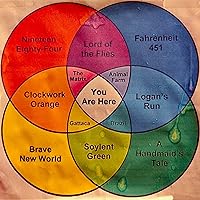
January 3, 2025
As a sci-fi fan, I loved this anthology. The selected stories cover the entire spectrum of science fiction themes instead of just name dropping quantum mechanics and parallel universes in every page. In fact my favourite one, "The Ones Who Walk Away From Omelas", by Ursula K. Le Guin, deals more with ethical questions and is not very 'science-fictiony' in the traditional sense.
Another big plus is the fact that every short story is preceded by a couple of pages of introduction to the author and many of their popular works, and I found this to be an excellent way of going down deeper into the sci-fi rabbit hole. For example, I had no idea that George R. R. Martin (yes, that one!) had a whole career as a science fiction author before he turned to the fantasy genre.
I can definitely recommend this anthology to a wide group of science fiction fans: from seasoned readers, to the ones who are looking for a starting point.
Another big plus is the fact that every short story is preceded by a couple of pages of introduction to the author and many of their popular works, and I found this to be an excellent way of going down deeper into the sci-fi rabbit hole. For example, I had no idea that George R. R. Martin (yes, that one!) had a whole career as a science fiction author before he turned to the fantasy genre.
I can definitely recommend this anthology to a wide group of science fiction fans: from seasoned readers, to the ones who are looking for a starting point.

February 27, 2022
well these were excellent.
and they tend to get better the further in you get (theyre arranged chronologically) science fiction has come a long way.
and they tend to get better the further in you get (theyre arranged chronologically) science fiction has come a long way.

September 30, 2021
Desigual colección de cuentos, como se espera de toda antología. El título completo debería ser "La mejor ciencia ficción y fantasía del siglo XX" porque algunos cuentos son pura fantasía y al no tener ni gota de ciencia o tecnología, no entran dentro de la más laxa definición de CF. Y en cuanto a "la mejor", obviamente es subjetivo, el critero del compilador. Fue una lectura útil porque a muchos autores los conocía de nombre pero nunca los había leído y fue una grata sorpresa, en algunos casos y en otros no tanto. Confieso que un par de textos no me atraparon y no quise invertir más tiempo en ellos, por lo que estrictamente no leí el libro al 100%. Pero tengo una lista de espera muy larga así que por el momento así queda, aprovechando uno de los derechos que tengo como lector.

Read
September 27, 2018Çeşit çeşit hikâyeye ev sahipliği yapan bir bilimkurgu galaksisi var. Birisi için gezegen olanın bir başkası için cüce-gezegen statüsünde değerlendirildiği, türlü gök cismine ev sahipliği yapan bir galaksi bu. Hem de varlığı kesin, ebatları ve nelerden meydana geldiği tartışma konusu olup duran bir galaksi.
Türü ve temsilcilerini tanımlama çabası için alınan her referans noktası ancak tartışmaların alevini körüklemeye yarıyor. Zihinlerin tazelenmesi ve yeni fikirlerin üretilebilmesi namına yararlı tartışmalar bunlar; buna şüphe yok. Süreç içerisinde nesnel bakış açısı ile aşırı öznel bakış açısının karıştırılmasıysa yararlı bulunamayacak tek şey. Çünkü bir kurmacanın nesnel açıdan kendi iç dinamiklerine göre neler vadettiği ve bunları nasıl karşıladığı yönünden incelenmesi, öznel açıdan ise kişisel zevklerin biçimlendirdiği kalıplara göre değerlendirilmeye tabi tutulması söz konusudur. Nesnelliği baştan kabul etmesi, öznelliğiyse umursamaması neticesinde, türü oluşturan üç temeli dikkatlerden kaçırmak tek ortaklıkları.
Bu üç temel: Spekülasyonlar, o spekülasyonlardan türetilmiş gerçeklikler ve bu ikisinin tesisini sağlayan anlatım ve biçem. Üçlünün belli dozajlarda ayarlanma ve birleştirilme yöntemi, hikâyelerin başarı ve başarısızlık skalasını etkileyen başat faktör. Tek bir spekülasyona ve basit bir anlatım tarzına sahipken, kendi gerçekliğini ikna ettirmedeki ustalığı başarı getirtmiş hikayeler varken; ilk ikisinin kılı kırk yarmasının üçüncünün zayıflığına kurban gittiği hikayeler de mevcut. Bunlar üçlünün teoride kolay, uygulamada zor dengesinin sonucu. Bu yüzden onları ve etkilerini kavramak, iyi ile kötünün, başarılı ile başarısızın sebeplerini anlamak açısından önemli.
- Cemalettin Sipahioğlu
İncelemenin tamamı için: https://kayiprihtim.com/inceleme/kole...
Türü ve temsilcilerini tanımlama çabası için alınan her referans noktası ancak tartışmaların alevini körüklemeye yarıyor. Zihinlerin tazelenmesi ve yeni fikirlerin üretilebilmesi namına yararlı tartışmalar bunlar; buna şüphe yok. Süreç içerisinde nesnel bakış açısı ile aşırı öznel bakış açısının karıştırılmasıysa yararlı bulunamayacak tek şey. Çünkü bir kurmacanın nesnel açıdan kendi iç dinamiklerine göre neler vadettiği ve bunları nasıl karşıladığı yönünden incelenmesi, öznel açıdan ise kişisel zevklerin biçimlendirdiği kalıplara göre değerlendirilmeye tabi tutulması söz konusudur. Nesnelliği baştan kabul etmesi, öznelliğiyse umursamaması neticesinde, türü oluşturan üç temeli dikkatlerden kaçırmak tek ortaklıkları.
Bu üç temel: Spekülasyonlar, o spekülasyonlardan türetilmiş gerçeklikler ve bu ikisinin tesisini sağlayan anlatım ve biçem. Üçlünün belli dozajlarda ayarlanma ve birleştirilme yöntemi, hikâyelerin başarı ve başarısızlık skalasını etkileyen başat faktör. Tek bir spekülasyona ve basit bir anlatım tarzına sahipken, kendi gerçekliğini ikna ettirmedeki ustalığı başarı getirtmiş hikayeler varken; ilk ikisinin kılı kırk yarmasının üçüncünün zayıflığına kurban gittiği hikayeler de mevcut. Bunlar üçlünün teoride kolay, uygulamada zor dengesinin sonucu. Bu yüzden onları ve etkilerini kavramak, iyi ile kötünün, başarılı ile başarısızın sebeplerini anlamak açısından önemli.
- Cemalettin Sipahioğlu
İncelemenin tamamı için: https://kayiprihtim.com/inceleme/kole...
October 14, 2020
Yüzyılın En İyi Bilimkurgu Öyküleri adından anlaşılacağı itibariyle yüzyıla damga vurmuş eserler olarak düşünülebilir ancak daha çok yüzyılda eserleri ile yer edinmiş yazarların öykülerini içeren bir antoloji. Bu yorumda tek tek her öyküden bahsetmek yerine genel görüşlerimi yazacağım. Nitekim başka yorumlarda öykü öykü puanlama vs yazılmış.
Kitaptaki öyküler 3 başlık altında toplanmış. Altın Çağ, Yeni Dalga ve Medya Jenerasyonu.
1. Kısım Altın Çağ adından da anlaşılacağı üzere bilimkurgu diyince akla ilk gelen ve neredeyse 100 yıl öncesinden günümüze ışık tutan yazarların öykülerinden oluşuyor. 1-2 öykü diğerlerine göre biraz zayıf ancak oldukça tatmin ediciydi.
2. Kısım Yeni Dalga ise Altın Çağ’ı mümkün olduğunca takip edebilmiş eserlerden oluşuyor. Bu kısım öykü sayısı olarak az tutulmuş ancak verilen öykülerden bazıları kitabın en başarılı öykülerinden(Gezginler ve Gelgeç Ay).
3. Kısım Medya Jenerasyonu ise GRRM’in öyküsü Çölkralları ile harika bir başlangıç niteliğinde. Bundan sonraki öykülerin çoğunun ise bu kitabın başlığına uygun olmadığını ve bu kısımdaki öykü sayısının bu kadar fazla tutulmasındansa kısa tutulan Yeni Dalga ya da Altın Çağ öykülerinden daha fazla okumak isterdim. Yine de kitabın son 2-3 öyküsü biraz olsun diğerlerine göre daha iyiydi.
Neden 3 puan verdiğime gelirsem iyi öykülerin yanında kötü öykülerin sayısının fazla olması diye özetleyebilirim.
Eğer bu kitabın baskısına sahip değilseniz yüksek meblağlar verip edinmek yerine pdf olarak internetten okumanızı tavsiye ederim.
Kitaptaki öyküler 3 başlık altında toplanmış. Altın Çağ, Yeni Dalga ve Medya Jenerasyonu.
1. Kısım Altın Çağ adından da anlaşılacağı üzere bilimkurgu diyince akla ilk gelen ve neredeyse 100 yıl öncesinden günümüze ışık tutan yazarların öykülerinden oluşuyor. 1-2 öykü diğerlerine göre biraz zayıf ancak oldukça tatmin ediciydi.
2. Kısım Yeni Dalga ise Altın Çağ’ı mümkün olduğunca takip edebilmiş eserlerden oluşuyor. Bu kısım öykü sayısı olarak az tutulmuş ancak verilen öykülerden bazıları kitabın en başarılı öykülerinden(Gezginler ve Gelgeç Ay).
3. Kısım Medya Jenerasyonu ise GRRM’in öyküsü Çölkralları ile harika bir başlangıç niteliğinde. Bundan sonraki öykülerin çoğunun ise bu kitabın başlığına uygun olmadığını ve bu kısımdaki öykü sayısının bu kadar fazla tutulmasındansa kısa tutulan Yeni Dalga ya da Altın Çağ öykülerinden daha fazla okumak isterdim. Yine de kitabın son 2-3 öyküsü biraz olsun diğerlerine göre daha iyiydi.
Neden 3 puan verdiğime gelirsem iyi öykülerin yanında kötü öykülerin sayısının fazla olması diye özetleyebilirim.
Eğer bu kitabın baskısına sahip değilseniz yüksek meblağlar verip edinmek yerine pdf olarak internetten okumanızı tavsiye ederim.

April 11, 2019
No me gustó mucho... Creo que hay mejores relatos de Ciencia Ficción

July 17, 2019
Çok iyi. hele George R. R. Martin'in bir öyküsü var ki aman aman.

August 28, 2020
Such a great mix! I read this anthology excited to see which stories would grab me and which ones didn’t and there was certainly a mix! Surprisingly (perhaps?) there wasn’t a particular genre/ age or even type of story that I preferred – in each of the three ‘ages’ the stories were split into, I loved a couple, wasn’t fond of a couple, and pretty steadily enjoyed the rest. I liked the descriptive author summaries before each story, and now I am coming away from this book with inspiration to explore different areas of sci-fi and a list of authors (most of which I’d never before heard of!) and their other works I’d like to read!

June 9, 2018
aslında kitabın notu tam olarak 3.43. her hikayeyi tek tek değerlendirerek 3 bölümün ortalaması olarak bu sayıya ulaştım. 3 bölümde en iyi notu ise 3.85 ile 'yeni dalga' aldı.
antolojiler çoğunluğu tatmin etmek için ortaya çıkmazlar bunu biliyoruz, genel olarak bay scott'ın bizlere ortalama üstü bir derleme sunduğunu ise rahatlıkla söyleyebiliriz.
antolojiler çoğunluğu tatmin etmek için ortaya çıkmazlar bunu biliyoruz, genel olarak bay scott'ın bizlere ortalama üstü bir derleme sunduğunu ise rahatlıkla söyleyebiliriz.
August 23, 2026
Por fin termine este libro de relatos de ciencia ficción. Este libro lo escogí porque contiene uno de los relatos que moría por leer, Llamame Joe (Call me Joe) de Poul Anderson, y por supuesto me encantó.
Contiene muchos relatos, algunos no muy buenos para mi gusto, pero otros super interesantes y buenísimos, mis favoritos aparte de Llamame Joe fueron, Todos somos Zombies, Los Reyes de la Arena y UNO por dar unos ejemplos.
Recomendable sobre todo si te gusta la ciencia ficción.
Contiene muchos relatos, algunos no muy buenos para mi gusto, pero otros super interesantes y buenísimos, mis favoritos aparte de Llamame Joe fueron, Todos somos Zombies, Los Reyes de la Arena y UNO por dar unos ejemplos.
Recomendable sobre todo si te gusta la ciencia ficción.

August 15, 2019
3,5'tan 4.

September 18, 2024
Uporządkowany chronologicznie zbiór opowiadań sci-fi. Można zobaczyć jak zmieniały się podejścia autorów do tego nurtu.

October 17, 2021
An almost incredibly good collection. Orson Scott Card has taste.
The Golden Age
Poul Anderson, "Call Me Joe". Anderson is one of the absolute best, and this story is among his best. I said some minor things about it at https://www.goodreads.com/review/show... last time I read it. Come to think of it (as I read over the rest of my comments): Very Anderson-flavored.
Robert A. Heinlein, "All You Zombies". Seminal, over the top, and very Heinlein-flavored.
Lloyd Biggle Jr., "The Tunesmith". A charming satire--but less of that adjective because of that noun, and vice versa.
Theodore Sturgeon, "A Saucer of Loneliness". Very, very Sturgeon-flavored. I always appreciate his characters, I think, but I don't seem to identify with them--and if that be a failing, I'm all but certain it's mine.
Isaac Asimov, "Robot Dreams". Yet another of his multitudinous robot stories--and this one actually managed to surprise me a bit.
Edmond Hamilton, "Devolution". I'm not at all sure that I derived the moral the author intended. Perhaps because I never properly suspended disbelief. I did see very early on where this one was going, but being proved right wasn't all that satisfying.
Arthur C. Clarke, "The Nine Billion Names of God". I thought I remembered exactly how this one ended, but it was slightly better even than that. Anyway, it's an elaborate joke ... I think.
James Blish, "A Work of Art". More than half a century later, we still can't upload ourselves to computers, or download anybody. But hope still springs in the real world. This story makes an interesting comment.
Ray Bradbury, "Dark They Were, and Golden Eyed". Very, very Bradbury's Mars–flavored. My "review" at https://www.goodreads.com/review/show... states my one complaint about this beauty.
The New Wave
Harlan Ellison, "'Repent, Harlequin!' Said the Ticktockman". A roller-coaster. I don't like the real-life rides, and I'm not sure I like this story. But it brilliantly does what it wants to do.
R.A. Lafferty, "Eurema's Dam". Certainly Lafferty wrote stories seriously. I'm not convinced he ever wrote any serious stories--which is a major blessing!
Robert Silverberg, "Passengers". Full marks for achievement of intention. Doesn't mean I don't hate it. Someone, somewhen, has defined a horror story as awful things happening to ordinary people for no good reason. This one fits that repellent definition.
Frederik Pohl, "The Tunnel Under the World". Read the anecdote at https://www.goodreads.com/book/show/2....
Brian W. Aldiss, "Who Can Replace a Man?". Contains one of my favorite worrisome lines in all of literature: "I have only a Class Five brain," said the quarrier, "but I have a good supply of fissionable materials."
Ursula K. Le Guin, "The Ones Who Walk Away from Omelas". Recognizing the title I knew that this is among the stories I think everyone should read. Once. We probably don't need to reinflict it on ourselves again in the absence of a specific need.
Larry Niven, "Inconstant Moon". It's good. I really don't know why it won a Hugo, though--maybe my usual (partial) emotion-blindness interferes?
The Media Generation
George R.R. Martin, "Sandkings". Horror to my taste: The PoV character earns all the inventively horrendous things that happen to him.
Harry Turtledove, "The Road not Taken". A highly imaginative forking point for our species' actual history.
William Gibson (yes, the Neuromancer man) and Michael Swanwick, "Dogfight". Another case of a jerk satisfactorily getting his comeuppance. But I didn't much enjoy watching it.
Karen Joy Fowler, "Face Value". I felt the same kind of pointlessness I experienced in too much of what I read when the New Wave movement was ascendant.
C.J. Cherryh, "Pots". Nothing to do with any of her glorious series that I know of, but good in its own way.
John Crowley, "Snow". This may well be good. But I know I'm not the audience for snow on my display screens.
James Patrick Kelly, "Rat". Unpleasant and effective--another biter bit.
Terry Bisson, "Bears Discover Fire". From my point of view, a pleasant end-of-life story.
John Kessel, "A Clean Escape". If we must be told one more time that nuclear war is a Really Very Bad Idea, at least this one does it an interesting way.
Lisa Goldstein, "Tourists". If I were in a seminar, back in my English-major days, I might enjoy figuring out why this one works when an accurate description would indicate it can't. Half a century further on in life, I'm content to just marvel.
George Alec Effinger, "One". Not at all what I expect from Effinger. Nor am I convinced of his moral here, either of its truth or that all the pages he took leading up to it were worth it.
The Golden Age
Poul Anderson, "Call Me Joe". Anderson is one of the absolute best, and this story is among his best. I said some minor things about it at https://www.goodreads.com/review/show... last time I read it. Come to think of it (as I read over the rest of my comments): Very Anderson-flavored.
Robert A. Heinlein, "All You Zombies". Seminal, over the top, and very Heinlein-flavored.
Lloyd Biggle Jr., "The Tunesmith". A charming satire--but less of that adjective because of that noun, and vice versa.
Theodore Sturgeon, "A Saucer of Loneliness". Very, very Sturgeon-flavored. I always appreciate his characters, I think, but I don't seem to identify with them--and if that be a failing, I'm all but certain it's mine.
Isaac Asimov, "Robot Dreams". Yet another of his multitudinous robot stories--and this one actually managed to surprise me a bit.
Edmond Hamilton, "Devolution". I'm not at all sure that I derived the moral the author intended. Perhaps because I never properly suspended disbelief. I did see very early on where this one was going, but being proved right wasn't all that satisfying.
Arthur C. Clarke, "The Nine Billion Names of God". I thought I remembered exactly how this one ended, but it was slightly better even than that. Anyway, it's an elaborate joke ... I think.
James Blish, "A Work of Art". More than half a century later, we still can't upload ourselves to computers, or download anybody. But hope still springs in the real world. This story makes an interesting comment.
Ray Bradbury, "Dark They Were, and Golden Eyed". Very, very Bradbury's Mars–flavored. My "review" at https://www.goodreads.com/review/show... states my one complaint about this beauty.
The New Wave
Harlan Ellison, "'Repent, Harlequin!' Said the Ticktockman". A roller-coaster. I don't like the real-life rides, and I'm not sure I like this story. But it brilliantly does what it wants to do.
R.A. Lafferty, "Eurema's Dam". Certainly Lafferty wrote stories seriously. I'm not convinced he ever wrote any serious stories--which is a major blessing!
Robert Silverberg, "Passengers". Full marks for achievement of intention. Doesn't mean I don't hate it. Someone, somewhen, has defined a horror story as awful things happening to ordinary people for no good reason. This one fits that repellent definition.
Frederik Pohl, "The Tunnel Under the World". Read the anecdote at https://www.goodreads.com/book/show/2....
Brian W. Aldiss, "Who Can Replace a Man?". Contains one of my favorite worrisome lines in all of literature: "I have only a Class Five brain," said the quarrier, "but I have a good supply of fissionable materials."
Ursula K. Le Guin, "The Ones Who Walk Away from Omelas". Recognizing the title I knew that this is among the stories I think everyone should read. Once. We probably don't need to reinflict it on ourselves again in the absence of a specific need.
Larry Niven, "Inconstant Moon". It's good. I really don't know why it won a Hugo, though--maybe my usual (partial) emotion-blindness interferes?
The Media Generation
George R.R. Martin, "Sandkings". Horror to my taste: The PoV character earns all the inventively horrendous things that happen to him.
Harry Turtledove, "The Road not Taken". A highly imaginative forking point for our species' actual history.
William Gibson (yes, the Neuromancer man) and Michael Swanwick, "Dogfight". Another case of a jerk satisfactorily getting his comeuppance. But I didn't much enjoy watching it.
Karen Joy Fowler, "Face Value". I felt the same kind of pointlessness I experienced in too much of what I read when the New Wave movement was ascendant.
C.J. Cherryh, "Pots". Nothing to do with any of her glorious series that I know of, but good in its own way.
John Crowley, "Snow". This may well be good. But I know I'm not the audience for snow on my display screens.
James Patrick Kelly, "Rat". Unpleasant and effective--another biter bit.
Terry Bisson, "Bears Discover Fire". From my point of view, a pleasant end-of-life story.
John Kessel, "A Clean Escape". If we must be told one more time that nuclear war is a Really Very Bad Idea, at least this one does it an interesting way.
Lisa Goldstein, "Tourists". If I were in a seminar, back in my English-major days, I might enjoy figuring out why this one works when an accurate description would indicate it can't. Half a century further on in life, I'm content to just marvel.
George Alec Effinger, "One". Not at all what I expect from Effinger. Nor am I convinced of his moral here, either of its truth or that all the pages he took leading up to it were worth it.
Displaying 1 - 30 of 194 reviews