Jump to ratings and reviews
Rate this book

Слонът и пеперудът

Rate this book
След това Аз казала на Ти: „Искаш ли да пием чай?”
Ти отговорила: „Да, искам.”
И така Аз и Ти отишли у дома и там, също както правим аз и ти, си приготвили хубав горещ чай с пресен хляб с масло и с много, много, много мармалад.


Едуард Естлин Къмингс (1894-1962) е американски поет, художник, есеист, писател и драматург. Пише близо 2900 стихотворения, два автобиографични романа, четири пиеси и няколко есета. Три от приказките в тази книга той създава за дъщеря си Нанси. Къмингс се разделя с майката и до 26-ата си годишнина момичето не знае кой е баща му. Запознават се, когато се ражда внукът на поета. Тогава се появява и „Слонът и пеперудът”.

76 pages, Paperback

First published January 1, 1965

7 people are currently reading
725 people want to read

About the author

E.E. Cummings

369 books3,950 followers
Edward Estlin Cummings was born in Cambridge, Massachusetts, on October 14, 1894. He began writing poems as early as 1904 and studied Latin and Greek at the Cambridge Latin High School.

He received his BA in 1915 and his MA in 1916, both from Harvard University. His studies there introduced him to the poetry of avant-garde writers, such as Gertrude Stein and Ezra Pound.

In 1917, Cummings published an early selection of poems in the anthology Eight Harvard Poets. The same year, Cummings left the United States for France as a volunteer ambulance driver in World War I. Five months after his assignment, however, he and a friend were interned in a prison camp by the French authorities on suspicion of espionage (an experience recounted in his novel, The Enormous Room) for his outspoken anti-war convictions.

After the war, he settled into a life divided between houses in rural Connecticut and Greenwich Village, with frequent visits to Paris. He also traveled throughout Europe, meeting poets and artists, including Pablo Picasso, whose work he particularly admired.

In 1920, The Dial published seven poems by Cummings, including "Buffalo Bill ’s.” Serving as Cummings’ debut to a wider American audience, these “experiments” foreshadowed the synthetic cubist strategy Cummings would explore in the next few years.

In his work, Cummings experimented radically with form, punctuation, spelling, and syntax, abandoning traditional techniques and structures to create a new, highly idiosyncratic means of poetic expression. Later in his career, he was often criticized for settling into his signature style and not pressing his work toward further evolution. Nevertheless, he attained great popularity, especially among young readers, for the simplicity of his language, his playful mode and his attention to subjects such as war and sex.

The poet and critic Randall Jarrell once noted that Cummings is “one of the most individual poets who ever lived—and, though it sometimes seems so, it is not just his vices and exaggerations, the defects of his qualities, that make a writer popular. But, primarily, Mr. Cummings’s poems are loved because they are full of sentimentally, of sex, of more or less improper jokes, of elementary lyric insistence.”

During his lifetime, Cummings received a number of honors, including an Academy of American Poets Fellowship, two Guggenheim Fellowships, the Charles Eliot Norton Professorship at Harvard, the Bollingen Prize in Poetry in 1958, and a Ford Foundation grant.

At the time of his death, September 3, 1962, he was the second most widely read poet in the United States, after Robert Frost. He is buried in Forest Hills Cemetery in Boston, Massachusetts.

source: http://www.poets.org/poetsorg/poet/e-...

Ratings & Reviews

What do you think?
Rate this book

Friends & Following

Create a free account to discover what your friends think of this book!

Community Reviews

5 stars
224 (43%)
4 stars
165 (31%)
3 stars
91 (17%)
2 stars
25 (4%)
1 star
13 (2%)
Displaying 1 - 30 of 84 reviews
Profile Image for Marquise.
1,958 reviews1,416 followers
January 13, 2019
This slim anthology of fairy tales by one of my favourite poets contains 4 short stories: "The Old Man Who Said 'Why'," about a maddeningly inquisitive old man who dwells in the moon and drives everyone bonkers with his one-word reply to everything, until a fairy godfather (?) decides to solve the problem. "The Elephant and the Butterfly," about two solitary animals who form an unlikely friendship once one decides to reach out to the other, "The House That Ate Mosquito Pie" about an abandoned house that becomes home to a host of little animals who take care of it and feed it, and "The Little Girl Named I," about a young girl called I who discovers and befriends You.

These tales are all charming, but aimed at very young children, not for adults. I think parents with little ones just learning to read would find this of much use, as the language is easy, the stories are creative, has nice illustrations, and there's room for the participation of the children, not just listening passively. I thought it'd be for adults, and was surprised to find it was for Cummings's daughter when she was little. Anyway, even I could enjoy them despite falling out of the target audience.
Profile Image for Jeana.
Author 2 books155 followers
April 21, 2009
I picked this book up at our local library the other day and just opened it tonight. Once I started reading, I couldn't stop. This is a cute collection of four "happy" sweet fairytales. They are fun to read and written cleverly, of course as it is written by e.e. cummings. Supposedly, most of these were written for Cumming's own daughter.

Two of the tales were actually quite silly, especially "The Little Girl Named I". The other two were simply just adorably sweet.

My favorite story was "The House that Ate Mosquito Pie". Here's the opening description:

"Once there was a house who fell in love with a bird.

This house was tall and empty and had a great many windows. Nobody lived in him because he stood on top of a high hill, away off from anywhere, with no one except the morning to play with and no one except the sunset to talk with and no one except the twilight to confide in. There was the afternoon, of course; but the afternoon rarely came near the house because the afternoon was too busy putting the moon to bed. And there was the night, too; but the night was fondest of wandering and wandering among all the bright and gentle kinds of flowers which you and I call "stars" because we don't know what they really may be. So, except for the three friends--the morning, the sunset, and the twilight--this tall and empty house with a great many windows, standing on the top of a high hill, was all alone."

Pure poetry!
Profile Image for Gergana Dimitrova.
44 reviews20 followers
June 5, 2018
С чиния със светлина в едната ръка и с чаша тишина в другата (тъй като за закуска винаги имало светлина и тишина)...
Profile Image for Книжни Криле.
3,601 reviews202 followers
August 23, 2018
Човек никога не знае с какво ще продължи поредицата на изд. „Лист” „Детски шедьоври от велики писатели”. Това, което знае обаче е следното – подборът на заглавията е изненадващ и нестандартен, а към превода и илюстрациите се подхожда с особено внимание и усет. „Слонът и пеперудът” на Е. Е. Къмингс, преведена от Владимир Молев и нарисувана от Юлиян Табаков, не прави изключение. Това е сборник с четири чудновати и нежни истории, написани от Къмингс за дъщеря му и внука му. Прочетете ревюто на "Книжни Криле": https://knijnikrile.wordpress.com/201...
Profile Image for Кремена Михайлова.
630 reviews209 followers
September 4, 2018
И четирите приказки на любимия поет Къмингс ми харесаха, но може би най-много „Слонът и пеперудът“ и „Малкото момиче, което се казвало Аз“. По възрастен навик си добавих и възрастен смисъл във всяка приказка; значения, връзки, вълнения. Като цяло за мен книгата излъчва хармония, „природно успокоителна“ е; трудното е преодолимо, по-страшничко беше само на „Шшшт! Идват хора!“

Надявам се внукът на Къмингс да е харесал приказките. Бих искала да съм малко дете и някой добър възрастен да ме пренесе в този свят на въображението и ситуациите от живота, където хора, звезди, животни, дървета и замъци общуват както би трябвало да бъде.

Но тази вечер оставам в компанията на Аз и …

„... и накрая вълшебникът скочил от масата с чиния със светлина в едната ръка и с чаша тишина в другата…“

„– Къде да оставим нашите тревоги? – извикали хората.“

*****
„Един ден слонът си седял в малката си къщичка, гледал през прозореца и не правел нищо (бил доволен, защото точно това най-много обичал да прави)…“

„Според мен пеперудът обича слона толкова, колкото и слонът обича пеперуда...“

„Защо никога не си идвал в долината при мен?“

*****
„Замъкът потреперил от задоволство и се вслушал внимателно, като освен това се заоглеждал на всички страни с всичките си прозорци да види кой е този, дето лети и пее.“

*****
„… също както правим аз и ти…“
Profile Image for Evgeniya.
125 reviews40 followers
June 21, 2018
Какво е бижу тази книга, каква прекрасна прекрасност! Чувствам се по отношение на нея малко като слона, който бил твърде щастлив, за да говори, затова си мълчал. ;)

Юлиян Табаков е създал един толкова нежен, но достатъчно детайлен свят в бяло, черно и златно за героите от 4-те детски истории на Къмингс, които са толкова странни, а пък цялата тяхна объркана, поглъщата тъга и тиха, но еуфорична радост те сграбчват моментално. Оформлението така добре пасва на причудлвата, но някак изчистена авагнардност на тези разкази на Къмингс и е наистина въздействащо в този смисъл. Чудно нещо е.

"Лист" заслужава поне още веднъж поздравления за цялата поредица "Детски шедьоври от велики писатели", защото нивото на изданията се вдига с всяка следваща книжка.
Profile Image for Robert.
827 reviews44 followers
July 30, 2019
This slim volume contains four stories, with a high proportion of space taken up by illustrations (that I like a lot.) Three were written for Cummings' daughter, Nancy and one (much later, obviously) for his grandson. This one, The Elephant and the Butterfly, was my favourite. Elephants were Cummings' favourite animals from childhood onwards. (He did his own pictures of elephants as a youngster.) It is surmised in an afterword that the titular Elephant and Butterfly symbolise Cummings himself and his grandson, respectively. I don't know if that's true, but it's plausible and the idea makes the story even more delightful to me.
Profile Image for Miguel.
469 reviews14 followers
August 8, 2018
O norte-americano Edward Estlin Cummings, mais conhecido como E. E. Cummings (1894-1962), foi um dos poetas mais importantes do século XX. Além de poesia, escreveu alguns ensaios e romances. Três anos após o seu desaparecimento, foram publicados pela primeira vez — o que para os seus leitores dessa altura foi uma surpresa — um quarteto de histórias infantis, que o escritor tinha escrito, na década de 1920, para a sua filha, Nancy, quando esta era criança.
(...) um livro que vai agradar não só às crianças mas também aos adultos.
http://silenciosquefalam.blogspot.com...
Profile Image for Irina Stoyanova.
110 reviews5 followers
December 5, 2018
Не съм сигурна дали децата биха разбрали точно тези четири разказа. Наричани са “детски шедьоври”, но всъщност това са приказки и за големи. Вероятно ще разкажа някой на голямата ми племенница, за да видя какво ще ми каже тя. Интересни илюстрации, смисъл и творчество. Заглавието е впечатляващо и запомнящо.
Profile Image for Angelina.
703 reviews91 followers
February 6, 2019
A charming, sweet, old-fashioned but whimsical collection of fairy tales.

Once there was a house who fell in love with a bird.
This house was tall and empty and had a great many windows. Nobody lived in him because he stood on top of a high hill, away off from anywhere, with no one except the morning to play with and no one except the sunset to talk with and no one except the twilight to confide in.

(the beginning of The House That Ate Mosquito Pie)
Profile Image for Valerie.
155 reviews83 followers
March 6, 2008
This is a book of four fairy tales written by E.E. Cummings, and beautifully illustrated by Meilo So. My first impression of it was that it was precious in a way that appeals to adults - I felt that it was probably marketed with them (me) in mind, but I guess there may be older children out there that would also enjoy it.

The stories themselves are poignant and touching... pretty much everything you'd expect from a poet who turned his attention to fairy tales. The stories are whimsical, some revolving around the power of words (a world is thrown into chaos because an old man will ask only "why?"), and some the strong love between unusual companions (a house and a bird; an elephant and a butterfly).

The Afterword, by George James Firmage, is very interesting. In it, he talks about how the first edition of Fairy Tales had a preface saying that the stories were written for Cummings' daughter, Nancy, when she was a little girl.

Her mother had divorced Cummings in 1924, married someone else the following year, and moved with him to Ireland. Her new husband was able to keep Cummings away from his daughter, and also kept from her the fact that Cummings was her father (I'm not exactly sure why all the blame is being laid at his feet, but I'm going by the text of the Afterword here). They didn't actually meet until 1946, when Nancy was 26. She had come to the U.S. to work as a translator in Washington, D.C. and while there, met and married Willard Roosevelt (grandson of Theodore). She had a son the following year.

It wasn't until 1948 that Cummings told her that he was her father (he was painting her portrait at the time). He then wrote "The Elephant and the Butterfly". The story was originally presumed to have been among those he wrote for his daughter, but was later determined to have been written for his grandson.
Profile Image for Cheryl.
12.9k reviews483 followers
March 15, 2020
Original, creative. The older illustrations, by John Eaton, enhance the text beautifully. I'm sure some readers will find too much sweetness here, but for those who agree with the "girl named I" that a good tea includes "bread and butter with lots and lots of jam," it will be a favorite book. And anyone who likes to analyze the mystical & metaphorical can have fun, too.

Reread a year later, review stands. Just a lovely light book for those with innocent wise souls.
Profile Image for a.g.e. montagner.
244 reviews42 followers
March 22, 2012
Queste storie furono scritte per la figlia di Cummings, quando era ancora molto piccina.
- Marion Morehouse Cummings

“Questo volumetto a cura di Vanni Scheiwiller è stato impresso a Trezzano sul Naviglio dalla tipografia Locatelli & Figli in mille copie numerate il 22 febbraio 1975. COPIA n. 238.”

Due note, la prima e l’ultima pagina stampata del libro, che sono sufficienti a spiegare la meraviglia di scoprire, per puro caso e mentre cercavo altro, in un’ala della biblioteca umanistica che probabilmente non visiterò mai più, queste favole di Cummings. Certo, la copertina verde è opinabile, ma d’altro canto è così sbiadita da fare tenerezza.
E fanno tenerezza, moltissima, anche le quattro favole. Che Cummings potesse essere dolce e delicato e pieno di fantasia, che avesse una grazia impareggiabile nel disseminare le sue opere di dettagli naturali, queste cose le sapevamo già. Ma fa tenerezza immaginarlo mentre legge, anzi recita, alla figlia. E lui dev’essersi divertito un sacco. Al punto che l’ultima storia, “La piccola bambina chiamata Io”, è costruita come un dialogo, in cui la voce narrante incita l’altra ad indovinare chi incontrerà la piccola Io e cosa si diranno. La verità è che io mi sono pure commosso: le storie d’amore tra elefanti e farfalle mi fregano sempre. Il che porrà seri problemi quando toccherà a me leggere favole… Dovrò ripiegare sul Beowulf, ecco.

Mannaggia a Cummings, come si fa a non volergli bene?
Profile Image for Melisa.
58 reviews2 followers
November 18, 2009
not sure i'm as impressed as i thought i would be, but i'm hesitant to admit that until we're finished reading it (lily and i that is).

well... we read another story from this book last night and lily and i really liked it. it was called "the little girl named i." she is older now, more patient, and also more interested in wordplay lately. making jokes about words, early puns, switching words for comedic effect (like in songs) are all fun for her right now, so i think she was really into the poetic sounds of the story, and the word play with i. also last night, i was singing "doin' the whah whah pigeon..." from sesame street, and she changed it to "doin' the whah whah burt" and then kept changing the noun for whatever we were doing at the time: henry, wipee, lotion, etc. so much fun. but she still doesn't understand next week.
Profile Image for Cami.
859 reviews67 followers
November 29, 2009
Written by poet and sytax-original e. e. cummings, these charming tales are exactly as anyone familiar would expect him to write.

If you do not like e. e. cummings poetry, you will not enjoy this book.

If you like his poetry, you will find these tales fun and original.

If you consider yourself a fan of the poet, you'll find yourself smiling, nodding your head as you read.

Four tales here:

"The Old Man Who Said "Why" " and "The Little Girl Named I" are odd and silly.
I really liked "The Elephant & The Butterfly." It was very sweet.

I loved "The House That Ate Mosquito Pie" and will be including it in some future declaration to my husband, as it has sweet and innocent heart. "Once there was a house who fell in love with a bird...and so they were as happy together as happy could be."
Profile Image for fpk .
444 reviews
Want to read
March 14, 2009
We've been reading some poems and stories by ee cummings. My 14 yr old son loves his stuff! His style is indeed unique, w/random punctuations and odd, irregular sentence structure, if indeed there is any structure. My 8 yr old daughter loved the odd little story called "The Old Man who said 'Why'". It reads like a fable of sorts. I'm hoping I have some time to read up on this unique writer.
Profile Image for Ana Claudia.
25 reviews17 followers
December 16, 2015
Contos muito bonitos e a edição da Cosac Naify está linda! Me apaixonei pelas cores e pelas ilustrações.
Profile Image for Jack Rousseau.
199 reviews4 followers
January 29, 2022
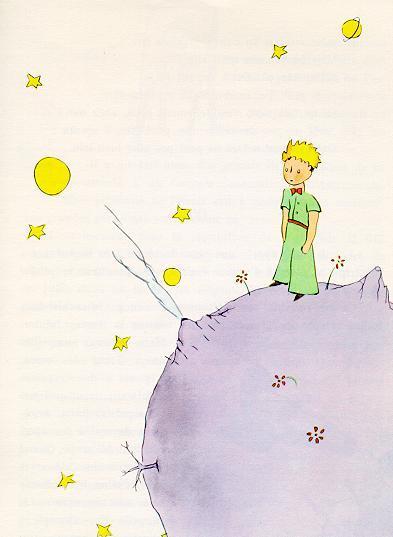
Four fairy tales by poet E. E. Cummings: "The Old Man Who Said Why", "The Elephant and the Butterfly", "The House That Ate Mosquito Pie", and "The Little Girl Named I". With illustrations by Meilo So, reminiscent of Antoine de Saint-Exupéry's The Little Prince...
description
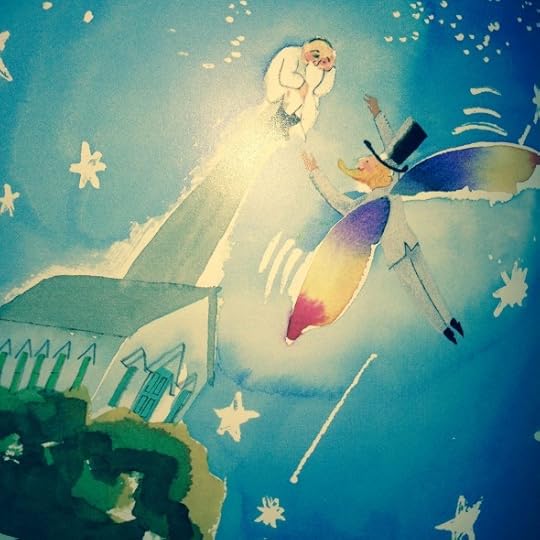
And then he saw a high rock, right on the very edge of the moon, and on top of this rock there was a tall church, and on top of this church there was a slender steeple, and away up - right at the very top of this steeple - there was sitting a very very very very very very very old man with little green eyes and a big white beard and delicate hands like a doll's hands. And this little old man never moved and sat all by himself looking and looking and look at nothing. (pg. 18)

description


Love is the most prominent theme that permeates the fairy tales. Or the pursuit of love (in "The Little Girl Named I"). The love in question is very innocent, very unassuming, as one would expect from stories written for children. The love Cummings writes about is therefore not the love between two people, but the love between an elephant and a butterfly (in "The Elephant and the Butterfly") or the love between a house and a bird (in "The House That Ate Mosquito Pie")...
So they came together and the elephant's arm was very gently around the butterfly. Then the littlest tree said: "I believe the butterfly loves the elephant as much as the elephant loves the butterfly, and that makes me very happy, for they'll love each other always." (pg. 33)


The story that is most evocative of Cummings's poetry is "The Little Girl Named I"...
 Once upon a time there was a little girl named I.
She was a very good little girl, wasn't she?
Yes indeed; very good. So one day this little girl named I
was walking all by herself in a green green field. And who
do you suppose she meets?
A cow, I suppose.
Yes, that's right. It was a yellow cow. So ever so politely
she says to the cow "How do you do" and what does this cow say?
Does it say "Nicely, thank you very much"?
Yes. It does. And so this little girl named I is very glad,
and she invites this cow to come to tea, but this cow
doesn't like tea. So then they say "Goodbye" and away goes I
through the green green field, all by herself. (pg. 51 - 52)
Profile Image for J.
3,876 reviews33 followers
June 1, 2024
Not quite sure what I thought when I ended up with this book but today was the day to read it....

Fairy Tales isn't really based on any actual fairy tales as readers would know them from the original genre foundations. Instead these are stories that were made by the poet to be told to his daughter as good-night stories thus should be in a whole different category than what is being called as the title.

There are four stories in all and they read brief but more or less have the same theme of childhood. The Old Man Who Said "Why?" basically felt to me that it was a just-so story/creation story about where children came from while providing the explanation as to why children keep asking the same question while providing the child with a pseudo-spiritual background without it being quite Christian one way or another.

The Elephant & the Butterfly and The House That Ate Mosquito Pie basically just felt like the same story with the same message. The father is the elephant or the house who has been empty and/or doing nothing until his little butterfly or bird appears to show him the wrongness of his ways. The only part that really didn't make sense to me was the three people who came to the empty house in the latter story who wanted to settle in but I am sure something personal had occurred, which e.e. cummings is addressing while I am not sure we will ever know what he means by that scene.

And finally the last story, The Little Girl Named I, just seems like it may be one of those stories where the parent encourages the child's imagination by having them interactively participate in telling the story with some coaxes here and there. As a result the last story probably is the most personal and didn't stand out too much message-wise as any of the first stories.

The illustrations by John Eaton are interesting with the brightly colored ones that look to be done in crayon alternating with those that are in black-and-white. Although seemingly simplistic in many regards the techniques used for technique and to add special touches like the strokes of the medium for non-outlined wings or or just small asterisks for stars was also quite clever.

Cute intimate tales that a reader may want to share with the little in their life but otherwise not a book for heavy reading....
Profile Image for NeDa.
434 reviews20 followers
April 7, 2020
За няколко секунди на неговата звезда се изсипали милиони, милиони, милиони, милиони летящи хора, които един след друг кацали където намерят. Милиони, милиони, милиони хора пикирали и напирали, клатушкали се и се люшкали, препъвали се и напъвали към дома му. Движели се тъй устремено, че едва не угасили свещта, и за миг той се озовал заобиколен от милиони, милиони ядосани съседи, понесли под мишница своите тревоги...

***
Замъкът потреперил от задоволство и се вслушал внимателно, като освен това се заоглеждал на всички страни с всичките си прозорци да види кой е този, дето лети и пее...
Когато причката се събудила на следващата сутрин, видяла, че целият замък грее, озарен от слънцето, и осъзнала, че никога преди не се била чувствала тъй щастлива. Затова запяла на замъка, който толкова я обичал, че измил всичките си прозорци, навил часовниците, измел стълбите и накрая целия се пребоядисал в нови, ярки цветове...
Profile Image for Maria.
48 reviews4 followers
February 22, 2018
Δανείστηκα το βιβλίο από φίλη που μου το πρότεινε αφού είδε την ανάρτησή μου για το παιδικό βιβλίο της Sylvia Plath. Μου αρέσουν τα γραπτά του E.E. Cummings και ευχαριστήθηκα τα παραμύθια του. Τα τρία πρώτα γράφτηκαν για την κόρη του , το τέταρτο -αρκετά χρόνια αργότερα- για τον εγγονό του.
Βγαλμένα από τη σουρεαλιστική πραγματικότητα ενός ποιητή ταιριάζουν υπέροχα στη μαγική πραγματικότητα των παιδιών αλλά και των ενηλίκων που προσπαθούν να σκέφτονται σαν παιδιά.
Τρυφερά, πρωτότυπα, χαριτωμένα. Αγάπησα και συγκινήθηκα πολύ με το "Ο γέρος που έλεγε γιατί" και "Το σπίτι που έφαγε κουνουπόπιτα".
Μια γλύκα η εικονογράφηση του Πάολο Γκέτσι ειδικά για την ελληνική έκδοση.

#readathon18 [6] - Ένα βιβλίο που δανειστήκατε
Profile Image for Alice.
269 reviews4 followers
February 23, 2018
I’ve been wanting to start reading in German and I had a bilingual edition of this book sitting on my shelves for ages so I thought it was finally time to pick it up. I had never read anything by E. E. Cummings and had no idea what to expect, so I was very pleasantly surprised when I discovered those four little fairy tales. They are so sweet and strange! I don’t think I could pick a favorite, as they are all so different and each charming in their own way. I’ll definitely reread it in the future, and I am very pleased with this first german reading experience!
Profile Image for Nicola.
3,637 reviews
May 16, 2018
I really like E. E. Cummings' poetry and was delighted to pick up this short collection of original fairy tales. They're different to traditional fairy tales, more lyrical. Miss 3's favourite was the house and the bird. I greatly enjoyed the last one, where You and I have a tea party (the linguistical word play went over her head).

I also greatly enjoyed the Afterword as the added context gave me a greater appreciation for the Elephant & the Butterfly once I realized it was about him getting to know his grandson.
Profile Image for João Teixeira.
2,306 reviews44 followers
February 9, 2019
Tenho alguma dificuldade em gostar de histórias sem sentido, mesmo quando escritas para crianças. Como não consegui perceber o objectivo destas histórias (excepto, talvez, "O Elefante e a Borboleta", na qual dois animais completamente diferentes se apaixonam um pelo outro — é essa a magia do amor!), não posso dizer propriamente que gostei de as ler. Em todo o caso, são histórias curtas que se lêem num ápice e que, por isso, não nos arrependemos de ler.
Profile Image for Makayla Davis.
36 reviews
February 8, 2023
This book was interesting, it consisted of four fairytales that were written for his young daughter. The stories have a great delicacy and beauty that are represented not only through the wording but the illustrations. It is easy to read these fairytales through the eyes of a child, I would recommend this book to parents who read their children's stories before bed.
722 reviews
August 11, 2023
I hadn't known that cummings wrote fairy tales, although I have loved his poetry since high school lit. Sweet and imaginative, it reminded me more of de Saint Exupery's The Little Prince than of classic fairy tales. I wonder if the two writers were acquainted, although I've not found actual evidence of that. Curious, though...
Profile Image for Irene.
459 reviews
October 6, 2021
Eu geralmente gosto da escrita do E. E. Cummings, mas pra ser sincera esses contos são bem mais ou menos. O que realmente fez o livro valer a pena foi a edição linda da Cosac Naify e as ilustrações do Eloar Guazelli, o projeto gráfico desse livro é realmente uma obra de arte a parte.
Profile Image for Kátia Cristina.
520 reviews17 followers
March 12, 2018
Very beautiful and moving! If you know a little bit about the author's life it will help wonders.
Displaying 1 - 30 of 84 reviews

Can't find what you're looking for?

Get help and learn more about the design.