Due to their unique neurology, only the enslaved Operator caste can program the quantum computers that run 26th century Red City. When three of the caste are ritually murdered, it's up to private investigator Hoshi Archer—herself a recently liberated Operator—to help the police solve the case. Things get complicated when one of the victims turns out to be Hoshi's ex-girlfriend, and power-hungry bureaucrats and old rivals stir up new problems. An immortal, amoral alien may even be involved. To unwind the plot to take over the city, Hoshi must decipher a deadly computer program and learn to communicate with the alien, before it's too late for the next victim—and the city.
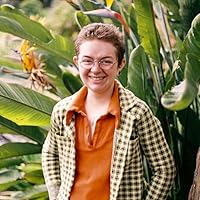
Dora M Raymaker, PhD, is a scientist, writer, multi-media artist, and activist whose work across disciplines focuses on social justice, critical systems thinking, complexity science, and the value of diversity. Dora is an Autistic/queer person with a deep love of soft yarn, restless cities, extreme writing events, and hard-boiled cyber-noir.
Hoshi is an autistic protagonist speaking from an authentically autistic point of view. I love that the author forgoes the standard autistic set-pieces (not being able to understand idioms, not knowing how to lie) and and goes for more relatable, subjective parts of the experience like sensory overload, 3-d visualization of concepts, and stimming because it's fun. Not to mention the excruciating social pain of not being able to end a phone call because you can't figure out who's supposed to go into the "goodbye" formalities first.
I'd call this genuinely autistic science fiction. Hoshi has cyborg-brain superpowers, and they're the cyborg-brain superpowers that an autistic person would fantasize about, ones that build on neurodivergent ways of thinking and functioning instead of replacing them. Even when she uses her powers to make up for pretty straightforward deficits in motor coordination and the like, the way she uses them is creative and empowering.
As a PI story it was fun to read, though I felt like some of the big reveals could have been better foreshadowed. There are also brief sections where it abruptly flips into ceremonial magick and technoshamanism, but fortunately I'm always up for that.
The writing has quite a few rough edges, but it's consistently readable. I think the characters and images are going to stick with me for some time. And beyond that, it just felt damn good to read about a protagonist I can identify with so much.
I found this via Ada Hoffman's Autistic Book Party reviews for my disabled/ND authors bingo card and picked it based on the title for the "judge a book by its title" square.
This was a fun little cyberpunk noir detective story layered within social critique of an upsettingly ableist society that enslaves ND people to serve as tech operators. The depiction of autism was dead on in every way and felt really timely and relevant.
It talks about autism and ableism and the discrimination we -autistic people- face and a lot of other related things.
This book is complex. And spot on. And I loved it.
I definitively recommend that you read it if you are autistic. And if you are not, you should also definitively read it (but not for the same reason).
We, autistic people, don't get a lot of representation in media and in books. And when we do, we often get the stereotypical representation of us.
But in this book? I felt seen. Seen like I never felt seen before in a work of fiction. Hoshi is one of "my people" and this goes without a shadow of a doubt.
I should warn you though, reader. There is A LOT of things in this book. And if you don't know all that much about autism, and if you don't know all that much about the discrimination we face, you might not be able to "see" everything at the first read. And that's okay, you don't need to. You will enjoy the story even without that. It will just make a second read all that more pleasant. Because you will be able to understand and see things that you hadn't during your first read.
So to everyone out there I say: read this book. And be ready to assimilate it, because it's gonna be a lot.
It takes awhile to understand the ways of this very different world so this book starts slow. But once you get into it it’s worth it. Really fascinating plot with new advancements keeping it engaging throughout. It’s rare to keep a mystery complex and unpredictable yet comprehensive. Also some important themes and a great portrayal of autism!
I had my reservations, being that I am not usually a fan of science fiction, but I guess it's true that great writing surpasses genre. What an amazing novel! On one level, the book is just a really fun page-turner. (I wanted to enjoy the beautiful writing, but literally couldn't read fast enough to keep up with my intense desire to find out what happens next.) On another, it's an insightful political allegory, filled with far-in-the-future examples of class struggle, oppression, hate crimes, government corruption, marginalization, mob mentality, human failings, media spin, power plays, you name it... that are just as relevant today as they are on the distant planet of Cassiopeia. And on another level, it's an insider's look into an autistic brain - kind of what one might imagine The Curious Incident of the Dog in the Night would be if in fact it has been written by an autistic writer. But mostly, I just loved Hoshi Archer, with her ability to push herself to the limit, her hard-earned friendships with an unlikely cast of side characters, the liminal space she inhabits between mainstream society and those at the margins, and her appreciation for the beauty in patterns and chaos.
Not sure I have the words to do this book justice right now, but I'll do my best.
It is gripping, immersive, has excellent worldbuilding, says a lot of important things and fills an important representational gap, and above all, it has a really, really excellent voice. Not just because Hoshi is likeable and her narration is immersive, but also because she's optimistic and bouncy: this book goes to some dark places - it is essentially about hate crimes - and doesn't make light of the horrors, but it's still essentially a fun read. I've read books that are fun, and I've read books that are deep, but it's not often I read a book that's both. This book is definitely both.
It also combines computers and neurology and linguistics and spirituality in a really cool way. "Combines" is not a nuanced enough word for what it does with these things, but regardless: it is really cool.
It's also really, really neat what it does with its depiction of K-syndrome, the way society responds to it, assistive technology and the way it works and what happens when it doesn't, &c. K-syndrome is fictional, but it's very similar to existing developmental disabilities (autism) - enough so to be both very relatable and a mirror for the world we live in.
Also it does a really neat thing with the climax.
Okay! I think I'm out of words now! Anyway it was good.
I liked this book quite a bit, knowing nothing about the author going in. (And apparently it's their debut, so I suppose that's not surprising.) Raymaker's Red City feels very lived-in and alive, the cast of characters is great, and I'm always down for more writing that's this aggressively queer.
I do wish the villain were a little more fleshed out; by the time you find out Whodunnit™, there's not very much book left, and their motivations aren't really explored at all. It feels like there's a bit lacking there, but hey, the world leaves plenty of room for a sequel.
This book is a remarkable accomplishment. It involves a first-person autistic protagonist, a murder mystery, far future tech, and alien woo-woo, yet I never felt lost or confused about what was going on.
The phrase that comes to mind to capture the tone is "nerd noir," which I thoroughly enjoyed – as I did the character of Hoshi.
Wonderful book with complex, exciting characters unlike any I've read before. Hoshi is a worthy main character, and the city itself is fascinating. If you like mysteries, you'll love this.
I read this fantastic story as a reviewer before it was published, which was a new a delightful experience for me. You're in for a treat when you read this book. Instead of writing my thoughts on the story now, I looked back on the email correspondence that Dora and I had as I was reading the story, here are some of the highlights:
Email subject: Hoshi! and coffee! and lunar eclipses! I dreamed of Hoshi last night, since I've been reading about her at night before bed. I dreamed I had a workspace in Mem and was able to have piles and piles of info to organize with silver strings ... ah if only my computer was that helpful.
Another email string: I am totally going to start thinking of my brain as my "meat-memory" :-)
And yet another: The split-intention thing in your book was especially interesting because Hoshi was _actively_ doing both threads of feeling/intention, not just temporarily repressing the way she felt, that's what I found amazing. So I can imagine repressing the way I feel to lie to someone, but not also at the same time actively feeling the way I truly feel and planning to act accordingly ... at the same time that I am saying and acting opposite to that... reminds me of spy movies or something.
------------- The story is engaging, authentic, and exciting. The ideas feel fresh and also relatable.
This book would have been better with Hoshi on her first day on being on the first Operator with K-Syndrome (coder/police officer who is autistic) that way we the audience would have gotten to learn about this new world through her eyes.
The problem with this book is that there are so many new dystopian/sci-fi stuff in it and none of it is explained properly, making it very hard to follow the plot. Holy Trinity! (This book slang) I have explain more about this book in this blurb then it did with its first three chapters.
A fascinating book, written first-and-foremost for a neurodivergent audience, but I suspect even the neurotypical would find it a fascinating book! It's a complex universe, and Dora Raymaker transports you into it very effectively. It plays with themes of neurotype, gender, class, capitalism, and others, which, like a lot of good science fiction illuminates our present-day world.