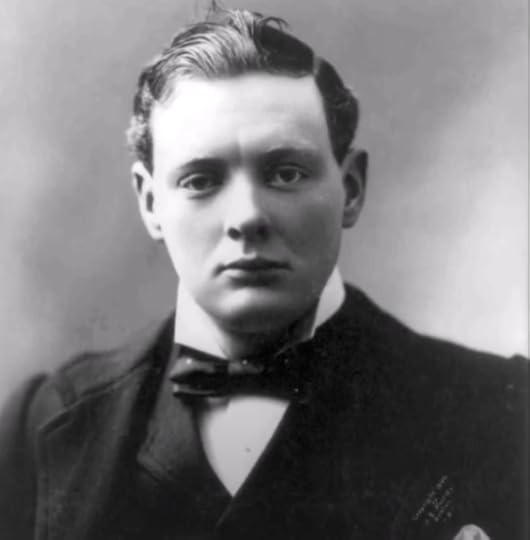
David Irving present a wealth of hitherto suppressed information, that shows a shockingly unfamiliar portrait of the great statesman, Churchill. Readers will discover a power-hungry leader who prolonged the war to advance his own career, and much more to astonish one and all.
David John Cawdell Irving is an English author who has written on the military and political history of World War II, especially Nazi Germany. He was found to be a Holocaust denier in a UK court in 2000 as a result of a failed libel case.
Irving's works include The Destruction of Dresden (1963), Hitler's War (1977), Churchill's War (1987) and Goebbels: Mastermind of the Third Reich (1996). In his works, he argued that Adolf Hitler did not know of the extermination of Jews, or, if he did, he opposed it. Though Irving's negationist claims and views of German war crimes in World War II (and Hitler's responsibility for them) were never taken seriously by mainstream historians, he was once recognised for his knowledge of Nazi Germany and his ability to unearth new historical documents, which he held closely but stated were fully supportive of his conclusions. His 1964 book The Mare's Nest about Germany's V-weapons campaign of 1944-45 was praised for its deep research but criticised for minimising Nazi slave labour programmes.
By the late 1980s, Irving had placed himself outside the mainstream of the study of history, and had begun to turn from "'soft-core' to 'hard-core' Holocaust denial", possibly influenced by the 1988 trial of Holocaust denier Ernst Zündel. That trial, and his reading of the pseudoscientific Leuchter report, led him to openly espouse Holocaust denial, specifically denying that Jews were murdered by gassing at the Auschwitz concentration camp.
Irving's reputation as a historian was further discredited in 2000, when, in the course of an unsuccessful libel case he filed against the American historian Deborah Lipstadt and Penguin Books, High Court Judge Charles Gray determined in his ruling that Irving willfully misrepresented historical evidence to promote Holocaust denial and whitewash the Nazis, a view shared by many prominent historians. The English court found that Irving was an active Holocaust denier, antisemite and racist, who "for his own ideological reasons persistently and deliberately misrepresented and manipulated historical evidence". In addition, the court found that Irving's books had distorted the history of Hitler's role in the Holocaust to depict Hitler in a favourable light.
David Irving has brilliantly presented the facts about the so-called Greatest Statesman of the 20th Century. An arrogant, liar, and drunkard politician who dragged Britain into the war that lost her empire. But why did David Irving finished the book at the start of Hitler's attack on Russia I can not understand. While everyone talks about the Holocaust and the crimes of the Nazis, no one talks about the crimes of the British. In 1943, almost 4 million Indians died of hunger due to the policies of Winston Churchill. During the devastating Bengal famine, it was the abominable Churchill who refused to divert food grain produced by Indians to save starving Indians. Churchill hated Indians. His hostility toward Indians has long been documented. At a War Cabinet meeting, he blamed the Indians themselves for the famine, saying they “breed like rabbits”. His attitude toward Indians may be summed up in his words: “I hate Indians. They are a beastly people with a beastly religion.”
If someone reading this goes to his library in a hundred years' time and takes down this book he will confirm that this is one of the great historical books and the author the most brilliant and honest of these times. All of this man's books carry the courage of honesty with human political bias that is anathema to this writer. Mr. Irving is so far above most historians in his honesty and attention to detail that, after reading any other opus on this topic, one is left with more annoying questions than answers. Never mind his stupid superior attitude, that of an annoying sibling that one feels like kicking in the backside and telling him to cop on, his diligent independence in most things carry him through to a masterpiece of historical writing. Those who jail and persecute those of a caliber of Mr. Irving, never mind the politics, have already condemned their descendants.
I've met David Irving twice when he was lecturing in America, and was immediately impressed with his knowledge and warm manner of lecturing and erudition. I happily bought Hitler's War from him, and started reading this, immediately impressed with his historical study of a man he claims destroyed the British empire, yet Irving also shows his regard for Churchill's depth of character and colorful, irascible nature. The volume covers WWII up to Hitler's invasion of Russia, and shows how much of the British blunders and tactical missteps were Churchill's doing, and Irving captures much unknown information about Churchill before the war, when he was out of power, disliked, and looking for some way to achieve greatness. As Churchill said, his greatest friend…was events. The man's massive ego, his enormous tastes, family troubles and political maneuvering are all brilliantly captured, and furthermore, for a 575 page book, reads very fast. Irving has a wonderful style, and is often witty and funny. As one man told people when Churchill made a lecture tour of America, 'His tastes are very simple: he is easy to please with the best of everything.' Churchill quotations, like 'Give me the facts, and I will twist them the way I want to suit my arguments,' and 'The Japanese are our relentless enemies. And the Americans are our unrelenting creditors,' show the brutal nature of life and war, politics, and offers interesting insights on Roosevelt and Churchill…far more rounded then the usual bonhomie of good, true allies as we've always been taught. It's a rough, devious, and glorious story of Winston and a decisive, tragic era in world and European affairs. I can't wait to dive into volume two. I was quire satisfied with Irving's work.
an evil libel of a great man from a very evil traitor to Britain who is obsessed with Dresden but care nothing for the 40 000 British men, women and children who were murdered by the Nazis in the Blitz
Read both volumes quite a number of years ago and came to the solid conclusion that Sir Winston was a pompous, drunken twit born with a privileged British silver spoon up the rear admiral.
A brilliant fly on the wall warts and all look at Winston Churchill's WW2 double dealing, screwing and getting screwed (particular by FDR) all to win the war and unsuccessfully save the British empire then go broke doing it. I have no opinion on David Irving as a person but as a historian he captures the behind the scenes manoeverings eloquently with enough authentic references to match or better any other similar tome. A very entertaining read.
"Oscar Wilde's friend and consort Lord Alfred Douglas published one scurrilous pamphlet in 1923 alleging that on behalf of a 'Jewish syndicate' including a friend, Sir Ernest Cassel, Churchill had issued a false communiqué on the Battle of Jutland in return for a £40,000 cut of their stock market killing. Churchill had his Lordship jailed for criminal libel."
The dark side of a British hero. Bold author David.
I never liked Churchill and after reading this it is impossible to. Irving supplies dates, quotes, etc. to paint the picture of a career opportunist that would betray everyone to have his way.
Fantastic read. David Irving is truly a master historian. The sources are prime and the reader feels like he is really learning something of value, unseen in other “historians’ “ books.
Churchill is definitely painted as war monger. A brilliant man, with a lot of flaws. The Empire is gone with the war.
I read Vol.1 right before the Russian invasion of Ukraine, thereby making the lessons taught by this book extremely relevant to the actions conducted by NATO and the West in response to the crisis. Churchill was an extraordinarily self-driven and hardworking man with a special way with words (oratory and on paper). After many failures involving WWI and the India Question, he resurrected his entire political career through force of will (and financial backers) by attacking Nazi Germany. This included making many unsubstantiated claims concerning German armament and foreign policy claims, as Irving meticulously demonstrates through his many sources previously undisclosed before the publication of this lengthy tome.
For 600 pages, Irving effectively makes the case that Churchill, compared to the post-war neoliberal consensus depiction as a hero (see the film "Darkest Hour" for this portrayal at its most sycophantic), was simply just a warmonger who ran an atrocious campaign against his great enemy once Hitler invaded Poland. This volume details Churchill's mistakes from 39-41, ranging from Narvik, Dunkirk, Mers-El-Kebir, Blitzkreig, Greece, etc.
Some people may say that sacrificing the British Empire and all those lives was worth it since the enemy was the Nazis. While the shoah certainly makes Churchill an honorable man in hindsight, this volume demonstrates that Churchill's primary motivation was the extreme anti-German sentiment that was common at the time (as shown by his usage of the slur "Huns" many times during the war). While Churchill did invoke charges of antisemitism against Hitler in some of his speeches, considering the discriminatory attitudes of some of his closest associates like Professor Lindemann, I can't say that Churchill put Ashkenazi liberation on the top of his to-do list.
One revealing quote about Churchill's ideological views comes from pg. 391 during a discussion with King George. The King feels that Russia (USSR) would eventually be the biggest threat against Russia. But Churchill and his associates disagree, stating that Russia could be "organized." As history would later prove, Churchill would be entirely wrong when he sold out the entirety of Eastern Europe in 1945. The West's unconditional support for the USSR (who committed even deadlier genocides) during these years over Nazi Germany makes little sense, especially considering that Hitler never wanted to invade Britain.
It seems that the West has never bothered to learn from the mistakes they made during WWII. Getting involved in a conflict they had no skin in, only served to make matters worse. The US funding of the Mujahideen, later leading to 9/11, is only one other example of the mistake. The Churchill cult among Neo-Conservatives makes perfect sense after reading this book.
While Irving's account is undoubtedly as biased and ideological as any other, he doesn't fail to clarify that Churchill was extremely hardworking and dedicated to his job, even while the rest of his country was falling apart. As NATO is scrambling to figure out what to do as Ukraine has recently been invaded, maybe it is best that our leaders are amateurish and lack the leadership Churchill possessed, lest they lead the West into another moralistic crusade which would only cause further issues down the line.
Some issues I had with this book are the overwhelming number of details and names Irving included. This made the first 200 pages a very slow read, as I would constantly need to backtrack to remember who was who. On the other hand, this was also the first account I've read about Britain in WWII, so maybe I just lacked the prior knowledge that Irving expected his readers to possess.
Knowing Irving's extremely controversial background, this will not be the only Churchill biography I will read. While Irving makes no mention of the Holocaust in this volume, the historian Richard Evans makes a fair point that Irving's entire corpus is tainted by the statements he made. This is something everyone should keep in the back of their mind when reading this book. Please let me know if anyone has recommendations on any reviews or books that critique Irving's particular thesis on Churchill.
A very interesting account of Winston Churchill's politicking during the early years of the Second World War. The author's research is prodigious, though, as he employs endnotes rather than footnotes, it is difficult for readers of the PDF version to check his use of the sources.
Using, as usual, primary sources, Irving portrays Churchill with more warts than in the usual biography. Irving’s Churchill was a man of great charm, wit and eloquence, but also of overweening ambition and prone to unsound judgement. The book’s most controversial argument is that Britain would have been better off to make peace with Germany in 1940; in fact, it should not have made the guarantee to Poland that caused it to declare war in 1939. Churchill’s opposition to Hitler and appeasement was not strictly disinterested; he rode the issue to get back into power. The book ends in June 1941 with Germany’s invasion of Russia. The story continues in volume two.
I am currently reading David Irving's 'Churchill's War - Vol 1. I guess I should have started with Hitler's War or True Himmler (two of his most controversial works). I am half way through CW V1 and it is a very detailed book and gives you a different and unique outlook on Churchill. I am reading Mr Irving's works, partly because of the controversy surrounding the Irving trail in the early 2000's. I am a supporter of freedom of speech and freedom within academia. Also as a Jew I find it interesting to hear the 'otherside'. I may not agree with his narrative on how events unfolded but it is still interesting nevertheless.
Rich in interesting, little know facts, but it is a sluggish read. Sometimes you get a feeling that chapters are superfluous because every page talks about different events anyway. Overall still good if you can get through it.