

What do you think?

Ancient Mesopotamia: Life in the Cradle of Civilization
When we imagine what life might have been like thousands of years in the past, the images we often conjure are primitive ones: reed and mud huts or plain brick dwellings, cooking pits, villagers, and simple farms. That was indeed what life was like in the earliest settlements, but by 5,000 years ago, life in some places had become much more sophisticated than we might think. Impressive achievements - like stepped temples that towered like mountains, elaborate palaces (some with bathrooms and plumbing), and complex houses - were also a part of life for people who lived in cities that arose thousands of years ago, particularly in the fertile region that emerged along the Tigris and Euphrates Rivers.
Welcome to Mesopotamia, the ancient name for the region that is now Iraq, a remarkably advanced civilization that flourished for two-thirds of the time that civilization has existed on Earth. Mesopotamians mastered irrigation agriculture; built the first complex urban societies; developed writing, literature, and law; and united vast regions through warfare and diplomacy. While civilizations like Greece and Rome have an unbroken tradition of written histories, the rich history of Mesopotamia has only been recently rediscovered, thanks to the decipherment of Mesopotamia's cuneiform writing less than 200 years ago. In this 24-lecture course taught by Professor Podany, you'll fill in the blanks of your historical understanding as you witness a whole new world opening before your eyes.
Riveting stories about kings and priestesses as well as ordinary people from all walks of life transport you back in time, giving you invaluable insights into the history of a landmark region that has long been known as the cradle of civilization.
Welcome to Mesopotamia, the ancient name for the region that is now Iraq, a remarkably advanced civilization that flourished for two-thirds of the time that civilization has existed on Earth. Mesopotamians mastered irrigation agriculture; built the first complex urban societies; developed writing, literature, and law; and united vast regions through warfare and diplomacy. While civilizations like Greece and Rome have an unbroken tradition of written histories, the rich history of Mesopotamia has only been recently rediscovered, thanks to the decipherment of Mesopotamia's cuneiform writing less than 200 years ago. In this 24-lecture course taught by Professor Podany, you'll fill in the blanks of your historical understanding as you witness a whole new world opening before your eyes.
Riveting stories about kings and priestesses as well as ordinary people from all walks of life transport you back in time, giving you invaluable insights into the history of a landmark region that has long been known as the cradle of civilization.
12 pages, Audible Audio
First published April 27, 2018
About the author
Amanda H. Podany
11 books122 followersDr. AMANDA H. PODANY is a historian and author specializing in the study of the ancient Near East, and a professor emeritus of history at Cal Poly Pomona. She has written several books on ancient Near Eastern history for a wide readership, most recently the critically acclaimed Weavers, Scribes, and Kings: A New History of the Ancient Near East (Oxford UP, 2022). In the book she recounts more than 3,000 years of history through the eyes of people of all walks of life: rich and poor, female and male, young and old. She is also the narrator of the audiobook version, available from Audible.
Podany's other books include The Ancient Near East: A Very Short Introduction (Oxford UP, 2014), Brotherhood of Kings: How International Relations Shaped the Ancient Near East (Oxford UP, 2010), and The Land of Hana: Kings, Chronology, and Scribal Tradition (CDL Press, 2002). The Land of Hana pertains to Podany's scholarly research (also discussed in many articles), which focuses on Syria in the second millennium BCE, with attention to chronology, scribal practice, international relations, and kingship.
She has a particular interest in making recent findings in her field accessible to a wider audience and, in that spirit, co-wrote (with Marni McGee) a book for young adult readers called The Ancient Near Eastern World (Oxford UP, 2004). She is also the author and presenter of a 24-part series of lectures for Wondrium/Great Courses called Ancient Mesopotamia: Life in the Cradle of Civilization (also available on Audible). She has been the recipient of a research award from the NEH and received the Norris and Carol Hundley Award from the American Historical Association for her book, Brotherhood of Kings. Recently, Weavers, Scribes, and Kings was selected as a finalist for a PROSE award from the Association of American Publishers. Podany received her MA in archaeology of Western Asia from the Institute of Archaeology, University of London, and her PhD in history of the Ancient Near East from UCLA. She was also the original bass player for the band that became the Bangles.
Podany's other books include The Ancient Near East: A Very Short Introduction (Oxford UP, 2014), Brotherhood of Kings: How International Relations Shaped the Ancient Near East (Oxford UP, 2010), and The Land of Hana: Kings, Chronology, and Scribal Tradition (CDL Press, 2002). The Land of Hana pertains to Podany's scholarly research (also discussed in many articles), which focuses on Syria in the second millennium BCE, with attention to chronology, scribal practice, international relations, and kingship.
She has a particular interest in making recent findings in her field accessible to a wider audience and, in that spirit, co-wrote (with Marni McGee) a book for young adult readers called The Ancient Near Eastern World (Oxford UP, 2004). She is also the author and presenter of a 24-part series of lectures for Wondrium/Great Courses called Ancient Mesopotamia: Life in the Cradle of Civilization (also available on Audible). She has been the recipient of a research award from the NEH and received the Norris and Carol Hundley Award from the American Historical Association for her book, Brotherhood of Kings. Recently, Weavers, Scribes, and Kings was selected as a finalist for a PROSE award from the Association of American Publishers. Podany received her MA in archaeology of Western Asia from the Institute of Archaeology, University of London, and her PhD in history of the Ancient Near East from UCLA. She was also the original bass player for the band that became the Bangles.
Ratings & Reviews
Friends & Following
Create a free account to discover what your friends think of this book!
Community Reviews
Displaying 1 - 30 of 84 reviews

November 16, 2024
As of right now, this is what we think of as our oldest civilization.
Now, who knows what archaeologists will unearth someday that will turn everything on its head? But no matter what happens in the future, the fact remains that we have quite a bit of juicy stuff to show us how things progressed in Mesopotamia.
There is a TON of great information in this lecture but below are a few things that jumped out to me as cool.
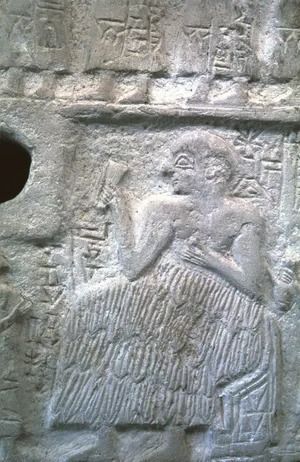
Podany starts off with ancient-ancient Mesopotamia and covers a bit of what they can gather from bones or seed pods or whatever else they've found.
Get this: it seems as though farming wasn't necessarily something people jumped at, as it appears that the whole hunter/gather thing was a bit easier and healthier. Kind of like home computers, the idea took a while to catch on because people just couldn't see the immediate need for it.
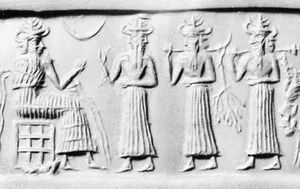
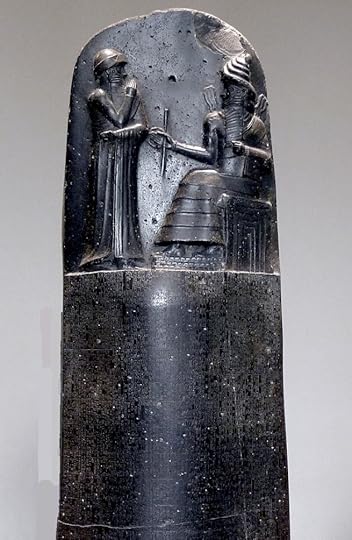
Again, there's a ton of information in this but (of course) I particularly enjoyed learning what it seems Hammurabi's laws actually were, in the sense that it appears that he didn't come up with any of it, but he was the guy who had the existing laws/codes put onto tablets.
I also thought it interesting that one of the ways to find out if someone had committed a crime (like adultery) was to submit to a river ordeal. The gods would protect them if they were telling the truth, and drown them if they were lying. So if they survived being tossed in a river, then they were telling the truth.
And no, they apparently weren't tied up and tossed in, they were just tossed in and supposed to swim to shore. And yes, they could swim.
What Podany said was that most guilty people didn't even bother with the trial, they would just go ahead and admit guilt because the belief in the gods was so complete and ingrained in their heads that even if they could swim, they truly believed the gods would drown them for lying.
So really it was kind of like an ancient lie-detector test.
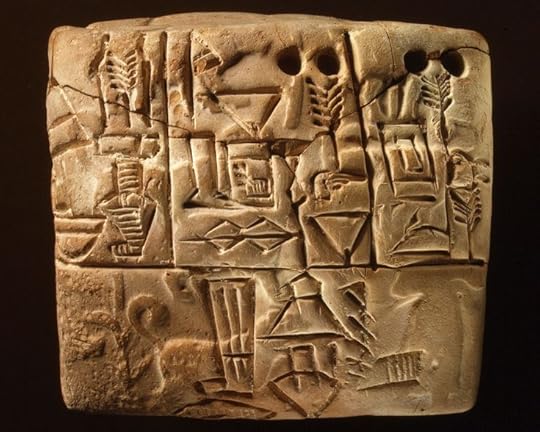
This doesn't even scrape the surface of what all she covers in this lecture, and I had a fantastic time listening to her.
Oh! And I almost forgot to mention that Podany could have been a Bangle as she played with the band in college and was/is high school BFFs with the guitarist Vicki Petersson in high school.
Highly Recommended.
Now, who knows what archaeologists will unearth someday that will turn everything on its head? But no matter what happens in the future, the fact remains that we have quite a bit of juicy stuff to show us how things progressed in Mesopotamia.
There is a TON of great information in this lecture but below are a few things that jumped out to me as cool.
Podany starts off with ancient-ancient Mesopotamia and covers a bit of what they can gather from bones or seed pods or whatever else they've found.
Get this: it seems as though farming wasn't necessarily something people jumped at, as it appears that the whole hunter/gather thing was a bit easier and healthier. Kind of like home computers, the idea took a while to catch on because people just couldn't see the immediate need for it.
Again, there's a ton of information in this but (of course) I particularly enjoyed learning what it seems Hammurabi's laws actually were, in the sense that it appears that he didn't come up with any of it, but he was the guy who had the existing laws/codes put onto tablets.
I also thought it interesting that one of the ways to find out if someone had committed a crime (like adultery) was to submit to a river ordeal. The gods would protect them if they were telling the truth, and drown them if they were lying. So if they survived being tossed in a river, then they were telling the truth.
And no, they apparently weren't tied up and tossed in, they were just tossed in and supposed to swim to shore. And yes, they could swim.
What Podany said was that most guilty people didn't even bother with the trial, they would just go ahead and admit guilt because the belief in the gods was so complete and ingrained in their heads that even if they could swim, they truly believed the gods would drown them for lying.
So really it was kind of like an ancient lie-detector test.
This doesn't even scrape the surface of what all she covers in this lecture, and I had a fantastic time listening to her.
Oh! And I almost forgot to mention that Podany could have been a Bangle as she played with the band in college and was/is high school BFFs with the guitarist Vicki Petersson in high school.
Highly Recommended.

December 5, 2024
I don't know the average quality of the Great Courses, but this is very solid. Amanda Podany is an expert in the history of ancient Mesopotamia. This syllabus gives a very comprehensive overview of the political evolution, the culture and daily life, and also pays attention to the many uncertainties and gaps in our knowledge. Illustrations and maps make it a very useful whole. More in my History account on Goodreads: https://www.goodreads.com/review/show....

Read
December 18, 2024Almost everything Amanda H. Podany (California State University) publishes on Mesopotamia is more than solid. This is something special, not a monograph or synthesis work, but the syllabus for the Great Courses series on Mesopotamian history. Podany summarizes no less than 4 millennia of that history, in short, comprehensible overviews. All together impressively complete. And above all very didactic: Podany also explains the importance of very basic facts well, something you do not easily find in other overviews. Think for example of her observation that the world in ancient Mesopotamia was perceived as very chaotic and unpredictable, and that people there (as also in Egypt, India, China ...) deliberately created a social order to make that life more manageable and predictable; and that is in fact a very beautiful, pertinent description of the existential reason why civilizations arose.
A few minor points: the first millennium BCE gets much less attention, despite the fact that in that period the first real empires (Neo-Assyria, Neo-Babylonia, Persia) arose. And Podany gives a fair amount of attention to Biblical history, while that only took place on the margins of Mesopotamia, but also is very questionable from a strict historical point of view. Also, the bibliography is not very up-to-date, and it is striking that Podany has not included the most recent insights of ancient DNA research. Finally: that subtitle ("the cradle of Civilization"), I can't imagine she choose that, because it's not true at all: civilization did NOT spread from Mesopotamia to the rest of the world (there were several craddles)! But don't worry, this is a very useful and solid overview. (and it's a lot longer - 248 pages - than Goodreads here suggests).
A few minor points: the first millennium BCE gets much less attention, despite the fact that in that period the first real empires (Neo-Assyria, Neo-Babylonia, Persia) arose. And Podany gives a fair amount of attention to Biblical history, while that only took place on the margins of Mesopotamia, but also is very questionable from a strict historical point of view. Also, the bibliography is not very up-to-date, and it is striking that Podany has not included the most recent insights of ancient DNA research. Finally: that subtitle ("the cradle of Civilization"), I can't imagine she choose that, because it's not true at all: civilization did NOT spread from Mesopotamia to the rest of the world (there were several craddles)! But don't worry, this is a very useful and solid overview. (and it's a lot longer - 248 pages - than Goodreads here suggests).

October 10, 2020
My lecture tour of ancient cultures continues with Podany’s course on Ancient Mesopotamia. This is probably as good a place to start as any, if—like me—you have forgotten whatever you might have once known about this famous civilization. Podany is an engaging and intelligent guide, who clearly loves her field. In fact, I wish she had made her course quite a bit longer, since by the end I was left only partially satisfied.
Podany is a historian who specializes in reading cuneiform. This academic background had a notable effect on the content of these lectures, steering her towards some topics and away from others. For example, Podany is very good on the subject of the Mesopotamian legal system, as she takes us through court documents and pronouncements of laws. Likewise, she is on sure footing when discussing the Epic of Gilgamesh and international diplomacy (as it was conducted through letters).
But this course is much weaker on the subject that interested me most—the arts. After all, my visits to museums with Mesopotamian art are what ignited my interest in Mesopotamia in the first place, so it was disappointing that, for example, Podany does not even mention the Standard of Ur. The perspective of an archaeologist is also lacking; I came away with only a vague sense of the major sites. And I might add, as my own hobbyhorse, that Podany ought to have spent much more time on Mesopotamian science and mathematics, which reached an impressive level of sophistication.
Even with these shortcomings, I found the course enjoyable and enlightening. I suppose I will just have to read more about this ancient civilization.
Podany is a historian who specializes in reading cuneiform. This academic background had a notable effect on the content of these lectures, steering her towards some topics and away from others. For example, Podany is very good on the subject of the Mesopotamian legal system, as she takes us through court documents and pronouncements of laws. Likewise, she is on sure footing when discussing the Epic of Gilgamesh and international diplomacy (as it was conducted through letters).
But this course is much weaker on the subject that interested me most—the arts. After all, my visits to museums with Mesopotamian art are what ignited my interest in Mesopotamia in the first place, so it was disappointing that, for example, Podany does not even mention the Standard of Ur. The perspective of an archaeologist is also lacking; I came away with only a vague sense of the major sites. And I might add, as my own hobbyhorse, that Podany ought to have spent much more time on Mesopotamian science and mathematics, which reached an impressive level of sophistication.
Even with these shortcomings, I found the course enjoyable and enlightening. I suppose I will just have to read more about this ancient civilization.

August 16, 2019
I was a bit sceptical at first about lecture series being sold as an audiobook, as I have done online courses and felt that the visual aids were a key part. However actually this is a brilliant way to hear the lecture series and worked really well as a history *book*. There is an accompanying PDF which has some of the pictures described which was also helpful.
The lectures themselves are entertaining and informative and cover ancient Mesopotamia up to the end of the Babylonian empire. It's fascinating how much has survived on tablets and how much more may be discovered.
The lectures themselves are entertaining and informative and cover ancient Mesopotamia up to the end of the Babylonian empire. It's fascinating how much has survived on tablets and how much more may be discovered.

December 13, 2018
Mesopotamia offers a unique opportunity to examine and discover its history through the over 250,000 tablets of cuneiform texts that are still being recovered. These clay tablets give a remarkably clear picture of the evolution of actual urban societies in the area that is occupied by present-day Iraq. I had no idea that such a resource existed!
These texts reveal glimpses of everyday life as well as the histories of kings and kingdoms, battles, famines, laws and trade agreements and religious dogmas and practices. And, the civilized world's first adventure story...long before Homer's Troy. And to think that all these texts have only been deciphered since the 19th century, thanks to the Behistun inscription.
The good professor systematically pieces together the 3500 (or so) year history of this land between the rivers, showing how we humans progressed from the hunter-gatherers we were, since nearly 12,000 BCE to the first cities around 4,000 BCE (thanks to Zargon...one of the best names for a king...ever). The history lectures extend from there up to the 6th century BCE when Cyrus and his band of Persian lackeys finally took over Babylon...thank you very much. There are the familiar names like Hammurabi, Ashurbanipal and Nebuchadnezzar...and unfamiliar ones like Tushratta, Enheduanna and Sin-leqe-unnini.
And then there was Gilgamesh... Sin-leqe-unnini's greatest creation. This, the first real adventure story, is a fascinating tale that looks deeply into the hopes and aspirations of a man seeking his destiny. (I'll try to find a complete and modern prose translation just for fun).
Dr Podnay ends her very clear and well-organized lecture with a nice quote from The Epic of Gilgamesh, as he is seeking the secret of immortality, gets some advice from an inn keeper, that goes something like this:
As for you, Gilgamesh, let your belly be full,
Make merry day and night.
Of each day make a feast of rejoicing.
Day and night dance and play!
Let your garments be sparkling fresh,
Your head be washed; bathe in water.
Pay heed to a little one that holds on to your hand,
Let a spouse delight in your bosom.
Would that we all tried to live up to these words...spoken over 4000 years ago! I can't wait for the movie.
Highly recommended...during a sale and a coupon that could save you several minas maybe even a talent!
These texts reveal glimpses of everyday life as well as the histories of kings and kingdoms, battles, famines, laws and trade agreements and religious dogmas and practices. And, the civilized world's first adventure story...long before Homer's Troy. And to think that all these texts have only been deciphered since the 19th century, thanks to the Behistun inscription.
The good professor systematically pieces together the 3500 (or so) year history of this land between the rivers, showing how we humans progressed from the hunter-gatherers we were, since nearly 12,000 BCE to the first cities around 4,000 BCE (thanks to Zargon...one of the best names for a king...ever). The history lectures extend from there up to the 6th century BCE when Cyrus and his band of Persian lackeys finally took over Babylon...thank you very much. There are the familiar names like Hammurabi, Ashurbanipal and Nebuchadnezzar...and unfamiliar ones like Tushratta, Enheduanna and Sin-leqe-unnini.
And then there was Gilgamesh... Sin-leqe-unnini's greatest creation. This, the first real adventure story, is a fascinating tale that looks deeply into the hopes and aspirations of a man seeking his destiny. (I'll try to find a complete and modern prose translation just for fun).
Dr Podnay ends her very clear and well-organized lecture with a nice quote from The Epic of Gilgamesh, as he is seeking the secret of immortality, gets some advice from an inn keeper, that goes something like this:
As for you, Gilgamesh, let your belly be full,
Make merry day and night.
Of each day make a feast of rejoicing.
Day and night dance and play!
Let your garments be sparkling fresh,
Your head be washed; bathe in water.
Pay heed to a little one that holds on to your hand,
Let a spouse delight in your bosom.
Would that we all tried to live up to these words...spoken over 4000 years ago! I can't wait for the movie.
Highly recommended...during a sale and a coupon that could save you several minas maybe even a talent!

October 11, 2022
A Bit Too Short to Cover Topic In-Depth, But Good Intro
I was always interested in the ancient civilizations of the Near East, but had never taken time to explore till I saw this audiobook available in the free Plus Catalog on Audible and thought I'd give it a go. Since Prof Podany is a historian and expert in cuneiform, as opposed to archaeology, there is a strong focus on extracting the details of Sumerian, Akkadian, Babylonian, and Assyrian civilizations through the huge number of clay tablets they have left behind. Unfortunately, many of those are purely administrative records of trading transactions, legal judgements, wedding contracts (had no idea these went back 5,000 years!), and a host of letters exchanged between the kings of those civilizations. While the latter do give more insight into the actual thoughts and concerns of the upper classes (and there is plenty of bombast and self-promotion contained therein), we don't get nearly the level of insight as we have into the Greek and Roman cultures that are so thoroughly documented. That is hardly the fault of the author, she just has to extrapolate a lot of insight through a very small straw. And it shouldn't be a surprise either considering the incredible age of these civilizations, who are matched only by the Egyptians in terms of development. Still, a fascinating glimpse into a very different world, especially their unwavering belief in their gods as an integral part of daily life and social structure.
I was always interested in the ancient civilizations of the Near East, but had never taken time to explore till I saw this audiobook available in the free Plus Catalog on Audible and thought I'd give it a go. Since Prof Podany is a historian and expert in cuneiform, as opposed to archaeology, there is a strong focus on extracting the details of Sumerian, Akkadian, Babylonian, and Assyrian civilizations through the huge number of clay tablets they have left behind. Unfortunately, many of those are purely administrative records of trading transactions, legal judgements, wedding contracts (had no idea these went back 5,000 years!), and a host of letters exchanged between the kings of those civilizations. While the latter do give more insight into the actual thoughts and concerns of the upper classes (and there is plenty of bombast and self-promotion contained therein), we don't get nearly the level of insight as we have into the Greek and Roman cultures that are so thoroughly documented. That is hardly the fault of the author, she just has to extrapolate a lot of insight through a very small straw. And it shouldn't be a surprise either considering the incredible age of these civilizations, who are matched only by the Egyptians in terms of development. Still, a fascinating glimpse into a very different world, especially their unwavering belief in their gods as an integral part of daily life and social structure.

May 13, 2021
I very much enjoyed this. It was super great content.
For some reason (probably because my previous course was an archaeology one) I was surprised? that the lecturer was a historian and not an archaeologist. Which like. buddy. All of the history courses you have listened to have been taught by historians. That's the plan.
And! and! Finally a great courses lecture that I wanted to listen to was taught by a woman! Remarkable! Amazing! Progress!
For some reason (probably because my previous course was an archaeology one) I was surprised? that the lecturer was a historian and not an archaeologist. Which like. buddy. All of the history courses you have listened to have been taught by historians. That's the plan.
And! and! Finally a great courses lecture that I wanted to listen to was taught by a woman! Remarkable! Amazing! Progress!

August 24, 2019
Wow, Professor Podany sure breathes life into this period of history. Fascinating stuff! I will be re-listening to all 24 lectures again, because it's so packed with interesting details. Highly recommended to anyone curious about the cultures and long rich history of Mesopotamia.

January 19, 2020
If you are into ancient history, interested in Mesopotamia, but you are not an expert in the area, this is a great all around course. Performance by the author is excellent throughout the course and the areas covered, economy, religion, armies, arts, relationships, are all well described.
NB: this review is for the audiobook version
NB: this review is for the audiobook version

July 30, 2026
A very informative and interesting series of lectures on Ancient Mesopotamia from a leading scholar of it. She reads all these documents she translated and makes it all be as alive as possible. Considering.

April 10, 2024
Detailed course on the rulers, kingdoms, and people of early Mesopotamia by an expert in the field.

September 25, 2025
I think we need to start writing records on clay tablets again. And also ~SOCIETYYYYYY~ coming to a dank river valley near you

July 3, 2022
A very good book but only if you a really interested in the subject.
November 22, 2020
Professor is as knowledgeable and as skillful a presenter as anyone you’ll find on the Great Courses, but as others have noted it is too short. The course is better on social, family and political life (as a native of the Middle East it was eerie how much of it seemed familiar apart from all the polytheism) than it is on mythology, the arts and the sciences. It also felt rather rushed towards the end. You will learn a lot and you will be entertained, but it does feel like an opportunity was missed to craft a longer, more in-depth course.

August 30, 2022
A very educational and easy to follow introduction to mesopotamian History. Though it mostly just focuses on the grander scheme of the mesopotamian world and empires, it does give some fair time to the day to day life aspects of the Normal people.
But I'd mostly conclude that it's a jumping off point rather than a comprehensive lecture series
But I'd mostly conclude that it's a jumping off point rather than a comprehensive lecture series

May 26, 2026
This was much more in depth than I expected, as opposed to a sweeping overview. Mesopotamia isn't my area of expertise at all so I learned quite a bit

July 23, 2024
Enjoyable summary but her areas of focus weren’t that gripping to me.

January 11, 2020
Ancient Mesopotamia has always fascinated me, and I enjoyed this series of lectures from Professor Podany. She traces the civilizations of the Levant from the earliest Natufian cultures to the end of the Neo-Babylonian empire, a period that spans 3,000 years. Each lecture is focused on a specific period, and Podany presents the material in an engaging, conversational manner. She is less concerned with chronology, which results in gaps in the narrative. This is my only criticism – at times it seems like cities, empires, and people just spring into existence or suddenly disappear. Otherwise it is another excellent Great Courses series, and I appreciate that Podany brings attention to one of history’s most important, but frequently overlooked, eras.

August 18, 2021
I learned a lot about Mesopotamians from these lectures. It was very interesting. Some things I learned...
- We still use the time system that the Mesopotamians used thousands of years ago. They found 60 was divisible by many numbers and it worked for time. Our time and math is full of divisions of 60.
- Kings were usually illiterate because they have better things to do than read
- Barbers were advisors to kings
- Names for kings in ancient Sumerian are Lugau, which means Big Man
- Early writing couldn't record names of people, so they wrote other words to make names. For example, my name is Rachel. Draw a ray of sunshine and then draw hell. RAY HELL. You got it!
Anyway, that is a small smidgen of what I learned.
- We still use the time system that the Mesopotamians used thousands of years ago. They found 60 was divisible by many numbers and it worked for time. Our time and math is full of divisions of 60.
- Kings were usually illiterate because they have better things to do than read
- Barbers were advisors to kings
- Names for kings in ancient Sumerian are Lugau, which means Big Man
- Early writing couldn't record names of people, so they wrote other words to make names. For example, my name is Rachel. Draw a ray of sunshine and then draw hell. RAY HELL. You got it!
Anyway, that is a small smidgen of what I learned.
August 22, 2022
Great course to kindle your interest in Ancient Mesopotamia. It goes through all the major periods and focuses a lot on the surviving literature since the professor is able to read the ancient script and therefore is very knowledgeable about the literature.

August 20, 2018
Innmari spennande og informativ!

September 23, 2018
Always fun to step into the ANE for a while.

December 28, 2018
Very informative and never dull.

January 31, 2020
My main man suppiluliuma is back! And ashurbanipal. Kick ass names and a fascinating subject told well by someone who clearly loves it.

August 3, 2020
Narrator had the same accent as Deanna Troi.

March 19, 2021
Considering this course is worth hundreds of dollars, 1 Audible credit is an absolute steal. Great overview of the ANE, and well worth the credit.
Read
July 4, 2024Trying not to cry every time Neo-Babylonian Empire is conquered by Cyrus the Great and the world's oldest civilizations get consigned to the dusts of history
The Mesopotamians are a fascinating bunch. I mean, they are one of a very few civilizations to fully invent themselves from nothing, just coming straight out of hunter gatherer lifestyle, and amongst this hallowed company, they are both the oldest and the one from which western civilization traces its roots. That's Romans, Greeks, even the Middle East and Persians. Basically everyone cool you know from history bar Egypt and the Far East. First farms, first cities, first laws, first kings, first temples, first state religions, first empires, first beer, first writing, first maths, first literature .They really set the stage for everything that was to come. It's just so cool to imagine people coming basically out of the mud and building, for the very first time, all this familiar stuff. Can you imagine what a city must have been like, when it was the first city ever?
Of course, over the course of 3000 years from cities to being conquered, they slowly morphed from trailblazers to a more orthodox ancient civilization, as everyone else caught up. Not to say they didn't continue to innovate, with the world's biggest cities and largest empires, but the represent the whole transition from prehistory to basically the founding of Rome (in fact, as prehistory just means the time before written records, they by definition ended it!).
This is a good introduction / overview of the broad sweeps of the period. The chapters are a nice mix of in depth cases (e.g. drilling into the reign of one particular guy, or the case of two princesses who didn't like their marriages) and more general "the Assyrian empire in 30 minutes) kind of pieces. Overall a nice listen, and read by the author which in this case is a nice plus, her enthusiasm really comes across.
PS:
I can confidently say this is the only audiobook I've listened to opens a chapter like:
*cue dramatic music*
LECTURE 3: NEOLITHIC TRADE, FARMING AND POTTERY
*music crescendos*
I wish we all had that kind of hype you know?
The Mesopotamians are a fascinating bunch. I mean, they are one of a very few civilizations to fully invent themselves from nothing, just coming straight out of hunter gatherer lifestyle, and amongst this hallowed company, they are both the oldest and the one from which western civilization traces its roots. That's Romans, Greeks, even the Middle East and Persians. Basically everyone cool you know from history bar Egypt and the Far East. First farms, first cities, first laws, first kings, first temples, first state religions, first empires, first beer, first writing, first maths, first literature .They really set the stage for everything that was to come. It's just so cool to imagine people coming basically out of the mud and building, for the very first time, all this familiar stuff. Can you imagine what a city must have been like, when it was the first city ever?
Of course, over the course of 3000 years from cities to being conquered, they slowly morphed from trailblazers to a more orthodox ancient civilization, as everyone else caught up. Not to say they didn't continue to innovate, with the world's biggest cities and largest empires, but the represent the whole transition from prehistory to basically the founding of Rome (in fact, as prehistory just means the time before written records, they by definition ended it!).
This is a good introduction / overview of the broad sweeps of the period. The chapters are a nice mix of in depth cases (e.g. drilling into the reign of one particular guy, or the case of two princesses who didn't like their marriages) and more general "the Assyrian empire in 30 minutes) kind of pieces. Overall a nice listen, and read by the author which in this case is a nice plus, her enthusiasm really comes across.
PS:
I can confidently say this is the only audiobook I've listened to opens a chapter like:
*cue dramatic music*
LECTURE 3: NEOLITHIC TRADE, FARMING AND POTTERY
*music crescendos*
I wish we all had that kind of hype you know?

December 14, 2022
Ancient Mesopotamia covers the area which is roughly equivalent to today’s Iraq, where the Tigris and the Euphrates rivers form a fertile area. In this Great Course, of 24 thirty minute lectures, Professor Amanda H. Podany describes the history of the earliest civilizations, beginning about 12,000 years ago.
Most of what we know about Mesopotamia is recent and mainly comes from archaeological excavations. Those excavations are ongoing so we are learning more all of the time from newly discovered documents. They were written with cuneiform characters pressed into clay tablets. These tablets can last a long time, especially if they are baked. They document the payment taxes, lists of items, laws, legal decisions, private letters, contracts and more.
These early people invented writing, created the first cities, studied astronomy, and developed the first laws and math rules.
Podany comments that every empire eventually ends, and thus this area went through many empires. Hammurabi was one of the kings and he gave us the series of laws for which he is known. Gilgamesh was written during this period. Religion was important; the people generally accepted all of the gods that were worshipped by people around them.
Eventually the Assyrians conquered the area and then they fell to the Babylonians. Podney refers to biblical history during this period. She ends her lectures with the death of Nebuchadnezzar II and the Persian take over of Babylon by Cyrus the Great in 539 BCE.
Podany has a pleasant voice and her interest in this period is infectious. She also brings her personal excitement in excavations. Her information was mostly new and challenging. I would like to listen to this audio course again in a few years.
Most of what we know about Mesopotamia is recent and mainly comes from archaeological excavations. Those excavations are ongoing so we are learning more all of the time from newly discovered documents. They were written with cuneiform characters pressed into clay tablets. These tablets can last a long time, especially if they are baked. They document the payment taxes, lists of items, laws, legal decisions, private letters, contracts and more.
These early people invented writing, created the first cities, studied astronomy, and developed the first laws and math rules.
Podany comments that every empire eventually ends, and thus this area went through many empires. Hammurabi was one of the kings and he gave us the series of laws for which he is known. Gilgamesh was written during this period. Religion was important; the people generally accepted all of the gods that were worshipped by people around them.
Eventually the Assyrians conquered the area and then they fell to the Babylonians. Podney refers to biblical history during this period. She ends her lectures with the death of Nebuchadnezzar II and the Persian take over of Babylon by Cyrus the Great in 539 BCE.
Podany has a pleasant voice and her interest in this period is infectious. She also brings her personal excitement in excavations. Her information was mostly new and challenging. I would like to listen to this audio course again in a few years.

November 29, 2022
Following the lectures presented in Human Prehistory and the First Civilizations, I decided to do some researching on Ancient Mesopotamia. I started with Ancient Assyria: A Very Short Introduction and Between the Rivers: The History of Ancient Mesopotamia, and followed with this course. This course did a phenomenal job of covering the history of Mesopotamia, the history, food, religions, languages, and cultures. This was absolutely fascinating. I will follow these lectures with The Epic of Gilgamesh, and Origins of Great Ancient Civilizations. Then I will begin reading on Ancient Egypt. This journey through ancient cultures has been extremely rewarding. This course is a great way to begin learning of the first great civilizations in Mesopotamia.
Displaying 1 - 30 of 84 reviews