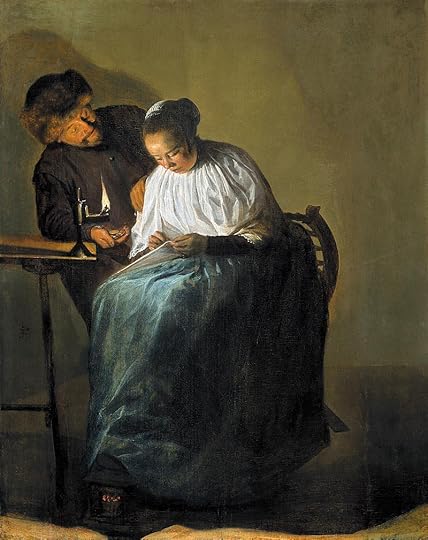
Judith is a painter, dodging the law and whispers of murder to become the first woman admitted to the prestigious Haarlem artist’s guild. Maria is a Catholic in a country where the faith is banned, hoping to absolve her sins by recovering a lost saint’s relic.
Both women’s destinies will be shaped by their ambitions, running counter to the city’s most powerful men, whose own plans spell disaster. A vivid portrait of a remarkable artist, A Light of Her Own is a richly-woven story of grit against the backdrop of Rembrandts and repressive religious rule.
* I would like to thank the Author, the Publisher and Netgalley for providing me generously with ARC in exchange for my honest review.* A Light of Her Own is a most beautiful novel about a Dutch artist, Judith Leyster, who lived in the 17th century and was probably the first female painter to have been admitted to the Guild. The novel is absolutely amazing for several reasons. To begin with, while reading I could visualize paintings in the style of the Dutch school, sometimes two or three sentences, sometimes a paragraph prompted descriptions of beautiful scenes of everyday life in street market or indoors, with most important aspect: the light and the colours. Another reason for my liking this novel massively was the detailed desrciption of a life of a painter in the town of Haarlem, problems, techniques, customs and traditions and religious dilemmas. Carrie Callagham did a thorough research into Dutch Masters and the novels takes us as close to them and times as possible. And one other thing, the background: the houses, clothes, hairstyles, food - they are perfectly presented by the Author. Reading A Light of Her Own was like looking at the paintings which could have been created by Dutch artists of the 17th century. The novel was an amazing surprise for me as I have been interested in the Dutch Masters for some years now and it complemeted my interests perfectly. A highly recommendable read!
”It was a wicked and wild wind Blew down the doors to let me in Shattered windows and the sound of drums People couldn't believe what I'd become” -- Viva la Vida, Coldplay, Songwriters: Christopher A. J. Martin / Guy Rupert Berryman / Jonathan Mark Buckland / William Champion
“As music is the poetry of sound, so is painting the poetry of sight.” James McNeil Whistler
”Judith leaned against the small window ledge and looked inside. The frigid twilight air seeped past her cloak into her many layers of tunics and her well-worn bodice, and the painted ledge below her numb fingertips had dulled to the gray of a low sky. Behind the glass, the inn’s golden light beckoned, and though it was not yet suppertime, already drinkers dressed in shades of brown sat at small tables. Her teeth chattered with cold and nerves.”
It is February of 1633 as this story begins, and Judith Leyster has trusted a painting of hers to a man who is inside, to offer to sell this painting to those gathered. She was not, at that time, a member of the Guild, but in time she would become one of the first two women to attain master status in the Haarlem artist’s guild. On that evening, as she waited to receive the coins from her painting that would not come, it would have seemed like an impossible dream.
At the age of thirteen, she was apprenticed to Frans de Grebber. Ten years have passed since she began her apprenticeship, and she is not allowed to sell her art without achieving master status. It is not an easy road for a female, few have tried, none had yet been chosen. That does not mean that de Grebber does not believe in her, he does, but she will have to convince more people than just de Grebber.
Judith shares this story with Maria, the daughter of de Grebber, around her own age, and an artist-in-training, as well. But Maria is more devoted to her religion, to the Catholic Church and its teachings, which have been banned there. There are other characters, but primarily this is a story of the art world, the lives of female artists, or women who were trying to become formally recognized as artists, in the Haarlem artist guild.
The writing is often lovely, the story is set in a time when any woman trying to create a path of her own was not only difficult, but often put them in a dangerous position. Callaghan’s attention to detail really has a transporting effect, and I felt and saw it all as I was reading this. The atmosphere of the streets reminded me, a bit, of the descriptive writing in Jessie Burton’s The Miniaturist, which I enjoyed, but I would have to say that I enjoyed this a bit more.
Three hundred and eighty-five years have passed since Judith’s dreams of becoming an acknowledged artist came true, and yet, even with that recognition bestowed upon her, she would never, in her lifetime, achieve the status of her male peers.
Pub Date: 13 NOV 2018
Many thanks for the ARC provided by Amberjack Publishing
"The purpose of art is washing the dust of daily life off our souls." (Pablo Picasso)
Haarlem, Holland in February of 1633 is wrapped in the frigidity of brisk winds and icy streets. Judith Leyster peers on tiptoe through the smudged window of the rowdy tavern. She can hardly bend her frozen fingers, but she knows that she will readily feel the weight of a few coins in her outstretched hand. Judith waits anxiously for Lachine, a shady Frenchman, who has promised to sell one of her paintings to a patron. No Lachine. No coins.
Judith heads back to the workshop of Frans de Grebber. Frans is an art master who has apprenticed the twenty-three year old since she was thirteen. Judith and her younger brother, Abraham, have been on their own since their parents left the city banished with heavy debt. Judith shares a tiny room with Frans' daughter, Maria, a fellow artist. Both young women experience the solid walls of rejection for females who pursue the arts during this time period. Opportunities are few.
Judith's giftedness is stoked with the flames of persistence. It is this internal fire that eventually lights the way for Judith to become a member of the St. Luke Artists' Guild and later she reaches the level of master status. But none of this comes easily.
Carrie Callaghan presents a story rich in detail of the lives of two female artists living in a profession dominated by men. Haarlem provides an environment of ruthlessness and cunning as we will experience throughout these pages. Callaghan has quite the talent for imbuing her storyline with the sounds, the cadence, and the muddied surroundings of the city's crowded streets. Her characters shift back and forth from the lowliness of street dwellers to the loftiness of master artists. We feel the renowned presence of Rembrandt van Rijn and Johannes Vermeer.
A Light of Her Own has the flavor of Girl With A Pearl Earring by Tracy Chevalier. But Carrie Callaghan creates a grittier atmosphere for Judith and Maria. I was delighted to find that a self-portrait of Judith Leyster can be found in the National Gallery of Art in Washington, D.C.. Although a debut novel for Callaghan, the richness of the prose will certainly link her to even greater experiences in the future.
I received a copy of this book through NetGalley for an honest review. My thanks to Amberjack Publishing and to Carrie Callaghan for the opportunity.
In 1633 Judith Leyster was admitted to the Haarlem Guild. The first and only female to attain this status. Judith Leyster is known to be the greatest female painter in history.
Even with small accounts of Judith Leyster’s life in existence the author has created a beautiful story around this outstanding female artist. The book reveals the struggles and obstacles faced by Judith as a woman of this time trying to pursue a career, to have her own apprentices and to be able to sell her paintings. The Guild to which she attained recognition was the controlling body for artists. Being admitted to the Guild would give an artist status, although there was still a pecking order depending on fame and those fameless would still struggle to make a living. Judith has a strong and fearless personality and seems to have boundless energy. She has a close friend Maria that as a teenage apprentice she shares a room with. Maria is the daughter of her employer and the complete opposite to that of Judith. The times are of the strong Protestant Church with those of the Roman Catholic Church having to hide their worship practices. Maria is a strong Catholic, Judith seems to be a non believer and while she doesn’t understand Maria’s religious obsessions she shows empathy to her friend who is a close to her as a sister. Judith’s family has left town owing money leaving two of their children behind, (Judith) and a son, Abraham who appears to live his life similar to his parents. The author has written parallel stories, the main one of Judith but the other one of Maria who has her own complex issues and through fate has her own misadventure. The descriptions of the environment and the towns with window boxes of flowers give the story added colour whilst the descriptions of everyday life and struggles, the polluted waters of the waterways and canals remind the reader that this was also a time of high infant deaths and when death through even minor sickness due to lack of hygiene and primitive medical practices was just around the corner.
While I enjoy biographical fiction with well-known figures, I'm also drawn to portraits of lesser-known women, especially when written as artfully as Carrie Callaghan has done with Judith Leyster, a Dutch painter who hasn't always been given her full due, her work often credited to others. Vividly rendered, Judith's story is one of loyalty, independence, and finding her place in a world dominated by male artists like Rembrandt and Molenaer. Throughout, Judith has an unrelenting focus and often grapples with ambition, influencing both her undoing and her redemption. I feel fortunate to have met Judith Leyster through Carrie Callaghan’s well-crafted words.
A female painter in Holland in the age of the old masters? Fantasy?
Actually, historical fiction based on the (admittedly thin) evidence of one such woman, Judith. She was apprenticed to a well-known painter and roommates with his daughter, also an apprentice. She was also just as ambitious (maybe more so?) as the male apprentices around her. Would this fly in Haarlem in 1633? You will have to read it to find out!
I loved this book. It had plenty of detail about the domestic and city scenes and the material aspects of oil painting. The characters felt real to me, and there was just enough plot to hold my interest. I read it on Kindle and looked forward to my next opportunity to read more.
Highly recommended for those interested in art, historical fiction, women's lives in other times and places.
With thanks to Amberjack Publishing and NetGalley for an ARC in exchange for my honest review.
Judith Leyster (1609-1660) was a Dutch Golden Age painter. She was one of the first two women to be admitted to the prestigious Haarlem artist’s guild as it is not clear who was the first woman (some sources point to Sara van Baalbergen). “She was the only woman who attained master status and operated her own workshop in the city at that time. (…) The limited contemporary documentation on her life makes it difficult to know much about her training and career.”
“Judith likely studied in Frans de Grebber’s workshop – quite possibly because he had a daughter a few years older who also painted.” Therefore, the author invented the friendship between Judith and Maria.
The story starts with Judith being apprenticed at Frans de Grebber, where she is best friends with his daughter Maria. At the age of 24, she dreams about having her own workshop, working on her own commissions, but she cannot do this unless she is a member of the guild. She applies to be admitted to the artist’s guild as she dreams of being an accomplished artist. Her ambition leads her to gaining the title of the master, which allows her to host apprentices in her own studio, which is a potential source of income.
On the other hand, Maria under her father’s wing could have had an easier path to becoming an accomplished artist. But her heart is not in painting, but in devotion to God.
I was confused about Maria’s story. I understand the point of her devotion in a country where the faith is banned to reflect religious situation of the time period. But this didn’t enrich the story, rather made it confusing. The pages given to Maria in this book should have been used solely on Judith’s story.
Judith’s story in this book concentrates on her struggle of attaining the title and having her own workshop as a woman in a world controlled by men. Through her struggle, the author skillfully presents the rules of the Guild. Only in the epilogue, it is mentioned her marriage to Jan Miense Molenaer, an artist himself and their five children. This in any way does not undermine the story. The concentration of the story on the struggle is an excellent approach.
This is a very evocative telling of life in 17th century Netherlands, for the female members of families in the Artists Guilds. Talent is not enough to merit training for Maria, though she shares a room with her father's female apprentice Judith Leyster. Both are already grown women in their twenties, but around them young painters have become masters at a younger age. At last both of them take decisive steps into the world on their own, Judith taking illicit commissions to afford her master's fee, Maria traveling to Leiden in search of a missing Guild artifact. But the road forward is fraught with daily perils not encountered by the male artists. And despite managing to set up her own workshop and apprenticeships, Judith walks a fine line, one group demanding three times the talent, and the other chastising her for putting her art before ties of friends and family. Even when she helps to save her dear friend Maria's life, Maria interprets it in a spirit of betrayal.
In the end, the first and only female master of the Haarlem School would give up painting for marriage to a fellow painter, using her energies to keep his books and only seldom turn out a canvas. Yet this was the age of expansion and the marriage was a happy one. Making history demanded stepping away from invisibility in order to pursue her ideal. It was a good idea to contrast her achievement with the life of her good friend, since talent does not happen only to brothers and not to sisters. How a person handles being gifted when society is not encouraging is interesting too.
Fans of Tracy Chevalier's Girl with a Pearl Earring will be delighted with Carrie Callaghan's debut novel, A Light of Her Own. The story focuses on the friendship between real-life 17th century Dutch artists, Judith Leyster and Marie de Grebber. Lyrical prose and engaging descriptions of Dutch life and the artmaking process made this book easy to escape into.
4.5 stars! This refreshing book gave me a good deal to think about while keeping me turning pages. The stars of the book are Judith and Maria, though there are a number of other well known painters making cameo appearances (and that’s always fun).
Imagine this: Judith Leyster, woman painter in Haarlem, was actually admitted to the city’s art guild in 1635. What hardships did she have in pursuing her work, and do they compare to the hardships that professional women face today? In what ways does she pay for her desire to be treated equally? Calaghan’s debut novel made me think through my own professional career over the last twenty plus years. Judith fought each inch of the way to live by her brush; this still rings true today.
Also, her relationships with family and friends, such as that with Maria, don’t actually make her efforts easier. For example, though Judith and Maria basically grew up together, they’ve grown apart and don’t know how to find their way back to their friendship. Basically that desire, though there for both, takes a lower place to the other desires of their hearts, as our friendships so often do. I enjoyed watching the ebb and flow of this friendship to its conclusion in the book. Maria was the harder of the two characters to relate to (for me), due to her crushing guilt over everything-everything, but she felt also very true, historically speaking, and I enjoyed rooting for her to stand tall and shed the guilt cloak.
Now what was different for me about this book (that I really enjoyed) is that—though there was a love interest or two—that is certainly not the point of the novel. The focal point is truly about two women trying to live (or find) their dreams in a man’s word. Also the world and art came alive with the descriptions. Great job, Carrie! Highly recommend.
OH—one more weird life thing. My maiden name is Snelling. This is the first book I’ve ever read that ever had that name in it. Family lore says it’s a “black Dutch” name. Also, that Grandad’s branch were descendants of William of Orange (female who didn’t inherit, in America before the Civil War). Grandad’s middle name is Orange so 🤷🏻♀️ maybe? Anyway, it was fun to read a book with both those names in it, placed in the right part of the word. 😎
This is a historical fiction about the first woman to attain master status in painting. She also owned her own shop. This woman was Judith Leyster. I found this book very interesting and informative. I had no idea a woman was up there with all the great painters. Amazing! By no means was it easy for her. The book points out a time when a painting was discovered as hers, a females, the price went down. Whereas if it had been a male painter, the price would have been higher. Talk about discrimination. Of course this was in the 1600's. It's a great book. Loved the storyline. It portrays her as being selfish. Only about her painting, but I choose to consider her as strong, driven and especially brave!
Callaghan's thoughtful prose creates a richly detailed novel that feels relevant despite taking place nearly 400 years ago. The struggles experienced by Judith feel eerily similar to the battles that women fight today in largely male dominated arenas. I appreciate Callaghan's desire to give attention to a lesser known historical figure. A great book to curl up with on a fall evening with a cup of tea!
All the artists, writers, musicians, philosophers, sages, inventors we will never know, because they were female... when we pause to consider what how history has been overwritten and rewritten by those who hold the swords, it's like the pain of a phantom limb. Into this void writes debut novelist Carrie Callaghan, inspired by an historical footnote of two women, one held aloft by ambition, the other by faith.
Rendering 17th century Holland with gorgeous, vivid detail, Callaghan offers the story of Judith Leyster, the first woman painter to be offered a place in the prestigious Haarlem Artist's Guild, and Maria, whose religious fervor sends her on a harrowing journey. From the thinnest threads of anecdotes, she weaves a rich tapestry of ambition and passion, art and commerce in a time and place where Rembrandt and his painter contemporaries changed the way we viewed the world. Knowing that some of these contemporaries were women is the grace and integrity of historical fiction, reminding us that the stories we hold as facts are often missing volumes of truth. A lovely, elegant read.
A wonderfully painted tale of the imagined life of Judith Leyster. An artist in the Dutch golden age, Leyster was one of the only women awarded master status in the Guild. This novel seeks to highlight what set her apart from other female painters of the age. Woven together with intrigue and daring, this story is different from other depictions of artists a la Girl With The Pearl Earring or similar prose. Carrie Callaghan deftly sketches a many-sided and adroit portrait of Leyster as well as her more well-known contemporaries. Written from a female point of view, it was refreshing and new to see and also easier to relate to for me than some of the other writings in the same genre. Pick it up! Highly recommend.
This ebook was provided by NetGalley in exchange for an honest review.
Thank you Netgalley and Amberjack Publishing for the ARC.
A Light of Her Own follows the lives of two young Dutch woman in a time of religious conflict. Haarlem 1633, city of Frans Hals and other Old Masters. Painter Frans de Grebber is Maria's father and Judith Leyster his apprentice. The girls have been friends for years, even though one is protestant and one catholic. Maria needs to atone for an incident in her past and leaves home to recover an old relic for her father. We get to see a bit of Leiden and The Hague as well. Meanwhile Judith longs to be a member of the painters guild running her own workshop. She achieves both, although being a woman doesn't make life easier. The story tells of friendship, love and loss. All quite calm even though it's filled with tons of everyday events. I enjoyed walking the city with the characters. The churches, the market, the laden carts, the canals, the smells, the dirt, the port and its merchants, but also the art world and the workings of the guild. Life is tough, poverty all around. It's hard to imagine those paintings now fetching at least six figures. As the story unfolds the girls are drifting apart, until a devastating event brings them back together. Beautiful descriptions of scenery throughout the book. I appreciate the author's afterword on Judith Leyster's life as an artist. Definitely a Leading Star for many woman in centuries to come.
A beautifully written story of Judith Leyster, the first and only woman of Her time admitted into the artist guild, St. Luke's. This story is so captivating and filled longing, angst and determination of a strong woman.
I came to this book expecting it to focus mainly on the story of Judith and her struggle to be accepted by the male-dominated Guilds who governed the art world of the time. I certainly got this and found her quest for independence and her determination to make the most of her artistic talent quite inspiring. The book also gave me a fascinating insight into the operation of the art market at the time: the power of the Guilds to control the activities of artists, such as setting up a workshop, employing apprentices and even selling completed works.
The reader is left in no doubt how central the act of creating art is to Judith’s existence: ‘Every time she painted, she fell a little in love with her subject, snared by the crevices and shadows and twitches that made the person. Painting meant focusing on the details, much like love. So each of her paintings became, in a way, an act of adoration.’ I really liked the way the author managed to convey Judith’s painterly eye for detail and composition, even as she goes about her daily tasks. To Judith, everything and everyone is a potential subject. ‘Judith looked over at Freija Woutersooz. […] As she spoke, her mouth was tremendously expressive, twitching and curling, but the rest of her expression was calm. There was something about the dichotomy that made Judith shiver. She had no idea how she would paint that woman.’ Judith even manages to diffuse a potentially hostile situation at one point through artistic means!
Alongside Judith’s story, the reader witnesses the experiences of her friend, Maria (although it’s speculation on the author’s part that they ever met in real life). Maria is also a talented painter but she is consumed by a sense of guilt about what she feels is her own sinful nature. It is this, rather than prejudice, that prevents Maria from making the most of her talent and in fact leads her to take a course of action which will endanger herself and, ultimately, present her friend Judith with a difficult moral choice. In addition, the author chooses to introduce a mystery element to the narrative, involving a sinister character and suggestions of corruption in high places…and maybe something worse.
Personally, I found Judith’s story sufficiently interesting without the need for the other story lines. I also believe a glossary (there wasn’t one in my advance reading copy) would be a useful addition to the book in order to explain some of the Dutch words used such as references to currency and measurements.
A Light of Her Own is an engaging story based on the life of a remarkable woman, Judith Leyster, who sought to challenge the social norms and prejudices of the time in order to fulfil her talent for painting. As the author admits in the Historical Notes section, there is limited contemporary documentation about Judith’s life so much of the book is necessarily a work of imagination on her part. I’ll admit that I had never heard of Judith Leyster before reading this book however, thanks to the author, I now know of Judith’s existence and her achievements. A Light of Her Own helps ensure that Judith’s life is no longer hidden in the darkness. (3.5 stars)
A LIGHT OF HER OWN is the story about two women. Judith is a painter, and the very first woman to be admitted to the prestigious Haarlem artist's guild. Her best friend Maria is the daughter of Frans de Grebber, who Judith learned painting from. Maria is also Catholic, living in a land where the faith is banned.
A favorite book (and movie) of mine is GIRL WITH A PEARL EARRING. So, guess I was intrigued when I learned about this book. About women painting in a time I thought there were just male painters. I just had to read the book. And, what an interesting story. Yes, this is a fictional story, but Judith Leyster really was admitted to the prestigious Haarlem artist's guild and it's not that far-fetched that she knew Maria. I greatly enjoyed reading about Maria and Judith in this a world with great religious antagonisms, not to mention a world where women painters was an anomaly. Another thing that I quite enjoyed was that the scheme initiated by Haarlem's powerful men that will affect both Maria and Judith's lives.
I quite enjoyed this book and this is definitely a book to read if you are interested in art or just want a well-written historical fiction.
Haarlem, Holland, City of the Netherlands, 1633. The birthplace of Dutch Golden Age painting.
Art, religious conflict, friendships, poverty and fighting for ones own place within society as ambitions are squelched at every turn, are just some of the descriptive strengths within this story.
Two woman, Judith and Maria have been friends for years and each of their lives are beginning to change in ways that neither of them will be ready for, all the while being under the somewhat watchful eye of Maria's father, Frans De Grebber.
Judith Leyster, has a dream..... one that no woman has dared consider in trying to make come true yet alone fight for, no matter the iron hand of the male dominated art world, by becoming the first woman of the St. Luke Artist Guild and the possibility of running her own artists workshop.
Then we have Maria, trying with all her might to make restitution for an incident of her past. She finds herself spinning in the uncertainty of how to right that wrong as the grit and callousness of the cobbled streets, beyond the studio walls, take her hostage in a despicable attack which she holds deep within as to not bring shame to the house; the house of art and light.
A time when rejections are many and opportunities are few, the women of this story do whatever necessary to punch through the icy walls that bind and are unrelenting with their persistence of purpose.
This historical fiction novel is richly expressive and researched. The characters are well rounded, strong and authentic to the time period.
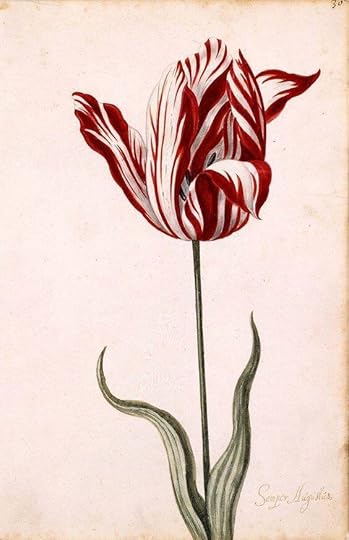
The artistic aspect is described beautifully as to it's technique, style and it's motivation; it will draw you in to the Dutch experience itself. Portraits and the introduction of a tulip, or two, are just some of the painted canvas offerings within this story.
Thank you Carrie Callaghan for bringing us this narrative of light and color in what was a very dark and depressing time of the 17th Century.
I'd like to thank NetGalley for this ARC copy in order that I may review before publication.
Judith Leyster was a painter who lived in 17th Century Holland, and one of the first females to be admitted to the famed Haarlem Guild of St. Luke. You can read my #bookreview of “A Light of Her Own” by Carrie Callaghan on my blog now, which is part of the Historical Fiction Virtual Blog Tours, where you can enter to win a copy of this fascinating book here. https://tcl-bookreviews.com/2018/11/1...
I love reading about women in history who have been ignored or forgotten, and Carrie Callaghan’s A LIGHT OF HER OWN fits the bill very well! This is the fascinating story of Dutch painter Judith Leyster, who was the only woman to attain master status and operate her own workshop in Haarlem, Holland in the early 17th century. Callaghan has done meticulous research on the art world of the era and on the little that is known about Leyster herself.
Judith’s struggle to establish herself as an artist in her own right in the male-dominated art world is compelling and believable. She is single-minded in her ambition, which sometimes makes her seem harsh or unfeeling, but women who break new ground for their sex have always been perceived this way, so that too is believable. The way Judith steels herself before business transactions by erasing any trace of softness from her expression and trying to look and sound authoritative, is especially poignant.
Callaghan’s writing style is clear and clean, and she brings the sounds, sights, and smells of 17th-century Holland to life. Later in the book there is also a little mystery and romance, which enrich the story. The only part of the novel I didn't find as compelling was Maria's story (Judith's friend). It was difficult to understand or relate to Maria, especially her very extreme religious views (despite being a "religious" person myself!). But I LOVED Judith!
This is an important novel about a woman who deserves to be better known!
This is the kind of slow-paced, absorbing book I like to read while sitting in front of a fire and drinking a glass of red wine. It took me immediately to 17th century Netherlands. I loved getting to know Judith. Considering how hard it is now for female artists to be accepted by the power brokers, it was even harder back in the 17th century. I enjoyed reading about her struggles, and I also enjoyed learning how hard it was to paint back in those days. They couldn't go and buy paints from the store like we do, but they had to grind them and mix them with oil--all before painting a thing. And artists had to do a long apprenticeship before they were accepted into the Guild. Only after Guild membership could they try to sell their paintings. Wow. That was fascinating.
I wasn't as happy with the character of Maria. She acted more like she was 13 rather than a decade older. I never could understand her lack of gratitude for what Judith did for her and her anger about their relationship. I think she could have either been sharpened or made less important.
In 1633 any woman with ambition was fighting a losing battle. Never mind ambition women did not seem to hold any position other than being daughters or wives and if neither worked it was a terrible life for any of them.
For Judith abandoned by her father and mother through circumstances of debt, her brother who was her only family now getting involved in shady activities, Judith with her ambition of being an artist and becoming a member of the Guild had ambitions far beyond the usual woman of the time. With hardly any money to set herself up, she was nevertheless determined to do so.
The story of Judith's endeavours despite immense hardship, obstacles and sheer pig headedness of men around her was a tough read. It is factually true according to the author in several instances and an artist of this name did live and have her own workshop in Holland at the time. The story was intense and Judith was blessed with common sense and a sense of diplomacy to know when it was enough.
Judith upto now lived with a master guildsman and his daughter both artists in their own right but Maria had problems of her own. She would have been treated accordingly today but no one knew of her mental suffering and torment she underwent. Judith had to balance her life between being a friend to Maria and her ambition about her art on the other. It did not always balance evenly.
Judith Leyton works hard and does whatever is needed to be admitted to the Artists Guild. As the only woman, she must overcome prejudice and disdain as she fights to prove she is as worthy as any man.
I found this to be a fascinating fictional look into a time period I know little about. The author did a phenomenal job of bringing the setting to life in her narrative. The day to day aspects of what this artist !at have had to deal with made the story more real.
On the other hand, we have Maria, the daughter of the artist who trained Judith. The author went with the premise that these two would have been friends. However, I found the chapters devotes to what Maria was dealing with uninteresting. No doubt she had her own trials, but it felt as though her story took away from Judith’s.
Overall, it is an excellent historical telling of a gifted artist. I would recommend it to readers with an appreciation for art.
I received a free copy from Netgalley and all opinions expressed are my own.
In 1633 a woman wants to be recognized as an artist in the restricted male scene of the Netherlands, but she must act very carefully to follow the rules. She struggles with money problems and a missing brother, also. Her best friend, a Catholic who works in a leper charity, wants to help solve the corruption problem in the male-dominated world of guild artists.
Judith Leyster was the eighth daughter of brewer and weaver Jan Willemszoon, who in 1624 declared bankruptcy. Judith was perhaps a pupil of Frans de Grebber, Frans Hals, and Jan Miense Molenaer. Already at eighteen she was cited in a text concerning culture in Haarlem, and her first work dated back to 1629. In 1633 she became a member of the Guild of Saint Luke of the city. She devoted herself mainly to painting portraits and subjects of genre, representing scenes of people having fun in the tavern or playing: very popular themes in that historical period. Despite the popularity achieved in life, Judith Leyster was soon forgotten after death. But in 1893, it was discovered that a painting, purchased from the Louvre Museum, presented, hidden under a false signature by Frans Hals, her characteristic monogram, consisting of the initials JL with a five-pointed star beside it.
I always appreciate when an author tries to weave a historical plot, stuffing it with really existent persons, like Hals and Copernicus. The author's writing is very good, linear and descriptive at the right point. In addition, we see that the author has done a great job of research and documentation to better describe the life of the painter and her world, the Flanders of the golden age of Dutch painting. Nevertheless, the reading experience was almost a torture. There are beautiful traits in which objects and people are described (they then become subjects of the paintings), but there are also numerous sections in which nothing happens. And this is a pity, because the author had a great start.
I really liked the relationship between Judith and Maria. Her character was very fascinating and I think it was well done. Unfortunately, I lost interest in her discussions with Judith and herself.
I admit it, from the second half of the book I completely lost interest in the story. At the end, the characters did not convince me, they did not excite me. They did not interest me. I continued to read without passion and, after two weeks, I finally finished the book. I can say that I’m happy to have read a book set in the seventeenth century, but it was a labor of Hercules.
Probably if I had read it in a chilling moment of my life I would have liked more. It has all the characteristics of a good historical novel, but lacks a fundamental one: attracting attention and maintaining it.
*However, I thank Netgalley and the publisher for sending me a free digital copy of the book.*
Carrie Callaghan’s A Light of her Own is a newly released historical novel that was inspired by the life and art of the 17th century Dutch painter, Judith Leyster. It’s the story of two girls, friends whose dreams and beliefs lead them along different paths. Through life’s challenges as well as the hurts they cause each other, Judith and Maria deal with their newly adult lives as best as they can.
Callaghan uses fact, conjecture and credible fiction to share Judith Leyster’s struggle to gain the respect and acceptance of the members of the local St. Luke’s Guild. Maria’s story is mostly independent of Judith’s but does eventually find relevance. Themes of human imperfection and forgiveness are well-executed, and cast a reflective light on our own lives.
I particularly appreciate Callaghan’s use of the senses to reinforce the status of the various neighborhoods. The sights, sounds and smells help carry the plot along, one misfortune at a time.
There’s much to be appreciated in this engaging and well-paced novel – the ordeals of a determined female artist, a thoroughly-challenged friendship, and a visit to the earliest days of Holland’s Golden Age. Any art or historical fiction enthusiast would surely enjoy it!
This historical fiction is well-written, thoroughly researched and offers fascinating details of the life of Dutch painter Judith Leyster. I was immediately drawn in because of my love of art, but that's not a prerequisite to enjoying this novel. It's got a great plot with some unexpected twists and turns, well-developed characters to care about and insight into human behavior. The main character is a strong and determined female in a male-dominated society, which of course impacts her relationships with others. Most of all, this is beautifully written. I tend to be a fast reader and made myself slow down to appreciate some of the phrasing and to savor the way the author sneaks in details and reveals emotions with her words.
In "A Light of Her Own," it's 1633 and Judith Leyster dreams of being admitted to the Haarlem artist's guild. Although this would be quite a feat for a woman, Judith isn't fazed. She is secure enough in her skill that she believes she is worthy of such an honor and will do what she must to realize this dream. Being able to get into the guild would have been an incredible boon for any artist, let alone a woman artist. I loved getting to know Judith on her journey through this book!
I have always liked Judith Leyster's self portrait, which hangs in the National Gallery of Art in Washington, D.C. Admittedly, the Dutch masters are not my favorite (I may struck with lightning with that disclosure, no?). So many of the portraits while realistic seem sort of dark and perhaps a bit drab to me. Leyster's self-portrait has a spark that makes the painting of her painting really interesting to me. She has a gleam in her eye and I thought that the author did a good job of capturing that light and that drive that shines through Leyster's paintings, particularly her self-portrait.
This book has so much going for it. You all know that I love historical fiction but I particularly love historical fiction when it includes art. I love the stories behind all of the paintings we know and love. I loved seeing Judith's story. She has to be very strategic throughout the book in order to follow her dreams in a time where women were supposed to be in the home. There is a great feminist theme present here, which is very much down my alley. I loved following her journey!
Another thing that I really liked in this book was the friendship between Judith and Maria. Both women are struggling with different problems but they are able to come together and support each other. This book had a very nice rumination on the importance of friendship. I thought the author did a good job of capturing the thoughts and feelings of both women.
Overall, this was a good book and a great debut! It will be such a treat for my fellow historical fiction lovers.
I love how historical fiction plucks once-famous figures out of obscurity and offers them to the modern world. Carrie Callaghan has done that with Judith Leyster in A Light of Her Own. In the 1600s, Leyster was the first female painter to be named a Dutch master. This beautifully-written novel is about Leyster's transition from student to master. I particularly enjoyed the contrast between Leyster's worldview and that of her good friend Maria, who is not as focused on her art. Unfortunately, in the years since Leyster's death, her work has been almost wholly attributed to men. With A Light of Her Own, Carrie Callaghan offers the modern world another ground-breaking female role model and helps affirm Leyster's legacy.