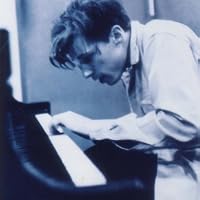
To me, an instrumentalist but not a pianist, the life of Glenn Gould, Canadian pianist, was always somewhat of a mystery. I read stories of his behavior, his withdrawal from the concert scene into almost mystical recording sessions, and his many sicknesses—or were they? Gould was a classic hypochondriac and cancelled concert events and recording events with increasing frequency as his career progressed. One of the reasons he loved the recording studio so much was because it allowed him sanctuary from the pressures of performing in public. Ostwald even conjectures at one point that Gould felt at war with his audiences who came to hear him make mistakes. Another was the fact that he was a perfectionist. Fortunately, for much of his recording career, he was also his own chief editor. An irony of this biography is that it was written in the last year of life of its author. Ostwald was suffering from cancer the entire last year and never got to read the finished product, even in proofs. It was Gould’s function as the first performer to take advantage of the new recording techniques of the 50s, 60 and 70s, dying in 1982 of a massive stroke, but in the process making his interpretations immortal. He lived long enough to record several of his more popular recordings in stereo with Dolby effects. In fact, it was his most famous second recording of the Goldberg Variations of Bach, that was an early Dolby best-seller for him and one of the last of his many projects. While famous primarily for his albums of Bach, Gould was a scholar of the moderns as well, Webern, Schoenberg and Alban Berg among them. It’s easy to concentrate on the idiosyncrasies of Glenn Gould because there were so many. His piano chair was made by his father and used so often the cushions wore out and Gould ended up hunched over the piano at eye level, sitting on the framework. His usual appearance was striking as he most often wore, even in summer, an overcoat, gloves, a scarf and hat and, not infrequently, galoshes. He had a concert routine that included warm soaking of his hands before playing and his diet was horrible. But his piano playing! He was technically brilliant, often taking tempi that mere mortals could not handle and, given his predilection for Bach, his skill at balancing all the voices in a fugue, for example, made the experience mystifying. To some critics, the balances were over-done, but if the word “contrapuntal” means “sounding together of melodies,” there could be no greater example of the equality of those melodies than those of Gould. The biography also notes Gould’s role as a conductor—limited but present—arranger, composer, actor, comic, writer and producer and, with a select few, bon vivant. He never married and his sex life is largely a mystery though he was not homosexual as many supposed, given his eccentricities. The subtitle of the biography is “The Ecstasy and Tragedy of Genius” and it was Ostwald’s opinion that many geniuses are infected with the tragic gene as well as the creative one. Certainly Gould did not live a “normal” life, even for a musician, but his contribution to music is undeniably one of genius. Even twenty years after its writing, the book stands as a monument to a rare and eccentric man whose main passion, recording, means he can be enjoyed for generations to come.