

What do you think?

Barsoom #8
Swords of Mars
This is #8 in the complete Martian Classic Series.
191 pages, Mass Market Paperback
First published January 1, 1935
About the author
Edgar Rice Burroughs
3,214 books2,806 followersEdgar Rice Burroughs was an American author, best known for his creation of the jungle hero Tarzan and the heroic John Carter, although he produced works in many genres.
Ratings & Reviews
Friends & Following
Create a free account to discover what your friends think of this book!
Community Reviews
Displaying 1 - 30 of 133 reviews

June 21, 2012
Arguably the last of the truly good Barsoom novels. John Carter is the narrator for the first time since Warlord, but this is more-or-less a standalone adventure, much in the template of the last few books -- a princess (Dejah Thoris in this case) is kidnapped and the hero has to rescue her in the course of a series of increasingly improbable adventures. This one begins in the city of Zodanga (which Carter conquered waaaaaaay back in Princess of Mars) before proceeding to more exotic climes, and offers a glimpse of the Barsoomian underworld. (In the framing story, ERB is reading a pulp story of gangsters & assassinations when John Carter pops back to Earth for a visit, and seeing his nephew's reading material inspires Carter to tell him the events of the story.)

May 22, 2026
⭐⭐⭐ Burroughs’ Imagination Still Carries the Adventure
By the eighth book in the Barsoom series, the formula is very easy to recognize. A calamity appears, someone touches or enters something they probably should have left alone, and the hero is pulled into another dangerous adventure across Mars. Swords of Mars follows that familiar pattern, and at this point, there is not much doubt that things will eventually resolve in the hero’s favor. Still, Edgar Rice Burroughs’ imagination continues to make these books enjoyable. Even when the structure feels predictable, the world itself remains strange, inventive, and full of energy.
The strongest part of the book is the world-building. Barsoom continues to feel immersive, and I am still impressed by the scope of Burroughs’ imagination nearly a century later. The inventions, contraptions, and scientific ideas in this book are especially fun, and some of them feel surprisingly forward-thinking for the time. That creativity is what keeps the adventure alive. The characters are fine, though not especially memorable, with Zanda standing out the most because of her vulnerability, her hatred toward John Carter, and the change in her heart by the end.
The main weakness is that the series structure has become repetitive. This is a classic Barsoom adventure, for better and worse. The familiar danger, journey, conflict, and resolution pattern is part of the charm, but it also limits the suspense because the reader knows the general shape of the story before it fully unfolds. Even so, the imaginative world-building offsets a lot of that repetition for me. This is not a book I would recommend as a starting point, but for readers already invested in Barsoom, Swords of Mars is a solid and enjoyable continuation of the series.
By the eighth book in the Barsoom series, the formula is very easy to recognize. A calamity appears, someone touches or enters something they probably should have left alone, and the hero is pulled into another dangerous adventure across Mars. Swords of Mars follows that familiar pattern, and at this point, there is not much doubt that things will eventually resolve in the hero’s favor. Still, Edgar Rice Burroughs’ imagination continues to make these books enjoyable. Even when the structure feels predictable, the world itself remains strange, inventive, and full of energy.
The strongest part of the book is the world-building. Barsoom continues to feel immersive, and I am still impressed by the scope of Burroughs’ imagination nearly a century later. The inventions, contraptions, and scientific ideas in this book are especially fun, and some of them feel surprisingly forward-thinking for the time. That creativity is what keeps the adventure alive. The characters are fine, though not especially memorable, with Zanda standing out the most because of her vulnerability, her hatred toward John Carter, and the change in her heart by the end.
The main weakness is that the series structure has become repetitive. This is a classic Barsoom adventure, for better and worse. The familiar danger, journey, conflict, and resolution pattern is part of the charm, but it also limits the suspense because the reader knows the general shape of the story before it fully unfolds. Even so, the imaginative world-building offsets a lot of that repetition for me. This is not a book I would recommend as a starting point, but for readers already invested in Barsoom, Swords of Mars is a solid and enjoyable continuation of the series.

March 10, 2023
John Carter returns as the main character! another great fast paced action packed book by the master of adventure. Great read. Very recommended

July 21, 2021
Loved this book!
Written in spare, focused, manly man style, not one word is wasted in getting to the action.
And there's a lot of action!
At less than 200 pages, Vandor aka John Carter climbs buildings, rescues maidens, fights assassins, commandeers a mind-controlled super-plane, is imprisoned in a dungeon, is captured by invisible enemies and much more. Exciting!
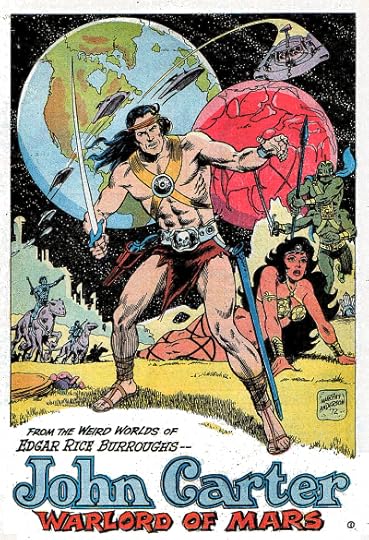
(courtesy http://famous-and-forgotten-fiction.com)
Here's the guy that wrote this:
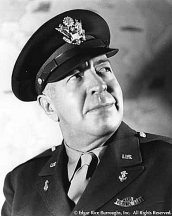
(courtesy http://www.tarzan.org/bio/)
I gather this is in the Pulp genre, but never having read Pulp or Burroughs for that matter, it's a great intro for me. My only regret is that I didn't start sooner!
Written in spare, focused, manly man style, not one word is wasted in getting to the action.
And there's a lot of action!
At less than 200 pages, Vandor aka John Carter climbs buildings, rescues maidens, fights assassins, commandeers a mind-controlled super-plane, is imprisoned in a dungeon, is captured by invisible enemies and much more. Exciting!
(courtesy http://famous-and-forgotten-fiction.com)
Here's the guy that wrote this:
(courtesy http://www.tarzan.org/bio/)
I gather this is in the Pulp genre, but never having read Pulp or Burroughs for that matter, it's a great intro for me. My only regret is that I didn't start sooner!

December 18, 2024
What fun! And a (mostly) return to form for Edgar Rice Burroughs.
John Carter is finally, after some years, the main character in a Barsoom novel. In Swords of Mars, he sneaks into the city of Zodanga, which was previously sacked by him and his Green Martian allies. The Guild of Assassins there who have been, well, assassinating people across Barsoom and uneasy political tensions are rising. So, John disguises himself as a Red Martian under the name of Vandor and sets off to find the two men at the root of the Guild and its internal struggles, two rival scientists Fal Sivas and Gal Nal. However, when John's wife Dejah Thoris is kidnapped by Gal Nal, things get personal. Along with a loyal padwar Jat Or and slave girl named Zanda with a grudge against John Carter for ruining her life, John will have to engage in subterfuge and good old fashion Barsoomian fights to get Dejah back.
While A Fighting Man of Mars was the most refreshing book in the Barsoom series, its length kind of weakened it (along with some other things). I just do not think that Burroughs, at least in this series, should write books over 200 pages. Yes, I know all these were stories initially serialized in magazines so he was probably going off word count instead, but you get my point. Burroughs' prose is fairly fast-paced, except when he gets down to technical details, and can be quick crisp and border on florid; that can all still be seen here, but thankfully this is a shorter book. There is some rushed things at the end, but overall it is a much tighter book than the previous ones. In addition to the length, the return of John's POV greatly aided this book. The previous main characters were not bad characters, but they were often too alike. John is very similar too, but he's a bit more ingenious than them and I'm just so used to his POV. I also enjoyed that this book takes us to Thuria (Phobos) one of the two moons of Mars. It was so fascinating to see what creatures and societies are there. Though it does grant some questions about the world-building. Did the people of Thuria come from Barsoom or have contact with them, but the jeddak/jeddara system of ruling is also in place there? I don't think there's ever an answer, but it does leave you head scratching for a second.
Burroughs also introduces (don't know if it was the first time ever in sci-fi literature at this point, but it was a first for Barsoom) the concept of a ship controlled by one's mind. There are some briefly suggested questions about how many can control it whether in succession or all at once and if it can become sentient itself. They aren't explored in-depth, but it was nice that Burroughs teased it all the way back in 1934-35. I quite like how the ship was utilized. It was not the central focus of the story, but still an important part of it.
Another thing I have to comment, something that Burroughs seemed to have improved on, is his descriptions of the technical details. I know I said above that it can slow his pacing down, but here he is much more briefer with it. Something he even just passes over it. Maybe somebody gave him a note during editing? I will say, however, there is one part of the book that I would like to have been not as brief. In about the middle of the book, when on Thuria, John encounters the jeddara Ozara. She's in love with John, because that's what happens with the women in this series, but he obviously rejects her because of his love for Dejah. She bargains with John that she'll help him free his friends that he'll take her back to her home country. After fighting in the castle on Thuria, escaping through the wild lands, and reuniting with his companions, it is very briefly explained near the end of the story that John and company just drop Ozara off in her country before the ship is mind-controlled back to Barsoom. There, John finds a note from Fal Sivas saying he's run away. They quickly find him and the other scientist who claim they've spirited Dejah away, but she quickly frees herself off page and reunites with John and one of the scientists dies. Additionally, what was also dissapointing was how quickly Zanda got over her hatred of John. She cited him as responsible for her father's death and her mother's suicide and longed to kill him. Off page, she becomes attracted to Jat Or and just suddenly forgives John. I really wish Burroughs would have explored this.
So, uh, hurray, I guess?
I mean, that was all quite quick. It was at the end of the book, so maybe Burroughs realized he was running out of time/pages. As an author who struggles at short fiction, I understand. But, it is a rushed ending. Like all the previous books, John befriends members of the other races and cities he visits. It's nice that Burroughs kept that.
A fun little story I managed to sneak in before Christmas!
John Carter is finally, after some years, the main character in a Barsoom novel. In Swords of Mars, he sneaks into the city of Zodanga, which was previously sacked by him and his Green Martian allies. The Guild of Assassins there who have been, well, assassinating people across Barsoom and uneasy political tensions are rising. So, John disguises himself as a Red Martian under the name of Vandor and sets off to find the two men at the root of the Guild and its internal struggles, two rival scientists Fal Sivas and Gal Nal. However, when John's wife Dejah Thoris is kidnapped by Gal Nal, things get personal. Along with a loyal padwar Jat Or and slave girl named Zanda with a grudge against John Carter for ruining her life, John will have to engage in subterfuge and good old fashion Barsoomian fights to get Dejah back.
While A Fighting Man of Mars was the most refreshing book in the Barsoom series, its length kind of weakened it (along with some other things). I just do not think that Burroughs, at least in this series, should write books over 200 pages. Yes, I know all these were stories initially serialized in magazines so he was probably going off word count instead, but you get my point. Burroughs' prose is fairly fast-paced, except when he gets down to technical details, and can be quick crisp and border on florid; that can all still be seen here, but thankfully this is a shorter book. There is some rushed things at the end, but overall it is a much tighter book than the previous ones. In addition to the length, the return of John's POV greatly aided this book. The previous main characters were not bad characters, but they were often too alike. John is very similar too, but he's a bit more ingenious than them and I'm just so used to his POV. I also enjoyed that this book takes us to Thuria (Phobos) one of the two moons of Mars. It was so fascinating to see what creatures and societies are there. Though it does grant some questions about the world-building. Did the people of Thuria come from Barsoom or have contact with them, but the jeddak/jeddara system of ruling is also in place there? I don't think there's ever an answer, but it does leave you head scratching for a second.
Burroughs also introduces (don't know if it was the first time ever in sci-fi literature at this point, but it was a first for Barsoom) the concept of a ship controlled by one's mind. There are some briefly suggested questions about how many can control it whether in succession or all at once and if it can become sentient itself. They aren't explored in-depth, but it was nice that Burroughs teased it all the way back in 1934-35. I quite like how the ship was utilized. It was not the central focus of the story, but still an important part of it.
Another thing I have to comment, something that Burroughs seemed to have improved on, is his descriptions of the technical details. I know I said above that it can slow his pacing down, but here he is much more briefer with it. Something he even just passes over it. Maybe somebody gave him a note during editing? I will say, however, there is one part of the book that I would like to have been not as brief. In about the middle of the book, when on Thuria, John encounters the jeddara Ozara. She's in love with John, because that's what happens with the women in this series, but he obviously rejects her because of his love for Dejah. She bargains with John that she'll help him free his friends that he'll take her back to her home country. After fighting in the castle on Thuria, escaping through the wild lands, and reuniting with his companions, it is very briefly explained near the end of the story that John and company just drop Ozara off in her country before the ship is mind-controlled back to Barsoom. There, John finds a note from Fal Sivas saying he's run away. They quickly find him and the other scientist who claim they've spirited Dejah away, but she quickly frees herself off page and reunites with John and one of the scientists dies. Additionally, what was also dissapointing was how quickly Zanda got over her hatred of John. She cited him as responsible for her father's death and her mother's suicide and longed to kill him. Off page, she becomes attracted to Jat Or and just suddenly forgives John. I really wish Burroughs would have explored this.
So, uh, hurray, I guess?
I mean, that was all quite quick. It was at the end of the book, so maybe Burroughs realized he was running out of time/pages. As an author who struggles at short fiction, I understand. But, it is a rushed ending. Like all the previous books, John befriends members of the other races and cities he visits. It's nice that Burroughs kept that.
A fun little story I managed to sneak in before Christmas!

June 17, 2016
I adore Burroughs' inability to write endings, honestly. It's so endearing.

July 20, 2025
Extended ERB Mars series read July 2025
And John Carter is back. In this episode of his Barsoom tales, he finally decides to do something about the Assassins guild on Barsoom that has been getting too powerful, and people are now afraid to cross them.
Travelling to the city state of Zedong in disguise , he gets a job as a warrior guard for a scientist in the city.
But this is no ordinary scientist and he realises he has stumbled into the domain of a mad but intelligent man who has created a “flyer” that can cross space to the two moons of Barsoom. Howver his new master is not the only scientist in the city working on this problem, his rival has now contracted the Assissions guild to kill John Carter’s new master.
However things get worse when John Carter discovers the other scientist and the head of the assassins are in league and have kidnapped Deja Thoris, John Carter’s wife and taken her to one of the moons of BArsoom.
With the aid of a loyal comrade along the way, Carter makes it to the main moon Thuiria, but is ambushed by invisible beings, and seems in even worse trouble.
However with the aid of one of the cat people of Thuvia, he learns to control his mind, so he can see and hear his captives, thus allowing him to work out a plan of escape for him and his comrades.
After adventures in nightmare forests and with the help of the Jeddara of the invisible people who happens to follow in love with John Carter, he eventually tracks down where his wife is, only to have the space flyer be taken from his control and transport them all back to Zedong in Barsoom.
Luckily things work out and rewarding his colleagues he and Dejah are united once again.
And John Carter is back. In this episode of his Barsoom tales, he finally decides to do something about the Assassins guild on Barsoom that has been getting too powerful, and people are now afraid to cross them.
Travelling to the city state of Zedong in disguise , he gets a job as a warrior guard for a scientist in the city.
But this is no ordinary scientist and he realises he has stumbled into the domain of a mad but intelligent man who has created a “flyer” that can cross space to the two moons of Barsoom. Howver his new master is not the only scientist in the city working on this problem, his rival has now contracted the Assissions guild to kill John Carter’s new master.
However things get worse when John Carter discovers the other scientist and the head of the assassins are in league and have kidnapped Deja Thoris, John Carter’s wife and taken her to one of the moons of BArsoom.
With the aid of a loyal comrade along the way, Carter makes it to the main moon Thuiria, but is ambushed by invisible beings, and seems in even worse trouble.
However with the aid of one of the cat people of Thuvia, he learns to control his mind, so he can see and hear his captives, thus allowing him to work out a plan of escape for him and his comrades.
After adventures in nightmare forests and with the help of the Jeddara of the invisible people who happens to follow in love with John Carter, he eventually tracks down where his wife is, only to have the space flyer be taken from his control and transport them all back to Zedong in Barsoom.
Luckily things work out and rewarding his colleagues he and Dejah are united once again.
March 13, 2012
In my mind, the best John Carter book. He's the main character in the first three books, and then functions as a King Arthur figure when he shows up afterwards - he wraps everything up after the main actors have already done everything. Perhaps Burroughs realized this, and wrote this one to make John Carter front and center again. Entirely successfully, I might add - Carter really drives the action even more than in the first trilogy. In this book, he's taking the fight to the assassins, instead of reacting to events. Really fun.
As always, predictable fun - this is, after all, pulp fiction (literally, as that's how these were written). I don't want to oversell this, but if you like this sort of thing, it's especially well done.
The only drawback is the ending. It's not that it's bad, it's just that it's a very quick summation. Better than the ending of "Thuvia, Maid of Mars," though, where the story just drops off at the brink of a world war that is never mentioned again. The ending of "Swords" is a complete, and satisfying, ending, even if it is abrupt. But otherwise, one of the best of the series.
As always, predictable fun - this is, after all, pulp fiction (literally, as that's how these were written). I don't want to oversell this, but if you like this sort of thing, it's especially well done.
The only drawback is the ending. It's not that it's bad, it's just that it's a very quick summation. Better than the ending of "Thuvia, Maid of Mars," though, where the story just drops off at the brink of a world war that is never mentioned again. The ending of "Swords" is a complete, and satisfying, ending, even if it is abrupt. But otherwise, one of the best of the series.

June 12, 2016
After a long hiatus from having John Carter as the central character, he's back!
Going to the city of Zodanga in disguise to dismantle the assassins guild, Carter encounters a scientist who has built a ship for interplanetary travel that can be controlled with the mind.
A wonderful tale that brings us from Barsoom to it's moon, Thuria, once again in pursuit of John Carter's beloved princess, Dejah Thoris.
I almost feel guilty liking these pulp stories so much; but they're just so damn fun!
Going to the city of Zodanga in disguise to dismantle the assassins guild, Carter encounters a scientist who has built a ship for interplanetary travel that can be controlled with the mind.
A wonderful tale that brings us from Barsoom to it's moon, Thuria, once again in pursuit of John Carter's beloved princess, Dejah Thoris.
I almost feel guilty liking these pulp stories so much; but they're just so damn fun!

February 20, 2022
ERB returns to form with an excellent John Carter story. This was great storytelling. I would only wish for a little more Dejah Thoris in the book.
July 24, 2024
This was such a fun book. One of the best in the series.

May 13, 2025
SWORDS OF MARS was a fun read, although it really sort of rushed to the ending. Opens like a spy novel, with John Carter going undercover against a league of assassins. Themes include mad science and skullduggery.

August 22, 2011
"Swords of Mars" is the 8th of 11 John Carter of Mars books that Edgar Rice Burroughs gave to the world. It first appeared serially in the "Blue Book Magazine" in six parts, from November 1934 to April 1935, and is one of the best in the Carter series. For the first time since book 3, "The Warlord of Mars," Carter himself takes center stage, rather than making a brief cameo appearance, and his return as the lead character is perhaps the best single element of this book. This time around, Carter goes to the Barsoomian city of Zodanga to put an end to the assassins guild that is thriving there. In the first half of the novel, Carter goes undercover to infiltrate this Murder Inc.-type of organization, and this segment is extremely tense and exciting. In the second half, Carter's wife, Dejah Thoris, in what to any reader of this series must come as an instance of Dejah vu (sorry...couldn't resist!), is abducted again, and Carter follows her kidnappers to one of the Martian moons, using one of that planet's first spaceships. His subsequent adventures on the moon propel the reader into the realm of pure fantasy. Both parts of the novel are as fun as can be, although very much different in tone.
This novel features very few of the inconsistencies--both internal and with other books in the series--that mar every previous Carter novel. There are some, however. For example, the great Scarlet Tower of Greater Helium is referred to in this book, whereas in previous novels, this tower was referred to as being in Lesser Helium, and besides which, was destroyed in book 5, "The Chessmen of Mars." More of a problem in the current volume are the book's implausibilities. For example, Carter & company jump out of their spaceship on that Martian moon, without bothering to check on the moon's breathable air. Fortunately, the air is just fine, thank you, although Burroughs makes nothing of this...surprising, given the pains he had taken in previous books to explain the breathable air on Mars itself. The invisibility-inducing hypnosis that the moon people use against Carter is a bit much to buy, but that's alright; it's all in good fun. But Burroughs' theory that a person who lands on this 7-mile-wide moon would be the same relative size that he would be on Mars--in other words, that he would shrink in proportion to the planetoid's mass; his so-called "compensatory adjustment of masses"--is, as Carter puts it, "preposterous," though, as it turns out, such is the case in the book. Like I said, it's all in good fun. And this book IS as fun as they get.
Oh...one other nice touch. As pointed out in the ERB List, a fine Burroughs Website, if you take the first letter of each first word of each chapter in this book, you will find a secret message that Burroughs incorporated for his new bride. A nice touch.
This novel features very few of the inconsistencies--both internal and with other books in the series--that mar every previous Carter novel. There are some, however. For example, the great Scarlet Tower of Greater Helium is referred to in this book, whereas in previous novels, this tower was referred to as being in Lesser Helium, and besides which, was destroyed in book 5, "The Chessmen of Mars." More of a problem in the current volume are the book's implausibilities. For example, Carter & company jump out of their spaceship on that Martian moon, without bothering to check on the moon's breathable air. Fortunately, the air is just fine, thank you, although Burroughs makes nothing of this...surprising, given the pains he had taken in previous books to explain the breathable air on Mars itself. The invisibility-inducing hypnosis that the moon people use against Carter is a bit much to buy, but that's alright; it's all in good fun. But Burroughs' theory that a person who lands on this 7-mile-wide moon would be the same relative size that he would be on Mars--in other words, that he would shrink in proportion to the planetoid's mass; his so-called "compensatory adjustment of masses"--is, as Carter puts it, "preposterous," though, as it turns out, such is the case in the book. Like I said, it's all in good fun. And this book IS as fun as they get.
Oh...one other nice touch. As pointed out in the ERB List, a fine Burroughs Website, if you take the first letter of each first word of each chapter in this book, you will find a secret message that Burroughs incorporated for his new bride. A nice touch.

July 9, 2017
For its first couple chapters, SWORDS OF MARS tricks you into thinking you're getting an atypical John Carter adventure, more of a spy novel than a princess-in-peril yarn. Alas, however, the book quickly falls back on repeating all the usual John Carter cliches, with Edgar Rice Burroughs basically writing on autopilot. Especially disappointing was the book's final chapter, which felt like a whirlwind summary of what would normally be an additional 100 pages of story.
Here are John Carter's stats for this adventure:
Princesses rescued: 2
Successful prison escapes: 2
Alien worlds visited: 1
New cultures/races discovered: 3
Mad scientists bested: 2
Insanely gorgeous females' hearts broken: 2
Sidekicks attained: 2
New languages learned: 1
Enemy strongholds infiltrated: 4
Enemy airships stolen: 1
Alien disguise success rate: 100%
Number of times John Carter is saved through sheer luck/coincidence: ∞
Here are John Carter's stats for this adventure:
Princesses rescued: 2
Successful prison escapes: 2
Alien worlds visited: 1
New cultures/races discovered: 3
Mad scientists bested: 2
Insanely gorgeous females' hearts broken: 2
Sidekicks attained: 2
New languages learned: 1
Enemy strongholds infiltrated: 4
Enemy airships stolen: 1
Alien disguise success rate: 100%
Number of times John Carter is saved through sheer luck/coincidence: ∞

March 24, 2008
John Carter returns to the series in this story of his personnal war against the Guild of Assassins, which takes him to Thuria, one of the moons of Mars, and back. The cliff-hanger ending leaves John Carter separated from 'the incomparable' Deja Thoris who is still held captive on Thuria.
These stories are not high art, or even good sci-fi/fantasy; but they are terrific yarns with exotic Barsoomian locales, fantastic beasts, flamboyant princesses, dastardly villains, and cliff-hanging adventures in which the hero gets the girl and the bad guy meets his (or her) just deserts.
I've read and re-read these stories over the years, and even recorded them onto DVD for the local radio station for blind and reading-impaired listeners.
These stories are not high art, or even good sci-fi/fantasy; but they are terrific yarns with exotic Barsoomian locales, fantastic beasts, flamboyant princesses, dastardly villains, and cliff-hanging adventures in which the hero gets the girl and the bad guy meets his (or her) just deserts.
I've read and re-read these stories over the years, and even recorded them onto DVD for the local radio station for blind and reading-impaired listeners.

March 12, 2020
John Carter arrives on Earth to tell the tale of manly men doing manly things with other manly men on Mars. In the tale, Carter went to the city of Zodanga to break up an assassination ring only to find himself on a perilous quest to Mars's moon Thuria to rescue Dejah Thoris from the head assassin. Good fun adventure fiction.

June 4, 2018
Gotta love it !

August 28, 2016
3.5/5

June 27, 2021
Edgar Rice Burroughs' 1934-35 Swords of Mars, eighth in his eleven-book Barsoom series, begins with the brief narrative frame of one of those occasional visits via astral projection of John Carter down to the fictionalized author, this time during a solo trip to the wilds of Arizona, then moves on with the Warlord's first-person tale "of loyalty and love, of hate and crime, a story of dripping swords, of strange places and strange people upon a stranger world" (1963 Ballantine paperback, page 9).
Now and then the existence of an assassins' guild has come up in the Barsoom novels, perhaps most pointedly in the sixth book, The Master Mind of Mars. It is the type of thing that rings so classically of the fantasy genre, redolent of baroque intrigue, involved codes and customs, and an unlikely honor-among-thieves mentality. Yet of course it also is the type of thing that the reader generally cannot look into too closely. Why, for example, would not just nobles but ordinary commoners in cities all over the world hire assassins to kill their enemies? Is there really that much for one neighbor to gain, whether monetarily or simply in satisfaction, by bumping off garrulous old Mrs. Mc-Ur-icuddy next door? 'Tis a tad difficult for me to credit, but, oh, well-- I guess we don't visit Barsoom not to suspend a li'l disbelief.
According to John Carter, on Mars "assassination is a profession; kidnaping a fine art. Each has its guild, its laws, its customs, and its code of ethics; and so widespread are their ramifications that they seem inextricably interwoven into the entire social and political life of the planet" (pages 10-11). To an honorable fighting man of Virginia, this situation is distasteful at best, but even the Warlord of Mars cannot change a hundred thousand years of culture with a snap of his fingers. Although some agree with his judgment of "this noxious system," these stalwarts, who would have fought alongside him to the death had they believed final victory possible, consider the hopeless struggle merely "another means for committing suicide" (page 11). Why, even "Dejah Thoris and [his] son, Carthoris, often counseled [him] to abandon the fight; but all [his] life [he has] been loath to admit defeat, nor ever [has he] willingly abandoned the chance for a good fight" (page 11).
Despite the guild and all its rules, though, somehow "most of the killings of the assassins" are of the "[c]ertain types" that "upon Mars are punishable by death" (page 11). Legally, this means little when "even eyewitnesses [fear] to testify against them," but John Carter in his years-long "thankless" struggle has created a secret organization of special crime-busters (page 11). After "ferret[ing] out the murderer," these agents serve as "judge and jury and eventually executioner," finishing off with a flashy "X" cut in the flesh over the heart of the offender as a message to others (page 11). I confess to finding such a schtick greatly enjoyable.
"More power to the Warlord," ordinary folks may nod approvingly upon hearing of one of his organization's just killings (page 48), but with a secretive planetwide guild against him, it may be "little less than a miracle" that John Carter has "for so long escaped the keen blade of the assassin" (page 11). Yet there's more than one way to skin a Carter...
When the Earthman, with his pale skin dyed red in disguise, visits the city of Zodanga, which back in the first book in the series had been sacked by John Carter's allies, he intends to teach a lesson to the local assassins who had "openly boasted that they were too smart for [him]" (page 12). The intrigues are a little more convoluted, however, and chance steers him the wrong way. After purposefully tagging along with a disreputable fellow called Rapas the Rat, he finds himself getting connected not with the assassins' guild but with Fal Sivas, a classic semi-mad scientist whose classic arch-rival scientist is intertwined with the guild.
These spaceship-building competitors have their sights set on "Thuria, the nearer moon, known to earth men as Phobos" (page 13), upon which according to spectroscopic analysis "must be mountains of gold and platinum...and vast plains carpeted with precious stones" (page 61). For the moment, though, in Zodanga there is much amusement to be had at the expense of the scheming but transparent Rapas, along with swordsmen who imagine they can best the great John Carter. There are capers and intrigues, plus of course a "young and well-formed and good-looking" (page 66) female slave whom the disguised Warlord saves from a sinister open-skull brain-drain operation...though, due to her family's destruction resultant to the sack of the city, she considers John Carter "the author of all [her] sorrows" and explains that if she ever encounters him, she "should find a way to kill him, even if [she] had to descend to the dagger or poison" (page 67).
Yet even while the wily and skilled John Carter investigates in the mazy alleys of once-looted Zodanga, agents of his enemies have insinuated themselves into noble Helium, yea even unto the retinue of his "divine princess, Dejah Thoris" (page 75)...for kidnapping is, after all, a "fine art." Ah, "[h]ow well [his] enemies knew where to strike at [him]! How well they knew [his] vulnerable parts!" (page 77). Thinking of his beloved imperiled so makes a "blood-red mist [swim] before his eyes" and "the blood-lust of the killer [dominate him] completely" (page 82), but the experienced fighting man must subsume these passions to a warrior's stratagem as, dueling-spaceships-wise, he heads to Thuria, since nowhere on Barsoom would the kidnappers be safe from the searching of "the great Tardos Mors" (page 75), Dejah Thoris's grandfather and the Emperor of Helium.
And there, with the help of a faithful fellow Heliumite soldier and the John-Carter-hating slave girl, along with a Thurian kitty-cat-man and eventually an ally even stranger, the Warlord of Mars must outwit invisible alien enemies and Barsoomian treachery alike. Without giving away any spoilers, I can comment that the conclusion comes with incredible suddenness after it had appeared, really, that another several chapters of adventure would be needed, and the notion of mining the untold wealth of Thuria seems to be forgotten, nor are the various ethical, social, and military issues raised by the weird mechanical brain created by Fal Sivas for his spaceship further explored...but that's the pulps for ya. Indeed, for its genre and for its age, Swords of Mars does remain a fun and entertaining 4-star read.
Now and then the existence of an assassins' guild has come up in the Barsoom novels, perhaps most pointedly in the sixth book, The Master Mind of Mars. It is the type of thing that rings so classically of the fantasy genre, redolent of baroque intrigue, involved codes and customs, and an unlikely honor-among-thieves mentality. Yet of course it also is the type of thing that the reader generally cannot look into too closely. Why, for example, would not just nobles but ordinary commoners in cities all over the world hire assassins to kill their enemies? Is there really that much for one neighbor to gain, whether monetarily or simply in satisfaction, by bumping off garrulous old Mrs. Mc-Ur-icuddy next door? 'Tis a tad difficult for me to credit, but, oh, well-- I guess we don't visit Barsoom not to suspend a li'l disbelief.
According to John Carter, on Mars "assassination is a profession; kidnaping a fine art. Each has its guild, its laws, its customs, and its code of ethics; and so widespread are their ramifications that they seem inextricably interwoven into the entire social and political life of the planet" (pages 10-11). To an honorable fighting man of Virginia, this situation is distasteful at best, but even the Warlord of Mars cannot change a hundred thousand years of culture with a snap of his fingers. Although some agree with his judgment of "this noxious system," these stalwarts, who would have fought alongside him to the death had they believed final victory possible, consider the hopeless struggle merely "another means for committing suicide" (page 11). Why, even "Dejah Thoris and [his] son, Carthoris, often counseled [him] to abandon the fight; but all [his] life [he has] been loath to admit defeat, nor ever [has he] willingly abandoned the chance for a good fight" (page 11).
Despite the guild and all its rules, though, somehow "most of the killings of the assassins" are of the "[c]ertain types" that "upon Mars are punishable by death" (page 11). Legally, this means little when "even eyewitnesses [fear] to testify against them," but John Carter in his years-long "thankless" struggle has created a secret organization of special crime-busters (page 11). After "ferret[ing] out the murderer," these agents serve as "judge and jury and eventually executioner," finishing off with a flashy "X" cut in the flesh over the heart of the offender as a message to others (page 11). I confess to finding such a schtick greatly enjoyable.
"More power to the Warlord," ordinary folks may nod approvingly upon hearing of one of his organization's just killings (page 48), but with a secretive planetwide guild against him, it may be "little less than a miracle" that John Carter has "for so long escaped the keen blade of the assassin" (page 11). Yet there's more than one way to skin a Carter...
When the Earthman, with his pale skin dyed red in disguise, visits the city of Zodanga, which back in the first book in the series had been sacked by John Carter's allies, he intends to teach a lesson to the local assassins who had "openly boasted that they were too smart for [him]" (page 12). The intrigues are a little more convoluted, however, and chance steers him the wrong way. After purposefully tagging along with a disreputable fellow called Rapas the Rat, he finds himself getting connected not with the assassins' guild but with Fal Sivas, a classic semi-mad scientist whose classic arch-rival scientist is intertwined with the guild.
These spaceship-building competitors have their sights set on "Thuria, the nearer moon, known to earth men as Phobos" (page 13), upon which according to spectroscopic analysis "must be mountains of gold and platinum...and vast plains carpeted with precious stones" (page 61). For the moment, though, in Zodanga there is much amusement to be had at the expense of the scheming but transparent Rapas, along with swordsmen who imagine they can best the great John Carter. There are capers and intrigues, plus of course a "young and well-formed and good-looking" (page 66) female slave whom the disguised Warlord saves from a sinister open-skull brain-drain operation...though, due to her family's destruction resultant to the sack of the city, she considers John Carter "the author of all [her] sorrows" and explains that if she ever encounters him, she "should find a way to kill him, even if [she] had to descend to the dagger or poison" (page 67).
Yet even while the wily and skilled John Carter investigates in the mazy alleys of once-looted Zodanga, agents of his enemies have insinuated themselves into noble Helium, yea even unto the retinue of his "divine princess, Dejah Thoris" (page 75)...for kidnapping is, after all, a "fine art." Ah, "[h]ow well [his] enemies knew where to strike at [him]! How well they knew [his] vulnerable parts!" (page 77). Thinking of his beloved imperiled so makes a "blood-red mist [swim] before his eyes" and "the blood-lust of the killer [dominate him] completely" (page 82), but the experienced fighting man must subsume these passions to a warrior's stratagem as, dueling-spaceships-wise, he heads to Thuria, since nowhere on Barsoom would the kidnappers be safe from the searching of "the great Tardos Mors" (page 75), Dejah Thoris's grandfather and the Emperor of Helium.
And there, with the help of a faithful fellow Heliumite soldier and the John-Carter-hating slave girl, along with a Thurian kitty-cat-man and eventually an ally even stranger, the Warlord of Mars must outwit invisible alien enemies and Barsoomian treachery alike. Without giving away any spoilers, I can comment that the conclusion comes with incredible suddenness after it had appeared, really, that another several chapters of adventure would be needed, and the notion of mining the untold wealth of Thuria seems to be forgotten, nor are the various ethical, social, and military issues raised by the weird mechanical brain created by Fal Sivas for his spaceship further explored...but that's the pulps for ya. Indeed, for its genre and for its age, Swords of Mars does remain a fun and entertaining 4-star read.

April 23, 2026
It's been about six years since I read one of the Barsoom novels featuring John Carter. I just love the pulp novel covers and they brought back memories of my brother's collection, which were very risque at the time.
In Swords of Mars readers once again join the adventures of John Carter on Mars. First published in the 1930s, the novel delivers exactly what fans of the series expect: swashbuckling action, strange alien cultures, and a courageous hero. John Carter undertakes a daring undercover mission, disguising himself and infiltrating enemy territory to uncover a dangerous conspiracy. This espionage angle adds a fun twist to the usual formula of battles and rescues, allowing Burroughs to explore Barsoom’s political intrigue.
The story moves quickly from one perilous situation to another keeping the sense of adventure alive. Burroughs’ world-building remains a highlight, filled with exotic cities, bizarre creatures, and a unique code of honor that governs Martian society.
I thought "Swords of Mars" was an enjoyable, action-packed story. I hardly ever read pulp science fiction but I thought it was fun. I think it would appeal to readers who appreciate classic science fiction and pulp adventure. It was an amusing and engaging journey through one of science fiction’s most iconic worlds.
In Swords of Mars readers once again join the adventures of John Carter on Mars. First published in the 1930s, the novel delivers exactly what fans of the series expect: swashbuckling action, strange alien cultures, and a courageous hero. John Carter undertakes a daring undercover mission, disguising himself and infiltrating enemy territory to uncover a dangerous conspiracy. This espionage angle adds a fun twist to the usual formula of battles and rescues, allowing Burroughs to explore Barsoom’s political intrigue.
The story moves quickly from one perilous situation to another keeping the sense of adventure alive. Burroughs’ world-building remains a highlight, filled with exotic cities, bizarre creatures, and a unique code of honor that governs Martian society.
I thought "Swords of Mars" was an enjoyable, action-packed story. I hardly ever read pulp science fiction but I thought it was fun. I think it would appeal to readers who appreciate classic science fiction and pulp adventure. It was an amusing and engaging journey through one of science fiction’s most iconic worlds.

January 27, 2026
i might be the biggest barsoom boy on the whole planet. these john carter books always turn out to be the most satisfying sci-fi stories ever and i love this world and these characters and edgar rice burroughs so much!!
was hesitant having john carter himself as the main character again after so many great standalone adventurers focussed on different people but this ruled. two competing mad scientists creating spaceships, one of them installing a human brain into his and connecting to it telepathically in order to navigate the ship. wild. carter going undercover to try and bring down a criminal organisation from the inside out and making so many alliances before being double crossed by everyone time and time again. really fun campy espionage stuff! and then a third act twist that rivals the rest of the stories for the best one yet.
so yeah. maybe john carter is my favourite thing ever? going to make it my whole personality so get ready.
was hesitant having john carter himself as the main character again after so many great standalone adventurers focussed on different people but this ruled. two competing mad scientists creating spaceships, one of them installing a human brain into his and connecting to it telepathically in order to navigate the ship. wild. carter going undercover to try and bring down a criminal organisation from the inside out and making so many alliances before being double crossed by everyone time and time again. really fun campy espionage stuff! and then a third act twist that rivals the rest of the stories for the best one yet.
so yeah. maybe john carter is my favourite thing ever? going to make it my whole personality so get ready.

December 7, 2022
John Carter is back as the main character of the Barsoom series, in a cracking good story. ESB's stories may at times be formulaic, but it remains a winning formula.

October 23, 2024
Oh, hey. John Carter is back. Been a while.
This was...fine. As usual, there are some cool ideas. But that's about it. If you've made it this far in the series, you know what you're getting.
This was...fine. As usual, there are some cool ideas. But that's about it. If you've made it this far in the series, you know what you're getting.

September 2, 2023
“To the end of the universe, my princess”
For only a 180 page book, this took me upwards of a week to finish because I never wanted to make the time for it.
There are some beautiful romantic lines in this (both of the relationship kind and the Romantic kind) but it’s completely all over the place. This is maybe four books shoved together and the resultant story is a rhythmic nightmare. It has its moments of intrigue and action, but it’s a travesty of a book.
John Carter continues to be thick as shit and everyone (mostly himself) talks about how he’s a bright mind with the best sinews anyone did ever see.
I did not enjoy this one.
For only a 180 page book, this took me upwards of a week to finish because I never wanted to make the time for it.
There are some beautiful romantic lines in this (both of the relationship kind and the Romantic kind) but it’s completely all over the place. This is maybe four books shoved together and the resultant story is a rhythmic nightmare. It has its moments of intrigue and action, but it’s a travesty of a book.
John Carter continues to be thick as shit and everyone (mostly himself) talks about how he’s a bright mind with the best sinews anyone did ever see.
I did not enjoy this one.

December 3, 2017
This tale of Barsoom opens with a prologue narrated by an unidentified character whom John Carter meets at his cabin in Arizona, after which Carter himself begins to narrate the main chapters for the first time since The Warlord of Mars. On Barsoom, the city of Zodanga is home to one of the most powerful Martian assassin guilds, and is resistant to attacks by Helium. John Carter thus goes to the city alone, wanting to sneak in during the day, going by the alias Vandor and meeting Rapas, who proposes employment to a scientist named Fal Sivas.
Carter lands an interview with Sivas, who wants the Earthman to show his swordsmanship before considering employing him. To try to find a weakness in the assassin guild, Carter sneaks into its headquarters, although he gets trapped and ends up killing a few of them. Sivas is angry with Carter for sneaking out, and an assassin ultimately targets the Virginian, with his true identity mercifully safe for most of the novel. Sivas, in the meanwhile, is developing a new ship with the ability to fly beyond Barsoom, possibly to one of its moons, among them Thuria.
One of John Carter’s subordinates, Jat Or, informs that Dejah Thoris has been kidnapped, with one of her captors, Ur Jan, wanting two ships full of treasure as ransom. Carter soon goes to Thuria with Sivas’ ship, and once there seeks the vessel of Gar Nal, another one of Dejah’s kidnappers. His ship is vacant, with invisible enemies attacking Carter and his companions thanks to special hypnosis. Dejah is indeed on Thuria, although she remains out of reach for her husband, who meets a one-eyed cat-man, Umka, which contains decent description.
The castle John Carter and his allies visit is owned by Ul Vas, son of an individual known as the Fire God, with women such as Dejah brought for his pleasure, Vas quickly condemning Carter and his friends to death, among them a newcomer named Ozara, Jeddara of people on Thuria known as the Tarids. Conflicts round out this action-packed novel, and while the conclusion seems a tad hasty, it’s still another enjoyable yarn of Barsoom that fans of its predecessors will enjoy, and is largely self-contained, so those that haven’t read its predecessors can enjoy it.
Carter lands an interview with Sivas, who wants the Earthman to show his swordsmanship before considering employing him. To try to find a weakness in the assassin guild, Carter sneaks into its headquarters, although he gets trapped and ends up killing a few of them. Sivas is angry with Carter for sneaking out, and an assassin ultimately targets the Virginian, with his true identity mercifully safe for most of the novel. Sivas, in the meanwhile, is developing a new ship with the ability to fly beyond Barsoom, possibly to one of its moons, among them Thuria.
One of John Carter’s subordinates, Jat Or, informs that Dejah Thoris has been kidnapped, with one of her captors, Ur Jan, wanting two ships full of treasure as ransom. Carter soon goes to Thuria with Sivas’ ship, and once there seeks the vessel of Gar Nal, another one of Dejah’s kidnappers. His ship is vacant, with invisible enemies attacking Carter and his companions thanks to special hypnosis. Dejah is indeed on Thuria, although she remains out of reach for her husband, who meets a one-eyed cat-man, Umka, which contains decent description.
The castle John Carter and his allies visit is owned by Ul Vas, son of an individual known as the Fire God, with women such as Dejah brought for his pleasure, Vas quickly condemning Carter and his friends to death, among them a newcomer named Ozara, Jeddara of people on Thuria known as the Tarids. Conflicts round out this action-packed novel, and while the conclusion seems a tad hasty, it’s still another enjoyable yarn of Barsoom that fans of its predecessors will enjoy, and is largely self-contained, so those that haven’t read its predecessors can enjoy it.

June 17, 2019
Otra aventura esta vez protagonizada por el mismísimo John Carter, que audaz se adentra en lo más oscuro de sus opositores para descubrir como la trama da un giro inesperado y sus planes se transforman en un rescate interplanetario. Cada vez más el autor está tocando muchos palos de la ciencia ficción, mezclando una excelente fantasía y hazañas aventureras, con pinceladas de rudimentaria tecnología que no acaban de encajar con todo el entorno que se vive en Barsoom. Es de agradecer que no intente entrar en demasiados detalles técnicos, pues el autor da por sentado que nosotros ya nos imaginaremos toda la información que nos falta.
En este libro hay varios párrafos que vuelven a destacar el carácter machista del autor, ofreciendo al lector una imagen surrealista de la mujer como objeto de posesión y/o trofeos para sus personajes. Aunque este tipo de descripción y actuación puede ser un aliciente para el lector más joven que se interese por estas lecturas, afean la imagen general de la historia.
Ya quedan menos libros para terminar la saga, pero es una saga de aventuras que bien podrían ser buenas partidas de rol. Aventuras a raudales, batallas épicas, valor y honor.
PD. El final de este libro es MUY precipitado.
En este libro hay varios párrafos que vuelven a destacar el carácter machista del autor, ofreciendo al lector una imagen surrealista de la mujer como objeto de posesión y/o trofeos para sus personajes. Aunque este tipo de descripción y actuación puede ser un aliciente para el lector más joven que se interese por estas lecturas, afean la imagen general de la historia.
Ya quedan menos libros para terminar la saga, pero es una saga de aventuras que bien podrían ser buenas partidas de rol. Aventuras a raudales, batallas épicas, valor y honor.
PD. El final de este libro es MUY precipitado.

January 7, 2019
The editon I've read is 450014169, New English Library, reprinted 1973.
Baths aren't just for princesses. John Carter has a bath en suite in Swords of Mars but no toilet and none mentioned as communal. Sleeping silks and furs are provided if you don't have your own though the author used the possessive 'my' initially so I wondered how the hero had got his from where they were to where he now was. He hadn't. They were really 'the' sleeping silks in the first instance.
The author thinks conscious thought can be conveyed between brains and might in this context be right since the brain the hero is conveying his thought to is mechanical but since not everybody can do it the implication has to be something else, like unconscious communication would need to be involved and not everybody can so transmit. Wouldn't the brain need a soul for reception?
Food is more specifically fruit, vegetables and meat, an improvement in specifying what it consists of if not by much.
It's rather a good story, as usual innovative and with an interesting ending as if not finished. Then suddenly it is, dea ex machina.
Baths aren't just for princesses. John Carter has a bath en suite in Swords of Mars but no toilet and none mentioned as communal. Sleeping silks and furs are provided if you don't have your own though the author used the possessive 'my' initially so I wondered how the hero had got his from where they were to where he now was. He hadn't. They were really 'the' sleeping silks in the first instance.
The author thinks conscious thought can be conveyed between brains and might in this context be right since the brain the hero is conveying his thought to is mechanical but since not everybody can do it the implication has to be something else, like unconscious communication would need to be involved and not everybody can so transmit. Wouldn't the brain need a soul for reception?
Food is more specifically fruit, vegetables and meat, an improvement in specifying what it consists of if not by much.
It's rather a good story, as usual innovative and with an interesting ending as if not finished. Then suddenly it is, dea ex machina.

March 20, 2024
John Carter, Zodanga’ya doğru yola çıkıyor, amacı ise Ur Jan ve onun suikastçılar loncasını ortadan kaldırmak.Bunun için kılık değiştiriyor, tenini boyuyor ve adının Vandor olduğunu söylüyor, böylece Ur Jan’ın bir başka düşmanı olan Fal Sivas adlı mucidin yanında işe başlıyor.
Her şey planına uygun giderken ve suikastçılarla ilgili bilgi almaya başlamışken bir gün Ur Jan’ın planlarını duyuyor.O planlar ise Dejah Thoris’i, yani biricik aşkını fidye için kaçırmak, hem de asla bulunamayacağı bir yere, Mars’ın aylarından biri olan Thuria’ya ve bunu başarıyorlar da.Fal Sivas’ın ise ilginç bir icadı var, mekanik beyinle çalışan, yani beyin dalgalarıyla verilen emirleri yerine getirebilen bir uçak.İşte bu tam da John’un işine yarayan bir şey çünkü böylece karısını kurtarabilir.
Thuria’ya vardıklarında ise kurtarma görevi tutsaklığa dönüşüyor.Mars’tan Thuria’ya uzanan bu inanılmaz yolculukta Taridlerle, Masenalarla, ihanet, kıskançlık ve yalanla kuşatılmış bir maceraya hazır mısınız?
John Carter’ın bu seferki macerası öncekilere nazaran çok daha güzel ve farklıydı bence.Yine keyifle okudum.
Her şey planına uygun giderken ve suikastçılarla ilgili bilgi almaya başlamışken bir gün Ur Jan’ın planlarını duyuyor.O planlar ise Dejah Thoris’i, yani biricik aşkını fidye için kaçırmak, hem de asla bulunamayacağı bir yere, Mars’ın aylarından biri olan Thuria’ya ve bunu başarıyorlar da.Fal Sivas’ın ise ilginç bir icadı var, mekanik beyinle çalışan, yani beyin dalgalarıyla verilen emirleri yerine getirebilen bir uçak.İşte bu tam da John’un işine yarayan bir şey çünkü böylece karısını kurtarabilir.
Thuria’ya vardıklarında ise kurtarma görevi tutsaklığa dönüşüyor.Mars’tan Thuria’ya uzanan bu inanılmaz yolculukta Taridlerle, Masenalarla, ihanet, kıskançlık ve yalanla kuşatılmış bir maceraya hazır mısınız?
John Carter’ın bu seferki macerası öncekilere nazaran çok daha güzel ve farklıydı bence.Yine keyifle okudum.

December 26, 2023
A pleasant surprise after reading A Fighting Man of Mars, which I thought was one of the weaker entries in the series. Swords of Mars just might be my favorite in the series since The Gods of Mars, maybe even since A Princess of Mars. Glad to see John Carter as the main character again (even if there really is not much of a difference between him, Carthoris, Gahan of Gathol, Ulysses Paxton, and Hadron of Hastor). I also like that we see more of a location that was already featured in a previous book (Zodanga). Wish Dejah Thoris were had a larger role, though; she's barely in it.
I have to mention one aspect of the worldbuilding that stood out to me. A good part of the book takes place on Mars's larger moon, Phobos (or Thuria as the Barsoomians call it). Thuria is only a few miles in diameter, so how does ERB get around the problem of making it a decent setting for an adventure? He has the characters shrink as they travel to the moon so that they're as big in relation to Thuria on Thuria as they are in relation to Barsoom on Barsoom. Even for a book like this that's just too ridiculous, but I reluctantly went along with it just to know how John Carter gets back Dejah Thoris.
I have to mention one aspect of the worldbuilding that stood out to me. A good part of the book takes place on Mars's larger moon, Phobos (or Thuria as the Barsoomians call it). Thuria is only a few miles in diameter, so how does ERB get around the problem of making it a decent setting for an adventure? He has the characters shrink as they travel to the moon so that they're as big in relation to Thuria on Thuria as they are in relation to Barsoom on Barsoom. Even for a book like this that's just too ridiculous, but I reluctantly went along with it just to know how John Carter gets back Dejah Thoris.

May 16, 2024
John Carter goes undercover to deal with an guild of assassins, but his mission soon expands to include dealing with two rival mad scientists, each of whom is building an interplanetary spacecraft. One of those scientists has also developed a "mechanical brain"--what we would today call an A.I.
The first few chapters are exposition-heavy and a little slowly paced, though still fun to read. But when the action takes off--including a trip to one of Mars' moons to rescue John Carter's wife Dejah Thoris--it gallops along at Burroughs' usual lightning pace. There's a number of strong supporting characters along with a plethora of sword fights, daring escapes and double-crossing villains.
It's also interesting to read John Carter's conversation with two other characters about the inherent dangers of a mechanical brain capable of independent thought. I don't believe Burroughs was trying to predict the future--he was merely introducing a (at the time) relatively unique plot element to the story. But nonetheless the conversation mirrors current concerns about A.I. almost exactly.
The first few chapters are exposition-heavy and a little slowly paced, though still fun to read. But when the action takes off--including a trip to one of Mars' moons to rescue John Carter's wife Dejah Thoris--it gallops along at Burroughs' usual lightning pace. There's a number of strong supporting characters along with a plethora of sword fights, daring escapes and double-crossing villains.
It's also interesting to read John Carter's conversation with two other characters about the inherent dangers of a mechanical brain capable of independent thought. I don't believe Burroughs was trying to predict the future--he was merely introducing a (at the time) relatively unique plot element to the story. But nonetheless the conversation mirrors current concerns about A.I. almost exactly.
Displaying 1 - 30 of 133 reviews