

What do you think?
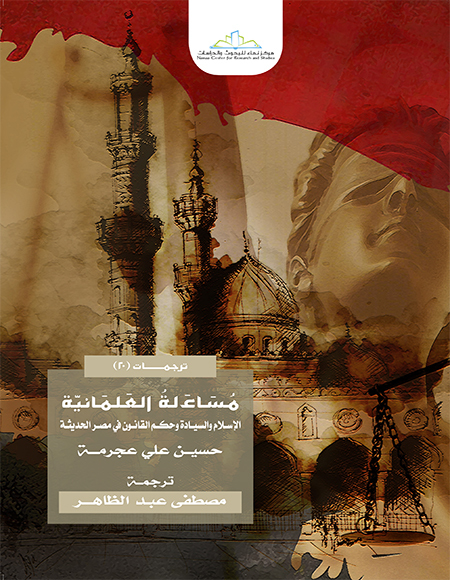
مساءلة العلمانية: الإسلام والسيادة وحكم القانون في مصر الحديثة
أثارت الأحداث الكبرى التي تعاقبت على عالمنا العربي في السنوات السابقة أسئلة ملحة عن الديمقراطية والليبرالية في دول شرق أوسطية ذات غالبية مسلمة، وهل لها أن تختار أو هل يجب أن تكون دولًا علمانية أم دولًا دينية؟
واستتبع هذا السؤال انشغالًا كبيرًا في الأوساط الأكاديمية بتحديد معنى "العلمانية" والبحث في مفهوم "الدين" و"الإسلام" ومتعلقاتهما السياسية والاجتماعية بوجه خاص، وتتبع المفاهيم والشروط المتعلقة بأفق وإكراهات الحداثة، وموقع الدولة الحديثة وحدودها، وماهية السيادة وحكم القانون.
هذا الكتاب، الذي يصدر في نسخته العربية عن مركز نماء، يبحث عن طريق بحث إثنوجرافي وأنثروبولوجي، في سياقات السياسة والاجتماع والقانون والدين وممارسة الحياة اليومية، ليقدم نقاشًا متبصرًا ونافذًا حول تلك المفاهيم من خلال نقد معمق واستشكاف حصيف لجذور التشكل التاريخي للواقع السياسي والاجتماعي والديني المصري المعاصر وسياقاته وتحولاته التاريخية.
واستتبع هذا السؤال انشغالًا كبيرًا في الأوساط الأكاديمية بتحديد معنى "العلمانية" والبحث في مفهوم "الدين" و"الإسلام" ومتعلقاتهما السياسية والاجتماعية بوجه خاص، وتتبع المفاهيم والشروط المتعلقة بأفق وإكراهات الحداثة، وموقع الدولة الحديثة وحدودها، وماهية السيادة وحكم القانون.
هذا الكتاب، الذي يصدر في نسخته العربية عن مركز نماء، يبحث عن طريق بحث إثنوجرافي وأنثروبولوجي، في سياقات السياسة والاجتماع والقانون والدين وممارسة الحياة اليومية، ليقدم نقاشًا متبصرًا ونافذًا حول تلك المفاهيم من خلال نقد معمق واستشكاف حصيف لجذور التشكل التاريخي للواقع السياسي والاجتماعي والديني المصري المعاصر وسياقاته وتحولاته التاريخية.
340 pages, Hardcover
First published October 15, 2012
Ratings & Reviews
Friends & Following
Create a free account to discover what your friends think of this book!
Community Reviews
Displaying 1 - 5 of 5 reviews
December 31, 2024
يعد حسين عجرمة من المتأثرين بمدرسة طلال أسد. لا أعلم ان كان من الانصاف وصفها بالمدرسة ما بعد حداثية. لكن البعض يقول ذلك. ..
يعد هذا الكتاب ثقيلا ، ودسما
ويحتاج لنفس لكتابة مراجعة عنه
قريبة باذن الله
يعد هذا الكتاب ثقيلا ، ودسما
ويحتاج لنفس لكتابة مراجعة عنه
قريبة باذن الله

April 27, 2023
Hussein Ali Agrama’s book “Questioning Secularism” is based on Asad’s foundational argument regarding secularism: that the secular and the sacred are not mutually exclusive, that secularism is not a precursor to modern, democratic states, and that both religion and secularism are sovereign tools through which to regulate the public and private domain.
Agrama argues that we should consider the secular to be not the opposite of the religious but rather, the dynamically negotiated and problematized space between what is clearly religious and what is explicitly not. Because Egypt has increased the relevancy of religious law in the political sphere, especially through the requiring of Hisba to be reported personally and judged politically, it becomes impossible to define the two in opposition to one another. Further, through this and related processes, religious law is rendered less innate and its traditions less relevant. Because it is up to the State to determine what elements of religiosity (and religious/civil overlap) falls under its scope of authority, the law *is always* and *will always be.*
More diametric is our production of the private vs. the public, and how we allow sovereign rule – either civil or Shi’a – to manifest in either sphere.
As Foucault has argued, humans produce and sustain public order through processes of governmentality. Because we have an agentive role in the recognition of authority, it becomes revealing of different cultures and societies where gaps are formed between religious authority and civil authority, and between the appearance of justice and the enactment of it, and what the gab reveals about our individual and/or collective values. Agrama is very clear that the intensification of importance assigned to the family as the central unit of the state and privacy as an essential freedom was not based in Islamic practices. In fact, he points out that the same thing happened in the US, which prides itself on its secularism (no matter how fair that may be).
My primary question following the book's conclusion is that I didn’t get a clear understanding as to what Agrama attributed this shift to.
Secondly (and this is a bit nit-picky), I liked the Hannah Arendt quote he brought in (about our increasing inability to distinguish coercion from authority), but I am still dubious about academia’s inability to separate the “art from the artist” when it comes to canonical philosophers and their histories of racism or other moral ineptitudes.
Agrama argues that we should consider the secular to be not the opposite of the religious but rather, the dynamically negotiated and problematized space between what is clearly religious and what is explicitly not. Because Egypt has increased the relevancy of religious law in the political sphere, especially through the requiring of Hisba to be reported personally and judged politically, it becomes impossible to define the two in opposition to one another. Further, through this and related processes, religious law is rendered less innate and its traditions less relevant. Because it is up to the State to determine what elements of religiosity (and religious/civil overlap) falls under its scope of authority, the law *is always* and *will always be.*
More diametric is our production of the private vs. the public, and how we allow sovereign rule – either civil or Shi’a – to manifest in either sphere.
As Foucault has argued, humans produce and sustain public order through processes of governmentality. Because we have an agentive role in the recognition of authority, it becomes revealing of different cultures and societies where gaps are formed between religious authority and civil authority, and between the appearance of justice and the enactment of it, and what the gab reveals about our individual and/or collective values. Agrama is very clear that the intensification of importance assigned to the family as the central unit of the state and privacy as an essential freedom was not based in Islamic practices. In fact, he points out that the same thing happened in the US, which prides itself on its secularism (no matter how fair that may be).
My primary question following the book's conclusion is that I didn’t get a clear understanding as to what Agrama attributed this shift to.
Secondly (and this is a bit nit-picky), I liked the Hannah Arendt quote he brought in (about our increasing inability to distinguish coercion from authority), but I am still dubious about academia’s inability to separate the “art from the artist” when it comes to canonical philosophers and their histories of racism or other moral ineptitudes.
August 21, 2025
Read mostly for Agrama’s theoretical insights and conceptual developments - his understanding of secularism is quite counterintuitive and revealing of the operations of sovereign power in a way that reads nicely alongside Agamben, Foucault, Cedric Robinson, etc. (and ofc Asad and his offspring, of which Agrama is one). Overall a rigorous, fascinating study of law, (state) sovereignty, and secularity with a wide appeal outside anthropology - though its gloss of contemporary Egyptian politics should not be overlooked.
July 31, 2014
Agrama’s book is highly readable thanks to his clear and structured style of writing despite the complex arguments he tackles. I would recommend this book to anyone interested in learning more on the tensions surrounding Islam and secularism or those who are interested in debates on the doctrines of secularism.
Agrama’s innovative contribution to the study of secularism is his comparison of the personal status courts and the Fatwa Council. Agrama’s comparative analysis is able to close the gap between macro-level theoretical underpinnings of secularism and everyday practice involving the authority in law. For example, Agrama distinguishes between the asecular nature of the Fatwa Council and the secular nature of the personal status courts, although the two institutions share the following similarities: they are under the state, they are products of modern reforms, and they draw their understanding from the Shari’a. Agrama’s earlier piece titled Ethics, tradition, authority: Toward an anthropology of the fatwa provides a more engaging account of his experiences at the Fatwa Council. However, Questioning Secularism supplants ethnographic accounts with an explanation as to why fatwas, despite their non-binding nature, exercise greater authority over court rulings: “The attention the muftis pay to the people’s particular situations, and the careful allocation of responsibility in the council, serves to create strong bond between the muftis and the questioners … creating a measure of trust that secures the fatwa’s authority” (Agrama 184). Despite its striking originality, the book is marred somewhat by Agrama’s analysis that is confined to a liberal framework.
The reason why Agrama’s analysis is confined in this way is that Agrama does not avail himself of the opportunity to use the asecular nature of the Fatwa Council or the protest movement to challenge or speak back against secular governance in Egypt. Simply put, Agrama’s analysis does not challenge secular power. Instead, Agrama only renders the aspects of secular power visible. This is due to Agrama’s limited analysis of the relationship between secularism and asecularism encapsulated in the following metaphor: “But like a bubble within a bubble, produced by it but no longer of it, bouncing around within its confines yet otherwise largely indifferent to it, the Fatwa Council is a space produced by secular power but one that nevertheless remains largely disengaged from it” (187). There are other anthropologists (e.g. Saba Mahmood and Lila Abu-Lughod) who have used their research to speak against liberalism and therefore challenge different conventionalized aspects characteristic of liberalism.
Agrama can challenge the power of secularism through investigating the nature of the relationship between asecularism and secularism. To reiterate, Agrama states that “the Fatwa Council is a space produced by secular power but one that nevertheless remains largely disengaged from it” (187). How do the asecular and secular interact? What happens, at seemingly limited times, when the asecular and secular engage? What are the practical implications, both on the state level and everyday life, of interactions between the asecular and secular? How will the interaction between the two domains affect secular power? Can the asecular be used to resist the power of the secular? If so, how? These are just some examples of the questions I raise in demonstrating how Agrama might approach the relationship between the asecular and secular. By investigating the relationship between the two, I am hoping that one would be able to challenge the current manifestation of secular power in Egypt by offering an alternative form of secular power that extends beyond the conventions of a liberal framework.
Agrama’s innovative contribution to the study of secularism is his comparison of the personal status courts and the Fatwa Council. Agrama’s comparative analysis is able to close the gap between macro-level theoretical underpinnings of secularism and everyday practice involving the authority in law. For example, Agrama distinguishes between the asecular nature of the Fatwa Council and the secular nature of the personal status courts, although the two institutions share the following similarities: they are under the state, they are products of modern reforms, and they draw their understanding from the Shari’a. Agrama’s earlier piece titled Ethics, tradition, authority: Toward an anthropology of the fatwa provides a more engaging account of his experiences at the Fatwa Council. However, Questioning Secularism supplants ethnographic accounts with an explanation as to why fatwas, despite their non-binding nature, exercise greater authority over court rulings: “The attention the muftis pay to the people’s particular situations, and the careful allocation of responsibility in the council, serves to create strong bond between the muftis and the questioners … creating a measure of trust that secures the fatwa’s authority” (Agrama 184). Despite its striking originality, the book is marred somewhat by Agrama’s analysis that is confined to a liberal framework.
The reason why Agrama’s analysis is confined in this way is that Agrama does not avail himself of the opportunity to use the asecular nature of the Fatwa Council or the protest movement to challenge or speak back against secular governance in Egypt. Simply put, Agrama’s analysis does not challenge secular power. Instead, Agrama only renders the aspects of secular power visible. This is due to Agrama’s limited analysis of the relationship between secularism and asecularism encapsulated in the following metaphor: “But like a bubble within a bubble, produced by it but no longer of it, bouncing around within its confines yet otherwise largely indifferent to it, the Fatwa Council is a space produced by secular power but one that nevertheless remains largely disengaged from it” (187). There are other anthropologists (e.g. Saba Mahmood and Lila Abu-Lughod) who have used their research to speak against liberalism and therefore challenge different conventionalized aspects characteristic of liberalism.
Agrama can challenge the power of secularism through investigating the nature of the relationship between asecularism and secularism. To reiterate, Agrama states that “the Fatwa Council is a space produced by secular power but one that nevertheless remains largely disengaged from it” (187). How do the asecular and secular interact? What happens, at seemingly limited times, when the asecular and secular engage? What are the practical implications, both on the state level and everyday life, of interactions between the asecular and secular? How will the interaction between the two domains affect secular power? Can the asecular be used to resist the power of the secular? If so, how? These are just some examples of the questions I raise in demonstrating how Agrama might approach the relationship between the asecular and secular. By investigating the relationship between the two, I am hoping that one would be able to challenge the current manifestation of secular power in Egypt by offering an alternative form of secular power that extends beyond the conventions of a liberal framework.
This entire review has been hidden because of spoilers.

November 19, 2012
absolutely loved this book.
Displaying 1 - 5 of 5 reviews