

What do you think?
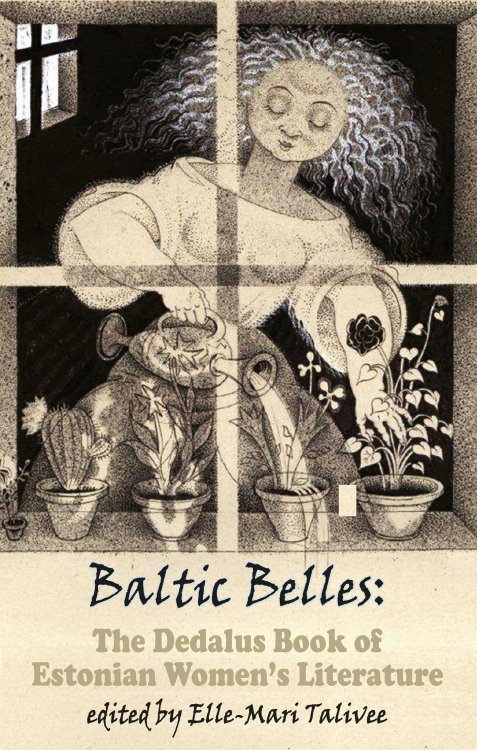
Baltic Belles
This anthology presents readers with a broad selection of fiction written between the late 19th century and today. The collection opens with the early realist Elisabeth Aspe, who described both village life and urban fear during the final decades of the 19th century. Early 20th-century works by female writers often discussed the young creative individual’s encounters in the transformed urbanised world, some of the most outstanding examples of which are by the great Betti Alver. After World War II, Estonian writing bore the unmistakable signs of Soviet censorship. Nevertheless, Viivi Luik’s momentous novel The Seventh Spring of Peace managed to avoid suppression, and the wonderfully unique Asta Põldmäe seized her opportunity to write. Very strong authors such as Eeva Park, Maarja Kangro and Maimu Berg flourished with the return of freedom of expression in the late 20th century, and continue to do so today. They represent the best of Estonian short-story writing, handling social topics very sharply and suggestively, and scrutinising the country’s soul in a highly personal manner.
234 pages, Paperback
Published September 14, 2018
Ratings & Reviews
Friends & Following
Create a free account to discover what your friends think of this book!
Community Reviews
Displaying 1 - 2 of 2 reviews
September 28, 2019
Superb Variety in this Collection
Review of the Dedalus Books paperback edition (2019)
Short prose from female Estonian writers in English translation has not been well served in the past. This carefully curated 2019 collection more than doubles the works that are now available. The earlier collections such as Estonian Short Stories (1981), Estonian Short Stories (1996) and The Dedalus Book of Estonian Literature (2011) had only 2-3 stories each by women writers. The editor, translators, and publisher in this new volume have produced an excellent overview of 125 years of writing which covers most of the period of the country's literary existence from the time of national awakening in the 1860's to the present day.
In addition to the actual stories, there are 7-pages of short biographies of the writers and translators followed by an informative 12-page introductory foreword by editor Elle-Mari Talivee which provides a historical overview and context of the writers and their times. One thing that you will note is that 7 of the 12 stories included are actually excerpts from novels (presumably the 1st chapter of each, although I can't be sure in all cases). These function quite well as short prose and you are not left feeling cheated by cliff-hangers.
Contents with links and brief synopses
1. Ain of Ennosaare (excerpt from the novel Ennosaare Ain (1888)) by Elisabeth Aspe (1860-1927) translated by Adam Cullen. (I'll confess that this early writer was completely unknown to me previously.) A farmwoman is pestered by Martinmas Eve tricksters while she ponders about the future of her farmstead.
2. The Wind’s Paramour (excerpt from the novel Tuulearmuke (1927)) by Betti Alver (1906-1989) translated by Adam Cullen. A student pianist at the Conservatory encounters a young boy who seems to be obsessed with her.
3. Family Tree (excerpt from the novel Sugupuu (1977)) by Aimée Beekman (1933-) translated by Eva & Jason Finch. Portrait of village characters from the writer's Vaseküla (Coppertown) trilogy.
4. The Seventh Spring of Peace (excerpt from the novel Seitsmes rahukevad (1985)) by Viivi Luik (1946-) translated by Eva & Jason Finch. This first chapter captures the spirit of Luik's superb childhood fictional memoir which is one of my top favourite Estonian books of all time.
5. Ella (excerpt from the non-fiction novel Ella (2008)) by Elin Toona Gottschalk (1937-) translated by Adam Cullen. Portrait of the writer's grandmother
6. Lying Tiger (story from the collection Lamav tiiger (1964)) by Lilli Promet (1922-2007) translated by Adam Cullen. Surrealistic tale as if the tiger which had posed for the famous etching by Estonian artist Eduard Wiiralt had started questioning the artist about why he was being placed in a foreign forest of Northern European birch trees. Copies of this etching hung in many Estonian ex-patriot homes symbolizing their displacement from their homeland after World War II.
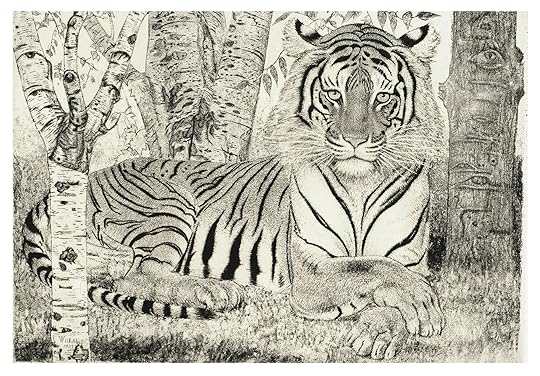
Lamav tiger (Reclining Tiger) (1937) etching by Eduard Wiiralt (1898-1954) from the collection of the Estonian Art Museum
7. In the Eye of the Wolf (excerpt from the novel Hundi silmas (1999)) by Helga Nõu (1934-) translated by Adam Cullen. A woman imagines herself turning into a werewolf to revenge herself on an ex-lover that spurned her.
8. Tango (story from the collection Absoluutne meister (2006)) by Eeva Park (1950-) translated by Eva and Jason Finch. A painter meets French singer Mirielle Matheiu who is on a concert tour in the Soviet Union and becomes her unofficial tour guide in Tallinn.
9. In the Winds of Blue Heights (excerpt from the novel Sinikõrguste tuultes (2000)) by Mari Saat (1947-) translated by Eva and Jason Finch. A woman thinks about her Swedish husband who travels on the final voyage of the MS Estonia.
10. The Bolide Shard (translated from the short story Boliidi kild (2010) [source unknown]) by Asta Põldmäe (1944-) translated by Eva and Jason Finch. An obsessive collector comes under the influence of a mysterious meteorite shard.
11. Awakenings (story from the collection Hitler Mustjalas (2016), originally published in the Looming literary magazine (2015)) by Maimu Berg (1945-) translated by Eva and Jason Finch. The protagonist adopts a homeless man who is an old acquaintance and attempts to rehabilitate and introduce them back into society.
12. At the Manor, or Jump into the Fire (story from the collection Hüppa tulle (2014)) by Maarja Kangro (1973-) translated by Christopher Moseley. A tale which puts the protagonists in somewhat awkward or even dangerous situations.
Review of the Dedalus Books paperback edition (2019)
Short prose from female Estonian writers in English translation has not been well served in the past. This carefully curated 2019 collection more than doubles the works that are now available. The earlier collections such as Estonian Short Stories (1981), Estonian Short Stories (1996) and The Dedalus Book of Estonian Literature (2011) had only 2-3 stories each by women writers. The editor, translators, and publisher in this new volume have produced an excellent overview of 125 years of writing which covers most of the period of the country's literary existence from the time of national awakening in the 1860's to the present day.
In addition to the actual stories, there are 7-pages of short biographies of the writers and translators followed by an informative 12-page introductory foreword by editor Elle-Mari Talivee which provides a historical overview and context of the writers and their times. One thing that you will note is that 7 of the 12 stories included are actually excerpts from novels (presumably the 1st chapter of each, although I can't be sure in all cases). These function quite well as short prose and you are not left feeling cheated by cliff-hangers.
Contents with links and brief synopses
1. Ain of Ennosaare (excerpt from the novel Ennosaare Ain (1888)) by Elisabeth Aspe (1860-1927) translated by Adam Cullen. (I'll confess that this early writer was completely unknown to me previously.) A farmwoman is pestered by Martinmas Eve tricksters while she ponders about the future of her farmstead.
2. The Wind’s Paramour (excerpt from the novel Tuulearmuke (1927)) by Betti Alver (1906-1989) translated by Adam Cullen. A student pianist at the Conservatory encounters a young boy who seems to be obsessed with her.
3. Family Tree (excerpt from the novel Sugupuu (1977)) by Aimée Beekman (1933-) translated by Eva & Jason Finch. Portrait of village characters from the writer's Vaseküla (Coppertown) trilogy.
4. The Seventh Spring of Peace (excerpt from the novel Seitsmes rahukevad (1985)) by Viivi Luik (1946-) translated by Eva & Jason Finch. This first chapter captures the spirit of Luik's superb childhood fictional memoir which is one of my top favourite Estonian books of all time.
5. Ella (excerpt from the non-fiction novel Ella (2008)) by Elin Toona Gottschalk (1937-) translated by Adam Cullen. Portrait of the writer's grandmother
6. Lying Tiger (story from the collection Lamav tiiger (1964)) by Lilli Promet (1922-2007) translated by Adam Cullen. Surrealistic tale as if the tiger which had posed for the famous etching by Estonian artist Eduard Wiiralt had started questioning the artist about why he was being placed in a foreign forest of Northern European birch trees. Copies of this etching hung in many Estonian ex-patriot homes symbolizing their displacement from their homeland after World War II.
Lamav tiger (Reclining Tiger) (1937) etching by Eduard Wiiralt (1898-1954) from the collection of the Estonian Art Museum
7. In the Eye of the Wolf (excerpt from the novel Hundi silmas (1999)) by Helga Nõu (1934-) translated by Adam Cullen. A woman imagines herself turning into a werewolf to revenge herself on an ex-lover that spurned her.
8. Tango (story from the collection Absoluutne meister (2006)) by Eeva Park (1950-) translated by Eva and Jason Finch. A painter meets French singer Mirielle Matheiu who is on a concert tour in the Soviet Union and becomes her unofficial tour guide in Tallinn.
9. In the Winds of Blue Heights (excerpt from the novel Sinikõrguste tuultes (2000)) by Mari Saat (1947-) translated by Eva and Jason Finch. A woman thinks about her Swedish husband who travels on the final voyage of the MS Estonia.
10. The Bolide Shard (translated from the short story Boliidi kild (2010) [source unknown]) by Asta Põldmäe (1944-) translated by Eva and Jason Finch. An obsessive collector comes under the influence of a mysterious meteorite shard.
11. Awakenings (story from the collection Hitler Mustjalas (2016), originally published in the Looming literary magazine (2015)) by Maimu Berg (1945-) translated by Eva and Jason Finch. The protagonist adopts a homeless man who is an old acquaintance and attempts to rehabilitate and introduce them back into society.
12. At the Manor, or Jump into the Fire (story from the collection Hüppa tulle (2014)) by Maarja Kangro (1973-) translated by Christopher Moseley. A tale which puts the protagonists in somewhat awkward or even dangerous situations.

January 16, 2022
The Dedalus Celebrating Women’s Literature (2018-2028) project aims to publish six titles a year (for 10 years) of mostly translated European women’s writing as a way to celebrate the centenary of women getting the right to vote in the UK (1918).
This anthology contains 12 short stories/bits of novels written by Estonian women writers, spanning from the pre-independence of the state (1918) to modern times. It historically contextualizes the texts, focusing on women’s perspectives. “When women ask questions, they often have a very different perspective to that of male authors” (foreword). This anthology is one of the best I’ve ever read. It properly introduces the writers and the translators. The selection is so well put together. I will read in full some of the novels/short story collections that are available in English.
What resurfaces time and again in this brilliant anthology is the representation of the mundane, such as daily chores or a visit to the theatre. The ordinary becomes extraordinary. A walk in the woods to forage rowanberries. A cooking failure that wastes precious sugar. The memories of an old woman that worked her entire life on a farm. Recognizing the neck of a man you used to love whilst waiting for a play to start. Finding a bolide shard in an empty field. Something small, exterior, triggering waves of memories and emotions, turning upside down one’s life. National identity, displacement, censorship, war and poverty, classism are all subjects explored in creative ways.
Let me give you a taste:
“For as long as Mum and Grandma were alive, I had a spiritual home, homeland, and memories. To be in a world without memories where you were unable to translate your thoughts or share your visions with others, not even with your own children, must have been the most dreadful kind of loneliness there is. That is what I feared the very most: I wanted to cling to memories like a child grasping for a ray of sunshine.” (excerpt from Ella by Elin Toona)
This anthology contains 12 short stories/bits of novels written by Estonian women writers, spanning from the pre-independence of the state (1918) to modern times. It historically contextualizes the texts, focusing on women’s perspectives. “When women ask questions, they often have a very different perspective to that of male authors” (foreword). This anthology is one of the best I’ve ever read. It properly introduces the writers and the translators. The selection is so well put together. I will read in full some of the novels/short story collections that are available in English.
What resurfaces time and again in this brilliant anthology is the representation of the mundane, such as daily chores or a visit to the theatre. The ordinary becomes extraordinary. A walk in the woods to forage rowanberries. A cooking failure that wastes precious sugar. The memories of an old woman that worked her entire life on a farm. Recognizing the neck of a man you used to love whilst waiting for a play to start. Finding a bolide shard in an empty field. Something small, exterior, triggering waves of memories and emotions, turning upside down one’s life. National identity, displacement, censorship, war and poverty, classism are all subjects explored in creative ways.
Let me give you a taste:
“For as long as Mum and Grandma were alive, I had a spiritual home, homeland, and memories. To be in a world without memories where you were unable to translate your thoughts or share your visions with others, not even with your own children, must have been the most dreadful kind of loneliness there is. That is what I feared the very most: I wanted to cling to memories like a child grasping for a ray of sunshine.” (excerpt from Ella by Elin Toona)
Displaying 1 - 2 of 2 reviews