Join three literary scholars and award-winning professors as they introduce you to dozens of short masterpieces that you can finish - and engage with - in a day or less. Perfect for people with busy lives who still want to discover -or rediscover - just how transformative reading can be, these 36 lectures range from short stories of fewer than 10 pages to novellas and novels of around 200 pages. Despite their short length, these works are powerful examinations of the same subjects and themes that longer "great books" discuss.
And with three great professors coming together to offer their own looks at literature, you'll get a multitude of ways to approach and think about grand human themes, including
- the nature of love and the mysteries of fate; - the riddle of identity and the trials of growing up; - the complex ties between individuals and their societies; - the ways we make sense of personal and public history.
In the company of these three professors, you'll also approach the evolution of the modern novel, the development of literary genres such as graphic novels and creative nonfiction, the role of politics and culture in inspiring authors, and much more.
What's more, by exploring literature through three perspectives instead of one, you'll get an opportunity to see how literature professors - just like everyone else - approach and read books in their own unique way. It's like getting three distinct learning experiences, all in one single, affordable package.
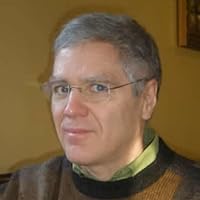
Dr. Arnold Weinstein is the Edna and Richard Salomon Distinguished Professor at Brown University, where he has been teaching for over 35 years. He earned his undergraduate degree in Romance Languages from Princeton University and his M.A. and Ph.D. in Comparative Literature from Harvard University. Among his many academic honors, research grants, and fellowships is the Younger Humanist Award from the National Endowment for the Humanities, a Fulbright Senior Lecturer Award as a visiting professor at Stockholm University, Brown University's award as best teacher in the humanities, Professeur InvitÈ in American Literature at the Ecole Normale SupÈrieure in Paris, and a Fellowship for University Professors from the National Endowment for the Humanities. Professor Weinstein is the author of many books, including Fictions of the Self: 1550ñ1800 (1981); Nobody's Home: Speech, Self, and Place in American Fiction from Hawthorne to DeLillo (1993); and A Scream Goes Through The House: What Literature Teaches Us About Life (2003). Northern Arts: The Breakthrough of Scandinavian Literature and Art from Ibsen to Bergman (Princeton University Press, 2008), was named one of the 25 Best Books of 2009 by The Atlantic. Professor Weinstein chaired the Advisory Council on Comparative Literature at Princeton University, is the sponsor of Swedish Studies at Brown, and is actively involved in the American Comparative Literature Association.
To say I have completed this is somewhat of an exaggeration - I have read or re-read all that I could get hold of. The most positive aspect of the course is that it covers many books that are somewhat rare (and not anglo-saxon in origin) and therefore were new to me. The negative aspect was that there were some I just could not get hold of. The lectures/lecture notes were very enlightening and enjoyable, and I would definitely recommend the course with the caveat that you may not be able to access all the books you need. (And it is likely to take you longer than a day to read most of the texts - unless you do nothing but read!)
This 36 lecture course has three different professors. Arnold Weinstein covers the first 12 lectures, and I am familiar with him, having listened to his 84 lecture course on Classics of American Literature (see separate review!). The second 12 lectures are by Emily Allen, this is the first course I've had with her. The last 12 lectures are by Grant Voth, and I've listened to his course Myth In Human History before this (see separate review!). Each of the three professors were very engaging, knowledgeable, and enthusiastic about the subject.
My favorite part about listening to this course was the opportunity to hear about some new writers and short novels that I had never read before. A Day's Read is about short novels or novellas that can be read in a day or two, or sometimes in less than a day. In the first section, Professor Weinstein enjoys talking about an author who may be celebrated for their longer novels, but he looks at a few lesser known, shorter works of fiction by some authors. Gustave Flaubert is an example of this. Instead of Madame Bovary, we hear about A Simple Heart. For William Faulkner, instead of The Sound and the Fury, we are told about Pantaloon in Black. In this section, I was most interested in hearing what Professor Weinstein had to say about Jorge Luis Borges, because I have not read him yet, but would like to do so very soon.
Emily Allen's section contained a lot of famous writers, with lectures on works by Jane Austen, Robert Louis Stevenson, James Joyce, and Oscar Wilde. But the lectures that were most interesting to me were on Honore Balzac's The Girl With The Golden Eyes and Ian McEwan's On Chesil Beach. Professor Allen was very excited about each reading, sometimes saying that more than one work was her favorite of the bunch!!
The final section by Professor Voth teaches about literature from many parts of the globe. My favorite lectures by him were on Anton Chekov's short stories. I was fairly familiar with Chekov's plays because they are so well known, but sometimes his short stories get overlooked I think. I also enjoyed hearing about Alice Munro's short stories. Munro is an author I have not read yet, but am eager to change that as soon as I can.
There were a few boring lectures in the whole series. Each lecture is only as interesting as the stories you choose, and there were some that are certainly going to be a miss for me. But, everyone has their preferences, and I learned about some important authors that I now know that I will certainly enjoy, and that makes these lectures worthwhile listening for me!
I assumed that most of the recommendations in this lecture series would be short stories and plays but that is not the case. Most of the books are novels. I don't consider these readable in a day. I may be quibbling. But I have always been a slow reader so a day's read for me does not include novels. Still I enjoyed the wide variety of authors and works covered in this course. I also enjoyed the fact that 3 different professors contribute to this series because they each have different tastes and their choices vary widely. They include South Africa, England, Japan, Canada, the US and Europe. I enjoyed learning about literature that was not on my radar. And I may read some of it in the future. If that happens, I will consider this read a good investment.
A really great series of lectures, in roughly chronological order, about the best novellas (short novels) in English literature. Wonderful discussion of some works I like a lot; interesting introduction to some I had never read.
Contents/Progress: A Country Doctor by Franz Kafka - 4/24/2021 Manon Lescaut by Abbe Prevost - 5/6/2021 A Simple Heart by Gustave Flaubert - 5/8/2021 Pantaloon in Black by William Faulkner - 5/21/2021 Short story selections (Funes, the Memorious; Garden of Forking Paths; Emma Zunz) by Jorge Luis Borges - 5/21/2021 [I really enjoyed the stories by Borges and would like to revisit this author in the future.] The Old Man and the Sea by Ernest Hemingway - 5/23/2021 [stands the test of time!]
Short story selections (River and Judgement Day) by Flannery O'Connor -
Lagerkvist, The Sybil -- Vesaas, The Ice Palace -- Calvino, Invisible cities -- Duras, The lover -- Coetzee, Disgrace. V. 2, lectures 13-24. Rhys, Wide Sargasso Sea -- Austen, Lady Susan -- Balzac, The girl with the golden eyes -- Meredith, Modern love -- Huysmans, Against the grain -- Stevenson, The strange case of Dr. Jekyll and Mr. Hyde -- Wilde, The picture of Dorian Gray -- James, The beast in the Jungle -- Joyce, "The dead" -- Proust, The Lemoine affair -- Woolf, "Mrs. Dalloway in Bond Street" -- McEwan, On Chesil Beach. V. 3, lectures 25-36. Cather, Alexander's bridge -- Lu Xun, Short story selections -- Chopin, The awakening -- Melville, Billy Budd -- McCullers, Ballad of the Sad Cafe -- Chekhov, Short story selections -- Hersey, Hiroshima -- Satrapi, Persepolis -- Jataka story selections -- Munro, Short story selections -- Basho, The narrow road of the interior -- Sijie, Balzac and the little Chinese seamstress.
After I'd already selected this Great Course, I found out the names of the books and authors. I am absolutely delighted with the selections. There are three professors, not just one (as is the usual habit of this company). I think that will give me the opportunity to see different viewpoints.
The first short story was by Franz Kafka, "A Country Doctor." Only about 5 pages in length, Kafka shows his mind-bending skills adroitly. As I've listened to each of Dr. Weinstein's lectures, I've been fascinated by the way he shares ideas that hadn't come to me while reading various pieces. I have never liked Faulkner, but I'm going to read the short story the professor mentioned in one lecture ("Pantaloon in Black").
Dr. Emily Allen really got my attention with LADY SUSAN. I've read and enjoyed, Jane Austen's six published novels but hadn't really considered this novella. However, Dr. Allen certainly piqued my interest in this short work. Her analyses of Jekyll/Hyde and Dorian Gray were delightful for very different reasons. I particularly enjoyed listening to her thoughts about each of her 12 books. Dr. Allen's investigations were wonderful; I enjoyed her lectures immensely.
I've loved everything I've read by Willa Cather; Dr. Voth opened my eyes to Cather's first published work, ALEXANDER'S BRIDGE. He tied it back to Stevenson's THE STRANGE CASE OF DR. JEKYLL AND MR. HYDE (studied in Lesson 18). Cather reworked that story with her own emphasis; the analysis was absolutely amazing.
Dr. Voth's analysis of BILLY BUDD bordered on profound; I've grappled with that story for years. The way Dr. Voth moved back and forth between Capt. Vere's responsibilities and Billy Budd's rights -- brought the novella's tragic ending to a powerful crescendo.
This was a delicious smorgasbord of short stories and novellas combined with intelligent and deep analysis of characters, plot, settings, and so much more. These lectures were wonderful; I learned so much.
“A Days Read” is a 36 lecture Teaching Company 2013 course by three university professors —Arnold Weinstein from Brown University, Purdue Professor Emily Allen, and Monterey Peninsula College Professor Grant Voth. Each lecture is 30 minutes long. These lectures are about novellas that have as few as 7 pages and no more than 175 pages of text. The books can be easily read in a day. The course features books written by famous authors such as Faulkner, Kafka, Balzac, Wilde, and Joyce. The course also includes lectures that feature many acclaimed novellas including Proust “The Lemoine Affair, Woolf’s “Mrs Dolloway in Bond Street, “Billy Budd by Melville , and Hemingway’s "The Old Man and the Sea.” The 274 page guidebook includes historic composition timelines, author profiles, and annotated bibliographies. (P)
A broad overview of short fiction pieces, sampling some older classics from an earlier century, Balzac and Flaubert, for example, and some contemporary authors, Alice Munro and Ian McEwan. Many of these pieces were new to me and I enjoyed learning about them, even though I may not read them any time soon. In a few cases, I a gained deeper appreciation of pieces and authors that I read a year or two earlier but which I did not fully understand. This course is worth the time. I did listen to a few lectures two or more times. Finally, I found that the three lectures added variety to the presentations and approaches to understanding literature.
Really enjoyed this series lectures on short novels and novellas (and sometimes short story collections, graphic novels, travel books of haiku etc.) that take just one day to read. Not only do they (the professors team up to offer the course) offer an excellent selection of such stories, they also consider the joys of reading and what can particularly be offered in a brief text.
An interesting, enlightening, and entertaining series of lectures concerning some short books and stories, most of which I will probably never read. That’s okay because Professors Arnold Weinstein, Emily Allen, and Grant L. Voth did it for me.
I love a list! There are a lot of great reads in this list , things I would never have discovered because I am so poorly read, ill trained and should have started my love affair with literature 20 years earlier! Took a ling time because i stopped and read most of the books in this lecture series.
This entire review has been hidden because of spoilers.