

What do you think?

Učiteľ
Kylovi Broderovi sa podarilo dosiahnuť životný sen a stal sa redaktorom vo významnom vydavateľstve. Keď sa s ním spojí jeho obľúbený profesor William Lensing, Kyle ani nemôže byť šťastnejší, najmä keď sa mu William zmieni, že píše román. Predstava, že sa stane redaktorom svojho učiteľa, preňho znamená splnený sen. No Williamov rukopis je najzvrátenejší príbeh, aký Kyle v živote čítal. Keď román zdvorilo odmietne, William sa stane posadnutým, vyhráža sa, že zničí Kylovi kariéru, vzťah s jeho dievčaťom, dokonca i život. Keď sa Kyle zahĺbi do psychopatického diela, začne mu pripomínať vychladnutý prípad z jeho univerzitného mesta. Román L. M. Goldberga Učiteľ je spletitý triler, ktorý odhaľuje, ako láska k slovám môže viesť k smrteľnej posadnutosti, keď osudy všetkých, ktorí sú s autorom spojení, visia na vlásku.
344 pages, Paperback
First published February 1, 2017
About the author
Lee Matthew Goldberg
29 books1,451 followersLee Matthew Goldberg is the author of fourteen novels including THE ANCESTOR and THE MENTOR along with his five-book DESIRE CARD series. His YA series RUNAWAY TRAIN is currently in script development with actress Raegan Revord from TVs Young Sheldon off his original written pilot. The GREAT GIMMELMANS comes out in 2023. He has been published in multiple languages and nominated for an Anthony Award, the Lefty, and the Prix du Polar. After graduating with an MFA from the New School, his writing has also appeared as a contributor in Pipeline Artists, LitHub, The Los Angeles Review of Books, Electric Literature, The Millions, Vol. 1 Brooklyn, LitReactor, Mystery Tribune, The Big Idea, Monkeybicycle, Fiction Writers Review, Cagibi, Necessary Fiction, Hypertext, If My Book, Past Ten, the anthology Dirty Boulevard, The Montreal Review, The Adirondack Review, The New Plains Review, Maudlin House and others. His pilots and screenplays have been finalists in Script Pipeline, Book Pipeline, Stage 32, We Screenplay, the New York Screenplay, Screencraft, and the Hollywood Screenplay contests. He is the co-curator of The Guerrilla Lit Reading Series and lives in New York City. Follow him at LeeMatthewGoldberg.com
Ratings & Reviews
Friends & Following
Create a free account to discover what your friends think of this book!
Community Reviews
Displaying 1 - 30 of 124 reviews

September 14, 2021
‘poor is the pupil that doesnt surpass his master.’
i had so much fun with this! definitely a hidden gem in the world of dark academia and publishing.
what really had me going was the thrill of the cat and mouse game between mentor and mentee. i was also surprised by how many emotions the characters made me feel - i felt rage at the increasing ploys one made for framing the other, utter despair at watching one of them trying to convince others they are not crazy and failing, and complete horror at some of things one was willing to do just to prove a point. the story is definitely a roller coaster of feeling.
one of the praise blurbs on the back cover calls this a voyeuristic experience and i completely agree. i felt like i was watching something so intimate unravel between a former student and former professor, like their jealousy and ambition were things i shouldnt be seeing. its just a really great way to not only tell a story, but experience it.
im so glad i picked this up on a whim because it was a delightful surprise. if you are experiencing a void since reading ‘the plot’ earlier this year, this will easily fill that space!
↠ 4.5 stars
i had so much fun with this! definitely a hidden gem in the world of dark academia and publishing.
what really had me going was the thrill of the cat and mouse game between mentor and mentee. i was also surprised by how many emotions the characters made me feel - i felt rage at the increasing ploys one made for framing the other, utter despair at watching one of them trying to convince others they are not crazy and failing, and complete horror at some of things one was willing to do just to prove a point. the story is definitely a roller coaster of feeling.
one of the praise blurbs on the back cover calls this a voyeuristic experience and i completely agree. i felt like i was watching something so intimate unravel between a former student and former professor, like their jealousy and ambition were things i shouldnt be seeing. its just a really great way to not only tell a story, but experience it.
im so glad i picked this up on a whim because it was a delightful surprise. if you are experiencing a void since reading ‘the plot’ earlier this year, this will easily fill that space!
↠ 4.5 stars

October 29, 2021
What a page turner! The pace never slows down, the suspense ramps up, the story is full of tension, I was hooked from the start! 4.5 stars
Think The Plot mixed with For Your Own Good... The publishing world mixed with dark academia. A young and successful publisher meets one of his former teachers who supposedly wrote a masterpiece. Some mad events and stalking ensue!
The plot was very clever, I was always wondering what was going to happen next.
I don't understand why this book isn't on everyone TBR yet, but it's not too late to change that!😉📚
Think The Plot mixed with For Your Own Good... The publishing world mixed with dark academia. A young and successful publisher meets one of his former teachers who supposedly wrote a masterpiece. Some mad events and stalking ensue!
The plot was very clever, I was always wondering what was going to happen next.
I don't understand why this book isn't on everyone TBR yet, but it's not too late to change that!😉📚

July 26, 2017
All of my reviews can be found on www.novelgossip.com
4.5/5
As most of you know by now, I read a ton of thrillers so I'm always on the lookout for something within the genre that is fresh and unique. I've never read a thriller quite like The Mentor, it has a major literary vibe, it's highly intelligent and very tightly plotted, I loved it!
The premise of this was super interesting to me, I liked the insiders POV into the publishing industry, and as Kyle is an editor, I definitely got a fascinating look at the business of books. This is also a book within a book, (a bookception) another device that always intrigues me. I was hooked even before I actually started reading this, but I do want to point out that it's a bit of a slow burn in the first half. The groundwork is being laid for what is to come and while it was definitely enough to hold my attention, some may be expecting a faster pace right away. Right in the middle things start to move very quickly and that's when the real thrills and twists begin, there are some heart pounding moments and the pacing picks up to a relentless speed that took my breath away.
This had some really gruesome scenes and a deranged and depraved individual, this is definitely not for the faint of heart. There were some surprisingly funny moments as well that really helped to break the darkness up which is always a tool that I appreciate. There is also a subplot that deals with a cold case that was a great addition as well as characters that begin to unravel and descend into madness, the sense of paranoia was palpable and menacing.
This was far too twisty to allow me to discuss the plot further than what the blurb provides, but if that piques your interest and you can stomach some graphic scenes, you may like this one. Goldberg is an immensely talented writer and one that I will certainly be following, his ability to craft sinister characters and a tight plot is exactly what I look for in a solid thriller.
4.5/5
As most of you know by now, I read a ton of thrillers so I'm always on the lookout for something within the genre that is fresh and unique. I've never read a thriller quite like The Mentor, it has a major literary vibe, it's highly intelligent and very tightly plotted, I loved it!
The premise of this was super interesting to me, I liked the insiders POV into the publishing industry, and as Kyle is an editor, I definitely got a fascinating look at the business of books. This is also a book within a book, (a bookception) another device that always intrigues me. I was hooked even before I actually started reading this, but I do want to point out that it's a bit of a slow burn in the first half. The groundwork is being laid for what is to come and while it was definitely enough to hold my attention, some may be expecting a faster pace right away. Right in the middle things start to move very quickly and that's when the real thrills and twists begin, there are some heart pounding moments and the pacing picks up to a relentless speed that took my breath away.
This had some really gruesome scenes and a deranged and depraved individual, this is definitely not for the faint of heart. There were some surprisingly funny moments as well that really helped to break the darkness up which is always a tool that I appreciate. There is also a subplot that deals with a cold case that was a great addition as well as characters that begin to unravel and descend into madness, the sense of paranoia was palpable and menacing.
This was far too twisty to allow me to discuss the plot further than what the blurb provides, but if that piques your interest and you can stomach some graphic scenes, you may like this one. Goldberg is an immensely talented writer and one that I will certainly be following, his ability to craft sinister characters and a tight plot is exactly what I look for in a solid thriller.
September 11, 2017
Oh, I’m so sad I can only give this book a 3 star review. I really wanted to love this one! The synopsis sounds so dark, intense and creepy, but it let me down in that department… almost completely!
The first 40% of this book was definitely enthralling, at times silly and over the top, but still exciting to read. The characters were interesting, the story was moving along nicely and the writing was simple, but not bad. It was about when I got to 50% that I realised I was getting a little bit bored by this novel.
Characters in this one weren’t so bad. They were well developed and even though there were a fair few number of them, we did get to know them individually, quite well. My problem was that they were pretty unbelievable and I didn’t really like any of them. I’m not sure if Kyle was meant to come across as an anti-hero, but that’s kind of what he felt like… although for me, it was mostly anti, less hero. I really didn’t like the introduction to the character as being a semi-graphic description of the sex he had with his girlfriend.
The plot for this book sounded amazing! An English professor writes a depraved book that sounds like an unsolved murder case from years ago? Is it just a coincidence or is it something more sinister? Doesn’t that sounds amazing? Well, it isn’t, I hate to say! Yes, this professor does write a depraved, and terribly written, book about kidnapping a girl but it doesn’t allude to the fact it might be about a cold case until around the 60% mark, which is ridiculous!
At 336 pages, this isn’t a long novel, but it definitely could have been cut down! Most of this novel was a very repetitive back and forth between Kyle and his mad professor. Repetition like this in books is something I absolutely despise and with each new chapter, I could feel myself losing the will to read this book.
That was my first issue with the writing, and then my annoyance moved on to the number of spelling, grammatical and sentence structure errors. Considering this novel was about an editor, you would have thought the real editor would have caught the vast number of cock ups in this book!
I got very irritated by this novel towards the end. The story was convoluted, silly and unrealistic. I got to the point of skimming pages in the ending chapters, yes, it was that disappointing. Not to mention this wasn’t creepy or tense at all. It was pretty predictable all the way through and the ending was a cheap way out.
Overall, I wouldn’t recommend this novel. It gets 3 stars because I did enjoy the first 40% or so, but the story became silly and I couldn’t get over the number of errors in the writing.
The first 40% of this book was definitely enthralling, at times silly and over the top, but still exciting to read. The characters were interesting, the story was moving along nicely and the writing was simple, but not bad. It was about when I got to 50% that I realised I was getting a little bit bored by this novel.
Characters in this one weren’t so bad. They were well developed and even though there were a fair few number of them, we did get to know them individually, quite well. My problem was that they were pretty unbelievable and I didn’t really like any of them. I’m not sure if Kyle was meant to come across as an anti-hero, but that’s kind of what he felt like… although for me, it was mostly anti, less hero. I really didn’t like the introduction to the character as being a semi-graphic description of the sex he had with his girlfriend.
The plot for this book sounded amazing! An English professor writes a depraved book that sounds like an unsolved murder case from years ago? Is it just a coincidence or is it something more sinister? Doesn’t that sounds amazing? Well, it isn’t, I hate to say! Yes, this professor does write a depraved, and terribly written, book about kidnapping a girl but it doesn’t allude to the fact it might be about a cold case until around the 60% mark, which is ridiculous!
At 336 pages, this isn’t a long novel, but it definitely could have been cut down! Most of this novel was a very repetitive back and forth between Kyle and his mad professor. Repetition like this in books is something I absolutely despise and with each new chapter, I could feel myself losing the will to read this book.
That was my first issue with the writing, and then my annoyance moved on to the number of spelling, grammatical and sentence structure errors. Considering this novel was about an editor, you would have thought the real editor would have caught the vast number of cock ups in this book!
I got very irritated by this novel towards the end. The story was convoluted, silly and unrealistic. I got to the point of skimming pages in the ending chapters, yes, it was that disappointing. Not to mention this wasn’t creepy or tense at all. It was pretty predictable all the way through and the ending was a cheap way out.
Overall, I wouldn’t recommend this novel. It gets 3 stars because I did enjoy the first 40% or so, but the story became silly and I couldn’t get over the number of errors in the writing.

February 10, 2020
Check out all of my reviews at: https://www.avonnalovesgenres.com
THE MENTOR by Lee Matthew Goldberg is an intense psychological thriller. Literary references, a cynical look into the book publishing industry and a college literary professor who dreams of immortal fame. A twisted and dark page-turner. (This thriller is not for the squeamish.)
Kyle Broder is a young New York house editor who has a new deal with a debut author that has put him in the limelight. The publicity is noticed by college professor, William Lansing who was Kyle’s mentor in college and assisted him in straightening out his life. William gets in touch and lets Kyle know he is writing a novel. Kyle is more than happy to read his mentor’s opus.
Kyle cannot believe not only the poor writing, but the story is depraved. He finds himself trying to let his mentor down gently with his rejection, but William obsessively injects himself into Kyle’s life and threatens his career.
Kyle learns that there is no way to separate himself from William’s story and he must finish reading the manuscript to discover the fate of all the people tangled up in this psychopath’s story.
I feel this will be one of those books everyone will have very differing responses to. It was a riveting, hard-to-put-down thriller that has an escalating cat-and-mouse game going on between Kyle and William. It is also quite graphic in descriptions of cannibalistic behavior and thoughts. That said, it has a twisted, psychological plot that pulled me in and had me continuing to read until the end just as Kyle did inside the story. I also enjoyed the dark twist after the climax at the end of the book.
I recommend this for dark psychological thriller lovers.
THE MENTOR by Lee Matthew Goldberg is an intense psychological thriller. Literary references, a cynical look into the book publishing industry and a college literary professor who dreams of immortal fame. A twisted and dark page-turner. (This thriller is not for the squeamish.)
Kyle Broder is a young New York house editor who has a new deal with a debut author that has put him in the limelight. The publicity is noticed by college professor, William Lansing who was Kyle’s mentor in college and assisted him in straightening out his life. William gets in touch and lets Kyle know he is writing a novel. Kyle is more than happy to read his mentor’s opus.
Kyle cannot believe not only the poor writing, but the story is depraved. He finds himself trying to let his mentor down gently with his rejection, but William obsessively injects himself into Kyle’s life and threatens his career.
Kyle learns that there is no way to separate himself from William’s story and he must finish reading the manuscript to discover the fate of all the people tangled up in this psychopath’s story.
I feel this will be one of those books everyone will have very differing responses to. It was a riveting, hard-to-put-down thriller that has an escalating cat-and-mouse game going on between Kyle and William. It is also quite graphic in descriptions of cannibalistic behavior and thoughts. That said, it has a twisted, psychological plot that pulled me in and had me continuing to read until the end just as Kyle did inside the story. I also enjoyed the dark twist after the climax at the end of the book.
I recommend this for dark psychological thriller lovers.

January 26, 2020
Synopsis
When Kyle earns a prestigious position as an editor at a large New York publishing house, he's surprised and delighted to hear from his favourite professor from his college days. Apparently, Professor William Lansing has been writing a novel these last ten years, and he asks if Kyle would consider publishing it. Kyle is thrilled to be the first to read this novel, but that excitement is short lived. It's a thousand pages of horribly written depravity. Kyle tries to let his professor down gently, to tell him that the novel can't be published, but his mentor won't take no for an answer...
Plot
The Mentor starts off slow, but the writing was compelling enough to keep me engaged until the novel’s hook was revealed. There are quite a few hair-raising twists throughout this thriller. A couple were somewhat predictable, but there were enough surprises to keep me on my toes. The ending (no spoilers!) is downright chilling.
This book is quite a psychological thriller, as it becomes clear that Professor Lansing isn't exactly the stereotypical concerned teacher. He has a dark side, which is gradually revealed as the story progresses. There are times when Kyle questions his own sanity, and the reader can't help but do the same. That said, there are other horror elements, such as the "depravity" of the professor's novel, which are revealed to the reader in snippets. These excerpts were never too extreme, but definitely not something you'd want to read with the lights off.
Unfortunately, the pacing of The Mentor was off at times, and there were points where there was too much description, and I just wanted the plot to plunge forward. This is the only reason why this book gets 4 stars instead of 5, because I feel like the writing could have been tightened up a bit.
Characters
Kyle makes for an interesting character. He’s suddenly found himself to be a successful editor at Carter & Burke, a publishing house, after discovering a new talent. He’s harboring a dark past, one that has shaped who he is today, and one that is slowly unveiled over the course of the novel. Flashbacks reveal his relationship with his mentor, William, ten years earlier, showing just how much he’d helped him during the darkest time of his life. Some of Kyle’s decisions are questionable--more so in the beginning of the book, when he didn’t have fear or paranoia driving his choices. Jamie, Kyle’s girlfriend, was a tad unreasonable. She was unwilling to listen to his fears, and it seemed like she trusted complete strangers over the man she wanted to commit to her. Other than this, their relationship seemed realistic, and it was an important part of the story.
Language
There are numerous literary references throughout the book, which serves multiple purposes. It draws in themes and parallels to the classics, but it also serves to strengthen the authenticity of the characters. Kyle is an editor and William is an English professor, and these regular literary references are prevalent among the thoughts and conversations of writer-folk (or so I've heard ;))
The Mentor is written in an accessible writing style, one that doesn’t detract from the storyline. Although, as mentioned in the Plot section, the pacing was off a few times. Excerpts from the Devil’s Hopyard , William’s book, were written in an entirely different style, hinting at the author’s potential descent into madness.
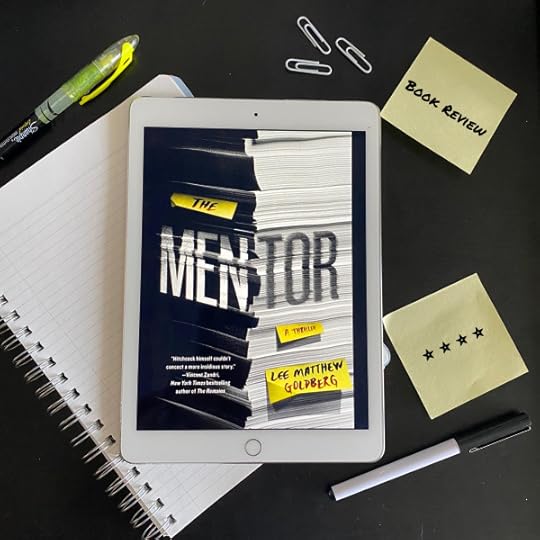
I recommend this book to anyone looking for a psychological horror novel, one with compelling relationships and an unpredictable plot.

*Thank you to Blackthorn Book Tours and the author for ebook for review*
This review appeared first on https://powerlibrarian.wordpress.com/
Instagram | Blog | Website | Twitter
My 2020 Reading Challenge
When Kyle earns a prestigious position as an editor at a large New York publishing house, he's surprised and delighted to hear from his favourite professor from his college days. Apparently, Professor William Lansing has been writing a novel these last ten years, and he asks if Kyle would consider publishing it. Kyle is thrilled to be the first to read this novel, but that excitement is short lived. It's a thousand pages of horribly written depravity. Kyle tries to let his professor down gently, to tell him that the novel can't be published, but his mentor won't take no for an answer...
Plot
The Mentor starts off slow, but the writing was compelling enough to keep me engaged until the novel’s hook was revealed. There are quite a few hair-raising twists throughout this thriller. A couple were somewhat predictable, but there were enough surprises to keep me on my toes. The ending (no spoilers!) is downright chilling.
This book is quite a psychological thriller, as it becomes clear that Professor Lansing isn't exactly the stereotypical concerned teacher. He has a dark side, which is gradually revealed as the story progresses. There are times when Kyle questions his own sanity, and the reader can't help but do the same. That said, there are other horror elements, such as the "depravity" of the professor's novel, which are revealed to the reader in snippets. These excerpts were never too extreme, but definitely not something you'd want to read with the lights off.
Unfortunately, the pacing of The Mentor was off at times, and there were points where there was too much description, and I just wanted the plot to plunge forward. This is the only reason why this book gets 4 stars instead of 5, because I feel like the writing could have been tightened up a bit.
Characters
Kyle makes for an interesting character. He’s suddenly found himself to be a successful editor at Carter & Burke, a publishing house, after discovering a new talent. He’s harboring a dark past, one that has shaped who he is today, and one that is slowly unveiled over the course of the novel. Flashbacks reveal his relationship with his mentor, William, ten years earlier, showing just how much he’d helped him during the darkest time of his life. Some of Kyle’s decisions are questionable--more so in the beginning of the book, when he didn’t have fear or paranoia driving his choices. Jamie, Kyle’s girlfriend, was a tad unreasonable. She was unwilling to listen to his fears, and it seemed like she trusted complete strangers over the man she wanted to commit to her. Other than this, their relationship seemed realistic, and it was an important part of the story.
Language
There are numerous literary references throughout the book, which serves multiple purposes. It draws in themes and parallels to the classics, but it also serves to strengthen the authenticity of the characters. Kyle is an editor and William is an English professor, and these regular literary references are prevalent among the thoughts and conversations of writer-folk (or so I've heard ;))
The Mentor is written in an accessible writing style, one that doesn’t detract from the storyline. Although, as mentioned in the Plot section, the pacing was off a few times. Excerpts from the Devil’s Hopyard , William’s book, were written in an entirely different style, hinting at the author’s potential descent into madness.
I recommend this book to anyone looking for a psychological horror novel, one with compelling relationships and an unpredictable plot.
*Thank you to Blackthorn Book Tours and the author for ebook for review*
This review appeared first on https://powerlibrarian.wordpress.com/
Instagram | Blog | Website | Twitter
My 2020 Reading Challenge

June 30, 2017
This book actually lives up to its hype of being a twisty, nail-biting thriller. While, I may not have bitten my nails, I did lose sleep over this book. You may want to lock your doors and windows and turn on the lights as The Mentor is the stuff of nightmares! The Mentor is the best of both worlds...part horror and part psychological thriller mixed in with a dash of Edgar Allan Poe. I just wanted to read one more page; which turned to another page and another.
Kyle and William were average guys that there was nothing too interesting about them. I mean if you passed them on the street, you would not give them a second glance. However, in this game between them, they were intriguing. There was a shift in the story about midway that got me wondering if Kyle was as innocent as he seemed. They always say the truth will set you free. In this case, it was true. Yet, will the truth be too much to handle? You will just have to pick up a copy of this book for yourself.
Kyle and William were average guys that there was nothing too interesting about them. I mean if you passed them on the street, you would not give them a second glance. However, in this game between them, they were intriguing. There was a shift in the story about midway that got me wondering if Kyle was as innocent as he seemed. They always say the truth will set you free. In this case, it was true. Yet, will the truth be too much to handle? You will just have to pick up a copy of this book for yourself.

August 12, 2017
Review can also be found in Chill and read
“The Mentor” is a strong psychological thriller that promises to trouble still waters!
Kyle Broder has become editor at Burke & Burke before reaching 30. It is a lifelong dream and he is more than happy to have achieved that. His author, the one he discovered, has signed a half a million dollar contract and that alone is big news! He is kind of a celebrity!
When his favorite college professor and mentor, William Lansing, contacts him after a decade or so, Kyle is glad to hear from him. He has his mentor over for dinner, that his girlfriend Jamie cooks, and the all get along. When William mentions a novel he is writing, Kyle agrees to read it. After all, it was his mentor that woke him up to the mysteries of literature. The book turns out to be not only awfully written, but also a great piece of junk and a horrifying story. When Kyle tries to politely refuse publishing it, William goes beyond borders, threatening Kyle’s career, relationships, even his life.
The story reminds of Hannibal Lecter, given the novel plot that the professor writes for over a decade. It is clear that there is obsession over something or someone. The reader can see that in the picture, as well as the fact that it is original. Yes, the story of Lecter is not a new one, but the story that evolves here is new. The profile of the psychopath cannot be clearly identified from the beginning of the book. A college professor living a quiet life in an easy going and quiet place, with his family, wife and two kids. He is the family guy and a respectable person in the small town. He is the person that students look up to. The one that carves responsible adults out of those students. But he has some skeletons in his closet, which is something the reader would expect.
The novel within the novel evolves as the pages go by. The plot becomes more and more interesting in every turn. There are some obvious turns, the ones the reader expects, the ones the book could not go without. There are also some really good twists though that allows the plot to unravel and move forward, under a new view. By the time the reader has reached the final pages, it is not clear if the main victim is alive or not. What had actually happened over a decade ago? What is true and what is fiction.
“The Mentor” is a strong psychological thriller that promises to trouble still waters!
Kyle Broder has become editor at Burke & Burke before reaching 30. It is a lifelong dream and he is more than happy to have achieved that. His author, the one he discovered, has signed a half a million dollar contract and that alone is big news! He is kind of a celebrity!
When his favorite college professor and mentor, William Lansing, contacts him after a decade or so, Kyle is glad to hear from him. He has his mentor over for dinner, that his girlfriend Jamie cooks, and the all get along. When William mentions a novel he is writing, Kyle agrees to read it. After all, it was his mentor that woke him up to the mysteries of literature. The book turns out to be not only awfully written, but also a great piece of junk and a horrifying story. When Kyle tries to politely refuse publishing it, William goes beyond borders, threatening Kyle’s career, relationships, even his life.
The story reminds of Hannibal Lecter, given the novel plot that the professor writes for over a decade. It is clear that there is obsession over something or someone. The reader can see that in the picture, as well as the fact that it is original. Yes, the story of Lecter is not a new one, but the story that evolves here is new. The profile of the psychopath cannot be clearly identified from the beginning of the book. A college professor living a quiet life in an easy going and quiet place, with his family, wife and two kids. He is the family guy and a respectable person in the small town. He is the person that students look up to. The one that carves responsible adults out of those students. But he has some skeletons in his closet, which is something the reader would expect.
The novel within the novel evolves as the pages go by. The plot becomes more and more interesting in every turn. There are some obvious turns, the ones the reader expects, the ones the book could not go without. There are also some really good twists though that allows the plot to unravel and move forward, under a new view. By the time the reader has reached the final pages, it is not clear if the main victim is alive or not. What had actually happened over a decade ago? What is true and what is fiction.

October 26, 2020
Depraved. Horror. Human Cannibalism and Animal Mutilation -Trigger Warning.
Psychopathic manic destroys those around him.
Yeah, I had to abandon this at page 176, I don't apologize for that either. In fact, I have no idea why I didn't ditch this debauched trash much sooner, as it was just plain evil decorated as a story regarding a psychopath (job well done). I am not talking about it just being scary, it was utterly depraved, sick, demonic, these terms all apply. It was not entertaining, it was horrifying and not like don't go into "that room" horror, this is salacious drivel.
It is being improperly marketed and I have to wonder what kind of person writes this insane excrement. It wasn't funny. It wasn't daring. It was bizarre. AND SICK, did I mention it was sick?
The author also gives a nod to William Burroughs, the writer who has now been confirmed to be a satanist by his son, Augusten Burroughs. I couldn't read Burroughs either and shared with a few friends that I thought he was a satanist 15 years before it was confirmed. Draw your own conclusions.
I hope those who know me will realize that I can swallow a lot but this was putrid manure.
Psychopathic manic destroys those around him.
Yeah, I had to abandon this at page 176, I don't apologize for that either. In fact, I have no idea why I didn't ditch this debauched trash much sooner, as it was just plain evil decorated as a story regarding a psychopath (job well done). I am not talking about it just being scary, it was utterly depraved, sick, demonic, these terms all apply. It was not entertaining, it was horrifying and not like don't go into "that room" horror, this is salacious drivel.
It is being improperly marketed and I have to wonder what kind of person writes this insane excrement. It wasn't funny. It wasn't daring. It was bizarre. AND SICK, did I mention it was sick?
The author also gives a nod to William Burroughs, the writer who has now been confirmed to be a satanist by his son, Augusten Burroughs. I couldn't read Burroughs either and shared with a few friends that I thought he was a satanist 15 years before it was confirmed. Draw your own conclusions.
I hope those who know me will realize that I can swallow a lot but this was putrid manure.

August 4, 2017
FTC: I received a free copy of this book from Pump Up Your Book in exchange for my honest review. I received no other compensation and the opinions expressed in this review are one hundred percent true and my own.
The Mentor by Lee Matthew Goldberg was one of the best books I have read in a while. I am not sure what made me like this book as much as I did but it was one that I didn’t want to put down even when I was at work during the day. One of the people I work with commented that it has been quite a while since I had been into a book like I was with this one. I loved just about everything in this book. This is the first book I have read by this author, and I can’t wait to read more by him in the future because his book hooked me right from the start and I kept reading until the book was done. This book kept me on the edge of my seat during the entire book. I didn’t want to put the book down to while I was at work and I was able to read this book in just a few days because all I wanted to do was read the book. If you love thriller type books, I know you will enjoy this book as much as I did.
The Mentor by Lee Matthew Goldberg was one of the best books I have read in a while. I am not sure what made me like this book as much as I did but it was one that I didn’t want to put down even when I was at work during the day. One of the people I work with commented that it has been quite a while since I had been into a book like I was with this one. I loved just about everything in this book. This is the first book I have read by this author, and I can’t wait to read more by him in the future because his book hooked me right from the start and I kept reading until the book was done. This book kept me on the edge of my seat during the entire book. I didn’t want to put the book down to while I was at work and I was able to read this book in just a few days because all I wanted to do was read the book. If you love thriller type books, I know you will enjoy this book as much as I did.

April 18, 2023
If you’re looking for a fun story about an English professor named William presenting his cherished manuscript to a former student-turned-book-editor named Kyle, then don’t read Lee Matthew Goldberg’s book The Mentor. This is not the book you’re looking for.
But if you’re willing to have your stomach churned by the stench of William’s depraved (and maybe even worse, poorly written) manuscript and the ensuing chaotic unraveling for Kyle, then read The Mentor.
Reading Goldberg’s books are my rollercoasters. As the book begins, my stomach starts churning, and I’m wondering why I’ve come back. I feel like I’m the front car with Kyle barreling forward through the twists and rolls, tearing us up with its visceral scenes.
There are tormented characters whose horrible pasts catch up to haunt them. As Goldberg’s pulling decayed fictional skeletons out of the closets, I wonder what’s buried in his backyard that inspires him to create this book. There has to be something compelling that allows him to not only present Hell to his readers, but to also grab the readers by the hand and drag them there with him.
As everything careens to its inevitable conclusion, you face the truth that this story’s not over just because the book ended. This book sticks with you once you’re finished, as you try to figure out how the characters’ fates could have been different. Nope. The book wouldn’t be so satisfying if it had ended any other way.
I’ve read many of Lee Matthew Goldberg’s books, and every time I’m struck by how unique a voice he has that compels me to keep reading his books. Read The Mentor and get hooked by his books too.
Thanks to Black Tide Book Tours for a review copy of the book. Opinions expressed are my own.
But if you’re willing to have your stomach churned by the stench of William’s depraved (and maybe even worse, poorly written) manuscript and the ensuing chaotic unraveling for Kyle, then read The Mentor.
Reading Goldberg’s books are my rollercoasters. As the book begins, my stomach starts churning, and I’m wondering why I’ve come back. I feel like I’m the front car with Kyle barreling forward through the twists and rolls, tearing us up with its visceral scenes.
There are tormented characters whose horrible pasts catch up to haunt them. As Goldberg’s pulling decayed fictional skeletons out of the closets, I wonder what’s buried in his backyard that inspires him to create this book. There has to be something compelling that allows him to not only present Hell to his readers, but to also grab the readers by the hand and drag them there with him.
As everything careens to its inevitable conclusion, you face the truth that this story’s not over just because the book ended. This book sticks with you once you’re finished, as you try to figure out how the characters’ fates could have been different. Nope. The book wouldn’t be so satisfying if it had ended any other way.
I’ve read many of Lee Matthew Goldberg’s books, and every time I’m struck by how unique a voice he has that compels me to keep reading his books. Read The Mentor and get hooked by his books too.
Thanks to Black Tide Book Tours for a review copy of the book. Opinions expressed are my own.
February 11, 2020
Honestly I didn’t read very much of this synopsis but I knew I wanted to read it so I asked for a review copy and to be a part of this blog tour.
I had no idea what was going to happen in this book but let me tell you I was captured from chapter one. I read this book in two sittings while in a reading slump. Yep this book got me out of an eleven day reading slump.
We follow mainly two characters the old student Kyle and the mentor William. As the synopsis tells us William is a bit unhinged and loses his plot when Kyle rejects his novel submission. His story was crazy! I can’t believe what I read in this novel. While writing this review I’m.still struggling to actually comprehend my thoughts on this story.
The mentor was creepy, mind blowing, terrifying, it made me cringe from some of the descriptions in this story. It was so creepy it made me take a step back from reading so I could comprehend what I was reading. This was sickening and I loved it. What does that say about me? Honestly I don’t know.
I gasped out loud plenty of times and did not see any of the twists coming at all.
This is truly a superb read that I loved every second of and I’ll definitely be picking up more books from this talented yet terrifying author. How did you come up with something like this??
http://www.foreverthewanderer.ie/the-...
I had no idea what was going to happen in this book but let me tell you I was captured from chapter one. I read this book in two sittings while in a reading slump. Yep this book got me out of an eleven day reading slump.
We follow mainly two characters the old student Kyle and the mentor William. As the synopsis tells us William is a bit unhinged and loses his plot when Kyle rejects his novel submission. His story was crazy! I can’t believe what I read in this novel. While writing this review I’m.still struggling to actually comprehend my thoughts on this story.
The mentor was creepy, mind blowing, terrifying, it made me cringe from some of the descriptions in this story. It was so creepy it made me take a step back from reading so I could comprehend what I was reading. This was sickening and I loved it. What does that say about me? Honestly I don’t know.
I gasped out loud plenty of times and did not see any of the twists coming at all.
This is truly a superb read that I loved every second of and I’ll definitely be picking up more books from this talented yet terrifying author. How did you come up with something like this??
http://www.foreverthewanderer.ie/the-...
January 28, 2022
*3.5
The mentor is a fast paced thriller with a gripping cat and mouse chase.
Kyle being the newly famous editor at a major publishing was overjoyed when he was contacted by his former mentor, William. When William mentions that he wrote a book, Kyle was excited to be the man's editor. But after reading how deprived the story of William's manuscript was, he rejected it. That's when things started to go downhill.
A lot of reviewers describe this book as dark academia mixed with the publishing world, and I couldn't help but agree. It has that major literary/dark academia vibe. It's also interesting to see how the publishing industry works as we get to see Kyle works.
This book is a page turner and not once slowing down, which made it hard for me to put this book down once I picked it up. What intrigue me the most was the cat and mouse chase between Kyle and William, how these two are obsessed with getting the upper hand over the other.
The characters were interesting but sometimes I do find William's character to be a bit 'messy' - I felt like the unravelling of his motive could be done more organically. Kyle and William's dynamic relationship is interesting but it felt like it's missing something. The final showdown between them didn't exactly have the emotional impact I was hoping for - honestly I just think their relationship should be fleshed out more.
I love thrillers, especially the ones that explore characters dynamics like this but being familiar with a lot of thrillers makes it easy to guess what's to come. For instance, William's class lecture at the beginning and how he mentioned/implied how literature can achieve immortality - I can already guess what his motivation is from the start or how the story may end. Nevertheless, it did not damper my enjoyment but I wish this book does something new or maybe have more nuance than any other typical thrillers.
Still, I do recommend giving this one a read.
The mentor is a fast paced thriller with a gripping cat and mouse chase.
Kyle being the newly famous editor at a major publishing was overjoyed when he was contacted by his former mentor, William. When William mentions that he wrote a book, Kyle was excited to be the man's editor. But after reading how deprived the story of William's manuscript was, he rejected it. That's when things started to go downhill.
A lot of reviewers describe this book as dark academia mixed with the publishing world, and I couldn't help but agree. It has that major literary/dark academia vibe. It's also interesting to see how the publishing industry works as we get to see Kyle works.
This book is a page turner and not once slowing down, which made it hard for me to put this book down once I picked it up. What intrigue me the most was the cat and mouse chase between Kyle and William, how these two are obsessed with getting the upper hand over the other.
The characters were interesting but sometimes I do find William's character to be a bit 'messy' - I felt like the unravelling of his motive could be done more organically. Kyle and William's dynamic relationship is interesting but it felt like it's missing something. The final showdown between them didn't exactly have the emotional impact I was hoping for - honestly I just think their relationship should be fleshed out more.
I love thrillers, especially the ones that explore characters dynamics like this but being familiar with a lot of thrillers makes it easy to guess what's to come. For instance, William's class lecture at the beginning and how he mentioned/implied how literature can achieve immortality - I can already guess what his motivation is from the start or how the story may end. Nevertheless, it did not damper my enjoyment but I wish this book does something new or maybe have more nuance than any other typical thrillers.
Still, I do recommend giving this one a read.

July 13, 2017
Man...this book was almost good. The bones are there, but it's like a really good writer gave an outline to a really bad writer and the bad writer did his best with the story but his terrible writing ruined it. And then the good writer read it and flipped a table because the bad writer botched what could have been a great story. Or something. Bah humbug.

October 11, 2021
I won this signed copy through Goodreads giveaway.
This hard to put down horror/mystery is a unique blend a literary and psychological discussion that is very well written and an intriguing page turner. I really can't compare it to anything else. You just have to read it.
This hard to put down horror/mystery is a unique blend a literary and psychological discussion that is very well written and an intriguing page turner. I really can't compare it to anything else. You just have to read it.

January 11, 2018
This book had promise but it never lived up to it. The title is sort of misleading. The plot isn't revealed until practically the end of the book. The writing was painfully sluggish. For over half the book, I had no idea what the point of anything was.

October 1, 2017
Started skimming this about halfway through. The premise was interesting enough that I wanted to see how it would end, but the writing was flat.

January 5, 2025
Hell fucking yessssss. I absolutely loved this!!

July 2, 2023
Can’t believe this book isn’t more popular!! What a fricken ride 👏🏼

September 17, 2021
Un bon thriller psychologique qui tient en haleine dès le début du récit.
J’ai particulièrement apprécié que ce roman tourne autour du monde de l’édition puisque le personnage principal est éditeur et que tout au long de l’histoire, il est question d’un meurtre remontant à quelques années qui est petit à petit révélé dans un manuscrit… Ici il n’est pas question de trouver qui est le tueur mais plutôt de suivre les étapes qui conduisent à le faire arrêter et à découvrir au fur et à mesure la vérité sur la disparition de Mia. L’intrigue est bien montée, les différentes actions bien placées dans le récit et le « méchant » est bien malin et vicieux et en fait voir de toutes les couleurs à Kyle.
Un bon page turner 📖
--------------
A good psychological thriller that keeps you on the edge of your seat from the beginning.
I particularly liked the fact that this novel revolves around the world of publishing, since the main character is a publisher and throughout the story the long last murder is gradually revealed in a manuscript... Here, it’s not a question of finding out who the killer is but rather of following the steps that lead to his arrest and discovering the truth about Mia's disappearance as we go along. The plot is well written, the various actions well placed in the story and the 'bad guy' is clever and vicious and gives Kyle a run for his money.
A good page turner 📖
J’ai particulièrement apprécié que ce roman tourne autour du monde de l’édition puisque le personnage principal est éditeur et que tout au long de l’histoire, il est question d’un meurtre remontant à quelques années qui est petit à petit révélé dans un manuscrit… Ici il n’est pas question de trouver qui est le tueur mais plutôt de suivre les étapes qui conduisent à le faire arrêter et à découvrir au fur et à mesure la vérité sur la disparition de Mia. L’intrigue est bien montée, les différentes actions bien placées dans le récit et le « méchant » est bien malin et vicieux et en fait voir de toutes les couleurs à Kyle.
Un bon page turner 📖
--------------
A good psychological thriller that keeps you on the edge of your seat from the beginning.
I particularly liked the fact that this novel revolves around the world of publishing, since the main character is a publisher and throughout the story the long last murder is gradually revealed in a manuscript... Here, it’s not a question of finding out who the killer is but rather of following the steps that lead to his arrest and discovering the truth about Mia's disappearance as we go along. The plot is well written, the various actions well placed in the story and the 'bad guy' is clever and vicious and gives Kyle a run for his money.
A good page turner 📖

June 15, 2016
“A dark, whirling, and gripping book, The Mentor pulls you in from the very first page. Goldberg is a masterful storyteller and this tale of jealousy and ambition is one that will stay with you long after you're done.” ―Jennifer Close, New York Times bestselling author of Girls in White Dresses and The Smart One
“Another title for Lee Matthew Goldberg's newest literary thriller, The Mentor, could be 'Writer Beware.' Hitchcock himself couldn't concoct a more insidious story. Goldberg has created a riveting, funny, contemporary novel that deserves the description, page turner.” ―Vincent Zandri, New York Times and USA Today bestselling author of The Remains and When Shadows Come
“A dark, mysterious and sexy page-turner―The Mentor has it all. Never before have a professor and his newly successful protégée clashed in such a twisted and macabre manner. A compulsive read –you won't be able to put this one down.” ―Margot Berwin, author, Hothouse Flower and the Nine Plants of Desire, and Scent of Darkness
“The Mentor unfolds like an addictive voyeuristic experience. The conflict draws you in and keeps you riveted until the last page. Goldberg spins a powerful premise into a masterful literary thriller that has the feel of a breakout novel.” ―Michael Soussan, author of Backstabbing for Beginners, the film version starring Ben Kingsley and Theo James
“Another title for Lee Matthew Goldberg's newest literary thriller, The Mentor, could be 'Writer Beware.' Hitchcock himself couldn't concoct a more insidious story. Goldberg has created a riveting, funny, contemporary novel that deserves the description, page turner.” ―Vincent Zandri, New York Times and USA Today bestselling author of The Remains and When Shadows Come
“A dark, mysterious and sexy page-turner―The Mentor has it all. Never before have a professor and his newly successful protégée clashed in such a twisted and macabre manner. A compulsive read –you won't be able to put this one down.” ―Margot Berwin, author, Hothouse Flower and the Nine Plants of Desire, and Scent of Darkness
“The Mentor unfolds like an addictive voyeuristic experience. The conflict draws you in and keeps you riveted until the last page. Goldberg spins a powerful premise into a masterful literary thriller that has the feel of a breakout novel.” ―Michael Soussan, author of Backstabbing for Beginners, the film version starring Ben Kingsley and Theo James

September 21, 2021
3.5 out of 5
Final part could be more thrilling.considering how crazy was the whole reading adventure up to that point. Depth could be more intense as well, since there are so many exciting and urgent matters throughout the book (drug abuse, anxiety, sociopathy,etc.). Exploring those would have improved the narrative. Although it's 300 pages long, by the end of the book i felt it seemed more like a short story rather than a novel. I had a great great time reading it, nevertheless.
Final part could be more thrilling.considering how crazy was the whole reading adventure up to that point. Depth could be more intense as well, since there are so many exciting and urgent matters throughout the book (drug abuse, anxiety, sociopathy,etc.). Exploring those would have improved the narrative. Although it's 300 pages long, by the end of the book i felt it seemed more like a short story rather than a novel. I had a great great time reading it, nevertheless.

July 18, 2017
The fact that it's the author's debut effort shows on every page. What could have been an engaging, disturbing read was rendered boring and predictable due to repetitive writing, flat characters, and heavy-handed storytelling.
July 17, 2017
wierdly disturbing. sometimes deeply creepy, sometimes feels like a movie on Lifetime network.
August 7, 2020
Too dark and convoluted for my taste. Got halfway through before giving up.

April 20, 2023
When Kyle Broder was in college his professor, William Lansing, helped him greatly by keeping him on track and helping him stay out of trouble. Kyle owes his success to his college professor who stepped in when Kyle was in trouble facing explosion. Now that Kyle has achieved his dream and is an editor at a major publishing company, William jumps on the opportunity of getting published by sending Kyle his manuscript, after all Kyle does owe him.
When Kyle starts reading the manuscript, he can’t believe his old college professor could write such horrible and shocking things, things that give Kyle nightmares. There’s something more disturbing than the professor’s manuscript, maybe he wants more from Kyle than just his help getting published. What sinister motivation could the professor have for appearing back in Kyle’s life after all these years?
This is a fast-paced thriller/mystery/horror that I couldn’t put down. Goldberg pulls you in with his writing and doesn’t let go with his detail for storytelling. This book has “Single White Female” and “Misery” vibes to it that keep you wanting to read more and more. The characters are well built and the dark psyche of William is well explored taking us inside his demented mind frame.
I also liked how Goldberg used the editing and publishing world in this story. One of my favorite quotes was, “Hemingway would weep at what is marketed as a novel today,” (91). While Kyle finds no similarities between Hemingway and William, William thinks he is just like him. Kyle thinks William’s story is too much and doesn’t want to publish it. William wants to teach the publishing world a lesson of his own.
I loved everything about this story and am shocked that I’ve never heard of it before as I read a lot thriller/horror books. This one is up there with some of the best horror/mystery stories and writers. William was once Kyle’s mentor but now years later will Kyle become a mentor to William, or will something worse happen? I don’t think I could forget this story even if I tried.
I recommend this book to anyone who loves a good thriller with a hint of horror. The book is available on Amazon – go buy it now – trust me.
#ad I received a copy of this ebook but then bought my own physical copy – either way, I leave this review of my own accord.
When Kyle starts reading the manuscript, he can’t believe his old college professor could write such horrible and shocking things, things that give Kyle nightmares. There’s something more disturbing than the professor’s manuscript, maybe he wants more from Kyle than just his help getting published. What sinister motivation could the professor have for appearing back in Kyle’s life after all these years?
This is a fast-paced thriller/mystery/horror that I couldn’t put down. Goldberg pulls you in with his writing and doesn’t let go with his detail for storytelling. This book has “Single White Female” and “Misery” vibes to it that keep you wanting to read more and more. The characters are well built and the dark psyche of William is well explored taking us inside his demented mind frame.
I also liked how Goldberg used the editing and publishing world in this story. One of my favorite quotes was, “Hemingway would weep at what is marketed as a novel today,” (91). While Kyle finds no similarities between Hemingway and William, William thinks he is just like him. Kyle thinks William’s story is too much and doesn’t want to publish it. William wants to teach the publishing world a lesson of his own.
I loved everything about this story and am shocked that I’ve never heard of it before as I read a lot thriller/horror books. This one is up there with some of the best horror/mystery stories and writers. William was once Kyle’s mentor but now years later will Kyle become a mentor to William, or will something worse happen? I don’t think I could forget this story even if I tried.
I recommend this book to anyone who loves a good thriller with a hint of horror. The book is available on Amazon – go buy it now – trust me.
#ad I received a copy of this ebook but then bought my own physical copy – either way, I leave this review of my own accord.

February 15, 2020
Lee Matthew Goldberg’s The Mentor is a tense, dark, psychological thriller. It starts in the urbane world of an upwardly mobile young professional, and descends, step by terrifying step, into a nightmare world of depravity and murder. It is a thriller that cuts across genres and works on many levels. There is a nail-biter of a crime mystery, which keeps the reader hooked from deceptive start to gruelling finish, with twists and turns that leave them wondering what is real and what isn’t. There is a narrative about relationships and history, as we gradually learn the complex back stories of the main characters and their relationships with each other. All the characters are interesting and the changes in point of view mean that we see the story in the round, understanding how each of the characters has their own version of the world. Goldberg is masterful in creating sympathetic characters who are all engagingly imperfect, as well as a deeply worrying villain who none the less has charm and occasionally pathos.
For a lover of books, one of the most entertaining undercurrents of this novel is its running commentary on the production of fiction. Kyle is a publishing editor; Lansing is a teacher of literature; Kyle has dreamt in the past of writing novels; Lansing still does. Throughout the novel there is a conversation about how fiction works, richly peppered by references to authors from Edgar Allen Poe to Jean Paul Sartre, Camus to Orwell. The story in no way depends upon knowing these references, but if you do recognise them, they give an additional depth to the read and each adds a clever counterpoint to the events of the novel. This production of literature theme operates at a number of different levels, starting at the end point of the commercial publishing house, and gradually stripping the process down, layer by layer, like a dance of veils, back to the origin of fiction in the darkest psychological secrets. The opening chapters give a satirical perspective on the publishing industry, wherein both books and authors are commodities to be cynically traded. Moving back from this, we see the process of writing a novel – two almost comically different first-time novelists, both struggling to bring their precious works to completion. Then, as we are drawn into the mind of the terrible William Lansing, we enter an exploration of the dark side of the creative process, the point where reality and fiction intersect.
Most authors of dark books will know that intersection, or at least will recognise the anxious looks on the faces of friends, family, partners, as the nagging question occurs to them. This dark story, emerging from the mind of someone they have known and trusted: “How come you have written this? I thought I knew you… Where does this stuff come from?” The answer in Lansing’s case is far from reassuring – as the narrative moves on, we discover that in his case, the line between reality and dark fantasy is fine to the point of illusory. At times it appears that Lansing’s ghastly novel-within-a-novel is not only recording a real past, implicating both Lansing and Kyle, but also, in some terrifying way, writing their real future. The shocking events at the climax of the story underline that possibility, as does the wicked twist at the end of the book.
Perhaps, in fact, there is no boundary at all.

April 29, 2025
Lee Matthew Goldberg wrote a chilling psychological thriller that seamlessly blended with the horror genre. I loved this book within a book trope, the brisk pacing and satirical humor. Goldberg brilliantly explored the relationship between a psychopath and his prey in this dark and eerily gripping tale. I was mesmerized by its distinction and unsettling premise.
{Kyle Broder achieved his lifelong dream and became an editor at a major publishing house. One day his favorite college professor, William Lansing, contacted him and Kyle had him over for dinner. In the following days, William mentioned he had been writing a novel. Kyle took the novel to read, until the novel turned out to be not only horribly written, but the most depraved story Kyle had ever read. As the story progressed, William’s novel looked more and more like a true crime confession.}
One element that didn’t work for me was the writing prose. There was a large amount of narrative about literary jargon that became redundant. It was more or less a preference that I felt was written to make the novel longer and wasn’t necessary.
Overall, Goldberg wrote a chilling story that explored how the love of words can lead to a deadly obsession with the fate of all those connected and hanging in the balance. This story was not for the faint of heart so I advise to read with caution. I also would only recommend this book to those that don’t mind a twisted f’up dialogue that takes you on a WTF did I really just read this narrative. It was brilliant, but nonetheless, terrifyingly disturbing.
{Kyle Broder achieved his lifelong dream and became an editor at a major publishing house. One day his favorite college professor, William Lansing, contacted him and Kyle had him over for dinner. In the following days, William mentioned he had been writing a novel. Kyle took the novel to read, until the novel turned out to be not only horribly written, but the most depraved story Kyle had ever read. As the story progressed, William’s novel looked more and more like a true crime confession.}
One element that didn’t work for me was the writing prose. There was a large amount of narrative about literary jargon that became redundant. It was more or less a preference that I felt was written to make the novel longer and wasn’t necessary.
Overall, Goldberg wrote a chilling story that explored how the love of words can lead to a deadly obsession with the fate of all those connected and hanging in the balance. This story was not for the faint of heart so I advise to read with caution. I also would only recommend this book to those that don’t mind a twisted f’up dialogue that takes you on a WTF did I really just read this narrative. It was brilliant, but nonetheless, terrifyingly disturbing.

August 16, 2025
I would give this one 4.5 stars. It was creepy as hell, but also very intriguing. Really did not know what was to come next. Not my typical read but good!

June 16, 2018
ach, to bolo riadne nechutenstvo... rozhodne nie knizka k jedlu alebo som len mala (ne)stastie, ze som vecerala zrovna pri tych "spravnych" pasážach.
a teraz uz naozaj pauza od trilerov!
a teraz uz naozaj pauza od trilerov!
Displaying 1 - 30 of 124 reviews