What do you think?
Rate this book


96 pages, Hardcover
First published March 31, 2008
The collective mindfuck requires informational isolation, so that nothing can come along to refute the system of false belief foisted on its victims; this is why nations and sects that depend on it are always closed societies. The essence of an open society is the free flow of information. The political mindfuck withers under the glare of informational openness, because knowledge thwarts manipulation. (pp.50–1)
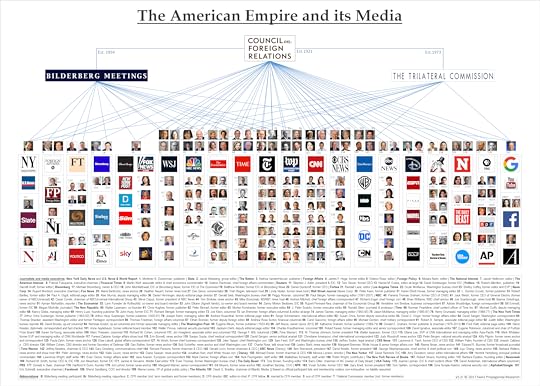
The effective mindfuck thrives on unity of message, the absence of a dissenting voice, and this state of affairs will not obtain if the means of communication are free and open (which is why informational monopoly is such a lamentable condition). The most mindfucked societies on the planet are, not accidentally, those with the weakest independent media. (p. 59)
Nothing to see here folks.
The problem is sorting out the bullshit and the mindfucking from honest discourse (and there is no simple litmus test). A serious worry is that people might come cynically to suspect that there is no genuine distinction here (this essay is dedicated to the proposition that there is). (p.60)
There is no simple litmus test.
The manipulation of minds needs to be at its most intense when those minds might, if left to their own devices, form dissenting opinions. Indoctrination will increase the volume if there are whispers from abroad filtering through. (p. 61)
A question that particularly interests me is whether philosophy, as an intellectual discipline, is inherently a type of mindfuck. I do not, I hasten to add, mean mindfuck in the negative sense; I mean the positive sense... in connection with paradigm shifts and other fundamental upheavals of thought....
Was Socrates, great man as he was, not actually one of the supreme mindfuckers of all time (in the positive sense, of course)? He went around the marketplace questioning people's ordinary beliefs about things, showing them that they were ignorant of even their most basic concept: he radically undermined their confidence, their sense of intellectual security (and rightly so). (pp. 62–3)
Perhaps, indeed, it is true to say that we can only be mindfucked by someone else if we already have a tendency to mindfuck ourselves: to believe our own bullshit, I am tempted to say. Mindfucking begins at home. (p. 71)