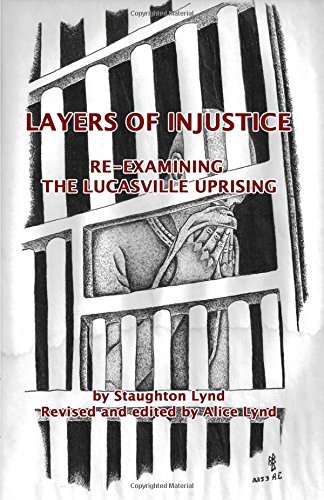
Twenty years ago, in April 1993, an eleven-day prison uprising, commonly known as the “Lucasville riot,” erupted at the Southern Ohio Correctional Facility. This is the longest prison uprising in United States history during which lives were lost. One hostage officer and nine prisoners were killed. Five prisoners were sentenced to death and others are serving lengthy sentences for crimes they allegedly committed during those eleven days. As we re-examine what happened before, during and after the uprising, we see that responsibility for what occurred should be shared by the State as well as the prisoners. The State does not know who the hands-on killers were. There was no physical evidence linking any suspect to any victim. The convictions depended almost entirely on testimony by prisoners who were rewarded for their testimony, without any objective corroborating evidence, and sometimes contrary to the testimony of the coroners. Convictions and death sentences were based on “complicity.” Based on such evidence, it is unfair to conclude that five men should be executed and others should serve the rest of their lives in prison. Twenty years is enough!
The son of renowned sociologists Robert Staughton Lynd and Helen Lynd, Staughton Lynd grew up in New York City. He earned a BA from Harvard, an MA and PhD in history from Columbia. He taught at Spelman College in Georgia (where he was acquainted with Howard Zinn) and Yale University. In 1964, Lynd served as director of Freedom Schools in the Mississippi Summer Project. An opponent of the Vietnam War, Lynd chaired the first march against the war in Washington DC in 1965 and, along with Tom Hayden and Herbert Aptheker, went on a controversial trip to Hanoi in December 1965 that cost him his position at Yale.
In the late 1960s Lynd moved to Chicago, where he was involved in community organizing. An oral history project of the working class undertaken with his wife inspired Lynd to earn a JD from the University of Chicago in 1976. After graduating the Lynds moved to Ohio, where Staughton worked as an attorney and activist.