Jump to ratings and reviews
Rate this book

The Mysteries of Nature #3

The Secret Network of Nature: The Delicate Balance of All Living Things

Rate this book

Did you know that trees can influence the rotation of the earth?
Or that wolves can alter the course of a river?
Or that earthworms control wild boar populations?

The natural world is a web of intricate connections, many of which go unnoticed by humans. But it is these connections that maintain nature’s finely balanced equilibrium.

Drawing on the latest scientific discoveries and decades of experience as a forester and bestselling author, Peter Wohlleben shows us how different animals, plants, rivers, rocks and weather systems cooperate, and what's at stake when these delicate systems are unbalanced.

The earth's ecosystems are too complex for us to compartmentalise and draw up simple rules of cause and effect; but The Secret Network of Nature gives us a chance to marvel at the inner workings and unlikely partnerships of the natural world, where every entity has its own distinct purpose.

And the more light that is shed on relationships between species, the more fascinating nature's web becomes.

274 pages, Kindle Edition

First published September 11, 2017

1446 people are currently reading
18859 people want to read

About the author

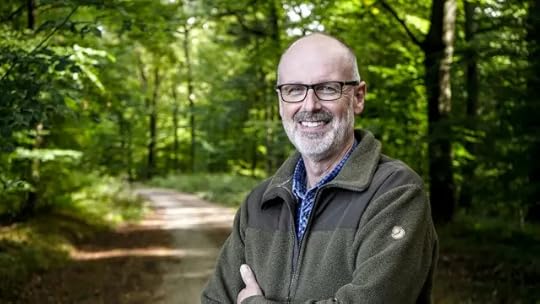
Peter Wohlleben

108 books1,917 followers
Peter Wohlleben is a German forester and author who writes on ecological themes in popular language.

Ratings & Reviews

What do you think?
Rate this book

Friends & Following

Create a free account to discover what your friends think of this book!

Community Reviews

5 stars
2,265 (31%)
4 stars
3,182 (44%)
3 stars
1,460 (20%)
2 stars
191 (2%)
1 star
25 (<1%)
Displaying 1 - 30 of 702 reviews
Profile Image for H (trying to keep up with GR friends) Balikov.
2,124 reviews817 followers
May 12, 2021
This is a series of essays on elements of life on Earth. The topics are fascinating. I wanted to go with the flow of Peter Wohlleben’s enthusiasm, but every time that urge got me going, I was hit by the fact that he so effortlessly shifts from science to his personal enthusiasms. This would be fine in other circumstances but I really wanted to have some firmer rock to cling to than just his beliefs. It should be there. It might be there, but I often lacked the confidence that I could rely on it. Speculation based on science is fine, but there needs to a clear differentiation between what is fact and what is extrapolated from known facts.

Too bad, because this is very interesting stuff.


Maybe it partially the fault of translation, but I can’t be sure of that, either.
Profile Image for L.G. Cullens.
Author 2 books97 followers
June 3, 2021
[Review revised Jun. 3, 2021 when I put it up on my website]

With all the hot buttons being pushed in scientific research papers, and distracting spin media, trying to sort out what is happening to our little blue canoe can be frustrating. There are, of course, major human proclivities we know of that need to be addressed if we are to stay afloat, but there is so much more that needs to be understood to maintain a biosphere that is conducive to human existence. There is no simple recipe because the extent of Nature's complexity is beyond our perception, not to mention that our thinking is influenced (by brain chemistry, hormones, sensory cues, prenatal environment, early experience, genes, both biological and cultural evolution, and ecological pressures, among other things) but there is much we can learn to ease our way.

What this book does is present an overview of detailed considerations to help guide us. It does this by offering up stories of known science together with observations, and where differing viewpoints beg questions it includes relative pros and cons. The supporting detail included is abbreviated out of necessity, but can be explored with further research. An example being where the author mentions the intricate dance of life in the seasonal rainforest on the west coast of Canada. He notes the large predators such as Grizzly Bears feasting on the salmon, and a dizzying array of scavengers. What he does not delve into are the fly larvae, feeding on what the larger predators leave in their gluttonous haste; banana slugs decomposing and distributing the waste and fungi; flying squirrels, fond of truffles, distributing fungi; and fungi and microorganisms finishing the decomposition to enrich the soil, renewing plant life of the seasonal rainforest (almost all life on Earth relies directly or indirectly on primary production). The balancing process here is an example of life being fueled by life in Earth's closed loop system. Looking at it from only the complexities of the food chains, with all the biodiversity of the seasonal rain forest involved, a fair bit of the balancing activity necessary to the continuity of all life is manifest.

My take of this book is that such interrelationships exist in and between all ecosystems and biomes, to sustain the continuity of life on Earth. Also, as life forms and habitats change, effects cascade through all with evolutionary balancing and niche filling adjustments. To get a simple mental handle on such, think about what would happen to our food supply if pollinators disappear.

This book is more of a call for increased wisdom than it is a condemnation of human activity, as any weedy life form that acquired sufficient capabilities would do the same given the natural order drives instilled in continuing life. We're but a liminal thread in Nature's fluid web-of-life, all sharing degrees of genes and basic inherent behavioral traits. All functional life forms share the basic natural order drive to not only survive but thrive and multiply. Our problem is that we are finding emerging hurdles ever more difficult, because the Earth is a closed system and we're struggling against natural processes we are but a part of. Make no mistake, Nature will hold sway regardless of our indifferent hubris. Paint a pretty picture in your mind to feel better if you will, but unless we learn to live in respectful coexistence with all Earth's life and resources that picture is pure fantasy.

Other books to read that bear on our ability to focus on and understand root issues are The Meaning of Human Existence by Edward O. Wilson, and Behave: The Biology of Humans at Our Best and Worst by Robert M. Sapolsky.

It is amazing how much we can broaden our horizons for the betterment of humankind through reading meaningful, informative books like this, which can help considerably in addressing our root problems. Simply focusing on downstream consequential issues of our proclivities to date is the long road few if any will survive — demonstrably we've made sluggish hit-and-miss progress so far, and we're already on the precipice of an environmental tipping point.

"We can't solve problems by using the same kind of thinking we used when we created them." ~ Albert Einstein
Profile Image for Darwin8u.
1,824 reviews9,030 followers
January 3, 2020
"We don't really understand how the clockwork of nature functions, and as long as we don't, we shouldn't try to fix it."
- Peter Wohlleben, The Secret Wisdom of Nature

description

I should disclose that my discomfort with Peter's empathetic narrative style, is mostly just a person preference and one I've brought up with his previous books in his 'The Mysteries of Nature trilogy'. I DO love his enthusiasm and agree with a lot of what he has to say in his books.

He even, in this book, addresses his writing style:

"Over the years, an undertone of emotion crept in, which was more in line with my personal thinking. In other words, I relaxed adn let my heart do the talking instead of my brain."

...And...

"The language I use is too emotional, they said. My descriptions make trees and animals seem human, and that is not scientifically correct. But can a language stripped of emotion even be called a human language?"

So, while I still will argue that anthropomorphizing trees and animals presents VERY real issues, Wohlleben has also recognized that the costs of doing it are worth the benefits (empathy with the situation of trees and animals). And, really, it is hard to argue with that.

All that said, his curiosity and his ability to pull research and other ecological writing into a compelling narrative is amazing. My favorite part, however, is one that is often overlooked in both scientific studies and commercial lobbying. Wohlleben presents nature as complicated and inter-dependent and recognizes just how much we don't know about nature, let alone our impact on the trees and animals we interfere with everyday. His combination of curiosity and humility kept me reading this trilogy.

The previous two books in his trilogy are:

1. The Hidden Life of Trees: What They Feel, How They Communicate – Discoveries from a Secret World - my review
2. The Inner Life of Animals: Love, Grief, and Compassion: Surprising Observations of a Hidden World - my review
Profile Image for Howard.
2,089 reviews118 followers
February 13, 2023
3 Stars for The Secret Wisdom of Nature: Trees, Animals, and the Extraordinary Balance of all Living Things (audiobook) by Peter Wohlleben translated by Jane Billinghurst read by Sean Barrett.

I enjoyed The Hidden Life of Trees more. It seemed like most of the examples mentioned in this book were in Europe. And it seemed less scientific and more opinion.
Profile Image for Camelia Rose.
889 reviews112 followers
April 13, 2021
The Secret Wisdom of Nature is an easy-to-access book on ecology, similar to The Secret Life of Trees, but boarder. Peter Wohlleben tells excellent stories about nature and the interconnecting living things in nature, including humans.

Some interesting learnings:
1. Reintroducing wolfs to central European forests recovers the region's balance between predicators, trees and herbivores.
2. The hunting practice where hunters feed their games causes more harm to forests than hunters would admit.
3. Meadows where livestocks browsing is so bucolic to human eyes because it is a human invention. The success of grass as a species is due to our picking of grass over forest.
4. Human emotions and aesthetics affect our relationship with animals and plants. Conservation projects can be swayed by our emotions and aesthetics and they may cause damage.
5.Trees don't like wild fire. Some trees, such as sequoias, adapt to regions where wild fires often happen, but it doesn't mean wild fire is necessary or even essential to the growth of forests.
6. Climate change is not a new phenomenon on earth. It's the speed of change that is the problem. The climate change unleashed by humans is too fast, too drastic for animals and trees to adapt. Urbanization and rigid land planning give no space for animals and trees to migrate.

His message: Nature is interconnected. Don't meddle with nature if you don't absolutely know what you are doing. Leave nature alone.

Compare to other books I've recently read, his attitude on climate change is almost nonchalant at the first glance. However, it is not because he thinks climate change is not an issue. On the contrary, he is fully aware of and laments the damage we have caused to other species. It seems to me that he thinks in the geological timeline instead of human timeline--no matter what damage we impose on nature, nature will eventually bounce back. But humans? Who knows. We are not as important as we think. Perhaps we do not matter after all (otherwise why a species would bring demise to themselves?).
Profile Image for Tonstant Weader.
1,284 reviews84 followers
January 29, 2019
The Secret Wisdom of Nature focuses on the relationships between the flora and fauna of nature, things like how some plants, insects, birds, or animals interact with other plants, insects, or animals to survive, thrive, and multiply. Many of the relationships are fascinating and this book is full of “I didn’t know that” and “Hmm, interesting” information. This is the third in a series of books that began with “The Secret Wisdom of Trees.”

Did you know trees affect the weather and change the rotation of the sun? Did you know they work in concert to react to threats and changes in their environment? Did you know the Brits love of feeding birds is changing the beak and wing shape of some birds? Did you know that for trees cannot “see” green so the daylight we see in the forest is dark for them? That is the kind of strange and surprising things you will learn reading this book.


The Secret Wisdomof Nature is fascinating and informative. It is also maddening at times. Wohlleben anthropomorphized far too much. He attributes intention to biochemical responses and biologically-programmed instincts and behaviors. His nature is full of emotion. Of course, animals experience emotion. Anyone who saw the daily stories of J35 mourning her dead calf and her fellow Southern Resident orcas helped keep her and her calf afloat for seventeen days cannot deny the grief and emotional depths of animals. Wohllenben goes further than that, though, too far for me, describing plants and animals as emotional beings.

I cringed sometimes when he described evolutionary processes, not necessarily because they were not happening but because he made them seem purposeful. His description of blackcap warbler evolution, for example, seems problematic. Some of them have taken to flying to England where people feed them rather than Spain where they eat berries and fruit, including olives. Natural selection has resulted in those with rounder wings and longer beaks doing better. But the way the author talks about it is far too intentional, not the random mutations turning out to be useful. There is an element of design in how he describes nature and that sets my teeth on edge.

He also seems humanity as something apart from nature. He addresses this directly, writing we became separate from nature when we began farming. This is increasingly rejected by scientists and it’s a good thing, helping to understand the interdependence of humanity with the rest of the world. Still, I think many people will enjoy the book for all the “did you know” moments and his easy writing style. I can see people who see the world as designed really liking it.

The Secret Wisdom of Nature will be published on March 5th. I received a copy for review from the publisher.

The Secret Wisdom of Nature at Greystone
Peter Wohlleben

ttps://tonstantweaderreviews.wordpress.com/2...
Profile Image for Ray LaManna.
713 reviews68 followers
February 29, 2020
This is the second book in Wohlleben's trilogy...his first was the excellent The Hidden Life of Trees (I guarantee you that you will never walk through a forest the same as you did after you read that book). This book extends his inquiry to all of nature...it's quite comprehensive, though a bit too strong on the science. But it is definitely worth the effort...here are the thoughts and suggestions of a man who walks through nature every day as part of his job as a forester.
Profile Image for ༺Kiki༻.
1,989 reviews129 followers
April 11, 2019
Profile Image for Nancy Mills.
456 reviews33 followers
June 15, 2019
Very well-written and friendly book. Easy reading and moves along well, packed with interesting information on nature from trees to insects to human evolution. I can't imagine anyone finding this uninteresting. The author has an intimate connection to the natural world around him and does a great job sharing the wonders.
Profile Image for Antje.
689 reviews59 followers
March 14, 2020
"Ich liebe es, zu erzählen." - Wie wahr er spricht. Manchmal läuft Herr Wohlleben geradezu Gefahr, sich völlig zu verzetteln, weil er dutzende Nebengedanken einwirft - mit Sicherheit in bester Absicht, den Leser so viel wie möglich an Wissenswerten auf dem Weg zu geben. Doch so passierte es, dass ich am Ende mancher Kapitel gar nicht mehr wusste, was das eigentliche Ausgangsthema gewesen war.

Insgesamt jedoch haben mich seine Ausführungen über die unterschiedlichsten Netzwerke der Natur erneut gefesselt. Vor allem die erste Hälfte seines Buches galt meinem Hauptinteresse, in der ich viel über Wölfe, Krähen, Ameisen, Borkenkäfer und andere Tiere lernen konnte. Es ist leider eine Flut an Informationen, die ich bereits wieder schwer hervorkramen kann.

Nichtsdestotrotz hätte ich eine solche Lektüre im Biologieunterricht begrüßt.
Profile Image for Paula  Abreu Silva.
384 reviews113 followers
April 2, 2021
"Vamos diretos ao assunto e comecemos a discutir uma das questões mais difíceis, nomeadamente a resposta à pergunta: o que é a natureza? São as florestas tropicais virgens ou as montanhas remotas com picos inalcançáveis? Os prados alpinos onde pastam vacas castanhas com grandes badalos ao pescoço? E as minas abandonadas, onde se formaram lagos e as rãs coaxam agora alegremente, também contam? Provavelmente há tantas definições quanto pessoas que gostam da natureza. Uma definição simples de base é que natureza é o oposto de cultura - ou seja, tudo o que as pessoas não criaram nem modificaram. Esta definição traça fronteiras rígidas e claras sobre aquilo a que pode chamar-se natureza. Outras definições veem as pessoas e as suas atividades como parte da natureza. Desta perspetiva, natureza e cultura não podem obviamente ser separadas.
E é exatamente este o problema do movimento moderno de conservação: o que vale realmente a pena proteger, e o que conta como ameaça ou mesmo perturbação?"
31 reviews
October 15, 2020
I tried to read The Hidden Life of Trees a few years ago but couldn't get through it because of how irked I got at Wohlleben's childish writing style (it reads in my head as almost sing-song-ey, like how you'd read to a child - "well, now then, how about we talk about..."). I'm not sure if this is a product of the translation or the actual writing, but I was disappointed to see that the Secret Wisdom of Nature was written in the same way - not surprising I guess considering it was written and translated by the same people. I persevered because in theory the book is right up my alley - I love nothing more than a nice non-fiction book paired with a personal narrative. Some of the informational tidbits Wohlleben supplied were interesting, and I enjoyed some of his case studies, but overall I was really underwhelmed, particularly considering the popularity of these books.

Aside from the writing style, I couldn't get behind some of his content. For instance, he seems to view some patches of wilderness as pristine, untouched nature without acknowledging the influence that humans have had on the environment for thousands of years. Wilderness is a human construct that separates humans from the rest of creation, a standpoint that Wohlleben assumes throughout the book. Though he is German, this line of thinking applied to North America (and, let's be honest, the rest of the world) is neocolonial and serves to extinguish the existence of Indigenous people from the land. Now that we realize Western land (mis)management systems are failing, it is commonplace to extol the virtues of practices such as prescribed burning and regenerative agriculture without acknowledging that traditional land stewards developed these systems and coevolved with these ecosystems. Ecosystems are dynamic. The concept of wilderness is not. I'd recommend reading William Cronon's essay "The Trouble With Wilderness" for further reading on this issue.

Though I believe that there is more to the rest of creation than we know, I do disagree with the particular way in which Wohlleben anthropomorphizes nature. It is always important to underscore the vast complexity of nature, though, so I cannot fault him for that, nor can I fault him for connecting so many readers to the natural world through his books as they gain in popularity.

Profile Image for Edvinas Gliebus.
48 reviews41 followers
March 19, 2020
Toks fainas skaitinys, visai nemoksliskas, bet toks siltai zmogiskas, lyg sneketum su dede girininku, kuris papasakoja idomiu istoriju, nelauzdamas is saves mokslavyrio.

Tinka prie aktualios situacijos, kaip gamta prisitaiko ir ismezia per daug prisidauginusi bruda.

3.5
Profile Image for nicole.
114 reviews
December 11, 2024
yo this was much better the second time around haha shame they didn't ask me any qs about it in the interview though
Profile Image for Amanda Hupe.
953 reviews67 followers
September 8, 2021
“We know nature can heal itself in certain circumstances, but we also know that this takes time…”

PETER WOHLLEBEN
I can’t get enough of Peter Wohlleben’s passion for nature. The Secret Wisdom of Nature is the third book in his The Mysteries of Nature Series. I am going out of order, but thankfully that doesn’t matter here. I have previously read The Hidden Life of Trees and I just purchased The Inner Life of Animals. To say Peter Wohlleben has inspired me is putting it lightly. He truly cares for every plant, animal, and insect (except for one type of moth, I can’t remember the specific species he named.) Every time I read one of his books, I want to go outside and observe the nature around me…except there isn’t much nature around me. The city in which I live is currently building thousands of new homes on previously empty fields. We used to see the occasional bald eagle and so many red-tailed hawks (much to my father’s delight, he was a huge fan of hawks.) But do the people in charge of bulldozing this land think that those birds are going to stay here after their habitat is gone? So my husband and I purchased some property up the mountain. I am taking as many notes from Peter Wohlleben and Douglas W. Tallamy as possible to ensure that our new home is also home to the fauna and flora around us.

Now, back to the book. This book focuses on the connections of nature. Not just trees communicating with each other but how animals and plants communicate. It also discusses how one aspect of an ecosystem is can affect the others within that ecosystem. We have already seen evidence of this here in the United States when wolves were reintroduced back into Yellowstone National Park after being hunted and eradicated by animal farmers. After wolves returned, the ecosystem became balanced again.

I really enjoyed the section on Climate Change as well. Here in America, it is a very “hot topic” so to speak. There is no doubt that Climate Change is a naturally occurring process but we have loads of evidence that humans have increased the speed of that change. So now many plants and animals do not have the time to adapt.

I wish many people looked at nature in a similar way as Peter Wohlleben. Then maybe our world and the life within it would have a fighting chance in the coming years. Sean Barrett is the narrator for this audiobook and he is phenomenal! I can’t wait to read more of these books! I urge EVERYONE to read them! 5 out of 5 stars!
Profile Image for Иван Величков.
1,076 reviews66 followers
March 18, 2018
Тази ми хареса даже повече от "Тайният живот на дърветата".
Авторът отново ни е приготвил кратки научнопопулярни есета, като този път е наблегнал повече на взаимовръзката растения-животни-хора-планета и доста по-смело излага вижданията си за влиянието ни върху природата и какво можем да направим, за да го подобрим. Плюс доста любопитни невидими взаимодействия в механизма на биосферата.
Ако искате да разберете как дърветата ядат сьомга, какъв е живота на двеста метра под земята, как дъждовните червеи контролират популацията на глиганите, как вълците помагат за растежа на брезите, защо мравките обичат незабравки и как молците развъждат ипомеа - това е вашата книга.
Също ще разберете как трябва да разсъждава един наистина загрижен едновременно за природата и човечеството разумен човек, как популистки се манипулират еко-организациите и защо не трябва да храним елените през зимата. Както и много други неща. За капак хер Волебен е разкошно сладкодумен и не се прави на всезнаещ.
Profile Image for Andrew.
686 reviews249 followers
December 20, 2018
Back to classic Wohlleben exploring the interconnectedness of all living things. Much like trees there are some wonderful observations in here. But also some deeper questions about how humans can help nature or whether they even should.
Profile Image for Adam.
1,139 reviews24 followers
June 1, 2021
Think Bill Bryson, but if a German were to write. So it's not really funny like Bryson, but it's the same comprehensive, intelligent, insightful outline of a whole lot of different areas of forests. I was hoping it would actually show 'wisdom' from nature, but it really is just a lot of perspectives on how relatively ignored parts of nature end up interacting with each other directly and indirectly. I really liked it, it felt like I was deep in a German forest for much of the book. But, it's more for appreciation and perspective than anything else.
Profile Image for Dinah Lynn.
108 reviews8 followers
April 27, 2023
This is the third book of The Mysteries of Nature trilogy.
Wohlleben discusses wildlife, forests, insects, climate, and humans interaction with all the above. Adding to knowledge that humans should be aware of in order to understand this potential fragile system.

With careful interaction— the outdoors can continue to bring critical elements into balance but we need to contribute too. Thank you Peter Wohlleben for becoming one of our experts to write about it.
Profile Image for Jonathan Tennis.
664 reviews14 followers
April 11, 2019
The last of the nature trilogy. Wohlleben sometimes repeats himself and so there is some info in this last book that was also in the earlier two. But he tells such a good story that it’s hardly noticeable. Recommend all three of these books.

“Aphids attach themselves to the trees’ needles and bark, stick their mouthparts down to where the trees’ sap flows, and tap into the trees’ lifeblood. Thanks to photosynthesis, this “tree blood” has a high sugar content, but that’s not what the aphids are after. What they want is protein, which is found in this fluid in only very small quantities. Therefore, the aphids need to allow enormous amounts of the trees’ fluids to flow through their bodies so that they can filter out enough of the scarce substances they desire. Whoever drinks a lot must excrete a lot, and aphids excrete almost constantly. If you park under aphid-infested trees in summer, your windshield will tell you all you need to know—in just a few hours, it will be covered with sticky droplets. And because the little creatures are constantly eating and excreting, over time their rear ends can get gummed up with sugar. Some species resort to covering their excretions with wax so that they can expel them more easily; others enlist the help of ants. Ants lap up the sugary feces, because, like their relatives the honeybees, sugar is the most important compenent in their diet. Per season, a single any colony digests about 50 gallons of these sugary droplets.” – p. 70

“Dead animals are often the cause of fights, and wolves lost out when brown bears turn up. Then it’s best for the pack to head for the hills, particularly if they have pups, which a bruin could easily scarf down as a snack. Ravens have a role to play here: they spot bears from afar and help wolves by alerting the pack to approaching danger. In return, wolves allow ravens to help themselves to a share of the booty—something the birds wouldn’t be able to do without the wolves’ permission.” – p. 88-89

“As researchers at Ulm University discovered, something else happens to the beetle mother: she loses interest in mating. Not only that, even if the male were to get lucky, it wouldn’t do any good, because his beloved is now completely infertile—at least as long as she has her full complement of babies. As soon as a couple of the little ones go missing (perhaps because they died or were eaten by some animal), her desire for sex returns. The male immediately gets wind of the change and goes beserk. The scientists observed up to three hundred copulations—more than when the male initially laid claim to the carcass. The female quickly lays new eggs to replace her loss. If, in this flurry of activity, she ends up with too many babies, she soon fixes things by killing the extras.” – p. 93

“Empathy is one of the strongest forces in conservation and can achieve more than any number of rules and regulations. Think of the campaigns against whaling or against the slaughter of seal pups—public outcry was so loud only because we all empathized with the animals. And the closer the animals are to us, the greater the empathy.” – p. 125

“A whole army of infectious agents has its eye on wild boar, including a large number of viruses. Viruses are remarkable, but what exactly are they? Scientists don’t include them among the living species of this earth, because they have no cells and can’t reproduce or metabolize on their own. All they are is a hollow shell that contains a blueprint for multiplication. Basically, they’re dead.” – p. 137-138

“There’s a very different kind of myth surrounding species diversity. When we save individual animals or plants, we really believe we’re doing something good for the environment. Yet this is rarely what happens, mostly because when we have to change conditions in the environment to ensure the survival of one species, the survival of many others ends up in jeopardy. But I’m getting ahead of myself. When we see just how multilayered the interactions between different species are, we have to ask, once again, whether we will ever be able to fully comprehend the connections in our environment.” – p. 146

**Arches National Park mentioned on p. 205

“Researchers tell us that every person alive can be traced back to one mitochondrial Eve, who is said to have lived 200,000 to 300,000 years ago. The variations in skin color and other characteristics that have developed since then are disappearing increasingly quickly. What some people mourn as a loss of diversity, others embrace as an opportunity for humanity to bid goodbye to racial differences.” – p. 213-214

“We don’t really understand how the clockwork of nature functions, and as long as we don’t, we shouldn’t try to fix it.” – p. 225

“Of course, no one wants to return to times of famine, but our problem today isn’t cold but increasingly warm temperatures. The positive message from all of this is that not only can we win back the original forests, but doing that could also steer the climate in the right direction. And to achieve this we don’t even need to do anything. Just the opposite, in fact. We need to leave things alone—on as large a scale as possible.” – p. 232
Profile Image for Betsy.
633 reviews234 followers
December 10, 2023
[26 November 2023]
I previously read The Hidden Life of Trees: What They Feel, How They Communicate: Discoveries from a Secret World and enjoyed it immensely, so I gladly joined in reading this book when my Goodreads group selected it for its monthly read. I'm glad I did. I really enjoyed reading it. It is similar to The Hidden Life of Trees in that it's more of a conversation with a friend than a science book. But this book is probably a little less controversial and surprising than the earlier one was.

Wohlleben is not technically a scientist. He's a forest ranger. But he's a very good observer of nature. And he obviously reads a lot of the science that supports his observations. And he's a good storyteller.

It's a short book and an easy read. It's essentially a collection of stories about how complex and interconnected all of nature is. Nature is a Jenga tower. Messing with it, even with good intentions, can result in unfortunate consequences. But Nature is also very powerful and could recover from much of what we've done to it. This book is a subtle plea for us to leave it alone, especially the forests because they need time to recover their balance.

I really enjoyed this book and recommend it strongly.
Profile Image for Melody.
2,668 reviews310 followers
October 19, 2021
Mostly, if it's in nature, leave it alone. I love this book. I love this philosophy. Wohileben is the one who first alerted me to the fungal networks that serve as the "wood-wide web" and really began my education into the intricacies of the connections humanity is ignoring and burning up.
Profile Image for Myada Elmasry.
305 reviews144 followers
October 21, 2024
عظمة كعادة Peter Wohllen 😍

الطبيعة مليئة بالأسرار اللي مهما عاش الإنسان وتقدم عمره ما حيقدر يكشف الستار عن خمسة في المية منها حتى ..


في هذا الكتاب الرائع يحاول الكاتب إظهار الترابط اللانهائي بين كل شئ في الطبيعة والنظام المثالي الذي لا يتطلب من الإنسان شئ للحفاظ عليه سوى تركه بلا تدخل (حتى تأخذ الطبيعة مجراها)
Profile Image for Cav.
906 reviews203 followers
March 31, 2023
"Nature is like the mechanism in an enormous clock. Everything is neatly arranged and interconnected. Every entity has its place and its function..."

The Secret Wisdom of Nature is my third from the author. It was an interesting book, but it did not resonate with me quite as much as I'd hoped it would. The book is the third installment in "The Mysteries of Nature" series.

Author Peter Wohlleben is a German forester who writes on ecological themes in popular language and has controversially argued for plant sentience. He is also sharply pro-animal rights, and decries a meat-eating diet, as well as hunting, and many other forms of animal treatment that could debatably be called "cruelty."

Peter Wohlleben:
peter-wohlleben

Wohlleben writes with a fairly engaging style here, and this book is a nice, easy-going read. The formatting was also well done. The book is broken into well-defined chapters, and each chapter into blurbs of writing with relevant headers at the top.

The quote from above continues on, setting the pace for the rest of the writing to follow:
"...But nature is much more complex than a clock, isn’t it? In nature, not only does one cog connect with another; everything is also connected by a network so intricate that we will probably never grasp it in its entirety.
And that is a good thing, because it means that plants and animals will always amaze us. It’s important for us to realize that even small interventions can have huge consequences, and we’d do better to keep our hands off everything in nature that we do not absolutely have to touch.
So you can get a clearer picture of this intricate network, I’d like to show you some examples. Let’s be amazed together."

These are all the topics covered here, listed by chapter:
1 Of Wolves, Bears, and Fish
2 Salmon in the Trees
3 Creatures in Your Coffee
4 Why Deer Taste Bad to Trees
5 Ants—Secret Sovereigns
6 Is the Bark Beetle All Bad?
7 The Funeral Feast
8 Bring Up the Lights!
9 Sabotaging the Production of Iberian Ham
10 How Earthworms Control Wild Boar
11 Fairy Tales, Myths, and Species Diversity
12 What’s Climate Got to Do with It?
13 It Doesn’t Get Any Hotter Than This
14 Our Role in Nature
15 The Stranger in Our Genes
16 The Old Clock


***********************

I did enjoy The Secret Wisdom of Nature, but not quite as much as I'd hoped. It is still an interesting short and easy-going read that contains many interesting tidbits of information about the natural world.
3.5 stars.
April 1, 2020
Knyga idomiai bet ne tiek kiek pirmoji jo knyga apie medziu gyvenima. Vienos istorijos idomios, kitos visiskai nepatraukiancios demesio. Issiduosiu, nes sia knyga nusipirkti sugalvojau del virselio, kuris savotiskai grazus. Paskui knyga gal koki menesi su virs gulejo lentynoj laukiant kada perskaitysiu, kadangi karantinas galvoju why not :) Visumoje knyga rekomenduoju, kam patinka gamta ar jos myletojams.
Profile Image for Angharad.
72 reviews8 followers
October 9, 2019
4.5 - if this book had a few colour images it would be a full 5 stars!

This book was exactly what I was hoping it would be. Plenty of information but not bogged down with science that would put off a person who has only reached as far as A-Level Biology and Geography, like me, and who wasn't up for wading through page after page of explanations. This was so easy to read (accessible to anybody with an interest really) and I never grew bored. The chapters were the perfect length and I love how the end of one connected to the beginning of the next...
Almost like... a network! :O
(my apologies)
Maybe I'm biased, because ecology is one of my favourite things to learn about, but I found the 'networks' in this book fascinating. I had already read/heard about a couple of them (I think most people have heard about the Yellowstone wolves by now, which is great) but most of them were new to me and I enjoyed every one.
It is wholeheartedly my opinion that the content of this book should be studied in schools. Children are, thankfully, taught more about climate change and their impact on their environment now than ever before, but more still needs to be done to highlight the issues (because my god, there are so many), a few of which are mentioned in this book.
I agreed with the authors views on all the bigger topics, and gave a little cheer every time he described the rogue hunters and farmers and the politicians that support them as exactly what they are- selfish and destructive.
I did disagree with the author slightly, on a few minor topics (owning wild animals etc) but I could tell by his writing, and the great translation I might add, that he cares so much about the world and its animals, and has only good intentions.
I will definitely be reading his other books!
Displaying 1 - 30 of 702 reviews

Join the discussion

Can't find what you're looking for?

Get help and learn more about the design.