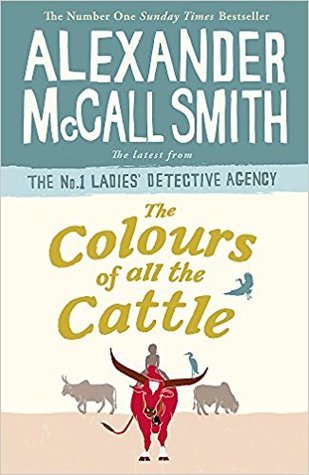
Precious Ramotswe dips her toe into the world of politics in the newest addition to the beloved and best-selling No. 1 Ladies' Detective Agency series.
When Mma Potokwane suggests to Mma Ramotswe that she run for a seat on the City Council, Mma Ramotswe is at first unsure. But when she learns about the proposed construction of the flashy Big Fun Hotel next to a graveyard, she allows herself to be persuaded. Her opponent is none other than Violet Sephotho, who is in the pocket of the hotel developers. Although Violet is intent on using every trick in the book to secure her election, Mma Ramotswe refuses to promise anything beyond what she can deliver--hence her slogan: "I can't promise anything--but I shall do my best." To everyone's surprise, she wins. As it turns out, politics does not agree with Mma Ramotswe. Though everyone is supportive, she eventually resigns. She thinks there will be a new election, but she discovers that the rules state that in such an event, the runner-up automatically takes the seat. Violet is triumphant, and sure that she will get the Big Fun Hotel planning application through without a hitch. But Mma Makutsi and Mma Potokwane are not about to make it easy for her. Through it all, Mma Ramotswe uses her good humor and generosity of spirit to help the community navigate divisive issues, and proves that honesty and compassion will always carry the day.
Alexander McCall Smith is the author of the international phenomenon The No. 1 Ladies' Detective Agency series, the Isabel Dalhousie Series, the Portuguese Irregular Verbs series, and the 44 Scotland Street series. He is professor emeritus of medical law at the University of Edinburgh in Scotland and has served on many national and international bodies concerned with bioethics. He was born in what is now known as Zimbabwe and he was a law professor at the University of Botswana. He lives in Scotland. Visit him online at www.alexandermccallsmith.com, on Facebook, and on Twitter.
What better way to spend a few hours on a rainy day than with Mma Ramotswe and her delightful friends.
There's lots happening in this nineteenth outing including Mma Ramotswe standing for a local election. Can she possibly win when she claims to be standing for nothing? Is honesty always the best policy? Charlie also has to deal with the subject of being honest and manages to land himself in all kinds of difficulties. Mma Makutsi gets herself into some trouble too, has her first row with her husband and finds herself having to think about her nemesis Violet Sepotho again. And the talking shoes reappear!
All of this happens in the author's beautifully described Botswana. The sense of place he creates is perfect. Botswana is just like that. The cattle, the sun, the dust, Rooibos tea - who cares if it is raining in Australia. I am in the sunshine in Africa.
In this 19th book in the 'No. 1 Ladies Detective Agency' series, Mma Ramotswe runs for public office. The book can be read as a standalone, but familiarity with the characters is advantageous.
*****
Mma Ramotswe, owner of the 'No. 1 Ladies Detective Agency' in Gaborone, Botswana has a good mind, a generous heart, and strong sense of right and wrong. Thus Mma Ramotswe is against the plan to build a hostelry called 'The Big Fun Hotel' right next to the town's cemetery.
After all, people who are late (deceased) should not be disrespected with noise and revelry.
Mma Ramotswe's good friend Mma Potokwane, director of the local orphan farm, has a plan to stop the building project. She wants Mma Ramotswe to run for a vacant seat on the city council....so she can vote against The Big Fun Hotel.
Mma Ramotswe resists mightily, but Mma Potokwane is a formidable woman, and she has a trump card. Violet Sephotho, the glamorous vamp, is running for the council seat - and she'll certainly vote YES for The Big Fun Hotel.
Thus Mma Ramotswe reluctantly agrees to be a nominee, and her election team consists of Mma Makutski - the co-managing director of the No. 1 Ladies Detective Agency (a promotion she gave herself); Mr. Polopetsi - a chemistry teacher who works as a part time detective; Charlie - a half-time mechanic's apprentice/half-time detective-in-training; and Mma Potokwane - who's organizing the entire business.
Mma Makutsi's talking shoes warn her not to get involved in politics, but she does, with rather amusing results. Mma Makutsi's 'undercover' visit to the man proposing The Big Fun Hotel has unexpected results and her 'manifesto' for Mma Ramotswe's campaign is hilarious.
The manifesto goes on and on about Violet Sephotho's sub-par performance at the Botswana Secretarial College, her use of fluttering eyelashes to get jobs, and her attempts to steal other women's husbands. Mma Ramotswe decides not to use this document, but to emphasize her own honesty instead.
While the political campaign is proceeding, Mma Ramotswe is also working on a case. Dr. Marang, from Mma Ramotswe's hometown of Mochudi, was badly injured in a hit-and-run accident. Needing compensation for his large medical bills, Dr. Marang has hired the No. 1 Ladies Detective Agency to find the driver who hurt him.
Part-time detective Charlie is put on the case and manages to get into trouble before Mma Ramotswe (as always) makes things right. There's a big element of luck here, as often happens with Mma Ramotswe's detective work.
Charlie is also dating a woman named Queenie-Queenie, not realizing that she comes from a very wealthy family. Charlie's dates with Queenie-Queenie usually amount to a cup of coffee or the rare inexpensive dinner because of his penurious circumstances and lack of transportation.
Will this romance work out? We'll have to stay tuned. (There's a disconnect here with previous books in the series. Formerly, Charlie had plenty of cash for a car, flashy clothes, and chasing girls. I wonder if the author forgot.....or what.)
As always, the characters drink many cups of tea and Mma Ramotswe indulges in numerous slices of Mma Potokwane's excellent fruit cake. And, as before, we hear about Botswana's 'old ways', which Mma Ramotswe prefers to some irreverent 'new' ideas.
The recurring characters make an appearance in the story, including Mma Makutsi's husband Phuti Radiphuti - who has a disagreement with his wife; Mma Ramotswe's husband Mr. JLB Matekoni - who sees automobiles and car maintenance as a metaphor for life; Mma Ramotswe's foster children Motholele and Puso - who are growing up; and Fanwell - the former apprentice who's now a skilled mechanic.
I always enjoy a visit with Mma Ramotswe and her associates, and it was fun to see the detective get embroiled in politics. Good book for relaxing with a cup of tea and a snack.
This is book 19 in the No. 1 Ladies Detective Agency series. This series has Precious Ramotswe and her team solving mysteries with kindness and humanity, rather than punitive measures. This book has several plot elements: MMA Potokwane, manager of an orphanage and friend of Precious, comes to Precious and insists that Precious run for election to the City Council Charlie's relationship with his girlfriend Queenie(Charlie is a mechanic at J.L.B. Matekoni's automobile repair shop and part time detective with the No. ! Ladies Detective Agency) A man who was the town doctor where Precious grew up, comes to Precious and asks her to find out who hit him in a hit and run accident, breaking both his legs. All of these issues are resolved satisfactorily. There are some humorous lines in this book. Grace Makutsi, who started as a secretary, has now decided to call herself "joint managing director." Some previous titles that she gave herself: " assistant detective, Principal investigating officer, and co-director." I noticed that the title of my edition uses the American spelling of "color', but in the text it uses "colour"(British spelling). If you like cozy mysteries, little violence, no bad language or sex scenes, then you will like this series. This book can be read as a stand alone, but I have read all the previous books in the series and there are ongoing plot developments in the series. I rate this book an easy 4 stars.
In this installment of the series, the lead detective finds herself in a pickle. She is convinced to become a political, at the same time as fulfilling her normal duties. It was fun to see her in another role, and as always she handled it with moral integrity and grace.
I love the humanity of this series, the gentleness, the forgiveness and the humor. We get to see our characters develop and their relationships evolve with each volume. The setting adds delight also. Favorite quotes include: "They (late people) were with us in the love that they had shown us, and which we could still draw about us, like a comforting blanket on a cold night," which made me feel warm and nostalgic for people who have past from my life.
"The tea break - that still moment, that unchangeable ritual, that survived everything, made normal the abnormal, renewed one's ability to cope with whatever the world laid before one. Tea." It's always time for tea and this resonated with me especially. Tea has the magical ability to restore me.
"Not once in his short life had he been given anything that was special to him. He loved the shoes [...] they made him feel very much better." This just made me cry with happiness for a sad boy who is now happy.
What a lovely, heartwarming book. It certainly warmed the cockles of my heart.
“There were some people cut out for politics, but she was sure she was not one of them. She believed in reconciliation and compromise; politicians seemed to believe only in the routing of their opponents. That was not the way she saw the world. It was not the way her father, the late Obed Ramotswe, had seen it either. It was not the way, she was sure, that the ancestors had viewed things. It was not the Botswana way.”
The Colours of All The Cattle is the nineteenth book in the popular No 1 Ladies Detective Agency by British author, Alexander McCall Smith. Life is good in Mma Precious Ramotswe’s Botswana, although there are always some concerns: plans for a dubious hotel proposal next to the cemetery are a worry; the hit-and-run case in Mochudi, on which the police have given up, is offering no clues; and the vacancy on the city’s council may be filled by Grace Makutsi’s least favourite person if no one stands against her.
It seems that the consensus of opinion of those around her is that the only person in Gabarone who could win against the notorious Violet Sepotho is Mma Ramotswe, and her bossy friend Sylvia Potokwani effectively bullies Precious into standing. Her later attempt to withdraw is sabotaged by her sense of duty to the people of Botswana. The self-appointed campaign committee has some wonderfully amusing meetings. Precious campaigns on a platform of honesty, making no rash promises, but vowing to do her best, and she is genuinely overwhelmed, and somewhat dismayed, by the response from voters.
In this instalment: Charlie, detective-in-training and part-time mechanic, uses a frowned-upon (by Mma Ramotswe) method to obtain information, which gets him into more trouble than he had ever imagined possible; seeking information about a corrupt developer, Mma Makutsi naively undertakes a covert operation, but with less success that she had hoped; Charlie has a girlfriend, and this time things look serious, but Queenie-Queenie has not been entirely honest with him. Mma Makutsi’s shoes murmur advice; and Mma Ramotswe again demonstrates her unfailing kindness and generosity.
As always, McCall Smith gives the reader a novel that has humour and wisdom, insightful observations and heartfelt emotion. Delightfully entertaining.
Like all in this series, The Colors of All The Cattle goes down like a warm cup of bush tea. Surely Smith's No. 1 Ladies Detective Agency series has improved and increased travel to Botswana.
Readers will continue to enjoy the wise, kind ruminations of Precious Ramotswe and the interactions of the other characters. Similar to Hemingway, Alexander McCall Smith is able to coax a moving, interesting story about a very different culture from a quiet economy of words and actions. Different from Hemingway, we also get quite a bit of some characters' interior thoughts.
While the book is not a world-changing, it is a welcome diversion readers will enjoy.
This rating is perhaps unfair. This is the only book I’ve read from this series and it’s a newer book. I found the characters annoying and the mystery weak. I’m sure if I’d already loved them, I might feel differently. There is a series I love that others find the main character annoying, but I love her. If I ever have an occasion to read another book in the series, I may amend my review.
This is the 19th book in the Number One Ladies’ Detective Agency Series. I always enjoy reading about the latest adventures of Mma Precious Ramotswe. Smith portrays a kinder, gentler world than the one I live in. Smith is the master of a subtle wit and humor. Mma Ramotswe muses over a gentle philosophy about the world and Botswana. Smith’s feelings about Botswana come through in the story.
In this story Mma Ramotswe is running against Mma Violet Sepotho for city council. The case being worked on is a hunt for a hit and run driver. And Mma Makutsi, had a disagreement with her husband. Each book features more about one of the characters; in this book it is Charlie. I am a big fan of Alexander McCall Smith. I am aware that readers either love or hate his style of writing.
I read this as an audiobook downloaded from Audible. The book is nine hours and thirty-six minutes. Lisette Lecat does an excellent job narrating this series. Lecat is from South Africa and does the accents and rhythm of speech perfectly.
Precious Ramotswe of the No.1 Ladies’ Detective Agency is talked into running for a seat on the Gaborone City Council by Mma Ptokwane. Charlie seems to be maturing at last and becomes the lead investigator to discover the driver of a hit-and-run accident. This is the 19th offering in the No.1 Ladies’ Detective series and it is definitely showing its age. But, it is always fun to get reacquainted with the key characters. Enjoy!
This is the 19th book in the series and I have read each one with pleasure. The writing is infused with wit and wisdom and a gentle philosophy which deals with the strengths and frailties of human nature and ways in which goodness, kindness, and honesty can prevail.
Reading these books is like an enjoyable, relaxing visit with old friends in Alexander McCall Smith’s beloved Botswana. If one believes from the title that this is a mystery story involving high crimes and frantic action, these stories may not be for you. The actual crimes leading to legal action are few and far between. Instead, the detective agency is more focused on solving clients’ troubling personal issues.
Precious Ramotswe has been requested to find the hit and run driver who seriously injured an elderly, highly respected doctor. The case was never resolved by the police. She is also being coerced into running for City Council by her friend, Mma Potokwane, director of the orphanage. She is also pressured by her once secretary, Grace Makutsi. Grace has promoted herself to detective and is now referring to herself as joint managing director of the detective agency. She has a prickly, annoying personality and a tendency to insult people. Mma Ramotswe treats Grace as she treats everyone with patience and compassion.
Precious is very uncomfortable going into politics but reluctantly consents. She has learned that there are plans to build a flashy Big Fun Hotel next to the cemetery. Also, her opponent will be the devious, evil Violet Sephotho who supports the proposed hotel through bribery. Violet is making many promises to the public while Precious states in her campaign that she can promise nothing but will do her best if elected.
Charlie, part-time, mostly incompetent apprentice mechanic and now a part-time assistant detective in training, has been charged with finding the car driver who injured the popular doctor. He now has a girlfriend but has discovered her family is prominent and very wealthy. He feels he is too poor and not accomplished enough to continue the relationship. He gets some words of advice from Precious.
The story ends with everything resolved for the better through honesty and kindness, except Charlie’s love life has been left in limbo.
You know a series may have run its course when you start to find once enjoyable characters super annoying.
In The Colors of All the Cattle, Precious Ramotswe is cajoled into running for city council while investigating the person responsible for a hit-and-run accident, injuring a long-time friend of her deceased father.
I am still a fan of Mma Ramotswe and the beautiful, peaceful descriptions of Botswana but where I once found Mma Makutsi quirky, I find her judgmental and condescending.
I admire Mma Potokwane as matron of the Orphan Farm but she is even more bossy and demanding in the 19th book.
Now, we are also getting exposition on Charlie and Fanwell, Precious's husband's part-time mechanic and certified mechanic, respectively, characters I never liked or cared about to begin with.
The mechanics are now part of the No. 1 Ladies' Detective Agency #19 which feels contrived and reads as so much filler.
The mystery behind the hit-and-run is superfluous, a meh reveal as is Mma Ramotswe's run for council.
I realize it's hard to sustain a series after so many books, as this applies to so many long-running mystery series I've been reading for two decades, so I think its time for the author to put this series on hiatus and return to it with fresh ideas after a break.
For all the reasons I said previously that regretfully, I’m over this series...now I really am over this series.
I didn’t finish this one. The authorial voice has gradually changed (I re-listened to the whole series this year to confirm this), and has become grating rather than charming to my ear.
Then, this story itself never captured me.
Moreover, as I listen to this series in audio at least as much for the marvelous narrator as for the stories, this time my actual ear couldn’t continue. It’s the same lovely reader, but this time the mouth sounds were so awful, really awful, I finally gave up on account of that primarily.
Knowing nothing about audio production, I don’t know if it’s an equipment, editing, or narrator issue. I rarely bail on account of audio quality. This was quite awful.
Those who continue to adore this series likely will enjoy this story far more than I did. My reasons, aside from audio quality, for losing the joy are subtle and likely more personal than general.
I cannot pretend to be anything other than a McCall Smith tragic. I love his gentle take on life, and always feel refreshed on finishing one of his many novels. The No. 1 Ladies' Detective Agency series is very close to my heart, and as this is the 19th instalment, all the characters are now like close friends. The Colours of all the Cattle does not disappoint. It has all the essential ingredients to make an utterly wonderful escape to Botswana. Mma Ramotswe is convinced by her friends to stand for local government, which leads to much ruminating on the often bad behaviour of politicians and those in power - rather pertinent in the current state of world politics. As always, however, the common thread throughout this latest novel is the important of kindness: "[Mma Ramotswe] sighed. If only people....could remember that the people they met during the day had all the same hopes and fears that they had, then there would be so much less conflict and disagreement in this world. If only people remembered that, then they would be kinder to others - and kindness, Mma Ramotswe believed, was the most important thing there was." Wise words indeed.
Alexander McCall Smith gives us another absolute gem of a book. At this point in the series, the characters are as familiar and comfortable to the reader as a beloved old sweater. And yet, by having them experience personal growth and showing us new facets of their personalities, and of course providing new mysteries, McCall Smith keeps the book feeling fresh.
As in prior books, the plot shifts between characters, sometimes bringing side players to the front. This time, it is Charlie, the half-mechanic/half-detective who we learn more about. It is always interesting to get inside of the head of a character we have only "seen" in prior books. Since the characters in the books age, McCall Smith shows us how Charlie has gone from a teenager who acts more like a boy to a grown man -- albeit one with some maturing still to go.
The best thing about this series is getting to spend time with Mma Ramotswe, her family and friends, and The Colors of All Cattle did not disappoint in this respect. What a delight it is to read about a group of intelligent, kind characters who are flawed like all of us, but each one trying in the end just to be their best self.
This is #19 in the No. 1 Ladies' Detective Agency series. Once again a leisurely stroll in Botswana with all our favorite characters. This time in addition to the usual "problems to be solved" for her detective agency, Mma Ramotswe enters (actually is forcefully shoved by Mma Potokwane) the world of Gabarone politics, very, very far out of her comfort zone. At the same time, Charlie... Charlie is growing up. And Mma Makutsi's shoes have a few words to say once again. I continue to enjoy this series immensely. It is consistent in tone and characters, but never repetitive, always covering new ground and new aspects of Precious Ramotswe's beloved Botswana. Highly recommended as a quick and very enjoyable read.
This series just keeps chugging along. It's nice visiting my old friends. There is more character development with Charlie. He is growing up! Mma Ramotswe reluctantly dips her toe in politics. Thinks unfold at the normal leisurely pace in Botswana.
This is the 19th book in the No.1 Ladies' Detective Agency series, in which Mma Ramotswe is persuaded to run for a vacant seat on the local council and the agency is called on to investigate a hit-and-run accident in a nearby town that left a retired doctor badly injured. Meanwhile, trainee detective and part-time mechanic Charlie thinks he has finally found the love of his life, little realising that the girl (Queenie-Queenie) has very rich parents. Yet another excellent episode in this wonderful series - really love the characters and the Botswana setting, together with the sundry investigations the team get involved in - 9/10.
“There is no other lady quite like Precious Ramotswe in all of Botswana.”
“There is no other lady quite like Precious Ramotswe in all of Botswana.” It’s with these words uttered by Rra J L B Matekoni that we begin this the nineteenth book is this remarkable series.
Mma Precious Ramotswe, Mma Grace Makutsi, Charlie and Rra Polopetsi are all keeping reasonably busy with on-going cases at the No 1 Ladies Detective Agency. That is until Mma Sylvia Potokwani decides that Mma Ramotswe should run as a candidate for the vacancy on the Gaborone Council. Mma Ramotswe is reluctant to put her name forward but her “campaign team” insist that she is the only person who can defeat Violet Sephotho and the Council from giving permission to build The Big Fun Hotel right next to the cemetery.
I always feel like I’m catching up with my dearest friends when the latest book in the series pops through my letterbox. I am filled with Mma Ramotswe's goodness, kindness and philosophy. As I close the book on another chapter in their daily lives, another case solved, or another trip to Mochudi to visit her cattle, I am left in a state of calm. I feel that if I can keep the vision of dusty roads, drinking Rooibos tea on the stoep as the sun comes up in Botswana alive inside me, then I will survive the day-to-day issues and complexities that crop up while I carry on with my life here in England
Treebeard
Breakaway Reviewers received a copy of the book to review.
*****second read****** There is a political aspect to this which doesn’t make it my favorite, but as you can expect from this series, AMS manages to downplay the negatives and emphasize the positives. Charlie is a recurring character who experiences a lot of growth in this one, which by itself, makes it worth the read.
I highly recommend this series for anyone experiencing any type of challenge. You’ll find humor and kindness every time you open up one of these books and may God continue to bless AMS, and all of his writing implements, as I’ve said more than once in my numerous reviews of this series 😀
****first read**** I think I expected a little more punch from this one, due to the subject matter, but I still really enjoyed this book, and Lisette Lecat's narration, as always.
I enjoy spending time with these characters, and it almost doesn't matter to me what happens. I love the subtle humor, and it was interesting to see someone who's been in the series from the beginning experience real growth in this volume.
AMS always manages to keep it fresh somehow, this time with Mma Ramotswe running for town council against the big villain of the series. Very little of this story is about politics, though, so if that's been keeping you away from this one, no worries.
It’s always enjoyable to spend time with Mma Ramotswe and all of her friends in Botswana. Precious is coerced into running for town council, and her opponent is the evil Violet Sepotho. There’s an important case to be solved by the No. 1 Ladies Detective Agency, too—a hit-and-run of a beloved old doctor—and Charlie is looking for the culprit, with Mma Ramotswe’s gentle assistance. How many other authors are still writing at the top of their game by the 19th in a series? Fortunately, Alexander McCall Smith still is.
I'm starting to think that the later books in this series are getting better and better! This latest one I've read was amazing, but had nothing to do with the colors of cattle. We're getting to know Charlie so much better and Mma Ramotswe too, which I'm really enjoying. There's more of what's going on in the inside of the characters, and is just deeper in general. Bravo!
Alexander McCall Smith touches on timely topics—politics, income inequality, and gender--in his latest Mma Ramotswe novel, "The Colors of All the Cattle." Precious and her partner in private detection, Mma Makutsi, continue to assist clients and, of course, enjoy their daily tea breaks. Mr. J. L. B. Matekoni, Mma Ramotswe's devoted husband and the owner of Tlokweng Road Speedy Motors, lovingly cares for his customers' automobiles as if they were human beings in intensive care. In addition, Mma Ramotswe pays frequent visits to her dear friend, Mma Potokwane, who operates her Orphan Home with love, compassion, and grit. So what has changed? There will be a council election in Gaborone, Botswana, and the malicious, ambitious, and greedy Violet Sephotho appears to be a shoo-in. Violet supports the building of the Big Fun Hotel near a cemetery, a proposed project that would garner a hefty profit for the developers, and lead to revelry next door to a graveyard. Sepotho's glamour is likely to attract male voters and, in addition, she makes extravagant promises to the electorate.
Mma Potokwane tries to convince Precious Ramotswe to run against Violet, a prospect that horrifies the modest and low-key founder of the No. One Ladies' Detective Agency. This plot line will resonate with readers who are put off by candidates who, like Violet, lie and exaggerate in order to obtain votes. Meanwhile, Charlie, the apprentice mechanic who has worked for Mr. J. L. B. Matekoni for years, plays a larger role than usual. This young man, who has become more thoughtful and mature of late, has a girlfriend, Queenie-Queenie, whom he truly cares for. However, she comes from a wealthy family, while he is virtually penniless. Charlie also lends a hand with an investigation concerning a hit-and-run that severely injured a kindly doctor.
As always, McCall Smith entertains us with humorous dialogue; an exploration of the ups and downs of relationships; and a demonstration of how Mma Ramotwe's kindness, humility, and integrity inspire her to behave in a way that would have made her late father proud. There is a memorable scene between Mma Makutsi and her husband, Philip Raduphuti, who argue about what women should and should not do. It is unfortunate that the author rushes his conclusion, which is too contrived and tidy to be believed. Still, "The Colors of All the Cattle" is a diverting and amusing tale in which McCall Smith demonstrates the value of toning down acrimony and rancor, and cultivating goodwill, generosity, and empathy, both in our private lives and in the public sector.
This 19th book in the series was just as entertaining as the previous 18.
Mma Precious Ramotswe is talked into standing as a local Councillor by her good friend, Mma Potokwani, Matron of the Orphan Farm, and Mma Grace Makutsi is determined to push her, after discovering who else will be standing for the same job.
It is against her better judgement, that Precious eventually does so - but only because of that other lady who is standing for the same job - oh, and to rescue those who are Late, from having to endure a large hotel being built alongside the graveyard.
There is a case at the agency, that nobody can offer a clue about, until Charlie, of all people, offers to take it on. Where Charlie is concerned, there are signs, at last, that he is maturing somewhat, probably due to his meeting a young lady who seems determined to get to know him better.
Between diverse cases, and the rush of electioneering, Precious finds little time to worry too much, convinced, as she is, that people will not vote for someone who, through honesty, can't, and won't, make promises that she couldn't keep, so she is totally shocked at the result of the election!
I loved this foray into local politics, that Precious is forced into doing - for the sake of her friends, more than anything else!
It was nice to see Precious in a position that, if half the Council hadn't resigned, might have given her even more scope for her wonderful acts of kindness.
Another classic Mma Ramotswe tale, with the usual focus on universal issues, distilled to just a few characters in relatively small environments. Touching again on poverty, with heartbreaking sensitivity, I think the world would be a better place if everyone read this series. Recommended as always.
My rating strategy:
5 stars = An all time favourite, I could tell you about this 10 years later.
4 stars = Loved this, really gripping/fun/exciting, will remember long term.
3 stars = Definitely enjoyed, might forget quickly though, but happy to read more by the author.
2 stars = Likely to have some good points, but it didn't properly captivate me.
1 star = Not my cup of tea at all, wouldn't return to the author.
The Big Fun Hotel, to be built near a cemetary, is virulently opposed by many citizens. Mma Ramotswe is reluctantly pushed into standing for city council elections by Mma Potokwani, so that she could veto the building of the hotel. This means that Mma Ramotswe could not refuse, especially with Grace Makutsi supporting Mma Potokwani. After all, the only other contestant would have been Violet Sephotho. Violet is now the set villain of these series, and doesn't even have to make an appearance to drive the plot forward.
The mystery element is made up by a hit and run case. Mma Ramotswe's late father's friend approaches her for justice, and Charlie, now acting as a detective apprentice as well, sets out to investigate. This book builds on Charlie's character as he falls in love and finally grows up. He also faces some real danger.
The characters and setting remain the same: charming, idealistic, and interesting. However, I found that some parts, especially dealing with Charlie's love affair, dragged a bit. The book was enjoyable, but not as much as others in the series.
What better way to start the summer than with the aroma of the warm scorched earth, the bells of the cattle and sips of red bush tea. The latest in the No 1 Ladies Detective Agency series is another pure delight from Alexander McCall Smith. Mma Ramotswe is standing for councillor elections against non other than the vile Violet Sephotho. There's a hit and run case to be solved in which Charlie takes charge. There's Charlie's new girlfriend Queenie-Queenie whom you can't help liking. Mma Makutsi and Mma Potokwani have their roles to play as well being on the candidate's team. Warmly recommended.
Anytime I get to spend the day with Mme Ramotswe and the others is a good day. She and all the rest always bring a smile to my face. This latest book was no exception.
Mma Precious Ramotswe began the No. 1 Ladies’ Detective Agency in Botswana and. It is possibly the only detective agency in that region of Africa. With people in the small villages knowing just about everything about everyone else, her cases are usually non-violent and relatively easily and tenderly resolved. When a well-loved doctor suffers severe injuries by a hit-and-run driver, she is asked by him and his daughter to locate the driver, no small task since there is no evidence pointing to a particular person or vehicle. But, with the help of her friend and colleague, Mma Grace Makutsi, who sees herself as an equal partner because she graduated from a secretarial college, and Charlie, an enthusiastic though unqualified part-time trainee (who spend the rest of his day as an enthusiastic but unqualified mechanical apprentice at Mma Ramotswe’s husband’s garage), she sets out to find the perpretrator. Gaborone, the city where they live, is also facing a major problem: A group of wealthy but unknown investors want to build a major hotel right next to a cemetery. The hotel will be called The Big Fun Hotel and is expected to be attractive to tourists. The townspeople believe the location is very disrespectful of the late people buried there. There is a vacancy on the city council and Mma Ramotswe is approached by an influential and strong-willed woman to run for the office to prevent the construction. Running for public office is about the last thing that she wants to do. She sees herself as a humble person and does not want the public attention. Eventually she agrees and runs by stating that she cannot do miracles and will not make any promises except that she will do her best. A third thread is Charlie’s relationship with a young woman whom he cares about deeply. Unfortunately, he doesn’t earn enough money even to take her to a restaurant. She doesn’t seem to care, but when he learns that she comes from an extremely wealthy family, he feels very inadequate. Mma Ramotswe is a very calm and positive person, always looking for the good in people, quick to forgive and offer second chances. THE COLORS OF ALL THE CATTLE, a gentle book, is packed with philosophy and humor. Charlie takes everything literally. As the first meeting of Mma Ramotswe’s election committee opens, he is sitting on the floor and wondering why the meeting was called to order when there was no disorder. His confusion continues. Later on when the chairperson reacts to an interruption, she complains about interruptions from the floor. Charlie responds, “But I am on the floor. If we cannot hear from the floor, then I will be able to say nothing.” Mma Makutsi’s husband is the wealthy owner of a furniture store. When she wants to use his business to get information, they have an argument about the roles of women and men. Mma Ramottswe has a lovely outlook about the dead. “Late people are still with us..... They were with us in the things that they had said, which we remembered long after they had gone; they were with us in the love that they had shown us, and which we could still draw upon...; and, if...they had children, they were with us in the look in the eyes of those children, in the way they held their heads, in the way they laughed, or in the way they walked., or did any of the other things that were passed on, deep inside, within families.” The last part hit home with me. My mother died 26 years ago. A couple years later, one of her first cousins told me I had my mother’s smile. No one had ever mentioned that before. I found a picture of her smiling and, sure enough, I had the same smile. That has been very comforting over the years. Like all the books in the No. 1 Ladies’ Detective Agency series, the people are treated respectfully and honestly. The plot does not use violence, sex, profanity;, car chases, etc., to make its point. While it takes place in Botswana, the people and situations are international. THE COLORS OF ALL THE CATTLE is a nice escape from current events and readers may learn something in the process.