

What do you think?

The Stones, the Crows, the Grass, the Moon
The New York Times bestselling author of Up in the Air and Blood Will Out embarks on a journey that begins with the death of his beloved mother - and ends in an inexplicable spiritual awakening.
After the utter grief of taking his mother off life support, Walter Kirn is compelled to understand his recurring visions of a Native American holy site. With his children and girlfriend, he follows them. In opening himself up to the mysticism he sees in religion, music, and nature, Walter discovers something magical and transcendent: solidarity and solace in the world around him.
Walter Kirn's The Stones, the Crows, the Grass, the Moon is part of Missing, a collection of six true stories about finding, restoring, or accepting the losses that define our lives - from the mysterious to the inspiring. Each story can be listened to in a single sitting.
After the utter grief of taking his mother off life support, Walter Kirn is compelled to understand his recurring visions of a Native American holy site. With his children and girlfriend, he follows them. In opening himself up to the mysticism he sees in religion, music, and nature, Walter discovers something magical and transcendent: solidarity and solace in the world around him.
Walter Kirn's The Stones, the Crows, the Grass, the Moon is part of Missing, a collection of six true stories about finding, restoring, or accepting the losses that define our lives - from the mysterious to the inspiring. Each story can be listened to in a single sitting.
31 pages, Kindle Edition
First published July 31, 2018
About the author
Walter Kirn
39 books243 followersWalter Kirn is a regular reviewer for The New York Times Book Review, and his work appears in The Atlantic, The New York Times Magazine, Vogue, Time, New York, GQ and Esquire. He is the author of six previous works of fiction: My Hard Bargain: Stories, She Needed Me, Thumbsucker, Up in the Air, Mission to America and The Unbinding. Kirn is a graduate of Princeton University and attended Oxford on a scholarship from the Keasby Foundation. "
Ratings & Reviews
Friends & Following
Create a free account to discover what your friends think of this book!
Community Reviews
Displaying 1 - 30 of 132 reviews

November 7, 2022
A little slow
I didn’t quite enjoy this true story. The writing was a little drab, it honestly felt like work to read at times. The story itself is interesting but the writing is lacking. I wouldn’t recon this.
I didn’t quite enjoy this true story. The writing was a little drab, it honestly felt like work to read at times. The story itself is interesting but the writing is lacking. I wouldn’t recon this.

January 1, 2019
The Stones, The Crows, The Grass, The Moon is the third story in the Missing Collection from Audible/Amazon Originals. This tale is the story of grief and wonder Author Walter Kirn experienced following the death of his mother. Kirn and his brother had to make medical decisions for his mother when she was in a coma. She had a Living Will that expressed her will to die if she was incapacitated, but Kirn still had to sign the medical papers to ok the use of morphine and other drugs that allowed her to slip away. It was emotional and heart wrenching. He felt responsible....guilt, sadness, anger.... And he kept having recurring images of a Native American holy place pop up in his head. They had been talking about visiting it before his mother's death. He took his family there after suffering with the mental anguish of ending his mother's life...and it helped to heal him and his family.
Lovely story! Very emotional and mystical. I have never had to make end of life medical decisions for a loved one....but I can see how it would be traumatizing, even if there was a DNR, living will or other legal paper stipulating that's what the person wanted. I can only imagine that sense of responsibility and guilt adding to the top of grief and loss. But, there was a sense of hope, forgiveness and healing in Kirn's story as well. Overall, a lovely listening experience.
The Missing Collection gathers six stories about accepting loss. I've listened to two of them so far. Both enjoyable. I will be working my way through the rest of the collection bit by bit. The stories are emotional and raw.....and I can only handle a bit of that at one time. They are all short, easy length stories....under two hours. I hope they are all as enjoyable as the first two I've listened to. So far, Kirn's tale of the loss of his mother and how it affected him is my favorite of the collection. This was a sad, but spiritual, story. Loved it! Full stars from me.
Lovely story! Very emotional and mystical. I have never had to make end of life medical decisions for a loved one....but I can see how it would be traumatizing, even if there was a DNR, living will or other legal paper stipulating that's what the person wanted. I can only imagine that sense of responsibility and guilt adding to the top of grief and loss. But, there was a sense of hope, forgiveness and healing in Kirn's story as well. Overall, a lovely listening experience.
The Missing Collection gathers six stories about accepting loss. I've listened to two of them so far. Both enjoyable. I will be working my way through the rest of the collection bit by bit. The stories are emotional and raw.....and I can only handle a bit of that at one time. They are all short, easy length stories....under two hours. I hope they are all as enjoyable as the first two I've listened to. So far, Kirn's tale of the loss of his mother and how it affected him is my favorite of the collection. This was a sad, but spiritual, story. Loved it! Full stars from me.
September 14, 2025
It took me two days to read this 31 page short story mostly because of the contempt I felt towards the author, who made himself out to be a dick time and again.
Walter Kirn's The Stones, the Crows, the Grass, the Moon is part of Missing, a collection of six true stories about finding, restoring, or accepting the losses that define our lives - from the mysterious to the inspiring. Each story can be listened to in a single sitting.
Walter Kirn's The Stones, the Crows, the Grass, the Moon is part of Missing, a collection of six true stories about finding, restoring, or accepting the losses that define our lives - from the mysterious to the inspiring. Each story can be listened to in a single sitting.

August 12, 2018
The third book in the new Amazon Original Stories ‘Missing’ Collection I have read in the last few days. Three left to read. All are free to Amazon Prime Members via the Prime reading perk of the membership. All six are short stories that are non-fiction ranging from the mysterious to the traumatic, to this one- mystical. And my favorite so far! I listened along to the free Audible download of this one as I read along. The author eloquently narrates his enlightening and mystical journey that occurs right before and in the next couple of years after his mother’s abrupt death. Goosebumps in a good way! Don’t miss this one if you believe in signs from those who have passed on. 5 stars. (These are only $1 each I believe to download from Amazon if you aren’t a prime member.

October 28, 2024
If you’ve helped someone die, there is nothing I can tell you. If you haven’t, I don’t want to tell you.
We follow the author's journey in his grief for the death of his mother.
While she was okay one day and then had emergency surgery the next day, he and his brother had to make the decision to keep her or not with life support.
Other than that, the rest of the book feels like a rambling session of his sudden obsession to visit Bighorn Medicine Wheel, dreams, visions and even the sudden repetition of seeing crows on moments when he is trying to take decisions.
We follow the author's journey in his grief for the death of his mother.
While she was okay one day and then had emergency surgery the next day, he and his brother had to make the decision to keep her or not with life support.
Other than that, the rest of the book feels like a rambling session of his sudden obsession to visit Bighorn Medicine Wheel, dreams, visions and even the sudden repetition of seeing crows on moments when he is trying to take decisions.

August 12, 2022
After the death of his mother, the author looks for signs all around him. Lovely prose about a sad subject.
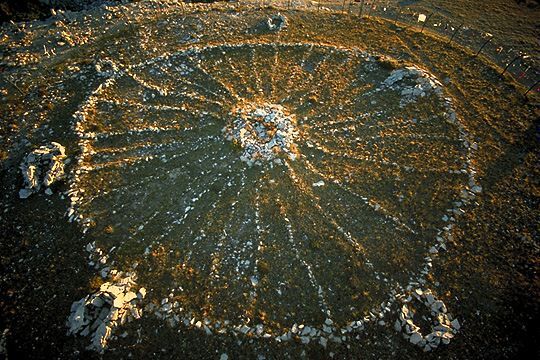
Bighorn Medicine Wheel, Wyoming
Bighorn Medicine Wheel, Wyoming

November 22, 2022
I enjoyed this. It was sad when Walter had to take his mother off of life support and I understood his grief. His belief of the signs he received as he saw crows and ravens was interesting, especially as it went on for years. The fact the he used the "signs" to make decisions for him was also interesting. I have never heard of the Native American holy site mentioned in the book, but he had an internal calling to go visit it, and I am glad he finally got to go there and have his spiritual awakening there to fulfill his bucket list. An interesting short true story. My favorite part was the crows and ravens.
May 4, 2020
Disingenuous
The author takes you through various scenes trying to connect them both with unspoken theology and mysticism. He speaks of his mother's Bible, even vaguely mentioning an essay on her multiple notes within its margins, but doesn't come to a belief in its content other than to somehow connect it to his suspicion that it relates to his crow sightings. At the end there is no clear directive as to how all of his dots connect into a concise philosophy. It is a disingenuous, open-ended ending lacking meaning.
The author takes you through various scenes trying to connect them both with unspoken theology and mysticism. He speaks of his mother's Bible, even vaguely mentioning an essay on her multiple notes within its margins, but doesn't come to a belief in its content other than to somehow connect it to his suspicion that it relates to his crow sightings. At the end there is no clear directive as to how all of his dots connect into a concise philosophy. It is a disingenuous, open-ended ending lacking meaning.

January 24, 2026
True story? Whatever. Mystery? After the death of the mother of an author he finally takes his family on a road trip from Missoula to a sacred indigenous site in Wyoming. His daughter sees a woman in white and has a hysterical reaction to being invaded by a spirit on the road home. Later he starts seeing crows and using them as decision advisors. Strange. Weird.

June 18, 2021
A really good read!
This story was very interesting to me. I really related to the subject matter as I, too, have experienced similar situations in my life. I am interested in crows and Crow is a name in my family tree. I will remember this story whenever I see crows, which is often.Well written and narrated!
This story was very interesting to me. I really related to the subject matter as I, too, have experienced similar situations in my life. I am interested in crows and Crow is a name in my family tree. I will remember this story whenever I see crows, which is often.Well written and narrated!

August 2, 2018
The crow on the cover is what caught my eye and this turned out to be an interesting story. Following the journey of the author in his grief after the death of his mother connected with me. The decision to remove someone from life support is a hard one. I wish I had the journey he did to help you deal with the feelings you have afterward. Very nicely written story!

June 26, 2024
Maybe consider honouring your mother by not writing about how you "murdered" her.

April 2, 2022
The story was interesting. I don't think the author was crazy at all - grief-stricken definitely - but crazy, not so much. He was also fortunate to have an understanding significant other by his side.
I admit I'm a bit envious of his experience after losing his loved one; I have longed to feel some sort of spiritual connection, not necessarily religious, mind you, just spiritual.
My dad and I believe that my (step) great-grandmother wanted to say a proper goodbye to us after passing away suddenly during a Christmas visit. We both looked up simultaneously and saw her "standing" in the garden the day after she died. Neither of us spoke a word about it until years later when I just had to know if he saw her that day too.
That one experience made the passing of my stepfather that much more difficult for me, though. I didn't get to say goodbye to him. I had spoken to him two days earlier on the phone; he was in the hospital but sounded great and was his usual, mischievous self. He died Christmas Eve; he never showed - not to me. It's been 20 some odd years, and I miss him to this very day.
I admit I'm a bit envious of his experience after losing his loved one; I have longed to feel some sort of spiritual connection, not necessarily religious, mind you, just spiritual.
My dad and I believe that my (step) great-grandmother wanted to say a proper goodbye to us after passing away suddenly during a Christmas visit. We both looked up simultaneously and saw her "standing" in the garden the day after she died. Neither of us spoke a word about it until years later when I just had to know if he saw her that day too.
That one experience made the passing of my stepfather that much more difficult for me, though. I didn't get to say goodbye to him. I had spoken to him two days earlier on the phone; he was in the hospital but sounded great and was his usual, mischievous self. He died Christmas Eve; he never showed - not to me. It's been 20 some odd years, and I miss him to this very day.

November 16, 2024
The true story of Walter Kirn who takes a spiritual journey to Bighorn Medicine Wheel, a Native American holy site, following the passing of his mother. I was so completely entranced by the beauty and mystery of this story that I was stunned when, eagerly turning a page, the author’s biography suddenly appeared - the end of the book had come and gone and I could not comprehend how. I wanted more. I still want more, as only a story of wonder and hope can leave you to feel.

September 20, 2018
A sense of self
After the loss of a parent the author questions life, relationships, and how everything is connected. Very interesting read. Watch for the crows.
After the loss of a parent the author questions life, relationships, and how everything is connected. Very interesting read. Watch for the crows.

October 24, 2018
Probably the best of the Missing series. I enjoyed this story.

February 19, 2019
I usually enjoy the amazon original stories. This story just seemed to slug by, has a great few points but moves slow .

May 26, 2021
It was ok but not what I was expecting the short story to be. It was somewhat good but not really not my cup of tea shall I say!

January 19, 2020
This is a short story about a time period in the author's life. I listened to the audio read by the author, which I think added to the enjoyment. Although mystical, a genre (can mystical be a genre?) I'm not usually drawn to, but with a cover and title as it is, I wanted to read this one and I'm glad I did.

July 14, 2026
Of course, there is plenty to be frustrated with in Big Bezos, our favorite company and man to complain about... But one of the more brilliant aspects of the business model is the parts where we are afforded gorgeous stories written by excellent writers for free - and MISSING is one such series of six stories where Amazon paid authors to write their perspective and interpretation on one topic, and give them away to Kindle owners (or even Kindle app readers) for free.
Missing is a motif that explores the many things that go missing in our lives and the way in which we are affected, each a nonfiction exploration of identity, language, pets, our anatomy, time, and even a parent. Some of them I enjoyed more than others, but all of them are beautifully crafted essays.
The Woman in the Strongbox by Maureen O'Hagan
An absurdly captivating family mystery, this piece explores the background of a wife and mother who committed suicide in 2010. After her passing, her family discovers a strongbox containing forged IDs and birth certificates, several clues as to the identity of the woman she became rather than the one she was born as, and a smattering of evidence proving her entire life had been fabricated. Not even her family or her husband knew her true identity. It is only through some genealogy digging, old photos, and following a deep paper trail back to her abusive upbringing in Pennsylvania that we learn who she truly was and why she hid. O'Hagan is a master storyteller and investigator in this short piece, revealing the intricate lies meant to hide a secretive, traumatic past and reinvent a life. As the first book in the series, it is a remarkably strong opener.
The Stones, The Crows, The Grass, The Moo n by Walter Kirn
Walter Kirn (author of Thumbsucker, Up in the Air, and Blood Will Out) is a favorite of mine, and perhaps my favorite aspect of his work is how transparent and emotionally vulnerable he can be. Frankly, his appearance on my friend Gil Roth's podcast discussing Blood Will Out is a joy to revisit as he talks about his relationship with the murderer and con man Clark Rockefeller. It was great to see his name on this list.
In this quiet, more literary piece, Kirn explores his relationship with his father as he gradually disappears due to a dementia diagnosis. Each of the elements in the title serves as a memory touchpoint for Kirn, reflecting on a childhood growing up in Montana, grief, conversation, fathers and sons, and the unreliability of memory—especially under the circumstances of losing a parent and reconstructing the past. It is a beautiful meditation on time and the relationship we have with ourselves and our parents as everything gradually slips away. This was another favorite in the group.
The Button by Wednesday Martin
While it didn't entirely appeal to me, Wednesday Martin explores an interesting history regarding medicine's dark relationship with the clitoris (the titular "button" being a euphemism). This piece isn't like the others; it isn't a narrative as much as it is a history, anthropological study, and neuroscientific examination—not to mention it features plenty of feminism and personal anecdotal evidence to go around. It is completely clear through her work that we have a long way to go despite the clitoris finally being mapped and 3D printed. Women's health, scientific bias, and global cultural taboos have only confounded something that has been a part of our bodies since the beginning. She makes this clear as she attempts to uncover how "misrepresented, misunderstood, disregarded, dissed, and disappeared" it really is.
After Words by Nina Mitchell
The Sapir-Whorf Hypothesis states that "...we are all prisoners of our own language," meaning our native language shapes our perception of the world to such a degree that it can limit our ability to fully understand concepts or experiences outside of its framework. It essentially acts like a "prison" that confines our thinking within its boundaries. But what happens when your ability to use language—to communicate, request, express, and interact—disappears little by little, warping and circumnavigating the crippling effects of stroke-related aphasia?
Another favorite in the series, this piece tells the story of the slow, painful recovery of the author as she struggles with aphasia—a writer's worst nightmare. Language isn't just a communication tool; it is an integral part of one's identity.
Catching Murphy by Wilson Ring
The warmest, most sentimental of the collection, this piece is about what happens when Murphy (a dog) goes missing and a community comes together to find him. Anyone who has ever lost a pet understands a story like this. Through it, one learns that the journey is always about much more than simply locating an animal; it transcends the family to encompass the community, keeping hope alive, jury-rigging an effective trap, and perhaps even learning to let go. It is a beautiful, optimistic story.
Time Out by Claudia Rowe
Work, technology, aging, parenting, and everything happening at breakneck speed makes modern time feel as if it is slipping away, leaving us constantly feeling behind. The secret, as Rowe helps us understand, is recognizing that time cannot be recovered, and that we need to be more intentional with how we use it and where we go rather than lamenting how quickly it accelerates. Rowe is a master at exploring the psychology of how and why we feel that way, and how to accept direction rather than just trying to find more time. Of course, the old saw that it keeps on spinning, spinning, spinning into the future at an ever-faster pace is absolutely true, but we have the power to slow it down and treat every moment, every breath, and every recurring cycle with dignity.
Missing is a motif that explores the many things that go missing in our lives and the way in which we are affected, each a nonfiction exploration of identity, language, pets, our anatomy, time, and even a parent. Some of them I enjoyed more than others, but all of them are beautifully crafted essays.
The Woman in the Strongbox by Maureen O'Hagan
An absurdly captivating family mystery, this piece explores the background of a wife and mother who committed suicide in 2010. After her passing, her family discovers a strongbox containing forged IDs and birth certificates, several clues as to the identity of the woman she became rather than the one she was born as, and a smattering of evidence proving her entire life had been fabricated. Not even her family or her husband knew her true identity. It is only through some genealogy digging, old photos, and following a deep paper trail back to her abusive upbringing in Pennsylvania that we learn who she truly was and why she hid. O'Hagan is a master storyteller and investigator in this short piece, revealing the intricate lies meant to hide a secretive, traumatic past and reinvent a life. As the first book in the series, it is a remarkably strong opener.
The Stones, The Crows, The Grass, The Moo n by Walter Kirn
Walter Kirn (author of Thumbsucker, Up in the Air, and Blood Will Out) is a favorite of mine, and perhaps my favorite aspect of his work is how transparent and emotionally vulnerable he can be. Frankly, his appearance on my friend Gil Roth's podcast discussing Blood Will Out is a joy to revisit as he talks about his relationship with the murderer and con man Clark Rockefeller. It was great to see his name on this list.
In this quiet, more literary piece, Kirn explores his relationship with his father as he gradually disappears due to a dementia diagnosis. Each of the elements in the title serves as a memory touchpoint for Kirn, reflecting on a childhood growing up in Montana, grief, conversation, fathers and sons, and the unreliability of memory—especially under the circumstances of losing a parent and reconstructing the past. It is a beautiful meditation on time and the relationship we have with ourselves and our parents as everything gradually slips away. This was another favorite in the group.
The Button by Wednesday Martin
While it didn't entirely appeal to me, Wednesday Martin explores an interesting history regarding medicine's dark relationship with the clitoris (the titular "button" being a euphemism). This piece isn't like the others; it isn't a narrative as much as it is a history, anthropological study, and neuroscientific examination—not to mention it features plenty of feminism and personal anecdotal evidence to go around. It is completely clear through her work that we have a long way to go despite the clitoris finally being mapped and 3D printed. Women's health, scientific bias, and global cultural taboos have only confounded something that has been a part of our bodies since the beginning. She makes this clear as she attempts to uncover how "misrepresented, misunderstood, disregarded, dissed, and disappeared" it really is.
After Words by Nina Mitchell
The Sapir-Whorf Hypothesis states that "...we are all prisoners of our own language," meaning our native language shapes our perception of the world to such a degree that it can limit our ability to fully understand concepts or experiences outside of its framework. It essentially acts like a "prison" that confines our thinking within its boundaries. But what happens when your ability to use language—to communicate, request, express, and interact—disappears little by little, warping and circumnavigating the crippling effects of stroke-related aphasia?
Another favorite in the series, this piece tells the story of the slow, painful recovery of the author as she struggles with aphasia—a writer's worst nightmare. Language isn't just a communication tool; it is an integral part of one's identity.
Catching Murphy by Wilson Ring
The warmest, most sentimental of the collection, this piece is about what happens when Murphy (a dog) goes missing and a community comes together to find him. Anyone who has ever lost a pet understands a story like this. Through it, one learns that the journey is always about much more than simply locating an animal; it transcends the family to encompass the community, keeping hope alive, jury-rigging an effective trap, and perhaps even learning to let go. It is a beautiful, optimistic story.
Time Out by Claudia Rowe
Work, technology, aging, parenting, and everything happening at breakneck speed makes modern time feel as if it is slipping away, leaving us constantly feeling behind. The secret, as Rowe helps us understand, is recognizing that time cannot be recovered, and that we need to be more intentional with how we use it and where we go rather than lamenting how quickly it accelerates. Rowe is a master at exploring the psychology of how and why we feel that way, and how to accept direction rather than just trying to find more time. Of course, the old saw that it keeps on spinning, spinning, spinning into the future at an ever-faster pace is absolutely true, but we have the power to slow it down and treat every moment, every breath, and every recurring cycle with dignity.

August 9, 2018
Fairly interesting story about something this reader does not believe in. The mystical, in my understanding, is governed by a desiring mind. Drugs help, but are not necessary for acquiring a meaningful result. I am not buying his point of view, but willing to consider others, always. I do wish Kern's subject would have remained his mother's dying. His crows are for the birds.

August 23, 2018
Every once in awhile I stumble onto a story or event on the web or in print that tends to support or emphasize another story or even that I chanced upon. Between last night and today was one of those bizarre occurrences. It is no small irony that this true story deals with a totally different aspect of the same sort of issues. I’m left wondering if I might be getting a sign for my next great adventure, just as this author seems convinced that he was being given signs. That, however, is getting a bit ahead…
Detailing the coincidences I found last night and today would bore review readers to death. Just please take my word for it: this short, true, story stimulated me to learning about a place called Medicine Wheel, Wyoming and to muse its connection with Ancient Egypt and On, or Heliopolis and the Sun God Ra and my personal circumstances.
How so? The author of “The Stones, the Grass, the Stars, the Moon” mentioned going there and driving up a steep road with a cliff of which scared his wife so that she wanted him to stop. Hmm, thought I, the only place I know of like that is the Beartooth Pass into Yellowstone's Silver Gate, which is not so near Powell as he claims.
So, of course, I surfed the web and learned that I was dead wrong. My reward? Learning about a mystical place utilized by several Native American tribes since it was erected several hundred years ago.
When writing forces me to research to learn the truth, it will result in a minimum of three stars. Still, none of that information will likely help you decide if this story is worth a purchase by you.
THE WRITING: The writing and editing are smooth, subtle and clean. I did find one small typo in which the word fall is used instead of tall. Otherwise, the writing is more sensitive than it comes across if listening to the audible version. This is unusual for me, as the narration usually finds me more receptive. Having said that, I still feel the writer has been so afraid of ridicule or charges of insanity that he didn’t fully open his feelings to us.
BLUSH FACTOR: No worries here. Feel free to read this nonfiction work to anyone you feel might listen.
ADVENTURE: Yes. Although the author doesn’t go too deeply into describing the drive from Iowa back to Montana, except for going to Medicine Wheel, Wyoming. Still, for such a short piece, there is more adventure than I would expect.
SOUL: This is all about soul, in a somewhat mystical sense. Yet, the author could have gone even deeper into bearing his innermost confidences and thoughts.
Detailing the coincidences I found last night and today would bore review readers to death. Just please take my word for it: this short, true, story stimulated me to learning about a place called Medicine Wheel, Wyoming and to muse its connection with Ancient Egypt and On, or Heliopolis and the Sun God Ra and my personal circumstances.
How so? The author of “The Stones, the Grass, the Stars, the Moon” mentioned going there and driving up a steep road with a cliff of which scared his wife so that she wanted him to stop. Hmm, thought I, the only place I know of like that is the Beartooth Pass into Yellowstone's Silver Gate, which is not so near Powell as he claims.
So, of course, I surfed the web and learned that I was dead wrong. My reward? Learning about a mystical place utilized by several Native American tribes since it was erected several hundred years ago.
When writing forces me to research to learn the truth, it will result in a minimum of three stars. Still, none of that information will likely help you decide if this story is worth a purchase by you.
THE WRITING: The writing and editing are smooth, subtle and clean. I did find one small typo in which the word fall is used instead of tall. Otherwise, the writing is more sensitive than it comes across if listening to the audible version. This is unusual for me, as the narration usually finds me more receptive. Having said that, I still feel the writer has been so afraid of ridicule or charges of insanity that he didn’t fully open his feelings to us.
BLUSH FACTOR: No worries here. Feel free to read this nonfiction work to anyone you feel might listen.
ADVENTURE: Yes. Although the author doesn’t go too deeply into describing the drive from Iowa back to Montana, except for going to Medicine Wheel, Wyoming. Still, for such a short piece, there is more adventure than I would expect.
SOUL: This is all about soul, in a somewhat mystical sense. Yet, the author could have gone even deeper into bearing his innermost confidences and thoughts.
June 21, 2023
(1.5 stars)
Walter Kirn receives a phone call from his brother about their mother being hospitalized. The former nurse had long since informed everyone of her wishes, but Walter experiences guilt at signing the paperwork that will officially end his beloved mother’s life. Shortly after, he makes his children and girlfriend take a last minute trip to the Bighorn Medicine Wheel and requests they all pray for her spirit. Following that he finds an overwhelming number of coincidental interactions with crows which he ultimately takes as signs in his life. Then he finds himself drawn to an old Bible his mother had written ruminations about.
* * * * *--------------* * * * *--------------* * * * *
This one was weird to me. It starts with a rather direct rundown of end of life care in modern hospitals where living wills can be contested and even medically assisted death is not pleasant. I thought that section contained enough detail to get the mood and point across without being repetitive or pointless—even for those readers who had dealt with the scenario before. Then it switches to his personal, rather mystical perspective on the path his life took in his grief. I can understand the impulse to want to connect to those we lose or the irrational thinking within emotional charged states. But there is too much vagueness and uncertainty with what is presented in the short narrative. He will say he shouldn’t appropriate a Native American belief and go on to do it. He will posit an interesting idea like how loved ones sometimes reinforce our delusions—but then never develop that into anything. He would say he was fighting with his girlfriend but not give context to the severity or the topic causing strife, only then a few sentences later they marry in a parking lot with strangers as witnesses as if all is well. It’s a personal journey so it isn’t like anything he says is wrong, I just don’t find it as compelling as many reviewers here.
Walter Kirn receives a phone call from his brother about their mother being hospitalized. The former nurse had long since informed everyone of her wishes, but Walter experiences guilt at signing the paperwork that will officially end his beloved mother’s life. Shortly after, he makes his children and girlfriend take a last minute trip to the Bighorn Medicine Wheel and requests they all pray for her spirit. Following that he finds an overwhelming number of coincidental interactions with crows which he ultimately takes as signs in his life. Then he finds himself drawn to an old Bible his mother had written ruminations about.
* * * * *--------------* * * * *--------------* * * * *
This one was weird to me. It starts with a rather direct rundown of end of life care in modern hospitals where living wills can be contested and even medically assisted death is not pleasant. I thought that section contained enough detail to get the mood and point across without being repetitive or pointless—even for those readers who had dealt with the scenario before. Then it switches to his personal, rather mystical perspective on the path his life took in his grief. I can understand the impulse to want to connect to those we lose or the irrational thinking within emotional charged states. But there is too much vagueness and uncertainty with what is presented in the short narrative. He will say he shouldn’t appropriate a Native American belief and go on to do it. He will posit an interesting idea like how loved ones sometimes reinforce our delusions—but then never develop that into anything. He would say he was fighting with his girlfriend but not give context to the severity or the topic causing strife, only then a few sentences later they marry in a parking lot with strangers as witnesses as if all is well. It’s a personal journey so it isn’t like anything he says is wrong, I just don’t find it as compelling as many reviewers here.
This entire review has been hidden because of spoilers.

March 19, 2024
Amazon Originals "Missing" #2 of 6.
I don't quite see how this novella fits into a series whose theme, or title, is "Missing;" there doesn't seem to be anything or anyone missing. The first one was definitely a nonfiction story about a missing person, or a person whose identity was missing; I take this one to be nonfiction also, but have no way to support this belief.
As we open, Kirn has a sudden mental image of visiting the Medicine Wheel in northern Wyoming. Perhaps he can take his children, who live with his ex-wife, on a trip come their next visit.
The whole idea is swept from his head by a phone call: his mother has just had emergency surgery for "a ruptured abcess in her brain," and is in a coma. He and his girlfriend Amanda fly from Montana to Iowa to be with his mother (and also his brother, who would drive down from Minnesota). It is a harrowing few days, and in the end the brothers have to make the decision to honor their mother's wishes and end her life.
For a while after, Kirn is irritable and jittery. One afternoon while the kids are visiting, he makes the snap decision to drive up to the Medicine Wheel -- about 200 miles, the last bit on questionable mountain roads -- that day/evening/night, and does so.
I'll leave the question of what the title means open, because spoilers, but it's a pretty strange story if true. I was moved by it.
I don't quite see how this novella fits into a series whose theme, or title, is "Missing;" there doesn't seem to be anything or anyone missing. The first one was definitely a nonfiction story about a missing person, or a person whose identity was missing; I take this one to be nonfiction also, but have no way to support this belief.
As we open, Kirn has a sudden mental image of visiting the Medicine Wheel in northern Wyoming. Perhaps he can take his children, who live with his ex-wife, on a trip come their next visit.
The whole idea is swept from his head by a phone call: his mother has just had emergency surgery for "a ruptured abcess in her brain," and is in a coma. He and his girlfriend Amanda fly from Montana to Iowa to be with his mother (and also his brother, who would drive down from Minnesota). It is a harrowing few days, and in the end the brothers have to make the decision to honor their mother's wishes and end her life.
For a while after, Kirn is irritable and jittery. One afternoon while the kids are visiting, he makes the snap decision to drive up to the Medicine Wheel -- about 200 miles, the last bit on questionable mountain roads -- that day/evening/night, and does so.
I'll leave the question of what the title means open, because spoilers, but it's a pretty strange story if true. I was moved by it.

October 16, 2020
Heartfelt Memoir of Family, Death and Connections.
In this second installment of the Missing series, Walter Kirn's retrospective explores the sense of loss and helplessness he experienced before, during and after his mother's death. His "missing" connection with his mother creates a series of life-changing thoughts and events as he faces his own ultimate mortality and his searching for something much larger than himself.
Logically accepting death as part of life suddenly becomes real when a loved one dies, and Walter's honest reflections of how he worked through this personal tragedy creates a poignant and thought-provoking experiential short read worthy of consideration and quiet review.
This well-written and personal analysis is made even more engaging with the author's own voice telling the story through Audible's narration supplement. This makes the experience more real, more touching, more intense, more intimate.
Recognizing what's really "missing" is the key thread to Walter's plight and the hope of any acceptance.
Definitely 4.5 stars for the chance to ride along on Walter's troublesome journey in this short but satisfying read that includes visiting an ancient Native American site of inspiration in Wyoming.
In this second installment of the Missing series, Walter Kirn's retrospective explores the sense of loss and helplessness he experienced before, during and after his mother's death. His "missing" connection with his mother creates a series of life-changing thoughts and events as he faces his own ultimate mortality and his searching for something much larger than himself.
Logically accepting death as part of life suddenly becomes real when a loved one dies, and Walter's honest reflections of how he worked through this personal tragedy creates a poignant and thought-provoking experiential short read worthy of consideration and quiet review.
This well-written and personal analysis is made even more engaging with the author's own voice telling the story through Audible's narration supplement. This makes the experience more real, more touching, more intense, more intimate.
Recognizing what's really "missing" is the key thread to Walter's plight and the hope of any acceptance.
Definitely 4.5 stars for the chance to ride along on Walter's troublesome journey in this short but satisfying read that includes visiting an ancient Native American site of inspiration in Wyoming.

August 19, 2024
If you’ve helped someone die, there is nothing I can tell you. If you haven’t, I don’t want to tell you. But I must, or what came later may make no sense.
Set in August 2011, across several Western states.
Walter lives in Livingston, Montana with his girlfriend, Amanda. He is an author; she is a journalist.
Walter’s mother, Millie, is 71. A ruptured abscess in her brain has left her comatose.
The Bighorn Medicine Wheel is a Native American holy site in Northern Wyoming: A kind of astral clock or calendar aligned with the movements of the sun and moon and various seasonal constellations.
Walter has been wanting to visit The Wheel for more than twenty years.
Visions of his mother…
One month after his mother’s passing, Walt once again gets the urge to visit the Wheel—immediately.
And with his children in tow, daughter Maisie (13) and son Charlie (11), they do.
Reading his mother’s Bible. The crows.
Dreams. Visions. Decisions aided by the crows.
A very offbeat story. Curious and different. Good ending.
They thanked us for joining in their ceremony. Then Amanda and I asked them to join ours.
Set in August 2011, across several Western states.
Walter lives in Livingston, Montana with his girlfriend, Amanda. He is an author; she is a journalist.
Walter’s mother, Millie, is 71. A ruptured abscess in her brain has left her comatose.
The Bighorn Medicine Wheel is a Native American holy site in Northern Wyoming: A kind of astral clock or calendar aligned with the movements of the sun and moon and various seasonal constellations.
Walter has been wanting to visit The Wheel for more than twenty years.
Visions of his mother…
One month after his mother’s passing, Walt once again gets the urge to visit the Wheel—immediately.
And with his children in tow, daughter Maisie (13) and son Charlie (11), they do.
Reading his mother’s Bible. The crows.
Dreams. Visions. Decisions aided by the crows.
A very offbeat story. Curious and different. Good ending.
They thanked us for joining in their ceremony. Then Amanda and I asked them to join ours.
May 22, 2020
Part of the 6 book 'Missing Collection', free to read with Amazon Prime, this is a heartfelt true story of loss, grief, and their wider effects on the author.
After having to make the awful decision to turn off his mother's life support and to provide drugs to ease her transition, the author talks of how crows and ravens start to hold greater meaning for him, even becoming a decision making mechanism.
There are more crows on earth than you imagine, and not only in Montana. They have a whole separate world above our heads, their very own strata or layer of reality, up on the poles, the antennae, the roofs, the wires. They live on what we waste, and we waste everything. Ask the crows, and they’ll tell you. They’re right up there.
The story will make you think more about life, spiritualism, death, and the afterlife.
I will be checking out the other 5 books in this series. They have a lot to live up to.
After having to make the awful decision to turn off his mother's life support and to provide drugs to ease her transition, the author talks of how crows and ravens start to hold greater meaning for him, even becoming a decision making mechanism.
There are more crows on earth than you imagine, and not only in Montana. They have a whole separate world above our heads, their very own strata or layer of reality, up on the poles, the antennae, the roofs, the wires. They live on what we waste, and we waste everything. Ask the crows, and they’ll tell you. They’re right up there.
The story will make you think more about life, spiritualism, death, and the afterlife.
I will be checking out the other 5 books in this series. They have a lot to live up to.

January 17, 2021
At some point during a Walter Kirn book (whether it's fiction or nonfiction) I start to believe that my own feelings have been plucked out my gut and used to construct his narrative. Whether it's Lost In The Meritocracy, the scattered moments of My Own Hard Bargain, or the feeling of being a stranger in one's own country (Mission To America), it all rings true; it all smells familiar.
This small book has a large weight to it, as Walter confronts the death of his mother. So much of it reminds of the death of my father (who passed when I was a mere 26). There's a scene where he talks about how he and his younger brother were "...equals here, equally dumbfounded, equally responsible." I felt electricity when I read that because it was the same way for my younger brother and me.
I think I could drop 3000 words on this small book, but I'd rather let the book speak for itself. It's more than worth the tiny cost.

January 27, 2022
Wish this story was a little longer. I thought the author was really on to something and had a very compelling story. His recounting of his mother's death was particularly hard as they injected her with lethal doses of pain medication only to see her rebound repeatedly. It shows just how resilient life can be, don't know how they were able to continue after that, must have been extremely draining emotionally. Felt like a literal suffocation of a human spirit until it was freed from the body.
Also really enjoyed his retelling of how crows have shown up to continually guide him in his life since visiting a Native American Medicine wheel. Grieving offers the potential for a spiritual awakening in those who are suffering.
Also really enjoyed his retelling of how crows have shown up to continually guide him in his life since visiting a Native American Medicine wheel. Grieving offers the potential for a spiritual awakening in those who are suffering.

July 15, 2024
I guess that this book was about how the author eased his guilt at the passing of his mother. He searched for signs. I'm not sure of what. But he drug his family to a Native American Holy Site in the middle of the night. Then he started seeing ravens and crows and found meaning in that. I don't know...I can't criticize this book because we all cope in the best way we can. This mysticism brought comfort to the author during a very painful experience. I'm glad it worked for him. I didn't really care for the short story. I felt like it didn't really go anywhere. Maybe if it was experienced by an actual Native American who had deep beliefs surrounding the Holy Site, it would have more meaning. Writing this account was probably very therapeutic for the author.
Displaying 1 - 30 of 132 reviews