Jump to ratings and reviews
Rate this book

Shatila Stories

Rate this book

Most novels are written by professional writers using second hand material. Not this one. Peirene commissioned nine refugees to tell their ‘Shatila Stories’. The result is a piece of collaborative fiction unlike any other. If you want to understand the chaos of the Middle East – or you just want to follow the course of a beautiful love story – start here.

Adam and his family flee Syria and arrive at the Shatila refugee camp in Beirut. Conditions in this overcrowded Palestinian camp are tough, and violence defines many of the relationships: a father fights to save his daughter, a gang leader plots to expand his influence, and drugs break up a family. Adam struggles to make sense of his refugee experience, but then he meets Shatha and starts to view the camp through her eyes.

Why Peirene chose to publish this book:

I want to hear their stories and see if their imaginations can open up a new path of understanding between us. Collaborative works of literature can achieve what no other literature can do. By pooling our imaginations we are able to access something totally different and new that goes beyond boundaries – that of the individual, of nations, of cultures. It connects us to our common human essence: our creativity. Let’s make stories, not more war.

'This remarkable novel isn’t about the refugee voice; it is born from it and told through it. On every page, the glint of hope for dignity and a better life is heartbreakingly alive.' Khaled Hosseini, author of The Kite Runner

'Both from a humanitarian standpoint and an artistic perspective, Peirene are doing invaluable work in finding new voices who open our eyes, ears and hearts to worldly reality in all its profound suffering, joy, community, isolation and complexity.’Bidisha, Writer and Broadcaster.

105 pages, Kindle Edition

First published June 18, 2018

16 people are currently reading
663 people want to read

About the author

Ratings & Reviews

What do you think?
Rate this book

Friends & Following

Create a free account to discover what your friends think of this book!

Community Reviews

5 stars
133 (39%)
4 stars
157 (46%)
3 stars
45 (13%)
2 stars
3 (<1%)
1 star
1 (<1%)
Displaying 1 - 30 of 70 reviews
Profile Image for Paul Fulcher.
Author 2 books1,965 followers
July 12, 2018
We have no home - no home but Shatila.

Spare us your good intentions, your quiet pity.

Instead, look up and raise your fist at the sky.


The Shatila camp in Beirut is perhaps best known for the massacre that took place there in 1982 (https://en.wikipedia.org/wiki/Sabra_a...) but the camp has existed since 1949, set up to house refugees who fled during the 1948 Palestine war (https://en.wikipedia.org/wiki/1948_Pa...), and more recently has seen an influx of Palestinian refugees from Syria.

The wonderful small independent Peirene Press, in addition to their trademark European literature (see e.g. Soviet Milk), launched another series, Pereine Now, "in which we would work closely with writers, and commission fiction on current political topics".

Shatila Stories is the 3rd in this series, and is a unique piece of literature - a collaborative novel written by nine refugees from the Shatila camp. Meike Ziervogel of Pereine (and also author of The Photographer) and London-based Syrian editor Suhir Helal ran a creative writing workshop in the camp for nine aspiring writers and then worked with them to edit and turn their stories, fictional but based on their lives in the camp, translated by Nashwa Gowanlock, into this resulting English language novel.

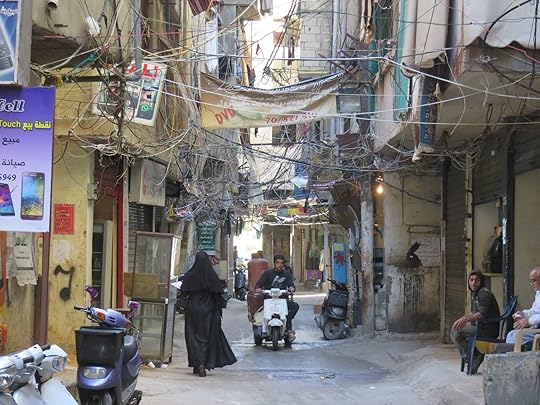
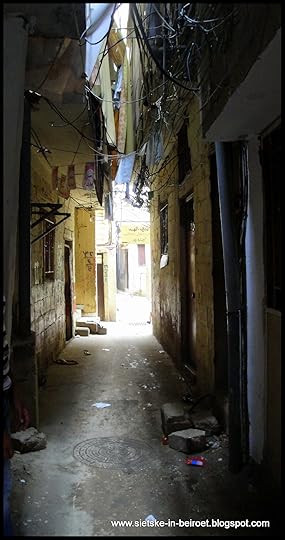
The intention behind the project is clearly good, but I'm pleased to report that it has also resulting in a highly worthwhile piece of literature. The novel has a relatively straightforward, although still powerful, story but the greatest value lies in the insights both into how the various character came to be there - ranging from those who still have the key of the house they left in 1948, to an infant who was the sole survivor in her family of the 1982 massacre, to a group who arrive from Syria as the novel opens - but also into the realities of life in somewhere that is only intended to be a temporary home but where people can live for decades. The portrayal of the tangled chaos of, often deadly, electrical cables that fills the air above the narrow alleyways was particularly memorable.

description

description

Unique and highly worthwhile.
Profile Image for Khulud Khamis.
Author 2 books104 followers
June 20, 2018
a beautiful piece of collaborative fiction about everyday life in the Shatila refugee camp. I especially loved the structure; almost like a series of short stories, told by several characters. Thus a marginal character in the first chapter becomes the main character through whose eyes we see and experience the camp in the following chapter. Tensions and chaos reign in the Shatila camp, but there is also beautiful music and love. It's a story written by refugees living in the Shatila camp, and although fiction, it depicts the experience of the refugees and the displaced in a genuine way.
Profile Image for WndyJW.
680 reviews155 followers
February 20, 2024
These fictional accounts of life in the Palestinian refugee camp Shatila, located in Lebanon, were written by the Palestinian refugees themselves with the help of Meike Ziervogel, founder of Peirene Press and Arabic translator Suhir Helal.

In 2017 Ms. Ziervogel and Ms. Helal ran a 3 day creative writing workshop in Shatila, after which participants had 6 weeks to submit a draft of a fictional story. From those who submitted drafts nine were selected to work with Ms. Ziervogel and Ms. Helal to further the develop the stories. The result is this moving novella of linked stories, translated into English by Nashwa Gowanlock.

Meike Ziervogel’s introduction explaining all the hurdles to getting this project off the ground and Suhir Helal’s Afterword, in which she discusses her feelings while working with the Palestinian writers stuck in the hell of a refugee camp, and provides a brief account of the experiences of her Syrian family and friends is as interesting and important as the novella itself.

Stories are important testaments to the evils and abuses inherent in colonization, and this story in particular is further evidence that we must free Palestine.

Strongly recommended.
Profile Image for ucha (enthalpybooks) .
201 reviews3 followers
August 17, 2019
From the first time I saw this book at Transit Bookstore, without doubt, I pick it as reading material.
It is written by nine Syrian and Palestinian refugee in Shatila Camp in Beirut after got a creative writing workshop conducted by Peirene Press.
No, it is not short stories compilation about living in the camp, instead, it is one solid fiction story with Shuttle as background. I found it as a remarkable story with the collaboration of subplot and giving an obvious description of life in there. Daily problems at camp are clearly told with a combination such as religion, patriarchal family, and economic problem complete with some photographs of the camp situated in the book.

How the war conflict has a tremendous effect on human life.
How to survive in a small area with limited opportunity.
And above all, the most suffer in this chaos condition is women.
Always.

How many stories to be written like this Shatila Stories in this world?
Can we just imagine just like Lennon’s song: “… all the people, living life in peace”?
Profile Image for Andrea.
728 reviews73 followers
June 20, 2020
Very difficult to rate this as a regular book, because it's anything but.

I'll try to be objective and rate this as a piece of literature.

It's a great concept and it's making me want to read more about Shatila and Palestine in general.

The stories themselves were eye-opening and moving, really capturing many of the difficulties the refugees are facing.

However, it is very obvious that these are mostly first-time writers and the quality of the writing might not be what we're used to reading.

Definitely worth reading, though!
Profile Image for Roger Boyle.
226 reviews5 followers
June 29, 2018
I helped to crowd fund this with Peirene.

I have to give it 5, partly because I backed it and partly because of what it is. But actually, the writing quality of much of it is [very] indifferent.

The book is a sequence of short stories roughly surrounding a single plot thread, written by and about residents of the Shatila refugee camp. The writers had no prior experience at all and the account of the editor of their workshop and development process is actually for me the best part of the book. the picture of life in the camp is harrowing and almost certainly very accurate.

I was prepared to overlook the very awkward and variable style because of what this is. Good luck to them all.
Profile Image for Liv .
665 reviews70 followers
September 15, 2020
Shatila Stories by Omar Khaled Ahmad, Nibal Alola, Safa Khaled Algharbawi, Rayan Mohamad Sukkar, Safiya Badran, Fatima Omar Ghazawi, Samih Mahmoud and Hiba Marei (tr. Nashwa Gowanlock)

Shatila Stories is a collaborative work of fiction that was organised by Mike Ziervogel and Suhir Helal who went out to Shatila working with the Lebanese based charity Basmeh & Zeitooneh to run a short writing course and publish a work from a group of Syrian writers.

The logistics weren't without difficulties but the end result is a collection of stories that can sit individually as more classic short stories but interweave a tale of connected lives and narratives that range in length and style across the book.

The narratives reveal the hardships of those within the Palestinian Shatila refugee camps, camp structures, daily lives, but also family, friends, loved ones, and independence and success. Relationships are constructed across the stories and tug on the heartstrings as we go along.

These stories are designed to draw you into the heart of Shatila and have been written by nine refugees. They all received advances and royalties for the work produced and were aware their stories would be woven into a more overarching collaborative fiction piece.

These stories were immensely heart-warming and sad and it felt quite special to read them over a series of days as I delved in and out of the various stories told and immersed myself in Shatila. I think both short story fans and shorter fiction lovers will enjoy this beautiful collection.
Profile Image for The Contented .
625 reviews10 followers
February 17, 2019
A simply-narrated book, sharing the experiences of Syrian refugees in the infamous Palestinian refugee camp - the Shatila of the title - in Lebanon. At its heart, a human story. Everyone should read this. I look forward to reading more from this independent publisher in the future.
Profile Image for Becky.
1,374 reviews56 followers
June 12, 2018
A piece of collaborative fiction that deserves a wide readership. The stories of nine inhabitants of the Shatila camp in the Lebanon interwoven together to create a fascinating and heartbreaking novel. I was recently involved in a conversation about the importance of reading voices from other cultures and this novel illustrates that point wonderfully.
Not only is this a unique and interesting bit of writing but a portion of the money from each sale goes directly to Basmeh & Zeitooneh a Lebanese NGO founded in response to the Syrian Refugee crisis. It aims to provide opportunities for refugees to break out of victim status, and to forge lives beyond the camps.
Profile Image for Lisa.
3,793 reviews493 followers
February 3, 2019
In June last year, ANZ LitLovers reached its ten year anniversary, and among the kind wishes from around the world came a very special gift to mark the occasion, from Kim at Reading Matters in London. The book is Shatila Stories, a slim novella of interlinked short stories which was written in a most unusual way.

Meike Ziervogel explains its genesis in the Introduction. Founder of London-based Peirene Press which specialises in translated fiction, she undertook this ambitious project in Lebanon, where she worked with an NGO called Basmeh & Zeitooneh (“the Smile and the Olive”) to create an authentic story from the Shatila Refugee Camp which was set up for Palestinian refugees in 1949 after the formation of Israel, but is now swollen with refugees from the war in Syria. Funded by a Kickstarter campaign, and with the help of London-based editor Suhir Helal, the project ran a three-day creative writing workshop to teach basic story-writing skills to a pre-selected group of participants. The individual stories which resulted were to become subplots woven into a narrative structure devised by Helal and Ziervogel.

The nine participants, aged 18 to 42 wrote under enormous difficulties. The Shatila camp is chaotic, and lawless, governed by opposing Palestinian groups. Attendance was patchy for some participants...
One participant's niece was killed by the low-hanging electrical cables, a grandmother slipped badly in one of the camp's muddy alleys and someone else's father died in Syria. (p.18)

The writing space at the Basmeh and Zeitooneh community centre was cramped and stuffy, shared a wall with a dancing class, and there were no computers, only pen and paper. Some of the writers had never completed formal schooling and quite a few had never read a novel in their lives.

Ziervogel's confidence waned in the face of these difficulties, but she persisted and after the workshops, the participants had six weeks to complete a 4,000 word draft, queuing up at the centre to use WhatsApp on the centre's sole computer to confer with Ziervogel and Helal back in London. The results were four good stories and five interesting drafts and Helal and Ziervogel then returned to work with the writers on these stories and integrate them into a single narrative.

Switching between first and third person narratives, the linked stories provide a vivid picture of life in the camp.

To read the rest of my review please visit https://anzlitlovers.com/2019/02/03/s...
444 reviews7 followers
August 29, 2018
As with all of Pereine's titles, it's a short book but it packs a punch with haunting tales that will stay with you for a long time after you've turned the final page. If that's not a good enough reason to buy a copy, 50p from the sale of all Peirene books, and all the profits made from the sale of Shatila Stories, will go to support refugees in nine camps throughout Lebanon and Turkey.

Full review on my blog : http://madhousefamilyreviews.blogspot...
Profile Image for Dibz.
150 reviews54 followers
December 30, 2020
A slim novel about the lives of a handful of characters living in the Shatila refugee camp in Lebanon. The stories explore the practical and emotional difficulties of the characters living in the camp, as well as touching on their hopes and dreams. This is a piece of collaborative fiction written by writers, translators and refugees who live in Shatila.
Profile Image for Anwen Hayward.
Author 2 books351 followers
November 26, 2020
Quite a few of the reviews here comment on the fact that this is the work of previously inexperienced writers and that this affects the quality of the writing. I would actually disagree quite vehemently with that. I found the writing very strong and emotive. At no point did I find it jarring or simplistic. The characters are all well-defined, the writing is often beautiful, and the concept of the book itself - a piece of collaborative fiction written by residents of the Shatila camp - makes it worth a read. Luckily, the book stands as a piece of literature above and beyond the interesting concept.

I won't mention specific plots in this review because I think this one is best read with as few expectations and as little knowledge as possible, but each of the narrative threads was compelling. Usually, when reading a book with multiple perspectives, I get much more attached to certain plots than others, and almost resent the ones I like less for taking up space that could be dedicated to the one I prefer (this is very bad of me, I know.) It's the mark of a solid book that none of these character perspectives or narrative arcs outshone the others to the detriment of the rest; it all felt very cohesive.

My only real criticisms of this book are the structure; for a novel which is comprised of interconnected stories about characters, it wasn't always clear how they knew one another. Some narrative threads were given much more resolved conclusions than others, which sometimes felt a little patchy; I was equally invested in all the storylines, so would have liked them all to be given the same treatment. I also didn't always feel, despite the authors' lived experiences, that the camp itself came to life. It was hard to get a feel for the place, perhaps because each of the writers (and thus each of the characters) felt so differently about it. Sometimes it was described as almost hellishly brutal, an unstable place which is at war with itself, and at other times it seems like a real refuge, almost a sanctuary. Although perhaps that contradiction is, in itself, the nature of the camp, in which case I would have liked that to have been more of a theme. For a book which is purportedly about a specific place, the place itself almost seemed to take a back seat to the character arcs rather than feeling enmeshed with and a part of them.

This is a book that should be read, and I'm glad it was written in the unique way it was.
Profile Image for Nancy Freund.
Author 3 books107 followers
July 12, 2018
The novel itself is a lyrical and descriptive view of life in the Shatila Refugee camp, with vivid details of its difficulties (internal strife, racism, violence, drug abuse, electrical failures, corruption...) but without gratuitous sensationalism. There are lovely moments of joy and light within the darker narrative, and on the whole, it's a balanced, nuanced story arc replete with both internal and external conflicts that move the plot forward. But this little novel is much more than meets the eye. The introduction is an essential part of it... the project of this book's creation is as compelling a story as the novel itself, and BOTH are remarkable. It began with a three-day creative writing class for residents of Shatila who studied the craft, presented their best efforts, and then honed their work with a translator and professional writer until Shatila Stories emerged. It's not an easy read -- but it's an important one, and a beautiful thing, with photos that enhance the experience of reading it. I've never read a book quite like it. I'm filled with admiration for Peirene Press for conceiving this project and making it happen, despite difficult odds, as well as their making a donation to a relevant charity for every book sold. Likewise, (maybe more so) I'm filled with admiration for each of the writers who participated in this unusual cooperative project.
Profile Image for Audrey.
21 reviews
June 19, 2023
I really liked this. I think a lot of literature about migration crises focuses on the west as an audience and capturing what migration is like to show westerners the diversity and paths of migrants and refugees. It’s not that this is a bad aim, but books like Hope and Other Dangerous Pursuits feel kinda reductive. They take a character and smash them into a few pages and define them by their status as migrants and refugees.

This book still provides that glimpse into ‘what it is like’ for the refugees living in Shatila and it is still written for an English audience, but it’s nature of collaborative fiction provides it with an angle and depth I didn’t know I was looking for. It’s what the authors wanted to write, not just the narratives they were pushed into. Just wish the original Arabic was available!
Profile Image for Donald Butler.
5 reviews
October 15, 2024
A really unique novel, written collaboratively by a group of nine Palestinian and Syrian refugees living in the Shatila refugee camp in Beirut. Among descriptions of the stifling and dangerous conditions of the the camp, we hear stories of love, resistance, and generational hope to return to Palestine.

There is also a series of incredible photographs by Paul Romans which allow the reader to fully imagine the setting of the novel. At the begging of the book is a photograph of phrase sprayed on a building wall which translates as “Don’t talk about the camp unless you know it”. These perspectives are so rarely heard, making it a truly unique and heart wrenching read.
Profile Image for Alan (the Lone Librarian rides again) Teder.
2,718 reviews257 followers
July 22, 2018
The stories here are straightforward tales interweaving the lives of primarily two families. My rating is more for the efforts of Peirene Press in organizing the writing workshop in Shatila Camp for the novice refugee writers and then the editors/translator who combined the initial stories into a collective narrative. There is both tragedy and hope here. The circumstances are dire but the hope and optimism achieved by even simple things such as the love of music, opportunities of education and work experience shines through.

Peirene Press is currently donating a portion of each book's sales to the Basmeh-Zeitooneh Lebanese Refugee Assistance NGO. See further information at the Peirene Press website.
Profile Image for Ayala Levinger.
251 reviews26 followers
September 25, 2019
The idea of this book was interesting. it was written by 9 different people, all residents of the Palestinian refugee camp Shatila in the present (it is not a book about Shatila's massacre) and with an editor it became a novel and not just a collection of short stories. It was really good. The stories are heartbreaking and I cried so much with many of the characters 💔😭
Profile Image for Lily Fox.
28 reviews
August 3, 2020
Great idea - a novella made up from workshops done with refugees living in Shatila refugee camp, Lebanon. The story produced is bittersweet and infused with emotion as well as generally interesting to gain some knowledge about 'camp' life, including relationships that in this desperate situation become abusive.
Profile Image for Shatterlings.
1,108 reviews14 followers
August 18, 2020
This is an interesting project that produced a good read, it’s linked short stories more than a continuous narrative, but that works well here.
Profile Image for Jackie Law.
876 reviews
June 8, 2018
“Spare us your good intentions,
your quiet pity,
Instead, look up and raise your
fist at the sky.”

Shatila Stories is a work of collaborative fiction commissioned by Peirene Press. In 2017 nine Syrian and Palestinian refugees took part in a 3 day creative writing workshop held inside the Shatila camp in Beirut. Run by Meike Ziervogel from Peirene and London based Syrian editor Suhir Helal, quite a few of the writers pre-selected for the workshop had never before read a novel.

Shatila camp was founded in 1949 for 3,000 Palestinians. It now houses up to 40,000 refugees. It is chaotic and dangerous with inadequate infrastructure and overcrowding. It is governed by various opposing Palestinian groups.

Following the workshop participants were asked to deliver a 4000-word typed draft within six weeks, works of fiction that could be brought together into one cohesive story to bring Shatila alive on the page. A few months later Meike and Suhir returned to the camp to work with each writer to draw out their strengths.

Afterwards Naswa Gowanlock translated everything into English. Meike and Suhir worked alongside to combine the material into a coherant narrative. The result, this book, is a novel written in an authentic refugee voice.

“Don’t talk about the camp unless you know it.”

The story opens with an arrival. A family has been promised accommodation at Shatila Camp by a family member. They pass through a border where thousands are waiting ‘with desperate eyes’, travelling from Damascus to Beirut.

The reader is introduced to key characters, individual tales told from each of their points of view.

Reham is a new bride eager to make a good life with the husband her parents have chosen for her. The couple hope for a child but find a wedge driven between them when their attitudes differ following the birth.

Youssef is the drug lord of the camp, powerful and feared.

Jafra plays with her doll while longing for a new dress, unaware of the steps her parents will be forced to take in an attempt to keep her safe.

Adam stays in his room to avoid the camp bullies until he meets a fellow musician and finds an escape in music. His new friend will rekindle his ambition until tragedy strikes.

Shatha dreams of escape through her studies but is torn between this and her love for her ill father. He believes those who leave the camp are cowards, traitors to the Palestinian cause.

Within these narratives are the limits of culture, particularly affecting the women, and the effects of camp dangers, including a dearth of hope.

Despite the wider reasons for the refugee situation these stories mostly avoid politics. The tales are of family and everyday life. The occasional lack of fluidity in the writing is more than made up for in the power of the voices. What the reader comes away with is better understanding.

An ambitious project that provides a raw and uncompromising portrayal of a radically displaced and closed community. This is a captivating and timely read.
103 reviews13 followers
July 29, 2018
I read this book because The Economist had a great review of it (https://www.economist.com/prospero/20...). The creation of the book was very interesting, because the chapters in the book were supposedly written by nine refugees living in the Shatila camp in Lebanon (about life in the camp). The stories they wrote were then edited and stitched together by two professionals to make the final product. I think that was brilliant because the stories, although they are beautifully written, do not come across as overly literary and obnoxious (which I've found to be characteristic of many short stories I've read). They are also not journalistic or anthropological. They are just honest, beautiful, and often heart-breaking accounts of life in Shatila. What bothered me though was that I was never certain what was the work of the refugees and what was the work of the editors. Many of the chapters are very well integrated in a way that 9 authors writing independently could definitely not do. I also can't figure out to whom I should attribute certain beautiful lines such as this one: "Eventually I can free my hands and I drape Marwan’s black jacket around me, hoping it will form a barrier between my ears and the pounding of my heart."

As for the stories themselves, most of them are really sad, and a couple of them actually really upset me. Two stories in particular upset me: the one about the baby with Down's syndrome and the one where Shatha died after touching a live wire. The one with the Down's baby was sad partly because of the trajectory of the marriage - it started, as many romances do, with so much tenderness and promise. But eventually the husband's severity became more and more apparent, and when the wife gave birth to her Malaak (angel), the husband disowned their child. It felt so realistic (and I suspect it must be based on the author's personal experience, or at least something the author witnessed). The baby eventually dies from a heart condition, but by then the marriage between the husband and wife is essentially over. It goes to show how sad this book is that one of the happier stories is the final one, where the wife finally divorces her husband.
The story where Shatha dies is also very upsetting, mainly because the previous story was about how she had received a scholarship to a Canadian university. That story was so full of her internal conflict between pursuing her dreams and staying in the camp with her father and her friend/first love, Adam. Her internal conflict was so convincing to me that it felt so horrible that that whole universe of thoughts and feelings died with her in the next chapter. It's also sad because her death was definitely based on one of the author's experiences (as the intro mentions that one of the authors lost someone important to them when they were electrocuted by a live wire).

Another aspect of the book that I found interesting was how it gives you the Palestinian perspective. The stories constantly reference Palestinian pride and identity. The characters constantly take comfort in the knowledge that they are surrounded by fellow Palestinians (even if there is often prejudice against Syrian Palestinians); they are proud about all of the Palestinian flags flying around the camp; they support the resistance and take pride in the intifadas; etc, etc. One example I found striking was when they mentioned that every family in Shatila has a key from the house they had to leave, since when they left they thought they would be allowed to return. The images of the camp really strike home that this is a society that has experienced truly calamitous disasters over and over again. The camp itself is in a way a continuous ongoing disaster, a strange society of people living in a never-ending limbo. One of the stories has a few lines of a song: ‘Palestine calls to the breeze: “Won’t you bring something back for me? A little of the air they breathe from the camp where my family are refugees?”’

My main issue with the book is that it is only 120 pages long. I wish it were longer.
This entire review has been hidden because of spoilers.
Profile Image for Sally.
602 reviews22 followers
February 15, 2024
‘We have arrived in a prison which we have entered of our own free will or so it appears.’

Shatila Camp is a Palestian refugee camp which was set up in 1948 for 3000 Palestinian refugees. Estimates currently put this at over 40000, with the population rapidly rising due to the civil war in Syria. Shatila Stories is a novella born from a creative writing workshop on the camp, incorporating the work of 9 writers.

These stories paint a picture of camp life: flimsy walls through which everyone hears everything and neighbours police the domestic violence of those who live next door; erratic electricity supplies; an elborate cabling system cluttering the skyline..Amidst this bleak existence there is a musician, a little girl who pieces together materials to make dresses for her dolls, a woman who gives birth to a Downs Syndrome baby, a young woman who has applied to study at a Canadian university. Given that these are all stories written by different writers there is a remarkable cohesion to this and the stories are pulled together as if by invisible threads which pull together in one powerful finale..These are stories of survival, beautifully written. I think the most devastating story was that of the girl is taken to buy a white dress. Little does she know that this is her wedding dress..One of the most powerful images is the keys - keys to the homes which Palestinians had to leave in 1948.

Each one of these stories represents a voice, a creative talent, a person living in Shatila Camp. In the guide notes on listen with audrey the translator tells us about the particular challenges of translating these stories, her wish to retain the authenticity of each writer and the challenges of the dialects.

Shatila Stories is astonishing. If there is one book I recommend this year it is probably this one. Each of these writers deserves to be heard, to be read. This is a reminder about what it is to be a refugee..

I listened to this on the Listen with Audrey app and I highly recommend this as a way to fully appreciate the creativity which has gone into this novella. There are detailed notes, resources and references and voice notes from the translator which help to illuminate the particular issues about translating this work.

Some quotes -

And It always surprises me how, with all these wires running over our heads, the bird shit still gets through.

Think of this dump as a work of art and you will soon learn to appreciate it

Where is there for us to go

Profile Image for rachy.
301 reviews54 followers
December 13, 2019
‘Shatila Stories’ is a very singular piece of fiction. Not quite novel, not quite short story collection, it is a weaving of multiple narratives from multiple authors, who are all refugees from the Shatila refugee camp in Lebanon that have been given the opportunity to tell their stories first hand. These have been recorded and brought together expertly by small publisher Peirene Press in this slim volume and as with everything they put out, has proved thoughtful and compelling and a joy to read.

As explained in the forward, this work was completed by those with little or no writing experience. In some places, this definitely shows and can be a little distracting. Some of the earlier sections of ‘Shatila Stories’ are incredibly simplistic, and can almost feel like reading a child’s diary. The use of such short and simple sentences, and even the overuse of exclamation marks and exposition can at time make this novel feel childish and therefore a little hard to take seriously. When I first noticed the simplicity, I was worried the project though an interesting concept, had become merely a gimmick but I was thrilled to find this not to be the case. Firstly, the simplicity is obviously completely understandable given the circumstances, and luckily this really does prove to be initial teething pains. ‘Shatila Stories’ quickly recovers from this with each narrative becoming more emotionally complex the deeper we delve in. It is also saved by how completely compelling each narrative is in terms of pure story. Only certain perspectives (and mostly earlier in the book) have this simplicity that can sometimes take away, however each story progresses enough in it’s own right to shed this. Some also do not suffer from this at all, with everything written from the point of view of Shatha being so well written for a beginner I was genuinely stunned. As I said before, each story is fascinating in it’s own right and as with anything written by multiple authors, you are always bound to have favourites and those that you aren’t so keen on and it definitely wouldn’t be fair to judge based on those you like least.

Overall ‘Shatila Stories’ is a successful experiment; An ambitious project that could have easily gone either way but was carefully edited and brought together into such a success. It’s another example of the type of great content Peirene Press keeps putting out, and I will continue to support them wherever I can - and you should too.
Profile Image for Janet Emson.
319 reviews449 followers
September 12, 2018
The Shatila refugee camp in Beruit is not how one may imagine a camp. Instead of tents there are buildings, tightly packed together, some perpetually unfinished as they grow to accommodate the rising population. There are cafes, schools, community centres and bakers. It is populated by people who have escaped oppression and violence in the countries they were born in, and by those who have only ever known the camp. Nine of its residents have worked together to create Shatila Stories.

The novella follows Adam and his family, as they arrive in the camp. A series of interlinked stories follow Adam as he comes to term with his new home. His sister looks back at her marriage and re-evaluates her life. A father, not known for his kindness to his family, makes a drastic decision to save his only daughter and a drug dealer makes his mark on the camp. One day Adam walks into the community centre and meets Shatha. His life is changed irrevocably.

This is a short novel, only 120 pages, but nonetheless impacting. There is a sense that the reader is walking down the narrow alleyways of the camp. The sights and smells are almost within touching distance. The faint buzz of the live electricity cables can almost be heard overhead. All of the authenticity is brought about by the fact that the various authors all reside in Shatila. It is eye-opening to read about a refugee camp that, I’ll admit, I didn’t know existed. And it has existed for years. The sense of limbo, perpetual estrangement with the rest of the country they reside in is inherent in the book.

This book is an informative, first person glimpse into a little known world and a worthy one.

There is tragedy in Shatila Stories. But there is also resilience, love, tenacity and hope. All of which are a necessary part of humanity. And if they can be found in the most trying of circumstances there is hope after all.
Profile Image for Ayu Ratna Angela.
215 reviews8 followers
February 26, 2023
Shatila Stories tell the story of the people in Shatila Camp, a Palestinian refugee camp in Beirut, Lebanon. There're 12 stories written by nine refugees from Shatila.

When thinking about a refugee camp, how do you imagine it?
I have never visiting a refugee camp before, so naively I thought that living in the camp mean that you will be provided with the basic needs such as food, clothed, housing and utility such as electricity and water for free by the organization that built the camp and the donors. But after reading Our Bodies Their Battlefield by Christina Lamb, First They Erased Our Name: A Rohingya Speaks by Habiburahman and now this book, I realized that the reality is far from that ideals.

In one hand the refugees must work to earn the money to pay even for the very basic need such as food, rent, and electricity. But on the other hand they are forbidden to work outside the camp, and off course there's almost no jobs inside the camp. This condition put so much pressure especially for men that turn violent and fall into gambling and drugs, sacrificing their family, wife and children. The young people is provided with education but denied to work outside too because of their nationality as refugee. Many become drug addicts because of this.

I found many of the stories speaks about women, maybe because 6 out of 9 writer is a woman. Their stories is strong and sad, especially the first story that surprised me and made me cry.

In the end this made me think again about the true intention behind the set up of this refugee camp. Was it really to help the Palestinian? or maybe they just want to encourage the Palestinian to leave their homeland to provide more space for Israel?
Profile Image for James Garman.
1,786 reviews1 follower
February 10, 2025
This novella is actually a collection of short stories edited to make a complete and over-arching story about life in a refugee camp in Beirut. Many had to flee there from other refugees camps in Syria after the 1982 war there. The camp is juryrigged and added onto in height over time to gain more space for the addition people having to fit into a small area.

But the story is not actually about the experiences that happened to the people so much as it an effort to respond to their experience and find a way of developing their ability to community how it has affected...what their writing ability might develop into. Each of the writers, and there are about nine of them write to the best of their ability and then the editors work on it to get it to something that is passible as a single narrative.

The results are really quite good. We get to see the heavy hopelessness that affects many of them, and the drugs and alcohol that they consume because of their situation, living as outcasts in a nation not their own. Their only source of jobs is agencies that are meant to try and get people off drugs, where they can get low level jobs due to many of their lack of education. Also, they have to deal with the fact that the electric power and spotty and goes off and on sometimes at odd times during the day, and the electric wires are a danger because they actually electrify the walls in some areas.

It was a well done volume and flowed, introducing the reader to different individuals trying to eek out a living in this what amounted to a slum with very little privacy or comfort. I would recommend it to those who like to read, in fiction format, what the minds of people totally unlike us can create. It really is an impressive piece of work.
May 28, 2023
Okay, so first and foremost, DO NOT TRUST MY WORDS ON THIS; I AM PRETTY SURE I'M WRONG.

Now that that's out of the way. This was barely a 3-star for me, but I don't want to rate it lower because, for what it is, I think it's good(?) I mean, this is basically nine authors working together to create a set of characters that are all related somehow and have their individual lives yet make up a cohesive plot. And somewhere along the way, I did start to care for the characters a lot, especially the little girl that just wanted a new dress and the woman in the 1st story (I'm bad with names, forgive me...😖)And it's not written badly.

However, despite all that, the book didn't play with my heartstrings as I expected it to. I wanted to get emotional because the topics in the stories range from child marriages to abuse to death. And yet... something felt like it was missing. Or maybe I was so shocked by everything that I forgot to feel the emotions. (Finding excuses because saying that it was badly written makes me feel like a bad person...☹)

Also, it was challenging to keep track of the characters. I always confused them or forgot parts of their story. In my opinion, that was partly because I wasn't used to their names as this was an audiobook, and reading the text yourself makes you pay attention more, and partly because I felt like the connections between the characters weren't as easily explained as they could have been. I've read other books with multiple main characters, and it's not always hard to keep track of them. But I'm not too mad about it because I think if I read it instead of listening to an audiobook, I would have struggled less with this.
Profile Image for Zarina Marsaleh.
51 reviews
April 6, 2020
Amidst the Covid-19 pandemic and oil turmoil, some other news that used to frequent the highlights are taking the back seats. While searching for Middle East literature recommendations, I came across Shatila Stories and I thought this would be an apt read for me, to remind me about the struggle of others, where in this case it is the struggle of the refugees.

The background of Shatila Stories itself is interesting. The publisher, with the help of a Lebanese NGO, selected nine least bad out of twenty short writing samples submitted by the refugees, mostly whom struggled to write in proper Arabic and organized their thoughts. But after a three-day fiction writing workshop and further support from the publisher, they handed in their works, which was then translated and interweaved into a single narrative.

The strength of the book is in their voices seeping through from fictional to life. We can sense the longing for homeland, faith, culture, courage, hope and struggle. Some parts either shocked or saddened me but these are the reality that they are facing, at times comes with hardly any choice.

“Think of this dump as a work of art and you’ll soon learn to appreciate it, for after destruction comes restoration. And after this refuge there will be a country for us again. After this camp, there will be a city named Haifa.”
Displaying 1 - 30 of 70 reviews

Can't find what you're looking for?

Get help and learn more about the design.