

What do you think?

Happiness
''Forna’s voice is relentlessly compelling, her ability to summon atmosphere extraordinary ... A thing of lasting beauty'' OBSERVERSHORTLISTED FOR THE RSL ONDAATJE PRIZE 2019SHORTLISTED FOR THE JHALAK PRIZE 2019
A breathtaking novel from Orange Prize-shortlisted and Commonwealth Writers’ Prize-winning author Aminatta Forna
Waterloo Bridge, London. Two strangers collide. Attila, a Ghanaian psychiatrist, and Jean, an American studying the habits of urban foxes. From this chance encounter in the midst of the rush of a great city, numerous moments of connections span out and interweave, bringing disparate lives together.Attila has arrived in London with two to deliver a keynote speech on trauma and to check up on the daughter of friends, his ‘niece’, Ama, who hasn’t called home in a while. It soon emerges that she has been swept up in an immigration crackdown – and now her young son Tano is missing.When, by chance, Attila bumps into Jean again, she joins him in his search for Tano, mobilizing into action the network she has built up, mainly from the many West African immigrants working London’s myriad streets, of volunteer security guards, hotel doormen, traffic wardens. All unite to help and as the search continues, a deepening friendship between Attila and Jean unfolds.In this delicate yet powerful novel of loves lost and new, of past griefs and of the hidden side of a teeming metropolis, Aminatta Forna asks us to consider the values of the society we live in, our co-existence with one another and all living creatures – and the true nature of happiness._____________________''Entering Forna’s sweeping universe transports you to a place that feels familiar, but also totally feral and full of surprises'' FINANCIAL TIMES''Happiness is a great pleasure to read because of how much life is packed in by Forna ... [it features] the most appealing protagonist I have encountered in a long while'' THE TIMES''The best writer of fiction in this field'' EVENING STANDARD
320 pages, Paperback
First published March 6, 2018
About the author
Aminatta Forna
21 books630 followersAminatta’s books have been translated into eighteen languages. Her essays have appeared in Freeman’s, Granta, The Guardian, LitHub, The Nation, The New York Review of Books, The Observer and Vogue. She has written stories for BBC radio and written and presented television documentaries including “The Lost Libraries of Timbuktu” (BBC Television, 2009) and “Girl Rising” (CNN, 2013).
Aminatta is a Fellow of the Royal Society of Literature and a member of the Folio Academy. She has acted as judge for the Samuel Johnson Prize, the Bailey Prize for Women’s Fiction, the Sunday Times EFG Short Story Award, the Caine Prize and the International Man Booker Prize.
In 2003 Aminatta established the Rogbonko Project to build a school in a village in Sierra Leone. The charity has also run a number of projects in the spheres of adult education, sanitation and maternal health.
Aminatta is the recipient of a Windham Campbell Award from Yale University, has won the Commonwealth Writers’ Prize Best Book Award 2011, a Hurston Wright Legacy Award the Liberaturpreis in Germany and the Aidoo-Snyder Book Prize. She has been a finalist for the Neustadt Prize for Literature, the Orange Prize for Fiction, the IMPAC Award and the Warwick Prize. Aminatta Forna was made OBE in the Queen’s New Year’s Honours 2017.
She is currently Lannan Visiting Chair of Poetics at Georgetown University and Professor of Creative Writing at Bath Spa University.
Aminatta is a Fellow of the Royal Society of Literature and a member of the Folio Academy. She has acted as judge for the Samuel Johnson Prize, the Bailey Prize for Women’s Fiction, the Sunday Times EFG Short Story Award, the Caine Prize and the International Man Booker Prize.
In 2003 Aminatta established the Rogbonko Project to build a school in a village in Sierra Leone. The charity has also run a number of projects in the spheres of adult education, sanitation and maternal health.
Aminatta is the recipient of a Windham Campbell Award from Yale University, has won the Commonwealth Writers’ Prize Best Book Award 2011, a Hurston Wright Legacy Award the Liberaturpreis in Germany and the Aidoo-Snyder Book Prize. She has been a finalist for the Neustadt Prize for Literature, the Orange Prize for Fiction, the IMPAC Award and the Warwick Prize. Aminatta Forna was made OBE in the Queen’s New Year’s Honours 2017.
She is currently Lannan Visiting Chair of Poetics at Georgetown University and Professor of Creative Writing at Bath Spa University.
Ratings & Reviews
Friends & Following
Create a free account to discover what your friends think of this book!
Community Reviews
Displaying 1 - 30 of 862 reviews

March 17, 2018
Adaptability
Aminatta Forna doesn’t just write stories to captivate us for a few hours, she challenges us to think about our homogeneity with the world and how we share this world with other living beings. She invites us to consider our relationships with others, both at a personal and societal level. Should everything that exists have a simple slap-on label? Dogs good! Foxes bad! Bad destroy !!
The main character, Jean, is an urban wildlife biologist, studying wildlife-human coexistence. Several times she accidentally bumps into Atilla, an internationally recognised conflict resolution psychologist in London for a conference. Needless to say, there is an attraction and the beginning of a smouldering love connection taking place that is tantalisingly developed throughout the book.
Atilla is convinced to take on a case of Post-Traumatic Stress Disorder and we get an insight into the diagnosis considerations and again how we attempt to pigeon-hole everything. Aminatta uses Atilla to present to us a belief that mankind is naturally drawn to violent conflict and what are the trigger points for real or perceived grief, anger or threats. Atilla is resolving family and friends issues, where his ‘friend’ Rose is living with dementia in a nursing home and her attentive carer has been sacked. He also needs to track down his niece’s son who is living on the streets after immigration has detained his mother. The two areas of immigration and dementia are very sensitively and subtly provoked and explored. We can't treat issues like these as black and white and often prejudices and selfish agendas remain hidden behind various courses of action.
Aminatta has a very intelligent and poetic writing style that is a joy to read. She touches on so many different areas where her observational and descriptive skills are wonderfully portrayed. She uses simple gestures and phrasing to illustrate and invoke much deeper motivations and intent. The concise nature of her writing enables us to explicate the scene in our minds and keeps a good pace to the narrative. The story is simply a powerhouse of modern day issues and observations.
Many thanks to NetGalley and Bloomsbury Publishing UK, for an ARC version of the book in return for an honest review.
Aminatta Forna doesn’t just write stories to captivate us for a few hours, she challenges us to think about our homogeneity with the world and how we share this world with other living beings. She invites us to consider our relationships with others, both at a personal and societal level. Should everything that exists have a simple slap-on label? Dogs good! Foxes bad! Bad destroy !!
The main character, Jean, is an urban wildlife biologist, studying wildlife-human coexistence. Several times she accidentally bumps into Atilla, an internationally recognised conflict resolution psychologist in London for a conference. Needless to say, there is an attraction and the beginning of a smouldering love connection taking place that is tantalisingly developed throughout the book.
“There is a time one sees a new love, a person who might perhaps become a new love, when the possibility of love has been spoken for the first time, but the possibility of retreat still exists. … A false word or misstep and all might yet be undone. Beneath the possibility of joy lies the fear of shame.”
Atilla is convinced to take on a case of Post-Traumatic Stress Disorder and we get an insight into the diagnosis considerations and again how we attempt to pigeon-hole everything. Aminatta uses Atilla to present to us a belief that mankind is naturally drawn to violent conflict and what are the trigger points for real or perceived grief, anger or threats. Atilla is resolving family and friends issues, where his ‘friend’ Rose is living with dementia in a nursing home and her attentive carer has been sacked. He also needs to track down his niece’s son who is living on the streets after immigration has detained his mother. The two areas of immigration and dementia are very sensitively and subtly provoked and explored. We can't treat issues like these as black and white and often prejudices and selfish agendas remain hidden behind various courses of action.
Aminatta has a very intelligent and poetic writing style that is a joy to read. She touches on so many different areas where her observational and descriptive skills are wonderfully portrayed. She uses simple gestures and phrasing to illustrate and invoke much deeper motivations and intent. The concise nature of her writing enables us to explicate the scene in our minds and keeps a good pace to the narrative. The story is simply a powerhouse of modern day issues and observations.
Many thanks to NetGalley and Bloomsbury Publishing UK, for an ARC version of the book in return for an honest review.

March 27, 2018
I was sure I would adore this book - and I enjoyed plenty of it, but parts left me bored and slightly confused. This is a story of chance and coincidence, of strangers meeting and lives slowly changing - and I loved that aspect of it. But it is also a book about animals in urban places - and that I was not so keen on.
Aminatta Forna tells her story slowly and considerately. I had the impression that every word, every sentence was placed very thoughtfully and carefully. While I can appreciate her craft, I also found it lifeless. Her prose was just not quite sharp enough for me to excuse the rambling nature of her narrative. While it is certainly accomplished, for me something was lacking. And I cannot quite put my fingers on what exactly the missing ingredient was - but as it is I found the overall book less compelling than its many parts.
Part of that has to do with the fact that I found her two protagonists, Attila the psychologist and Jean the biologist, more compelling when they weren't interacting with each other. I thought Jean's struggle as a researcher who is missing her son was compelling and interesting (and very close to my heart); Attila's restlessness and his interesting profession as somebody working with trauma was another highpoint for me - but for some reason I did not find them believable together and I thought their interactions did not ring true to what their characters were on their own (this might very well have been on purpose, I know, showing that they bring out the best in each other but it didn't really work for me).
There were definite glimpses of brilliance here though. Jean's interactions with her extended network of rubbish men and security and everybody else walking the streets were wonderful and lovely and absolutely felt true. Her conversations with her son were painful to read but poignant. Attila's love for his wife was wonderfully drawn and the juxtaposition with his restlessness was incredibly well done. But this brilliance was not quite enough for me to off-set the pages and pages of musings on coyotes and foxes and their changing habitats; a topic that I am very much not interested in at all and that Forna did not manage to make interesting.
I received an ARC of this book courtesy of NetGalley and Bloomsbury Publishing in exchange for an honest review.
You can find this review and other thoughts on books on my blog.
Aminatta Forna tells her story slowly and considerately. I had the impression that every word, every sentence was placed very thoughtfully and carefully. While I can appreciate her craft, I also found it lifeless. Her prose was just not quite sharp enough for me to excuse the rambling nature of her narrative. While it is certainly accomplished, for me something was lacking. And I cannot quite put my fingers on what exactly the missing ingredient was - but as it is I found the overall book less compelling than its many parts.
Part of that has to do with the fact that I found her two protagonists, Attila the psychologist and Jean the biologist, more compelling when they weren't interacting with each other. I thought Jean's struggle as a researcher who is missing her son was compelling and interesting (and very close to my heart); Attila's restlessness and his interesting profession as somebody working with trauma was another highpoint for me - but for some reason I did not find them believable together and I thought their interactions did not ring true to what their characters were on their own (this might very well have been on purpose, I know, showing that they bring out the best in each other but it didn't really work for me).
There were definite glimpses of brilliance here though. Jean's interactions with her extended network of rubbish men and security and everybody else walking the streets were wonderful and lovely and absolutely felt true. Her conversations with her son were painful to read but poignant. Attila's love for his wife was wonderfully drawn and the juxtaposition with his restlessness was incredibly well done. But this brilliance was not quite enough for me to off-set the pages and pages of musings on coyotes and foxes and their changing habitats; a topic that I am very much not interested in at all and that Forna did not manage to make interesting.
I received an ARC of this book courtesy of NetGalley and Bloomsbury Publishing in exchange for an honest review.
You can find this review and other thoughts on books on my blog.

April 28, 2018
A Quiet and contemplative novel which begins with a chance meeting on the Waterloo bridge brings together two people, both emotionally wounded. Two people, Jean a woman who studies animals in urban areas and Attila, who is an expert in PTSD in refugees. An unusual friendship will develop between the two, and maybe a hope for more. Although their studies differ in theory, in essence they are both studying the behavior of those, whether animal or human, who were forced out of their natural environment. Trying to adapt to a new environment, often facing hostility.
This is a book i should have loved, but didnt, though I did admire the prose and the subjects. I even liked the characters, though my favorites were the doormen who came from various Africa countries. They added a compassionate element that I liked. I'm not sure why this missed the mark for me, whether it was my mood or that I found the plot meandering, but I found myself putting it down and not in a big hurry to pick it back up. I did like the last third more, which is why I rated this the way I did.
ARC from Netgalley.
This is a book i should have loved, but didnt, though I did admire the prose and the subjects. I even liked the characters, though my favorites were the doormen who came from various Africa countries. They added a compassionate element that I liked. I'm not sure why this missed the mark for me, whether it was my mood or that I found the plot meandering, but I found myself putting it down and not in a big hurry to pick it back up. I did like the last third more, which is why I rated this the way I did.
ARC from Netgalley.

April 15, 2018
A chance encounter on Waterloo Bridge, London. Theatregoers, en masse, stream out into a sleety night. Heavy foot traffic on Waterloo Bridge startles a fox. Two pedestrians crash with the woman falling to the ground. The gentleman helps her up.
Dr. Attila Asare, a psychiatrist from Ghana, has traveled to London to deliver a keynote speech at a psychiatry conference. For years, Attila has worked in war zones, specializing in trauma experienced by survivors. He is a big man with a hearty appetite. When eating out, he enjoys being seated near the kitchen in order to view the epicurean creations carried by waiters to the dining clientele.
Jean Turane, an American, is a wildlife biologist working on a two year independent study of urban foxes. Jean, a runner, tracks the movement of foxes who are nocturnal, solitary animals. She gets an assist from some West African immigrants who have volunteered as fox spotters.
Attila's visit to London is multi-faceted. He is asked to check on his "niece" Ama who has not been reachable by phone. A visit to her apartment is unsettling. A neighbor informs Attila that immigration came two days ago. Ama is located in hospital being treated for diabetes but her son Tano, ten years old, is missing.
"Happiness" by Aminatta Forna is a very rich, multi-layered novel. Both Attila and Jean seem to have fulfilling careers but are alone, having experienced loss of love. They carry on, ministering to others. Attila works with trauma victims, Jean with the fox population, recording their movements, trying to promote urban co-existence between humans and foxes. There are factions opposing Jean's work. Lack of knowledge and panic are the driving forces. Attila and Jean cross paths, on occasion. Is this for a reason or a season?
For this reader, "Happiness" was a most enjoyable and informative book. The behavior and habitats of wolves, coyotes and foxes was presented. The character development was excellent as well. This is a tome I highly recommend.
Thank you Grove Atlantic and Net Galley for the opportunity to read and review "Happiness".
Dr. Attila Asare, a psychiatrist from Ghana, has traveled to London to deliver a keynote speech at a psychiatry conference. For years, Attila has worked in war zones, specializing in trauma experienced by survivors. He is a big man with a hearty appetite. When eating out, he enjoys being seated near the kitchen in order to view the epicurean creations carried by waiters to the dining clientele.
Jean Turane, an American, is a wildlife biologist working on a two year independent study of urban foxes. Jean, a runner, tracks the movement of foxes who are nocturnal, solitary animals. She gets an assist from some West African immigrants who have volunteered as fox spotters.
Attila's visit to London is multi-faceted. He is asked to check on his "niece" Ama who has not been reachable by phone. A visit to her apartment is unsettling. A neighbor informs Attila that immigration came two days ago. Ama is located in hospital being treated for diabetes but her son Tano, ten years old, is missing.
"Happiness" by Aminatta Forna is a very rich, multi-layered novel. Both Attila and Jean seem to have fulfilling careers but are alone, having experienced loss of love. They carry on, ministering to others. Attila works with trauma victims, Jean with the fox population, recording their movements, trying to promote urban co-existence between humans and foxes. There are factions opposing Jean's work. Lack of knowledge and panic are the driving forces. Attila and Jean cross paths, on occasion. Is this for a reason or a season?
For this reader, "Happiness" was a most enjoyable and informative book. The behavior and habitats of wolves, coyotes and foxes was presented. The character development was excellent as well. This is a tome I highly recommend.
Thank you Grove Atlantic and Net Galley for the opportunity to read and review "Happiness".

September 10, 2017
Aminatta Forna has been established as one of my favourite writers ever since I read The Memory of Love. Two of her other books - The Devil That Danced on the Water and The Hired Man are also among my favourites. So my expectations for this one were very high, and I was not disappointed.
Like The Hired Man this one starts quietly and builds towards a moving resolution. The opening tells of a wolfer (wolf hunter) in Massachusetts in 1834 but most of the book is set in modern London, making this the first of Forna's novels to be set in Britain.
The two main protagonists are Jean, a wildlife expert from Massachusetts who is watching urban foxes and Attila, a Ghanaian psychiatrist who specialises in helping victims in various war zones around the world. Attila is in London for a conference but gets involved in the case of his niece, who has been wrongly arrested in an immigration check, and whose son has run away. Having met a couple of times by chance, Jean joins Attila in the search, enlisting her network of fox watchers. Attila is also involved in helping Rosie, a former colleague and lover who is in a care home with early onset dementia.
There are also flashbacks to pivotal events that have affected Jean and Attila and their marriages (Jean is divorced and Attila is a widower). In Jean's case this allows Forna to explore the way coyotes evolved and migrated and to parallel public fears about them with similar panics about urban foxes. Attila's concern his work in Iraq and Sierra Leone.
Another central theme is the nature of both happiness and psychiatric disorders, and the differences in perceptions of them created by different cultural experiences and expectations.
I found the language interesting - when telling Jean's story Forna uses American language (such as sidewalk and dumpster) and I think this was a conscious decision.
As in The Hired Man the story builds gradually to an impressive and thought-provoking whole. Another fine book - for me a Booker nomination is long overdue.
Update 24 July: Sadly, and perhaps unsurprisingly, the wait for a Booker nomination for Forna goes on, but she is one of the best writers never to have been nominated.
Like The Hired Man this one starts quietly and builds towards a moving resolution. The opening tells of a wolfer (wolf hunter) in Massachusetts in 1834 but most of the book is set in modern London, making this the first of Forna's novels to be set in Britain.
The two main protagonists are Jean, a wildlife expert from Massachusetts who is watching urban foxes and Attila, a Ghanaian psychiatrist who specialises in helping victims in various war zones around the world. Attila is in London for a conference but gets involved in the case of his niece, who has been wrongly arrested in an immigration check, and whose son has run away. Having met a couple of times by chance, Jean joins Attila in the search, enlisting her network of fox watchers. Attila is also involved in helping Rosie, a former colleague and lover who is in a care home with early onset dementia.
There are also flashbacks to pivotal events that have affected Jean and Attila and their marriages (Jean is divorced and Attila is a widower). In Jean's case this allows Forna to explore the way coyotes evolved and migrated and to parallel public fears about them with similar panics about urban foxes. Attila's concern his work in Iraq and Sierra Leone.
Another central theme is the nature of both happiness and psychiatric disorders, and the differences in perceptions of them created by different cultural experiences and expectations.
I found the language interesting - when telling Jean's story Forna uses American language (such as sidewalk and dumpster) and I think this was a conscious decision.
As in The Hired Man the story builds gradually to an impressive and thought-provoking whole. Another fine book - for me a Booker nomination is long overdue.
Update 24 July: Sadly, and perhaps unsurprisingly, the wait for a Booker nomination for Forna goes on, but she is one of the best writers never to have been nominated.

February 10, 2018
4★
“‘Fast food. Fried chicken, burgers, kebabs – the sidewalks have turned into an “all you can eat” buffet for foxes. The same is true in cities the world over.”
Jean has a small grant to study urban foxes in London and supplements it with money earned from “wilding” people’s urban domains, planting vegetable and wildflower gardens on balconies and rooftops. Her business card reads “Jean Turane. Wild Spaces.”
She’s a divorced American with an ex-husband, Ray, a perfectly decent fellow who absolutely loves the cars he sells and the life he’s chosen in a small town. Jean, on the other hand, is an outdoor girl who goes for runs through the woods and puts radio-collars on coyotes. He does go along to help and tries to sound interested, but isn’t completely convincing.
“Ray felt he could not compete with her work. If she had run her own nail salon probably they would still be together.”
That’s the life a lot of her old schoolmates chose, but she’s enjoying her solitude in London, where she watches foxes clamber along walls, across bridges, through alleys, making dens under shipping containers. Some are chased away, some are fed by people working in the kitchens of the Savoy.
Crossing Waterloo Bridge one day, she literally bumps into Attila Asare, an enormous, very black African psychiatrist who is in London as the keynote speaker at a psychiatry conference. They mumble apologies and go on their way. They cross paths again, of course, and the connection of their stories is the basis for the novel.
Forna is a fine writer and she obviously has a lot to say about urbanisation of wildlife, conservation, politics, wars and war zones, migrants, psychology - anything I’ve left out?
Jean is a bit of an idealistic tree-hugger, Attila is a realistic, practical psychiatrist, and when they are suddenly presented with a young boy who needs looking after, they gather some of the African community around them and pitch in.
There’s a bit too much going on, but basically I enjoyed it. I was reminded of Trevor Noah’s autobiography, Born a Crime: Stories From a South African Childhood, when Attila was asked about his name.
‘Your parents named you after Attila the Hun?’
Attila smiled. ‘Some people,’ he said, ‘name their baby girls Victoria.’
Noah said many Africans had only heard famous names and decided to name their kids for someone famous, and one kid he grew up with was called Hitler. As Noah said, the parents would have had no idea Hitler was bad, just that it was a name they’d heard a lot. [I shared a lot of his information about this in my review of his book: https://www.goodreads.com/review/show.... ]
There are many side stories, mostly Attila’s I think, since he’s got the colourful background, working around the world as he has with troops and people suffering from PTSD. He is continually asked to be an expert witness in stress and trauma cases, but he prefers not to testify, since there’s too much at stake now financially, not medically.
“‘It’s a hot topic and it’s only getting hotter. The military take it a great deal more seriously these days. Then there’s the insurance companies, certain employers. There’s a lot of work for expert witnesses now.’”
He’s an expert, all right, but he understands that not all reactions to grief and tragedy are necessarily PTSD. So there is quite a discussion about what does constitute PTSD as opposed to normal reactions to loss or horror, and if I need a psychiatrist, I’d like Attila to be mine, please.
He has suffered his own trauma and losses, and the stories cut back and forth a bit to his work in war zones, facing checkpoints and his unwinding with an iPod playing something like a Congolese rumba, which gets him dancing with abandon in his hotel room. Seems to suit him.
Jean’s stories tend to get preachy about cutting down trees, killing foxes and coyotes, eating vegan, running through the cemetery to be alone. A bit of a killjoy, but gradually we see her warm up with the influence of the migrant community, Attila and the boy.
A good read, if a bit disjointed, and I loved Attila. Thanks to NetGalley and the publishers for the review copy from which I’ve quoted, so quotes may have changed.
“‘Fast food. Fried chicken, burgers, kebabs – the sidewalks have turned into an “all you can eat” buffet for foxes. The same is true in cities the world over.”
Jean has a small grant to study urban foxes in London and supplements it with money earned from “wilding” people’s urban domains, planting vegetable and wildflower gardens on balconies and rooftops. Her business card reads “Jean Turane. Wild Spaces.”
She’s a divorced American with an ex-husband, Ray, a perfectly decent fellow who absolutely loves the cars he sells and the life he’s chosen in a small town. Jean, on the other hand, is an outdoor girl who goes for runs through the woods and puts radio-collars on coyotes. He does go along to help and tries to sound interested, but isn’t completely convincing.
“Ray felt he could not compete with her work. If she had run her own nail salon probably they would still be together.”
That’s the life a lot of her old schoolmates chose, but she’s enjoying her solitude in London, where she watches foxes clamber along walls, across bridges, through alleys, making dens under shipping containers. Some are chased away, some are fed by people working in the kitchens of the Savoy.
Crossing Waterloo Bridge one day, she literally bumps into Attila Asare, an enormous, very black African psychiatrist who is in London as the keynote speaker at a psychiatry conference. They mumble apologies and go on their way. They cross paths again, of course, and the connection of their stories is the basis for the novel.
Forna is a fine writer and she obviously has a lot to say about urbanisation of wildlife, conservation, politics, wars and war zones, migrants, psychology - anything I’ve left out?
Jean is a bit of an idealistic tree-hugger, Attila is a realistic, practical psychiatrist, and when they are suddenly presented with a young boy who needs looking after, they gather some of the African community around them and pitch in.
There’s a bit too much going on, but basically I enjoyed it. I was reminded of Trevor Noah’s autobiography, Born a Crime: Stories From a South African Childhood, when Attila was asked about his name.
‘Your parents named you after Attila the Hun?’
Attila smiled. ‘Some people,’ he said, ‘name their baby girls Victoria.’
Noah said many Africans had only heard famous names and decided to name their kids for someone famous, and one kid he grew up with was called Hitler. As Noah said, the parents would have had no idea Hitler was bad, just that it was a name they’d heard a lot. [I shared a lot of his information about this in my review of his book: https://www.goodreads.com/review/show.... ]
There are many side stories, mostly Attila’s I think, since he’s got the colourful background, working around the world as he has with troops and people suffering from PTSD. He is continually asked to be an expert witness in stress and trauma cases, but he prefers not to testify, since there’s too much at stake now financially, not medically.
“‘It’s a hot topic and it’s only getting hotter. The military take it a great deal more seriously these days. Then there’s the insurance companies, certain employers. There’s a lot of work for expert witnesses now.’”
He’s an expert, all right, but he understands that not all reactions to grief and tragedy are necessarily PTSD. So there is quite a discussion about what does constitute PTSD as opposed to normal reactions to loss or horror, and if I need a psychiatrist, I’d like Attila to be mine, please.
He has suffered his own trauma and losses, and the stories cut back and forth a bit to his work in war zones, facing checkpoints and his unwinding with an iPod playing something like a Congolese rumba, which gets him dancing with abandon in his hotel room. Seems to suit him.
Jean’s stories tend to get preachy about cutting down trees, killing foxes and coyotes, eating vegan, running through the cemetery to be alone. A bit of a killjoy, but gradually we see her warm up with the influence of the migrant community, Attila and the boy.
A good read, if a bit disjointed, and I loved Attila. Thanks to NetGalley and the publishers for the review copy from which I’ve quoted, so quotes may have changed.

November 1, 2020
Happiness by Aminatta Forna, a Scottish and Sierra Leone writer, is a book that engaged me more cerebrally than emotionally. It grappled with issues regarding environmental conservation, particularly the preservation of urban foxes, as well as the psychology of trauma.
The key characters are Dr. Attila Asare, an eminent psychiatrist from Accra in West Africa, and Jean Turane, an American wildlife biologist stationed in London. They meet when Attila who works in war zones and specializes in trauma is in London to give a keynote speech at an international psychiatry conference.
Woven into their budding romance are the colorful backstory of their personal lives and career, the citing of urban wolves in London and the history of their migration and survival in other parts of the world. The settings are eclectic and cut across continents as we follow Attila in his psychiatry work in Sierra Leone, Bosnia, Iraq, and many war torn countries in which his expertise to rescue and rehabilitate the wounded is required.
The narrative flashes forward and backward in time. Interwoven are chapters devoted to fox and coyote tracking. It can bore the reader who is not sufficiently interested in this preservation effort. Knowledge of Post-Traumatic Stress Disorder (PTSD) and other related psychiatric disorders kept me involved in the discussion and I do agree with the conclusions drawn about the relationship between suffering and trauma and damage. I appreciate the point that ethical practice in clinical diagnosis and treatment requires a cultural understanding of the unique ways in which a psychological condition manifests itself in individuals relative to their historical, political, and cultural background.
The reader gets to meet quite a few lovely characters in the story, humble people such as Abdul, the hotel doorman, street cleaners, and relatives and friends of Attilla whom he helps with personal crises. Attila himself is a lover of food and dance, and I like reading about what he enjoys eating.
Issues of trauma and preservation of urban foxes aside, this book also touches on resilience and happiness. For some reason, the characters do not quite engage my affections although I do like and respect them well enough.
I think this is a book that will appeal to readers who have an interest in the issues I mentioned above, but it is not for everyone. Four stars for the ideas in this book.
The key characters are Dr. Attila Asare, an eminent psychiatrist from Accra in West Africa, and Jean Turane, an American wildlife biologist stationed in London. They meet when Attila who works in war zones and specializes in trauma is in London to give a keynote speech at an international psychiatry conference.
Woven into their budding romance are the colorful backstory of their personal lives and career, the citing of urban wolves in London and the history of their migration and survival in other parts of the world. The settings are eclectic and cut across continents as we follow Attila in his psychiatry work in Sierra Leone, Bosnia, Iraq, and many war torn countries in which his expertise to rescue and rehabilitate the wounded is required.
The narrative flashes forward and backward in time. Interwoven are chapters devoted to fox and coyote tracking. It can bore the reader who is not sufficiently interested in this preservation effort. Knowledge of Post-Traumatic Stress Disorder (PTSD) and other related psychiatric disorders kept me involved in the discussion and I do agree with the conclusions drawn about the relationship between suffering and trauma and damage. I appreciate the point that ethical practice in clinical diagnosis and treatment requires a cultural understanding of the unique ways in which a psychological condition manifests itself in individuals relative to their historical, political, and cultural background.
The reader gets to meet quite a few lovely characters in the story, humble people such as Abdul, the hotel doorman, street cleaners, and relatives and friends of Attilla whom he helps with personal crises. Attila himself is a lover of food and dance, and I like reading about what he enjoys eating.
Issues of trauma and preservation of urban foxes aside, this book also touches on resilience and happiness. For some reason, the characters do not quite engage my affections although I do like and respect them well enough.
I think this is a book that will appeal to readers who have an interest in the issues I mentioned above, but it is not for everyone. Four stars for the ideas in this book.

March 5, 2018
3.5 stars
Happiness is a slow burn that took a while to get into at first. Yet there is so much depth to this book that one cannot easily dismiss it. Flashbacks and long ago histories are used to show that coincidence does not exist. Instead Forna chooses to highlight the inter-relatedness of humans to one another and to our environment. In this way Happiness is a love story. One that is honest and tenderly develops over time. Early on we are introduced to Jean, a wildlife biologist studying canids in urban areas and Attila, a psychologist who travels to war torn countries and examines the impact of trauma. Their relationship lies in the background of what defines Happiness. Through the voice of Attila, Forna examines our ideas of happiness. In Western society this notion of contentment is more about the belief that we are owed pleasure. This theory assumes that we come into the world happy and as long as hardship doesn’t knock on our door we remain blissful and at peace. But life does not work this way. Change is inevitable. Our need to control everything exposes our vulnerabilities and causes us to act out in fear. Holding ourselves to the opinion that trauma brings about grief and changes us for the worse only brings about despair. Instead struggle and change should be viewed as necessary for personal growth and instilling an appreciation for what we have been given. This is true happiness.
Happiness is a slow burn that took a while to get into at first. Yet there is so much depth to this book that one cannot easily dismiss it. Flashbacks and long ago histories are used to show that coincidence does not exist. Instead Forna chooses to highlight the inter-relatedness of humans to one another and to our environment. In this way Happiness is a love story. One that is honest and tenderly develops over time. Early on we are introduced to Jean, a wildlife biologist studying canids in urban areas and Attila, a psychologist who travels to war torn countries and examines the impact of trauma. Their relationship lies in the background of what defines Happiness. Through the voice of Attila, Forna examines our ideas of happiness. In Western society this notion of contentment is more about the belief that we are owed pleasure. This theory assumes that we come into the world happy and as long as hardship doesn’t knock on our door we remain blissful and at peace. But life does not work this way. Change is inevitable. Our need to control everything exposes our vulnerabilities and causes us to act out in fear. Holding ourselves to the opinion that trauma brings about grief and changes us for the worse only brings about despair. Instead struggle and change should be viewed as necessary for personal growth and instilling an appreciation for what we have been given. This is true happiness.

June 24, 2020
fulfilling my 2020 goal to read (at least) one book each month that i bought in hardcover and put off reading long enough that it is now in paperback.
review to come!
review to come!

November 26, 2017
A very thought provoking book. Is there such a thing as normal? In the West we are sanitised from death to a large extent- bereavement and loss can be all consuming. But in other war torn parts of the world, death can be an everyday part of life. Does trauma necessarily mean that we are damaged? Or does it mean that we are only changed?
“The trouble with happiness, thought Attila, was that, perhaps because infants seemed such happy creatures, people were led to believe that happiness came with a mother’s milk, happiness was man’s state of nature, of which all else was a warping. The search to return to that state became unending. But they were mistaken, for what they desired so badly wasn’t happiness but a state of prelapsarian innocence, the thing that babies possessed. They wanted desperately not to know the truth.”
This story is also about the interconnectedness of life- not only human but animal and plant life too. And how strange that in the modern western urban world, where wildlife is controlled, people still yearn for that connection to the wild, to nature.
This was a wonderful exploration of the meaning of life, love, loss and what happiness might actually mean in real terms.
I have not read any of this author’s previous work but I intend to in the future.
Many thanks to Netgalley for an ARC of this book. All opinions are my own.
“The trouble with happiness, thought Attila, was that, perhaps because infants seemed such happy creatures, people were led to believe that happiness came with a mother’s milk, happiness was man’s state of nature, of which all else was a warping. The search to return to that state became unending. But they were mistaken, for what they desired so badly wasn’t happiness but a state of prelapsarian innocence, the thing that babies possessed. They wanted desperately not to know the truth.”
This story is also about the interconnectedness of life- not only human but animal and plant life too. And how strange that in the modern western urban world, where wildlife is controlled, people still yearn for that connection to the wild, to nature.
This was a wonderful exploration of the meaning of life, love, loss and what happiness might actually mean in real terms.
I have not read any of this author’s previous work but I intend to in the future.
Many thanks to Netgalley for an ARC of this book. All opinions are my own.

April 20, 2018
What a wonderful story. The ending gave me exactly the feeling of that scene in a film where the hero has made a great sacrifice, and now must die alone, as snow is falling. To carry my filmic metaphor to ridiculous lengths I'll add that the whole book feels like an old film that was shot on nitrate-based material, and it has been not well cared for, or properly stored, so there are many scenes that should be there, but the frames have dulled over, or blooms of sepia have obscured a critical scene, one that might have connected one part of the story to the next part. As it is I frequently could not understand the movement and logic of the story. It felt like the pieces of many stories. This is not always a bad thing.

May 9, 2020
Happiness is a beautifully written novel about trauma, resilience, cultural differences, coexistence, and the nature of happiness. The author explores these themes through examining conflicts between humans and animals and humans with each other. American wildlife biologist Jean Turane has significant experience with animals and the natural world. She has researched coyotes in the US and is now studying urban foxes in London. Attila Asare has considerable experience treating people in war zones, specializing in PTSD. He is in London as a keynote speaker and arrives early to reconnect with his niece, Ama, and a former colleague who suffers from early-onset Alzheimer’s. Jean and Attila meet by literally bumping into each other.
The plot revolves around the search for Ama’s son, who runs away when his mother is wrongfully detained for immigration issues. One of the highlights of the story is the network of African and European immigrants, consisting of doormen, security guards, street performers, and traffic wardens, that work together with Attila and Jean to find the boy. Forna’s characters are authentic and memorable. The story is non-linear and includes many flashbacks to provide context for the lives led by Jean and Attila prior to their meeting. There are many threads to track, which can sometimes feel a bit scattered, but they all converge in the end. Attila ultimately realizes something profound about the nature of happiness.
The author’s message is a positive one. She is encouraging people to adapt to change, overcome trauma, embrace the natural environment, and find ways to peacefully coexist. This is the first book I have read by Aminatta Forna. I found it very impressive and look forward to reading more of her work.
The plot revolves around the search for Ama’s son, who runs away when his mother is wrongfully detained for immigration issues. One of the highlights of the story is the network of African and European immigrants, consisting of doormen, security guards, street performers, and traffic wardens, that work together with Attila and Jean to find the boy. Forna’s characters are authentic and memorable. The story is non-linear and includes many flashbacks to provide context for the lives led by Jean and Attila prior to their meeting. There are many threads to track, which can sometimes feel a bit scattered, but they all converge in the end. Attila ultimately realizes something profound about the nature of happiness.
The author’s message is a positive one. She is encouraging people to adapt to change, overcome trauma, embrace the natural environment, and find ways to peacefully coexist. This is the first book I have read by Aminatta Forna. I found it very impressive and look forward to reading more of her work.

August 4, 2017
I'm so conflicted about Happiness. I think there's a really extraordinary novel in here - I just think it occasionally gets too caught up in its meandering structure, and loses focus too often. At its best, it's striking and thought-provoking; at its worst, it's a slog.
Happiness is a quiet, contemplative novel that meditates on themes like trauma, cultural differences, the relationship between humans and animals, and what it means to be happy. The novel begins with a chance encounter between two expats in London, an American woman named Jean and a Ghanaian man named Attila. It takes place over the course of about a week (though it feels much longer), and it follows each of their narratives as they weave in and out of each other's lives.
I've seen this compared to Kazuo Ishiguro's The Remains of the Day, but it actually reminds me more of The Unconsoled. Not the whole Kafkaesque element, but one thing that struck me was how Jean and Attila kept encountering minor characters, getting caught up in their drama, and getting derailed from their main story - reminiscent of Ishiguro's character Ryder (not to mention that Attila and Ryder are both meant to be preparing for exhibitions of sorts - a psychology lecture for one and a piano recital for the other). But anyway, these proverbial rabbit holes that they go down feel less like subplots than they do side-quests, and as a reader I couldn't help but to go through Happiness with a touch of impatience, waiting for the narrative to regain focus. This not-quite-linear structure is deliberate, but it didn't completely work for me.
I thought Forna's prose was really excellent, and I highlighted so many passages on my Kindle that I found striking. But I also couldn't wait to be done with this after a while. While it's certainly a unique novel that has a lot to offer, I just wish it had been subjected to more rigorous editing. Maybe that's just a personal preference, though. Recommended if you're in the mood for something thoughtful and character-driven, that ultimately examines the role of trauma in shaping our lives.
Thank you to Netgalley, Atlantic Monthly Press, and Aminatta Forna for the advanced copy provided in exchange for an honest review.
Happiness is a quiet, contemplative novel that meditates on themes like trauma, cultural differences, the relationship between humans and animals, and what it means to be happy. The novel begins with a chance encounter between two expats in London, an American woman named Jean and a Ghanaian man named Attila. It takes place over the course of about a week (though it feels much longer), and it follows each of their narratives as they weave in and out of each other's lives.
I've seen this compared to Kazuo Ishiguro's The Remains of the Day, but it actually reminds me more of The Unconsoled. Not the whole Kafkaesque element, but one thing that struck me was how Jean and Attila kept encountering minor characters, getting caught up in their drama, and getting derailed from their main story - reminiscent of Ishiguro's character Ryder (not to mention that Attila and Ryder are both meant to be preparing for exhibitions of sorts - a psychology lecture for one and a piano recital for the other). But anyway, these proverbial rabbit holes that they go down feel less like subplots than they do side-quests, and as a reader I couldn't help but to go through Happiness with a touch of impatience, waiting for the narrative to regain focus. This not-quite-linear structure is deliberate, but it didn't completely work for me.
I thought Forna's prose was really excellent, and I highlighted so many passages on my Kindle that I found striking. But I also couldn't wait to be done with this after a while. While it's certainly a unique novel that has a lot to offer, I just wish it had been subjected to more rigorous editing. Maybe that's just a personal preference, though. Recommended if you're in the mood for something thoughtful and character-driven, that ultimately examines the role of trauma in shaping our lives.
Thank you to Netgalley, Atlantic Monthly Press, and Aminatta Forna for the advanced copy provided in exchange for an honest review.

March 2, 2018
Wolf, coyote, fox, human
Trauma, suffering, damage
Happiness, hope
Jean, Attila, London
Doormen, Security men, Street cleaners, A man painted silver
A Study into the urban fox
A keynote conference speech on trauma
Ghana, America
war zones, negotiations, danger,
a hatred of nature, that which man can not control or profit from
loved ones lost
Rosie, Emmanuel
Ama, Tano
Maryse
Happiness opens with the tale of a wolf hunter in the US called in to track a wolf that is believed to have been killing sheep. He observes the surroundings, lies in wait, makes the kill, collects his bounty and then returns to lie in wait for the she-wolf he knows will come out after three days. Two species. Surviving.
Attila has just been to the theatre, he has arrived a few days early to indulge his passion for theatre and to look up his niece Ama, whom the family hasn’t heard from recently, he will also see an old friend and former colleague Rosie, who has premature Alzheimers.
While we follow Attila on his rounds of visiting his friends and family, all of whom are in need of his aide, we witness flashbacks into his working life, his brief encounters in numerous war zones, where he was sent on missions to negotiate with hardline individuals often operating outside the law. He remembers his wife Maryse, there is deep sense of remorse.
His niece Ama and her 10 year old son Tano have been forcibly evicted from their apartment in an immigration crackdown, she is unable to resolve the matter, hospitalised due to an unstable diabetic condition. Attila responds with the help of the doorman of his hotel, who alerts other hotel doormen, to be on the lookout for Tano who has disappeared amidst all the confusion.
And there is Jean, in London to study the behaviour of the urban fox, she has funding for a period of time to observe them, their numbers, how they have come to be living in the city and whether they expose a risk to the humans they live alongside. She recruited a local street-cleaner and through him others, to be her field study fox spotters, the few people likely to regularly see them.
These networks of connected men, the doormen, the streetcleaners and others, come together to help Jean and Attila in their search for Tano. They’ve texted his picture to each other, they know who to look for. They demonstrate something important, in their resilience and ability to adapt to this new environment, creating new support circles, many having been through traumatic experiences before finding a semblance of new life in London.
Jean too remembers what she has left, in America, where she tried to do a similar study on the coyote, an animal that due to the human impact on the environment had left the prairie and moved towards more urban environment.
Finding herself in conflict with locals, who campaigned against the coyote, believing it to be a danger to humans, her voice silenced by those who preferred to extend hunting licences, despite her warnings that culling the coyote would result in their population multiplying not decreasing.
Now a similar debate arises in London, where the Mayor wants to cull the animals and Jean’s message, based on scientific evidence is being ignored, worse it attracts the attention of internet trolls, flaming the unsubstantiated fears of residents.
Ultimately the novel is about how we all adapt, humans and wild animals alike, to changing circumstances, to trauma, to the environment; that we can overcome the trauma, however we need to be aware of those who have adapted long before us, who will resist the newcomer, the propaganda within a political message.
And to the possibility that the experience of trauma doesn’t have to equate to continual suffering, that our narrative does not have to be that which happened in the past, it is possible to change, to move on, to find community in another place, to rebuild, to have hope. And that is perhaps what happiness really is, a space where hope can grow, might exist, not the fulfilment of, but the idea, the expression.
Salman Rushdie alludes to this after the fatwa was issued against him when he said this:
In an enlightening article in The Guardian, linked below, Forna describes reading Resilience, by renowned psychologist Boris Cyrulnik. Born in France in 1937, his parents were sent to concentration camps in WW2 and never returned. He survived, but his story often wasn’t believed, it didn’t fit the narrative of the time. He studied medicine and became a specialist in resilience.
Further Reading:
Article: Escape from the past: Boris Cyrulnik lost his mother and father in the Holocaust. But childhood trauma needn’t be a burden, he argues – it can be the making of us. by Viv Groskop Apr 2009
Trauma, suffering, damage
Happiness, hope
Jean, Attila, London
Doormen, Security men, Street cleaners, A man painted silver
A Study into the urban fox
A keynote conference speech on trauma
Ghana, America
war zones, negotiations, danger,
a hatred of nature, that which man can not control or profit from
loved ones lost
Rosie, Emmanuel
Ama, Tano
Maryse
Happiness opens with the tale of a wolf hunter in the US called in to track a wolf that is believed to have been killing sheep. He observes the surroundings, lies in wait, makes the kill, collects his bounty and then returns to lie in wait for the she-wolf he knows will come out after three days. Two species. Surviving.
London. A fox makes its way across Waterloo Bridge. The distraction causes two pedestrians to collide—Jean, an American studying the habits of urban foxes, and Attila, a Ghanaian psychiatrist there to deliver a keynote speech.
Attila has just been to the theatre, he has arrived a few days early to indulge his passion for theatre and to look up his niece Ama, whom the family hasn’t heard from recently, he will also see an old friend and former colleague Rosie, who has premature Alzheimers.
While we follow Attila on his rounds of visiting his friends and family, all of whom are in need of his aide, we witness flashbacks into his working life, his brief encounters in numerous war zones, where he was sent on missions to negotiate with hardline individuals often operating outside the law. He remembers his wife Maryse, there is deep sense of remorse.
His niece Ama and her 10 year old son Tano have been forcibly evicted from their apartment in an immigration crackdown, she is unable to resolve the matter, hospitalised due to an unstable diabetic condition. Attila responds with the help of the doorman of his hotel, who alerts other hotel doormen, to be on the lookout for Tano who has disappeared amidst all the confusion.
And there is Jean, in London to study the behaviour of the urban fox, she has funding for a period of time to observe them, their numbers, how they have come to be living in the city and whether they expose a risk to the humans they live alongside. She recruited a local street-cleaner and through him others, to be her field study fox spotters, the few people likely to regularly see them.
‘Everything happens for a reason, that was Jean’s view, and part of her job was tracing those chains of cause and effect, mapping the interconnectedness of things.’
These networks of connected men, the doormen, the streetcleaners and others, come together to help Jean and Attila in their search for Tano. They’ve texted his picture to each other, they know who to look for. They demonstrate something important, in their resilience and ability to adapt to this new environment, creating new support circles, many having been through traumatic experiences before finding a semblance of new life in London.
‘Let me do the same for you,’ said the doorman. ‘The doormen and security people, they are my friends. Most of those boys who work in security are Nigerian. We Ghanaians, we prefer the hospitality industry. Many of the doormen at these hotels you see around here are our countrymen. The street-sweepers, the traffic wardens are mainly boys from Sierra Leone, they came here after their war so for them the work is okay.’
Jean too remembers what she has left, in America, where she tried to do a similar study on the coyote, an animal that due to the human impact on the environment had left the prairie and moved towards more urban environment.
Finding herself in conflict with locals, who campaigned against the coyote, believing it to be a danger to humans, her voice silenced by those who preferred to extend hunting licences, despite her warnings that culling the coyote would result in their population multiplying not decreasing.
Now a similar debate arises in London, where the Mayor wants to cull the animals and Jean’s message, based on scientific evidence is being ignored, worse it attracts the attention of internet trolls, flaming the unsubstantiated fears of residents.
Ultimately the novel is about how we all adapt, humans and wild animals alike, to changing circumstances, to trauma, to the environment; that we can overcome the trauma, however we need to be aware of those who have adapted long before us, who will resist the newcomer, the propaganda within a political message.
And to the possibility that the experience of trauma doesn’t have to equate to continual suffering, that our narrative does not have to be that which happened in the past, it is possible to change, to move on, to find community in another place, to rebuild, to have hope. And that is perhaps what happiness really is, a space where hope can grow, might exist, not the fulfilment of, but the idea, the expression.
Salman Rushdie alludes to this after the fatwa was issued against him when he said this:
“Those who do not have power over the story that dominates their lives, power to retell it, rethink it, deconstruct it, joke about it, and change it as times change, truly are powerless, because they cannot think new thoughts.”
In an enlightening article in The Guardian, linked below, Forna describes reading Resilience, by renowned psychologist Boris Cyrulnik. Born in France in 1937, his parents were sent to concentration camps in WW2 and never returned. He survived, but his story often wasn’t believed, it didn’t fit the narrative of the time. He studied medicine and became a specialist in resilience.
“It’s not so much that I have new ideas,” he says, at pains to acknowledge his debt to other psychoanalytic thinkers, “but I do offer a new attitude. Resilience is about abandoning the imprint of the past.”
The most important thing to note about his work, he says, is that resilience is not a character trait: people are not born more, or less, resilient than others. As he writes: “Resilience is a mesh, not a substance. We are forced to knit ourselves, using the people and things we meet in our emotional and social environments.
Further Reading:
Article: Escape from the past: Boris Cyrulnik lost his mother and father in the Holocaust. But childhood trauma needn’t be a burden, he argues – it can be the making of us. by Viv Groskop Apr 2009
April 29, 2018
"How do we become human except in the face of adversity?"
This elegantly written and richly cast novel speaks of adversity, both personal and political, that tests our willingness to greet the world with compassion, to believe in the possibility of happiness.
Attila Asare, a Ghanian psychiatrist and expert on PTSD, and Jean Turane, an American wildlife biologist, meet by chance, and then chance again, in central London. Jean is living in London, conducting a study on the urban fox phenomenon; Attila is passing through to present at a conference, yet his connections to the city run much deeper. His ex-lover is fading away at a care facility in the suburbs, Alzheimer's corroding her brain. And as he arrives in London, he receives word that his niece has been detained by immigration and her young son has run off, disappearing into the February cold and dark.
It is the search for the boy, Tano, that unites this unlikely pair and brings to the foreground a cast of supporting characters. These characters — hotel employees, garbage collectors, street buskers, the homeless — are themselves immigrants, all making their way in a shadow economy far from the glittering highrises and bespoke suits of the storied British city.
The narrative moves from present to recent to mythical past, tracing the lines of a wolf hunter in Massachusetts in the early nineteenth century, the demise of Jean's marriage and her quest to save coyotes in New England in the mid-oughts, and Attila's work as a hostage negotiator and trauma specialist in war zones from Bosnia to Sierra Leone to Iraq. Despite the breadth of its landscapes, Happiness is the story of what happens deep inside the heart after grief and loss, after love has come and gone. And possibly come again. It is also deeply political, delving into human migration, animal conservation, and war. There are so many layers of theme and character and much of the narrative relies on coincidence to move it forward, yet Forna keeps this all spinning in delicate orbit with sublime writing and wonderful characters.
It was paradoxical, but nevertheless true that in this life and in his career Attila had often observed joy amongst those who had suffered most: it was what life gave in exchange for the pain.
An excellent read. Highly recommended.
This elegantly written and richly cast novel speaks of adversity, both personal and political, that tests our willingness to greet the world with compassion, to believe in the possibility of happiness.
Attila Asare, a Ghanian psychiatrist and expert on PTSD, and Jean Turane, an American wildlife biologist, meet by chance, and then chance again, in central London. Jean is living in London, conducting a study on the urban fox phenomenon; Attila is passing through to present at a conference, yet his connections to the city run much deeper. His ex-lover is fading away at a care facility in the suburbs, Alzheimer's corroding her brain. And as he arrives in London, he receives word that his niece has been detained by immigration and her young son has run off, disappearing into the February cold and dark.
It is the search for the boy, Tano, that unites this unlikely pair and brings to the foreground a cast of supporting characters. These characters — hotel employees, garbage collectors, street buskers, the homeless — are themselves immigrants, all making their way in a shadow economy far from the glittering highrises and bespoke suits of the storied British city.
The narrative moves from present to recent to mythical past, tracing the lines of a wolf hunter in Massachusetts in the early nineteenth century, the demise of Jean's marriage and her quest to save coyotes in New England in the mid-oughts, and Attila's work as a hostage negotiator and trauma specialist in war zones from Bosnia to Sierra Leone to Iraq. Despite the breadth of its landscapes, Happiness is the story of what happens deep inside the heart after grief and loss, after love has come and gone. And possibly come again. It is also deeply political, delving into human migration, animal conservation, and war. There are so many layers of theme and character and much of the narrative relies on coincidence to move it forward, yet Forna keeps this all spinning in delicate orbit with sublime writing and wonderful characters.
It was paradoxical, but nevertheless true that in this life and in his career Attila had often observed joy amongst those who had suffered most: it was what life gave in exchange for the pain.
An excellent read. Highly recommended.

June 11, 2019
This got under my skin - in a good way.
Attila Asare is a Ghanaian psychiatrist visiting London to deliver a keynote presentation. He's had a career travelling from war zones to battlefields and is a noted expert in post-traumatic recovery. He's a recent widower, is also tending to a former lover who's tumbled into early dementia, and finds himself helping his niece navigate immigration issues and find her son Tano who's disappeared into the city. It's a lot, but Attila is all efficient composure, still out to attend the theatre, dine on his own or dance in his hotel room.
We're also introduced to Jean Turane in London, divorced and missing her son back in the US, designing small space gardens, and studying foxes. The two collide in a meet-cute on Waterloo bridge and Jean is soon enlisted in the search for Tano, bringing in her network of fox watchers comprised of traffic wardens, street sweepers, street performers, security guards and hotel doormen to find the lost boy.
And there's quite a bit about the foxes, coyotes and even urbanized parakeets here. How they've adapted to their ever changing situation. How they manage to thrive and how they still represent something other, something wild that needs to be tamed or eradicated before it can insinuate itself into our insulated world. We've got notes on assimilation, immigration and trauma as well as lessons in resilience and joy. How very highbrow - but at its core suffused with warmth and hope. An utterly lovely read that surprised me in the best of ways.
Attila Asare is a Ghanaian psychiatrist visiting London to deliver a keynote presentation. He's had a career travelling from war zones to battlefields and is a noted expert in post-traumatic recovery. He's a recent widower, is also tending to a former lover who's tumbled into early dementia, and finds himself helping his niece navigate immigration issues and find her son Tano who's disappeared into the city. It's a lot, but Attila is all efficient composure, still out to attend the theatre, dine on his own or dance in his hotel room.
We're also introduced to Jean Turane in London, divorced and missing her son back in the US, designing small space gardens, and studying foxes. The two collide in a meet-cute on Waterloo bridge and Jean is soon enlisted in the search for Tano, bringing in her network of fox watchers comprised of traffic wardens, street sweepers, street performers, security guards and hotel doormen to find the lost boy.
And there's quite a bit about the foxes, coyotes and even urbanized parakeets here. How they've adapted to their ever changing situation. How they manage to thrive and how they still represent something other, something wild that needs to be tamed or eradicated before it can insinuate itself into our insulated world. We've got notes on assimilation, immigration and trauma as well as lessons in resilience and joy. How very highbrow - but at its core suffused with warmth and hope. An utterly lovely read that surprised me in the best of ways.

July 18, 2021
Every living creature reminds him of her. The gecko that rolls an obsidian eye from its perch on the wall. The ant bearing a sugar crystal away from the saucer that holds his coffee glass, in which now only the grounds remain.
I can always count on Forna to showcase the cultured nuance of the African diaspora, how we inherit and inhabit different spaces within various continents. She is one writer I can depend on to illuminate the multifaceted experiences of war survivors. Her Memory of Love is my favorite and I also have The Hired Man set to read soon.
I stayed with this book for quite some time. There were moments of revel and moments of nuisances; like the italicized story of the fox which I felt could have been woven nicely into Jean's story. Yet this is what Forna does in her work, create these interwoven stories, subplots and numerous themes.
Although I wish the lessons about urban foxes were only sprinkled throughout the novel, I also enjoyed learning about their unique lifestyles and how they live among people. And then there is the idea of a different angle to post traumatic stress: what about those war survivors who do their best to find ways to prove that their existence is not in vain?
Everything is deeply intentional in this novel. One can perhaps always count on having love as a theme that embodies the Forna novel. I certainly enjoyed the love story emerging between Jean, the scholar who studies the urban fox, and Attila, the Ghanian psychiatrist who must enlist Jean's help to find his grand-nephew. I saw Attila clearly, felt the pain of his loss and remembrance. I also saw remnants of Haywards Heath, a short story by Forna, which I mentioned in this review.
There is love and loss and this book shows how love sometimes appears magically through unintended association. Jean and Attila have the loss of spouses in common, even if one is through divorce and the other through death. This novel not only shows how two strangers can unite in a city but how they can organize a group of strangers who have much in common that unites them. The many layers to this novel and its complex plotting is something a reader should be aware of, yet this is another book this Forna fan would highly recommend.

April 20, 2018
I just adored this book. It spoke to me on so many levels and I didn't want it to end. But end is inevitable, so as it was drawing to its conclusion I found myself instead wishing I could sit down and have a chat with... the author? ... maybe the character, Attila? I'm not fussy - either would do!
One evening, crossing Waterloo Bridge in London, Jean runs into Attila. Literally, ending up on the ground. She is a divorced American wildlife biologist, living in London while she conducts a study of urban foxes. He is a widowed eminent psychiatrist, from Ghana but educated in the UK, in the city to present the keynote address at a conference the following week. While waiting for the conference, Attila wants to catch up with his niece and spend some time with his friend who suffers from early-onset dementia.
In the following days, Attila and Jean encounter each other again. Coincidence? Not so, according to Jean, the scientist, who cleverly explains the causality. So when Attila's niece is admitted to hospital with diabetes complications, and her young son Tano runs away from temporary foster care, Jean is there to lend a hand. Between them they are able to conscript a group of searchers from the Ghanaian, Nigerian and Sierra Leonean communities - plus one silver-painted living statue - to search for the boy. Initially I thought this search was going to be the main thread of the story, but in fact it's just one of a number of events that take place over the course of the week to keep Jean and Attila within each others' orbits, and to show us a thing or two about connectedness.
This is a story about many things; coincidence, mental health, regret, wildlife conservation, hope, family, dealing with the past, migration, trauma, happiness, death and of course, love.
By the time Attila is due to speak at the conference, both he and Jean have had a glimpse of the possibility of happiness together. I loved the way Jean made sense of it to herself:
Love is a gamble, the stake is the human heart. The lover holds his or her cards close, lays them out one at a time and watches each move of the other player. To whom do you go first? This is the ‘tell’ of love. When a thing happens, be it good or bad, when you pick up the telephone or push through a crowd, who is it you most want to reach? More than anybody else Jean wanted Attila.
My first 5-star read of 2018, and this is one I'll be adding to my Favorites shelf.
With thanks to NetGalley and Bloomsbury Publishing for a copy to read and review.
One evening, crossing Waterloo Bridge in London, Jean runs into Attila. Literally, ending up on the ground. She is a divorced American wildlife biologist, living in London while she conducts a study of urban foxes. He is a widowed eminent psychiatrist, from Ghana but educated in the UK, in the city to present the keynote address at a conference the following week. While waiting for the conference, Attila wants to catch up with his niece and spend some time with his friend who suffers from early-onset dementia.
In the following days, Attila and Jean encounter each other again. Coincidence? Not so, according to Jean, the scientist, who cleverly explains the causality. So when Attila's niece is admitted to hospital with diabetes complications, and her young son Tano runs away from temporary foster care, Jean is there to lend a hand. Between them they are able to conscript a group of searchers from the Ghanaian, Nigerian and Sierra Leonean communities - plus one silver-painted living statue - to search for the boy. Initially I thought this search was going to be the main thread of the story, but in fact it's just one of a number of events that take place over the course of the week to keep Jean and Attila within each others' orbits, and to show us a thing or two about connectedness.
This is a story about many things; coincidence, mental health, regret, wildlife conservation, hope, family, dealing with the past, migration, trauma, happiness, death and of course, love.
By the time Attila is due to speak at the conference, both he and Jean have had a glimpse of the possibility of happiness together. I loved the way Jean made sense of it to herself:
Love is a gamble, the stake is the human heart. The lover holds his or her cards close, lays them out one at a time and watches each move of the other player. To whom do you go first? This is the ‘tell’ of love. When a thing happens, be it good or bad, when you pick up the telephone or push through a crowd, who is it you most want to reach? More than anybody else Jean wanted Attila.
My first 5-star read of 2018, and this is one I'll be adding to my Favorites shelf.
With thanks to NetGalley and Bloomsbury Publishing for a copy to read and review.

May 15, 2020
Aminatta Forna just makes you feel happy. Her writing style is so easy to fall into and her characters are likable and the journey with them through the novel is engrossing.
There is an evolving love story between the two main characters, Jean and Atilla but both their backgrounds and separate storylines are also interesting with immigration, elderly living with dementia, and nature-human coexistence all making an appearance.
The observational quality of her writing is great and she does cause us to think about the world around us.
There is an evolving love story between the two main characters, Jean and Atilla but both their backgrounds and separate storylines are also interesting with immigration, elderly living with dementia, and nature-human coexistence all making an appearance.
The observational quality of her writing is great and she does cause us to think about the world around us.

April 5, 2018
A lovely great read. When I started highlighting as I read I knew I had found something good. And I did not inundate you with my highlighted updates only because I read an advanced readers copy of this, so consider yourselves spared.
This was my first encounter with Forna and I definitely do not want it to by my last. I like how she writes, how her words are punches in a paragraph and caresses in another. Her ability to see, to join dots is one I want more of.
Happiness, what is it? Shall we find it where the adverts tell us, or the films or society. Forna's story explores life, death, trauma, happiness. How what seems small, insignificant, like how we treat animals is a reflection to how we treat others, what we expect from others and from our life, what scares us, what we allow to make us happy. Forna's people are the people I want to read about. The more we read about the ones in the shadows, the better. The ones in the limelight, who dictate, what happiness is, are not a reflections of us, rather a magnet greedy for attention without any real care for the attention givers. What gives some people such a certainty, such a feeling of entitlement, that what they think is right, that they have the moral high-ground? This certainty that obliterates the life of others and casts them in the shadow. Is it being born in one place and having the fortune or misfortune to stay in that place, to call that place yours. Not everyone can do that, not in our world, the ones moving in the shadows exist as well and this is one of their stories.
Great story, I loved reading it.
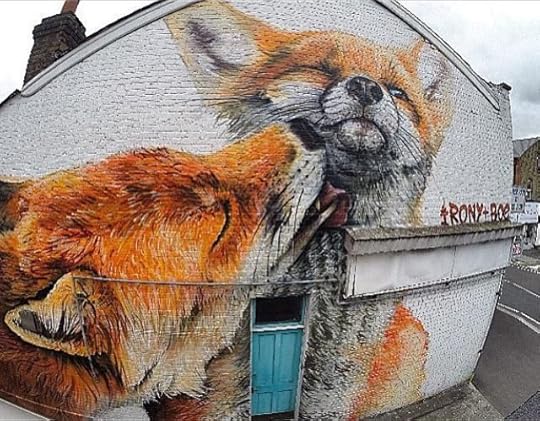
An ARC gently provided by the author/publisher in return for a review.
This was my first encounter with Forna and I definitely do not want it to by my last. I like how she writes, how her words are punches in a paragraph and caresses in another. Her ability to see, to join dots is one I want more of.
Happiness, what is it? Shall we find it where the adverts tell us, or the films or society. Forna's story explores life, death, trauma, happiness. How what seems small, insignificant, like how we treat animals is a reflection to how we treat others, what we expect from others and from our life, what scares us, what we allow to make us happy. Forna's people are the people I want to read about. The more we read about the ones in the shadows, the better. The ones in the limelight, who dictate, what happiness is, are not a reflections of us, rather a magnet greedy for attention without any real care for the attention givers. What gives some people such a certainty, such a feeling of entitlement, that what they think is right, that they have the moral high-ground? This certainty that obliterates the life of others and casts them in the shadow. Is it being born in one place and having the fortune or misfortune to stay in that place, to call that place yours. Not everyone can do that, not in our world, the ones moving in the shadows exist as well and this is one of their stories.
Great story, I loved reading it.
An ARC gently provided by the author/publisher in return for a review.
Read
July 1, 2018An ambitious novel, magnificently executed. I have no idea why I had not heard of Ms Forna before. A joyful moment: discovering an author whose work you appreciate and then finding there's lots more.
Love is a gamble, the stake is the human heart. The lover holds his or her cards close, lays them out one at a time and watches each move of the other player. To whom do you go first? This is the 'tell' of love. When a thing happens, be it good or bad, when you pick up the telephone or push through a crowd, who is it you most want to reach?
Love is a gamble, the stake is the human heart. The lover holds his or her cards close, lays them out one at a time and watches each move of the other player. To whom do you go first? This is the 'tell' of love. When a thing happens, be it good or bad, when you pick up the telephone or push through a crowd, who is it you most want to reach?

April 20, 2018
This is a gentle, subtle story about human suffering and resilience. There are some beautiful passages, but I sometimes struggled to see how the parts of the story fit together. Overall, though, this is a moving story about the acceptance of impermanence and the resilience that leads us and the natural world to survive.

March 11, 2018
You could accuse Forna of over-reliance on "coincidence" to drive her plot forward. But one of her characters attempts to cover that off for us:
"So … you say it is a coincidence we have met three times. What if I tell you I don’t believe in coincidences? … But what we call coincidences are merely normal events of low probability."
Fundamentally, her character is explaining that if you join the dots leading up to an event, you will see that what might look like a random meeting is, in fact, almost inevitable. You might think it unlikely that two strangers would meet three times in one of the world’s busiest cities (London), but when you learn about what brings them to London, it becomes less surprising that they should, in this case literally, run into one another.
Attila is a Ghanaian psychiatrist in London to give a keynote speech at a conference on his specialist topic - post traumatic stress disorder (PTSD). Jean is a scientist in London to study urban foxes. They first meet when Jean is out for a run in the city and accidentally collides with Attila. They dust themselves off and go their separate ways. But a connection has been made and grows from there.
Both our main protagonists have a lot going on in their lives. I had to stop at one point and write down all the different story threads so that I could try to keep track of them. Attila is in London for professional reasons (the conference), but also personal: he is trying to contact Ama, the daughter of friends, who has dropped out of contact. Whilst preparing for his conference and searching for Ama, he is also visiting Rosie, an ex-colleague now in a nursing home. And he also takes on a new role as an expert witness in a case where the personnel involved bring back memories of his past. Jean is studying foxes, but she is also helping a client build a roof garden, dealing with an illegal fox hunt she comes across, defending foxes on the radio and re-building a relationship with her son, Luke.
The kinds of connections that Forna explores in her book are not those where all these story lines turn out to be connected. Attila deals with his plot lines, Jean deals with hers (of course, there is some cross over: Jean gets involved in the search for Ama, for example). But their developing friendship means that they learn to experience some of what the other is going through.
In the mix with these different story lines developing in the book’s present, Forna also takes time flesh out her two main characters by jumping back in time. Attila is grieving for his wife, Maryse, whom he lost some time ago. And we also hear about some of his experiences in war zones. Jean is dealing with the break up of her marriage and we learn about her study of coyotes in USA prior to the foxes in urban UK.
If all this sounds like a lot for just 320 pages, there’s an element of truth in that. Especially as there are also several side-characters with some, albeit less, character development.
It’s a book that starts out with coincidence or chance encounters. It develops (because there is no such thing as coincidence, remember) into a book about living together, coexistence. Attila and Jean have lessons to learn about this, although I am not going to say what happens to the relationship they have after three “chance encounters”. The solution to the coyote/fox problem is also about tolerance and finding a way to live together. The parakeet that adorns the cover of some editions is a sub-plot also about tolerance and coexistence.
By taking time to fill in the history of the two main characters, I think one of the things Forna is doing is saying we can’t deal with things superficially - where we are now is deeply rooted in where we have come from. I think this is similar to what Ali Smith is doing in her seasonal quartet (Autumn and Winter both take time to ground current events in a historical context) and what Richard Powers has very recently done in The Overstory which very much focuses on the connections that draw people together. Forna's story opens with a prologue in which a wolf hunter in the early part of the 19th century tracks down a wolf: ostensibly, this has nothing to do with what follows, but the link wolf-coyote-fox is there pointing us towards what the book is telling us about.
It’s a valid point. We easily take life a face value and are surprised by the twists and turns it presents us with. But perhaps we would be less surprised if we took a bit more time to understand the context, both our own history and that of those we interact with. The book is in part a plea for tolerance and understanding. Attila has a key view that the axiom “trauma = suffering = damage”, which drives his profession, is wrong. Yes, trauma brings suffering, but suffering does not necessarily equate to damage, he says. It can be what makes us (more) human. The book seems to me to be asking us not to try to heal everyone of every little bit of suffering they have endured, but to appreciate that some things can make us better people. Sometimes, perhaps, suffering does not mean damage as much as it means greater tolerance and understanding.
Writing this has slightly altered my view of this book. As I started writing, I wasn’t sure about the reliance on coincidence or about the sheer number of different plot lines that were being progressed. But, on reflection, they are perhaps a key strength of the book given what I understand its main motivations to be. I could be wrong (it wouldn’t be the first time), but this is certainly a book to dwell on after reading it which is always a positive.
My thanks to the publisher for a free review copy via NetGalley.
"So … you say it is a coincidence we have met three times. What if I tell you I don’t believe in coincidences? … But what we call coincidences are merely normal events of low probability."
Fundamentally, her character is explaining that if you join the dots leading up to an event, you will see that what might look like a random meeting is, in fact, almost inevitable. You might think it unlikely that two strangers would meet three times in one of the world’s busiest cities (London), but when you learn about what brings them to London, it becomes less surprising that they should, in this case literally, run into one another.
Attila is a Ghanaian psychiatrist in London to give a keynote speech at a conference on his specialist topic - post traumatic stress disorder (PTSD). Jean is a scientist in London to study urban foxes. They first meet when Jean is out for a run in the city and accidentally collides with Attila. They dust themselves off and go their separate ways. But a connection has been made and grows from there.
Both our main protagonists have a lot going on in their lives. I had to stop at one point and write down all the different story threads so that I could try to keep track of them. Attila is in London for professional reasons (the conference), but also personal: he is trying to contact Ama, the daughter of friends, who has dropped out of contact. Whilst preparing for his conference and searching for Ama, he is also visiting Rosie, an ex-colleague now in a nursing home. And he also takes on a new role as an expert witness in a case where the personnel involved bring back memories of his past. Jean is studying foxes, but she is also helping a client build a roof garden, dealing with an illegal fox hunt she comes across, defending foxes on the radio and re-building a relationship with her son, Luke.
The kinds of connections that Forna explores in her book are not those where all these story lines turn out to be connected. Attila deals with his plot lines, Jean deals with hers (of course, there is some cross over: Jean gets involved in the search for Ama, for example). But their developing friendship means that they learn to experience some of what the other is going through.
In the mix with these different story lines developing in the book’s present, Forna also takes time flesh out her two main characters by jumping back in time. Attila is grieving for his wife, Maryse, whom he lost some time ago. And we also hear about some of his experiences in war zones. Jean is dealing with the break up of her marriage and we learn about her study of coyotes in USA prior to the foxes in urban UK.
If all this sounds like a lot for just 320 pages, there’s an element of truth in that. Especially as there are also several side-characters with some, albeit less, character development.
It’s a book that starts out with coincidence or chance encounters. It develops (because there is no such thing as coincidence, remember) into a book about living together, coexistence. Attila and Jean have lessons to learn about this, although I am not going to say what happens to the relationship they have after three “chance encounters”. The solution to the coyote/fox problem is also about tolerance and finding a way to live together. The parakeet that adorns the cover of some editions is a sub-plot also about tolerance and coexistence.
By taking time to fill in the history of the two main characters, I think one of the things Forna is doing is saying we can’t deal with things superficially - where we are now is deeply rooted in where we have come from. I think this is similar to what Ali Smith is doing in her seasonal quartet (Autumn and Winter both take time to ground current events in a historical context) and what Richard Powers has very recently done in The Overstory which very much focuses on the connections that draw people together. Forna's story opens with a prologue in which a wolf hunter in the early part of the 19th century tracks down a wolf: ostensibly, this has nothing to do with what follows, but the link wolf-coyote-fox is there pointing us towards what the book is telling us about.
It’s a valid point. We easily take life a face value and are surprised by the twists and turns it presents us with. But perhaps we would be less surprised if we took a bit more time to understand the context, both our own history and that of those we interact with. The book is in part a plea for tolerance and understanding. Attila has a key view that the axiom “trauma = suffering = damage”, which drives his profession, is wrong. Yes, trauma brings suffering, but suffering does not necessarily equate to damage, he says. It can be what makes us (more) human. The book seems to me to be asking us not to try to heal everyone of every little bit of suffering they have endured, but to appreciate that some things can make us better people. Sometimes, perhaps, suffering does not mean damage as much as it means greater tolerance and understanding.
Writing this has slightly altered my view of this book. As I started writing, I wasn’t sure about the reliance on coincidence or about the sheer number of different plot lines that were being progressed. But, on reflection, they are perhaps a key strength of the book given what I understand its main motivations to be. I could be wrong (it wouldn’t be the first time), but this is certainly a book to dwell on after reading it which is always a positive.
My thanks to the publisher for a free review copy via NetGalley.

May 24, 2018
The book has two main protagonists – Attila and Jean.
Attila is Ghanian, a psychiatrist who specialises in PSTD and in particular in the treatment of civilians in war zones. Recently widowed – his wife Maryse dying while he was in Iraq negotiating a hostage release, he is visiting London to speak at a conference. While there he is asked to check on his niece who has lost contact with her family - which quickly turns into a search for her young son after he absconds from temporary foster care after his mother is incorrectly and briefly detained as an illegal immigrant, leading to the solicitor he hires saying
He also visits Rosie, an ex-lover and collaborator now dying of early onset Alzheimer’s in a nursing home (from which her long term carer is laid off). Later, in order to personally re-employ her carer, he takes on a role as expert witness in case which turns out to involve the wife of his ex-driver, the driver who was later kidnapped in Iraq.
Jean is American – recently divorced from her husband, a seller of vintage American cars and struggling in her relationship with her college age son. In America she specialised in the tracking of coyotes, and looking for a new start she has accepted an EU-funded council post in London to track the urban fox population. Rearising she has under-estimated the costs of living in London, she sets up her own business, designing natural, wild flower gardens on rooftops. As well as her fascination with the foxes, she is also drawn to a local parakeet population.
Jean’s fascination with canines, early on is almost physical
Initially I was horrified that this, together with Paula Cocozza’s How to Be Human was part of a new genre of literary fiction – the canine/human love story; but thankfully the book thereafter steered clear of pursuing this track any further.
The other main characters in the book are a group of African immigrants who keep London ticking, while bonding tightly in their national groups:
And in fact London itself and the way it draws on an international cast, is a key part of the book, Jena saying to Attila:
Jean and Attila literally run into each other at the start of the book – and after a number of meetings start a friendship which deepens over time. Their repeated accidental meetings, are simply an early example of a major part of the narrative drive in this book – coincidence. At times it feels like every scene has some form of coincidental link to another scene, with even minor characters from one scene (often animals) reappearing in another scene. This is clearly deliberate and, with the aid of some shaky mathematics, Attila and Jean confront this head on:
I was reminded of Kate Atkinson’s One Good Turn (and its forerunner Case Histories) – a book which relied excessively on coincidence and whose main protagonist – the detective Jackson Brodie says "A coincidence is just an explanation waiting to happen."
In both cases I was not really convinced that simply getting a character to acknowledge and recategorise the excessive use of coincidence, justified its excessiveness: however I think this was much more of a weakness in “One Good Turn” (given it was a plot driven detective story) than here, where it really is meant to illustrate to pick up two key themes in the book: the importance of looking for what we have in common rather than what divides us; and the tendency of the West to want life to be predictable This is how most people want to live … They want to be safe, they want to be comfortable. They want to believe that they are in control of their lives, and they want that thing we call freedom and to regard any deviation as both unexpected and traumatic rather than as a simply a natural, if tragic, part of life which can be strengthening – the latter viewpoint being one Attila argues strongly for in his conference speech, towards the end of the book:
There were, as well as the use of coincidence, other aspects of the book I did not find entirely convincing.
For example Jean is portrayed as a lover of health food, much to the hidden dismay of Attila when he wants to order some cake from a café she frequents and is offered raspberry oat slice, non-dairy carrot cake, gluten-free lemon biscuits .. vegan chocolate and cherry, vegan banana loaf … vegan date loaf.. Clearly also she finds herself drawn to the environmental movement, participating on the fringe of protests against the chopping down of trees and denouncing on a radio hosts programme the Mayor of London’s plans for a fox cull (as an aside I found both the mayor and the radio host crudely drawn characters – although ones easily drawn from real life). I struggled then with finding that she had developed a taste for Lucozade and even more so when she eats with plastic cutlery from a plastic tray and throws both into a litter bin.
I was also not entirely convinced in the coherence of Attila’s theories or whether they are in fact more being used as part of an admirable anti-racist theme. We are initially told that he examined the tendency among clinicians in Western countries to over-diagnose schizophrenia in certain immigrant groups [he] deduced they were misdiagnosing post-traumatic stress disorder. , but later when acting as an expert witness he argues that what a previous expert is diagnosing as trauma enducing stress, might be an unusual event in Sussex, but is almost a daily tragedy in other countries.
About Rosie, before her illness we are told as she drives around the Suffolk coast near to a fictionalised version of Dunwich The roads were very narrow, but Rosie was used to that sort of thing; being brought up in the Sussex countryside, she never could see the point of slowing down around a bend – and yet having grown up in the countryside, I would say that it is those who live there who drive slowly on narrow country lanes, always wary of needing to give way to an oncoming vehicle, and visitors who actually think the 60 mile an hour speed limit is a target. Similarly, and although there is a reference to being without a satnav, the description of a route from London to Sussex is rather odd: M25, M23, A23 via Redhill only really works with the M23 as a very brief spur from the M25.
Some closing observations:
I am writing this review from my desk overlooking the common at the front of my house – a position from which I daily see foxes padding past and frequently the local flock of parakeets, and while I live in more of a rural than urban setting, I therefore related significantly to Jean’s monitoring of these two animals. Clearly the parakeets in particular, and the reaction of different people to them, are a metaphor for human migrants, and in that respect the RSPB’s position on Parakeets reminded me of political parties views on immigration.
Finally I was not sure if this was a dig at the most garlanded book of 2017-18, or a genuine example of “co-incidence” (and perhaps proof of what Attila and Jean claim as to its universality) but Jean, we are told read names on graves, the kind of name people no longer seemed to possess: ‘Oliphant’
Overall this was an enjoyable book, but perhaps less impressive than I had expected from the reviews I had read and the comments of others – and I have, for now, rounded my 3.5* down due to this.
Attila is Ghanian, a psychiatrist who specialises in PSTD and in particular in the treatment of civilians in war zones. Recently widowed – his wife Maryse dying while he was in Iraq negotiating a hostage release, he is visiting London to speak at a conference. While there he is asked to check on his niece who has lost contact with her family - which quickly turns into a search for her young son after he absconds from temporary foster care after his mother is incorrectly and briefly detained as an illegal immigrant, leading to the solicitor he hires saying
Once I spent my time dealing with work permits, now I spend my time attending to denunciations and deportations. These days landlords and employers must ask for all sorts of proof of the right to reside, the government wants to send as many people away as they can, because the whites don’t want us.’ The lawyer smiled as though this was a shared joke. ‘So now anybody can call the immigration services and tell them, Oh this person, that person is here without papers. The scheme is contracted out to private companies, maybe they’re on commission. The burden of proof is on you.’ He pointed at Attila. ‘You with the black skin.
He also visits Rosie, an ex-lover and collaborator now dying of early onset Alzheimer’s in a nursing home (from which her long term carer is laid off). Later, in order to personally re-employ her carer, he takes on a role as expert witness in case which turns out to involve the wife of his ex-driver, the driver who was later kidnapped in Iraq.
Jean is American – recently divorced from her husband, a seller of vintage American cars and struggling in her relationship with her college age son. In America she specialised in the tracking of coyotes, and looking for a new start she has accepted an EU-funded council post in London to track the urban fox population. Rearising she has under-estimated the costs of living in London, she sets up her own business, designing natural, wild flower gardens on rooftops. As well as her fascination with the foxes, she is also drawn to a local parakeet population.
Jean’s fascination with canines, early on is almost physical
Finally she laid her cheek against his chest and felt the beating of his heart, turned to bury her face in his fur. The rankness had not been unpleasant; heavy with musk and the scent of sun-scorched earth. The coyote had been Jean’s first. She had never forgotten.
Initially I was horrified that this, together with Paula Cocozza’s How to Be Human was part of a new genre of literary fiction – the canine/human love story; but thankfully the book thereafter steered clear of pursuing this track any further.
The other main characters in the book are a group of African immigrants who keep London ticking, while bonding tightly in their national groups:
Most of those boys who work in security are Nigerian. We Ghanaians, we prefer the hospitality industry. Many of the doormen at these hotels you see around here are our countrymen. The street-sweepers, the traffic wardens are mainly boys from Sierra Leone, they came here after their war so for them the work is okay. Some Nigerians do warden work when they first get here, before their friends in the security business find them something with greater job satisfaction and a seat inside’
And in fact London itself and the way it draws on an international cast, is a key part of the book, Jena saying to Attila:
You are an American. I am a West African. The barman is South American. And here we are in the middle of London. Not one of us was born here, but we each have a reason to be here. He’s learning the hotel business, I am on a junket. What’s your reason?’ His voice was deep, crumbly, the texture of rich earth. ‘Work,’ said Jean. She felt unnerved talking to a psychiatrist. She wondered if he would be able to tell if she lied. ‘And life,’ she added, in case he could.
Jean and Attila literally run into each other at the start of the book – and after a number of meetings start a friendship which deepens over time. Their repeated accidental meetings, are simply an early example of a major part of the narrative drive in this book – coincidence. At times it feels like every scene has some form of coincidental link to another scene, with even minor characters from one scene (often animals) reappearing in another scene. This is clearly deliberate and, with the aid of some shaky mathematics, Attila and Jean confront this head on:
‘So,’ said Attila reprising his thoughts of a few minutes earlier, ‘you say it’s a coincidence we have met three times. What if I tell you I don’t believe in coincidences? By which I mean the idea that coincidences are out of the ordinary, coincidences happen far too often to be considered extraordinary. People are always saying it. My, what a coincidence!’ … ‘A statistician will tell you that you are as likely to get a row of zeros on a winning lottery ticket as a row of different numbers. We should be less surprised when life takes an unexpected turn. Life is disorderly. In certain parts of the world, in the absence of plagues and floods it’s easy to mistake mundanity for normality and therefore to react to what seems extraordinary. But what we call coincidences are merely normal events of low probability..
[Jean]: Of course you’re right. I’m a scientist, I should never have used the word coincidence. There’s less synchronicity and more causality than we often think. Things happen. Sometimes in ways we couldn’t even start to imagine
I was reminded of Kate Atkinson’s One Good Turn (and its forerunner Case Histories) – a book which relied excessively on coincidence and whose main protagonist – the detective Jackson Brodie says "A coincidence is just an explanation waiting to happen."
In both cases I was not really convinced that simply getting a character to acknowledge and recategorise the excessive use of coincidence, justified its excessiveness: however I think this was much more of a weakness in “One Good Turn” (given it was a plot driven detective story) than here, where it really is meant to illustrate to pick up two key themes in the book: the importance of looking for what we have in common rather than what divides us; and the tendency of the West to want life to be predictable This is how most people want to live … They want to be safe, they want to be comfortable. They want to believe that they are in control of their lives, and they want that thing we call freedom and to regard any deviation as both unexpected and traumatic rather than as a simply a natural, if tragic, part of life which can be strengthening – the latter viewpoint being one Attila argues strongly for in his conference speech, towards the end of the book:
We don’t blame victims any longer, instead we condemn them. We treat them like damaged goods and in so doing we compound the pain of whatever wound has been inflicted and we encourage everyone around them to do the same. The fact of the matter is that most people who have endured trauma do so without lasting negative effects, but we overlook the ones who cope because we never see them. It’s a simple logical fallacy. You already have the answer, so you construct the supporting argument. Trauma causes suffering, suffering causes damage. But what we don’t know is whether the absence of adverse life events creates the ideal conditions for human development. We just assume it does ... That the emotional vulnerability of trauma is oftentimes transformed into emotional strength. What if we were to have revealed to us that misfortune can lend life quality? Whatever does not kill me makes me stronger, yes. What if I told you that there are times when whatever does not kill me can make me more, not less, than the person I was before?
There were, as well as the use of coincidence, other aspects of the book I did not find entirely convincing.
For example Jean is portrayed as a lover of health food, much to the hidden dismay of Attila when he wants to order some cake from a café she frequents and is offered raspberry oat slice, non-dairy carrot cake, gluten-free lemon biscuits .. vegan chocolate and cherry, vegan banana loaf … vegan date loaf.. Clearly also she finds herself drawn to the environmental movement, participating on the fringe of protests against the chopping down of trees and denouncing on a radio hosts programme the Mayor of London’s plans for a fox cull (as an aside I found both the mayor and the radio host crudely drawn characters – although ones easily drawn from real life). I struggled then with finding that she had developed a taste for Lucozade and even more so when she eats with plastic cutlery from a plastic tray and throws both into a litter bin.
I was also not entirely convinced in the coherence of Attila’s theories or whether they are in fact more being used as part of an admirable anti-racist theme. We are initially told that he examined the tendency among clinicians in Western countries to over-diagnose schizophrenia in certain immigrant groups [he] deduced they were misdiagnosing post-traumatic stress disorder. , but later when acting as an expert witness he argues that what a previous expert is diagnosing as trauma enducing stress, might be an unusual event in Sussex, but is almost a daily tragedy in other countries.
About Rosie, before her illness we are told as she drives around the Suffolk coast near to a fictionalised version of Dunwich The roads were very narrow, but Rosie was used to that sort of thing; being brought up in the Sussex countryside, she never could see the point of slowing down around a bend – and yet having grown up in the countryside, I would say that it is those who live there who drive slowly on narrow country lanes, always wary of needing to give way to an oncoming vehicle, and visitors who actually think the 60 mile an hour speed limit is a target. Similarly, and although there is a reference to being without a satnav, the description of a route from London to Sussex is rather odd: M25, M23, A23 via Redhill only really works with the M23 as a very brief spur from the M25.
Some closing observations:
I am writing this review from my desk overlooking the common at the front of my house – a position from which I daily see foxes padding past and frequently the local flock of parakeets, and while I live in more of a rural than urban setting, I therefore related significantly to Jean’s monitoring of these two animals. Clearly the parakeets in particular, and the reaction of different people to them, are a metaphor for human migrants, and in that respect the RSPB’s position on Parakeets reminded me of political parties views on immigration.
“The RSPB is not in favour of a cull of parakeets at this time, but believes it is important that the spread of the ring-necked parakeet is monitored and its potential for negative impacts on our native bird species assessed”
Finally I was not sure if this was a dig at the most garlanded book of 2017-18, or a genuine example of “co-incidence” (and perhaps proof of what Attila and Jean claim as to its universality) but Jean, we are told read names on graves, the kind of name people no longer seemed to possess: ‘Oliphant’
Overall this was an enjoyable book, but perhaps less impressive than I had expected from the reviews I had read and the comments of others – and I have, for now, rounded my 3.5* down due to this.

January 21, 2018
The premise of two strangers meeting on Waterloo Bridge because of an urban fox was enough to make me want to read this book. I lived in London for ten years and the city and its fox population have a special place in my heart. And now, so has this lovely beautifully crafted novel.
This is a story of two people who have already had a life. Throughout the book we get glimpses of the past that has shaped them into the people they are in the present. Atilla is a psychiatrist from Ghana, who has history in London and is in the city to deliver a keynote speech. He has worked in warzones and has been exposed to the darker side of humanity. Jean is a scientist, who has done case studies on coyotes in her native US and who is now conducting a study into the urban foxes that surround her London home, and enlists the help of the West African local binmen turned fox spotters to find Atilla’s friend’s grandson.
This book has so much going for it. It touches on immigration, both human and animal. human emotion, ranging from grief and PTSD to love and hope. I loved how this book had mature main characters, who were depicted in an intelligent senstive way.
I felt so connected to both Atilla and Jean and enjoyed the tentative connection between them and how it grows so organically. I thought the flashbacks to important moments in their respective lives were very well done and served to understand the present.
The author manages to bring the multicultural city to life beautifully and I enjoyed getting a different (West African) perspective on it.
I found this a very senstive sometimes thought provoking novel that made me smile and question myself and what is important.
This is a story of two people who have already had a life. Throughout the book we get glimpses of the past that has shaped them into the people they are in the present. Atilla is a psychiatrist from Ghana, who has history in London and is in the city to deliver a keynote speech. He has worked in warzones and has been exposed to the darker side of humanity. Jean is a scientist, who has done case studies on coyotes in her native US and who is now conducting a study into the urban foxes that surround her London home, and enlists the help of the West African local binmen turned fox spotters to find Atilla’s friend’s grandson.
This book has so much going for it. It touches on immigration, both human and animal. human emotion, ranging from grief and PTSD to love and hope. I loved how this book had mature main characters, who were depicted in an intelligent senstive way.
I felt so connected to both Atilla and Jean and enjoyed the tentative connection between them and how it grows so organically. I thought the flashbacks to important moments in their respective lives were very well done and served to understand the present.
The author manages to bring the multicultural city to life beautifully and I enjoyed getting a different (West African) perspective on it.
I found this a very senstive sometimes thought provoking novel that made me smile and question myself and what is important.

November 25, 2023
The Goodreads description tells too much, I think. But maybe it was what made me pick up this book.
Dr. Attila Asare is a world renown psychiatrist who has published several papers. PTSD in the Non-combat Population is one title I remember. I suppose I remember it because we always think of PTSD as relating to soldiers returning from war. Attila is, of course fictional. Every word I read of him in this made me believe that he exists even if by another name. It wasn't just that he is from Accra, Ghana nor that he is at least 6 foot 6 inches tall. Somehow I could hear his voice when he spoke and a laugh from deep in his chest.
Jean Turane is a wildife biologist from the US with a specialty in urban wildlife. She has a contract in the UK to study urban foxes. She, too, is fictional but also so well drawn that such a person surely exists in real life. Having gotten permission from her landlord she has accessed the roof in her building, set up raised beds for vegetables and also created a small "meadow" with flowers. There is a bench and a table where she feeds wild birds. She found that her pay for her study doesn't quite meet her costs in London. So, with her gardening knowledge she has a small business called Wild Spaces to create similar spaces on roofs or terraces.
These two bumped into each other, quite literally. Then met again, again by happenstance. Through a series of vignettes we get to know them as individuals. The novel is not linear. There are long passages that describe scenes from their lives before the 2014 week of the present.
In addition to the excellent characterizations I very much liked Forna's writing style. I like being challenged to having to look up the occasional vocabulary word. There might have been a 1/2 dozen in this. One I remember because I think, living in timber country, I should have known. pol·lard ˈpä-lərd
: a tree cut back to the trunk to promote the growth of a dense head of foliage
I have marked her The Memory of Love as wish list while marking this title as 5-stars. It is the best thing I've read recently.
Dr. Attila Asare is a world renown psychiatrist who has published several papers. PTSD in the Non-combat Population is one title I remember. I suppose I remember it because we always think of PTSD as relating to soldiers returning from war. Attila is, of course fictional. Every word I read of him in this made me believe that he exists even if by another name. It wasn't just that he is from Accra, Ghana nor that he is at least 6 foot 6 inches tall. Somehow I could hear his voice when he spoke and a laugh from deep in his chest.
Jean Turane is a wildife biologist from the US with a specialty in urban wildlife. She has a contract in the UK to study urban foxes. She, too, is fictional but also so well drawn that such a person surely exists in real life. Having gotten permission from her landlord she has accessed the roof in her building, set up raised beds for vegetables and also created a small "meadow" with flowers. There is a bench and a table where she feeds wild birds. She found that her pay for her study doesn't quite meet her costs in London. So, with her gardening knowledge she has a small business called Wild Spaces to create similar spaces on roofs or terraces.
These two bumped into each other, quite literally. Then met again, again by happenstance. Through a series of vignettes we get to know them as individuals. The novel is not linear. There are long passages that describe scenes from their lives before the 2014 week of the present.
In addition to the excellent characterizations I very much liked Forna's writing style. I like being challenged to having to look up the occasional vocabulary word. There might have been a 1/2 dozen in this. One I remember because I think, living in timber country, I should have known. pol·lard ˈpä-lərd
: a tree cut back to the trunk to promote the growth of a dense head of foliage
I have marked her The Memory of Love as wish list while marking this title as 5-stars. It is the best thing I've read recently.

June 5, 2018
Jean is a research biologist, who has moved temporarily to England to do a research project counting the number of foxes living in London. While there, she meets an attractive African Psychiatrist, Attila, who is presenting a keynote speech at a Psychiatric Symposium. He arrives early so that he can make arrangements for his former lover from his college years, who developed early onset Alzheimer's and to check on a niece that no one can reach.
Little does he know that his niece has been erroneously picked up by authorities for illegal immigration and she was taken ill without her medications and hospitalized. Her son is missing and Attila must find him. Jean has many friends from Northern Africa among the security details, doormen and janitors in the city and she enlists them in the locating of this nephew. As she and Attila work together, they begin to develop chemistry. We learn that both have recently suffered losses, Attila's wife died while he was working in a war zone with an NGO. Jean has recently divorced. Each is leery of getting hurt, each wonders if they can take another chance at love and then when they finally conclude nothing ventured nothing gained. Their situations switch around and soon those questions are re-examined. I don't spoil endings so you will have to read this fascinating story.
Ms. Forna is an engaging writer, who creates memorable characters. There isn't one thing that stood out to me it was the entire work that was a pleasure. She put in the time to research and write in details that made this story seem like it could happen.
Little does he know that his niece has been erroneously picked up by authorities for illegal immigration and she was taken ill without her medications and hospitalized. Her son is missing and Attila must find him. Jean has many friends from Northern Africa among the security details, doormen and janitors in the city and she enlists them in the locating of this nephew. As she and Attila work together, they begin to develop chemistry. We learn that both have recently suffered losses, Attila's wife died while he was working in a war zone with an NGO. Jean has recently divorced. Each is leery of getting hurt, each wonders if they can take another chance at love and then when they finally conclude nothing ventured nothing gained. Their situations switch around and soon those questions are re-examined. I don't spoil endings so you will have to read this fascinating story.
Ms. Forna is an engaging writer, who creates memorable characters. There isn't one thing that stood out to me it was the entire work that was a pleasure. She put in the time to research and write in details that made this story seem like it could happen.

March 9, 2019
This is a thoroughly enjoyable read – touching, funny, real. I'm surprised this one's not getting more attention.

July 4, 2020
Fericire este povestea a doi oameni ale căror vieți sunt schimbate în doar câteva secunde, cât a durat prima lor întâlnire. Din când în când este profundă și inspiră nostalgie, dar în cea mai mare parte eu am văzut-o mai degrabă anostă. Pentru că nu m-am atașat de personaje, nu am găsit răbdarea și interesul de a trăi la aceeași intensitate ca ei descoperirea iubirii lor. Totuși, spre final mi-a plăcut mult. Aceeași lentoare care mi s-a părut deseori agonizantă în restul lecturii se transformă într-un ritm cumva romantic și a fost plăcut să văd crescând acea iubire matură, timidă și precaută, dar nu lipsită de pasiune. Deși ambii protagoniști au o înclinație spre singurătate, pentru fiecare fericirea înseamnă altceva. Pentru ea, mirosul blănii unui animal, un răsărit sau o grădină frumoasă, pentru el, o masă bună, o amintire frumoasă ori, pur și simplu, o melodie. A fost plăcut de urmărit cât de bine se înțeleg cei doi în ciuda diferențelor și cum încep să găsească lucruri care îi bucură pe amândoi! Totuși, cred că ar fi mai apreciată de persoanele de peste 40 de ani, să zicem. Personajele au o vârstă înaintată, nu mi-am dat seama exact care e aceea, dar aproape de bătrânețe oricum, așa că e nevoie măcar de un anumit nivel de experiență, înțelepciune și melancolie din partea cititorului, genul care vin doar odată cu timpul și nu cred că ajung până la vârsta sus menționată. Nu aș spune că este o lectură memorabilă, dar nici de evitat. Recenzia aici: https://bit.ly/2CTuEsr.
,,La cine te duci prima dată? Ăsta e primul indiciu al dragostei. Când se întâmplă ceva, fie bun, fie rău, când ridici telefonul sau îți faci loc prin mulțime, la cine vrei cel mai mult să ajungi?''
,,La cine te duci prima dată? Ăsta e primul indiciu al dragostei. Când se întâmplă ceva, fie bun, fie rău, când ridici telefonul sau îți faci loc prin mulțime, la cine vrei cel mai mult să ajungi?''

March 23, 2018
What do wolves, foxes and immigrants have in common?
In this multi-faceted epic novel about the battle for survival on the margins of society, the author explores issues of tolerance and co-existence against a background of violent culture clashes and territorial disputes around the globe. The two main characters are well fleshed out with convincing back stories and Forna is careful to prevent political posturing or polemic from overwhelming the narration.
With thanks to the publisher for the ARC via NetGalley.
In this multi-faceted epic novel about the battle for survival on the margins of society, the author explores issues of tolerance and co-existence against a background of violent culture clashes and territorial disputes around the globe. The two main characters are well fleshed out with convincing back stories and Forna is careful to prevent political posturing or polemic from overwhelming the narration.
With thanks to the publisher for the ARC via NetGalley.
Displaying 1 - 30 of 862 reviews