

What do you think?

Parenting with Words of Grace: Building Relationships with Your Children One Conversation at a Time
How you speak to your kids today will impact your relationship with them tomorrow . As a parent, your words are powerful. What you say and how you say it has the potential to either invite your children into deeper relationship with you or push them away. What’s more, in a very real sense, your words represent―or misrepresent―God’s words to his children― meaning they have the power to shape how your children view their heavenly Father. Offering practical guidance for grace-filled communication in the midst of the craziness of everyday life, this accessible guide will help you speak in ways that reflect the grace God has shown to you in the gospel.
224 pages, Paperback
Published February 28, 2019
About the author
William P. Smith
45 books8 followersWilliam P. Smith, M.Div., PhD., is the director of counselling at Chelten Baptist Church, Dresher, PA., adjunct faculty at CCEF, and the author of many counselling articles and the book Caught off Guard: Encounters With the Unexpected God.
Ratings & Reviews
Friends & Following
Create a free account to discover what your friends think of this book!
Community Reviews
Displaying 1 - 30 of 58 reviews

August 1, 2020
This book surprised me at just how good it was. If you can easily get too full of parenting books and want to choose them wisely, this one is a keeper.
The book is all about how to speak with words of kindness and humility, “that impart grace to hearers.” The context is in the form of parents to children but I found myself applying the scriptural principles to any relationship be it marriage, friendships, church relationships, etc.
If you fail at consistently speaking to your children with patience and grace (that would be all of us), you will appreciate this book. But you will not feel “beat up.” The author repeatedly drives home the truth that God is still parenting the parents. He often uses our own children to do so. And in the same way he forgives us, loves us and welcomes us back into loving relationship with him when *we* are the ones who’ve “blown in”, we are to also do likewise with our children.
If your knee jerk reactions to the sins of your children are anger or harshness or resentment or withdrawal or (in the case of teens/young adults) retaliation, the author reminds readers in a very winsome way, that God has never done this to his children. The author points to scriptures that show us how God’s corrections are to draw us back to himself into loving fellowship.
Lastly, the book is an easy read. This may actually frustrate some of us who enjoy heavier reading. Sometimes I wished the author would dive a little deeper theologically 😬. However, the nice part is that you don’t need a cup of coffee in hand to read this one. It’s light enough to read before bed and not feel like your brain might explode or have you in tears.
I’ll be returning to my highlights in this book for a good while.
The book is all about how to speak with words of kindness and humility, “that impart grace to hearers.” The context is in the form of parents to children but I found myself applying the scriptural principles to any relationship be it marriage, friendships, church relationships, etc.
If you fail at consistently speaking to your children with patience and grace (that would be all of us), you will appreciate this book. But you will not feel “beat up.” The author repeatedly drives home the truth that God is still parenting the parents. He often uses our own children to do so. And in the same way he forgives us, loves us and welcomes us back into loving relationship with him when *we* are the ones who’ve “blown in”, we are to also do likewise with our children.
If your knee jerk reactions to the sins of your children are anger or harshness or resentment or withdrawal or (in the case of teens/young adults) retaliation, the author reminds readers in a very winsome way, that God has never done this to his children. The author points to scriptures that show us how God’s corrections are to draw us back to himself into loving fellowship.
Lastly, the book is an easy read. This may actually frustrate some of us who enjoy heavier reading. Sometimes I wished the author would dive a little deeper theologically 😬. However, the nice part is that you don’t need a cup of coffee in hand to read this one. It’s light enough to read before bed and not feel like your brain might explode or have you in tears.
I’ll be returning to my highlights in this book for a good while.

February 15, 2023
2025 update: it's still helpful and encouraging.
This gave me a much needed perspective on parenting and felt more practical to the every day moments that come up with my kids. Even in failing, this book served as an encouraging reminder to receive the grace God gives and allow it to inform how I talk/discipline with them.
Also, that eternal perspective bit about seeing them as potential peers was 🤌🏽!
This gave me a much needed perspective on parenting and felt more practical to the every day moments that come up with my kids. Even in failing, this book served as an encouraging reminder to receive the grace God gives and allow it to inform how I talk/discipline with them.
Also, that eternal perspective bit about seeing them as potential peers was 🤌🏽!
January 1, 2026
The length of time I took to work through this book was no reflection on how good it was! Really helpful insight into how we use our words as parents and in any of our relationships.

October 23, 2019
Book 178 of 2019. All parents have the best intention. However, not all parents communicate with their children in a way that effectively communicates the lessons that they wish to impart to their children. Smith, as a pastor and a parent, has some ideas about how to best match our communication with our children to our goals. His idea is to add more grace to those conversations.
As a parent, I freely admit that my use of my tongue is one of my weak areas, so I’ve read several books on using grace-filled words. Smith’s book is made up of stories as much as ideas and the chapters dare short than easily digested.
His exegesis of Ephesians 4:29 is powerful and throughout the book there are many little gems for the reader to find. This is not, however, a step-by-step guide on how to change your communication (Sam Crabtree’s Practicing Affirmation is good for that.). Instead, this shows how Smith’s family works through this communication and how they also fail at it. Perhaps the most powerful idea in the whole book is the realization that your relationship with God and your experience of his grace is where your ability to give this kind of grace to others springs from.
Overall, this is a good book and a great reminder to be more aware of the power of our everyday interaction with our children.
⭐️⭐️⭐️⭐️
#bookstagram #books #bookreview #parenting #parentingwithwordsofgrace #theunreadshelfproject2019
As a parent, I freely admit that my use of my tongue is one of my weak areas, so I’ve read several books on using grace-filled words. Smith’s book is made up of stories as much as ideas and the chapters dare short than easily digested.
His exegesis of Ephesians 4:29 is powerful and throughout the book there are many little gems for the reader to find. This is not, however, a step-by-step guide on how to change your communication (Sam Crabtree’s Practicing Affirmation is good for that.). Instead, this shows how Smith’s family works through this communication and how they also fail at it. Perhaps the most powerful idea in the whole book is the realization that your relationship with God and your experience of his grace is where your ability to give this kind of grace to others springs from.
Overall, this is a good book and a great reminder to be more aware of the power of our everyday interaction with our children.
⭐️⭐️⭐️⭐️
#bookstagram #books #bookreview #parenting #parentingwithwordsofgrace #theunreadshelfproject2019

April 27, 2023
Unquestionably 5 stars to this refreshing book on how to be authentic with our kids, and speak to them the kinds of grace-filled, transformative words they need to hear. Part of the book deals with personal transformation too, because in order to pour into our kids the most life-giving words of grace, we have to be people who are genuinely experiencing it ourselves, not just trying to make it up.
I was particularly blessed by how author William Smith writes with such down-to-earth wisdom. In my adult life, I’ve landed several times in faith communities surrounded by people who don’t seem to wrestle as much with real-people struggles—eating too much, drinking too much, too much screen time, etc. I appreciated Smith’s frank portrayal of these as everyday issues in his own home. In doing this, he models one of the ground-rules he teaches: “Build bridges with your failures.”
And lots of other lessons I’m taking with me too—Here’s just a handful…
• …not to define parenting as an adult-resolution to a problem created by my child
• …choosing words that will encourage my kids to want more of me (not less of me)
• …taking those ordinary, everyday interruptions as opportunities for communicating grace
• …sometimes, start conversations without knowing where they’ll end
• …remind myself that Jesus is at work to bring about good for his children (including my family!)
I’m so glad God brought this book along at just the right time... just as I’m taking my first tentative steps in parenting teenagers!
~Jen
I was particularly blessed by how author William Smith writes with such down-to-earth wisdom. In my adult life, I’ve landed several times in faith communities surrounded by people who don’t seem to wrestle as much with real-people struggles—eating too much, drinking too much, too much screen time, etc. I appreciated Smith’s frank portrayal of these as everyday issues in his own home. In doing this, he models one of the ground-rules he teaches: “Build bridges with your failures.”
And lots of other lessons I’m taking with me too—Here’s just a handful…
• …not to define parenting as an adult-resolution to a problem created by my child
• …choosing words that will encourage my kids to want more of me (not less of me)
• …taking those ordinary, everyday interruptions as opportunities for communicating grace
• …sometimes, start conversations without knowing where they’ll end
• …remind myself that Jesus is at work to bring about good for his children (including my family!)
I’m so glad God brought this book along at just the right time... just as I’m taking my first tentative steps in parenting teenagers!
~Jen

May 29, 2021
Cannot recommend enough!

February 7, 2026
Would strongly recommend this to any parent with a 5+ year old. This was so helpful.
“All day, every day, we are constantly given normal, ordinary opportunities to say three very important things: “This is the kind of person I am.” “This is the kind of relationship you can expect to have with me in the future.” “This is a little taste of the God I know.”
“All day, every day, we are constantly given normal, ordinary opportunities to say three very important things: “This is the kind of person I am.” “This is the kind of relationship you can expect to have with me in the future.” “This is a little taste of the God I know.”

October 12, 2020
Being a mom of two adults and only one teen still living at home, I didn’t think I needed to read this book. I thought it was too late for me since I’m 2/3 done with parenting. How wrong I was!
Yes, the author mostly addresses parenting smaller kids, but the principles he explained work with older children, and even in other discipleship-type relationships at church or elsewhere. It is helpful for any kind of pursuit of relationship with anyone.
But, I think what I like most about the book is the author’s constant reminder of God the Father’s love for His children. I was deeply encouraged by Scripture references that show God’s patience, grace and mercy toward His sometimes rebellious children. And when parents realize what and how much God has done for them, it leads to treating their children the same.
One of my favorite passages in the book is this,
“What changed me—what keeps changing me—is the Word of God, spoken from the Father to me, his child. His words help me know his heart: that I am absolutely safe with him. That my reputation is secure because he has my back. That I am far more deeply loved than I have yet dared to imagine. That he is working in me now and will not quit until I am pure and perfect, just like Christ. That he has taken away every wrong thing that I’ve ever done to him, along with the penalty of doing wrong. That at this very moment he is not angry with me. That he likes me and wants to be friends with me.”
Yes, the author mostly addresses parenting smaller kids, but the principles he explained work with older children, and even in other discipleship-type relationships at church or elsewhere. It is helpful for any kind of pursuit of relationship with anyone.
But, I think what I like most about the book is the author’s constant reminder of God the Father’s love for His children. I was deeply encouraged by Scripture references that show God’s patience, grace and mercy toward His sometimes rebellious children. And when parents realize what and how much God has done for them, it leads to treating their children the same.
One of my favorite passages in the book is this,
“What changed me—what keeps changing me—is the Word of God, spoken from the Father to me, his child. His words help me know his heart: that I am absolutely safe with him. That my reputation is secure because he has my back. That I am far more deeply loved than I have yet dared to imagine. That he is working in me now and will not quit until I am pure and perfect, just like Christ. That he has taken away every wrong thing that I’ve ever done to him, along with the penalty of doing wrong. That at this very moment he is not angry with me. That he likes me and wants to be friends with me.”

February 7, 2019
I read Parenting with Words of Grace because I enjoy books that contain scripture references and also comparing scripture to parenting-life in modern times. While there were chapters and chapters with references to the Bible, I still felt like the book missed a lot of opportunity to use real examples of “Parenting with Words of Grace”.
Don’t get me wrong, the author is clearly a smart pastor and knows his scripture, but the “real life” examples where he spoke to his own children with Words of Grace seemed to be unauthentic and not very realistic (at least in my opinion). I was hoping for more examples of how to speak with children or family members based on the title, however the book kind of missed the mark.
I feel like the book lacks overall structure, there were too few parenting examples (some but not many and unrealistic), and just a disorganized flow of the book in general. The book did not meet my expectations based on my initial impression of the title and book description.
Thank you Crossway books and #netgalkey for my free e-book arc in exchange for an honest review.
Don’t get me wrong, the author is clearly a smart pastor and knows his scripture, but the “real life” examples where he spoke to his own children with Words of Grace seemed to be unauthentic and not very realistic (at least in my opinion). I was hoping for more examples of how to speak with children or family members based on the title, however the book kind of missed the mark.
I feel like the book lacks overall structure, there were too few parenting examples (some but not many and unrealistic), and just a disorganized flow of the book in general. The book did not meet my expectations based on my initial impression of the title and book description.
Thank you Crossway books and #netgalkey for my free e-book arc in exchange for an honest review.

March 13, 2019
Your kids mature through conversations. That is the main idea of this book. Through our conversations, we teach our children. Just as we learn from our conversations with God, our children learn from us. They not only learn who we are and how we treat them, but they also learn who God is. Every time you talk to your child, you are communicating "This is what I am like as a person- this is what I value; this is what's important to me; this is how I think about life; this is how I think about you."
There are aspects of this book that I loved, the mission to speak thoughtfully to our children was great. However, I felt like his personal stories were completely unrealistic. Overall, I would recommend this book.
"Teach and talk everywhere. Verbally communicate not simply what God says, but how his words intersect with daily life as you're home or on the road...Fill your children's world with God's words so that they develop a sense of who he is, who they are in relation to him, and how they must live in this world."
There are aspects of this book that I loved, the mission to speak thoughtfully to our children was great. However, I felt like his personal stories were completely unrealistic. Overall, I would recommend this book.
"Teach and talk everywhere. Verbally communicate not simply what God says, but how his words intersect with daily life as you're home or on the road...Fill your children's world with God's words so that they develop a sense of who he is, who they are in relation to him, and how they must live in this world."

November 16, 2021
Are you a parent who feels like you say the same things over and over to your children? Do you wish you had fresh vocabulary, Grace filled perspective in the way you think about your relationships with your kids? At the bottom of all of these desires lies the deeper question of how has God in Jesus spoken to us, how has He condescended to communicate to His creatures? Parenting with words of grace answers these questions and more. I’ll be re-reading this for years to come!
December 12, 2024
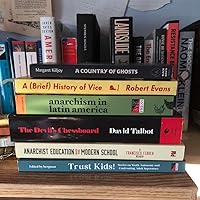
There's something about reviews about books or a piece of media that feels inherently snobbish. Like the nature of reviewing makes you put on a turtleneck and some tiny ass glasses and start talking in a nasaly British accent, which is weird because you're French. Or at least your in France. But enough about the guy from ratatouille. This is a good book for the most part. And when compared to most of the Christian parenting books I've read (the sample size isn't large, but big enough for me to justify saying things like 'most of') it's leaps and bounds ahead of the rest with just a few problems that I'll get to later. A lot of it is a reiteration of stuff that you would think Christians would know. But I don't mind that. It's good to be reminded of things, even if they may be obvious to everybody. And with the swirl of emotions that new parents have, and the piles of books given to them and suggested to them by friends and even acquaintances it's worthwhile to write a parenting book that's pointed, that's easy to digest, but that you still have to wrestle with a bit. And it's useful to write one that's easy to read, that way people don't get stuck and move on to the next suggestion. This book does a lot right, and is littered with Bible verses wielded as a form of teaching , reproof and correction for parents rather than as a weapon with which to attack children and their actions and intentions. The writing style was concise, clear and yet entertaining. And hey, an acknowledgment that Paul wasn't talking about swear words when he said "let no corrupting talk come out of your mouth", made me so happy that I walked into my parents room to see if my mom was awake and show it to her at 7 or so in the morning. And as an added bonus this book affirmed a truth that I have long screamed at Christian parenting books to do but they hadn't until this one: stating that children are made in the imago dei. When I first started research on Christian parenting I had assumed this would be a low bar but with each one I consumed the bar slowly but surely rose to the point where I consider Smith as a possible candidate for the summer Olympics.
When I set this book down, I didn't do so hastily, like I do with some books like it, as if me running from it could change the very words on the page, and me casting it aside could save kids from it's harsh, and often downright un-Christlike message. No; instead, i set this book down like one does with a plate to the sink, that just held a meal that was far better than you expected. It wasn't Michelin star level, but it certainly was worth chewing on. I went to leave it a three star review. After all, it still had some issues typical of these kinds of books, and I certainly didn't agree with all of it. But I swallowed my pride, and decided that more people should read this book rather than dobson. I can't convert Christian parents to John Holt or even to being a gentle parent overnight. I must meet them where they are, and this book makes a damn good bridge.
Okay, we've gotten to the good, which is the bulk, but now to the outliers: the bad and the ugly. We've got just a couple instances.
1. He does say some unhinged things to his kids such as (and I'm paraphrasing here) "do you deserve to stay up late Timmy? The Bible says you deserve crucifixion". Can't remember how old Timmy was, I seem to remember 8 but do not quote me on that.
2. When talking about something Paul is saying in a particular verse, Smith says that Paul is essentially saying direct quote here: "'you don't get to ignore the weeklong war that children insist on waging in your home. You have to speak. But you can only say what will give them grace". Right after reading this, I wrote in my notebook that this entire page gave me "whiplash" and I couldn't have said it better myself. Because, well because that's what I said so I literally could not have said it better because that was my, that was what i- you get it. The war language was super disappointing mostly because I had come to expect Smith to not be like other girls to put it in terms Gen z would understand.
/// we interrupt this broadcast for more William P Smith W's, rattled off in rapid succession right before we get to the worst thing he said ///
-made fun of the war on drugs- BASED
-critique of Winston Churchill- BASED
-using the movie Babe as an example- INCREDIBLY BASED
/// Back to our usually scheduled programming ladies and gentlemen and we have a breaking news alert that William P Smith has been accused of blasphemy by some random 18 year-old on the internet who is- and I quote- wired, and also reports say he is talking in the third person. His friends and family are worried about him. His accusation was reportedly based on this paraphrasing of Mr. Smith:
"You're not going to treat anyone in authority, including [God], with any better respect than you practice with me".
The random kid, known only as "the Viper" and also by his name on goodreads which is public, made the statement that he "had to set down the book after reading this, stare at a Culver's wall, go to pick up the book again and then look back at the wall with a dumbfounded look before [he] finally understood what Smith meant" and then said that *static noise* *broadcast cuts off* /////
///////////////////////////////////////////////////////
That's done. So that seems blasphemous right?
When I set this book down, I didn't do so hastily, like I do with some books like it, as if me running from it could change the very words on the page, and me casting it aside could save kids from it's harsh, and often downright un-Christlike message. No; instead, i set this book down like one does with a plate to the sink, that just held a meal that was far better than you expected. It wasn't Michelin star level, but it certainly was worth chewing on. I went to leave it a three star review. After all, it still had some issues typical of these kinds of books, and I certainly didn't agree with all of it. But I swallowed my pride, and decided that more people should read this book rather than dobson. I can't convert Christian parents to John Holt or even to being a gentle parent overnight. I must meet them where they are, and this book makes a damn good bridge.
Okay, we've gotten to the good, which is the bulk, but now to the outliers: the bad and the ugly. We've got just a couple instances.
1. He does say some unhinged things to his kids such as (and I'm paraphrasing here) "do you deserve to stay up late Timmy? The Bible says you deserve crucifixion". Can't remember how old Timmy was, I seem to remember 8 but do not quote me on that.
2. When talking about something Paul is saying in a particular verse, Smith says that Paul is essentially saying direct quote here: "'you don't get to ignore the weeklong war that children insist on waging in your home. You have to speak. But you can only say what will give them grace". Right after reading this, I wrote in my notebook that this entire page gave me "whiplash" and I couldn't have said it better myself. Because, well because that's what I said so I literally could not have said it better because that was my, that was what i- you get it. The war language was super disappointing mostly because I had come to expect Smith to not be like other girls to put it in terms Gen z would understand.
/// we interrupt this broadcast for more William P Smith W's, rattled off in rapid succession right before we get to the worst thing he said ///
-made fun of the war on drugs- BASED
-critique of Winston Churchill- BASED
-using the movie Babe as an example- INCREDIBLY BASED
/// Back to our usually scheduled programming ladies and gentlemen and we have a breaking news alert that William P Smith has been accused of blasphemy by some random 18 year-old on the internet who is- and I quote- wired, and also reports say he is talking in the third person. His friends and family are worried about him. His accusation was reportedly based on this paraphrasing of Mr. Smith:
"You're not going to treat anyone in authority, including [God], with any better respect than you practice with me".
The random kid, known only as "the Viper" and also by his name on goodreads which is public, made the statement that he "had to set down the book after reading this, stare at a Culver's wall, go to pick up the book again and then look back at the wall with a dumbfounded look before [he] finally understood what Smith meant" and then said that *static noise* *broadcast cuts off* /////
///////////////////////////////////////////////////////
That's done. So that seems blasphemous right?

January 14, 2024
This is a quick, insightful read on the concept of allowing grace to impact one’s parenting. It starts with the notion that all interactions are either encouraging or discouraging further relationship. The rest of the book is spent unpacking some key principles related to this idea, along with lots of practical stories and examples. It’s a book that, if implemented, should impact not only one’s parenting, but also other meaningful relationships!

July 26, 2023
The main premise is worth gold - talk and behave towards your kids as God does. That is loaded given how many warped concepts of God there are. But with a solid foundation of a good, just, holy, and gracious God who shows the depths of His character through Christ's life, death, and resurrection, it is a simple yet powerful starting point for parenting and all relationships really. Some of the paragraphs varied in their impact and power but I loved the forgiveness chapter at the end.

September 8, 2021
Not just helpful for parenting, but for communication in all relationships.

August 22, 2023
For parents, or for people who have to talk to people, or for people who have relationships with people.
Grab this book. You won’t be the same.
Grab this book. You won’t be the same.

December 4, 2025
Such a great book! I need to revisit this again and again as my baby gets older. So much wisdom and Gospel-centered parenting advice in an easy-to-read and relatable book.

February 21, 2023
I appreciated the biblical wisdom in this book, but found the structure a little hard to follow. That distracted me as the flow was disconnected to me. Also, I have young children, and it felt many of the examples of parenting were for children a little older. Still, readers are sure to glean some helpful parenting tips along the way.

November 13, 2019
The core idea of this book - how you communicate with your kids impacts how they see Jesus - is spot on and critically important. Some of the examples and comments in this book were really helpful, especially in thinking through how to use sin and frustration to point back to Jesus, and how to use your words to build others up. Unfortunately, this book really struggled with formatting and structure, so the idea flow felt disorganized and confusing to follow at times.
3.5/5
3.5/5
October 10, 2020
Wonderful book about about speaking in light of the gospel
Do read this book! Whether you have kids or not you will be challenged to reevaluate your speech and approach to relationships in light of your relationship to God. This book will encourage you to think about the way God has been kind to you and to respond with kindness in your human relationships. Very challenging and encouraging!
Do read this book! Whether you have kids or not you will be challenged to reevaluate your speech and approach to relationships in light of your relationship to God. This book will encourage you to think about the way God has been kind to you and to respond with kindness in your human relationships. Very challenging and encouraging!

March 14, 2019
The things we choose to say or not to say, along with the way that we say them, are either an invitation to, or a warning against, greater relationship. Parenting then is the privilege of wooing potential future peers-smaller, less developed images of God-inviting them, if they so choose, to vertical and horizontal relationships that could outlast time. Parenting can't work if you force your children to love you or work well with you but you can woo. You can give them an experience of living in God's world that invites them to have more. You can use words to love them, pursue them, train them, and engage them like God uses words with you. In doing so your kids, will have the chance to sense his character and nature through you, which will help them decide whether or not they'd like more of you and more of him. It is an invitation for a long lasting relationship.
There is a balancing act in parenting your children. Parenting can be tough love when needed but it also can be filled with grace. It is through our everyday conversations that we can build a relationship that woos our children to us and to the Father. Words are powerful. They can be death or life. It is taking the opportunity to give life in our words to lift them up that they have the confidence to love others and serve.
There can be misconceptions on what grace is and the author makes those misconceptions plain. Grace is not enabling your children but showing them a better way. The distinction in itself can be harmful to the child if we are not mindful of it.
The goal of parenting with words of grace is to help connect our child to the love of Christ. It is by understanding the love of Christ, we can love others and Christ well. Words of Grace can give us opportunities to say 3 very important things. What kind of person am I. What kind of relationship can you expect to have with me in the future, and most more important, you represent God to your children and do they want to know him based on your representation. Highly recommend.
A Special Thank you to Crossway Publishing and Netgalley for the ARC and the opportunity to post an honest review.
There is a balancing act in parenting your children. Parenting can be tough love when needed but it also can be filled with grace. It is through our everyday conversations that we can build a relationship that woos our children to us and to the Father. Words are powerful. They can be death or life. It is taking the opportunity to give life in our words to lift them up that they have the confidence to love others and serve.
There can be misconceptions on what grace is and the author makes those misconceptions plain. Grace is not enabling your children but showing them a better way. The distinction in itself can be harmful to the child if we are not mindful of it.
The goal of parenting with words of grace is to help connect our child to the love of Christ. It is by understanding the love of Christ, we can love others and Christ well. Words of Grace can give us opportunities to say 3 very important things. What kind of person am I. What kind of relationship can you expect to have with me in the future, and most more important, you represent God to your children and do they want to know him based on your representation. Highly recommend.
A Special Thank you to Crossway Publishing and Netgalley for the ARC and the opportunity to post an honest review.
April 4, 2019
This book had some good things to say about the power of our words. Do we speak like people we ourselves would like to be around? Often not. And yet my fear is that this book will lead its readers to use words to manipulate. The thesis seems to be, "You're using words in this way because you want a certain result. But if you want that certain result, use words in this other way instead." It seems to be all about achieving a certain outcome, not about changing hearts. After all, "Out of the abundance of the heart the mouth speaks" (Matt. 12:34)--not the other way around.
My other concern rears its head every time I read a parenting book from a Baptist--why do we assume our children are unbelievers that need converted? Why not raise them as believers and expect the Spirit to effect the grace promised and sealed at baptism? That seems the far more Biblical way. How else can a parent teach his child Ephesians 6:2? If he's not a part of the people of God, that "promise" ain't for him!
I'd steer away from this book. Read something by Doug Wilson or Paul Tripp instead.
My other concern rears its head every time I read a parenting book from a Baptist--why do we assume our children are unbelievers that need converted? Why not raise them as believers and expect the Spirit to effect the grace promised and sealed at baptism? That seems the far more Biblical way. How else can a parent teach his child Ephesians 6:2? If he's not a part of the people of God, that "promise" ain't for him!
I'd steer away from this book. Read something by Doug Wilson or Paul Tripp instead.

February 9, 2020
This book is good. It's not perfect and if I had to choose between Parenting with Words of Grace and a few other books about parenting, I would likely choose another. The author appears to be quite religious which should seem obvious from the cover, however when a book is about relationship I'm looking more for the outworking of faith in relationship that religion.
His use of scripture, especially in the way we speak to our children is helpful.
This may be a book my husband would enjoy more than I did. It's pretty well written and easy to read. I am not disappointed I took the time to read it, I simply didn't find much that was new in here and could likely gather the same information from book I would enjoy more.
The publisher provided an ARC through Netgalley. I have voluntarily decided to read and review, giving my personal opinions and thoughts
His use of scripture, especially in the way we speak to our children is helpful.
This may be a book my husband would enjoy more than I did. It's pretty well written and easy to read. I am not disappointed I took the time to read it, I simply didn't find much that was new in here and could likely gather the same information from book I would enjoy more.
The publisher provided an ARC through Netgalley. I have voluntarily decided to read and review, giving my personal opinions and thoughts

January 30, 2019
I absolutely love the premise behind this book, and I learned a lot about the character of God. If we look to how God speaks to us, we will see a beautiful example of how we should speak to our children. This book is full of scripture passages to help us truly see the character of God, and then helps us think about how we can implement what we learn from God into our relationships with our children.
I didn’t love the writing style of the author. I felt like it was a bit choppy and there was no good flow between thoughts.
Thanks to netgalley and the author for the ARC. I truly enjoyed reading it!
I didn’t love the writing style of the author. I felt like it was a bit choppy and there was no good flow between thoughts.
Thanks to netgalley and the author for the ARC. I truly enjoyed reading it!
March 4, 2019
"Parenting with Words of Grace" by William Smith is a practical book for parents. It teaches parents the importance of keeping open communication with your children. It shows the parents to always be open in the way they communicate and accepting . He warns against turning your children off so they will not listen. The book uses good examples and ties in scripture . It reminds us of God's love for us and His patience and reminds us to do the same for our children. I appreciate the publisher , author and netgalley for allowing me to read and review this wonderful book.

October 11, 2019
What an amazing book on parenting! This book was encouraging, convicting and so well-written. The author shares stories from his own parenting experience but constantly points back to the power of the Gospel for parenting and investing well in our kids. The principles in this book can be used no matter what stage of parenting you are in - and the principles can be applied to all relationships. Very highly and wholeheartedly recommend!

February 10, 2019
This is an excellent book, challenging and full of grace (just like its title!) In this crazy world we live in, parents need this kind of guidance and encouragement, that, when put into practice, shapes the next generation in love, giving God the glory, and bring hope to a lost and desperate world.
December 6, 2019
I'm Thankful for this Book!
This book was a great encouragement in how our speech is used as parents. Words are not a means to get our kids to do what we want but rather tools to point them to the loving Savior.
This book was a great encouragement in how our speech is used as parents. Words are not a means to get our kids to do what we want but rather tools to point them to the loving Savior.

October 19, 2022
Like all parents, I thought I knew how to raise kids -- before I had them. God humbled that mindset during the toddler years. Entering the "tween" stage felt like merging onto the interstate after learning how to drive. Now that I'm in the middle of the teen years, it feels like being stuck in Chicago's never-ending rush-hour traffic!
I love my kids and I love the privilege of being home to raise them. It is something I don't take for granted. But I also know how important these years are in our relationship as adults someday. My parents weren't perfect and I'm certainly not perfect, but I don't want to fall into the same patterns of poor communication and ongoing relationship hurts that many parents have with their grown kids.
I really appreciated this book and the amazing wisdom and humility this author brought to such a difficult subject. It was a helpful format in intentional interaction with our kids, both while they're in the house and even when they're grown.
He divides the book into four sections:
🍁 The Vision (our relationship with God and how the gospel impacts our relationships with our kids)
🍁 The Hope (how to respond when we fail in both)
🍁 The Skill of Encouragement (the importance of encouragement)
🍁 The Skill of Honesty (focus on the heart of both parent and child, rather than just child)
I love my kids and I love the privilege of being home to raise them. It is something I don't take for granted. But I also know how important these years are in our relationship as adults someday. My parents weren't perfect and I'm certainly not perfect, but I don't want to fall into the same patterns of poor communication and ongoing relationship hurts that many parents have with their grown kids.
I really appreciated this book and the amazing wisdom and humility this author brought to such a difficult subject. It was a helpful format in intentional interaction with our kids, both while they're in the house and even when they're grown.
He divides the book into four sections:
🍁 The Vision (our relationship with God and how the gospel impacts our relationships with our kids)
🍁 The Hope (how to respond when we fail in both)
🍁 The Skill of Encouragement (the importance of encouragement)
🍁 The Skill of Honesty (focus on the heart of both parent and child, rather than just child)

October 28, 2024
I was nervous coming into this book. I was nervous that this book would be light on discipline and high on grace. Biblically, God uses both in His love. Books that are coming out today can easily swing far too far in one direction or the other.
In this book, I was pleasantly surprised with how neutral the author stayed between the two extremes. They began by helping us see the grace in which God communicates with His children in Scripture. Then, Smith goes on to explain and point to the many issues and circumstances we encounter in dealing with people in this sinful, fallen world. Keeping the main goal of communicating in such a way as to invite people into the relationship no matter the topic of conversation was a wonderful, biblical approach used in this book.
I would say I learned more about communication with people than just communication with my children. I have applied many of the ideas and thinking of this book in my communication with those I work with. This is a great book for challenging our desires and thinking when choosing the purpose behind the words we choose to use in communication with others. A great read.
In this book, I was pleasantly surprised with how neutral the author stayed between the two extremes. They began by helping us see the grace in which God communicates with His children in Scripture. Then, Smith goes on to explain and point to the many issues and circumstances we encounter in dealing with people in this sinful, fallen world. Keeping the main goal of communicating in such a way as to invite people into the relationship no matter the topic of conversation was a wonderful, biblical approach used in this book.
I would say I learned more about communication with people than just communication with my children. I have applied many of the ideas and thinking of this book in my communication with those I work with. This is a great book for challenging our desires and thinking when choosing the purpose behind the words we choose to use in communication with others. A great read.
Displaying 1 - 30 of 58 reviews