Jenny Lewis relocates Gilgamesh to its earlier, oral roots in a Sumerian society where men and women were more equal, the reigning deity of Gilgamesh’s city, Uruk, was female (Inanna), only women were allowed to brew beer and keep taverns and women had their own language – emesal. With this shift of emphasis, Lewis captures the powerful allure of the world’s oldest poem and gives it a fresh dynamic while creating a fastpaced narrative for a new generation of readers.
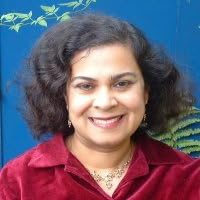
Jenny Lewis is an Anglo-Welsh poet, playwright, songwriter, children’s author and translator who teaches poetry at Oxford University. She trained as a painter at the Ruskin School of Art before reading English at St Edmund Hall, Oxford. She has worked as an advertising copywriter and a government press officer for, among others, the Equality and Human Rights Commission. She has also written children’s books and plays and co-written, with its creator, Kate Canning, a twenty-six-part children’s TV animation series, James the Cat. Her first poetry sequence, When I Became an Amazon (Iron Press, 1996) was broadcast on BBC Woman’s Hour, translated into Russian (Bilingua, 2002) and made into an opera with music by Gennadyi Shizoglazov which had its world premiere with the Tchaikovsky Opera and Ballet Company in Perm, Russia, November 2017. Since 2012, Jenny has been working with the Iraqi poet Adnan al-Sayegh on an award-winning Arts Council-funded project, ‘Writing Mesopotamia’, which aims to build bridges and foster friendships between English and Arabic-speaking communities. Her work for the theatre includes Map of Stars (2002), Garden of the Senses (2005), After Gilgamesh (2011) and, with Yasmin Sidhwa and Adnan al-Sayegh, Stories for Survival: a Re-telling of the 1001, Arabian Nights (2015). She has published two collections with Oxford Poets/Carcanet, Fathom (2007) and Taking Mesopotamia (2014). Jenny is currently completing a PhD on Gilgamesh at Goldsmiths.
It was lovely to read a version of Gilgamesh without the stuttering gaps of a strictly accurate translation.
This was a work of beautiful, thoughtful modern poetry, well rooted in the Sumerian oral tradition of Gilgamesh’s origin.
When Gilgamesh and Enkidu slew the Forest guardian Humbaba, the tone was grief-filled rather than triumphant as in the original text, because Jenny Lewis had described the gentle beauty of the forest with great care:
“This patched, striped, and furred world, this feathered, fecund cradle of wingbeats, This paradise, song, hymn to the goddess This womb, this holy, pregnant ground”
This ancient forest was destroyed, “penetrated with unsheathed sword” - in an episode with pretty clear gendered symbolism.
This was a theme throughout the poem - Jenny Lewis is commenting on the archaic shift in Sumerian society from the archaic “earth-mother” worship of fertile Inanna to the warlike “sky-father” worship of brilliant Shamash.
In this scene of the despoiling of the forest, I’ll try to quote the part that so moved me, but in the poem, spacing played a huge role in how these lines were delivered. God, but reading this part still gets me.
I'm not sure about the 'Shift of emphasis' touted on the back cover and repeated on the Goodreads page. It feels like a marketing attempt that doesn't do the book justice.
As a retelling of Gilgamesh, this is magnificent. Presenting the story as individual poems, and varying the form from poem to poem, Lewis returns the story to its fragmented state, but she keeps the narrative moving while keeping the poetry. It's a very impressive performance.
It raises the question though, if you're rewriting a story from this distance, it's going to contain features that should make a modern reader or writer uncomfortable. If you decide to start translating 'The Epic of Gilgamesh', what do you do with those incidents, episodes, speeches? In the 'Afterwords' Lewis records her discomfort with the episode of Shamhat and Enkidu. Whether her desire to gentle the incident works in her poem is one question, whether she needed to is another.
There are aspects to this that I enjoyed a lot. I think there are ways in which the text is shaped aesthetically that are excellent, also the utility of italics was similar to the works of William Wordsworth, which I'm always down for. Being forced to read this for a class with a very peculiar lense and then read information about the authors goals, I felt that it failed to achieve those goals. I also felt that in making some sections more poetic the author relied too heavily on epigraphs to make sure themes of the text weren't lost. I found these to be brutally blunt. Could have been worse, but could have been a lot better. There are moments of brilliance, but they are rare.
This is one of the best translations I have read. I have read over 25 translations. What I like is how each chapter is written in a different style as if it were oral poetry. She takes great liberties with certain parts and I am okay with this.
Her postscript refers to women's language and she says that some parts such as the initial sex between Inanna and Enkidu is made less pornographic.
Do yourself a favor and include this great book in your reading of Gilgamesh.
Echt heel erg mooi - had het eigenlijk in 1 dag moeten uitlezen. en ook: ik geloof dat hedendaagse (feministische) hervertellingen mijn nieuwe favoriet zijn
I’m a fan of national myths and Gilgamesh is a particular favourite of mine, not only because it is one of the oldest of its kind, nor because I had a bit of a Sumerian ‘thing’ when I was fifteen but because it seems so refreshingly honest compared to later myths.
Gilgamesh is full of masculine energy and he’s an utter pain to his citizens who pray for something to distract him and the Gods create Enkidu. Gilgamesh and Enkidu start out as rivals but after fighting each other become best buds and go kill monsters together. Having done that, Enkidu dies, not in battle but of illness and it sends Gilgamesh on a huge downward spiral in which he realises he is mortal. He seeks immortality, almost gets it but doesn’t and returns home a much better king for having realised his mortality. I love how he is broken and remade in the text.
Having got (and read) the pretty definitive Penguin version, I didn’t think I’d be buying anymore versions of Gilgamesh but carcanet press had a 29% off sale for leap-year day, and the blurb mentioned Inanna. She is the older version of Ishtar and the primary pro/ant-agonist of the book I am currently writing is named after her. Partly this is due to it being a striking name but also because of Inanna’s mythological habits of stealing attributes from other Gods and having a sticky end in the underworld. None of these stories are part of Gilgamesh, though I’m still pleased I got it.
This is such a wonderfully engaging and easy to read retelling of the ancient myth. It’s make a wonderful performance. Jenny Lewis varies style and meter in different chapters of the story, making the mood and meter fit tremendously but also giving something of the different oral voices telling the same story.
Of particular quality was the fight with Humbaba, the ogre who guards the cedar forests. It’s written in a polyphonic style, with lines being said over other lines, building a tension and a ferocity which is then broken when Humbaba is killed and the page is full of white space. It makes the act more than a monster killing by a pair of heroes, it makes it a vicious act, one of desecration and destruction and a reflection on how mankind destroys to build itself up. This notion of sacrilege is also carried into the part when Gilgamesh and Enkidu kill the Bull of Heaven, as the stars and planets of which it is comprised begin to dim.
Enkidu’s death is another polyphonic piece, as death calls and as Enkidu rages against it and the people in his life that brought him there. Gilgamesh’s wandering in grief had an Anglo-Saxon meter and had a similar tone to The Wanderer. All the poetry flowed well and the different types broke it up and refocussed the mind every few pages (thus relieving that weird meter hypnotism you can come across in less varied works).
I read the whole piece in one go and look forward to reading it again soon. It’s great.
A beautifully written vivid and powerful modern retelling of the epic of Gilgamesh. It brings the epic tale to life. You are drawn in to the ancient world of Gilgamesh while maintaining a new and fresh perspective.
Don't be put off by the Goodreads description which wildly overemphasizes this version's feminist bona fides. Instead, they should have said that it was a magnificent reimagining of the ancient tale, one that plumbs the heights of glory and heroism as well as the depths of grief in mortality and the loss of love. Or something like that. I've read Gilgamesh in a number of translations/adaptations but none have proved as moving as this one.
A great, big letdown. The approach is cool - each song has a different poetic style in order to parallel the epic's oral tradition and long history - but there's really nothing else new on offer. Moreover, much of the queerness/homoeroticism/gay subtext/whatever-you-wanna-call-it has been stripped away, and the emphasis on gender equality promised by the back cover is quite lacking imo.
Really enjoyable storytelling, prosody, imagery. Compared to the many wilfully opaque modernisations of classic lit, like Anne Carson's, this is unpretentious and accessible. An afterword gives interesting details about poet's aims and methods.
Jenny Lewis's poetic retelling of the epic of Gilgamesh is truly wonderful. I am glad I was already familiar with the story from my reading of Nancy Sandars's prose version earlier this year, to better appreciate what Lewis has done with the story.
Lewis writes of Gilgamesh and Enkidu "The two men stood/Embracing as if made of marble like/Some carving on a palace wall that seems/So lifelike it could walk away and leave/An empty shape, a story to be told/That changes with the teller and the telling." Gilgamesh's story comes to us in cuneiform carved into clay tablets, 4000 years old but so full of life. I think this teller has honored the carving on the palace wall with her retelling.
The manner in which Lewis tells this story makes more connection and sense, for me at least, of all the events of the story. When I read in Sandars's prose version about the killing of Humbaba and the cutting of the cedars, it was more like reading a reporting of "what happened". This episode in Lewis's rendering is fraught with emotion: fear, rage, reckless pride of conquest, sorrow, grief. Some of these emotions are experienced by the actors, some by the reader, some by both. This, and the section recounting the death of Enkidu, are stunning works all on their own.
Lewis employs a variety of poetic forms throughout the book and I think this choice by the author works quite well. The epic itself has a rhythm that is mirrored by the rhythm of change in poetic forms; and within each section, the particular rhythm of the poetic form chosen for that section works well for the part of the epic being told. All in all it is really a quite masterful work. So happy to have read this! (Could have read it in one day if I hadn't started it so late at night, but it would reward a re-read, I think.)
I found this to be a powerful prose re-imagination of the themes and major narrative events of the epic of Gilgamesh.
Unlike a review below that criticises the work for not being fastidiously factual, I was more than prepared to grant creative licence to Jenny Lewis to see how she would handle the material and themes of this truly ancient work. I personally approach myths and mythological texts as works of social art - they are not so much singular objects produced by a brilliant individual, but combine the talents of many brilliant thinkers, performers and dreamers. They reflect and interpret the world as it is for those involved in a myth’s creation and re-making as it is re-told; but for those amateur Dr Jones’ out there seeking a kernel of ancient “fact” hidden under dense (but supposedly deliberate) allegory, they are on a Quixotic quest doomed before it even begins.
So leave aside any inclination towards pedantry and enjoy the beautiful this prose as it explores power, tyranny, love, hopelessness, hope, and renewal.
Jenny Lewis employs a variety of poetic styles to create a new spin on the epic of Gilgamesh. For the most part, I really enjoyed this, but it's hard to say how much of that owes to anything new the author brings to the table as opposed to my love of the original story.
The blurb talks a lot about a "shift of emphasis" towards a world with greater equality between the sexes. The cynical part of me wonders if this was some kind of attempt to cash in on the whole feminist myth retelling trend, but this was published a bit too early for that to be the case. The thing is, this is pretty much just a straightforward retelling of the Gilgamesh story. It doesn't really change anything about the gender dynamics of the story, so I fail to see why that's all the blurb talks about.
I love myths, legends, tales of long ago and history re-told, and Gilgamesh Retold is a song of a book, a tale written with different forms of poetry giving different voices and patterns, holding the reader in its spell. I loved it and highly recommend it, it is a gem and Jenny Lewis gives us a book to be treasured.
I have the privilege of belonging to a classics book group with Jenny Lewis, and so have heard her read some of this hauntingly beautiful translation. Jenny brings the ancient epic to new and vibrant life; the beauty of her poetic melodies and rhythms lingers in mind and imagination. A tour de force!
This was the only way I was going to get through this story. I don’t like myths. This edition made it possible to finally check this off my list. Lots of death, sex, and woe is me, just like a lot of other myths, not for me.