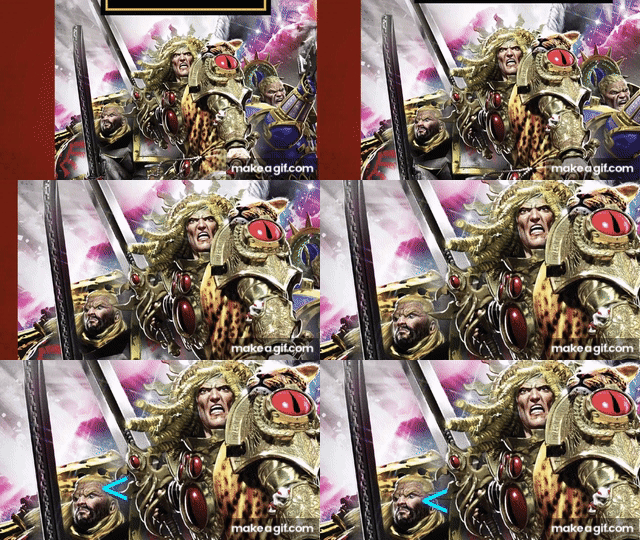
Ruinstorm is a complicated book, but by no means a bad one. Nevertheless, it strains under its own weight which leads to a sagging middle- bowed by its ambition and the stresses of combining the real and the unreal.
David Annandale has a reputation for understanding the true cosmic horror nature of Chaos. Not the near-comical portrayal as we've seen in, say, "Fear To Tread", but Chaos as moral and existential threat. The best examples I can think of would be "The Carrion Anthem", "Damnation of Pythos", "The Traveller" and "Warden of the Blade." With Ruinstorm, however, this gift is compromised by the demands of the narrative. At some places the story has a perfect flow and rhythm, buffeting us in the storm; while at others, it feels as though battle has been inserted for the sake of it. It is this sag that sadly blights the middle of the book, and is compounded by the next few trials and travails being easily overcome.
Where it excels, however, is in the mad spectacle of the Ruinstorm and the effect it has on the three main primarch characters. Sanguinius especially is put through the emotional and spiritual ringer; facing down the spectre of his own forewarned death and the bloody echoes of Signus Prime. His desire to find a way through the maelstrom is intensified by the guilt he feels over Imperium Secundus.
This guilt also defines Guilliman's arc, while he second-guesses everything he has done since Calth. The spectre of corruption and taint haunt him, as he considers the means and method of the enemy.
While the Lion also has his doubts, he isn't as troubled by guilt. More he is motivated by the pragmatic desire to find the quickest and most direct way through. Aided by the warp-entity Tuchulcha, he has the most ease in jumping but is stymied at every turn. He has also taken over responsibility for keeping Curze contained. Curze introduces an interesting narrative wrinkle, as his foresight and ignorance mirror Sanguinius' own.
With pay-offs from a number of previous sources (including Damnation of Pythos and "The Noose"), the novel spirals into plots both old and new; including a return to at least one unexpected set-piece. The novel succeeds most in its atmosphere of unremitting tension and palpable unease; especially where human characters are concerned. The prologue in particular is a wonderfully crafted piece of text which calls to mind the best of the poison prayers which he festooned "Sermon of Exodus" with.
Ultimately, the weight of the plot and its requirements help to hamstring the novel. There is, perhaps, too much going on. At the beginning of the novel, the narrative jumps almost irregularly between the three main strands and breaks us from the story at the wrong moments. When the story finally focuses, it then briefly slumps, before regaining its puff. By the end, we see a number of interesting confrontations and decisions, which give new light to the Heresy as it draws to its close, a new perspective (if a particularly mundane one) on how the Legion dispositions of the Siege came to be how they were.
Despite all this, the book was never boring. If anything I think it simply had to commit harder to one course; to lean into the insane symbolism and imagery of the end of all things. Its a novel begging to be a "battle at the centre of the mind"; I'd almost have liked it to take place more entirely in their heads- as though they were just setting off, the events pass, and then it turns out they're much less far in than they first thought.
Because ultimately, this isn't about the journey to Terra. It's about the journey to know whether or not you're worthy to; it's about facing down doubts and spitting in the eyes of fate. On both sides.