

What do you think?

A. Lincoln
NAMED ONE OF THE BEST BOOKS OF THE YEAR BY
The Washington Post • The Philadelphia Inquirer • The Christian Science Monitor • St. Louis Post-Dispatch.
NEW YORK TIMES BESTSELLER
WINNER OF THE CHRISTOPHER AWARD
Everyone wants to define the man who signed his name “A. Lincoln.” In his lifetime and ever since, friend and foe have taken it upon themselves to characterize Lincoln according to their own label or libel. In this magnificent book, Ronald C. White, Jr., offers a fresh and compelling definition of Lincoln as a man of integrity–what today’s commentators would call “authenticity”–whose moral compass holds the key to understanding his life.
Through meticulous research of the newly completed Lincoln Legal Papers, as well as of recently discovered letters and photographs, White provides a portrait of Lincoln’s personal, political, and moral evolution. White shows us Lincoln as a man who would leave a trail of thoughts in his wake, jotting ideas on scraps of paper and filing them in his top hat or the bottom drawer of his desk; a country lawyer who asked questions in order to figure out his own thinking on an issue, as much as to argue the case; a hands-on commander in chief who, as soldiers and sailors watched in amazement, commandeered a boat and ordered an attack on Confederate shore batteries at the tip of the Virginia peninsula; a man who struggled with the immorality of slavery and as president acted publicly and privately to outlaw it forever; and finally, a president involved in a religious odyssey who wrote, for his own eyes only, a profound meditation on “the will of God” in the Civil War that would become the basis of his finest address.
Most enlightening, the Abraham Lincoln who comes into focus in this stellar narrative is a person of intellectual curiosity, comfortable with ambiguity, unafraid to “think anew and act anew.”
A transcendent, sweeping, passionately written biography that greatly expands our knowledge and understanding of its subject, A. Lincoln will engage a whole new generation of Americans. It is poised to shed a profound light on our greatest president just as America commemorates the bicentennial of his birth.
816 pages, Hardcover
First published January 13, 2009
About the author
Ronald C. White Jr.
21 books197 followersRonald C. White is the author of American Ulysses: A Life of Ulysses S. Grant (2016). General David H. Petraeus (Ret.) wrote, “Certain to be recognized as the classic work on Ulysses S. Grant.”
White is also the author of three books on Abraham Lincoln. A. Lincoln: A Biography [2009], was a New York Times, Washington Post, and Los Angeles Times bestseller. USA Today said, “If you read one book about Lincoln, make it A. LINCOLN.” The book was honored as one of the best books of 2009 by the Washington Post, Christian Science Monitor, St. Louis Post-Dispatch, History Book Club, and Barnes & Noble. It won a 2010 Christopher Award which salutes books “that affirm the highest values of the human spirit.”
Lincoln’s Greatest Speech: The Second Inaugural, was honored as a New York Times Notable Book of 2002, and a Washington Post and San Francisco Chronicle bestseller. The Eloquent President: A Portrait of Lincoln Through His Words [2005], was a Los Angeles Times bestseller, and a selection of the History Book Club. White’s op-eds have appeared in the New York Times, Washington Post, Los Angeles Times, and Christian Science Monitor. He has lectured at the White House and been interviewed on the PBS News Hour.
He attended Northwestern University and is a graduate of UCLA and Princeton Theological Seminary, earning a Ph.D. in Religion and History from Princeton University. He has taught at UCLA, Princeton Theological Seminary, Whitworth University, Colorado College, Rider University, and San Francisco Theological Seminary. He is a Fellow at the Huntington Library in San Marino, California, and a Senior Fellow of the Trinity Forum in Washington, D.C. He lives with his wife, Cynthia, in La Cañada, California.
White is also the author of three books on Abraham Lincoln. A. Lincoln: A Biography [2009], was a New York Times, Washington Post, and Los Angeles Times bestseller. USA Today said, “If you read one book about Lincoln, make it A. LINCOLN.” The book was honored as one of the best books of 2009 by the Washington Post, Christian Science Monitor, St. Louis Post-Dispatch, History Book Club, and Barnes & Noble. It won a 2010 Christopher Award which salutes books “that affirm the highest values of the human spirit.”
Lincoln’s Greatest Speech: The Second Inaugural, was honored as a New York Times Notable Book of 2002, and a Washington Post and San Francisco Chronicle bestseller. The Eloquent President: A Portrait of Lincoln Through His Words [2005], was a Los Angeles Times bestseller, and a selection of the History Book Club. White’s op-eds have appeared in the New York Times, Washington Post, Los Angeles Times, and Christian Science Monitor. He has lectured at the White House and been interviewed on the PBS News Hour.
He attended Northwestern University and is a graduate of UCLA and Princeton Theological Seminary, earning a Ph.D. in Religion and History from Princeton University. He has taught at UCLA, Princeton Theological Seminary, Whitworth University, Colorado College, Rider University, and San Francisco Theological Seminary. He is a Fellow at the Huntington Library in San Marino, California, and a Senior Fellow of the Trinity Forum in Washington, D.C. He lives with his wife, Cynthia, in La Cañada, California.
Ratings & Reviews
Friends & Following
Create a free account to discover what your friends think of this book!
Community Reviews
Displaying 1 - 30 of 556 reviews

July 15, 2016
“Each generation of Americans rightfully demands a new engagement with the past. Fresh questions are raised out of contemporary experiences. Does [Abraham Lincoln] deserve the title ‘the Great Emancipator’? Was Lincoln a racist? Did he invent, as some have charged, the authoritarian imperial presidency? How did Lincoln reshape the modern role of commander in chief? What were Lincoln's religious beliefs? How did he connect religion to politics? As we peel back each layer of Lincoln's life, these questions foster only more questions.”
- Ronald White, A. Lincoln
Some years ago, during the run-up to the bicentennial of Abraham Lincoln’s birth, I started casting about for the ideal book on the greatest president in history. That is easier said than done. The problem is not one of quantity, but quality. As it turned out, finding the right Lincoln bio is like finding the perfect cup of water in a lake. It’s tough to choose. Eventually, and to the detriment of my credit card, I purchased Michael Burlingame’s massive two-volume, 2,000 page opus on the Illinois rail-splitter turned world-historical figure.
The set is physically huge. This isn’t simply two books. These are two huge books that are difficult to read anywhere but the table. To demonstrate this fact, I recently had my two Goodreads assistants, Chief Assistant Millie and Sub-Assistant Gracie, attempt to hold them. Bottom line: Tough to hold.
***
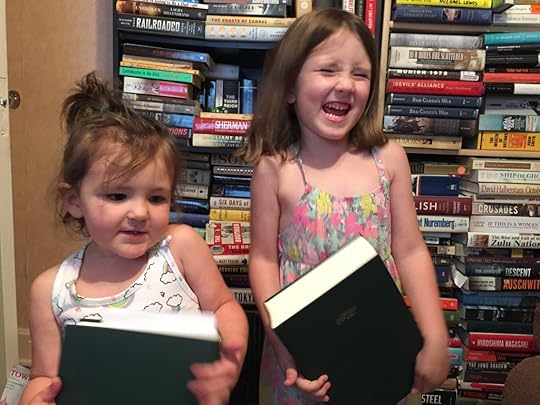
My Goodreads assistants, Gracie (L) and Millie (R) attempt to hold up the two volumes of Michael Burlingame's substantial opus, Abraham Lincoln: A Life
***
Burlingame’s Abraham Lincoln: A Life is densely packed with just about every twist or turn, every offhand comment or speech, that Lincoln ever encountered or made. In the years since my original purchase, I’ve made it through about 300 pages.
Recently, the Civil War bug alit upon me again. I decided to return to Lincoln (the last bio on him I’d read was David Herbert Donald’s renowned Lincoln). This time, I decided to sacrifice the comprehensiveness promised by Burlingame, for something a little more manageable (and easier to read while lying in bed).
After some consideration, I struck upon Ronald C. White, Jr.’s A. Lincoln. At 676 pages of text, this is not exactly a Denny’s menu; still, in comparison to Burlingame – indeed, in comparison to the overstuffed nature of Lincoln’s existence – it feels rather slim.
***
A. Lincoln is a cradle-to-grave biography. It starts with Lincoln’s birth in Kentucky, to a middling farmer towards whom Lincoln always displayed a curious reticence. It ends with his assassination at the hands of actor/white supremacist John Wilkes Booth. In between are all the touchstones familiar to most: working on a keelboat; tending store in New Salem; reading law; serving in the Illinois legislature; getting elected to a lone term as U.S. Representative; losing a Senate bid; debating Stephen Douglas; emerging as a dark horse Presidential candidate; winning the Presidency; and finally saving a Nation born some 80 years earlier.
***
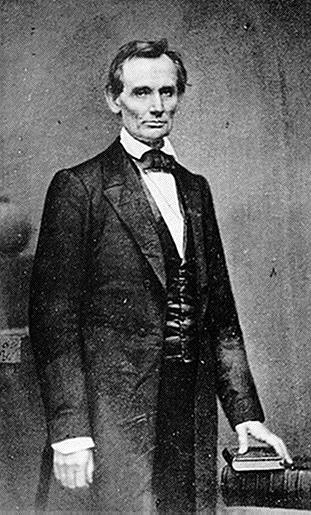
Abraham Lincoln in 1860, before he knew exactly what he was getting into
***
With a subject this big, and space at a premium, anyone who writes about Lincoln has to choose his or her focal points. White develops several themes that he discusses throughout the length of the narrative. Foremost, of course, is slavery. Lincoln’s views on slavery are complicated, with his personal feelings vying with his conception of the powers of the Federal Government under the Constitution.
On a personal level, Lincoln was always against the institution of slavery (“If slavery is not wrong, nothing is wrong. I cannot remember when I did not so think, and feel,” he wrote in 1864). His earliest extant writings bear this out. Racial equality is a thornier matter, one that Lincoln played close to his vest buttons. Some of his statements on black suffrage and colonization schemes do not fit well with our notion of the Great Emancipator. White sifts the evidence, but it’s hard to know whether Lincoln made some of his eyebrow raising pronouncements as a sop to political expediency, or whether he actually held these views. In any event, by the end of his Presidency, and his life, he had clearly come round to reality that the end of the Civil War required the end of slavery, and therefore the integration of former slaves fully into American life.
It is also worth noting – for this is sometimes lost when we try to compare Lincoln’s views to our own “enlightened” times – that the end of slavery is objectively the largest, most consequential act in the history of American civil rights. Everything else flows from this, and Lincoln deserves credit for it, whatever else he might have thought or said.
***
White also spends a great deal of time tracing the role of religion in Lincoln’s life. Lincoln’s writings are infused with God, but Lincoln himself was not a regular churchgoer. The debate has always been whether Lincoln believed the things he wrote, which often brim with spirituality and Biblical imagery, or if his allusions to the Almighty were rhetorical flourishes. White is of the belief that the former is true, and that Lincoln’s faith helped to shape the moral framework of his leadership.
***
White also spends a goodly amount of time focusing on Lincoln’s writing ability. White’s textual analysis does a wonderful job of revealing Lincoln’s thought processes, of how he felt about a matter. It is instructive, for instance, to compare the Emancipation Proclamation (written in such a lawyerly fashion that Marx compared it to the “mean pettifogging” of a legal summons) with the Second Inaugural (which reframes the Civil War as a crusade to end slavery).
It's not for everyone, perhaps, but deconstructing words is fun to me. This might be why I get so few invitations to parties.
***
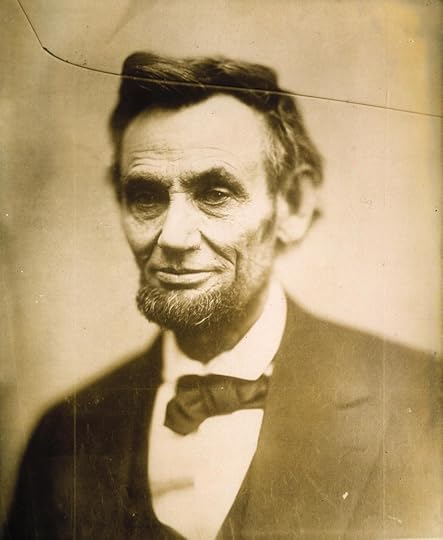
Lincoln in 1865, one of the last photos of his life. By this time, he knew exactly what he'd gotten into
***
There are tradeoffs, obviously, in biographies as in life. White does not spend a lot of time trying to reach any deeper psychological interpretation of his subject. He does not delve into Lincoln’s melancholy, his blue moods, his “tired spot” that nothing could reach. He also does not dwell much on Lincoln’s personal life, specifically his relationship with Mary Todd, a relationship best described as “it’s complicated.”
***
One of the things that makes A. Lincoln worthwhile is that it stakes out its positions. White has concept of Lincoln that he is more than willing to share. That doesn’t mean he is always entirely convincing in his arguments. For example, White draws a portrait of Lincoln as an activist, self-taught commander-in-chief whose interventions furthered the cause. True, at times, Lincoln’s untrained eye seemed to see the heart of the military situation better than his West Point-trained generals. At other times, though, he stymied his generals (in the Eastern Theater, at least) by giving them contradictory orders to both march out and destroy the Confederate army while also remaining in position to protect Washington, D.C. His meddling often frustrated his leaders, and not entirely without reason. (Incidentally, he recognized that capturing Richmond should not be priority one; when it came to his own capital, though, he brooked no chances). White also lets Lincoln off pretty easy with respect to some of the terrible promotions he extended (often politically motivated), which allowed lightweights such as John Pope and Ambrose Burnsides to lead huge armies of men to their woe.
Through it all, White’s writing style is crisp and without flourishes. He is not on par with master biographers like Robert Caro. Yet his narrative is well-paced and his insights well-distributed. The book reads very quickly, though in places it feels rushed.
***
A. Lincoln closes with the President’s death in the Petersen House. As the president expires, White relates the timeworn tale of Secretary of War Edwin Stanton musing: “Now he belongs to the Ages.”
As White briefly explains in an endnote, we don’t actually know if Stanton spoke that bon mot, which is possibly the ultimate historical mic drop. He might have said it. Or he might have said “Now he belongs to the angels.” Or he might have said nothing at all, and only thought the phrase “Now he belongs to the Ages.” Or he might have said and thought nothing, and then, years later, told Lincoln’s biographer/former secretary John Hay that he both thought it and said it.
In any event, it makes no difference. The words, the phrase, is perfect. There is no better way to describe Lincoln’s place in the firmament. He belongs to history but also stands outside of history. He will exist forever, to be interpreted and reinterpreted by succeeding generations. The measureless impact of Lincoln’s life, his utter timelessness, cannot be captured by a single book. It cannot be captured by two massive books that my children have a hard time lifting.
At the same time, most of us don’t have the luxury of spending all our waking hours reading about the many faces of Lincoln, however appealing that is. To that end, A. Lincoln ranks up there with David Herbert Donald as the standard one-volume biography. It is a good place to start, as well as being an excellent addition to any proper Lincoln library. It is not a good place to finish, because with Lincoln, you can't ever really be finished.
- Ronald White, A. Lincoln
Some years ago, during the run-up to the bicentennial of Abraham Lincoln’s birth, I started casting about for the ideal book on the greatest president in history. That is easier said than done. The problem is not one of quantity, but quality. As it turned out, finding the right Lincoln bio is like finding the perfect cup of water in a lake. It’s tough to choose. Eventually, and to the detriment of my credit card, I purchased Michael Burlingame’s massive two-volume, 2,000 page opus on the Illinois rail-splitter turned world-historical figure.
The set is physically huge. This isn’t simply two books. These are two huge books that are difficult to read anywhere but the table. To demonstrate this fact, I recently had my two Goodreads assistants, Chief Assistant Millie and Sub-Assistant Gracie, attempt to hold them. Bottom line: Tough to hold.
***
My Goodreads assistants, Gracie (L) and Millie (R) attempt to hold up the two volumes of Michael Burlingame's substantial opus, Abraham Lincoln: A Life
***
Burlingame’s Abraham Lincoln: A Life is densely packed with just about every twist or turn, every offhand comment or speech, that Lincoln ever encountered or made. In the years since my original purchase, I’ve made it through about 300 pages.
Recently, the Civil War bug alit upon me again. I decided to return to Lincoln (the last bio on him I’d read was David Herbert Donald’s renowned Lincoln). This time, I decided to sacrifice the comprehensiveness promised by Burlingame, for something a little more manageable (and easier to read while lying in bed).
After some consideration, I struck upon Ronald C. White, Jr.’s A. Lincoln. At 676 pages of text, this is not exactly a Denny’s menu; still, in comparison to Burlingame – indeed, in comparison to the overstuffed nature of Lincoln’s existence – it feels rather slim.
***
A. Lincoln is a cradle-to-grave biography. It starts with Lincoln’s birth in Kentucky, to a middling farmer towards whom Lincoln always displayed a curious reticence. It ends with his assassination at the hands of actor/white supremacist John Wilkes Booth. In between are all the touchstones familiar to most: working on a keelboat; tending store in New Salem; reading law; serving in the Illinois legislature; getting elected to a lone term as U.S. Representative; losing a Senate bid; debating Stephen Douglas; emerging as a dark horse Presidential candidate; winning the Presidency; and finally saving a Nation born some 80 years earlier.
***
Abraham Lincoln in 1860, before he knew exactly what he was getting into
***
With a subject this big, and space at a premium, anyone who writes about Lincoln has to choose his or her focal points. White develops several themes that he discusses throughout the length of the narrative. Foremost, of course, is slavery. Lincoln’s views on slavery are complicated, with his personal feelings vying with his conception of the powers of the Federal Government under the Constitution.
On a personal level, Lincoln was always against the institution of slavery (“If slavery is not wrong, nothing is wrong. I cannot remember when I did not so think, and feel,” he wrote in 1864). His earliest extant writings bear this out. Racial equality is a thornier matter, one that Lincoln played close to his vest buttons. Some of his statements on black suffrage and colonization schemes do not fit well with our notion of the Great Emancipator. White sifts the evidence, but it’s hard to know whether Lincoln made some of his eyebrow raising pronouncements as a sop to political expediency, or whether he actually held these views. In any event, by the end of his Presidency, and his life, he had clearly come round to reality that the end of the Civil War required the end of slavery, and therefore the integration of former slaves fully into American life.
It is also worth noting – for this is sometimes lost when we try to compare Lincoln’s views to our own “enlightened” times – that the end of slavery is objectively the largest, most consequential act in the history of American civil rights. Everything else flows from this, and Lincoln deserves credit for it, whatever else he might have thought or said.
***
White also spends a great deal of time tracing the role of religion in Lincoln’s life. Lincoln’s writings are infused with God, but Lincoln himself was not a regular churchgoer. The debate has always been whether Lincoln believed the things he wrote, which often brim with spirituality and Biblical imagery, or if his allusions to the Almighty were rhetorical flourishes. White is of the belief that the former is true, and that Lincoln’s faith helped to shape the moral framework of his leadership.
***
White also spends a goodly amount of time focusing on Lincoln’s writing ability. White’s textual analysis does a wonderful job of revealing Lincoln’s thought processes, of how he felt about a matter. It is instructive, for instance, to compare the Emancipation Proclamation (written in such a lawyerly fashion that Marx compared it to the “mean pettifogging” of a legal summons) with the Second Inaugural (which reframes the Civil War as a crusade to end slavery).
It's not for everyone, perhaps, but deconstructing words is fun to me. This might be why I get so few invitations to parties.
***
Lincoln in 1865, one of the last photos of his life. By this time, he knew exactly what he'd gotten into
***
There are tradeoffs, obviously, in biographies as in life. White does not spend a lot of time trying to reach any deeper psychological interpretation of his subject. He does not delve into Lincoln’s melancholy, his blue moods, his “tired spot” that nothing could reach. He also does not dwell much on Lincoln’s personal life, specifically his relationship with Mary Todd, a relationship best described as “it’s complicated.”
***
One of the things that makes A. Lincoln worthwhile is that it stakes out its positions. White has concept of Lincoln that he is more than willing to share. That doesn’t mean he is always entirely convincing in his arguments. For example, White draws a portrait of Lincoln as an activist, self-taught commander-in-chief whose interventions furthered the cause. True, at times, Lincoln’s untrained eye seemed to see the heart of the military situation better than his West Point-trained generals. At other times, though, he stymied his generals (in the Eastern Theater, at least) by giving them contradictory orders to both march out and destroy the Confederate army while also remaining in position to protect Washington, D.C. His meddling often frustrated his leaders, and not entirely without reason. (Incidentally, he recognized that capturing Richmond should not be priority one; when it came to his own capital, though, he brooked no chances). White also lets Lincoln off pretty easy with respect to some of the terrible promotions he extended (often politically motivated), which allowed lightweights such as John Pope and Ambrose Burnsides to lead huge armies of men to their woe.
Through it all, White’s writing style is crisp and without flourishes. He is not on par with master biographers like Robert Caro. Yet his narrative is well-paced and his insights well-distributed. The book reads very quickly, though in places it feels rushed.
***
A. Lincoln closes with the President’s death in the Petersen House. As the president expires, White relates the timeworn tale of Secretary of War Edwin Stanton musing: “Now he belongs to the Ages.”
As White briefly explains in an endnote, we don’t actually know if Stanton spoke that bon mot, which is possibly the ultimate historical mic drop. He might have said it. Or he might have said “Now he belongs to the angels.” Or he might have said nothing at all, and only thought the phrase “Now he belongs to the Ages.” Or he might have said and thought nothing, and then, years later, told Lincoln’s biographer/former secretary John Hay that he both thought it and said it.
In any event, it makes no difference. The words, the phrase, is perfect. There is no better way to describe Lincoln’s place in the firmament. He belongs to history but also stands outside of history. He will exist forever, to be interpreted and reinterpreted by succeeding generations. The measureless impact of Lincoln’s life, his utter timelessness, cannot be captured by a single book. It cannot be captured by two massive books that my children have a hard time lifting.
At the same time, most of us don’t have the luxury of spending all our waking hours reading about the many faces of Lincoln, however appealing that is. To that end, A. Lincoln ranks up there with David Herbert Donald as the standard one-volume biography. It is a good place to start, as well as being an excellent addition to any proper Lincoln library. It is not a good place to finish, because with Lincoln, you can't ever really be finished.

January 16, 2009
An excellent one-volume biography of Lincoln, written in a clear, elegant style and concentrating on essentials. White is particular good on Lincoln the writer.
I learned a lot from this book and would recommend it to anyone interested in Lincoln.

May 10, 2009
I am a Lincoln buff and have read myriad biographies of the man, ranging fron his ardent admirers to his worst detractors. So, reading yet another one seemed redundant, but I did it anyway, and I'm glad I did. The first few pages start out with the usual retelling of his humble beginnings, but soon the revelations and insights begin. White searched through Lincoln's own notes to himself on every conceivable issue, and bases this new bio on them. Lincoln had a lifelong habit of writing down his thoughts, as well as pros and cons of every issue he was concerned with, stuffing the notes not only in cubbyholes in his desk, but in every nook and cranny, including his hatband.
Fortunately, after his death those notes were gathered by archivists. They are very revealing. For one thing, White chronicles Lincoln's religious thinking. For another, he puts to rest any notion that Lincoln was a racist in any way. As for his suggesting that freed slaves might be amenable to colonization in Africa, we find that this was a passing notion and that he consulted with African American leaders on the issue -- a very unusual thing to do in the mid-19th century! Lincoln also was the first President to invite an African American to the White House: Frederick Douglass, and Lincoln steadfastly insisted that all men are created equal applied to Africans as well as White Protestan landowners. This book is so well written, I couldn't put it down. Even readers who don't usually like non-fiction should enjoy this.
Fortunately, after his death those notes were gathered by archivists. They are very revealing. For one thing, White chronicles Lincoln's religious thinking. For another, he puts to rest any notion that Lincoln was a racist in any way. As for his suggesting that freed slaves might be amenable to colonization in Africa, we find that this was a passing notion and that he consulted with African American leaders on the issue -- a very unusual thing to do in the mid-19th century! Lincoln also was the first President to invite an African American to the White House: Frederick Douglass, and Lincoln steadfastly insisted that all men are created equal applied to Africans as well as White Protestan landowners. This book is so well written, I couldn't put it down. Even readers who don't usually like non-fiction should enjoy this.

May 2, 2020
Roland C. White Jr. packs a lot into this book. For me the distinctive features were Lincoln’s experiences as a young adult, the analysis of his speeches and how he performed his role as Commander in Chief. The first half of this 676 page book is Lincoln’s 51 years prior to his presidential run meaning that there is a whole book’s worth of detail. The second half covers how he was nominated for, ran for and performed as President. Throughout the book there are well selected B & W photos and drawings that enhance the narrative.
The first Lincoln forbear to arrive in the new world came 2 years after the Mayflower. Subsequent generations pushed west. Lincoln’s father, Thomas, moved the family 4 times. One of the few things we know of him was that his hatred of slavery influenced his move from Indiana to Illinois. Thomas was not close to his son although they cleared land and built cabin-houses together. Abraham does not seem to be close to his mother either, but had a warm relationship with his step-mother.
White shows how lifelong patterns were established in Lincoln’s childhood. With less that a year of schooling and a high value for learning he read everything he could find. With few available books, he memorized long passages from the Bible and Shakespeare’s plays which later figure in his speeches and documents. There are many examples of his honesty from paying his debts when it was difficult to refusing legal fees he felt he did not deserve. He seeks out others’ opinions. He researches and prepares. He prefers compromise to fighting and abhorred slavery from the day he first saw it.
Lincoln had several careers before law. He hired out his farming and building skills. He clerked in a dry goods store, surveyed, made two cargo delivery trips down the Mississippi (he designed and patented a lift for getting boats over shoals and sandbars) and he owned a bar. In his political life he drew from these experiences and personal relationships with those he met along the way. Through all this, he developed an understanding of people and how, to paraphrase Tip O’Neill, all politics can be local.
Some things I better understand from this book:
• The Whig Party – who they were and how they disappeared
• The House Divided Speech – Lincoln gave 3 outcomes for a divided house: one side wins; the other side wins; or the house does not stand
• The marriage – while they are still an odd couple (to me) Mary had a sharp mind and an interest in politics.
• The “Team of Rivals” – Lincoln squeaked by in getting the Republican nomination and then winning the Presidency, he used his appointments to bring more constituencies into his administration.
• Why the war dragged on- It seems that Lincoln had a political strategy (keep the border states neutral – appoint some “rival” generals) but did not have a military strategy. Lincoln encouraged generals to make plans for their regions and at times micro-managed. He clearly needs a military advisor and a chief of staff to deal with McClellan and others.
• Stephen Douglas – their lives intertwined from rooming together in early campaigns to the famous debates to the presidential race. Almost eerily, Douglas died shortly after Lincoln beat him in the 1860 presidential run.
• Fort Sumter – there is detail on the decision to re-supply and how Lincoln and his "team" responded to the subsequent events.
• Lincoln on the cause of the war – he took an oath to protect the union and its Constitution. He had no such oath on slavery, which he abhorred. He tried to end slavery within the confines of the Constitution (i.e. the government buys the slaves, or stages freedom over a generation). These failed, but he believed his Emancipation Proclamation was consistent with the Constitution and his oath.
• Frederick Douglass – while they met fewer times than I thought, Lincoln’s welcome to him at the war’s end is instructive. Lincoln was free, too, to greet Douglass, in public, as a friend.
• A. Lincoln – the title – was how he signed his name and from time to time referred to himself in the third person.
In the first part of the book, author Ronald C. White shows how Lincoln was an improbable, statistical “outlied” and inexperienced presidential contender… but he won. Had he not, what would have happened to the proverbial “house” under Seward, Douglas, Chase or the other more likely candidates? This book shows the majesty of a man from humble beginnings who could cut to the root of a debate, show moral leadership, speak to the elite and the masses and re-form a nation.
The Last Lincolns: The Rise Fall of a Great American Familyshows that only a DNA test would tell us if there is one surviving descendant. White shows the improbable rise, task and success of Lincoln. He came from a log cabin, rose to defend a nation, left a legacy of wisdom in his speeches and left no (confirmed) descendants. He is like a comet that flew across the sky.
This book is recommended for all who like a large scale biography. Those interested in elocution will be particularly interested in White’s analysis of Lincoln’s speeches and writing. It is accessible for those knowledgeable about Lincoln and those who are not
The first Lincoln forbear to arrive in the new world came 2 years after the Mayflower. Subsequent generations pushed west. Lincoln’s father, Thomas, moved the family 4 times. One of the few things we know of him was that his hatred of slavery influenced his move from Indiana to Illinois. Thomas was not close to his son although they cleared land and built cabin-houses together. Abraham does not seem to be close to his mother either, but had a warm relationship with his step-mother.
White shows how lifelong patterns were established in Lincoln’s childhood. With less that a year of schooling and a high value for learning he read everything he could find. With few available books, he memorized long passages from the Bible and Shakespeare’s plays which later figure in his speeches and documents. There are many examples of his honesty from paying his debts when it was difficult to refusing legal fees he felt he did not deserve. He seeks out others’ opinions. He researches and prepares. He prefers compromise to fighting and abhorred slavery from the day he first saw it.
Lincoln had several careers before law. He hired out his farming and building skills. He clerked in a dry goods store, surveyed, made two cargo delivery trips down the Mississippi (he designed and patented a lift for getting boats over shoals and sandbars) and he owned a bar. In his political life he drew from these experiences and personal relationships with those he met along the way. Through all this, he developed an understanding of people and how, to paraphrase Tip O’Neill, all politics can be local.
Some things I better understand from this book:
• The Whig Party – who they were and how they disappeared
• The House Divided Speech – Lincoln gave 3 outcomes for a divided house: one side wins; the other side wins; or the house does not stand
• The marriage – while they are still an odd couple (to me) Mary had a sharp mind and an interest in politics.
• The “Team of Rivals” – Lincoln squeaked by in getting the Republican nomination and then winning the Presidency, he used his appointments to bring more constituencies into his administration.
• Why the war dragged on- It seems that Lincoln had a political strategy (keep the border states neutral – appoint some “rival” generals) but did not have a military strategy. Lincoln encouraged generals to make plans for their regions and at times micro-managed. He clearly needs a military advisor and a chief of staff to deal with McClellan and others.
• Stephen Douglas – their lives intertwined from rooming together in early campaigns to the famous debates to the presidential race. Almost eerily, Douglas died shortly after Lincoln beat him in the 1860 presidential run.
• Fort Sumter – there is detail on the decision to re-supply and how Lincoln and his "team" responded to the subsequent events.
• Lincoln on the cause of the war – he took an oath to protect the union and its Constitution. He had no such oath on slavery, which he abhorred. He tried to end slavery within the confines of the Constitution (i.e. the government buys the slaves, or stages freedom over a generation). These failed, but he believed his Emancipation Proclamation was consistent with the Constitution and his oath.
• Frederick Douglass – while they met fewer times than I thought, Lincoln’s welcome to him at the war’s end is instructive. Lincoln was free, too, to greet Douglass, in public, as a friend.
• A. Lincoln – the title – was how he signed his name and from time to time referred to himself in the third person.
In the first part of the book, author Ronald C. White shows how Lincoln was an improbable, statistical “outlied” and inexperienced presidential contender… but he won. Had he not, what would have happened to the proverbial “house” under Seward, Douglas, Chase or the other more likely candidates? This book shows the majesty of a man from humble beginnings who could cut to the root of a debate, show moral leadership, speak to the elite and the masses and re-form a nation.
The Last Lincolns: The Rise Fall of a Great American Familyshows that only a DNA test would tell us if there is one surviving descendant. White shows the improbable rise, task and success of Lincoln. He came from a log cabin, rose to defend a nation, left a legacy of wisdom in his speeches and left no (confirmed) descendants. He is like a comet that flew across the sky.
This book is recommended for all who like a large scale biography. Those interested in elocution will be particularly interested in White’s analysis of Lincoln’s speeches and writing. It is accessible for those knowledgeable about Lincoln and those who are not

January 1, 2020
It would be impossible to produce a perfect biography of Abraham Lincoln. Entire books have been written about particular aspects of his life, about specific moments in time, or about an individual speech he delivered. So a single biography can’t possibly include everything with enough breadth and depth to please everyone. A book on the life of Lincoln, then, has to be judged not on its comprehensiveness, but on the information it imparts, its historical merit, interpretative ability, and the quality of its prose.
I first read this book several years ago, and enjoyed it thoroughly. I just read David Herbert Donald’s Lincoln, and admired and respected it. I knew I liked White’s book better, but never wrote a review so couldn’t quite remember why. So I read it again. And now I can write the review that I didn’t before.
In doing so, I can’t avoid comparing the two books even though each ought to be judged on its own merits. Donald’s is thoughtful and thorough, detailed and deliberate, well-written but designed for a more academic audience. White’s is engaging and expressive, astute and analytical, and well-written in a way that’s much more accessible to a wider audience. Does that necessarily make one book better than the other? Ratings and reviews are all subjective anyway, but to me, Donald’s was a meritorious four-star read and White’s - in both my original read and my just-completed one - gets a well-deserved five stars.
White’s strengths are in his storytelling, and his keen analysis of Lincoln’s words. Lincoln took great care in composing his letters, speeches and documents, so White takes great care in parsing and deconstructing them, examining Lincoln’s word choices, his phrasing, his literary and biblical influences, and what it all reveals about Lincoln’s thoughts, his faith, his convictions and his objectives.
He does so without losing sight of the fact that he’s telling a story - the story of a life - not just imparting information. His descriptions of familiar events in Lincoln’s life are vivid and dramatic - the pomp and pageantry surrounding the Lincoln-Douglas debates, the political conventions, and the expertly-contrasted simultaneous journeys of the newly-elected president to Washington and his Confederate counterpart Jefferson Davis to Montgomery on the eve of war.
Through it all, White traces Lincoln’s evolution on the conduct of the war, its objectives, and his own personal evolution from opposing slavery to effecting its eradication. Donald’s portrayal is perhaps more thorough, penetrating and insightful. But Donald’s Lincoln seems to come across as more passive and ineffective, as though Donald took to heart Lincoln’s lament that "I claim not to have controlled events, but confess plainly that events have controlled me."
White’s Lincoln is more active, engaged, shrewd and decisive. In both books, a frustrated Lincoln is unable to control his generals or the outcome of their battles. But with his astute focus on Lincoln’s words, White ably shows how Lincoln succeeded in making the case for the righteousness of the cause, which was just as important as what was happening on the battlefield.
Donald ultimately seems so determined to avoid hagiography that he never really gets at what made Lincoln great. He describes the setbacks that Lincoln faced and the problems he wrestled with, while White shows how Lincoln overcame those setbacks to not only restore but renew the Union, revealing himself to be precisely the right man in the right place at the right time.
Neither book provides a thorough look at Lincoln’s family life - White’s even less so, as he only alludes to Mary Lincon’s outbursts and troublesome behavior from time to time without delving into the subject in any detail. But no matter, since entire books have been written on those aspects of the Lincolns’ lives. And White clearly wanted to focus on Lincoln’s life and not his death, so the assassination is described with dispatch and without much drama. But again, for anyone wanting more, there are entire books on the assassination and its aftermath.
So White’s book may not be comprehensive in that it can’t possibly include absolutely everything there is to know about Lincoln. But, for its combination of readability and insightfulness, it may be about as good a single-volume Lincoln biography as there is.
I first read this book several years ago, and enjoyed it thoroughly. I just read David Herbert Donald’s Lincoln, and admired and respected it. I knew I liked White’s book better, but never wrote a review so couldn’t quite remember why. So I read it again. And now I can write the review that I didn’t before.
In doing so, I can’t avoid comparing the two books even though each ought to be judged on its own merits. Donald’s is thoughtful and thorough, detailed and deliberate, well-written but designed for a more academic audience. White’s is engaging and expressive, astute and analytical, and well-written in a way that’s much more accessible to a wider audience. Does that necessarily make one book better than the other? Ratings and reviews are all subjective anyway, but to me, Donald’s was a meritorious four-star read and White’s - in both my original read and my just-completed one - gets a well-deserved five stars.
White’s strengths are in his storytelling, and his keen analysis of Lincoln’s words. Lincoln took great care in composing his letters, speeches and documents, so White takes great care in parsing and deconstructing them, examining Lincoln’s word choices, his phrasing, his literary and biblical influences, and what it all reveals about Lincoln’s thoughts, his faith, his convictions and his objectives.
He does so without losing sight of the fact that he’s telling a story - the story of a life - not just imparting information. His descriptions of familiar events in Lincoln’s life are vivid and dramatic - the pomp and pageantry surrounding the Lincoln-Douglas debates, the political conventions, and the expertly-contrasted simultaneous journeys of the newly-elected president to Washington and his Confederate counterpart Jefferson Davis to Montgomery on the eve of war.
Through it all, White traces Lincoln’s evolution on the conduct of the war, its objectives, and his own personal evolution from opposing slavery to effecting its eradication. Donald’s portrayal is perhaps more thorough, penetrating and insightful. But Donald’s Lincoln seems to come across as more passive and ineffective, as though Donald took to heart Lincoln’s lament that "I claim not to have controlled events, but confess plainly that events have controlled me."
White’s Lincoln is more active, engaged, shrewd and decisive. In both books, a frustrated Lincoln is unable to control his generals or the outcome of their battles. But with his astute focus on Lincoln’s words, White ably shows how Lincoln succeeded in making the case for the righteousness of the cause, which was just as important as what was happening on the battlefield.
Donald ultimately seems so determined to avoid hagiography that he never really gets at what made Lincoln great. He describes the setbacks that Lincoln faced and the problems he wrestled with, while White shows how Lincoln overcame those setbacks to not only restore but renew the Union, revealing himself to be precisely the right man in the right place at the right time.
Neither book provides a thorough look at Lincoln’s family life - White’s even less so, as he only alludes to Mary Lincon’s outbursts and troublesome behavior from time to time without delving into the subject in any detail. But no matter, since entire books have been written on those aspects of the Lincolns’ lives. And White clearly wanted to focus on Lincoln’s life and not his death, so the assassination is described with dispatch and without much drama. But again, for anyone wanting more, there are entire books on the assassination and its aftermath.
So White’s book may not be comprehensive in that it can’t possibly include absolutely everything there is to know about Lincoln. But, for its combination of readability and insightfulness, it may be about as good a single-volume Lincoln biography as there is.

December 18, 2017
I have read many very good biographies of Lincoln but the one by White stands out. White's expert knowledge of language allows him to analyze Lincoln's in a manner rare in historical writing. Although there is not much that is new, this book presents its information in a new and fresh light and given the ignorance about Lincoln that persists in this country, should be read widely.

April 20, 2019
What I appreciated was White's literary analysis of many of Lincoln's speeches and letters showing how you can trace the evolution of Lincoln's thoughts on the war, the power of the presidency, and slavery.
Maybe it's just me, but I always had this image of Lincoln coming from out of nowhere to be President. The truth is far from that image. Lincoln worked hard in his political career and rose up as many do through less prestigious offices.
I also had an image of Lincoln being quiet and reserved, almost unemotional, but again this is incorrect as can be seen in events described by White. The one most alive to me is of Lincoln throwing his hat to the ground in frustration at (I believe) General McClellan's inability to get the Army of the Potomac moving. (Personally, I think McClellan is possibly the most incompetent figure of the Civil War.)
I know people, well-versed in history, who still criticize Lincoln for some of the actions taken during the war, most notably the suspension of habeas corpus and the placement of "Grant the Butcher" as Commander of the Union Army, and these people still view Lincoln as one of our worst presidents. I believe Lincoln was the only person capable of leading the United States through the war. Every aspect, either problem and celebration, of his life seems to have perfectly molded him for that position.
Maybe it's just me, but I always had this image of Lincoln coming from out of nowhere to be President. The truth is far from that image. Lincoln worked hard in his political career and rose up as many do through less prestigious offices.
I also had an image of Lincoln being quiet and reserved, almost unemotional, but again this is incorrect as can be seen in events described by White. The one most alive to me is of Lincoln throwing his hat to the ground in frustration at (I believe) General McClellan's inability to get the Army of the Potomac moving. (Personally, I think McClellan is possibly the most incompetent figure of the Civil War.)
I know people, well-versed in history, who still criticize Lincoln for some of the actions taken during the war, most notably the suspension of habeas corpus and the placement of "Grant the Butcher" as Commander of the Union Army, and these people still view Lincoln as one of our worst presidents. I believe Lincoln was the only person capable of leading the United States through the war. Every aspect, either problem and celebration, of his life seems to have perfectly molded him for that position.

September 22, 2021
I was surprised it weighed in at 816 pages since I had the e-book read to me. I mention that because I am both very familiar with the events of Lincoln's life and overly interested in reviewing one book to get on to the next one. If this author can make 816 pages fly for me, I suspect you will enjoy him.
How? He seems to be good at comparing Lincoln to his times and to previous phases in his only. He seems to take particular delight in Lincoln's wordsmithing, perhaps because he spends his professional life in a similar endeavor. These phrases of Lincoln's were timely and persuasive because…
How? He seems to be good at comparing Lincoln to his times and to previous phases in his only. He seems to take particular delight in Lincoln's wordsmithing, perhaps because he spends his professional life in a similar endeavor. These phrases of Lincoln's were timely and persuasive because…

May 27, 2010
I thought this was an excellent biography of Lincoln. I loved that it didn't seem in any way salacious. It didn't dwell on his marriage or depression or relationships with his parents. It did dwell on his writings and speeches and spent time discussing his rhetoric, poetry, and influences, and this was so much more appealing. I thought White handled the civil war amazingly well; I am no history buff and although I needed reminding of many of the important battles and their significance, I felt really comfortable following the flow of the war. I hadn't realized that Lincoln had essentially no time in office before the war began. Between his election and inauguration, states were already seceding; his election was really the final straw. I was also alarmed at how current and relevant the pre-civil war tension felt. I left this book with a much deeper appreciation and love for Lincoln. His general style and approach to life felt like something I could relate to, or at least aspire to. His measured and thoughtful manner when handling a problem was criticized much of the time, but in retrospect it worked so well for him and our country. I was also amazed by how charismatic, personable, and funny he was. And finally I was struck by how unpopular he and many of his decisions were at the time. Sometimes you just can't judge a president without some hindsight, and that is worth remembering.

March 24, 2012
Ugh.
I don't know why this got recommended so highly. In fact, I don't know why White wrote this book at all, since it adds almost nothing to Lincoln scholarship. It was just astonishing to see entire topics go unmentioned in this 600+ page doorstop--a book that was billed as *the* authoritative Lincoln of our time.
Interested in the debate over Lincoln's depression? How about his marriage, or his (hetero/a/homo-)sexuality? Or perhaps his management of foreign policy and Reconstruction during the war? Well, you'll still be interested after reading this book, because White manages to duck these issues completely.
This book fails as serious historical analysis. Unfortunately for White it also fails as narrative history, and as hagiography--hard as he tries. The reason is simple: as a writer, White is utterly outclassed by his subject. Lincoln's own speeches and letters tell his story far better than White can, and in a more engaging, authentically American voice.
Great books in the last few decades have enriched our understanding of important dimensions of Lincoln's life: Doris Kearns Goodwin on the cabinet, James Macpherson on the war, Garry Wills on rhetoric. But White's "A. Lincoln" isn't one of them.
I don't know why this got recommended so highly. In fact, I don't know why White wrote this book at all, since it adds almost nothing to Lincoln scholarship. It was just astonishing to see entire topics go unmentioned in this 600+ page doorstop--a book that was billed as *the* authoritative Lincoln of our time.
Interested in the debate over Lincoln's depression? How about his marriage, or his (hetero/a/homo-)sexuality? Or perhaps his management of foreign policy and Reconstruction during the war? Well, you'll still be interested after reading this book, because White manages to duck these issues completely.
This book fails as serious historical analysis. Unfortunately for White it also fails as narrative history, and as hagiography--hard as he tries. The reason is simple: as a writer, White is utterly outclassed by his subject. Lincoln's own speeches and letters tell his story far better than White can, and in a more engaging, authentically American voice.
Great books in the last few decades have enriched our understanding of important dimensions of Lincoln's life: Doris Kearns Goodwin on the cabinet, James Macpherson on the war, Garry Wills on rhetoric. But White's "A. Lincoln" isn't one of them.

December 16, 2012
In so many ways, I really enjoyed this biography of Abraham Lincoln. I learned a great deal about his upbringing, the challenges he had early in his life and the number of choices he had to make - and sometimes reverse - before becoming the savior of the Union. A. Lincoln also shined a spotlight on the conditions of the American Midwest in the middle of the nineteenth century as the pressures of an expanding country ran into the pull of slavery. This biography does an outstanding job of portraying America in the leadup to the Civil War.
While there is so much to applaud with A. Lincoln, there are shortcomings as well. White has a propensity to linger on small points for far too long and then slip right past major points barely an acknowledgement. These are minor quibbles. The real disappointment was the way White cruised right over the final months of Lincoln's life, barely mentioned his assassination and completely ignored any discussion of the impact of his life on the years and decades that came after.
As much as I learned from A. Lincoln, I have to admit I was a bit disappointed with it in places, especially at the end. It may be that other presidential biographies have set a bar to high, it is difficult to achieve. But for Honest Abe, that bar is certainly worth exceeding. Still, despite its shortcomings, A. Lincoln is still worth spending time with.
While there is so much to applaud with A. Lincoln, there are shortcomings as well. White has a propensity to linger on small points for far too long and then slip right past major points barely an acknowledgement. These are minor quibbles. The real disappointment was the way White cruised right over the final months of Lincoln's life, barely mentioned his assassination and completely ignored any discussion of the impact of his life on the years and decades that came after.
As much as I learned from A. Lincoln, I have to admit I was a bit disappointed with it in places, especially at the end. It may be that other presidential biographies have set a bar to high, it is difficult to achieve. But for Honest Abe, that bar is certainly worth exceeding. Still, despite its shortcomings, A. Lincoln is still worth spending time with.

February 21, 2019
This is a biography to savor. As a true Lincolnologist, White provides countless insights and fascinating details concerning the life of our greatest president. For example, I had no idea that German-Americans played such a critical role in his election, administration and prosecution of the Civil War. Germans comprised the largest national origin group in the Illinois electorate in the 1850s. The only person who both worked on Lincoln's presidential campaign and joined him in the White House was born in Bavaria (John Nikolay). Several of Lincoln's generals were German-born as roughly 300,000 German-Americans fought in the Civil War.
I also learned that like me, Lincoln's ancestors settled in Pennsylvania and migrated to the Shenandoah Valley in the late 1700s. Both of our fathers were born in the Shenandoah Valley too.
Unlike other presidential biographies I have read, I could not find a single awkward sentence or superfluous paragraph. I also loved the way pictures and primary/secondary sources are sprinkled throughout the text, albeit some of the sources are difficult to actually read.
I also learned that like me, Lincoln's ancestors settled in Pennsylvania and migrated to the Shenandoah Valley in the late 1700s. Both of our fathers were born in the Shenandoah Valley too.
Unlike other presidential biographies I have read, I could not find a single awkward sentence or superfluous paragraph. I also loved the way pictures and primary/secondary sources are sprinkled throughout the text, albeit some of the sources are difficult to actually read.

October 5, 2019
In my journey of reading at least one biography of every President, I selected this one because it was generally considered the best single-volume biography of Lincoln. It was easy to read and a solid work of history. While it has some good analysis in some areas (including Lincoln’s writing style, his views on religion, and his evolving views on how to address slavery), the work just felt lacking in personality. It seemed more like a work of history than biography. While we learn many of Lincoln’s views, you never really feel like you know the man, his moods, or his personality. Additionally, the book abruptly ends without any sort of discussion on his legacy or the implications his death had on the course of Reconstruction in the hands of his chosen VP Andrew Johnson. Overall, definitely well worth the read, but there is probably a reason most of the best biographies are multi-volume affairs. 3 Stars.
What follows are my notes on the book:
Family immigrated to MA in 1600s. Over generations, they moved to NJ, VA, KY, & IN. After land disputes in KY, they moved to IN and purchased 40 acres.
His earliest memories were of church and helping on the farm. He prized education and took every opportunity to read. His mother died at age 34 from sickness. His father traveled to KY to find a new wife and mother for his children. He married Sarah Johnston, a widowed mother of three, who proved an amazing mother to young Abe.
He worked on ferrying passengers on/off steamships heading up the river. In 1830 this family moved further west to IL. In 1831, Lincoln set out on his own, spending the next 6 years in New Salem. He worked as a clerk in a store.
After a year, he ran for the state assembly. His ambitions were put on hold because of the Blackhawk War, when he served as captain of a local regiment. Lincoln failed to win a seat for Sangamon County. After a failed venture of opening his own store, he served as postmaster, then as a surveyor. Two years after his first attempt, he was elected to the state legislature. He studied law and became an anti-Jackson Whig.
He took an early stand against slavery in the IL Assembly. The state capitol’s move to Springfield proved fortuitous for Lincoln. With his law license, he became the junior partner to an establish lawyer in the capitol. He traveled the state as part of the judicial circuit. Lincoln proved a good campaign speaker, stumping for the first Whig President W.H. Harrison.
Ann Rutledge died before they could be married. Other relationships fell thru due to his social awkwardness. Mary Todd was an educated young woman from an aristocratic Lexington, KY family. In Springfield she fell into a social circle with the well-to-do. The rugged man and refined lady shared a mutual interest in politics. He had a surprise wedding with Mary Todd. After four terms in the legislature, he ran for the House of Representative in the new IL 7th district. He fell short of the Whig nomination but became the chair of the convention, gaining much prominence.
First child Robert born in 1843. He achieved prominence arguing cases before the IL Supreme Court. He was saddened by Henry Clay’s loss to Polk in the 1844 presidential election. A third-party, anti-slavery candidate played spoiler, solidifying Lincoln’s opinion that abolitionists would rather be right than win.
During his run for the 7th district in 1846, Polk declared war on Mexico. Lincoln defeated his opponent, however he had to wait 16 months before being seated in Congress. The freshman challenged Polk’s assertion that the Mexico was the aggressor. He supported the troops, always voting to supply them, but his rhetoric against the president was considered treasonous back home.
Pragmatic he supported hero Zachary Taylor over Henry Clay for the Whig domination. When Taylor won the presidency, Lincoln was weakened at home when his petitions for patronage weren’t selected. His unsuccessful congressional career over, he returned to being a lawyer on the 8th circuit.
Mary felt abandoned during their long absences. Lincoln’s idol Clay died 3 years after he left office. 5 years after leaving office, the Kansas-Nebraska Act passed, enflaming both Southerners and abolitionists and contributing to the demise of Whig party.
Stephen Douglas, and ambitious politician and one of the principal authors of the Kansas-Nebraska Act, toured Illinois to defend it against hostile crowds. Lincoln stepped into challenge Douglas and his characterization of the bill as an abandonment of the Compromise of 1850. The Lincoln-Douglas debates ensured, catapulting Lincoln to prominence.
In 1854, he won a seat in the state legislature but declined because it would’ve prohibited him from running for Senate. He subsequently lost his bid for the Senate and shifted his supporters to an anti-Nebraska Democrat candidate. He represented the booming railroads in his legal practice.
He remained an outspoken Whig as the party crumbled around him, hesitant to associate with the radically abolitionist Republicans. He did give the closing address at the IL Republican convention. He had separated himself from his peers with the greater vision for the country, praising the past but also laying out hope for a future. Received votes at the Rep Convention of 1856. Strongly supported the eventual nominee Fremont over Dem James Buchanan, the US ambassador to England untainted by the Bleeding Kansas controversy.
Unlike other firebrands, he offered a sober, thoughtful response to both the Dredd Scott case and Douglas’ arguments for it. Today, Douglas is viewed as little more than a foil for Lincoln. But in context, he was a man of greater prominence.
When Dems won the legislature in 1859, they selected the senator ending Lincoln’s run. Within weeks, he was touted as a presidential candidate of the fractious Republican Party. He encouraged OH gov Salmon Chase to avoid any provocative planks (like trying to repeal the fugitive slave law) that would harm the party in election. This was the beginning of his national party leadership.
Lincoln was nominated on the third ballot defeating Seward and Chase. In the national election there were four major candidates. With the Dems divided between Breckenridge and Douglas, he swept the north and won, but with 39% of the popular vote. Ominously, the Republicans did not win either the House or Senate. Isolated in Springfield, he was blind to the growing fervor for succession.
7 states seceded before his inauguration. Rather than surround himself with yes-men, his cabinet was balanced 4-4 with former Whigs and Democrats, many of them the most able bodied men of his age. After weeks of indecision, Lincoln went against the advice of his cabinet resupplied Fort Sumter. 35 days into his term, the fort was attacked.
He needed to keep the Border States on his side. He also needed to move quickly before war fever died out, but generals wanted a slow squeeze (Anaconda Plan). He thought McDowell would be his man of action. The alarming defeat at Bull Run followed. Lincoln would take a much more active role than any president before him in the military conduct of war. He changed generals, summoning McClellan from WV.
He faced a steep learning curve on military affairs but was used to being self-taught and dived in to understand strategy and naval affairs. Generals didn’t appreciate his active role and encroachment into their sphere.
Worried over loss of Border States, he respected KY’s neutrality and won the state to his side. MO proved more frustrating. Fremont appointed over the West but overstepped his bounds by freeing slaves of rebels. Lincoln nullified his proclamation, removed him, and faced scrutiny in the northern press. Still bound by the Constitution, and concerned such actions would push Border States (MD, DE, KY, MO) to the Confederacy. Growing frustration with the “young Napoleon” McClellan and his delays. McClellan despised Lincoln and the rest of his Cabinet. 1861 ended with growing frustration on the lack of aggressive military action. McClellan was down with typhoid fever and calls for action in the West were equally stalled by General Halleck.
He replaced the Sec of War with War Dem Edwin Stanton. He proved an active force and their relationship would be one of the most intriguing of the war. Lincoln issued General Order #1 commanding McClellan to attack by 22 Feb 1862. McClellan offered his own plan which Lincoln reluctantly deferred to. Grant scored his first big victories in the West.
His son Willie died. Mary devastated but Abe focused on his duties. McClellan still hadn’t executed his plan. Many wondered if he was a Confederate sympathizer. Lincoln didn’t replace him but did reorganize the Army. McClellan continued to overestimate his opponent. Lincoln split the Army, leaving McClellan over the Potomac but giving the West to Halleck and TN/WV to Fremont.
Lincoln pushed the idea of compensated emancipation and colonization (of Liberia or Haiti). When that went nowhere, he considered a more drastic proclamation out of character for him. His cabinet was flabbergasted when they got a draft. Seward recommended he wait till after victory to make it, so as not to appear desperate. He replaced McClellan with Halleck and placed the new Army of Virginia under General Pope.
Lincoln understood the critical importance of public opinion and was a newspaper junkie. At the second Battle of Bull Run, Pope attacked and thought he had Jackson on the run but McClellan, who was supposed to reinforce Pope, refused to move and helpless Halleck deferred to him. Jackson and Longstreet whipped Pope. Still Lincoln retained McClellan.
He called 5 black leaders to the White House to propose a colonization project in South America (all the while waiting for the opportunity to give his emancipation proclamation).
Lee invaded MD to a colder reception that expected. McClellan obtained a copy of Lee’s orders but was slow in acting. Lee realized this, and dug in. Despite his 2-1 advantage in manpower, McClellan couldn’t push Lee back at Antietam, one of the bloodiest battles of the war.
Though not decisive, the Rebels were driven out of the North and Lincoln issued his Emancipation Proclamation. He had now changed the purpose of the war from restoring the Union to creating a new Union without slavery. Radical Republicans criticized this wartime measure as insufficient. Democrats accused him of being a dictator. Days after the midterm elections, Lincoln finally relieved McClellan and installed Ambrose Burnside.
By 1862 he openly stated slavery was cause of the war yet still sought peaceful means to its end, including constitutional amendments for compensated emancipation or colonization.
With superior numbers, Burnside attacked Lee at Fredericksburg. Rather than try to flank, Burnside went for a frontal assault and suffered 13,000 casualties in a disastrous defeat. Burnside took responsibility and resigned. Lincoln did not except his resignation and gave him another chance. After the Army embarrassingly retreated up the Rappahannock after getting bogged down in mud, Lincoln relieved Burnside and replaced him with Joseph Hooker. The demoralized and malnourished army resented this change of command.
Grant’s string of victories led to critical correspondence to the president from jealous rivals. Lincoln was slow to pick up on this Army rivalry. Lincoln was impressed with Grant’s humility, his willingness to attack, and the fact that he never asked for reinforcements. Grant boldly attacked into the interior of MS, defeating a large army by attacking it piecemeal, capturing Jackson, and then moving on to Vicksburg.
Fighting Joe Hooker spoke of attack, but like his predecessors was slow to act. At Chancellorsville despite having every advantage in manpower and resources, Lee and Jackson defeated him. Lincoln was despondent.
He replaced Hooker with Meade. Lee invaded PA and Lincoln alone saw it as an opportunity. Meade failed to follow up Gettysburg and destroy Lee. Lincoln wrote a blistering letter arguing that this failure prolonged the war. He never sent the letter. Grant captured Vicksburg.
After Rosecrans’ defeat at Chickamauga, Lincoln put Grant in command of Ohio, Cumberland, and Tennessee.
Lincoln surprised his cabinet by agreeing to speak at the dedication of the new national soldier’s cemetery at Gettysburg. After the principal speaker’s lengthy address, hiss succinct speech proved a perfect little gem.
Grant punched into TN, opening the door for the heart of the confederacy. With the growing string of successes in the West, squabbling over what Reconstruction should look like ensued. Lincoln’s own thinking evolved dramatically. At the outset he had no intention of abolishing slavery, now following the Emancipation Proclamation, abolishing slavery would be a prerequisite for readmission to the Union.
In Grant, Lincoln finally found a general who shared his vision. Grant attacked on five fronts not allowing the South to shift forces against disjointed attacks. Even after devastating losses in the Battle of the Wilderness, Grant did not turn back but pressed forward. As casualties mounted, the public turned against Grant but Lincoln did not.
Lincoln accepted the resignation of Salmon Chase. His prospects for reelection were dim. The Dems elected McClellan, trying to bring together war and peace Democrats. If the Democrats won, the North would’ve sued for peace, the Confederacy would have survived, and slavery would’ve continued. Sherman captured Atlanta, changing everything. Lincoln would win in a landslide.
Lincoln had the opportunity to appoint a new Chief Justice. The lawyer in him weighed the decision thoughtfully, knowing that the Emancipation Proclamation could easily come up for judicial review. Despite Chase’s backstabbing, his views on emancipation and anti-slavery amendment were known and Lincoln chose him.
Lincoln worried about Sherman’s march to the sea. After it was a colossal success, he wrote congratulating him and giving him full credit.
Lincoln briefly explored peace talks but those proved pointless. Meanwhile Sherman continued to wreak havoc in the South and Grant’s siege slowly closed the noose on Lee. “Unconditional Surrender Grant” offered a generous peace with Lincoln’s blessing at Appomattox.
His second inaugural, often considered his best speech, was filled with biblical quotes and imagery. It shows how deep his inner thought life was and was considered a “sacred effort” by Fredrick Douglas.
He desired reconciliation after the victory was won and wanted get the Southerners back to their farms. Lincoln visited Richmond at risk to his own life. Unsure of his own thoughts on Black suffrage, Lincoln stated that black soldiers and really intelligent blacks should be given the right to vote.
Shot in head by Booth at Ford’s Theater. Died Apr 15, 1865. What might have been in his second term?
What follows are my notes on the book:
Family immigrated to MA in 1600s. Over generations, they moved to NJ, VA, KY, & IN. After land disputes in KY, they moved to IN and purchased 40 acres.
His earliest memories were of church and helping on the farm. He prized education and took every opportunity to read. His mother died at age 34 from sickness. His father traveled to KY to find a new wife and mother for his children. He married Sarah Johnston, a widowed mother of three, who proved an amazing mother to young Abe.
He worked on ferrying passengers on/off steamships heading up the river. In 1830 this family moved further west to IL. In 1831, Lincoln set out on his own, spending the next 6 years in New Salem. He worked as a clerk in a store.
After a year, he ran for the state assembly. His ambitions were put on hold because of the Blackhawk War, when he served as captain of a local regiment. Lincoln failed to win a seat for Sangamon County. After a failed venture of opening his own store, he served as postmaster, then as a surveyor. Two years after his first attempt, he was elected to the state legislature. He studied law and became an anti-Jackson Whig.
He took an early stand against slavery in the IL Assembly. The state capitol’s move to Springfield proved fortuitous for Lincoln. With his law license, he became the junior partner to an establish lawyer in the capitol. He traveled the state as part of the judicial circuit. Lincoln proved a good campaign speaker, stumping for the first Whig President W.H. Harrison.
Ann Rutledge died before they could be married. Other relationships fell thru due to his social awkwardness. Mary Todd was an educated young woman from an aristocratic Lexington, KY family. In Springfield she fell into a social circle with the well-to-do. The rugged man and refined lady shared a mutual interest in politics. He had a surprise wedding with Mary Todd. After four terms in the legislature, he ran for the House of Representative in the new IL 7th district. He fell short of the Whig nomination but became the chair of the convention, gaining much prominence.
First child Robert born in 1843. He achieved prominence arguing cases before the IL Supreme Court. He was saddened by Henry Clay’s loss to Polk in the 1844 presidential election. A third-party, anti-slavery candidate played spoiler, solidifying Lincoln’s opinion that abolitionists would rather be right than win.
During his run for the 7th district in 1846, Polk declared war on Mexico. Lincoln defeated his opponent, however he had to wait 16 months before being seated in Congress. The freshman challenged Polk’s assertion that the Mexico was the aggressor. He supported the troops, always voting to supply them, but his rhetoric against the president was considered treasonous back home.
Pragmatic he supported hero Zachary Taylor over Henry Clay for the Whig domination. When Taylor won the presidency, Lincoln was weakened at home when his petitions for patronage weren’t selected. His unsuccessful congressional career over, he returned to being a lawyer on the 8th circuit.
Mary felt abandoned during their long absences. Lincoln’s idol Clay died 3 years after he left office. 5 years after leaving office, the Kansas-Nebraska Act passed, enflaming both Southerners and abolitionists and contributing to the demise of Whig party.
Stephen Douglas, and ambitious politician and one of the principal authors of the Kansas-Nebraska Act, toured Illinois to defend it against hostile crowds. Lincoln stepped into challenge Douglas and his characterization of the bill as an abandonment of the Compromise of 1850. The Lincoln-Douglas debates ensured, catapulting Lincoln to prominence.
In 1854, he won a seat in the state legislature but declined because it would’ve prohibited him from running for Senate. He subsequently lost his bid for the Senate and shifted his supporters to an anti-Nebraska Democrat candidate. He represented the booming railroads in his legal practice.
He remained an outspoken Whig as the party crumbled around him, hesitant to associate with the radically abolitionist Republicans. He did give the closing address at the IL Republican convention. He had separated himself from his peers with the greater vision for the country, praising the past but also laying out hope for a future. Received votes at the Rep Convention of 1856. Strongly supported the eventual nominee Fremont over Dem James Buchanan, the US ambassador to England untainted by the Bleeding Kansas controversy.
Unlike other firebrands, he offered a sober, thoughtful response to both the Dredd Scott case and Douglas’ arguments for it. Today, Douglas is viewed as little more than a foil for Lincoln. But in context, he was a man of greater prominence.
When Dems won the legislature in 1859, they selected the senator ending Lincoln’s run. Within weeks, he was touted as a presidential candidate of the fractious Republican Party. He encouraged OH gov Salmon Chase to avoid any provocative planks (like trying to repeal the fugitive slave law) that would harm the party in election. This was the beginning of his national party leadership.
Lincoln was nominated on the third ballot defeating Seward and Chase. In the national election there were four major candidates. With the Dems divided between Breckenridge and Douglas, he swept the north and won, but with 39% of the popular vote. Ominously, the Republicans did not win either the House or Senate. Isolated in Springfield, he was blind to the growing fervor for succession.
7 states seceded before his inauguration. Rather than surround himself with yes-men, his cabinet was balanced 4-4 with former Whigs and Democrats, many of them the most able bodied men of his age. After weeks of indecision, Lincoln went against the advice of his cabinet resupplied Fort Sumter. 35 days into his term, the fort was attacked.
He needed to keep the Border States on his side. He also needed to move quickly before war fever died out, but generals wanted a slow squeeze (Anaconda Plan). He thought McDowell would be his man of action. The alarming defeat at Bull Run followed. Lincoln would take a much more active role than any president before him in the military conduct of war. He changed generals, summoning McClellan from WV.
He faced a steep learning curve on military affairs but was used to being self-taught and dived in to understand strategy and naval affairs. Generals didn’t appreciate his active role and encroachment into their sphere.
Worried over loss of Border States, he respected KY’s neutrality and won the state to his side. MO proved more frustrating. Fremont appointed over the West but overstepped his bounds by freeing slaves of rebels. Lincoln nullified his proclamation, removed him, and faced scrutiny in the northern press. Still bound by the Constitution, and concerned such actions would push Border States (MD, DE, KY, MO) to the Confederacy. Growing frustration with the “young Napoleon” McClellan and his delays. McClellan despised Lincoln and the rest of his Cabinet. 1861 ended with growing frustration on the lack of aggressive military action. McClellan was down with typhoid fever and calls for action in the West were equally stalled by General Halleck.
He replaced the Sec of War with War Dem Edwin Stanton. He proved an active force and their relationship would be one of the most intriguing of the war. Lincoln issued General Order #1 commanding McClellan to attack by 22 Feb 1862. McClellan offered his own plan which Lincoln reluctantly deferred to. Grant scored his first big victories in the West.
His son Willie died. Mary devastated but Abe focused on his duties. McClellan still hadn’t executed his plan. Many wondered if he was a Confederate sympathizer. Lincoln didn’t replace him but did reorganize the Army. McClellan continued to overestimate his opponent. Lincoln split the Army, leaving McClellan over the Potomac but giving the West to Halleck and TN/WV to Fremont.
Lincoln pushed the idea of compensated emancipation and colonization (of Liberia or Haiti). When that went nowhere, he considered a more drastic proclamation out of character for him. His cabinet was flabbergasted when they got a draft. Seward recommended he wait till after victory to make it, so as not to appear desperate. He replaced McClellan with Halleck and placed the new Army of Virginia under General Pope.
Lincoln understood the critical importance of public opinion and was a newspaper junkie. At the second Battle of Bull Run, Pope attacked and thought he had Jackson on the run but McClellan, who was supposed to reinforce Pope, refused to move and helpless Halleck deferred to him. Jackson and Longstreet whipped Pope. Still Lincoln retained McClellan.
He called 5 black leaders to the White House to propose a colonization project in South America (all the while waiting for the opportunity to give his emancipation proclamation).
Lee invaded MD to a colder reception that expected. McClellan obtained a copy of Lee’s orders but was slow in acting. Lee realized this, and dug in. Despite his 2-1 advantage in manpower, McClellan couldn’t push Lee back at Antietam, one of the bloodiest battles of the war.
Though not decisive, the Rebels were driven out of the North and Lincoln issued his Emancipation Proclamation. He had now changed the purpose of the war from restoring the Union to creating a new Union without slavery. Radical Republicans criticized this wartime measure as insufficient. Democrats accused him of being a dictator. Days after the midterm elections, Lincoln finally relieved McClellan and installed Ambrose Burnside.
By 1862 he openly stated slavery was cause of the war yet still sought peaceful means to its end, including constitutional amendments for compensated emancipation or colonization.
With superior numbers, Burnside attacked Lee at Fredericksburg. Rather than try to flank, Burnside went for a frontal assault and suffered 13,000 casualties in a disastrous defeat. Burnside took responsibility and resigned. Lincoln did not except his resignation and gave him another chance. After the Army embarrassingly retreated up the Rappahannock after getting bogged down in mud, Lincoln relieved Burnside and replaced him with Joseph Hooker. The demoralized and malnourished army resented this change of command.
Grant’s string of victories led to critical correspondence to the president from jealous rivals. Lincoln was slow to pick up on this Army rivalry. Lincoln was impressed with Grant’s humility, his willingness to attack, and the fact that he never asked for reinforcements. Grant boldly attacked into the interior of MS, defeating a large army by attacking it piecemeal, capturing Jackson, and then moving on to Vicksburg.
Fighting Joe Hooker spoke of attack, but like his predecessors was slow to act. At Chancellorsville despite having every advantage in manpower and resources, Lee and Jackson defeated him. Lincoln was despondent.
He replaced Hooker with Meade. Lee invaded PA and Lincoln alone saw it as an opportunity. Meade failed to follow up Gettysburg and destroy Lee. Lincoln wrote a blistering letter arguing that this failure prolonged the war. He never sent the letter. Grant captured Vicksburg.
After Rosecrans’ defeat at Chickamauga, Lincoln put Grant in command of Ohio, Cumberland, and Tennessee.
Lincoln surprised his cabinet by agreeing to speak at the dedication of the new national soldier’s cemetery at Gettysburg. After the principal speaker’s lengthy address, hiss succinct speech proved a perfect little gem.
Grant punched into TN, opening the door for the heart of the confederacy. With the growing string of successes in the West, squabbling over what Reconstruction should look like ensued. Lincoln’s own thinking evolved dramatically. At the outset he had no intention of abolishing slavery, now following the Emancipation Proclamation, abolishing slavery would be a prerequisite for readmission to the Union.
In Grant, Lincoln finally found a general who shared his vision. Grant attacked on five fronts not allowing the South to shift forces against disjointed attacks. Even after devastating losses in the Battle of the Wilderness, Grant did not turn back but pressed forward. As casualties mounted, the public turned against Grant but Lincoln did not.
Lincoln accepted the resignation of Salmon Chase. His prospects for reelection were dim. The Dems elected McClellan, trying to bring together war and peace Democrats. If the Democrats won, the North would’ve sued for peace, the Confederacy would have survived, and slavery would’ve continued. Sherman captured Atlanta, changing everything. Lincoln would win in a landslide.
Lincoln had the opportunity to appoint a new Chief Justice. The lawyer in him weighed the decision thoughtfully, knowing that the Emancipation Proclamation could easily come up for judicial review. Despite Chase’s backstabbing, his views on emancipation and anti-slavery amendment were known and Lincoln chose him.
Lincoln worried about Sherman’s march to the sea. After it was a colossal success, he wrote congratulating him and giving him full credit.
Lincoln briefly explored peace talks but those proved pointless. Meanwhile Sherman continued to wreak havoc in the South and Grant’s siege slowly closed the noose on Lee. “Unconditional Surrender Grant” offered a generous peace with Lincoln’s blessing at Appomattox.
His second inaugural, often considered his best speech, was filled with biblical quotes and imagery. It shows how deep his inner thought life was and was considered a “sacred effort” by Fredrick Douglas.
He desired reconciliation after the victory was won and wanted get the Southerners back to their farms. Lincoln visited Richmond at risk to his own life. Unsure of his own thoughts on Black suffrage, Lincoln stated that black soldiers and really intelligent blacks should be given the right to vote.
Shot in head by Booth at Ford’s Theater. Died Apr 15, 1865. What might have been in his second term?
April 29, 2022
If I could, I would give this book 4.5 stars. David Herbert Donald's Lincoln biography was good, but this was superb. It might be the best biography I've ever read.
White made his biography read like a novel. It was so elegantly crafted, so engrossing; with each succeeding chapter I was more and more entranced. He really made Lincoln come alive. Given Lincoln's background of minimal formal schooling, semirural poverty, largely self-taught legal knowledge, almost no elected political positions, and once he was elected constant criticism from all sides, it was incredible to me to see what he was able to accomplish. He took very seriously his presidential oath to preserve, protect, and defend the Constitution of the United States, and regard preservation of the Union as the paramount objective of the Civil War. Only later in the war did he act upon his hatred of slavery and incorporate emancipation of slaves as part of his efforts, resulting in the 13th amendment to the Constitution.
Before Lincoln was elected president, he had served eight years in the Illinois legislature, and only one 2-year term as a US Congressman from Illinois. That's it. By contrast, his presidential predecessor James Buchanan had before the presidency served in the PA state legislature, US Congressman from PA, minister to Russia, US Senator from PA, secretary of state, and minister to England. Ironically, Buchanan is regarded as one of our worst presidents, while Lincoln is acclaimed as one of our best, perhaps the best.
Throughout the book White gives us samples of Lincoln's writing and speeches, showing how he grew in his understanding of the issues of the day and in his ability to articulate his positions clearly. Lincoln had a habit of writing notes to himself constantly and saving them in his desk, later to use them in his various communications. He was a great letter writer as well.
While the war consumed his administration, White does not go into great detail about the various battles. Yet he does show how Lincoln grew in his learning of military strategy and tactics, and how he had to search through six generals until he finally found his man in Ulysses Grant.
Finally, White shows how Lincoln's faith in God grew throughout his life, but particularly in his White House years. During those years his pastor was Phinehas Gurley, a student of Charles Hodge, who helped develop Lincoln's understanding of the will of God and the interplay between God's sovereignty and man's freedom. Lincoln's last speeches, particularly his second inaugural address, is highly reflective of this, and White terms it his best speech ever.
This was truly an enjoyable and eye-opening read. I highly recommend it!
White made his biography read like a novel. It was so elegantly crafted, so engrossing; with each succeeding chapter I was more and more entranced. He really made Lincoln come alive. Given Lincoln's background of minimal formal schooling, semirural poverty, largely self-taught legal knowledge, almost no elected political positions, and once he was elected constant criticism from all sides, it was incredible to me to see what he was able to accomplish. He took very seriously his presidential oath to preserve, protect, and defend the Constitution of the United States, and regard preservation of the Union as the paramount objective of the Civil War. Only later in the war did he act upon his hatred of slavery and incorporate emancipation of slaves as part of his efforts, resulting in the 13th amendment to the Constitution.
Before Lincoln was elected president, he had served eight years in the Illinois legislature, and only one 2-year term as a US Congressman from Illinois. That's it. By contrast, his presidential predecessor James Buchanan had before the presidency served in the PA state legislature, US Congressman from PA, minister to Russia, US Senator from PA, secretary of state, and minister to England. Ironically, Buchanan is regarded as one of our worst presidents, while Lincoln is acclaimed as one of our best, perhaps the best.
Throughout the book White gives us samples of Lincoln's writing and speeches, showing how he grew in his understanding of the issues of the day and in his ability to articulate his positions clearly. Lincoln had a habit of writing notes to himself constantly and saving them in his desk, later to use them in his various communications. He was a great letter writer as well.
While the war consumed his administration, White does not go into great detail about the various battles. Yet he does show how Lincoln grew in his learning of military strategy and tactics, and how he had to search through six generals until he finally found his man in Ulysses Grant.
Finally, White shows how Lincoln's faith in God grew throughout his life, but particularly in his White House years. During those years his pastor was Phinehas Gurley, a student of Charles Hodge, who helped develop Lincoln's understanding of the will of God and the interplay between God's sovereignty and man's freedom. Lincoln's last speeches, particularly his second inaugural address, is highly reflective of this, and White terms it his best speech ever.
This was truly an enjoyable and eye-opening read. I highly recommend it!

February 16, 2023
Lincoln was the freaking goat

May 18, 2025
I've read a dozen plus books on Lincoln. If you're looking for your first cradle to the grave biography on him or wanting to get your first introduction reading Lincoln, this is the biography I would recommend. The pace is swift, never bogged down. It can feel a bit rushed, particularly in the final chapters, but remains succinct and comprehensive. It is a very enjoyable and entertaining account.

May 7, 2013
http://bestpresidentialbios.com/2014/...
“A. Lincoln: A Biography” is Ronald White, Jr.‘s 2009 biography of Abraham Lincoln. White is the author of seven other books including two previous books on Lincoln. He is a graduate of UCLA and Princeton Theological Seminary and is a Visiting Professor of History at UCLA. He is currently working on a biography of Ulysses S. Grant, to be published in early 2015.
There is certainly no shortage of biographies of Abraham Lincoln. So it is high praise that White’s effort is often described as the best single-volume Lincoln biography since David Herbert Donald’s “Lincoln” was published in 1995. Consistent with my expectations, this book provided a broad, clear and penetrating review of our sixteenth president.
Although this is a lengthy biography (with nearly 700 pages of text and almost 100 pages of notes) it is lucid, free flowing and extremely easy to read. White manages to pack his pages with a significant amount of detail but without losing the big picture or slowing the book’s pace. Numerous maps, charts, illustrations and photographs are embedded throughout the text, and they appear when contextually appropriate rather than being bunched together arbitrarily as is the case with many books.
White’s synthesis of Lincoln’s complex life is well calibrated and his frequent review of Lincoln’s most notable letters and speeches is interesting and insightful. Equally valuable is the way this book traces Lincoln’s public and private views toward slavery from his childhood through his presidency. Coverage of the Lincoln Douglas debates of 1858 proves absolutely superb. But most commendable may be the way White’s biography demonstrates Lincoln’s lifetime of enormous intellectual and emotional growth and maturity.
Exceptional in many ways, this biography is not perfect. The first half of the book is less interesting than I would have liked and provides less insight into Lincoln’s ancestry and childhood than another (multi-volume) biography of Lincoln I recently completed. Also, White focuses principally, though not exclusively, on Lincoln’s legal and political careers so the spotlight rarely shines on his family.
In what space is devoted to her, White is too generous in his treatment of Mary Todd Lincoln who, by most accounts, was fiendishly difficult. One of Lincoln’s law partners described his marriage as “a burning, scorching hell” and the First Lady was sometimes referred to as “her Satanic majesty.” Yet none of this color infuses White’s biography. To my greater disappointment, the book ends rather abruptly after Lincoln’s death, with little reflection on his legacy.
Overall, this is an extremely readable biography which provides much more than just a satisfactory introduction to Lincoln. White’s biography displays a marvelous balance of breadth vs. depth of coverage and is accentuated by moments of excellence. It is suitable for someone with little familiarity with Lincoln as well as a scholar seeking new perspectives on a fascinating president. Despite falling slightly short of my lofty expectations, Ronald White’s “A. Lincoln” is educational, enjoyable and well worthwhile.
Overall rating: 4¼ stars
“A. Lincoln: A Biography” is Ronald White, Jr.‘s 2009 biography of Abraham Lincoln. White is the author of seven other books including two previous books on Lincoln. He is a graduate of UCLA and Princeton Theological Seminary and is a Visiting Professor of History at UCLA. He is currently working on a biography of Ulysses S. Grant, to be published in early 2015.
There is certainly no shortage of biographies of Abraham Lincoln. So it is high praise that White’s effort is often described as the best single-volume Lincoln biography since David Herbert Donald’s “Lincoln” was published in 1995. Consistent with my expectations, this book provided a broad, clear and penetrating review of our sixteenth president.
Although this is a lengthy biography (with nearly 700 pages of text and almost 100 pages of notes) it is lucid, free flowing and extremely easy to read. White manages to pack his pages with a significant amount of detail but without losing the big picture or slowing the book’s pace. Numerous maps, charts, illustrations and photographs are embedded throughout the text, and they appear when contextually appropriate rather than being bunched together arbitrarily as is the case with many books.
White’s synthesis of Lincoln’s complex life is well calibrated and his frequent review of Lincoln’s most notable letters and speeches is interesting and insightful. Equally valuable is the way this book traces Lincoln’s public and private views toward slavery from his childhood through his presidency. Coverage of the Lincoln Douglas debates of 1858 proves absolutely superb. But most commendable may be the way White’s biography demonstrates Lincoln’s lifetime of enormous intellectual and emotional growth and maturity.
Exceptional in many ways, this biography is not perfect. The first half of the book is less interesting than I would have liked and provides less insight into Lincoln’s ancestry and childhood than another (multi-volume) biography of Lincoln I recently completed. Also, White focuses principally, though not exclusively, on Lincoln’s legal and political careers so the spotlight rarely shines on his family.
In what space is devoted to her, White is too generous in his treatment of Mary Todd Lincoln who, by most accounts, was fiendishly difficult. One of Lincoln’s law partners described his marriage as “a burning, scorching hell” and the First Lady was sometimes referred to as “her Satanic majesty.” Yet none of this color infuses White’s biography. To my greater disappointment, the book ends rather abruptly after Lincoln’s death, with little reflection on his legacy.
Overall, this is an extremely readable biography which provides much more than just a satisfactory introduction to Lincoln. White’s biography displays a marvelous balance of breadth vs. depth of coverage and is accentuated by moments of excellence. It is suitable for someone with little familiarity with Lincoln as well as a scholar seeking new perspectives on a fascinating president. Despite falling slightly short of my lofty expectations, Ronald White’s “A. Lincoln” is educational, enjoyable and well worthwhile.
Overall rating: 4¼ stars

March 29, 2021
Reading this long book was a worthwhile investment. Although the writing style was occasionally a bit dry, I found the storytelling engaging. I appreciated the rhetorical and literary analysis of Lincoln’s speeches and writing. Overall, it seemed like White consciously avoided having a “take” on Lincoln. When it came to debated areas of Lincoln’s life, he chose to present facts and possibilities rather than controversy or edgy claims.
Another helpful aspect of thus book was the way Lincoln’s story provided a window on the America in which he lived. I was surprised (and sometimes dismayed) at how familiar the world of antebellum American politics felt. Although many of the specific issues have shifted, many of the categories and types of debate felt relevant.
I also (sadly) didn’t realize how much political talk centered on slavery in the decades leading up to the Civil War. Even though enslaving fellow humans was manifestly evil, I had believed that many slaveholders were following in the accepted pattern of the nation as a whole, making their acceptance of it more understandable (though certainly not excusable). But that’s actually not true. Many voices were calling out against the evil of the system, and its continued existence was grievous.
Although I tend to be skeptical about past and present heroes, I finished this book with a great admiration and almost a sense of personal connection with Abraham Lincoln. Not only was his rise from rail splitter to president the most idealistically American of stories, but he was a leader who truly pursued reconciliation and understanding with political opponents. He was secure in his own well-thought views in a way that guarded him from defensiveness. Some of his early convictions against slavery were restrained by his understanding of the limitations of his constitutional powers and possibly by his own racism. Yet he seems to have had a growing ethical clarity that in the end resulted in an extraordinary commitment to doing what was right apart from public approval or political expediency. In a fallen world where we are all complicit in varying levels of injustice, what more could we ask from our leaders? I believe Lincoln truly was a great man, and I am glad this book allowed me to know him better.
Another helpful aspect of thus book was the way Lincoln’s story provided a window on the America in which he lived. I was surprised (and sometimes dismayed) at how familiar the world of antebellum American politics felt. Although many of the specific issues have shifted, many of the categories and types of debate felt relevant.
I also (sadly) didn’t realize how much political talk centered on slavery in the decades leading up to the Civil War. Even though enslaving fellow humans was manifestly evil, I had believed that many slaveholders were following in the accepted pattern of the nation as a whole, making their acceptance of it more understandable (though certainly not excusable). But that’s actually not true. Many voices were calling out against the evil of the system, and its continued existence was grievous.
Although I tend to be skeptical about past and present heroes, I finished this book with a great admiration and almost a sense of personal connection with Abraham Lincoln. Not only was his rise from rail splitter to president the most idealistically American of stories, but he was a leader who truly pursued reconciliation and understanding with political opponents. He was secure in his own well-thought views in a way that guarded him from defensiveness. Some of his early convictions against slavery were restrained by his understanding of the limitations of his constitutional powers and possibly by his own racism. Yet he seems to have had a growing ethical clarity that in the end resulted in an extraordinary commitment to doing what was right apart from public approval or political expediency. In a fallen world where we are all complicit in varying levels of injustice, what more could we ask from our leaders? I believe Lincoln truly was a great man, and I am glad this book allowed me to know him better.

Read
June 19, 2026Abraham Lincoln is a remarkable figure of history! Being high in character the Confederacy was lucky to have such a merciful president in office after they started the Civil War. And they still played the sore loser card… contrasting Lincoln, John Wilkes Booth has got to be one of the most punchable characters in history. Racist, pretentious (think smug theater kid), and a cowardly murderer. No respect for Booth!
Overall, this womb to tomb biography brought Lincoln from legend to life. One of my favorite stories was learning about Old Abe’s near sword fighting duel. Definitely a recommended reading for all who are interested in the 16th president.
Overall, this womb to tomb biography brought Lincoln from legend to life. One of my favorite stories was learning about Old Abe’s near sword fighting duel. Definitely a recommended reading for all who are interested in the 16th president.

February 25, 2024
Buy.
The single greatest biography I have ever read. Not solely because of the remarkable subject, Lincoln, but because of the authorship.
White Jr. is a master of writing: structure, prose, chronology and holding a reader's gaze. If I had any criticism at all, it would be in feeling a certain lack of emotion or conviction on the part of Lincoln in the first half of the book. This is quickly remedied once he becomes president and through his speech writing and letters we see a true glimpse of the man.
The single greatest biography I have ever read. Not solely because of the remarkable subject, Lincoln, but because of the authorship.
White Jr. is a master of writing: structure, prose, chronology and holding a reader's gaze. If I had any criticism at all, it would be in feeling a certain lack of emotion or conviction on the part of Lincoln in the first half of the book. This is quickly remedied once he becomes president and through his speech writing and letters we see a true glimpse of the man.

August 3, 2009
I really wanted to read a good bio about Abraham Lincoln. I know so little about one of America's most reverred presidents. However it seems that most biographies are either 700-1000 pages or 100 page bios for elementary school children. Why can't someone write a good 300-400 page bio? I don't need to know the text of every letter he ever wrote...
This bio on Lincoln assumed you knew the major historical points of the civil war, which I do not. It mentioned historical events with a one sentence explanation, so I oftened had to refer to the internet for a more thorough understanding of the events during Lincoln's life. Some major moments of Pres. Lincoln's life were just lightly glossed over, while some of his notes were analyzed for several pages.
Some key associates were described in great detail, while others were merely glossed over. How did Lincoln compare to his "rival-president" Jefferson Davis? What did some of his associates accomplish later in life? To understand President Lincoln, I think we also have to understand his friends, collegues and rivals.
There is also no mention of Lincoln's mental illness. Not a single word. How did someone who in hind-sight (since it was rarely realized/discussed in 1800 America) is diagnosed with severe depression, maybe bi-polar disease succeed in becoming President and making such a large mark on history. The author seems to ignore this fact and writes of a 'melancholy'. As a fellow sufferer of mental illness I was hoping to find comfort and inspiration in someone who also suffered but still managed to do great things in his life.
The book ends with Lincoln's assasination. Only one paragraph is writen about the funeral and nothing about the events after his death. I know the book is about Lincoln, so one might assume the best place to end the story is at the end of his life, but his story continued on past his death. How did the nation cope after his death? What happened to his family? How did his successors' continue or change his political agenda/ideas?
So I would recommend choosing another book to read to learn about Abraham Lincoln. Half way through the book, I just wanted to be done with it. I continued reading, so I could finish "his" story, but I was left wanting. So, do I now pick up another 700 page bio to fill in the missing pieces? Ugh!
This bio on Lincoln assumed you knew the major historical points of the civil war, which I do not. It mentioned historical events with a one sentence explanation, so I oftened had to refer to the internet for a more thorough understanding of the events during Lincoln's life. Some major moments of Pres. Lincoln's life were just lightly glossed over, while some of his notes were analyzed for several pages.
Some key associates were described in great detail, while others were merely glossed over. How did Lincoln compare to his "rival-president" Jefferson Davis? What did some of his associates accomplish later in life? To understand President Lincoln, I think we also have to understand his friends, collegues and rivals.
There is also no mention of Lincoln's mental illness. Not a single word. How did someone who in hind-sight (since it was rarely realized/discussed in 1800 America) is diagnosed with severe depression, maybe bi-polar disease succeed in becoming President and making such a large mark on history. The author seems to ignore this fact and writes of a 'melancholy'. As a fellow sufferer of mental illness I was hoping to find comfort and inspiration in someone who also suffered but still managed to do great things in his life.
The book ends with Lincoln's assasination. Only one paragraph is writen about the funeral and nothing about the events after his death. I know the book is about Lincoln, so one might assume the best place to end the story is at the end of his life, but his story continued on past his death. How did the nation cope after his death? What happened to his family? How did his successors' continue or change his political agenda/ideas?
So I would recommend choosing another book to read to learn about Abraham Lincoln. Half way through the book, I just wanted to be done with it. I continued reading, so I could finish "his" story, but I was left wanting. So, do I now pick up another 700 page bio to fill in the missing pieces? Ugh!

March 13, 2011
Though I have long been an avid reader of history - I admit I have generally avoided anything related to the Civil War/Abraham Lincoln. This probably stems from my childhood when I somehow came to the conclusion that the Civil War was . . . boring. I simply couldn't work up any interest - I was much more likely to be interested in Greek or Roman history, 20th century American history, etc. etc.
I changed my mind last summer when I had the opportunity to visit the Lincoln Museum in Springfield, Illinois. It's not as if I had some life-altering, spiritual experience, but the museum is so well done, you couldn't help but be interested.
This winter I found myself searching for a book to read and came across this recent biography by R. White. Once I started I couldn't put it down. Lincoln has to be one of the most documented human beings to ever walk the planet, and while I can't speak to how well this biography compares to others, I can say that this one is captivating.
White paints a picture of Lincoln as a man who really does live up to his legend, or at least almost does. He creates not only a detailed sketch of the facts, but helps the reader get into the mind a personality of his subject.
My favorite parts of the book:
Lincoln's early career as a circuit Lawyer in Illinois
Lincoln's ongoing dilemma reconciling his distaste for slavery and his desire to see the union preserved. (Of course you know that Lincoln's purpose in fighting the Civil war was initially his desire to preserve the union, not to abolish slavery).
Lincoln's interactions with his generals and war staff - Lincoln had to educate himself on tactics and strategy and was very hands on in the day-to-day operations of the war.
I highly recommend this book!
I changed my mind last summer when I had the opportunity to visit the Lincoln Museum in Springfield, Illinois. It's not as if I had some life-altering, spiritual experience, but the museum is so well done, you couldn't help but be interested.
This winter I found myself searching for a book to read and came across this recent biography by R. White. Once I started I couldn't put it down. Lincoln has to be one of the most documented human beings to ever walk the planet, and while I can't speak to how well this biography compares to others, I can say that this one is captivating.
White paints a picture of Lincoln as a man who really does live up to his legend, or at least almost does. He creates not only a detailed sketch of the facts, but helps the reader get into the mind a personality of his subject.
My favorite parts of the book:
Lincoln's early career as a circuit Lawyer in Illinois
Lincoln's ongoing dilemma reconciling his distaste for slavery and his desire to see the union preserved. (Of course you know that Lincoln's purpose in fighting the Civil war was initially his desire to preserve the union, not to abolish slavery).
Lincoln's interactions with his generals and war staff - Lincoln had to educate himself on tactics and strategy and was very hands on in the day-to-day operations of the war.
I highly recommend this book!

June 19, 2017
A fair judgment of this book may have been sacrificed by my reading of it immediately after “Team of Rivals,” as much of the information was repeated. But in form and style it was very different, and presented new substance as well, offering many trivial tidbits I had not heard before. I felt bogged down at times in White’s analysis and repetition of parts of Lincoln’s most famous speeches, which I feel speak sufficiently for themselves. While I fault many authors for not naming often enough the year in which the events occur that they are writing about, White goes the other way and says the year after every month and day. Lincoln's last several months rush by in a blur, but they represent a story told a hundred times already, so I can forgive it. This might make a good first-book for a Lincoln reader, but I would not recommend for those already familiar with or dedicated to #16.

March 19, 2010
You know when you start thinking that no one can tell you anything new about A. Lincoln . . . comes a book like this.
The book is just excellent. The author takes you through Lincoln's life, his evolution as a man, a politician, public servant and with special interest to me and my play . . . his evolution spiritually.
The author also covers Lincoln's use of the language, the words he used, the sources of those words (many from the Bible)and his intellectual honesty and growth.
If you are a Lincoln scholar or admirer of President Lincoln . . . you need to read this book and add it to your library.
The book is just excellent. The author takes you through Lincoln's life, his evolution as a man, a politician, public servant and with special interest to me and my play . . . his evolution spiritually.
The author also covers Lincoln's use of the language, the words he used, the sources of those words (many from the Bible)and his intellectual honesty and growth.
If you are a Lincoln scholar or admirer of President Lincoln . . . you need to read this book and add it to your library.

May 25, 2012
Didn't finish. I'm fascinated by Lincoln, and I tried, but I swear if the author could include any more unnecessary details I can't think of what they would be. I think he was trying to impress us with his scholarship. For example, every time Lincoln moved to a different town the author would list every shop open in it. "3 blacksmith shops, 2 saloons, 2 dressmakers, ....blah blah blah" why the heck? I just wanted to know Lincoln. I can have some patience, knowing he was trying to give a sense of the situation around him, but jeez. Say medium to small town. Don't write a paragraph!

July 30, 2025
This book is so impressive. I have read several books on Lincoln, and this one is absolutely the best. The author must have researched every known source of Lincoln's writings. He was also very good to include 100's of documents and writings and diary entries of the many people associated with Lincoln. He also gave short bios of these people, which was very helpful.
Lincoln was truly an impressive human being, always learning, researching and reading. The author covers well all of his early thoughts on slavery, and how these thoughts changed and evolved over time. Lincoln is often criticized for this, but every human has changing thoughts when educating oneself, exposing oneself to others, constantly seeking the help and advice of others while consuming educational materials as well as being an avid reader of not only his own parties newspapers and rhetoric, but also that of his opponents. If only he had lived to oversee reconstruction, I don't think it would have gone so terribly.
Lincoln was truly an impressive human being, always learning, researching and reading. The author covers well all of his early thoughts on slavery, and how these thoughts changed and evolved over time. Lincoln is often criticized for this, but every human has changing thoughts when educating oneself, exposing oneself to others, constantly seeking the help and advice of others while consuming educational materials as well as being an avid reader of not only his own parties newspapers and rhetoric, but also that of his opponents. If only he had lived to oversee reconstruction, I don't think it would have gone so terribly.

February 29, 2024
White’s biography was a nearly perfect level of detail for a cradle-to-grave biography (outside of childhood). The choice to provide select photos, letters, and political cartoons at specific points was highly appreciated and well-done. White understood nearly perfectly the level of context to provide in any given scenario without ending up in a tangent, and whether he did it intentionally or not, he left enough attention away from the cabinet to have me excited for Team of Rivals later this year.
Only a few weaknesses, one is already mentioned. The childhood years are a bit of a tough read at points. I understand there is less documented on Lincoln’s childhood than presidents who attended prestigious private schools, etc., but the “in this essay I will” energy makes it a hard sell. Second, there’s a bit too much basic rhetorical analysis - White overcomes the pedantic approach every other speech or letter, but it could have been much better.
Great book!
Only a few weaknesses, one is already mentioned. The childhood years are a bit of a tough read at points. I understand there is less documented on Lincoln’s childhood than presidents who attended prestigious private schools, etc., but the “in this essay I will” energy makes it a hard sell. Second, there’s a bit too much basic rhetorical analysis - White overcomes the pedantic approach every other speech or letter, but it could have been much better.
Great book!

August 8, 2023
A truly marvelous book about a great American. I listened to the audiobook (yes all 27 hours!!!) and the narrator (Bill Wideman) was outstanding. The amount of meticulous research and analysis that went into this masterpiece is overwhelming. Most of we history buffs know the particulars of Abraham Lincoln but what sets this biography apart is the deep analysis that the author conducts regarding the meaning of many of Lincoln's speeches. I found this fascinating but the author does not try to rewrite history nor does he put words in Lincoln's mouth. His analysis is a clarification of parts of Lincoln's speeches that are difficult for the modern reader to put in context. Excellent - this work inspires me to read other works on this fascinating President.
March 1, 2015
When a writer first puts his pen to paper, there are a number of things that are being sought. More than anything else, a writer wrestles with how to take something as complex, vast and comprehensive as reality and reduce it into little, black, written letters printed on paper. The writer wants to do this in such a way that the reader, when it is taken in, will use mental powers of the imagination, filter it, and then visualize it within so that it mirrors the original reality. For the Historian, this is made even harder because many of the settings and physical objects of the past are so esoteric that most contemporary people cannot even visualize them. It takes a keen imagination just to “go back” and recreate the World within that is being written about on paper. However, when a particular Historian is good at his craft, the History can be written so clearly that one feels lost in the bubble of a particular experience, as if one is actually right there in that Historical moment. This brings us to Ronald C. White's “A. Lincoln.” White is great at putting us in these special moments of Lincoln's life, primarily through a very piercing analysis of Lincoln's words, through his speeches and official papers. White is excellent in taking us into the head of Lincoln, explaining why certain words or phrases might have been used instead of others, and how that plays out socially in History. This book is written for the average reader who wants to know more about Lincoln, but appeals to the scholar as well. Some of the special moments in this book are: the little impromptu speech by Lincoln before he departs his hometown of Springfield, IL to go to Washington to take over the Presidency, the Gettsburg Address, etc.
During Lincoln's time, there were limited means of spreading a person's popularity. Newspapers formed just about the only means for spreading mass appeal. Given its cosmopolitan nature, and its population density, the city of New York, then as now, was the place to go to try and appeal to a Nation. So, with that thought in mind, Lincoln went off to New York in mid-1860, to give a speech. As he rose to speak, people noticed a very tall man, in a disheveled suit. He had an uncouth shape, and was homely in appearance. His hair looked uncombed. Many had heard of his lack of formal education, knowing that he was coming from poverty and the frontier state of Illinois, and that he was a lawyer. All of these unflattering characteristics were simply what the young people nowadays call “throw-offs.” They were distractions from the brilliant man that lay beneath them. As he opened his mouth to speak, reason, intelligence and clarity coming from his mouth, he gained confidence. The more he got into the speech, those present realized they were in on something very special. As he concluded, the crowd erupted with applause. Newspapers from all over America announced what had happened, laying the groundwork for his fame and his eventual winning of the 1860 Presidential election. Lincoln's Cooper Union speech had catapulted him into that position. Lincoln's speech brings to mind a 1970's song by the singer George Benson, called “On Broadway.” The song is about a young man from a small town taking off for New York, trying to “make it” in one of the big musical clubs on Broadway in New York. There is an age-old mantra that, “If you can make it in New York, you can make it anywhere.” Though he is a poor young man, the youth is confident in his guitar playing, at one point in the song, demonstrating his confidence in success by stating, “'Cause I can play this here guitar.” Lincoln went to New York, trying to make a name for himself in the political world, and he succeeded. In one, sense, one can say, “Lincoln, “Could play that there guitar.” As a lover of History, one senses it would have been an awe-inspiring experience to have been a fly-on-the-wall that day. One of the beauties in reading White's book is the fact that White's exceptional writing and analytical skills makes it so that numerous scenes from within the book puts one right smack-dab in the middle of powerful Historical moments. You are there. His uncanny ability to recreate these experience makes this book worth both its purchase and its reading. This is an excellent account of Lincoln's life, and what makes it so remarkable is that it is supremely accessible to the average reader. A wonderful job, this!
PS---I read White's work no more than 2 pages at a sitting. This is the only way I could digest this mountain of information, to “eat this elephant-of-a-book-of 676 pages only one spoonful at a time.” It takes Job-like patience to do it this way. This is not the kind of book I could do marathon reading with, breezing through 30 to 50 pages at a sitting. If I had done that, I would have gotten bored and bogged down. I am glad that I read the book slowly, absorbing much more information doing it this way than any other way. It took me quite some time to read it this way, but I am profoundly blessed to have done it my way. I can only hope the level of my reading is reflected in this review.
During Lincoln's time, there were limited means of spreading a person's popularity. Newspapers formed just about the only means for spreading mass appeal. Given its cosmopolitan nature, and its population density, the city of New York, then as now, was the place to go to try and appeal to a Nation. So, with that thought in mind, Lincoln went off to New York in mid-1860, to give a speech. As he rose to speak, people noticed a very tall man, in a disheveled suit. He had an uncouth shape, and was homely in appearance. His hair looked uncombed. Many had heard of his lack of formal education, knowing that he was coming from poverty and the frontier state of Illinois, and that he was a lawyer. All of these unflattering characteristics were simply what the young people nowadays call “throw-offs.” They were distractions from the brilliant man that lay beneath them. As he opened his mouth to speak, reason, intelligence and clarity coming from his mouth, he gained confidence. The more he got into the speech, those present realized they were in on something very special. As he concluded, the crowd erupted with applause. Newspapers from all over America announced what had happened, laying the groundwork for his fame and his eventual winning of the 1860 Presidential election. Lincoln's Cooper Union speech had catapulted him into that position. Lincoln's speech brings to mind a 1970's song by the singer George Benson, called “On Broadway.” The song is about a young man from a small town taking off for New York, trying to “make it” in one of the big musical clubs on Broadway in New York. There is an age-old mantra that, “If you can make it in New York, you can make it anywhere.” Though he is a poor young man, the youth is confident in his guitar playing, at one point in the song, demonstrating his confidence in success by stating, “'Cause I can play this here guitar.” Lincoln went to New York, trying to make a name for himself in the political world, and he succeeded. In one, sense, one can say, “Lincoln, “Could play that there guitar.” As a lover of History, one senses it would have been an awe-inspiring experience to have been a fly-on-the-wall that day. One of the beauties in reading White's book is the fact that White's exceptional writing and analytical skills makes it so that numerous scenes from within the book puts one right smack-dab in the middle of powerful Historical moments. You are there. His uncanny ability to recreate these experience makes this book worth both its purchase and its reading. This is an excellent account of Lincoln's life, and what makes it so remarkable is that it is supremely accessible to the average reader. A wonderful job, this!
PS---I read White's work no more than 2 pages at a sitting. This is the only way I could digest this mountain of information, to “eat this elephant-of-a-book-of 676 pages only one spoonful at a time.” It takes Job-like patience to do it this way. This is not the kind of book I could do marathon reading with, breezing through 30 to 50 pages at a sitting. If I had done that, I would have gotten bored and bogged down. I am glad that I read the book slowly, absorbing much more information doing it this way than any other way. It took me quite some time to read it this way, but I am profoundly blessed to have done it my way. I can only hope the level of my reading is reflected in this review.

August 12, 2019
A good, broad overview of Lincoln’s life, with emphasis on his personal views of slavery and religious beliefs.
Displaying 1 - 30 of 556 reviews