

What do you think?

Neuromyths: Debunking False Ideas About The Brain
Neuromyths—flawed beliefs about learning and
teaching—have the capacity to adversely affect
classroom practice. In this eye-opening examination
of more than seventy such beliefs, Tracey
Tokuhama-Espinosa debunks widely circulated myths
and untangles scientific fact from pedagogical fiction.
Here, teachers have an invaluable guide on how to avoid
misconceptions and instead apply evidence-based
practices from mind, brain, and education science.
teaching—have the capacity to adversely affect
classroom practice. In this eye-opening examination
of more than seventy such beliefs, Tracey
Tokuhama-Espinosa debunks widely circulated myths
and untangles scientific fact from pedagogical fiction.
Here, teachers have an invaluable guide on how to avoid
misconceptions and instead apply evidence-based
practices from mind, brain, and education science.
- GenresNeuroscienceEducation
311 pages, Kindle Edition
Published September 25, 2018
Ratings & Reviews
Friends & Following
Create a free account to discover what your friends think of this book!
Community Reviews
Displaying 1 - 4 of 4 reviews
September 3, 2025
"What do you think you know about the human brain" quiz.
True or False?
1. Listening to classical music makes you smarter.
2. Creativity is in the right hemisphere of the brain.
3. Individuals learn better when they receive information in their preferred learning styles.
4. Humans are born with a “blank slate” and will learn if knowledge is simply provided.
5. Violent video games have no effect on behavior.
6. People can learn in their sleep.
7. Memorization is unnecessary for learning and undesirable in modern education.
8. The brain has unlimited memory capacity (as in the sci-fi flick, “Lucy”).
9. The brain can “Multitask”.
10. Adults cannot learn a foreign language as fast as a child.
11. Human brains are as unique as human faces.
12. Each individual’s brain is differently prepared to learn different tasks.
13. New learning is influenced by prior experience.
14. The brain changes constantly with experience.
15. The brain is plastic.
16. There is no new learning without some form of memory and some form of attention.
See answers below.
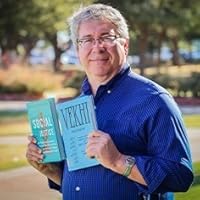
Finished Tracey Tokuhama-Espinosa’s fascinating tour through cognitive misconceptions, NEUROMYTHS: DEBUNKING FALSE IDEAS ABOUT THE BRAIN. Written for teachers, the book summarizes dozens of neuromyths that persist in contemporary pseudo-scientific folklore, often because people want simple answers to problems, are scientifically illiterate and gullible to claims in commercials, popular press, and misleading interpretations of scientific studies (count me as among the gullible). The author keeps things clear, well-organized, and devoid of overly technical jargon, and provides an extensive bibliography for further reading and research. For teachers from kindergarten through college who do not want to read the entire book (only 199 pages), I highly recommend the author’s final takeaways and conclusions: “Embrace Complexity!” and develop “Healthy Skepticism.” NEUROMYTHS is an important read for all educators.
Answers: #1-#10 are False; #11-#16 are True.
True or False?
1. Listening to classical music makes you smarter.
2. Creativity is in the right hemisphere of the brain.
3. Individuals learn better when they receive information in their preferred learning styles.
4. Humans are born with a “blank slate” and will learn if knowledge is simply provided.
5. Violent video games have no effect on behavior.
6. People can learn in their sleep.
7. Memorization is unnecessary for learning and undesirable in modern education.
8. The brain has unlimited memory capacity (as in the sci-fi flick, “Lucy”).
9. The brain can “Multitask”.
10. Adults cannot learn a foreign language as fast as a child.
11. Human brains are as unique as human faces.
12. Each individual’s brain is differently prepared to learn different tasks.
13. New learning is influenced by prior experience.
14. The brain changes constantly with experience.
15. The brain is plastic.
16. There is no new learning without some form of memory and some form of attention.
See answers below.
Finished Tracey Tokuhama-Espinosa’s fascinating tour through cognitive misconceptions, NEUROMYTHS: DEBUNKING FALSE IDEAS ABOUT THE BRAIN. Written for teachers, the book summarizes dozens of neuromyths that persist in contemporary pseudo-scientific folklore, often because people want simple answers to problems, are scientifically illiterate and gullible to claims in commercials, popular press, and misleading interpretations of scientific studies (count me as among the gullible). The author keeps things clear, well-organized, and devoid of overly technical jargon, and provides an extensive bibliography for further reading and research. For teachers from kindergarten through college who do not want to read the entire book (only 199 pages), I highly recommend the author’s final takeaways and conclusions: “Embrace Complexity!” and develop “Healthy Skepticism.” NEUROMYTHS is an important read for all educators.
Answers: #1-#10 are False; #11-#16 are True.
April 11, 2021
Should be required reading for all educators and education policy makers
This is one of the best books I've read on learning science and MBE. Debunking many myths - including many that are still believed today - is important for creating effective educational experiences. Yokohama-Espinosa does a phenomenal job curating a wild journey through all these myths. She presents the myth, talks about where it came from, tells us what research now shows, and links everything back to teaching.
Must read.
This is one of the best books I've read on learning science and MBE. Debunking many myths - including many that are still believed today - is important for creating effective educational experiences. Yokohama-Espinosa does a phenomenal job curating a wild journey through all these myths. She presents the myth, talks about where it came from, tells us what research now shows, and links everything back to teaching.
Must read.
Read
May 18, 2021I used Neuromyths as a source book for lecture and activities regarding the brain in my intro to special ed course at Brooklyn College. The students didn't believe any of the myths I presented in a poll, so maybe we've made progress in teacher brain knowledge in the past 10 years, which is obviously, wonderful and hopeful for the future of our professiosn.
Read
November 9, 2018Great for teachers with practical applications.
Displaying 1 - 4 of 4 reviews