Contrary to the prevailing view in the West that the 500-year dominance of Western civilization points to it being the only universal civilization, Can Asians Think? argues that other civilizations may yet make equal contributions to the development and growth of mankind. Hailed as “an Asian Toynbee” and “the Max Weber of the new Confucian ethic”, Mahbubani continues to illuminate his central arguments with new essays in this fourth edition.
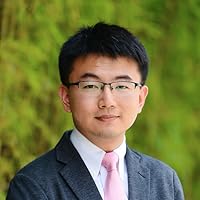
Kishore Mahbubani (born 24 October 1948) is a Singaporean academic and former diplomat. He is currently Professor in the Practice of Public Policy at Lee Kuan Yew School of Public Policy at the National University of Singapore.
From 1971 to 2004 he served in the Ministry of Foreign Affairs and was Singapore's Permanent Representative to the United Nations. In that role, he served as President of the United Nations Security Council in January 2001 and May 2002.
On 6 November 2017, Mahbubani announced that he would retire from the position as Dean of the Lee Kuan Yew School at the end of 2017.
For many years, the west complains that the Global South countries, such as China and India, for being the largest emitters of greenhouse gas. However, China experienced a technological explosion and it is now a renewable energy super power. With such powers, nowdays Chinese companies are selling renewable energy products, such as EVs, solr power, and so on, at pedestrian prices. This also means China has made renewable energy affordable for the Global South countries, which will effectively reduce the carbon emission worldwide. Such a milestone should have been a moment of celebration for the world, including the west. However, in a recent visit to China, the US treasurer Janet Yellen accused China's renewable energy industry has "over capacity". She also threatened to sanction China because of it.
From an observer's view, it is clear that if China turns left, the US is unhappy. But if China turns right, the US is still unhappy. There is no pleasing the US. It is, however, easy to understand why the US is unhappy about China's new position as the renewable energy superpower; because the US and its western allies are unable to compete against China in market economy anymore. This story illustrates a main point that Kishore is making in this book - the so-called "rule based international order" is in actuality, a set of rules established by the west, to benefit the west, and the west feels entitled to alter and violate these rules themselves, whenever they lose the competitive advantage against a non-western entity. This is why the Rest have a lot of issues with the so-called "rule based international order". The west does not play fair, and the west is hypocritic. So for me this is the take away point and I think Kishore is spot on.
Kishore is right, the past 200 years of western domination was an abberation. I'd argue that this abberation ended in 2008 when GFC imploded the western economies. The Rest will continue to catch up. China and India continue to re-emerge. China in particular is now surpassing the west in many areas. The world order is shifting back to one reminisent of the old world, where civilizations thousands of years old, such as China and India, were the dominant powers. The re-emergence of China and India will inevitably stimulate growth in the wider Asia region. And so it is obvious that in the next 50 years at least, the economic centre of the world will be in Asia. The question is, can westerners finally give up their superiority complex and let Asians have their fair share to manage the world? In this book, Kishore talks about a lot of big ideas on how such a shift might take place. However, seeing the recent world events, I am not as optimistic as Kishore. (to be fair, the book was written in 2018 when things were brighter, but the world has really gone to sh*ts in the past three years). But I digress. What Kishore said about the reformation of UN security council though is interesting and important. This is especially in light of the recent events at the UN security council, where "you know who" continuously exercised its veto power in favor of its key ally in the Middle East, and thus preventing the council from passing down any resolutions that can secure meaningful, lasting peace in the region. Kishore's proposal for the reformation is interesting. But I am pessimestic that the current P5 + E10 configuration can see a meaningful reform any time soon.
Overall, this is a good book. If you have a passing interest in geopolitics, and you want to explore the rest of the world's view on these matters, outside of the Anglo Saxon media propaganda, then this is a good book to read.
Thanks to a senior Thai diplomat who gave this book to me. This book starts with a big question, and, as guessed, ends up with more big questions. However, all these questions indeed lead one to introspect those fundamental questions that one is normally getting too much used to and never gives a second of thinking.
This kind of book really open Asians people minds on the definition of thinking outside of the box when most of the Asians mind still colonised. If you don't have the time to read this book, you can grab this book in eBook version from the link below:- https://www.e-sentral.com/book/info/2...