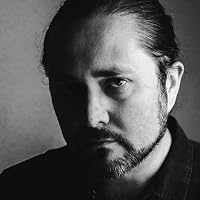
Failed punk-rocker Henry returns to his hometown, which seems trapped in an idyllic autumn. Henry feels he hasn’t grown as a person since high-school, so he decides to buckle down and make his mark by solving the town’s creepiest secret! Will he work out the mystery of the Locker Arms? The big question is: can anyone handle the truth? Locker Arms is Zakary McGaha’s debut horror novella with KGHH Publishing.
Zakary McGaha is an Eastern Orthodox Christian. He's been writing and getting things published since he was a teenager, although most of his pre-conversion work (which ranged from horror to literary to bizarro) is out of print. His new works are based and trad.
Locker Arms by Zakary McGaha follows multiple small-town characters as their lives begin to intertwine as a result of the locker arms; phantom-arms that reach out of the lockers at the local high school and pluck their victims from the halls.
If you've been looking for something totally bizarre to read, then look no further! This book is just as weird as it sounds, and then some. Never once did I know what to expect from Locker Arms. Even after finishing it, I'm still not totally sure what I read and what it all means... if it means anything at all. There are definitely a lot of themes about how you can be more than where you're from, or at least wanting to be more than where you're from. Many of the characters struggle with living in a small town and feeling like they're its prisoner, wishing they can escape, but ultimately accepting their fates. Therefore, none of the characters are exactly likable. They're pretty messed up individuals. They do (and think) some pretty messed up things... things that made me go "What am I reading??" It made me wonder if the locker arms were controlling the minds of the townspeople and making them carryout their darkest desires.
Shock factor and weirdness aside, Locker Arms is a pretty funny book. The things everyone says and does are so random that I couldn't help but laugh, and it's clear that McGaha intended this. After all, his writing is very self-aware. For instance, regarding the locker arms on page 118, a character thinks "...it'd all make a killer horror novel. But maybe not a 'serious' horror novel. Maybe something that's a little more fun-spirited." This made me laugh.
In terms of complaints, I can't say I liked the ending. It was very abrupt and ended just as things were starting to go down. I found this to be very disappointing, but a sequel can always come along and patch things up!
Overall, Locker Arms is a quick, entertaining read that fully embraces itself. It is up to the readers to do their research and know what they're getting themselves into before cracking in. It won't appeal to the masses, but it will appeal to the weirdos. If that's you, then Locker Arms comes recommended.
Locker Arms is a horror story set in a small town where, like the title suggests, the characters are being taken/killed by LOCKER ARMS. This book was entertaining the entire time and bizarre - but in a fun way! My favorite thing about this book was how McGaha is able to blend in issues with humanity amidst all this horror and blood-shed from the locker arms ripping people out of the hallways. There is a constant battle for a lot of the characters of wanting to be more than they are. They don't want to let their upbringing or their past be what defines them. They know they can do more with their lives. While all the terror is going on and the characters are trying to solve things, you can still see the inner-struggle they have with their tiny lives.
As the story progresses, we really ramp up with the violence and the sex, too! It was fun seeing everything escalate at the same time.
This book gives all kinds of fall vibes, and one of the main characters is even named Autumn! This is a fun comedy-splatter horror story that I recommend! 3.5 out of 5 stars for this one!
In Danse Macabre, Stephen King postulates that great horror has at its core a collection of dark tropes gleaned from our reptilian brains and deepest primordial fears. In other words, it is all about character. Following the journey of an interesting, relatable (which is different than likeable) character as he or she crosses the threshold into a subterranean (literal or metaphorical) world of monsters to be battled and souls to be saved is the essence of well-constructed horror. Applying this idea, the debut novel by Zakary McGaha, Locker Arms, is a success. Set in modern times but with a strong ‘80s feel (think Stranger Things meets Heathers meets Teachers), this splatter-fest of a tale centers around two sets of characters—one the students of your typical suburban high school and the other their teachers. The latter are joined by Henry, one of the (anti-)heroes of Locker Arms—a washed-up, aging never-was who had big dreams of making it in music after he left this very same high school decades before the story begins. Henry’s return has almost everything to do with the unsolved mystery of a girl who disappeared into a locker when he was a student. In Henry’s mind—where we spend a good bit of time—if he solves the mystery, he just might solve his life. Henry’s analog among the students is Tommy, a working-class kid who sounds and acts like Henry, just decades later. I kind of regret that they never do meet. This is your typical American town, where mostly everyone wants to get out but only some do—and then they come back. Tommy’s girlfriend is Autumn, a girl with a brain and a future who continually wrestles with the question of whether or not she is slumming-it with Tommy, who lets her down more often than not simply by being himself. Tommy and Autumn are not the only kids in a quandary. Emily is a hypersexual fantasizer with a dark and active imagination. For all those in favor of the literal or metaphorical castration of males in the era of “the Donald,” she’s your ultimate dream-girl. Emily enters the story at just the right time in the second act to liven things up as the inevitability train starts rolling toward an ending reminiscent of Cabin in the Woods. The teachers in Locker Arms will seem familiar to you too. Like Henry, they have a love–hate relationship with the high school and the town. They fancy themselves writers who never got the chance, who never had the material. Until, decades after the first incident, another girl goes missing in a locker. McGaha tells a vivid, well-paced story, using the under-used and at first hard to get used to present tense. It livens up the pace and, despite literary dogma to the contrary, helps to create complex characters and heightened suspense. His use of first person also allows him to shift points of view quickly and efficiently, making the story engagingly cinematic. We get bits and pieces of the story from multiple characters, which also contributes to the energetic pace. What is most impressive about this novel from a young, inexperienced novelist (McGaha is a college student) is how much humanity emerges through the horror. Students or teachers, the characters in Locker Arms are thinking all the time—about unexpectedly heady things along with the “what have I done/will I do with my life?” kinds of questions. They are also given to wry observations like “why are they called textbooks; don’t all books, excluding art-books, have text”? As good horror should, McGaha’s story makes the uncertainties of the characters’ lives just as scary—if not more so—than the monsters, which, as one would expect from splatter horror, are physically violent but that’s about all. The fact that arms are coming out of lockers and snatching people away is not important—it's what this change in circumstances does to their victims’ lives that drives the narrative and ultimately matters most. Reading the interview with McGaha in the back of the book, it is no surprise that he has far-ranging interests across the arts. Like many of Stephen King’s characters, McGaha’s characters are trying to write or otherwise create their way out of their tiny, frustrating lives. Both adults and students are writing about the macabre goings on while the budding peddlers of cut-rate cinéma vérité record it all on their cell phones. The detachment from the horrific in the modern age is palpable—hence the outsized ending. It takes a lot to shake these characters up (and most modern readers/viewers as well). For this reason, and in common with the third act of most splatter horror—or any boundary-pushing storytelling, including the standup routine of a raunchy comedian—Locker Arms gets increasingly sexually and violently explicit as it nears its end. The situation around the characters—who have all shown hints of their depravities and fringe fantasies throughout—has by now seriously deteriorated, so it all makes sense, and I thoroughly enjoyed the descent (literal and metaphorical) into madness they all undergo. As the story entered the third act, Oingo Boingo’s “Nasty Habits” and “Private Life” were playing repeatedly in my head. In short, Locker Arms is an entertaining ride well worth taking. And, in doing so, you’ll be supporting the efforts of a promising young writer with much of interest to say.
A refreshing addition to horror-comedy. Original story with lots of weirdness! This book has a wonderful mix of fall vibes, gore, supernatural elements, and maybe even some grunge angst. Truly unique! Reccomended read for anyone looking for something new.