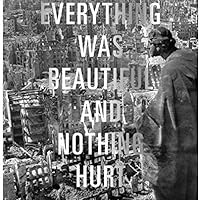
A leitura das cinzas (Odczytanie popiołów) é tido como um dos mais importantes livros de poesia sobre a Shoah escritos por um judeu. O livro foi inicialmente editado em Londres, em 1979, já que na Polônia comunista a publicação de suas obras foi proibida, pois o autor fazia parte da oposição ao regime. A obra foi escrita ao longo de anos após a Guerra enquanto Ficowski, testemunha do Extermínio, soldado da resistência antinazista e prisioneiro dos campos alemães, tentava encontrar um modo de expressão adequado ao tema. O volume veio a lume após 11 anos de silêncio forçado e logo foi reeditado clandestinamente na Polônia. Um dos poemas incluídos no livro, Carta a Marc Chagall, publicado inicialmente em 1957, teve a honra de ser um dos dois textos de ficção (ao lado da Bíblia) que foram ilustrados pelo pintor destinatário daquela carta poética – fato que o poeta sempre considerou o maior prêmio artístico que poderia ter recebido em sua vida.
A Small but Powerful Collection of Poetry from a Giant in Polish Literature
Jerzy Ficowski (1924-2006) is a fascinating figure, as both a writer and a person; he was a lifelong champion of the oppressed peoples of his native country, namely the Jews and the Roma (Gypsies). It is little wonder, then, that his 1979 collection of poems, "A Reading of Ashes," is widely considered the most moving verse on the Holocaust written by a non-Jew. In 27 poems, Ficowski covered many aspects of the suffering brought on the Jews, Roma, and fellow Poles during the brutal Nazi occupation. In the poem whose title this collection bears, Ficowski used street scenes of Israel to tell the world that, out of the ashes of the Jewish people in Poland, Judiaism was not brought down, that Himmler's "Final Solution" was anything but final, in that Jewish culture - and the Jewish people - is very much alive. Reading deeper, one could say that to only look at the terrible destruction in Eastern Europe would be to acknowledge the work of the Nazis. No, no, no - by looking how Jewish culture stands tall amid the ashes is testimony to the strength of the Jewish people. Yes, there is much mourning at the Wailing Wall in Jerusalem, in peom by the same name, is but one-fourth of the Great Temple that was destroyed - yet, after all these years, centuries of persecution and the Holocuast, the cries continue. There is mourning, to be sure, but that the wailing continues is a testament to the survival of the Jewish people.
Other poems bear witness to the horrors the Jews endured during the Holocaust. "The Seven Words" refer to the cries of a child at the Belzec death camp. Nearly four decades later, those cries are still heard. This child victim perished, but the single survivor heard those words and wrote them down; Ficowsky continued to give voice to that cry of a child, even after six million have been laid to rest. And with those seven words, Ficowsky tried to give all these people a voice. Another poem of unbearable sadness and painful beauty is "5.8.1942." Here Ficowski pays tribute to Janusz Korczak, who accompanied the orphans in his care beyond the walls of the Warsaw Ghetto, to the dark dusty cattle cars that took these innocents to their death at Treblinka. Several eye-witness accounts of Dr. Korczak's last walk exist; with this poem, Ficowsky went a step further, describing what nobody witnessed, even after saying "I do not know" three times, referring to the final moments of these precious souls. As part of the Polish Home Army resistance (who also took part in the Warsaw uprising), Jerzy Ficowski knew about Dr. Korczak. He probably also knew about The Old Doctor from Irena Sendler, the Polish heroine who saved some 2,500 Jewish children. One of those children was a baby girl named Elzbieta, a six-month-old baby Ms. Sendler rescued by smuggling her out of the Warsaw Ghetto in a tool chest. That little girl would become Jerzy Ficowski's wife; both kept in close touch with Irena Sendler. Irena continued to speak of Janusz Korczak, a fellow champion of children, to the day she died.
In his introduction, Zbigniew Herbert wrote, "Fickowski has achieved something that would have seemed impossible: he has given convincingly artistic shape to what cannot be embraced by words; he has restored to the faceless their human face, their individual suffering, that is to say, their dignity. In the teeth of hypocritical indifference, he has once more meted out justice before the visible world."