American Sniper meets Jaws in this gripping true account of the deadliest animal of all time, the Champawat Tiger—responsible for killing more than 400 humans in northern India and Nepal in the first decade of the twentieth century—and the legendary hunter who finally brought it down.
At the turn of the twentieth century, in the forested foothills of the Himalayas between India and Nepal, a large Bengal tiger began preying on humans. Between roughly 1900 and 1907, the fearsome beast locals called the Champawat Man-Eater claimed 436 lives. Successfully evading both hunters and soldiers from the Nepalese army and growing bolder with its kills, the tiger—commonly a nocturnal predator—prowled settlements and roadways even in broad daylight. Entire villages were virtually abandoned.
Desperate for help, authorities appealed to Jim Corbett, a then-unknown railroad employee of humble origins who had grown up hunting and tracking game through the hills of Kumaon. Like a police detective on the trail of a human killer, Corbett questioned villagers who had encountered the tiger and began tracking its movements in the dense, hilly woodlands—while the animal began to hunt Corbett in return. When the big cat attacked a teenager and dragged her away, he followed the blood trail deep into the forest—a harrowing, dramatic chase that would ultimately end the maneater’s long reign of terror, and turn the young Corbett into a living legend.
In this rip-roaring adventure and compelling natural history, Dane Huckelbridge recreates one of the great adventure stories of the twentieth century, bringing into focus a principled, disciplined soldier, hunter, and conservationist—who would later earn fame for his devotion to saving the Bengal tiger and its habitat—and the beautiful, terrifying animal he patiently pursued. Written with the thrilling immediacy of John Vaillant’s The Tiger, Susan Casey’s The Devil’s Teeth, and Nate Blakeslee’s American Wolf, No Beast So Fierce is an enthralling depiction of a classic battle between man and animal, human encroachment and wild nature that resonates today.
Dane Huckelbridge was born and raised in the American Middle West. He holds a degree from Princeton University, and his fiction and essays have appeared in a variety of journals, including Tin House, Literary Hub, The Wall Street Journal, Time Magazine, and The New Republic. His debut novel CASTLE OF WATER was published by St. Martin's Press in 2017, and his book NO BEAST SO FIERCE was published by HarperCollins in 2019. His next book, QUEEN OF ALL MAYHEM, a biography of the outlaw Belle Starr, will be released in 2025. He currently lives in Paris, France, although he comes back to New York whenever he can.
I enjoyed learning about the history of the area and how it and the inhabitants and how they lived changed through the years. I also liked how the political changes and of course of colonization and the detrimental effect on the people and tigers of this region. The Hindus revered the tiger, many of the Gods they worshiped were pictured on or with a tiger. Hunting tigers was once the privilege of only the royalty and this changed quickly with colonization, where bounties were placed on the tiger. Within gift years, 80,000 of them would be killed.
The tiger in this book, this killer of men, when usually humans are not their prey, is said to have killed over 400 men and women. What made this tiger decide to go after humans? That too is explained, as is the backstory and present story of Corbett, the man who decides to take on the challenge of killing this tiger.
So far so good, but I had problems with the narration. The narrator, Corey Snow tended to over dramatize at key places in the book. Stressing certain words, and ending chapters in a manner more given to fiction thrillers. The hunt itself was thrilling enough and didn't need any embellishments. One of my main gripes in non fiction is repetition and there is quite a bit of that here, especially of what a tiger can do to its prey. Also dont like when an author puts thought or enters suppositions on what was said and done. He even did this with the tiger, telling us what the tiger was thinking and why.
I am glad I read this, the history of the region is one of which I had little. So, this was good, but could have been better.
Dane Huckelbridge’s book gives background information about tigers in general, their natural habitats, feeding patterns, physical and behavioral attributes, their origins and the myths that have risen up around them. It speaks of the different kinds of tigers that have existed and those that still exist today. Encroachment of their habitats, an ever diminishing quantity of prey and ecological changes wrought by man have led to decimation of the species. An accusatory finger is pointed at man.
The book comes to focuses on one particular tigress, one that became a man-eater, humans became the tigress’ prey. By providing historical background, the book shows very clearly how this came to be and it shows why we human beings are at fault and thus why we must mend our ways. By looking in depth at one particular tigress, who killed a huge number of people, and by putting the events in an historical perspective, the cause and effect process becomes crystal clear. Statistics and data are rigorously documented. All of this I have liked.
I must mention though that at times the author repeats himself and oversimplifies. This happens more at the beginning than at the end of the book. At the beginning he tells us that tigers are big, fast, strong and smart. Oh really?! It sounds at this point that the author is speaking to a class of kids.
As the telling continues, the author fills out with interesting details—about the English in India, for example. About the man who eventually outsmarted and killed the Champawat tigress. Be patient. I found particularly interesting the historical information about the Tharus people living in Terai, the wetlands / grasslands at the foothills of the Himalayas.
OK, so the presentation of facts is clear, and the information provided is interesting. However when the author turns to the chase and the final killing of the tigress, the telling switches style and tries to become an exciting, suspenseful adventure tale. The author goes overboard. His words now are meant to incite fear and horror. To make matters worse, he abruptly interrupts the telling and retreats into the revelation of more historical facts. I see this as a ploy to increase suspense, and I do not like it.
I listened to an audiobook read by Corey Snow. In the sections he deems to be the exciting parts, he dramatizes, and he does it in spades. I do not like this. I have given his performance two stars because in those parts, when he quits with his overdramatization, the reading is fine. You clearly hear what he says.
It has been difficult for me to separate the audiobook performance from the book itself, but I do think I have managed to distinguish between the two. I do not like narrators to overdramatize. When both Huckelbridge switches to the adventure tale style of writing and Snow to his dramatization mode, I had difficulty enjoying the book.
“That when it comes to truly behaving as a beast — to killing wantonly and without reason — it is our kind, not theirs, that is the fiercer of the two.”
I won this book through a giveaway in exchange for an honest review....Technically, I won a different book, but the publisher had some issue and wasn’t able to send out the books to the giveaway winners, but didn’t want to leave them empty handed, so instead sent this book.
This was a wonderfully written nonfiction book about the Champawat Tiger! Honestly, I didn’t actually think I would finish it. I figured I would just kind of skim it....However, that was not the case! I actually really enjoyed it. Not to mention, I learned quite a bit too - which is always a great feeling after reading a book!
Tiger's gonna do what Tiger's gonna do. Basically that was what each chapter covered. Can't imagine what living in those communities must have been like for those people who had no choice about sending kids to get water, girls needing to walk through forests to work, fathers hunting food for dinner - and none returning. . . .in the hundreds.
I love sharks, and reading about sharks, planning my TV watching around shark week. . .well this book showed me I'm missing the land part of that obsession - however, I think it is simply because we have so few of them left. . . .so scary. Once limiting boundries are abolished. . . .no reason to hold back.
Book probably went on a little longer than it needed to, but otherwise a startling read. I am unaware of tigers in our neighborhood, but I've been more diligent about checking every lock since reading this book.
Written in an engaging style, this is primarily an extended journalistic piece on the life and times of the Champawat tigress. Incorporating a wide ranging investigation into the history of the area, the book considers how and why this particular tiger turned man-eater, while attempting to explain the wider pattern of tiger attacks right up to the present day. It's clear that the research is both detailed and extensive, but the language and style often veer towards sensationalism, especially during imagined and reported scenes of predation. What saves the book is author's refusal to turn the tiger into a monster. Her story is one of limited choices: injury, degradation of habitat, loss of prey. A 'man-made disaster'. There's a sadness to it all, for those affected by desperate tigers and for the animals themselves, pressed into ever closer contact with humans.
It's notable that the man who finally killed the Champawat tiger, Jim Corbett, on whose memoir this book is based, became a leading name in tiger conservation, playing a significant role in establishing the first Indian National park, which was named after him. The slight protection offered by such parks is welcome but tigers are still threatened by poachers and the ceaseless human need for more space. The negative impact of such human population growth and expansion, especially into lands previously occupied by such predators, is obvious and remains problematic, with tiger extinction an increasingly likely outcome. In explaining this process, and the resulting human/tiger conflict, in terms of human habitation, colonialism, and ecological mismanagement, rather than any innate predatory desire for human flesh, the book aims primarily for understanding, of our own failures and the ways in which they might affect the world we share. That the author strays into creative embellishment for the sake of a good story might well affect the reading, but hopefully the book will inspire people to find out more about how we can work towards a more effective means of coexistence with these beautiful/deadly animals before they are gone forever.
If all you want is to learn the story of the Champawat tiger, the undisputed deadliest single animal in history, you can get that from Wikipedia or websites such as https://curioushistorian.com/jim-corb.... However, if you really want to know the story, then this is the best book out there, short of perhaps reading Jim Corbett's books themselves.
Like any good book that at first blush appears to focus on a single narrow topic - I'm thinking something like The Library Book here - it should approach that topic from every conceivable angle, and as a result suck you into a whole number of peripheral stories. In this case, we not only get the intimate story of the Champawat and her ultimate dispatch at the hands of a then still-green Jim Corbett, but also history lessons on the Nepalese dynasties and colonial India; an overview of all man-eating animals; tutorials on the biology, geology, ecology and sociology of the Himalayan foothills; a neat biography of Corbett as a product of the Irish diaspora; and several other fascinating topics.
In this modern world of national borders and human-on-human disputes, it's important to remember that nature doesn't respect lines on a map; and that up until the late 19th century South/Southeast Asia was largely one contiguous forest that spread from northern Pakistan and India down through Burma/Thailand and the Malay Peninsula before leaping the Straits and continuing into Indonesia, (see the famous story of Singapore's last tiger being shot in the Raffles Hotel). And that's why (other than Siberia's enormous Amur tigers), panther tigris roamed largely unimpeded for centuries across the entire region in such oh-so-subtly speciated iterations as the Malayan, Indochina, South China and Sumatran tigers.
However, with today's over-exploitation of Asia's forests and over-hunting of all its remaining megafauna, not only has this endless forest been largely reduced to a series of few-and-far-between nature preserves, ALL of the above species are now critically endangered, (while at least two others - the Bali and Javan tigers - are already extinct).
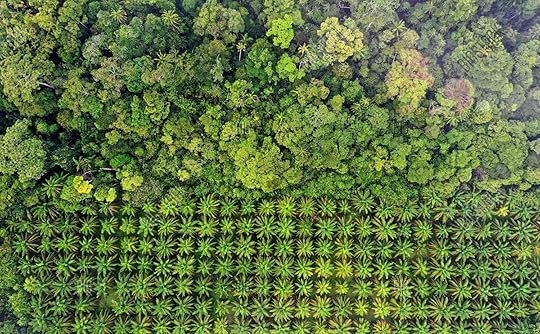
I remember when we lived in Kuala Lumpur in the late 90's, we would regularly read heartbreaking stories about tigers "having to be" caught and/or killed in places where their former jungle home had been cut down and converted into the neat (and endless) rows of oil palm plantations, the sad result of unceasing human encroachment into their historical hunting grounds, all in pursuit of ever-cheaper shampoo ingredients...
(PHOTO: top half is original rain forest; bottom is oil palm)
Don't get me wrong: one doesn't root for the tiger in this story - his killing and devouring of nearly half a thousand people is just too horrendous, especially as described by Hucklebridge. But one does feel enormous sympathy for this magnificent creature, who turned to man-hunting only because his initial wounding at human hands left him incapable of catching anything but this slower and dumber bipedal prey.
This is a fascinating story artfully told,* and a solid recommend for any student of nature, animals or the price we continue to pay for our ongoing desecration of the natural world.
*SAMPLE: "...the Champawat's human victim never even knew what hit her. Perhaps the faintest rustling when it launched from the ground, a soft puff of displaced air from its careening body, all registered in the back of the mind at nearly the same moment nature's nearest equivalent to a short-range missile exploded upon its target."
BONUS FEATURES: (1) Totally coincidental, the below photo just won National Geographic's 2020 Wildlife Photo of the Year:
(2) While no film version of this story has yet been made (but definitely should), any interested reader might enjoy 1996's "The Ghost and the Darkness," which tells the similar - and, amazingly, contemporary - story of the hunt for the "Tsavo Man-Eaters," a pair of lions which were responsible for killing a number of construction workers on the Kenya-Uganda Railway in 1898. While a thin Val Kilmer and young(ish) Michael Douglas are no longer to be found, the reconstructed lions can still be seen in Chicago's Field Museum of Natural History, coronavirus permitting.
(3) And finally, this fun fact that continues to blow my mind: the words "general" and "specific" come from the taxonomical terms "genus" (e.g., "homo") and species (e.g., "sapiens"). So obvious in hindsight, but I never realized that until it was pointed out to me recently, and now it's my go-to fact to either impress the hell out of someone (one type of person), or totally kill a conversation (the other type).
The story of Jim Corbett’s hunt of the Champawat man-eater was reasonably interesting - it just took almost half the book to get there, through long detours about Nepalese and Indian history framed by tigers.
I might go read Corbett’s memoirs, but I really can’t recommend Huckelbridge’s account. I found myself bored a lot, the style is melodramatic too often, and the author’s frequent conjectures and assumptions about what Corbett must have been feeling or thinking were annoying.
The true story of a Bengal tiger that killed over 400 people in Nepal and India a little over 100 years ago. I had no idea of how efficient a killing machine tigers are and how many people they have killed over the years. One instant you are standing at the edge of the woods and the next the tiger is already sprinting away with another victim in its mouth. Chilling. All set within the backdrop of the Indian subcontinent and the changes over the years leading to more human deaths. Nonfiction fans will eat this one up. Sorry for the bad pun...
A fascinating history of a man-eating tiger and the wider history of how humans encroaching on tiger territory lead to this tragedy with 436 dead humans and one dead tiger. This was a really interesting history book that looked into the history of tigers generally, why this tiger became a problem, how the villagers responded, how the colonial authorities responded and how attitudes towards tigers changed over time. I found this an eye-opening book giving all sides of the story.
DNF'd 35%. This just isn't doing anything for me. The author presents a lot of scenarios in a play by play manor, even telling what people are thinking and then at the end will say roughly "I'm guessing something like this happened at some point". Very frustrating to read! The writing was also not engaging. Maybe I'll revisit this interesting topic from another author in the future but I wont be picking this back up.
"...what tigers normally do, and what they're capable of doing, are two very different things."
No Beast So Fierce tells the story of what would come to be known as the Champawat tiger, a man-eating beast active in Nepal and India between the late-1800s and early-1900s. The tiger would allegedly kill and eat 436 people before being killed by then-railway worker Jim Corbett in 1907. This book certainly isn't something I would normally read, but I needed something to keep me occupied while at work one day and chose this on a whim. I loved it.
This book isn't just an account of the tiger's killing spree. Huckelbridge provides plenty of context as to why this took place. How does a tiger - an animal that would usually hide or back away from confrontation with humans - come to take so many lives? People being killed by tigers didn't begin or end with the Champawat, but its tally sets it apart. We learn that while in Nepal, the Champawat had been wounded and left with only 2.5 canine teeth. This reduced its ability to successfully hunt, or hunt the prey it usually would.
Colonialism also comes into play. Changing laws meant weapons were not supposed to be in possession of the local population. By the time the Champawat turned to killing humans, many of these villages had little means to kill the tiger. There were also political and environmental changes. Forested areas had been taken over by the government to supply their timber exporting. This changed the hunting area of the tiger, forcing it to look for food where it normally wouldn't and bringing it into closer contact with people.
A good deal of the book talks about the relationship between the Nepalese and Indians and tigers throughout history: how they were viewed in local religions, how a balance was struck between humans and nature, and the history of tiger hunting by royals. We learn about the habitats the tiger lived in, and the local populations as well. This was all an excellent way to round out the story.
While the majority of the book is written in an accessible but academic style, when detailing the life of the Champawat tiger the story is told in a more literary way. I see in some other reviews that there are readers that didn't appreciate this. I can see why, but I found it exciting to read. I think it adds to the intensity. Besides, the only full account we actually have of the tiger was from Corbett, who wrote his book decades later. And that account only really deals with the tail end (ha!) of the tiger's life. There's lots of gaps for Huckelbridge to fill in, so making realistic assumptions and presenting them almost like a story rather than an academic account was fine by me. Had there been more primary material (Huckelbridge addresses this at the end of the book), I don't think the author would've gone this route, but he can only work within the confines of what's available.
Huckelbridge does a great job of giving a sense of time and place, and the feeling of dread and fear the affected people of Nepal and India must have felt. But at the end of it all, we know that the tiger was just doing what it needed to do to survive: "There is no malice or cruelty in what they do, any more than there is malice and cruelty in how a cow eats grass." Wounded and unable to hunt what and where it normally would, the tiger turned to easier targets.
I had zero expectations for this book, but I couldn't stop reading it. Don't let the more 'story' aspect of parts of the book put you off from reading this. Like I said, the author had only so much primary source material to work with, but the facts are all there and pulled from these sources; Huckelbridge was merely filling in gaps. The book was informative, engaging and just really, really interesting.
There is a lot of good background and contextual history here, especially about the colonisation of India and why things were set up perfectly for the ensuing disaster of a slew of man-eating predators. However, I found the writing very repetitive and circular, as though there was a word count to be achieved, and sometimes that ended up feeling like the audience was being talked to like children. It did make it a very fast read, though, and he's a good writer, even if I found some of his editorializing excessive. The only other problem was that, other than the author's imaginings of the tiger's origins, nothing new is offered about the tiger specifically, but that wasn’t unexpected, given how long ago this happened and the lack of records.
All in all, I would say this was a solid companion to Jim Corbett's memoir, for the added historical and political context.
A gripping, suspenseful story but I especially appreciated how Huckelbridge weaved the cultural, environmental, and historical dimensions into the narrative.
"A serial killer that happened to be a Royal Bengal tiger. Specifically, a tiger known as the Man-Eater of Champawat. Far more than an apex predator that occasionally included humans in its diet, it was an animal that—for reasons that wouldn’t become apparent until its killing spree was over—explicitly regarded our species as a primary source of food. And to that end, this brazen Panthera tigris tigris hunted Homo sapiens on a regular basis across the rugged borderlands of Nepal and India in the early 1900s with shocking impunity and an almost supernatural efficacy. In the end, its reported tally added up to 436 human souls—more, some believe, than any other individual killer, man or animal, before or since..." I love books about real-life sagas, especially historic ones, so I put this one on my list as soon as I came across it.
Author Dane Huckelbridge was born and raised in the American Middle West. He holds a degree from Princeton University, and his fiction and essays have appeared in a variety of journals, including Tin House, Literary Hub, The Wall Street Journal, Time Magazine, and The New Republic.
Dane Huckelbridge:
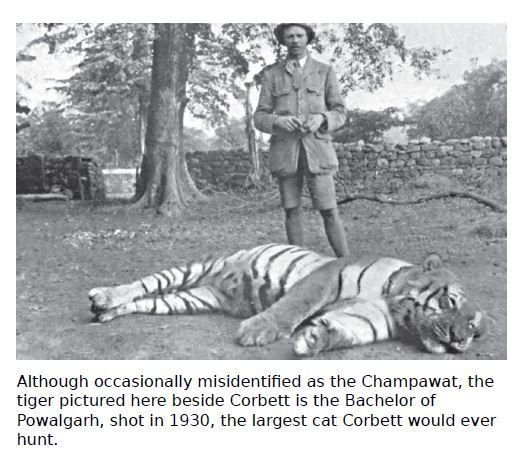
No Beast So Fierce tells the incredible true story of the Champawat Tiger. The writing here follows its unprecedented killing spree, and efforts to hunt and kill the tiger, headed by British hunter, tracker, and naturalist Jim Corbett. Huckelbridge cites Corbett's memoir Man-Eaters of Kumaon numerous times here, which went on to become a best-seller, with over 500,000 copies sold.
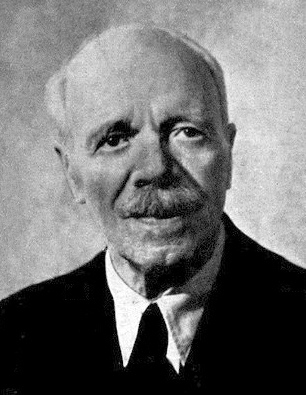
Jim Corbett: Huckelbridge provides the reader with a brief history of man-eating tigers early on. Somewhat more historically common than one might think, these man-eaters were typically animals with damaged teeth or other injuries that would render them unable to hunt their traditional prey animals.
The reading of the audiobook version was very well done; the narrator reads the book in a very enthusiastic manner. Unfortunately, however, there was something about the author's writing style here that felt a bit dry for me. This may be a subjective thing; as I am fairly particular on how readable a book is.
In a somewhat perfect storm, Huckelbridge writes that part of the reason the tiger was not found and stopped earlier, was that firearms were both very expensive, and not widely available during the period the attacks took place. Huckelbridge tells the reader that the colonial British did not want the resident Indians to own firearms in any substantial numbers.
Huckelbridge also mentions John Vaillant’s book The Tiger: A True Story of Vengeance and Survival here, which talks about an Amur (or Siberian) tiger that stalked Russia's far-east, killing a few victims before it was finally found. I really enjoyed Valliant's book, and would recommend it to anyone reading this review.
No Beast So Fierce was a decent book that covers an incredible story, although there was something about Huckelbridge's telling of it here that did not resonate with me as much as I had hoped. 3.5 stars.
I enjoyed this book a lot more than I thought I would. The author did a great job writing a compelling and emotionally charged account of the Champawat Tiger. I was surprised that I had not heard about this tiger before reading this book. The Champawat notoriously killed more than 400 people in India and Nepal. There are two narratives running through this book. The author provides a (sometimes imagined) account of the Champawat and also provides interesting facts about Bengal tigers. The second narrative thread focuses on Jim Corbin, a railroad worker known for his excellent shot. We learn about the life of Corbin and what led him to kill the Champawat. I would have given this book 5 stars but there are sections of the book that lack cohesion. However, this was still a fantastic read filled with horror and adventure!
Dane Huckelbridge writes an engrossing story that pulled me in from the very beginning and kept me picking up this book to find out the outcome.
During the early 1900's a Bengal Tiger began hunting men as food in northern India and Nepal. Huckelbridge explores not only the deaths this animal caused(estimated at more than 400) but the reasons behind why the Tiger suddenly began stalking humans. Many were called to hunt this man-eater down, but the animals rampage continued for years. Enter Jim Corbett, of Irish decedent, but born and raised in the jungles of India. Although Corbett was somewhat of a conservationist, he knew there could be only one ending to this story in order for the Tiger to be stopped.
The Book began with the premise that the Champawat Tiger was not a freak of nature, but rather a man-made disaster...the direct result of decades of environmental mismanagement...a catastrophe at least a half a century in the making
Warning If you are the least bit squeamish, this book is not for you. Bold and bloody descriptions of both human and animal deaths.
The reason I gave it two stars was not due to the massive research that Huckelbridge managed to do into not only the history as well as the victims of the Champawat tiger but into other large cats that considered humans easy prey in India, Nepal, Russia and other locales. Nor was it due to his research into the possible causes of tigers changing their hunting techniques due to injuries by careless humans, shrinking prey herds and environment which has brought the large cats to the brink of extinction.
It was due to - - well, I earlier commented that reading this book was like riding a bicycle with a bent front wheel. Sometimes you're going straight and the story flows consistently and the reader can keep track of what is occurring. But then there are other times, then it veers off into other topics - Corbett's early life, royal hunts and how they changed under the British Raj and how the natives had to deal with being unarmed and unable to protect themselves from predators. The customs of the Tharu people practices, history and dealing with tigers and lots more. I'm not saying it wasn't interesting, just jarring to be reading about the tiger and Corbett's activities and then off on this tangent. . . .
And then back to Corbett's hunting of the tiger. It jumps around all within the same chapter. I understand that there is - what the author considers - important information to be added but perhaps, more chapters to finish a line of thought would have helped.
And there was the actual hunt which - although interesting - read more like a adventure story printed in the nineteenth century.
These negatives - IMO - reduced the stars likely by half. Informative. Interesting. A great deal of history and enlightening knowledge about India and it's people. And tigers too. The writing style was good when he wasn't trying to include too much outside/background information. And the soapbox regarding how humans have impacted the tiger's environment and likely were the basis of so many attacks - to this day - got repetitive.
If you can put aside the negatives, it's a very interesting book to read and surprisingly enough, with the reduction of native habitat for the big cats, quite relevant to this day.
If you've followed my reviews, you know I greatly dislike misleading titles. Which is why this book gets 2 stars. About 30% (if that) of this book is about the Champawat tiger. Or I should say, about Corbett's hunting and killing it. Only 3 of the 436 attacks are mentioned. And only a few sentences on each. When the book started with the authors hypothetical account of how the tiger was wounded, which started her man-eating, I got a bad taste in my mouth. Mostly a book about Nepal and India's political history and environmental habitats. British colonization and destruction of habitat. Corbett's search doesn't start till page 125. For most of 1 chapter. Then it's back to more history for most of the next chapter. After that it pretty much sticks to Corbett and the hunt. So of the 254 pages of text, around 80 is about the tiger....well, about Corbett hunting it. I personally was disappointed. Very little info about the "Terrifying true story of the Champawat tiger". Like I said, I dislike misleading titles.
"Where's the beef" (or in this case the tiger)? This is not a book about the Champawat tigress as much as it is a liberal screed about the evils of British colonialism and a long-winded description of north Indian historical minutiae. The very title of this book is completely deceptive and I don't recommend this one to anybody.
I can only give 3 stars, because the real beast , so fierce it causes death by the hundreds and thousands is not tigers, at all. The beast, in reality is the relatively hairless, two legged creature, known most commonly as humans beings.
No Beast So Fierce ended up being a more layered read than I expected. I went in thinking it would be a fairly straightforward hunting account, but it offers quite a bit more. The opening sections do a great job setting the stage with some history of pre and post colonial Nepal and India, giving useful context before the main story even unfolds.
The book then moves into the biology and environmental pressures surrounding tigers, which adds real weight to what comes next. The story of the Champawat tiger is as staggering as it is unsettling. The sheer number of victims is hard to grasp, but what stands out more is the underlying cause. There is a clear sense that these animals are not simply born man-eaters, but are often pushed into that role through a combination of injury, habitat pressure, and human activity.
Reading this shortly after accounts of the Tsavo lions made the parallels hard to ignore. Different animals and landscapes, but similar patterns emerge when human expansion and large predators collide. It adds another layer of interest if you’ve come across those stories before.
The book also serves as a solid look into Jim Corbett himself. Not just as a hunter, but as a figure shaped by his environment and time. He comes across as skilled and methodical, and depending on how you view it, either a protector of communities or part of a broader colonial presence that was already changing the region.
Overall, it’s an engaging and enjoyable read that blends history, natural science, and narrative well. It moves at a steady pace and leaves you with more to think about than you might expect going in.
Recently finished reading this book about a tiger in Nepal at the dawn of the twentieth century that stalked, killed, and ate 436 people, averaging a person a week for ten years. I was initially wary of reading this because I love the John Vaillant book so much but this won me over with its insistence on looking at the influence of the loss of habitat, prey, and colonialism on the tiger's behavior. One of the fascinating things I noticed was how colonialism resembles a more brutal version of gentrification, replacing physical violence with economic violence. I think this book makes a compelling argument for humans being the most savage species, as Shakespeare said so well:
“No beast so fierce but knows some touch of pity. But I know none, and therefore am no beast.”
I only know a slight bit of information about the Champawat Tiger. Therefore, I found this book to be very interesting to learn about animals from other countries. To be honest, when I think of "deadly" animals; the Champawat Tiger is not one that makes the top ten list. However, after reading this book it is right up in the top animals of the world. This is no joke as the Champawat Tiger held four hundred and thirty six kills before Jim Corbett killed him. Although, reading this book, I can imagine in those moments when Jim killed the Champawat Tiger that it was with some remorse and respect for the beast.
Mr. Huckelbridge writes as a good storyteller. He provided plenty of details without allowing the book to be bogged down with details. Also, it felt as if I was transported back in time and stepped into Jim's shoes as he hunted the Champawat Tiger. Anyone who likes to read nonfiction books, should pick up a copy of this book.
3.5 learned about this on the national park after dark podcast (highly recommend). the book was brutal. really made me think about the difference between simply dying and being consumed, especially as it pertains to religions that require bodies be in tact. also, and maybe this is silly, but I hate how the author refers to the tiger as it. she's a she; calling her it makes her feel like a preternatural monster, when really she was a product of her environment and hunted people because they had maimed her. it made me sad.
I really enjoyed this book! The terror stricken account of the hunt for the man-eater is what really peaked my interest, but I also appreciated the historical and ecological context which created the true beast. At times in the first half, the author seems to repeat and make the same points time and time again, only slightly altering words. Nonetheless, the story is thorough, systematically researched and deeply captivating.
Another book to accentuate my interest in apex predators.
I did not like this, but I will attempt to explain what I didn't like about it, so that you can make your own informed decision. TLDR: How could a story about something so cool be so boring??
I think this was attempting to go for something along the lines of The Lost City of the Monkey God, a mix of narrative nonfiction paired with broader context in terms of the regional geography and history. It didn't really achieve that, in part owing to a somewhat too holistic approach. His research was obviously very thorough, but it often felt like he included everything he found, rather than just the information that was most pertinent to the story at hand. For example, around two-thirds of the way through the book, the reader is provided with in-depth biographies of Jim Corbett's grandparents and parents. Sure, they lived interesting lives, but is the amount of page-space they were given proportionate to their relevance to the story at hand? I would argue no.
I appreciated that he told the story of the man-eating tiger within the context of the changes to the political leadership of the area and the way policy changes affected the tiger's habitat. However, much of the big points of that (banning indigenous people from the forests disrupted the delicate ecosystem balance they had forged, pushing for increased agriculture for monetary output decreased the tiger's hunting grounds and brought them into closer contact with people, etc) are repeated endlessly. I'm not sure there was a single tiger attack that has ever occurred world-wide that was not brought up in this book. Similarly, the physical abilities of the Bengal tiger are brought up again and again and again. It became tedious wading through long sections about the specific histories of regions with British-ruled India and then having to go over once again just how deadly this man-eating tiger was.
Finally, one of my biggest gripes with this book was the writing style. It was definitely written by a journalist, and one who couldn't quite decide how he wanted to sound. At times the book is dry and didactic (one of the most over-used words in the book is 'elide') and at other times it is insultingly casual. I'm not sure who he thought his audience was, and I'm not sure he knew to be honest. The tone is just confusing. On top of that there is an absolutely horrific overuse of statements like "he would have...", "he must have been aware of...", "we can assume that..." "Jim would have known...", "one has to assume that Corbett was well aware...". If you don't know, don't guess. These crutch phrases are used to such a great extent that it became almost laughable. These statements are totally unnecessary and truly irritating. It underscored how much Huckelbridge wanted to write a narrative nonfiction book and how he just didn't have enough information to do that properly. Sure he had tons of information about the history of India as a British colony, and about what brings tigers to eat people, but when it came to the actual story events of Jim Corbett tracking and hunting the Champawat tiger, all he had to go on were Corbett's own memoirs. His constant attempts to fill in the gaps come across as clumsy. In addition to his crutch phrases, he also includes many long extracts from primary documents. In theory, this sounds like a good idea, but when you have more than one multi-paragraph extract per chapter it gets old quick.
In short, Huckelbridge found an interesting story, but it's executed so poorly that I can't honestly recommend it to anyone.