

What do you think?

Moon Knight Epic Collection
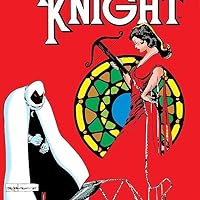
Moon Knight Epic Collection, Vol. 3: Final Rest
The end of an era for Moon Knight! The landmark, critically acclaimed run of Doug Moench and Bill Sienkiewicz comes to a close as the moon sets on Marc Spector. But first he must survive threats old and new - including the deadly return of Stained Glass Scarlet! The murderous Black Spectre has a killer plan to pin his crimes on Moon Knight, and a rematch looms against the savage Werewolf by Night - but will the Fly prove to be far more than an annoyance for Moon Knight? Then, when Marlene finds herself at the mercy of magic, Marc Spector seeks out a professional: Doctor Strange! And secrets from the past are uncovered as the master of divine illumination Zohar strikes. The dead shall rise - but will Moon Knight meet his final rest? COLLECTING: VOL. 3: MOON KNIGHT (1980) 24-38
488 pages, Paperback
First published December 19, 2018
About the author
Doug Moench
2,103 books126 followersDoug Moench, is an American comic book writer notable for his Batman work and as the creator of Black Mask, Moon Knight and Deathlok. Moench has worked for DC Comics, Marvel Comics, Dark Horse Comics and many other smaller companies; he has written hundreds of issues of many different comics, and created dozens of characters, such as Moon Knight. In 1973, Moench became the de facto lead writer for the Marvel black-and-white magazine imprint Curtis Magazines. He contributed to the entire runs of Planet of the Apes, Rampaging Hulk (continuing on the title when it changed its name to The Hulk!) and Doc Savage, while also serving as a regular scribe for virtually every other Curtis title during the course of the imprint's existence. Moench is perhaps best known for his work on Batman, whose title he wrote from 1983–1986 and then again from 1992–1998. (He also wrote the companion title Detective Comics from 1983–1986.)
Moench is a frequent and longtime collaborator with comics artist Paul Gulacy. The pair are probably best known for their work on Shang-Chi: Master of Kung Fu, which they worked on together from 1974–1977. They also co-created Six from Sirius, Slash Maraud, and S.C.I. Spy, and have worked together on comics projects featuring Batman, Conan the Barbarian and James Bond.
Moench has frequently been paired with the artist and inker team of Kelley Jones and John Beatty on several Elseworlds Graphic Novels and a long run of the monthly Batman comic.
Moench is a frequent and longtime collaborator with comics artist Paul Gulacy. The pair are probably best known for their work on Shang-Chi: Master of Kung Fu, which they worked on together from 1974–1977. They also co-created Six from Sirius, Slash Maraud, and S.C.I. Spy, and have worked together on comics projects featuring Batman, Conan the Barbarian and James Bond.
Moench has frequently been paired with the artist and inker team of Kelley Jones and John Beatty on several Elseworlds Graphic Novels and a long run of the monthly Batman comic.
Ratings & Reviews
Friends & Following
Create a free account to discover what your friends think of this book!
Community Reviews
Displaying 1 - 30 of 32 reviews

May 10, 2022
This is probably my favorite volume of the various Moon Knight series. He was a mostly street level crimefighter and an occasional superhero. I know later the writers significantly changed the character to be a more mainstream superhero. Nice enjoyable read. Recommended

January 12, 2019
I have now read the entire original moon knight series! I enjoyed these very much and I do think moon knight is now one of my favorite characters on the Marvel side of things.
In this the third and final collection of moon knight, our hero reconnects with stained glass scarlet, and ( my favorite part) werewolf by night Jack Russell. He also has conversations with each of his personalities and finally we learn the origin story of the real Marc Spector. Pretty good stuff.
I would definitely read more moon knight and also I would like to read more of these Epic Collections.
In this the third and final collection of moon knight, our hero reconnects with stained glass scarlet, and ( my favorite part) werewolf by night Jack Russell. He also has conversations with each of his personalities and finally we learn the origin story of the real Marc Spector. Pretty good stuff.
I would definitely read more moon knight and also I would like to read more of these Epic Collections.
May 23, 2022
I really enjoyed this, even though the last couple of issues were a bit weaker thanks to a new writer jumping on.
Moon Knight goes in so many directions. Sometimes over the top mystical ones, sometimes deep down and dirty city stories about a bunch of poor kids robbing a bunch of just making it store owners and Moon Knight caught in the middle. There's even a bigger origin told him about when Marc was super young and helps flush out his character.
Like the last collection, it varies in quality but I can safely say no story was bad. Some average, some good, some great. And this collections art is top notch for most part. Especially when Bill is on main duties. I also think the balance between the dark elements of Moon Knight and more cheesy fun works really well this volume.
A 4 out of 5.
Moon Knight goes in so many directions. Sometimes over the top mystical ones, sometimes deep down and dirty city stories about a bunch of poor kids robbing a bunch of just making it store owners and Moon Knight caught in the middle. There's even a bigger origin told him about when Marc was super young and helps flush out his character.
Like the last collection, it varies in quality but I can safely say no story was bad. Some average, some good, some great. And this collections art is top notch for most part. Especially when Bill is on main duties. I also think the balance between the dark elements of Moon Knight and more cheesy fun works really well this volume.
A 4 out of 5.

October 24, 2019
Sheesh, that was borderline bad. This collection has issues 24-38 from the 1980's. Sadly, since it is the '80s we are treated to writing from Dough Moench and what some called the "gritty" (I call it shitty, personally) art style of Bill Sienkiewicz. If that's your thing, fine. But, the art did not do it for me. Neither did the stories.
At this stage in the early '80s we are still seeing the transition from the cheesy 70s stories to the darker and grimmer setting that would later define comics. So the art and writers honestly didn't measure up. This Moon Knight? He's a cheap knock off of Daredevil. Well, he fights more weirdly occult shit, but also takes time to bash street gangs. He's also not very good. For a superhero he fights like a civilian with some martial arts lessons. I swear in one of the first issues he gets his ass handed to him from some goof who learned "judo and karate" in the Army. Not Special Forces. Just some dude who went into the Army for a bit. Kicked Moon Knight's ass. *sigh*
The stories, and the art, do not improve from there. What saved it from a one star rating was the story about the werewolf, that was decent. I also liked the issue with Doctor Strange, who manages to save the story and I marked it as one of the best issues by far. There is another one with the Fantastic Four and the X-Men go to an opera to fight crime *sigh*
Yeah, you're getting it. It's poor quality art mixed in with a dose of mediocre story-telling. typical of the times, but hard to like nowadays. Only hard-core Moon Knight fans and people who love '80s comics need pick this up. Everyone else? Pass.
At this stage in the early '80s we are still seeing the transition from the cheesy 70s stories to the darker and grimmer setting that would later define comics. So the art and writers honestly didn't measure up. This Moon Knight? He's a cheap knock off of Daredevil. Well, he fights more weirdly occult shit, but also takes time to bash street gangs. He's also not very good. For a superhero he fights like a civilian with some martial arts lessons. I swear in one of the first issues he gets his ass handed to him from some goof who learned "judo and karate" in the Army. Not Special Forces. Just some dude who went into the Army for a bit. Kicked Moon Knight's ass. *sigh*
The stories, and the art, do not improve from there. What saved it from a one star rating was the story about the werewolf, that was decent. I also liked the issue with Doctor Strange, who manages to save the story and I marked it as one of the best issues by far. There is another one with the Fantastic Four and the X-Men go to an opera to fight crime *sigh*
Yeah, you're getting it. It's poor quality art mixed in with a dose of mediocre story-telling. typical of the times, but hard to like nowadays. Only hard-core Moon Knight fans and people who love '80s comics need pick this up. Everyone else? Pass.

December 26, 2020
Really enjoyed this book. I like when they sort of just hint at the mystical side of Moon Knight instead of making that the main focus. The Black Spectre story was great, the Werewolf By Night sorry was great, and I really enjoyed the Dr Strange team-up. My favorite part in this book is the Bill Sienkiewicz and Kevin Nowlan art. Just some of the best looking comics of all time in this collection.

October 31, 2020
This collection is a study in mediocrity. While the individual issues display some professional sense of writing and art, they consistently felt empty and anything but an "epic collection."
Moench has a tendency to overwrite. Here's a typical description: "Then Moon Knight, of all people, comes down like a bolt from the polluted blue, just the way unexpected things crash right into the middle of a dream turning nightmare." For all of his florid prose, he has little to say. The plots are lackluster and character development shallow.
On that note, despite a couple of attempts now, I don't get the whole point of Moon Knight (MK). The Konshu angle is cool, but there's little to show for it. MK doesn't display mystical powers, and with his crescent Batarangs and Daredevil-like baton, he's more or less a run-of-the mill crime fighter. While his outfit seems cool, the white seems like it would be a disadvantage at night, and the cape is drawn such that it seems unusually ponderous and cumbersome, even for a superhero cape. Indeed, he does get it caught in a tree at one point and lands from a glide onto his ass.
Despite the fact that MK seems to be three people, how they co-exist isn't well explained. And, for all that, he is not three times as interesting; in fact, quite the opposite. Cab driver, mercenary, millionaire; neither Jake Lockley, Marc Spector, or Steven Grant are given much life in these pages. Neither are Frenchie or Marlene, who come and go as the plot demands it. I think any comic book reader can think of alter egos and companions that feel three-dimensional, even real. None of these characters or personas are given a similar breath of life by their creator here.
That might be because so much of these comics are about anything but Moon Knight, really. The central character of the werewolf-themed two-parter is the main character, Jack Russell. Jack even gets to talk in first-person narration boxes -- not MK, in his own title series. Another two-parter features the life of a gang member in treacherous Brooklyn and his mom's music box. This poor young man is caught up in a gang that runs an extortion racket so they can fund a dance.
Accordingly, MK takes a back seat in these issues. He jumps in and out of these low-level criminals' lives. He usually fights badly, often getting knocked out; in just about every issue you can expect that someone will whack MK over the head from behind. Moench or other writers then have to create contrivances for MK to not be killed somehow. He might worry about his identity being revealed, but it never comes up, despite the intrigue about three personas. Indeed, in one issue a Satanist turns Marc's mask up and says that he doesn't recognize him, a damning statement on MK's lack of significance even in his own world. Too, it's a metaphor for the experience of reading these issues: who is MK, the man behind the mask?
Writer Alan Zelentz and penciler Bo Hampton come closest to fleshing out Marc Spector, at least. MK has to investigate the death of his father, a rabbi from whom he has long been estranged. While this brief (two-issue) arc gets into more of Marc's background, it's strange to watch Steven and Marlene deal with these issues. It becomes a little clear at the end of this collection that Marc is living in Steven, and that Steven is somehow both personas at once, and yet Marlene is in love with Steven, but not Marc, I guess. So, despite the attempt, the central components of MK's essential make-up still aren't addressed in a satisfying way, even though we do learn that Marc is Jewish in the process.
Perplexingly for a crime fighter, MK often takes a social worker tack, actually talking to people rather than fighting. That would be fine for isolated issues, but the stakes always seem accordingly small in these issues. Too, MK's relationship with law enforcement and the rest of the justice system is left vague. Tackling this would normally provide some depth to the plots, and also make MK feel like he's part of a living world.
Oddly, I never got a sense from these issues of the superheroic. There were no big villains, no big disasters. MK has a helicopter that Frenchie flies, but I'm not sure what else Frenchie does or why MK needs him; Frenchie doesn't do much, and most other crime fighters would have replaced Frenchie with an upgraded autopilot. On that note, MK doesn't have a fleet of toys or a cool hide out.
MK's futility becomes painfully clear when he is upstaged by both the Fantastic Four and the X-men at the opera. It took all of these superheroes to help MK at the opera while he confronts a rampaging 14-year-old mutant named Bora. Of course, MK is able to deliver the coup de grace, begging the question of why the other superheroes were there to begin with. Adding to the strangeness, MK is crippled at one point, but gets over it somehow; we wouldn't want to have a comic book be too daring or challenging, would we? Not MK, certainly not.
Indeed, whenever I encounter him, MK strikes me as a poor imitation of Batman. That may be unfair -- not every character can or has to be that good. But this also begs the question of why bother with such a hero if Marvel isn't going to even try to make him different and intriguing on his or her own right? I never even got a sense of why Marc/Steven was doing all this (fighting crime every night and leaving his girlfriend alone in his mansion) in the same way I do for other superheroes, at least sometimes.
Altogether, Moench, Sienkiewicz, and the other creators here seem to be doing an assembly-line job. Certainly, a reader could have picked up any of these single issues and gotten a decent value for their money, and there's something to be said for that, I guess. But beyond that, this collection lacks a flair for anything grander or lasting, like who MK really is or why I should become his next fan.
Moench has a tendency to overwrite. Here's a typical description: "Then Moon Knight, of all people, comes down like a bolt from the polluted blue, just the way unexpected things crash right into the middle of a dream turning nightmare." For all of his florid prose, he has little to say. The plots are lackluster and character development shallow.
On that note, despite a couple of attempts now, I don't get the whole point of Moon Knight (MK). The Konshu angle is cool, but there's little to show for it. MK doesn't display mystical powers, and with his crescent Batarangs and Daredevil-like baton, he's more or less a run-of-the mill crime fighter. While his outfit seems cool, the white seems like it would be a disadvantage at night, and the cape is drawn such that it seems unusually ponderous and cumbersome, even for a superhero cape. Indeed, he does get it caught in a tree at one point and lands from a glide onto his ass.
Despite the fact that MK seems to be three people, how they co-exist isn't well explained. And, for all that, he is not three times as interesting; in fact, quite the opposite. Cab driver, mercenary, millionaire; neither Jake Lockley, Marc Spector, or Steven Grant are given much life in these pages. Neither are Frenchie or Marlene, who come and go as the plot demands it. I think any comic book reader can think of alter egos and companions that feel three-dimensional, even real. None of these characters or personas are given a similar breath of life by their creator here.
That might be because so much of these comics are about anything but Moon Knight, really. The central character of the werewolf-themed two-parter is the main character, Jack Russell. Jack even gets to talk in first-person narration boxes -- not MK, in his own title series. Another two-parter features the life of a gang member in treacherous Brooklyn and his mom's music box. This poor young man is caught up in a gang that runs an extortion racket so they can fund a dance.
Accordingly, MK takes a back seat in these issues. He jumps in and out of these low-level criminals' lives. He usually fights badly, often getting knocked out; in just about every issue you can expect that someone will whack MK over the head from behind. Moench or other writers then have to create contrivances for MK to not be killed somehow. He might worry about his identity being revealed, but it never comes up, despite the intrigue about three personas. Indeed, in one issue a Satanist turns Marc's mask up and says that he doesn't recognize him, a damning statement on MK's lack of significance even in his own world. Too, it's a metaphor for the experience of reading these issues: who is MK, the man behind the mask?
Writer Alan Zelentz and penciler Bo Hampton come closest to fleshing out Marc Spector, at least. MK has to investigate the death of his father, a rabbi from whom he has long been estranged. While this brief (two-issue) arc gets into more of Marc's background, it's strange to watch Steven and Marlene deal with these issues. It becomes a little clear at the end of this collection that Marc is living in Steven, and that Steven is somehow both personas at once, and yet Marlene is in love with Steven, but not Marc, I guess. So, despite the attempt, the central components of MK's essential make-up still aren't addressed in a satisfying way, even though we do learn that Marc is Jewish in the process.
Perplexingly for a crime fighter, MK often takes a social worker tack, actually talking to people rather than fighting. That would be fine for isolated issues, but the stakes always seem accordingly small in these issues. Too, MK's relationship with law enforcement and the rest of the justice system is left vague. Tackling this would normally provide some depth to the plots, and also make MK feel like he's part of a living world.
Oddly, I never got a sense from these issues of the superheroic. There were no big villains, no big disasters. MK has a helicopter that Frenchie flies, but I'm not sure what else Frenchie does or why MK needs him; Frenchie doesn't do much, and most other crime fighters would have replaced Frenchie with an upgraded autopilot. On that note, MK doesn't have a fleet of toys or a cool hide out.
MK's futility becomes painfully clear when he is upstaged by both the Fantastic Four and the X-men at the opera. It took all of these superheroes to help MK at the opera while he confronts a rampaging 14-year-old mutant named Bora. Of course, MK is able to deliver the coup de grace, begging the question of why the other superheroes were there to begin with. Adding to the strangeness, MK is crippled at one point, but gets over it somehow; we wouldn't want to have a comic book be too daring or challenging, would we? Not MK, certainly not.
Indeed, whenever I encounter him, MK strikes me as a poor imitation of Batman. That may be unfair -- not every character can or has to be that good. But this also begs the question of why bother with such a hero if Marvel isn't going to even try to make him different and intriguing on his or her own right? I never even got a sense of why Marc/Steven was doing all this (fighting crime every night and leaving his girlfriend alone in his mansion) in the same way I do for other superheroes, at least sometimes.
Altogether, Moench, Sienkiewicz, and the other creators here seem to be doing an assembly-line job. Certainly, a reader could have picked up any of these single issues and gotten a decent value for their money, and there's something to be said for that, I guess. But beyond that, this collection lacks a flair for anything grander or lasting, like who MK really is or why I should become his next fan.

August 5, 2019
Four-stars? Why only four-stars? Yes, this volume includes some of my favorite Moon Knight stories, but it also loses focus and momentum when, first, Bill Sienkiewicz leaves and then Doug Moench departs. Yes, there are some good stuff after their departure but there’s also some pretty mediocre stuff as well. Alan Zelenetz offers some nice new blood and direction in the last couple stories and the issues with art by the likes of Bo Hampton, Marc Silvestri and Kevin Nowlan (and others) are all wonderful, but without Moench and Sienkiewicz it’s just not the same (kind of like the Fantastic Four without Kirby and Lee). So the volume starts out strong, VERY STRONG in fact, loses focus and momentum in the middle and ends with the promise that maybe things are looking up for our favorite hero with Dissociative Identity Disorder.

June 7, 2024
Individual issues rated below -
Issue #24: 4.5/5 Stars
Issue #25: 3/5 Stars
Issue #26: 3/5 Stars
Issue #27: 3/5 Stars
Issue #28: 3.5/5 Stars
Issue #29: 4/5 Stars
Issue #30: 3.5/5 Stars
Issue #31: 2.5/5 Stars
Issue #32: 3/5 Stars
Issue #33: 5/5 Stars
Issue #34: 2.5/5 Stars
Issue #35: 2/5 Stars
Issue #36: 3/5 Stars
Issue #37: 3/5 Stars
Issue #38: 4/5 Stars
Issue #24: 4.5/5 Stars
Issue #25: 3/5 Stars
Issue #26: 3/5 Stars
Issue #27: 3/5 Stars
Issue #28: 3.5/5 Stars
Issue #29: 4/5 Stars
Issue #30: 3.5/5 Stars
Issue #31: 2.5/5 Stars
Issue #32: 3/5 Stars
Issue #33: 5/5 Stars
Issue #34: 2.5/5 Stars
Issue #35: 2/5 Stars
Issue #36: 3/5 Stars
Issue #37: 3/5 Stars
Issue #38: 4/5 Stars

May 3, 2022
This collection completes the run of Marvel's first Moon Knight series.
For the most part, this book is pretty solid material, Moench and Sienkiewicz being at the top of their game in telling gritty, street-level adventures. There are a few issues following their run where interim creators attempt to either copy t h e feel of their predecessors or adopt a tone that doesn't quite fit the book, making those issues a little shaky. The run ends with Alan Zelenitz writing and his issues show a confidence in the character that would continue into the "Fist of Khonshu" follow-up series. His issues also show more of an explicit dive into the supernatural aspects of the character which Doug Moench always purposely vague.
For viewers of the Disney+ series, these issues provide a lot of the background to the character that is only briefly mentioned in that series. Beyond that, they contain some of the best stories featuring the character before the supernatural and mental health aspects took center stage.
For the most part, this book is pretty solid material, Moench and Sienkiewicz being at the top of their game in telling gritty, street-level adventures. There are a few issues following their run where interim creators attempt to either copy t h e feel of their predecessors or adopt a tone that doesn't quite fit the book, making those issues a little shaky. The run ends with Alan Zelenitz writing and his issues show a confidence in the character that would continue into the "Fist of Khonshu" follow-up series. His issues also show more of an explicit dive into the supernatural aspects of the character which Doug Moench always purposely vague.
For viewers of the Disney+ series, these issues provide a lot of the background to the character that is only briefly mentioned in that series. Beyond that, they contain some of the best stories featuring the character before the supernatural and mental health aspects took center stage.

August 31, 2021
In this, the final fifteen issues of Moon Knight's 1980s run, the cracks are starting to show, not just in Marc Spector's increasingly fractious mental state, but in the series' overall quality. Towards the end, there are issues that feel propped up with gimmicks and guest stars to the point our white-cloaked hero feels like a secondary player in his own comic. It's also worth noting that writers other than Doug Moench wrote some of these stories. That's not to say this is a poor collection. It isn't. The quality definitely dips at times but there's plenty of wacky 1980s comic book violence, Moon Knight oddness and welcome returns from Werewolf By Night and Stained Glass Scarlet (two of MK's more interesting antagonists/allies). Ending everything on a high(ish) note, the final two issues are based around a cheesily mystical villain but does reveal yet more of Spector's backstory.
June 1, 2019
The Sienkiewicz art in this collection is awesome. The stories are full of thugs, wanna be crimebosses, and weird cultists...with a werewolf thrown in for good measure!
May 12, 2026
Rating is closer to a 3.7, 3.8 stars.
A book that kicks off just as solid as the last one left off, just the usual great character work from Moench and Sienkiewicz's art style has finally reached its peak apex as absolutely goated, but I guess it wasn’t enough to save the book; as you slowly see it descend into eventual cancellation and I honestly can’t say I blame Marvel for it, as the post Moench stuff is… not necessarily bad, but not to the level it was before. So I will now go through every arc because I still love the book.
Issue #24: The return of Stained Glass Scarlet and a pretty damn good little look at the morality of a vigilante like Moon Knight and ESPECIALLY one with his backstory. Scarlet works so well as a foil for Marc because she’s not necessarily "crazy" in the usual sense, but she is broken yet rational to a degree, she’s just an awesome character.
Issue #25: The debut of my absolute favorite MK villain after Bushman and Scarlet: Black Spectre. Carson Knowle's backstory is so simple yet easy to understand, he’s a man pushed to the edge who serves as a crack mirror look into Marc Spector, plus he’s an obvious commentary on 80s politics, what’s not to love?
Issue #26: A more artsy Issue for the first half, as there isn’t really a main villain per se, but rather smaller vignettes that encapsulate the book’s themes of violence and it’s cycle, it does feature some damn good Sienkiewicz art, so it’s already elevated beyond any of its contemporaries. The backup story featuring a cabbie killer and Commodore Donny Planet is… fine, but definitely the first sign of the book's desperation when they probably realized Moench and Sienkiewicz wouldn’t stick around for much longer.
Issue #27: A fill-in Issue not written by Moench or drawn by Sienkiewicz. It’s about a Cop Killer. It’s fine. Standard 80s cop drama fluff, not bad by any means but I’ve read and seen better.
Issue #28: An Issue that pays homage to classic Neal Adams Batman in the cover is already a 10/10 in my books, and the story itself is pretty alright, though definitely below the standard the run had previously established. It is Moench playing around with the mythology and beliefs behind Khonshu a bit more, but it feels like it ends right when it starts getting good.
Issues #29-30: The farewell arc for Sienkiewicz before he leaves to go work on New Mutants, it’s the rematch between Marc and Jack Russell and it’s really fun, since they knew this would be Sienkiewicz's final work on the book, they decided to leave off with a bang and it did not disappoint, it’s a hell of a ride.
Issues #31-32: A two parter involving a punk joining a gang and pawning off his mother’s precious music box. It’s fine, but you can tell Moench's heart isn’t into it by the way barely anything happens and what could’ve easily been fit into a single issue is stretched out across a two parter that also includes some alright backup stories that do have some small substance to them, it’s a functional and structurally fine story but one where you can tell Moench just wanted out as well. Kevin Nowlan as the new artist is fine.
Issue #33: The final issue with Moench as the writer and it feels like he wanted to leave by stating his final piece on MK as a character and he does a good job, the story revolves around deconstructing myths and legends and how it’s the people around them that shape them, it’s essentially Moench taking one last magnifying glass at Marc and seeing what makes him tick as MK.
Issue #34: The first Issue after Moench leaves and it’s got a strong enough premise. You get a bit of Marc's backstory and a bit of development for Gena, tho it’s clearly an excuse to get her out of the book since they probably didn’t know what to do with her.
Issue #35: A double-sized issue that has guest stars galore to distract you from the fact it’s just a repeat from the two-parter from Issues 9-10 but kinda worse. It is fun to see the X-Men and FF team up tho, even if it isn’t their book.
Issue #36: An interesting Issue that plays around some more with the mythology of Khonshu and it is always nice to see Doctor Strange, but it’s all very by the motion. Nothing mind blowing but ehh.
Issues #37-38: The final arc of the book before it gets canned and it’s pretty good. It’s interesting that Marc's Jewish heritage wasn’t introduced by Moench himself but it works rather well for him and it has some great character growth moments for him, it’s a weirdly sweet and cool high note to end the book on. Pretty good!
So overall while I can see why the book eventually got cancelled and I’m not blind to its downfall in quality, it is still a damn great time and that wrap up to the Moench/Sienkiewicz run is just magical.
A book that kicks off just as solid as the last one left off, just the usual great character work from Moench and Sienkiewicz's art style has finally reached its peak apex as absolutely goated, but I guess it wasn’t enough to save the book; as you slowly see it descend into eventual cancellation and I honestly can’t say I blame Marvel for it, as the post Moench stuff is… not necessarily bad, but not to the level it was before. So I will now go through every arc because I still love the book.
Issue #24: The return of Stained Glass Scarlet and a pretty damn good little look at the morality of a vigilante like Moon Knight and ESPECIALLY one with his backstory. Scarlet works so well as a foil for Marc because she’s not necessarily "crazy" in the usual sense, but she is broken yet rational to a degree, she’s just an awesome character.
Issue #25: The debut of my absolute favorite MK villain after Bushman and Scarlet: Black Spectre. Carson Knowle's backstory is so simple yet easy to understand, he’s a man pushed to the edge who serves as a crack mirror look into Marc Spector, plus he’s an obvious commentary on 80s politics, what’s not to love?
Issue #26: A more artsy Issue for the first half, as there isn’t really a main villain per se, but rather smaller vignettes that encapsulate the book’s themes of violence and it’s cycle, it does feature some damn good Sienkiewicz art, so it’s already elevated beyond any of its contemporaries. The backup story featuring a cabbie killer and Commodore Donny Planet is… fine, but definitely the first sign of the book's desperation when they probably realized Moench and Sienkiewicz wouldn’t stick around for much longer.
Issue #27: A fill-in Issue not written by Moench or drawn by Sienkiewicz. It’s about a Cop Killer. It’s fine. Standard 80s cop drama fluff, not bad by any means but I’ve read and seen better.
Issue #28: An Issue that pays homage to classic Neal Adams Batman in the cover is already a 10/10 in my books, and the story itself is pretty alright, though definitely below the standard the run had previously established. It is Moench playing around with the mythology and beliefs behind Khonshu a bit more, but it feels like it ends right when it starts getting good.
Issues #29-30: The farewell arc for Sienkiewicz before he leaves to go work on New Mutants, it’s the rematch between Marc and Jack Russell and it’s really fun, since they knew this would be Sienkiewicz's final work on the book, they decided to leave off with a bang and it did not disappoint, it’s a hell of a ride.
Issues #31-32: A two parter involving a punk joining a gang and pawning off his mother’s precious music box. It’s fine, but you can tell Moench's heart isn’t into it by the way barely anything happens and what could’ve easily been fit into a single issue is stretched out across a two parter that also includes some alright backup stories that do have some small substance to them, it’s a functional and structurally fine story but one where you can tell Moench just wanted out as well. Kevin Nowlan as the new artist is fine.
Issue #33: The final issue with Moench as the writer and it feels like he wanted to leave by stating his final piece on MK as a character and he does a good job, the story revolves around deconstructing myths and legends and how it’s the people around them that shape them, it’s essentially Moench taking one last magnifying glass at Marc and seeing what makes him tick as MK.
Issue #34: The first Issue after Moench leaves and it’s got a strong enough premise. You get a bit of Marc's backstory and a bit of development for Gena, tho it’s clearly an excuse to get her out of the book since they probably didn’t know what to do with her.
Issue #35: A double-sized issue that has guest stars galore to distract you from the fact it’s just a repeat from the two-parter from Issues 9-10 but kinda worse. It is fun to see the X-Men and FF team up tho, even if it isn’t their book.
Issue #36: An interesting Issue that plays around some more with the mythology of Khonshu and it is always nice to see Doctor Strange, but it’s all very by the motion. Nothing mind blowing but ehh.
Issues #37-38: The final arc of the book before it gets canned and it’s pretty good. It’s interesting that Marc's Jewish heritage wasn’t introduced by Moench himself but it works rather well for him and it has some great character growth moments for him, it’s a weirdly sweet and cool high note to end the book on. Pretty good!
So overall while I can see why the book eventually got cancelled and I’m not blind to its downfall in quality, it is still a damn great time and that wrap up to the Moench/Sienkiewicz run is just magical.

March 9, 2025
SOLID
this volume is even less consistent thanks to the departure of doug moench and bill sienkiewicz midway through. the issues while they were still on, however, were the best of the entire run. HIT IT is an all-timer, for example.
it's interesting to see moon knight's character drift closer to the hero we know today in the final few issues of the run (these were, i believe, written by jenny blake and alan zelenetz). in literally the last three or four comics they introduce elements like marc's judaism, and enforcing the idea of khonshu as an actual being that powers marc, which is in doubt for most of the run. also i can tell they're toying with marc/steven/jake/moon knight being separate alters rather than just disguises. just make it canon!! (i am aware it is canon now, but it wasn't at the time)
what's interesting to me about moon knight is that he doesn't have a super high profile rogues gallery. sure, there are memorable villains like stained glass scarlet and morpheus, but in this run especially he is more of a villain-of-the-month type. it makes moon knight feel like a supernatural cop procedural. this is a good thing, to be clear. you know i go crazy for a comic book with a defined genre that isn't just "super hero".
in summation, moon knight vol 1 totally rules. it is so unfortunate that the energy drops sharply off a cliff the moment the creative team changes. otherwise it would almost be a top tier book.
this volume is even less consistent thanks to the departure of doug moench and bill sienkiewicz midway through. the issues while they were still on, however, were the best of the entire run. HIT IT is an all-timer, for example.
it's interesting to see moon knight's character drift closer to the hero we know today in the final few issues of the run (these were, i believe, written by jenny blake and alan zelenetz). in literally the last three or four comics they introduce elements like marc's judaism, and enforcing the idea of khonshu as an actual being that powers marc, which is in doubt for most of the run. also i can tell they're toying with marc/steven/jake/moon knight being separate alters rather than just disguises. just make it canon!! (i am aware it is canon now, but it wasn't at the time)
what's interesting to me about moon knight is that he doesn't have a super high profile rogues gallery. sure, there are memorable villains like stained glass scarlet and morpheus, but in this run especially he is more of a villain-of-the-month type. it makes moon knight feel like a supernatural cop procedural. this is a good thing, to be clear. you know i go crazy for a comic book with a defined genre that isn't just "super hero".
in summation, moon knight vol 1 totally rules. it is so unfortunate that the energy drops sharply off a cliff the moment the creative team changes. otherwise it would almost be a top tier book.

May 23, 2022
Our of Doug Mensch’s run, these issues are by far my favorite due to the heightened aesthetic of the art presented in these volumes. The imagery borrows from a grittiness commonplace in 80s’ comics but the subject matter never becomes heavy-handed in a way those stories oftentimes do. I don’t understand the critiques of this volume’s art as what is presented here is often highly dynamic, experimental, and transforms stories with straightforward plots into a comic series that refuses to be pigeonholed as just another superhero comic. Mensch’s overall run is imperfect, but this batch of issues makes for a phenomenal reading experience of Mensch’s best Moon Knight stories.
March 9, 2022
This collection is particularly interesting considering that Marc Spencer, the man behind Moon Knight (or at least one of them), is given a clearly Jewish background. The writer, Alan Zelenetz, uses his background and identity to impart Jewishness to the Moon Knight comics, building off of the original writer, Doug Moench, and his acknowledgement that Marc Spencer was "accidentally" created as Jewish. Moon Knight is arguably the "first Jewish Marvel superhero," and this collection is the best place to start investigating these origins of Jewishness.

April 18, 2022
Probably the volume from this era I enjoyed the most. Doug Moench pretty much had his vision for Moon Knight nailed by this point, so the characterization feels the most consistent. It is a bummer to see Moench and especially Bill Sienkiewicz leave the book, the other artists clearly aren't on the same level, but it is fitting that they start going hard with the crossovers once the OG team is gone. I'm glad I went through this classic era of Moon Knight. I was worried that I was gonna hate it, but it ended up being pleasantly solid.
June 3, 2022
Mediocre at best. The cover art is fantastic and the costume looks great. The writing leaves much to be desired. It can be overly verbose and boring. Moon Knight's 3 main personalities don't seem to get much spotlight, you can tell they didn't know what to do with it. MK has no powers, which is fine, but there's no strong villain or angle to make him truly stand out in this collection. Later runs like the ones by Huston, Warren Ellis, and Jeff Lemire definitely do a much better job with the character. I'd highly recommend that you read one of those volumes instead.

August 31, 2023
The issue that's narrated by Steven Grant is awesome. Maybe one of my favorite issues in the entire run. And in general, this might be the most consistent set of issues out of the original 38. But it's that consistent level doesn't really hit a ton of highs. The most unfortunate part of it all is that the final few issues feel like just before a breakthrough. That all the slog and slow build is finally going to culminate in something extraordinary. And then the run just ends. Overall the run is probably worth a read to fans of the character, but it's definitely rough around the edges.

July 24, 2021
Moon Knight's initial series comes to an end. Moench and Sienkiewicz continue bringing innovative stories to the page. They are joined by artist Kevin Nowlan and others later in the series. After Moench leaves the book Moon Knight gets more connected to the greater Marvel Universe with appearances by the X-Men, Fantastic Four, and Dr. Strange. The final few issues hint at the new direction to come in Moon Knight's short lived second series "Fist of Khonshu."
Read
April 17, 2022Great run!
I cannot believe it took me so many years to discover the awesome Moon Knight! I sure am glad I watched the teasers and listened to my friends who could not believe that I had avoided MK, exemplar of so many of my pulp, comics, mystery, and supernatural interests! If your tastes run to those genres, and you have not yet feasted on the tales of Khonshu's agent, please do yourself a favor and get reading ASAP.
I cannot believe it took me so many years to discover the awesome Moon Knight! I sure am glad I watched the teasers and listened to my friends who could not believe that I had avoided MK, exemplar of so many of my pulp, comics, mystery, and supernatural interests! If your tastes run to those genres, and you have not yet feasted on the tales of Khonshu's agent, please do yourself a favor and get reading ASAP.
July 7, 2022
Bill Sienkiewicz is an amazing artist. His pencils are brilliant and really uplift the stories told by the nearly as brilliant Doug Moench. About halfway through Kevin Nowlan takes over art duties and he is pretty good too. If it was just these three in the book it would have been a 5 star review. Unfortunately the replacement writers/artists aren't quite of the same high quality.
Nevertheless, the stories are very enjoyable and I personally prefer them to modern comics.
Nevertheless, the stories are very enjoyable and I personally prefer them to modern comics.
June 21, 2024
For me this is up there with Frank Miller's Daredevil. Fantastic writing Fantastic art, even when Doug and Bill leave the comic Zelenetz and Nowlan do excellent work building on the mythos that is Moonknight. A must have for any comics fan who enjoys the 80s grittier style of Marvel comics of the era.

November 26, 2023
The most interesting thing about this book is seeing Bill Sienkiewicz come into his own as he develops the unique style that he came to be known for. The stories themselves can mostly be described as Batman with more angst and less colorful villains.
April 1, 2025
I really enjoyed this volume, it gave us a good variety within its storytelling and the artwork was very complimentary to the stories as well. My favorite story was the last one, a two parter that gave us some background on Marc Spectors past which I appreciated.
June 6, 2025
This might top vol. 2 for me? Lots of good stuff in here. Definitely the peak of Bill's art. Solid story after solid story from Doug.
I will say I was surprised at the abruptness of their run and also at the quality of Zelentz's, who had a lot to live up to.
I will say I was surprised at the abruptness of their run and also at the quality of Zelentz's, who had a lot to live up to.

January 19, 2026
Of the first 3 volumes of the epic collection (what I consider essential to MKs original run) this is probably my favorite, it has a lot of moments and villains that really stick and ascend MK from a “good” hero to a “great” one

August 24, 2026
The end to the first Moon Knight series and of Bill Sienkiewicz and Doug Moench run on the character and it is all gas. Pretty much every story in here was great with awesome art and Moon Knight as a character is top ten in Marvel for sure. 1982-1984. 9/10

February 5, 2022
Gems include Moon Knight v. Stained Glass Scarlet, Black Spectre, Cabbie Killer, Kingpin, Sons of the Jackals, Werewolf by Night, Fly, Amutef w/ Dr. Strange, & Zohar

April 4, 2022
Bill Sienkewicz’s art is sublime. Truly adds a mood / tone to the character that is missing with most other artistic attempts.

February 14, 2024
There's a bit of tonal whiplash between the goofier stories and the Moench written issues, but it's worthwhile.
Displaying 1 - 30 of 32 reviews